
How Long Does Mold Making Take? Lead Times by Mold Type
Table of Contents
Your mold is the gate between the drawing and the product launch. If it arrives three weeks late, the launch window closes , and the cost is not the mold price. Take a product planned for a 12-month sales window at USD 50,000 of gross margin per month. A three-week slip costs roughly USD 37,500 in delayed revenue, before expedited freight and overtime. Every week of mold lead time carries a price tag, so knowing what is normal is worth real money.
The Snapshot
- Prototype molds: 2–4 weeks typical, with aluminum or printed-insert cavity sets.
- Production single-cavity molds: 4–8 weeks typical published range.
- Multi-cavity molds: 6–12 weeks typical, before hot-runner tuning.
- Automotive tooling: 8–16 weeks typical, including PPAP documentation.
- DieStrike ships production molds in 2–5 weeks, with 120+ machines and standard parts in 3–7 days.
Mold Lead Times by Mold Type
Lead time is not one number. It is a band that depends on mold type, cavity count, steel, and the trial standard you accept. The table below shows typical published ranges for each tooling class. Treat them as planning bands, not promises , your actual date depends on the points covered in the rest of this article.
| Mold Type | Typical Lead Time | What Adds the Weeks | Best For |
|---|---|---|---|
| Prototype mold, aluminum (1–2 cavities) | 2–4 weeks (typical) | Simple cavity set, no heat treatment | Design validation, 500–5,000 shots |
| Bridge mold, P20/718 (single cavity) | 3–5 weeks (typical) | Pre-hardened steel, stock components | Pilot runs, 10k–50k shots |
| Production mold, single cavity (hardened) | 4–8 weeks (typical) | Heat treatment, EDM, polishing | 100k+ shot programs |
| Production mold, multi-cavity (4–32 cavities) | 6–12 weeks (typical) | Cavity count, hot runner, flow balance | High-volume consumer parts |
| Die casting die, aluminum/zinc | 6–10 weeks (typical) | Thermal design, large plates, H13 | Die cast housings and frames |
| Stamping die, progressive | 8–16 weeks (typical) | Strip layout, tryout loops | Sheet metal brackets, terminals |
| Automotive tooling with PPAP | 8–16 weeks (typical) | Documentation, capability studies | Tier-1 and OEM programs |
← swipe to scroll →
Published ranges come from tooling industry benchmarks, not from any single shop. Your quote should state a date range, a milestone list, and what happens on design changes. DieStrike's own production-mold window is 2–5 weeks, which sits below the typical band because of the parallel scheduling covered later in this article.
Prototype and Bridge Molds
Prototype molds answer one question: does this part design work? You trade tool life for speed. The cavity set is usually aluminum (Al 7075 or 6061) or a printed insert, machined to one or two cavities. At 2–4 weeks typical, the schedule fits design validation, pilot parts, and early functional tests.
Aluminum vs. Hardened Steel Cavity Sets
Aluminum cuts fast and polishes fast, which is why prototype cavity sets arrive in days rather than weeks. The trade-off is tool life: typically 5,000 to 50,000 shots for soft tooling, versus 500,000+ for a hardened production tool. If your program needs 100,000 parts, a prototype mold is a stepping stone, not the final tool.
Machining the Cavity Set
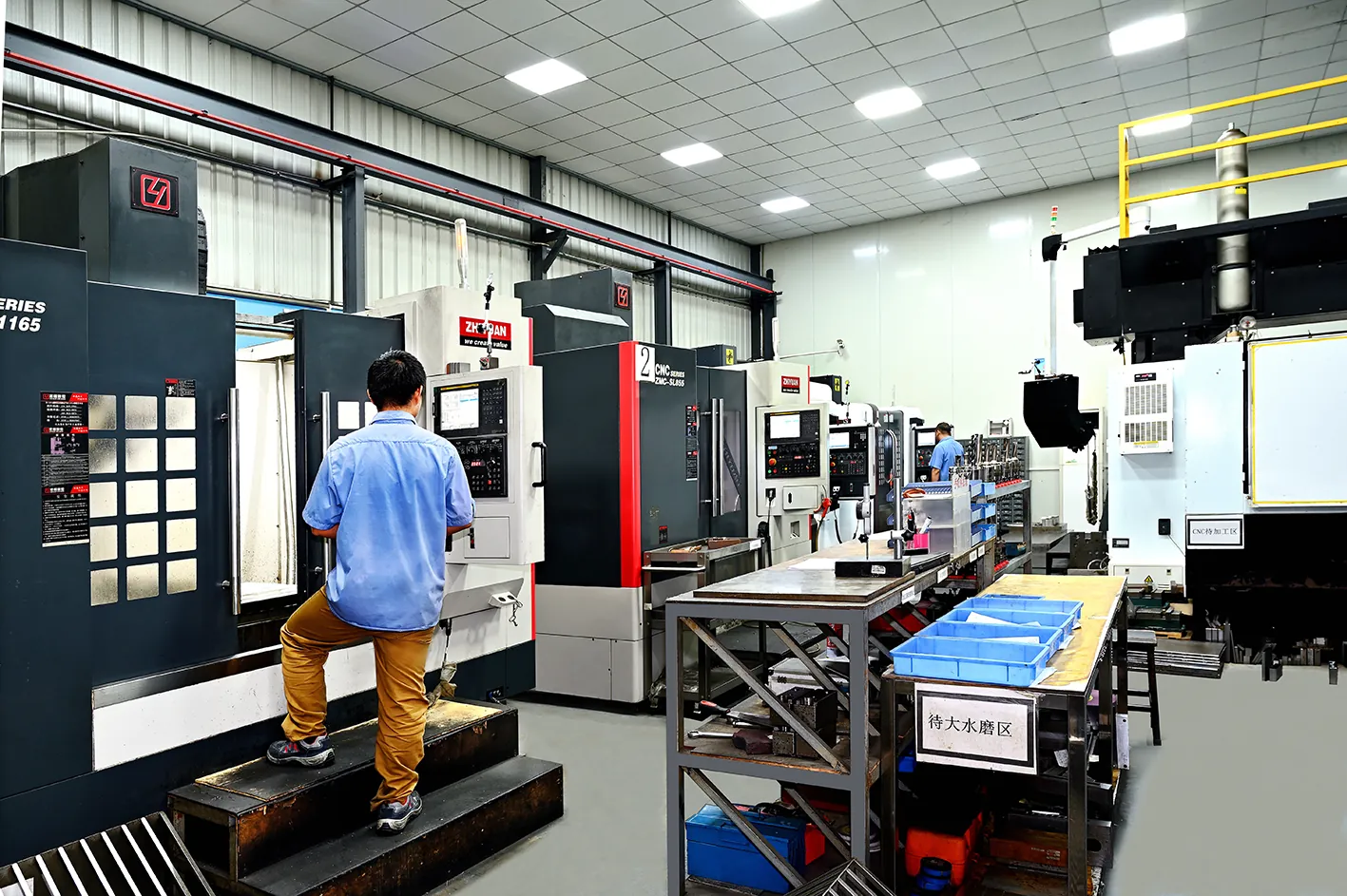
A 3-axis or 5-axis machining center cuts the cavity, cores, and side actions. Roughing removes most of the stock, and a finishing pass holds the ±0.05 mm class that prototype parts usually need. On a single-cavity aluminum set, this stage runs 3–5 days in most shops.
Bridge molds step up to P20 or 718 pre-hardened steel. Pre-hardened stock skips the hardening cycle entirely, so a bridge tool can ship in 3–5 weeks typical while still running 10k–50k shots. If you need pilot quantities before production tooling lands, a bridge mold is the usual answer. For a full week-by-week plan, see how to prototype molds in 2 weeks.
What a Prototype Mold Cannot Do
A prototype tool will not hold production tolerances at full cycle rate, and its cooling is often simplified. Use it for validation, not for launch inventory. When the program is approved, the production tool starts, and the 2–4 week window resets.
Production Injection Molds
A production mold is designed for output: hardened steel, engineered cooling, and a cycle time target. Typical published range is 4–8 weeks for a single cavity, and the long pole is not machining. It is the sequence of hardening, finishing, and trials that cannot be safely overlapped.
High-Speed Finishing
After heat treatment, the cavity is finished on a high-speed CNC. High-speed machining centers run finishing passes at 20,000–40,000 rpm, holding ±0.005 mm and better on critical faces. This stage determines surface quality and draft, so it receives the largest block of machining hours in the schedule.
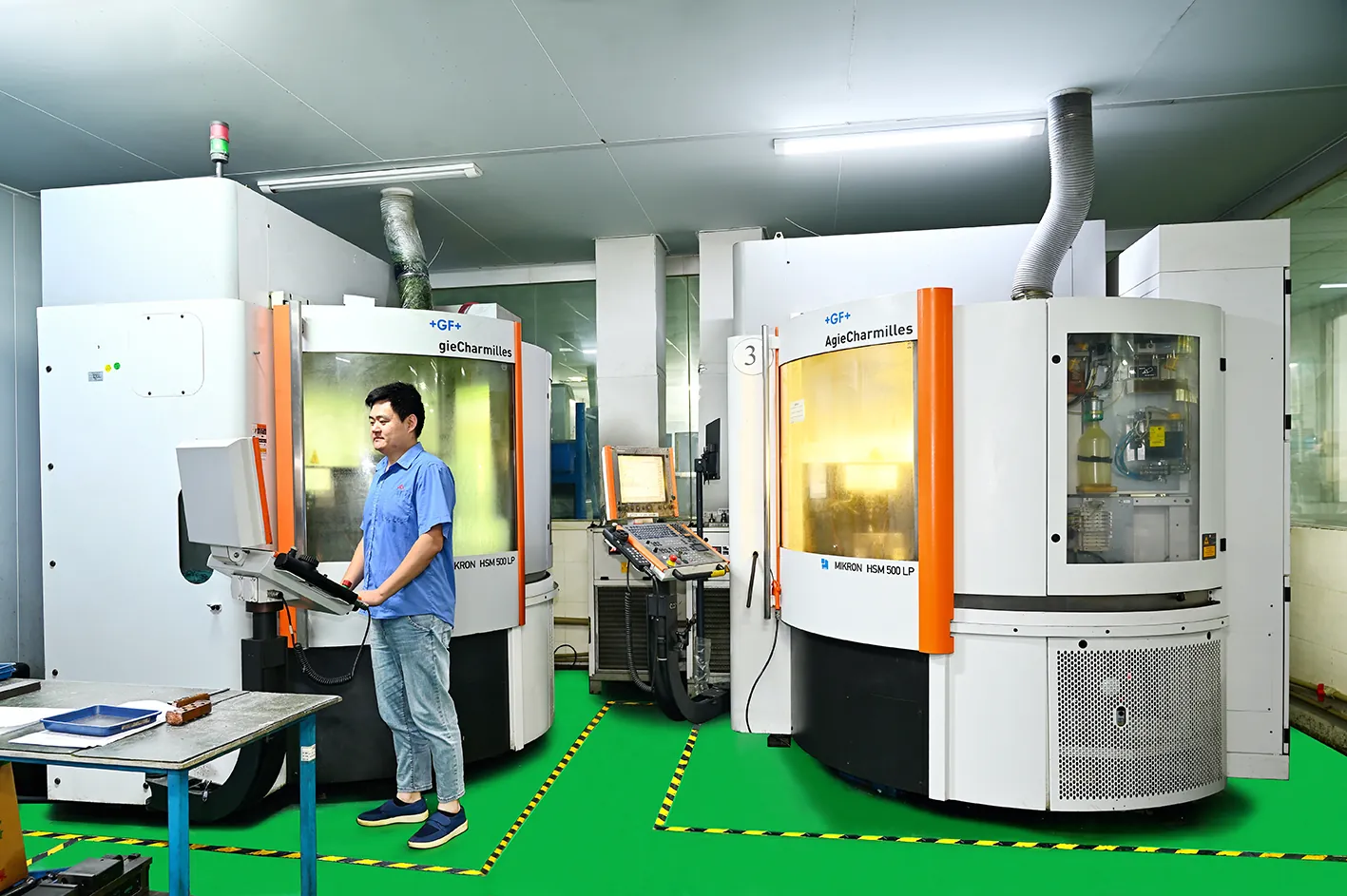
Finishing cuts in hardened steel at 58–62 HRC are slow by design. A typical cavity face gets three passes: semi-finish, finish, and a light skim. Each pass removes less material and takes more time, which is why polishing-heavy molds trend to the top of the 4–8 week band.
The Trial Loop
The first trial, called T0, reveals filling, cooling, and ejection issues. A clean T0-to-approval loop takes 1–2 weeks typical; each rework round adds 3–5 days. Shops that quote 4 weeks for a production mold are usually quoting to the T0 milestone, not to final approval.
Inserts add their own track. Replaceable cavity inserts are machined, hardened, and fitted in parallel with the main body. If the insert is a wear item, order two sets up front. The second set costs material only and removes a future 2–3 week delay.
Multi-Cavity and Family Molds
Each additional cavity multiplies machining hours and complicates flow balance. As a rule of thumb, multi-cavity tools run 1.5–2× the single-cavity schedule. That is why 6–12 weeks typical is the published range for 4–32 cavity molds. Right-size the cavity count to the annual volume; an oversized tool pays off only if the volume actually arrives.
Cavity Balance and Hot Runners
Every cavity must fill at the same rate, or the tool produces one good part and seven rejects. Balancing requires flow analysis, gate tuning, and , with hot runners , controller integration. Hot runner systems add 1–2 weeks typical to the schedule and are usually ordered the day the mold is confirmed.
Family molds, with different parts in one tool, add another variable: fill balance across different volumes. They are faster than separate tools per part but slower to approve, because one trial must satisfy every cavity. Plan for two or three trial rounds.
EDM on Deep Cavity Features
Deep ribs, square corners, and fine textures are cut by EDM, not milling. Sinker EDM burns the electrode shape into hardened steel, and wire EDM cuts through-holes and inserts to ±0.002–0.005 mm. EDM is slow , a single deep slot can take days , and it appears on every hardened multi-cavity tool.
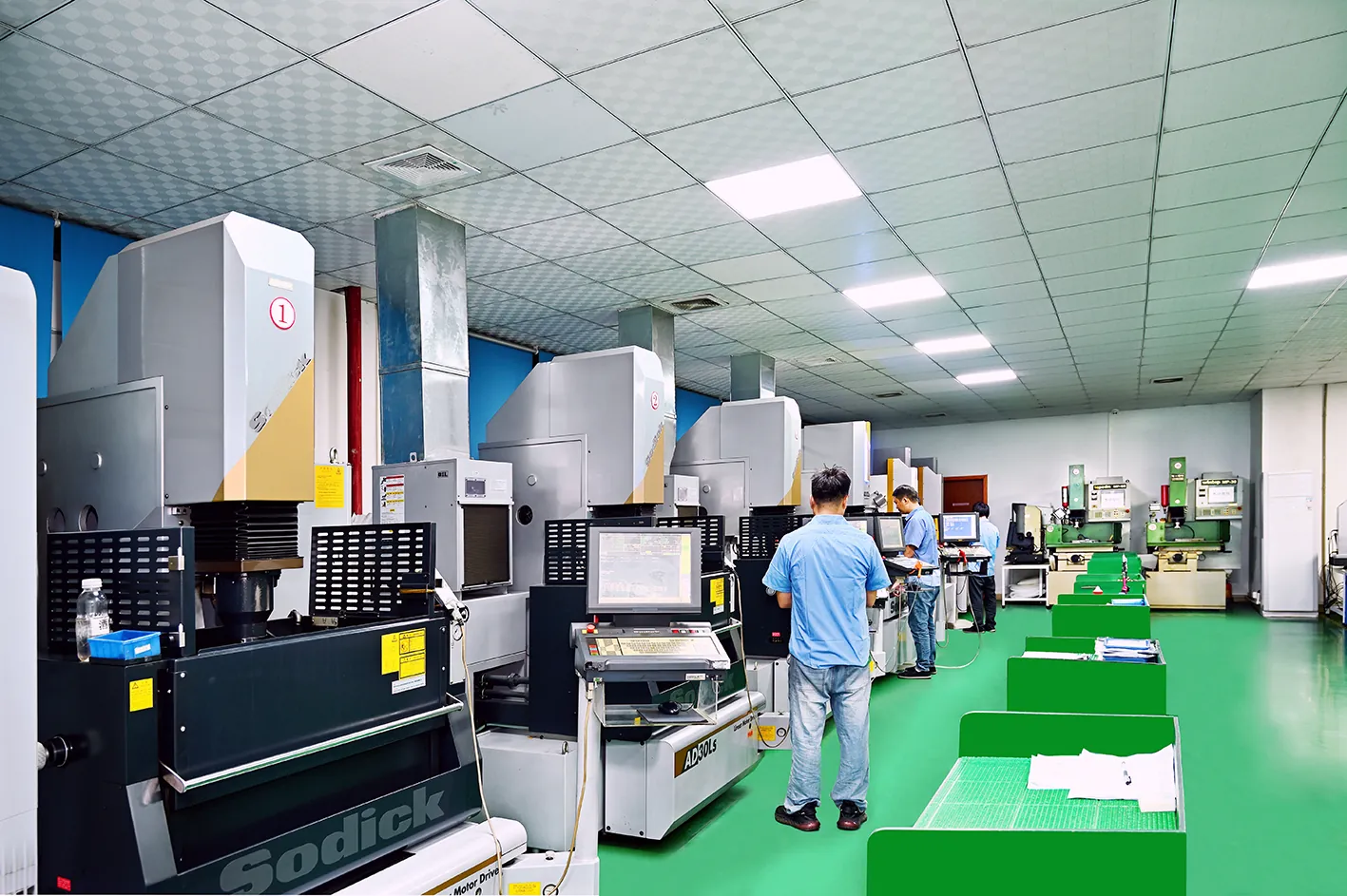
Plan EDM time into the schedule rather than treating it as an afterthought. Electrodes themselves must be machined first, which adds 2–4 days typical before the burn starts. A mold with 20 electrode sets is a 10–12 week tool, not a 6-week one.
Die Casting Dies
Die casting dies are heavier than injection molds and thermally harder on steel. Typical published range is 6–10 weeks for aluminum and zinc parts, and the extra weeks go into thermal design and large-plate machining.
Large Plate Machining and Thermal Design
Die plates run large on a gantry machining center: pockets, ejector housings, and cooling lines in a single setup. Gantry machines hold flatness across meter-scale plates, which matters because a warped plate destroys die life before the first shot.
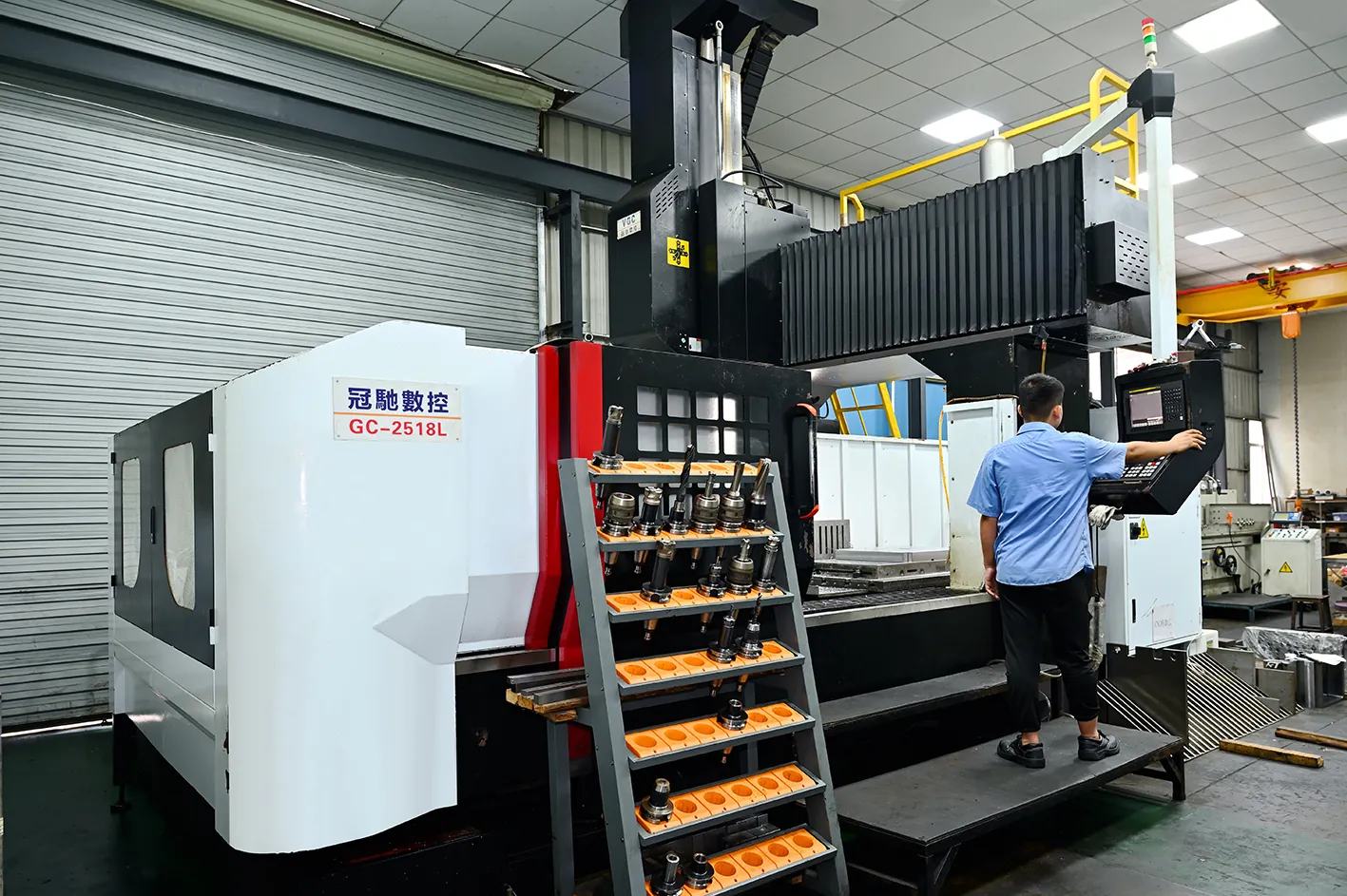
Thermal design decides die life. Water lines must keep the casting face below the soldering threshold of the alloy, typically 400–500 °C. H13 at HRC 44–52 is the usual die steel; harder grades resist erosion but crack sooner.
Die casting dies also carry moving cores for side features and ejector systems that see 100,000+ thermal cycles. Each moving element is a wear and maintenance point, so assembly and bench testing take longer than on an equivalent injection mold.
Stamping Dies
Stamping dies convert sheet metal into parts at high speed, and their lead time is dominated by tryout, not cutting. Typical published range is 8–16 weeks for progressive dies, with strip layout and die tryout as the two long poles.
A progressive die combines blanking, forming, and bending stations in one strip layout. The strip must be proven on the press , material thickness, springback, and punch clearance all get tuned during tryout. Tryout loops add 2–4 weeks typical on their own.
Grinding dominates machining. Punches, dies, and strippers are finished on surface grinders to ±0.002–0.005 mm, then assembled to matched clearances. A 20-station progressive die is a high-precision stack, not a single part, which is why 8 weeks is optimistic for anything complex.
Stamping lead time also includes the press check: the die must run on the customer's press at the rated strokes per minute. If the die was built for a different press class, rework starts. Confirm press data , tonnage, shut height, feed width , before the steel order.
What Drives Mold Lead Time
Strip away the mold type and five variables control most of the schedule. Each one has a measurable effect, so each one belongs in the quote's milestone list.
Cavity Count
More cavities mean more machining hours, more electrodes, and more trial complexity. Published estimates add roughly 40–60% to the single-cavity schedule for a 4-cavity tool and 2× for 8 cavities. Match the cavity count to real annual demand, not to a hoped-for price per part.
Steel Grade and Availability
Standard grades , P20, 718, S136, H13 , ship from stock in 3–7 days. Special grades or certified material for automotive programs add 1–2 weeks typical, and imported steel can add a month. Ask the shop which grades they stock before you approve a non-standard spec.
Pre-hardened steel (P20 at 28–32 HRC, 718 at 32–38 HRC) skips the heat treatment queue entirely. If the part volume and surface spec allow it, pre-hardened material is the fastest single lever on the schedule.
Complexity and Inserts
Undercuts force slides and lifters; deep features force EDM; fine textures force polishing hours. Each mechanism adds design, machining, and assembly work measured in days. Inserts let you replace worn detail without rebuilding the tool, but every insert adds its own machining and fitting cycle.
Heat Treatment Cycles
Hardened tool steel spends 1–2 weeks typical in the heat treatment cycle. The cycle covers pre-heat, austenitizing, quench, and two or three tempering steps to reach 58–62 HRC. Vacuum hardening with nitrogen quench is standard for mold steels, and a distortion check follows, before any finishing pass.
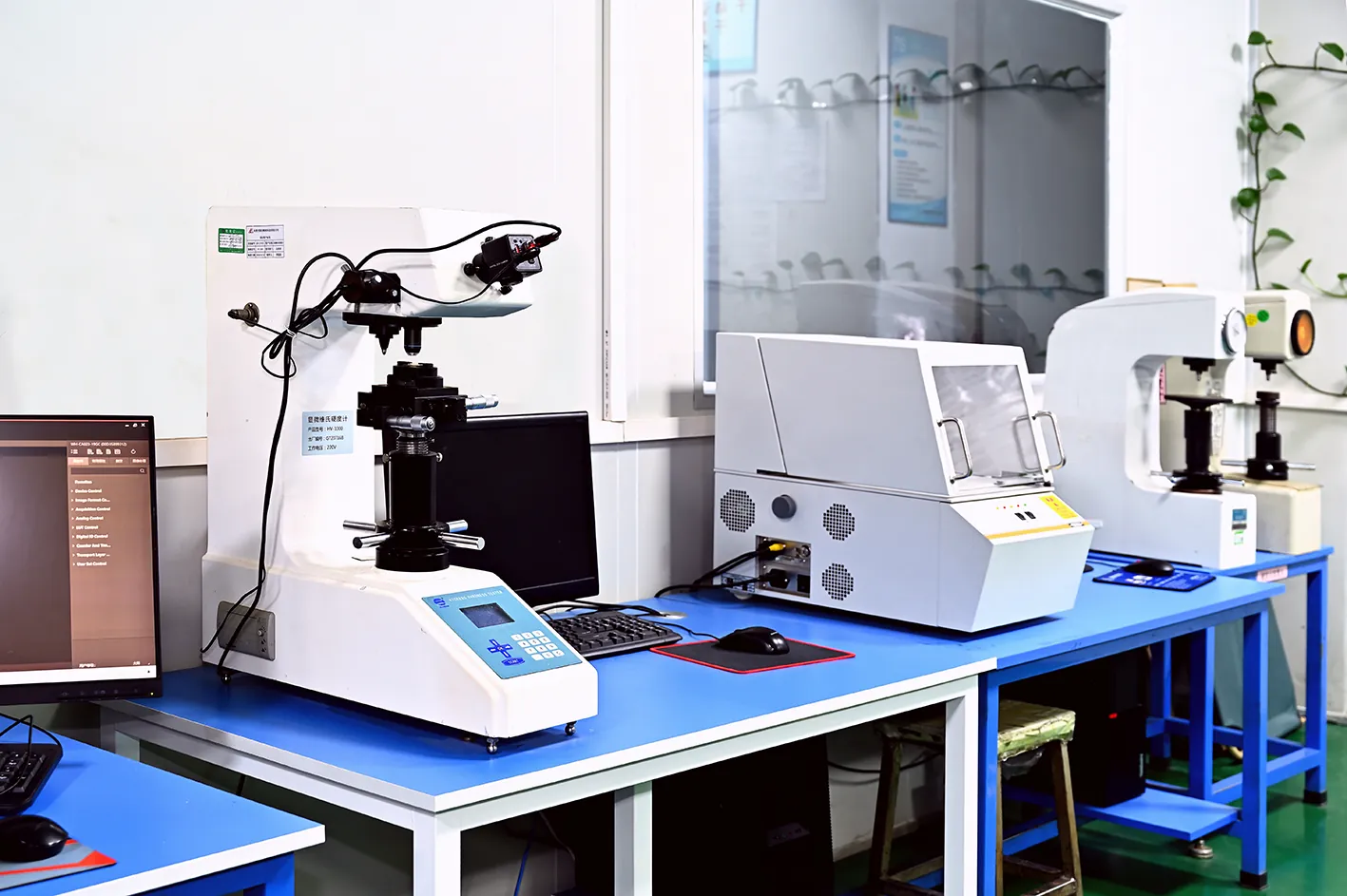
Total heat treatment for complex programs can stretch to 2–4 weeks typical when multiple components run separate cycles. Every component that needs hardening joins this queue, so parts are batched, not run one at a time. If the drawing allows pre-hardened steel, this whole block disappears.
EDM Time and Polishing Grades
EDM burns electrodes into hardened steel at 0.5–2 mm per hour in deep features. A tool with 10–20 electrode sets needs 3–6 days typical of burn time plus electrode machining. Polishing grades add their own days: SPI-A1 mirror polish on a large cavity can take a week of hand work.
Trial Iterations
Each trial round , T0, T1, T2 , costs 3–5 days typical when it includes rework. The fastest path to a short schedule is a clean first trial. Complete DFM, correct shrinkage, and a realistic gate design before the steel is cut. Trial rework is the most common hidden cause of a slipped date.
The Week-by-Week Breakdown
Here is a realistic weekly sequence for a single-cavity production mold, using typical ranges. Your shop's numbers will differ, but the order will not: design, steel, machining, hardening, finishing, assembly, trial.
- Design and DFM: 3–10 days , shrink analysis, gate placement, cooling layout, drawing release.
- Steel procurement: 3–7 days , standard grades from stock; special grades take longer.
- Rough machining: 3–7 days , cavity, cores, plates, and pockets.
- Hardening: 1–2 weeks , vacuum cycle to 58–62 HRC plus distortion check.
- Finishing and EDM: 5–10 days , high-speed finishing, EDM, polishing to grade.
- Assembly: 3–7 days , fitting slides, lifters, hot runner, and bench test.
- Trial and approval: 1–2 weeks , T0 sampling, dimensional report, customer sign-off.
Add the ranges and a typical build lands at 5–9 weeks, which matches the published 4–8 week band for a single cavity. Multi-cavity and complex tools add to the machining and trial blocks, not to design.
Assembly and First Article Inspection
Assembly is where tolerances meet. Guides, ejectors, and slides are fitted, then the tool is bench-tested before it touches a press. A CMM checks critical dimensions against the drawing , at DieStrike, standard inspection holds ±0.005 mm, with ±0.002 mm available on precision features.
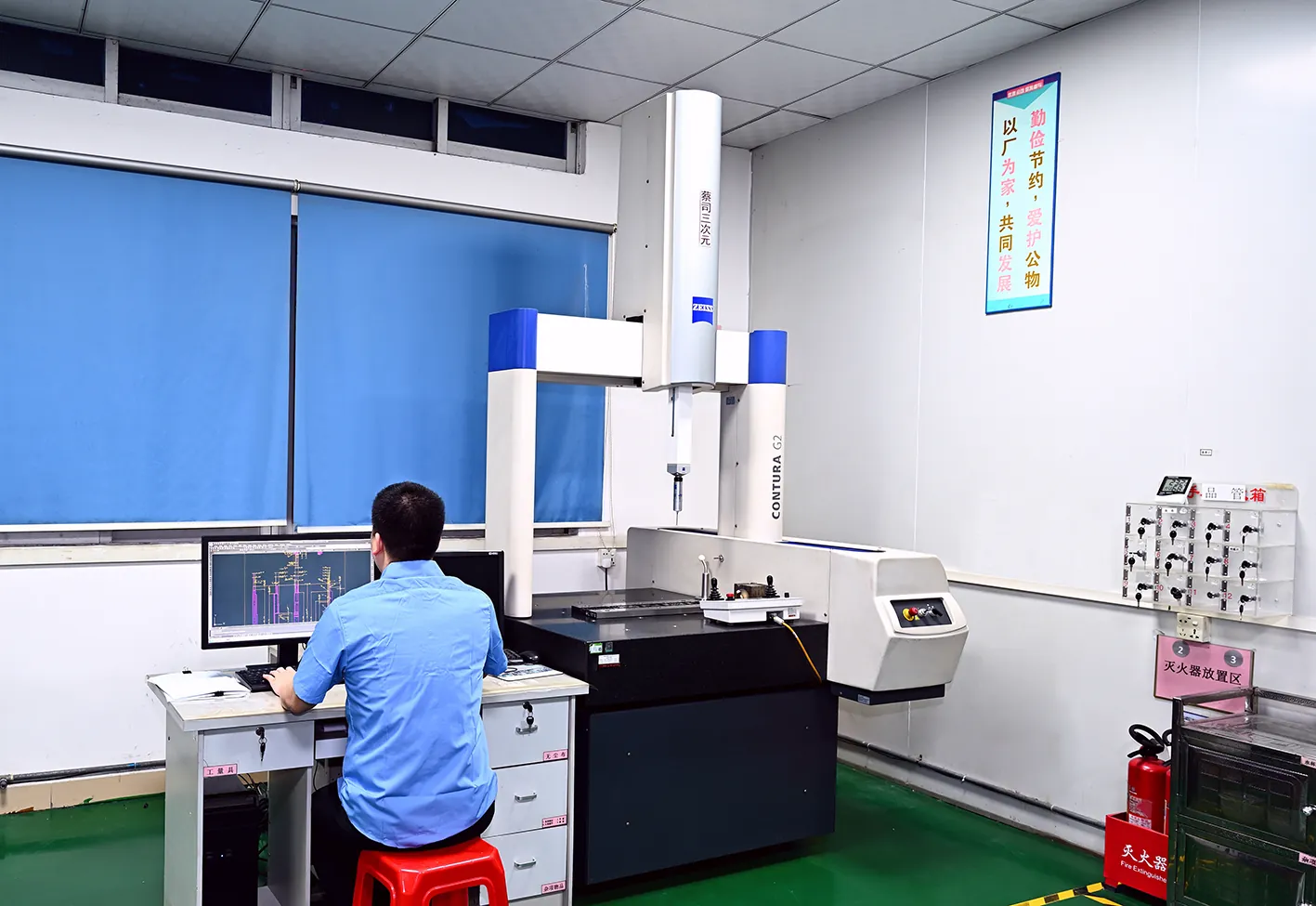
The dimensional report matters more than the calendar. A mold that ships on day 35 but fails first article is slower than one that ships on day 42 with a clean report. Schedule review time for the report , it is part of the trial loop, not paperwork.
How to Compress Lead Time
Compression is scheduling, not shortcuts. The goal is to remove waiting time while keeping every physical process intact. Five levers do most of the work.
Run workstreams in parallel. Design review and steel procurement overlap at professional shops: the steel is ordered on DFM sign-off, not on final drawing release. That single change removes 3–7 days typical from the front of the schedule.
Do DFM before quoting. A complete manufacturability review , draft, wall thickness, gate location, cooling access , prevents rework at every later stage. Treat DFM as a gate, not a courtesy, because every missed issue that resurfaces in trial costs days.
Specify pre-hardened steel where the part allows. P20 or 718 at 28–38 HRC removes the entire 1–2 week hardening block. If the surface spec needs higher hardness, accept that the block stays.
Order standard components early. Mold bases, ejector pins, springs, and guide components ship in 3–7 days at DieStrike; specialty items take longer. Freeze the component list at DFM so standard parts arrive while the cavity is being cut.
Design for a clean first trial. Shrinkage compensation, gate sizing, and cooling balance done right in design mean T0 passes with minor tweaks. Avoiding one rework round saves 3–5 days, and usually more, because rework pushes every downstream step.
The DieStrike Manifest: Production Molds in 2–5 Weeks
DieStrike runs a 120+ machine factory in Shenzhen, Guangdong, built around vertical integration: machining, EDM, heat treatment, grinding, and inspection under one roof. Certified to IATF 16949 and ISO 9001, the plant ships production molds in 2–5 weeks and standard parts in 3–7 days.
The 2–5 week window is the schedule the factory plans against, not a marketing band. It is possible because heat treatment, finishing, and inspection run in-house instead of moving between vendors. Customers include TE Connectivity, Amphenol, Luxshare, and Dongshan Precision, who audit the plant against their own supplier standards.
Standard tolerance is ±0.005 mm, with ±0.002 mm on precision features. Hardness is verified to HRC 62 in-house. If your program sits inside that envelope, the quoted date is a plan, not a hope. See how the factory handles your mold class on the injection mold manufacturing service page.
Frequently Asked Questions
Can a production mold really ship in 2 weeks?
Only simple single-cavity tools with stock steel and a frozen design. Typical published range is 4–8 weeks for a production mold; a 2-week date means pre-hardened steel, no EDM-heavy features, and a fast trial. DieStrike's 2–5 week production window applies to the standard envelope, not every geometry.
What is the fastest mold type to make?
Prototype molds with aluminum cavity sets, typically 2–4 weeks. Aluminum cuts fast, polishes fast, and skips hardening. Bridge molds in P20/718 add a week but run more shots.
Why does heat treatment add so much time?
The vacuum hardening cycle , pre-heat, austenitize, quench, temper , takes 1–2 weeks typical for hardened tool steel. Distortion check and any corrective grinding come after. Parts are batched through the furnace, so the queue grows with complexity.
What is the longest part of mold making?
For hardened tools, it is usually the finishing sequence: heat treatment, EDM, polishing, then trial. Each stage has physical minimums. For stamping dies, tryout loops dominate. The week-by-week breakdown above shows where the days actually go.
How much can rushing a mold shorten lead time?
Parallel scheduling typically saves 1–2 weeks on a 6–8 week tool by removing waiting time. Cutting machining speed or skipping trial steps saves nothing , it creates rework. Rush fees buy queue position, not physics.
When should I order the mold to hit a launch date?
Work backwards from the launch. Add trial and approval time (1–2 weeks typical), then the lead time for your mold type, then 2–4 weeks buffer for design changes. For a production multi-cavity mold, that means ordering 10–14 weeks before the first committed delivery.
The Bottom Line
Mold lead time is a measurable chain: design, steel, machining, hardening, finishing, assembly, trial. Prototype tools run 2–4 weeks typical. Production single-cavity molds run 4–8 weeks, and multi-cavity tools run 6–12 weeks. Automotive programs with PPAP run 8–16 weeks. Every number in this article is a planning band, and your quote should name the milestones inside it.
The schedule is most compressible at the front. Freeze the design, order steel and standard components at DFM, and choose pre-hardened material where the part allows. When you evaluate suppliers, ask how their trial loop works, not just for a date. A clean first trial is worth more than a fast promise.
For the full picture of what a quote's dates and line items mean, read our guide on how to read a mold quote. Do that before you compare suppliers. A lead time you understand is a lead time you can plan against.
NEXT STEP
Ready to Start Your Mold?
Send us your element dimensions or part numbers — our team responds within 24 hours with pricing and lead time.

Written by
Ray ChanMold Buyer's Guide Author · Precision Mold Manufacturing Specialist. Ray helps global importers, distributors and OEMs source factory-direct molds and mold parts.