
How to Read a Mold Quote: Line by Line
Table of Contents
You open three quotes for the same 2-cavity mold and the prices land at $18,500, $26,000, and $39,000. The cheapest one looks like a win. Then the change orders arrive, and your real total clears $30,000 before the first trial shot. That is how most mold buying mistakes start: nobody read the quote line by line.
A mold quote is not a price. It is a scope document that happens to end with a number. The $39,000 quote included trial shots, CMM reports, and standard components. The $18,500 quote included a mold base and nothing else. Read the two side by side, and the gap makes sense.
This guide walks through every line of a mold quote, from the header to the change order clause. Each step gives you a threshold, a standard, or a question to ask. Use it before you sign, not after the steel is cut.
The method works for injection molds and stamping dies alike. The numbers that matter are the same in both: scope, steel, tolerance, lead time, and terms. Keep this page open when the next quote lands on your desk.
The Snapshot
- Mold prices run from $3,000 for an aluminum prototype mold to $100,000+ for a multi-cavity hot runner mold (published ranges).
- Tolerance is the biggest hidden cost driver: ±0.005mm standard and ±0.002mm critical.
- DieStrike locks scope with a 24-hour DFM review before the quote price is set.
- Lead time brackets: stamping dies 2-5 weeks, plastic molds 2-4 weeks, standard components 3-7 days.
Step 1: Lock the Scope Before the Price
Start at the top of the page. The header must name the part number, the drawing revision, the cavity count, and the quoted quantity. A quote tied to revision A cannot be compared to a drawing at revision C. If the revision does not match your latest file, stop and ask for a re-quote.
Revision mismatches cause most mold cost surprises. A missing revision letter is a one-line fix on paper, and a rework risk typically worth $4,000 to $8,000 on the floor. The steel is cut from whatever file the shop last received.
Check the cavity count against your annual volume. A 4-cavity mold on a 30-second cycle makes 480 parts per hour. A 1-cavity mold on the same press makes 120. That gap decides whether the mold pays for itself in 6 months or 18.
Quantity matters as much as cavity count. A quote for 100,000 parts per year funds a different mold than a quote for 1 million. DieStrike accepts a minimum order of one mold, or MOQ 1, but the piece price still scales with volume.
The piece price and the mold price are two halves of one decision. A mold that cuts cycle time by 10 seconds saves money on every part it ever makes. The quote review should pair the mold cost with the quoted part cost before either number makes sense.
Read the scope statement before the price. The scope line defines what the number covers: design, steel, machining, assembly, trial shots, and delivery. A quote that lists scope in one sentence is asking you to trust the rest.
Check the quote validity line as well. Steel prices move, and a quote that does not state a validity period can be repriced at delivery. Ask for the validity in writing if the line is missing.
Send the drawing, the material spec, and the volume plan together. One unambiguous input produces one comparable quote. Our RFQ guide lists every field a complete request should carry.
Step 2: Count Cavities and Read the Mold Type
The next lines define the mold type: single cavity, multi cavity, family mold, or insert mold. Each type changes the tooling cost per part. A single cavity mold is the cheapest to build and the most expensive to run at scale.
Run the math before you judge the cavity line. A single cavity mold at $12,000 with a 30-second cycle adds $0.50 per part in machine time at $60 per hour. A 4-cavity mold at $30,000 with the same cycle adds $0.125 per part. The extra $18,000 pays back at roughly 48,000 parts.
A single cavity hot runner can beat a cold runner 4-cavity mold on total cost when volumes are small. You pay for one cavity instead of four, and the runner waste disappears at the same time.
Family molds run several different parts in one cycle and share the base cost. Insert molds swap replaceable inserts to make variants of one part. Both cut tooling spend and both slow the cycle, so the quote should say which type you are buying.
Insert molds deserve their own check. Replaceable inserts let one base run several part variants, and the quote should price each insert set separately. If the insert sets are buried in one number, ask for the split before you order spare inserts later.
Read the runner line with care. A hot runner adds a manifold, nozzles, and temperature control, and it typically adds 30-60% to the mold price (published range). It also removes runner waste from every cycle. Judge hot runner versus cold runner on cost per part, not on mold price alone.
The quote should name the gate type as well: edge gate, pin gate, submarine gate, or valve gate. Gate type drives cycle time and cosmetic quality. A valve gate hot runner adds cost and gives a cleaner knit line, which matters for visible parts.
Ask whether the cavity count is final. Adding a cavity after the steel is cut becomes a change order, and that line costs more than the original cavity did.
Step 3: Split the Base from the Components
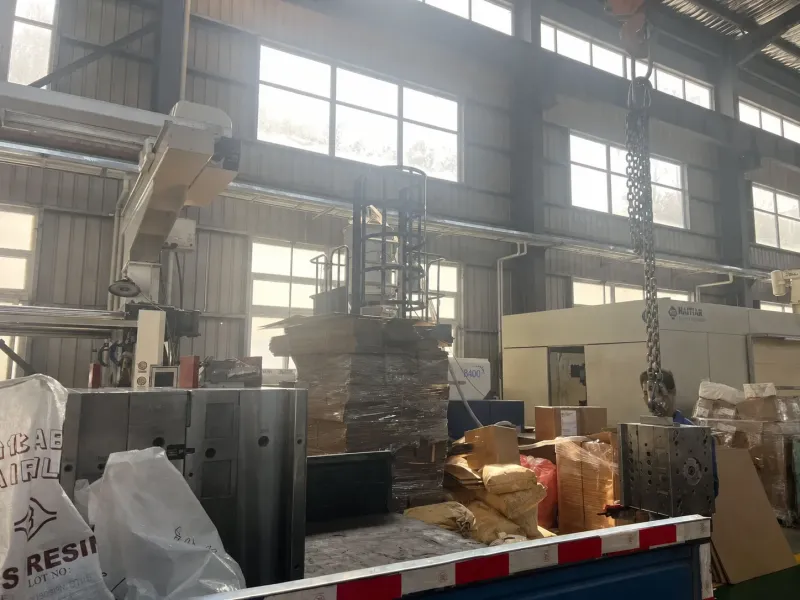
A complete mold quote separates the mold base from the working components. The base is the frame: plates, guide pillars, and return pins. The components do the forming and ejecting: ejector pins, core pins, sprue bushings, springs, and leader pins.
The base line should name a size and a standard. A DME 4545 base prices differently from a 3030, and the difference shows up on the steel bill. DieStrike builds components to HASCO, DME, and MISUMI interchangeability.
Read the component line for brands and standards. When no standard is named, you cannot check the price against any catalog. Standard components ship in 3-7 days at DieStrike, and custom pins add machining time to the critical path.
Confirm which components are stock and which are custom. Custom ejector pins and core pins carry machining and heat treatment cost. Stock parts carry a catalog price. The quote should say which is which.
Mold accessories belong on the same line. Water connectors, locating rings, and interlocks are small parts with real cost. When they are missing from the quote, they show up on the invoice as extras. The same applies to custom mold inserts for wear areas.
Ejector pin and core pin grades decide replacement frequency. Standard pins at catalog prices are fine for most jobs. High-load ejector pins in tougher grades cost more and last longer in deep-draw and high-temp parts.
Step 4: Check Steel Grades and Heat Treatment
The steel line tells you how the mold will wear. P20 is a pre-hardened general-purpose steel. H13 handles high temperature and high pressure. S136 is a stainless mold steel for medical and clean-room work. The grade sets both the price and the tool life.
Steel grades stack up in price. P20 is the entry point. H13 adds cost for toughness at temperature. S136 costs more for corrosion resistance (typical published price ladder).
Look for a hardness target, not a vague word. DieStrike specifies HRC 62 for critical inserts, and the heat treatment line should name the target with a tolerance. A quote that says "hardened" without a number is not a spec.
Ask which parts of the mold get hardened. Inserts and moving components carry the wear. Hardening every plate pays for capability you do not need.
Heat treatment without a tolerance is guesswork. A target of HRC 50-54 differs from HRC 56-60 in wear and grindability. The quote should carry the range, not a single number.
Coatings add a line of their own. Nitriding and PVD coatings extend insert life on abrasive and glass-filled materials, typically by 2-4x (published range). If your resin is abrasive, the coating line is not optional.
Surface finish belongs on this line as well. SPI A-1 is the polished mirror finish for optical and cosmetic parts. If your part needs it, the quote must say so, because polishing time is billed somewhere. See our P20 versus H13 versus S136 comparison before you pick a grade.
Step 5: Read the Tolerance and Finish Lines
Every mold quote should state a tolerance policy. DieStrike quotes ±0.005mm standard and ±0.002mm for critical features. Those two numbers change the machining plan completely.
Process capability sets the floor. Wire EDM holds ±0.002mm. Jig grinding holds 0.0005mm. Standard CNC milling holds about ±0.01mm (typical process capability). A ±0.002mm feature needs the slow machines, and slow machines cost more per hour.
Compare the mold tolerance to the part tolerance. Mold features are typically held to about one-tenth of the part tolerance (common practice). A part at ±0.05mm needs mold work well inside ±0.005mm. If the quote does not state mold tolerances at all, ask.
Tolerance and cost escalate together. Moving a feature from ±0.005mm to ±0.002mm roughly doubles the machining time on that feature (typical practice). Moving it to ±0.001mm can double it again. Read the tolerance line as a cost curve, not a checkbox.
Watch the drawing callouts too. If the print carries a position tolerance frame, the quote should price that frame. Undefined datums leave the tolerance open to argument later.
Surface finish grades run from SPI A-1 mirror polish down to C-3 coarse sanding. The quote should name the SPI grade per surface. A finish clause that says "as required" leaves the polishing bill open.
Step 6: Audit the Lead Time Line
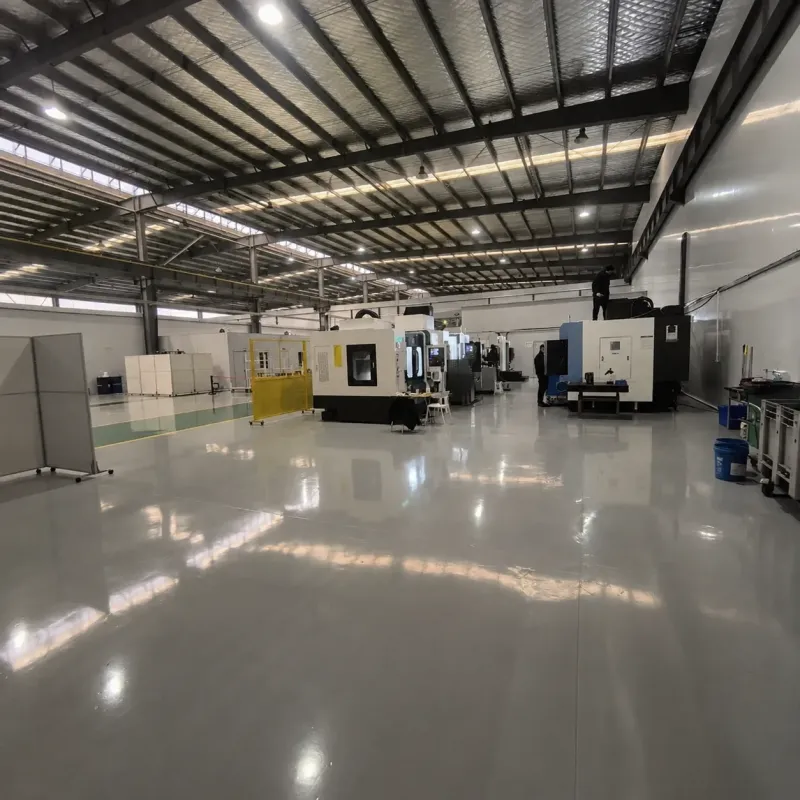
The lead time line is where quotes hide real cost. Read it as design time plus steel time plus machining time plus trial time. A shop that quotes "6 weeks after drawing approval" has committed to nothing until you approve.
DieStrike quotes stamping dies in 2-5 weeks and plastic molds in 2-4 weeks, with a 24-hour DFM review before the price locks. Standard components run 3-7 days. Compare lead times from the same starting point.
Ask what the clock starts on. If it starts when you sign, that is clean. If it starts after design approval, add your own two weeks to the number.
Break the quoted lead time into its milestones. Design freeze, steel order, machining start, assembly, and trial each take days. If the quote gives one number with no milestones, ask for the schedule that supports it.
Short lead times are not always better. A 6-week quote with a full validation plan can beat a 3-week quote with no trial line. The lead time line and the trial line must be read together.
Step 7: Review Payment and Change Order Terms
Payment terms usually split across three milestones: deposit, progress at machining, and balance at trial approval. Common splits are 30/40/30 and 50/50 (typical practice). Neither is wrong, but the schedule must match your cash flow.
Ask what the deposit buys. A deposit should cover steel and components, not shop overhead. A request for 100% upfront is a red flag unless the shop is IATF 16949 or ISO 9001 certified and referenceable.
The change order clause matters more than the payment schedule. A change order is any scope shift after the quote: new cavity, new steel grade, new gate location. Ask the shop to write its change order rate into the quote. A shop that refuses to name a rate will price you on the spot later.
Keep a written record of every revision you send. If your drawing moves from revision B to revision C, get the price impact in writing before the shop cuts steel.
The warranty line is part of the terms. A quote should state what it covers after the mold ships: workmanship defects, replacement components, or rework. A one-line warranty is a one-line commitment, so read it twice.
Step 8: Check Validation and Reports
Trial shots are the proof that the mold works. Confirm how many trial rounds are included, what the acceptance criteria are, and who pays for the resin. Typical quotes include 1-3 trial rounds (typical practice), and extra rounds are billed.
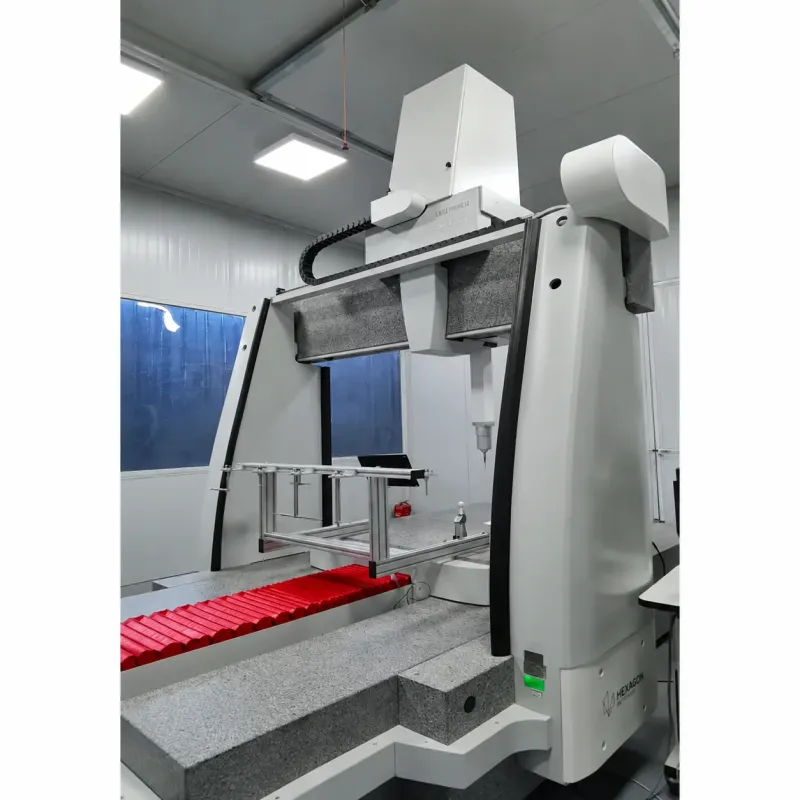
Reports are part of the scope. A serious quote includes a CMM inspection report, a material certificate, and a dimensional report on the first articles. A CMM report with measured points for every critical dimension beats a note that says "within tolerance".
DieStrike ships these reports with every mold, backed by IATF 16949, ISO 9001, and ISO 14001 systems. Under IATF 16949, material traceability is a requirement, not a favor.
If your customer demands PPAP, confirm it is in the quote. Level 3 PPAP is the default for automotive parts (typical practice), and the documentation is real work. Read the report line before you assume it is free.
Trial acceptance is a scope item, not a feeling. Name the criteria before the trial: dimensions on the drawing, surface finish grade, and a shot count without defects. Written criteria turn the trial into a pass-fail event instead of a debate.
Ask who owns the mold when it is done. Tooling ownership and file ownership are separate clauses, and both should appear in the quote. For automotive programs under IATF 16949, the ownership paper trail matters at audit time.
Step 9: Compare Quotes on the Same Grid
You cannot compare three quotes by their bottom lines. You compare them by their scope lines. Build one grid with the same items for every supplier: mold base, inserts, components, heat treatment, trial shots, reports, shipping, and payment.
Add a contingency line to every comparison. A 10-15% change order budget is typical practice, and it belongs in the grid before you compare totals.
Convert the total into cost per part over the mold life. Quote A runs $28,000 with a 45-second cycle. Quote B runs $34,000 with a 35-second cycle. At $60 per hour, quote A costs $150,000 in machine time over 200,000 parts, and quote B costs about $117,000. The $6,000 price gap buys $33,000 in cycle savings.
Mold price is a number. Mold cost is a rate. Shipping, export packing, and tooling insurance belong on the grid. A quote that excludes freight is not cheaper, it is unfinished.
Watch the currency and the freight line. A quote in USD from an overseas shop includes export packing and insurance in the total, or it does not. Ask which one it is, and add the freight to the grid before comparing.
A single-part mold and a 6-variant family mold share the same base cost. The quote should show how the base cost splits between them. DieStrike quotes MOQ 1, so the grid works for one mold or a hundred.
| Quote line | What it covers | Red flag if missing |
|---|---|---|
| Mold base | Plates, guide pillars, return pins, HASCO or DME or MISUMI standard | No standard or brand named |
| Core and cavity inserts | Machined and heat-treated insert steel, wire EDM at ±0.002mm | No steel grade or hardness target |
| Ejector system | Ejector pins, core pins, and springs sized for the part | No pin sizes or counts |
| Runner and gating | Cold runner, or hot runner with manifold and nozzles | No gate type named |
| Heat treatment | Hardening and coating, hardness target such as HRC 62 | "Hardened" with no number |
| Trial shots and reports | Trial rounds, CMM report, material certificate | No trial count or report list |
← swipe to scroll →
Values are typical industry practice, not a quote from DieStrike. Confirm every line with your supplier.
Step 10: Ask Before You Issue the PO
Before you sign, ask the five questions below. The answers decide whether the quote is a price or a promise.
- Which drawing revision does this price lock to?
- What is your change order rate, and what triggers one?
- How many trial shots are included, and what is the acceptance criteria?
- Which components are standard stock and which are custom?
- What reports ship with the first articles?
A shop that answers all five in writing is pricing the job. A shop that answers vaguely is pricing the opportunity.
Get the validity period in writing. Quotes typically hold for 30 days (typical practice). After that, steel prices move.
If you find a red flag, ask for a re-quote on the missing lines. A shop that itemizes its scope will do it in writing within a day or two. A shop that cannot itemize cannot justify its price, and that is the answer you needed.
| Checkpoint | Normal sign | Red flag |
|---|---|---|
| Total price | Itemized into base, inserts, components, and trials | One lump number with no breakdown |
| Tolerance policy | ±0.005mm standard, ±0.002mm critical features | No tolerance clause at all |
| Lead time | Stamping dies 2-5 weeks, plastic molds 2-4 weeks | Clock starts after design approval |
| Standard components | Named standard, stock parts in 3-7 days | Sourced to an unnamed third party |
| Change orders | Rate written into the quote | "Rate negotiated later" |
| Validation | Trial count, CMM report, material certificate listed | No report or trial line |
← swipe to scroll →
Terms shown are typical industry practice, not DieStrike contract language.
Frequently Asked Questions
Q1. How much does an injection mold cost?
Published ranges put injection molds at about $3,000 for an aluminum prototype mold up to $100,000+ for a multi-cavity hot runner tool. Cavity count and tolerance move the number more than anything else. Our injection mold cost guide breaks the price into its drivers.
Q2. Why is my mold quote so expensive?
Three lines drive most of the price: cavity count, steel grade, and tolerance. A ±0.002mm critical feature needs jig grinding and wire EDM, which run slower than standard milling. Ask the shop which line carries the most hours, and you will find the honest part of the price.
Q3. Why do mold quotes vary so much between suppliers?
Most variance is scope, not margin. One quote includes trial shots, CMM reports, and standard components. Another quotes a bare mold base. A $20,000 quote that includes trial shots and reports is usually cheaper than a $16,000 quote that does not. Compare line by line before you compare totals.
Q4. What should a mold quote include?
A complete quote names the mold base, insert steel grades, component standards, heat treatment, trial shots, reports, lead time, payment, and change order policy. If any of those lines are missing, ask for them in writing.
Q5. Can I negotiate a mold quote?
Yes, but negotiate scope, not the price number. Ask to move from a hot runner to a cold runner, or from custom components to standard stock that ships in 3-7 days. Every removed line cuts both the price and the risk.
Q6. What is the difference between a mold quote and a part quote?
A mold quote prices the tooling in one payment. A part quote prices the molded pieces as a rate per unit over the production volume. Ask for both numbers on the same RFQ so the tooling decision and the piece price decision stay connected.
The Bottom Line
Every mold quote is a scope document with a price attached. The buyer who reads line by line catches missing trial shots, vague change order clauses, and tolerance gaps before the steel is cut. The buyer who reads only the bottom line pays for them twice.
Walk your next quote through these ten steps. If a line carries no number, no standard, and no threshold, send it back. Our DFM team reviews drawings and scope within 24 hours and will tell you which lines are missing before you sign.
KEEP READING
Related Reading
How to Choose a Mold Manufacturer: 8 Checks Before You Sign
Choosing a mold manufacturer means choosing production reliability.
Read articleArticleHow to Write a Mold RFQ: 10 Fields That Get You Better Quotes
Your RFQ quality determines your quote quality. These ten fields — 3D part file, resin grade, annual volume,…
Read articleArticle5 Mold Cooling Channel Design Tips for Faster Cycles
Mold maker's 5 cooling channel design rules: channel-to-cavity distance 2-2.
Read articleArticle5 Shrinkage Compensation Rules for Mold Design
Shrinkage compensation decides mold accuracy. Five rules: material rates from 0.3% to 2.
Read articleNEXT STEP
Ready to Start Your Mold?
Send us your element dimensions or part numbers — our team responds within 24 hours with pricing and lead time.

Written by
Ray ChanMold Buyer's Guide Author · Precision Mold Manufacturing Specialist. Ray helps global importers, distributors and OEMs source factory-direct molds and mold parts.