
How to Write a Mold RFQ: 10 Fields That Get You Better Quotes
Table of Contents
Two RFQs for the same part land on the same mold maker's desk on the same morning. The first contains a STEP file, a 2D drawing with tolerances, the resin grade, the annual volume, and the cosmetic requirements. The second contains a PDF screenshot and the sentence "please quote best price." The first gets a priced quote with cavity count, steel, cycle, and trial milestones in 24 hours. The second gets a number, a shrug, and a change order the moment the real requirements surface. The difference between them is not the supplier, it is the RFQ.
The quality of your RFQ determines the quality of your quotes, because mold pricing is custom engineering built on the information you provide. Every field you omit is a field the supplier fills with an assumption, and assumptions become change orders. This guide walks through the ten fields every mold RFQ should carry, why each one matters, and what happens to the quote when it is missing.
The ten fields cost you nothing but typing time, and they compound: a complete RFQ gets you a precise quote, a clean DFM review, and a mold that matches the drawing. A thin RFQ gets you guesswork, and guesswork is the most expensive thing in tooling.
The Snapshot
- Ten fields: part file, material, volume, weight, cosmetics, tolerances, lead time, standards, documentation, delivery.
- A complete RFQ gets a quoted 24-hour DFM review and precise pricing; a thin RFQ gets assumptions that become change orders.
- Send the 3D file (STEP/STP/IGES) plus a 2D drawing with tolerance callouts, never a PDF alone.
- Name the resin grade, annual volume, and cosmetic surface limits, and the supplier can quote cavity count, steel, and cycle.
- DieStrike answers complete RFQs within 24 hours with DFM feedback, cost breakdown, and trial milestones.
Why the RFQ Defines the Mold
A mold quote is not a catalog price, it is an engineering estimate built from your information. Cavity count comes from volume. Steel comes from resin and life. Gate type comes from cosmetics. Tolerance capability comes from the drawing callouts. Every one of those decisions starts from a field in your RFQ, and every field you leave blank delegates the decision to the supplier's least expensive default.
The consequences arrive in two waves. First, the quote itself: a vague RFQ produces a vague price, and comparing vague prices is how buyers choose on price alone and then discover scope differences. Second, the build: the supplier's assumptions surface as change orders when the real requirements become unavoidable, and change orders cost $2,000 to $6,000 each and 2 to 3 weeks of schedule (typical range).
A complete RFQ also changes the DFM conversation. The supplier can only review what it can see, and the DFM review is where geometry problems get caught for free. A STEP file plus a tolerance drawing gets you a real review; a screenshot gets you a form letter. Our DFM checklist guide shows what the review covers when the files are complete.
Finally, the RFQ is your comparison instrument. Ten suppliers quoting the same complete RFQ produce comparable quotes: same cavity count, same steel, same scope, and the price differences mean something. Ten suppliers quoting a thin RFQ produce ten different molds disguised as ten prices.
Field 1: Part File
The part file is the RFQ. Send the 3D model in STEP, STP, or IGES format plus the 2D drawing with tolerance callouts. The 3D file carries the geometry, and the 2D drawing carries the critical dimensions and the GD&T. A part with both gets a complete DFM review and a precise quote; a part with only a PDF gets a partial review and a hedged price.
Format matters less than completeness. STEP is the most portable neutral format and the safest choice; IGES works but carries less surface data; native CAD files are useful but force the supplier to have your exact software version. Whatever the format, the file must be the released revision, with a revision number in the RFQ, because quoting the wrong revision is a change order with a different name.
The 2D drawing is where tolerance lives. A 3D model has no tolerance information, and shrink, draft, and gate placement decisions depend on knowing which dimensions are critical. Mark the critical dimensions on the drawing, either with explicit tolerance callouts or a GD&T frame, and state the general tolerance note that applies everywhere else.
A quick completeness test: if your part file package is everything you would need to machine the part yourself, it is everything the mold maker needs. If it is missing something, the quote will be missing something too.
Field 2: Material and Grade
Name the resin by grade, not by family. "ABS" is a family with a wide range of shrink, flow, and mechanical behavior; "ABS, LG Chem HI-121H" is a grade with a datasheet, a shrink rate, and a processing window. The supplier needs the grade for four decisions: shrink compensation, mold steel, gate sizing, and cycle projection.
Shrink is the first material-driven decision. A 1.8% shrink POM cavity is cut differently from a 0.5% shrink PC cavity, and the shrink factor comes from the specific grade's datasheet, not the family average. State the grade and the supplier applies the datasheet; state only the family and the supplier applies a guess.
Fillers change the mold. A 30% glass-filled PA66 needs wear-resistant steel and coated or SKH51 ejector pins, while unfilled ABS is happy with P20 and standard pins. The grade statement should include the filler level, because it drives the steel and component spec that appears in the quote, and our steel selection guide explains the trade-offs.
Also state the color and any additive requirements. Color affects the resin price and sometimes the grade; UV stabilizers, flame retardants, and food-contact grades change the material cost line. A quote made on the wrong grade assumption fails at the first material purchase order.
Field 3: Annual Volume and Run Size
Volume is the field that prices the mold, because it decides cavity count, runner type, and steel life target. State the annual volume and the typical run size: 200,000 parts a year in runs of 20,000, for example. The run size matters as much as the total, because it decides how often the mold goes in and out of the press.
Cavity count is the first volume-driven decision. 50,000 parts a year might run a single cavity at 90,000 cycles; 500,000 parts a year wants 4, 8, or 16 cavities depending on cycle and press availability. The cavity count drives the mold price more than any other single decision, and it comes straight from your volume statement.
Runner type follows volume. Above roughly 100,000 parts per year, the hot runner's per-part savings beat its tool cost, and the volume field is what lets the supplier run the payback calculation. Below that, a cold runner is usually right. The volume statement is the difference between a quote with a hot runner line and a quote without one.
Also state the program life if you know it: 3 years, 5 years, or indefinite. Steel selection and cavity count should match the life target, and a quote for a 5-year program should not be built on 1-year assumptions. The volume field is the cheapest way to buy the right mold instead of the smallest mold.
Field 4: Part Weight and Dimensions
Part weight and overall dimensions size the machine, the steel, and the price. A 5 g connector and a 500 g housing are different molds in every dimension, and the weight figure lets the supplier check the shot size against the machine and the runner against the part.
Shot size drives machine selection. The shot weight, part plus runner, should sit in the 30 to 70% range of the machine's rated shot capacity for consistent quality (typical practice). A part weight statement plus the cavity count lets the supplier pick the press size and the quote the machine hour implications.
Overall dimensions drive the mold base. A 300 x 200 mm part needs a different plate stack than a 30 x 20 mm part, and the base size drives the biggest single cost line in the quote. The dimensional envelope, plus any draft or undercut complexity, is what the supplier uses to size the base and the machining hours.
Wall thickness and depth belong in the same field. A thin-wall part with 0.4 to 0.8 mm walls changes the fill and cooling strategy completely, and a deep draw changes the core machining and the ejection plan. The more the supplier knows about the part's geometry class, the more the quote reflects reality.
Field 5: Cosmetic Requirements
Cosmetics decide gate type, polish specification, and surface texture, and they are the field buyers most often forget. State which surfaces are visible, what texture or polish is required, and where gate marks are unacceptable. A cosmetic surface requirement is what moves a quote from edge gates to valve gates, and from standard polish to SPI A-1.
Polish specification should be stated in SPI grades or a roughness number. SPI A-1 is a mirror polish for optical and clear parts, SPI B and C grades cover fine and standard finishes, and SPI D covers textured surfaces (typical SPI scale). A drawing that says "smooth surface" leaves the supplier to guess, and the guess is usually cheaper than what you wanted.
Gate mark limits belong in the RFQ. State the maximum acceptable vestige, for example 0.3 mm, and where it may appear. A part with a visible gate scar on a Class A surface is a reject, and the requirement should exist in the RFQ, not in the first trial review.
Texture adds cost and draft requirements. Textured surfaces need extra draft, roughly 1 degree per 0.025 mm of etch depth, and texture applied by the mold maker is a separate line in the quote. State the texture reference if you have one, and the visible-surface map, and the supplier prices the real scope instead of a guess.
Field 6: Tolerances
Tolerances are the field where precision is bought or assumed. Mark the critical dimensions on the drawing with explicit tolerance callouts, and state the general tolerance note. A drawing with no callouts gets quoted at the supplier's default, which is rarely the precision your assembly actually needs.
Precision has a price and a lead time. DieStrike holds mold tolerances at ±0.005 mm standard and ±0.002 mm for critical features, and the difference between the two shows up in the machining strategy, wire EDM finish passes, jig grinding, and CMM verification, and in the quote. State which dimensions are critical and the tolerance band follows.
Also flag the dimensions that are not critical. A general tolerance note of ±0.1 mm on non-critical features lets the supplier spend the machining hours where they matter instead of chasing irrelevant precision. The tolerance statement is how you direct the toolmaker's effort, and our precision tolerance guide explains the chain that holds ±0.002 mm.
Tolerance interacts with material. A ±0.01 mm dimension in unfilled PP is physically difficult because the material moves; the same dimension in glass-filled PA66 is routine. The material and tolerance fields should be read together by the supplier, which is exactly why both belong in the RFQ.
Field 7: Target Lead Time
State the target lead time and whether it is flexible or fixed. The lead time drives the quote's schedule risk and sometimes its price, and a supplier quoting a fixed date needs to know it is committing to a date and not a preference. DieStrike runs typical mold lead times of 2 to 4 weeks for plastic injection molds and 2 to 5 weeks for stamping dies, with standard components shipping in 3 to 7 days.
Lead time and cavity count trade against each other. A high-cavity mold takes longer to build than a low-cavity mold, and if the program deadline is fixed, the supplier may recommend a lower cavity count, a parallel build, or a staged delivery: trial-ready cores first, additional cavities later. The RFQ should invite those options instead of hiding the deadline.
Schedule milestones belong in the lead time statement. Ask for the DFM date, the steel order date, the first trial date, and the approval date, not just a ship date. A mold that ships on time but has never been approved is a mold that arrives unfinished, and the milestone list is what makes the schedule real.
Finally, ask how the schedule is held. The supplier should state the trial iteration plan: how many trial rounds the quote includes and what happens if the part needs more. Trial capacity is the schedule risk that most often slips, and it is a field the RFQ should cover explicitly.
Field 8: Standards Preference
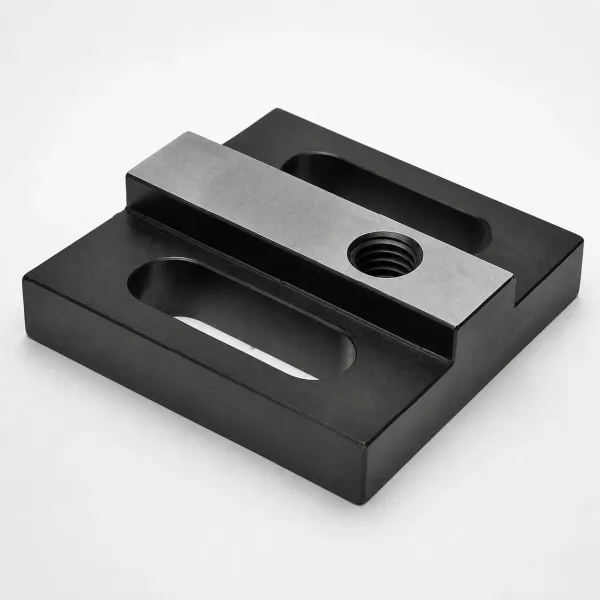
State which component standards the mold should follow: HASCO, DME, MISUMI, or a mix. The standard determines the mold base, the ejector pins, the springs, and the guide systems, and it decides whether your tool room can buy replacements from any supplier in the world or only from the original manufacturer.
Standard series also set the price and lead time. Standard DME or HASCO bases and components are stocked and ship in days, while custom equivalents take weeks. A mold specified to standard series is cheaper to build and cheaper to maintain, and the RFQ should name the series so the quote reflects it.
Standards interact with precision. A standard mold base with guide pillars held to 10 to 20 µm of play will not hold a ±0.002 mm part tolerance, so the standards field and the tolerance field must be consistent. Our mold base specification guide covers the callouts that keep a precision base standard-compliant.
State the standard explicitly and the supplier complies. Leave it blank and the supplier uses whatever it stocks, which may be a proprietary series that locks your maintenance into one source. The standards field is a one-line clause that protects years of maintenance freedom.
Field 9: Documentation Needs
State the documentation package in the RFQ: PPAP Level 3 where required, steel certificates, CMM reports, trial reports, and sample parts. Documentation is part of the mold's value, and it should be priced into the quote, not requested after the mold ships and treated as a favor.
PPAP is the framework for automotive and regulated programs. A PPAP Level 3 submission requires material certificates, dimensional reports, process data, and capability studies, and the mold maker's documentation becomes your PPAP package. State the PPAP level in the RFQ and the supplier plans the evidence trail from the start.
Steel certificates are the baseline. Every cavity and core block should carry a certificate with the grade and heat number, and the RFQ should say the certificates are required deliverables. The certificate is the only proof the cavity is the steel you paid for, and our mold quote guide shows which lines to check.
CMM and trial reports close the loop. The CMM report verifies the critical dimensions against the drawing, and the trial report documents the T1, T2, and approval rounds with the corrections applied at each stage. Name the reports in the RFQ and the supplier produces them; leave them unnamed and the supplier produces the minimum that satisfies the PO.
Field 10: Delivery Terms
State the delivery destination, the incoterm, and the payment terms. Delivery terms decide freight, insurance, customs, and who owns the risk at each point, and they belong in the RFQ so the quote includes the real logistics cost instead of a default.
Payment terms should be stated or negotiated at RFQ time. Typical mold terms run 30/40/30 or 50/50 with milestones tied to DFM approval, trial approval, and shipment. State your preferred terms in the RFQ and the supplier quotes against them; a supplier that insists on full payment before trial results is a red flag covered in our manufacturer selection guide.
Also state the destination country and any import requirements. Mold bases and components ship as separate lines, and the incoterm changes where the buyer's responsibility starts. A quote on EXW terms and a quote on DDP terms are different numbers that describe the same mold, and the comparison only works when the terms match.
Finally, state the acceptance criteria: what makes the mold approved, the trial results, the CMM report, the sample parts, and the sign-off process. An RFQ that defines acceptance produces a mold that is approved on evidence; one that does not produces a mold that is approved on argument.
What to Avoid in an RFQ
The ten fields are the positive list; these four habits are the negative list. They are the fastest way to convert a precise quote into guesswork:
- Sending only a 2D PDF without 3D data. Geometry cannot be reviewed, shrink cannot be checked, and the quote is built on a picture.
- Stating a target price without volume or material. The supplier either guesses scope or gold-plates the quote to cover every possibility.
- Asking for "best price" without scope. The lowest price wins, and the scope that was never defined arrives as a change order.
- Bundling unrelated molds in one RFQ. Each mold deserves its own scope, steel, cavity count, and price, and bundling hides the comparison.
One more habit to avoid: sending the RFQ to twenty suppliers. The quote quality falls as the list grows, because the suppliers sense the race to the bottom. Three to five well-chosen suppliers, scored on the eight checks, produce better quotes than twenty suppliers scored on price.
How to Compare Quotes
Compare like for like, and the RFQ is what makes the comparison possible. Same cavity count, same steel, same standards, same milestones, same documentation scope: those are the axes of a fair comparison, and each one traces back to a field in your RFQ. A quote that differs on an axis is a different mold, not a different price.
| RFQ field | Why it matters | If missing from the quote |
|---|---|---|
| 1. Part file | Enables DFM review and geometry pricing | Hedged price, no review |
| 2. Material grade | Sets shrink, steel, gate, cycle | Wrong shrink, wrong steel |
| 3. Volume and runs | Sets cavity count and runner type | Wrong cavity count, wrong runner |
| 4. Weight and size | Sets machine and mold base | Wrong press, wrong base size |
| 5. Cosmetics | Sets gate type and polish | Visible gate scars, wrong finish |
| 6. Tolerances | Sets machining and verification level | Dimensions fail at trial |
| 7. Lead time | Sets schedule and milestones | Late delivery, no trial plan |
| 8. Standards | Sets component series and maintainability | Proprietary parts, locked maintenance |
| 9. Documentation | Sets evidence package and PPAP | Audit failures, missing certs |
| 10. Delivery terms | Sets incoterm, payment, acceptance | Scope and risk mismatch |
← swipe to scroll →
Comparison axes follow typical mold procurement practice. Add program-specific axes where your requirements demand them.
Then weigh the non-price lines. A quote with DFM feedback, a cost breakdown, and structured trial milestones is worth more than a bare number, because the difference shows up later as rework or surprise charges. The cheapest quote that matches the scope exactly is the right choice; the cheapest quote that differs on scope is a trap.
Finally, test the quotes against reality. Run the hot runner payback from our runner comparison guide, check the mold budget against the cost levers guide, and confirm the price band against the market range in injection mold cost guide. The RFQ that produces comparable quotes is the RFQ that produces a defensible decision.
Frequently Asked Questions
Q1. Is a 3D file really necessary, or is a 2D PDF enough?
The 3D file is necessary for a complete quote and DFM review. Geometry, shrink, draft, and gate placement cannot be verified from a raster PDF, and a quote built on a PDF is built on assumptions. Send STEP or IGES plus the 2D drawing with tolerance callouts.
Q2. What if I do not know the annual volume yet?
State your best estimate and the uncertainty. A supplier can quote a range of cavity counts against a volume range, which is more useful than a quote made on a blank field. Update the volume before the mold order and the cavity count gets corrected while it is still cheap.
Q3. Should I send my target price in the RFQ?
Only with the full scope attached. A target price without volume, material, and tolerances invites either guesswork or gold-plating. With a complete RFQ, a stated budget range helps the supplier propose the cavity count and steel that fit it.
Q4. How many suppliers should I quote?
Three to five, chosen for capability, not lowest price. More suppliers degrades quote quality and comparison clarity. Score them on the eight checks from our manufacturer selection guide, then compare like-for-like quotes.
Q5. How fast should I expect a response to a complete RFQ?
DieStrike answers complete RFQs within 24 hours with DFM feedback, a cost breakdown, and trial milestones. A supplier that needs two weeks to answer a complete RFQ will need two weeks for every decision that follows.
The Bottom Line
Your RFQ quality determines your quote quality, and ten fields carry the whole conversation: part file, material, volume, weight, cosmetics, tolerances, lead time, standards, documentation, and delivery. Fill all ten and suppliers quote precisely, review honestly, and compare fairly. Leave fields blank and the assumptions become change orders.
Send a complete RFQ to DieStrike and get the written DFM review, a cost breakdown, and trial milestones within 24 hours. Use the contact page to start, and when the quotes come back, our mold quote guide shows you exactly which lines to read before you sign.
KEEP READING
Related Reading
How to Choose a Mold Manufacturer: 8 Checks Before You Sign
Choosing a mold manufacturer means choosing production reliability.
Read articleArticleHow to Read a Mold Quote: Line by Line
Read a mold quote like a buyer: 10 steps from scope lock to PO — cavities, steel grades, tolerances, lead time, change…
Read articleArticle5 Mold Cooling Channel Design Tips for Faster Cycles
Mold maker's 5 cooling channel design rules: channel-to-cavity distance 2-2.
Read articleArticle5 Shrinkage Compensation Rules for Mold Design
Shrinkage compensation decides mold accuracy. Five rules: material rates from 0.3% to 2.
Read articleNEXT STEP
Ready to Start Your Mold?
Send us your element dimensions or part numbers — our team responds within 24 hours with pricing and lead time.

Written by
Ray ChanMold Buyer's Guide Author · Precision Mold Manufacturing Specialist. Ray helps global importers, distributors and OEMs source factory-direct molds and mold parts.