
Hot Runner vs Cold Runner: Which Is Right for Your Mold?
Table of Contents
A buyer places the same part with two mold makers. One quotes a cold runner mold at $18,000 with a 28-second cycle and 18% runner scrap. The other quotes a hot runner mold at $31,000 with a 20-second cycle and zero scrap. The buyer picks the cheaper mold, and by year two the cold runner mold has burned through the $13,000 price difference in resin and machine time. That is the entire hot versus cold runner decision in one story: it is a payback calculation, not a preference, and the numbers change with every part.
Hot runner and cold runner are the two ways to deliver melt from the machine nozzle to the cavity, and the choice changes your cycle time, your part cost, and your gate marks. This guide lays out how each system works, compares them on the numbers that matter, and gives you the payback math to decide per program. The rule of thumb is simple: hot runners win above roughly 100,000 parts per year, cold runners win below it, and every exception is explained by the part geometry or the resin.
The decision is usually made once, at quoting, and locked into the mold for its whole life. A cold runner mold can be retrofitted to a hot runner later, but the retrofit costs most of a new mold. So the analysis has to be right the first time, and it has to include the costs nobody writes on the quote: regrind handling, cycle-time machine rates, and the labor of trimming gates.
The Snapshot
- A cold runner solidifies with each shot and is trimmed off, wasting 10-30% of the material in the runner.
- A hot runner keeps melt liquid to the cavity, cutting scrap to near zero and eliminating gate scars.
- Hot runners add $3,000 to $15,000+ in tool cost (typical), and pay back fastest at high volume and high cavity count.
- The crossover volume is roughly 100,000 parts per year: hot above, cold below (typical practice).
- DieStrike quotes both systems with a written payback estimate and 24-hour DFM review before you commit.
The Basic Difference
A cold runner delivers melt through a sprue and runner that solidify with each shot, are ejected with the parts, and are trimmed off after the mold opens. A hot runner replaces the solidifying runner with a heated manifold that keeps the melt liquid all the way to the cavity, so there is no sprue, no runner scrap, and no gate scar to trim.
The trade is hardware versus consumables. A hot runner adds a manifold, nozzles, heaters, thermocouples, and a temperature controller, which is real tool cost. A cold runner adds material and labor to every shot for the life of the program: the resin in the runner, the machine time to cool it, and the labor to separate and regrind it.
Both systems fill the same cavities with the same resin. The difference is where the melt stops being liquid and what happens to everything downstream of that point. Everything else, cavity steel, cooling, ejection, is the same mold.
The right way to choose is arithmetic. Estimate the per-part cost of the cold runner, the added tool cost of the hot runner, and the annual volume, and the crossover point falls out. The sections below give you the numbers to run that math on your own part.
How a Cold Runner Mold Works
In a cold runner mold, melt flows from the machine nozzle through a sprue bushing into the sprue, then through a runner system, usually in the parting plane, and into each cavity through a gate. The whole network is unheated, so it cools and solidifies with the parts. On ejection, the parts come out attached to the runner, and the runner is separated, trimmed, and dropped into a regrind bin.
The runner geometry is chosen by the resin and the part. Standard trapezoidal or full-round runners deliver melt to each cavity, and balance is the first design rule: every cavity must fill at the same pressure and time, or the mold produces short shots in one cavity and flash in another. Balance tolerances in production typically hold cavity weight spread within 0.3 to 0.5% (typical practice).
The gate is where the cold runner shows its cost. Every gate leaves a vestige, a small witness mark where the runner was separated, and the vestige must be trimmed or polished if the surface is visible. Submarine gates break off below the surface, which hides the mark but adds trim tooling. Edge gates leave a scar that needs a trim operation on anything cosmetic.
Runner scrap is the recurring line item. A typical runner weighs 10 to 30% of the shot, depending on cavity count and part size, and that material is paid for, dried, molded, trimmed, and reground on every cycle. Regrind comes back into the process at a percentage, typically capped at 10 to 25% of the feed, which means most runner material is effectively lost value plus handling cost.
How a Hot Runner Mold Works
In a hot runner mold, melt flows from the machine nozzle into a heated manifold, which distributes it to heated nozzles that deliver melt directly to each cavity. The manifold temperature is held by cartridge heaters and thermocouples, zone by zone, so the melt never freezes between shots. The gates freeze only at the cavity face, and the next shot pushes the frozen gate plug through.
The system is built in zones because temperature control is the whole game. A manifold with 8, 16, or 32 drops is divided into zones, typically one per drop or one per drop group, each with its own heater, thermocouple, and controller setpoint. Zone-to-zone balance holds the melt at the resin's processing window, typically within ±3-5°C of setpoint (typical practice), which is what keeps every cavity filling identically.
Gate type determines the vestige. A thermal gate, a pin-point or sprue gate, leaves a small, clean mark that needs no trimming on most surfaces. A valve gate mechanically pins the gate shut at the end of fill, which gives a flat, flush gate mark and also lets the mold pack multiple cavities in sequence. Valve gates are the standard choice for cosmetic parts and large multi-cavity automotive molds.
The hot runner adds service points, not just cost. Heaters, thermocouples, and seals are consumables with a service life, and a manifold leak or a dead zone is a mold downtime event. That is why the maintenance discipline matters, and our seven hot runner maintenance checks are the pre-run list our service team uses before every production start.
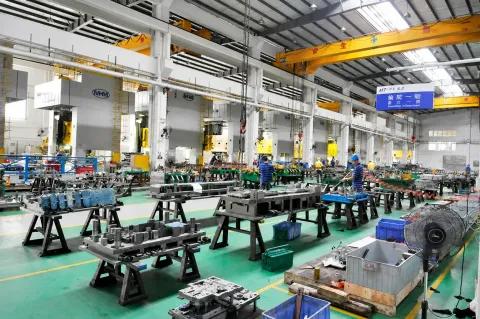
Hot vs Cold Compared
The table below puts both systems side by side on the factors that decide part cost. Read it as a map of where the money goes, then use the payback section to turn it into a decision.
| Factor | Cold Runner | Hot Runner |
|---|---|---|
| Material waste | Runner 10-30% of shot | Near zero |
| Gate mark | Visible, needs trimming | Clean, no trim on most surfaces |
| Cycle time | Longer, runner must cool | Shorter, 10-25% typical gain |
| Tool cost | Baseline | +$3,000 to $15,000+ |
| Maintenance | Simple, no heated parts | Heaters, seals, zones to manage |
| Regrind handling | Every shot, capped feed ratio | None |
| Color changes | Fast purge | Slow, purge material required |
| Residence time risk | Low | Thermal degradation if oversized |
| Best volume band | Low to medium | Medium to high |
← swipe to scroll →
Values are typical industry practice. Confirm cycle, scrap, and tool cost numbers with your mold maker for your specific part.
Cycle Time and Machine Cost
Cycle time is where the hot runner earns its keep. In a cold runner mold, the runner must cool enough to eject rigid, and the runner is often the thickest section in the mold, which makes it the last to freeze. In a hot runner mold, only the part cools, so the cycle shrinks to the part's cooling time. Typical gains run 10 to 25% (typical practice), and on thin-wall parts the gain is larger because the part cooling is short and the runner dominates.
Machine time has a price. A 300-ton press at a typical $60 to $90 per hour machine rate costs $1.00 to $1.50 per minute. A 5-second cycle saving on a 20-second cycle is a 25% output gain on the same press, which means the same mold capacity produces 25% more parts per shift. On a 100,000-part program, that is meaningful capacity, or a smaller press, or a later second shift.
The cycle math compounds with cavity count. A 32-cavity mold that drops from a 24-second cold cycle to a 19-second hot cycle produces 4,600 more parts per day at typical uptime assumptions, which is a scheduling fact, not a sales pitch. High-cavity molds are where the hot runner's cycle advantage shows up fastest.
Cold runner molds are not slow by design. A well-designed cold runner with a short, balanced runner can hold its own on cycle, and on small parts the runner may be thin enough to freeze with the part. The payback calculation should use the actual runner design, not a generic assumption, which is why the DFM review should state the projected cycle for both options.
Material Waste and Regrind
Resin is the recurring cost that everyone under-estimates. At a typical $1.50 to $4.00 per kg for engineering thermoplastics, a 20 g shot with an 18% runner wastes 3.6 g of resin per cycle. On 500,000 cycles, that is 1,800 kg of material paid for and mostly lost, $2,700 to $7,200 in resin alone, before handling, drying energy, and regrind labor.
Regrind is not free material. Runner regrind is typically capped at 10 to 25% of the feed to protect part properties, so the majority of the runner is not recycled into the same part at all. It is sold as scrap, stored, or burned into lower-value parts. The regrind percentage also drifts part quality: regrind changes melt flow, which changes fill, which changes dimensions, which is why controlled programs run virgin-plus-fixed-ratio rather than free regrind.
Labor is attached to the runner every shot. Someone or something separates the runner, trims the gates, and loads the regrind, and on a visible-surface part, gate trimming is a hand operation. Trim labor typically adds 1 to 3 cents per part on cosmetic parts (typical practice), which on a million parts is $10,000 to $30,000 of labor that a hot runner eliminates.
The scrap comparison is not zero versus 18%, it is zero versus the fully loaded cost of the runner: resin, energy, labor, and quality risk. That full-loaded number is what belongs in the payback calculation, and it is why the hot runner often pays back faster than the tool cost delta suggests.
The Payback Calculation
Payback is the difference in per-part cost multiplied by annual volume, compared with the difference in tool cost. The table below runs a representative example so the method is concrete; substitute your own part weight, cycle, scrap, and tool delta.
| Input | Cold runner | Hot runner | Delta |
|---|---|---|---|
| Tool cost (typical) | $18,000 | $31,000 | +$13,000 |
| Cycle time | 28 s | 21 s | -7 s |
| Machine rate (typical) | $70/h | $70/h | 0 |
| Machine cost per part | $0.054 | $0.041 | -$0.013 |
| Resin per shot incl. runner | 23.6 g (18% runner) | 20 g | -3.6 g |
| Resin cost per part (at $2.50/kg) | $0.059 | $0.050 | -$0.009 |
| Trim labor per part | $0.015 | $0.000 | -$0.015 |
| Total per-part cost | $0.128 | $0.091 | -$0.037 |
| Annual volume | 300,000 | 300,000 | 0 |
| Annual savings | - | - | $11,100 |
← swipe to scroll →
Illustrative example using typical rates. Your payback depends on part weight, cycle, machine rate, resin price, and the actual tool quote.
In the example, the $13,000 tool delta pays back in about 14 months of production, and every year after that the hot runner saves $11,100. At 500,000 parts per year the payback drops under 9 months; at 50,000 parts per year it stretches past 5 years, which is the crossover logic in action.
The sensitivity rules are simple. The payback shortens with volume, resin price, machine rate, and cavity count, and it lengthens with tool cost delta. Parts that are small relative to their runner, which is most connector and cap parts, have high scrap percentages and pay back fast. Parts that are large relative to their runner barely care.
When the Hot Runner Wins
The hot runner wins when the per-part savings beat the tool delta within the program life. The typical crossover sits near 100,000 parts per year, but the geometry can move it in either direction, and these four situations push it hot:
- High annual volume, typically 100,000+ parts per year, where a few cents per part compounds into the tool delta quickly.
- Cosmetic parts where gate scars are unacceptable. A visible vestige on a Class A surface forces a trim operation that the hot runner eliminates at the gate.
- Thin-wall parts needing fast, balanced fill. The hot runner feeds every cavity at the same temperature and pressure, which is why multi-cavity thin-wall molds almost always go hot.
- Multi-cavity programs, 16, 32, or 64 cavities, where a cold runner would dominate the shot weight and the cycle. At 64 cavities the runner can outweigh the parts.
Automotive, appliance, and electronics programs hit all four conditions at once, which is why those industries run hot as the default for anything long-lived. Our multi-cavity automotive hot runner guide walks through zone layout, gate type, and cavity count decisions for exactly those programs.
When the Cold Runner Wins
The cold runner wins when the volume or the geometry never lets the savings catch the tool delta. These five situations push it cold:
- Prototyping and low-volume production. A 5,000-part pilot run never pays back a hot runner, and a cold runner mold is faster to build and cheaper to revise.
- Materials sensitive to residence time. Some resins degrade when held at melt temperature in a manifold, especially flame-retardant grades and some bio-plastics. A cold runner keeps the residence time short by design.
- Frequent color changes. A cold runner purges in a few shots; a hot runner needs purge material and time to flush every zone. Programs that change color weekly are cold runner programs.
- Tight tooling budgets where the payback is too slow. If the program horizon is shorter than the payback period, the hot runner is a loan, not an investment.
- Insert molding and multi-material jobs where the runner is part of the design and the melt path is short anyway.
There is no shame in a cold runner. Most of the world's molds are cold runner molds, and a well-designed cold runner with a balanced layout and submarine gates produces perfectly good parts at low tool cost. The mistake is choosing it by habit instead of by payback.
Hybrid Options: Hot Sprue and Valve Gates
The decision is not always binary. A hot sprue bushing keeps the sprue molten while the runner stays cold, cutting the sprue scrap and its cooling time without a full manifold. It is a common first step for single-cavity molds and for parts with a single gate, and it captures part of the hot runner benefit at a fraction of the cost.
Valve gates bring a process advantage beyond cosmetics. Because a valve gate closes mechanically, the mold can pack each cavity individually, which improves dimensional control on large parts and multi-cavity molds. Valve gate molds also handle higher injection pressures cleanly, which matters for thin-wall engineering parts.
Insulated runners are a niche middle ground. The runner is sized large and surrounded by insulating melt so the core stays molten between shots, but they are sensitive to cycle interruptions and are mostly historical. For a practical program, the choice is cold, hot sprue, or full hot, and the payback math above covers all three.
Whatever the choice, the DFM review should state the projected cycle and scrap for the option quoted, and the quote should separate the hot runner hardware line from the mold build line. Our gate design best practices guide covers the vestige and sizing rules that apply on either side of the decision.
Frequently Asked Questions
Q1. At what volume does a hot runner pay for itself?
Typically around 100,000 parts per year, but the real crossover depends on part weight, runner percentage, cycle, machine rate, and resin price. Run the payback table in this guide with your own numbers before deciding.
Q2. Do hot runner molds always have faster cycles?
Usually 10 to 25% faster, because only the part cools instead of the part plus runner. The gain is largest on thin-wall parts and high-cavity molds, and smallest when the runner was already thin enough to freeze with the part.
Q3. Are hot runner molds harder to maintain?
Yes, they add heaters, thermocouples, seals, and zones to manage. The added maintenance is real and should be in the total cost of ownership, but the per-part savings usually outweigh it at volume. Run the seven pre-run checks before every production start.
Q4. Can a cold runner mold be converted to hot later?
Technically yes, but the retrofit costs most of a new mold because the plate stack, cavity layout, and gate positions change. Decide at quoting, not after production starts.
Q5. Which is better for a cosmetic part?
Hot, specifically with valve gates, because it eliminates the visible gate scar and the trim operation. If the volume is too low to pay back a hot runner, design the cold runner gate to a hidden surface and accept a small vestige.
The Bottom Line
The hot versus cold runner decision is payback math, not preference. A hot runner trades $3,000 to $15,000+ of tool cost for faster cycles, zero runner scrap, and clean gates, and it wins above roughly 100,000 parts per year on most programs. A cold runner wins on low volume, frequent color changes, and residence-time-sensitive resins.
Ask for both numbers in your DFM review: the projected cycle and scrap for each runner option, and the written payback estimate. DieStrike quotes both systems and builds the one the numbers pick. When the program goes to a hot runner, our hot runner systems page shows the standard drop and zone configurations we build.
KEEP READING
Related Reading
5 Mold Cooling Channel Design Tips for Faster Cycles
Mold maker's 5 cooling channel design rules: channel-to-cavity distance 2-2.
Read articleArticle5 Shrinkage Compensation Rules for Mold Design
Shrinkage compensation decides mold accuracy. Five rules: material rates from 0.3% to 2.
Read articleArticle5 Ways to Reduce Mold Cost Without Cutting Quality
Five proven ways to reduce injection mold cost without cutting quality: DFM before quoting, right-sized cavity count,…
Read articleArticle7 Gate Design Best Practices for Balanced Filling
Mold maker's 7 gate design rules for balanced multi-cavity filling: gate depth 50-80% of wall thickness, land 0.5-1.
Read articleNEXT STEP
Ready to Start Your Mold?
Send us your element dimensions or part numbers — our team responds within 24 hours with pricing and lead time.

Written by
Ray ChanMold Buyer's Guide Author · Precision Mold Manufacturing Specialist. Ray helps global importers, distributors and OEMs source factory-direct molds and mold parts.