
5 Ways to Reduce Mold Cost Without Cutting Quality
Table of Contents
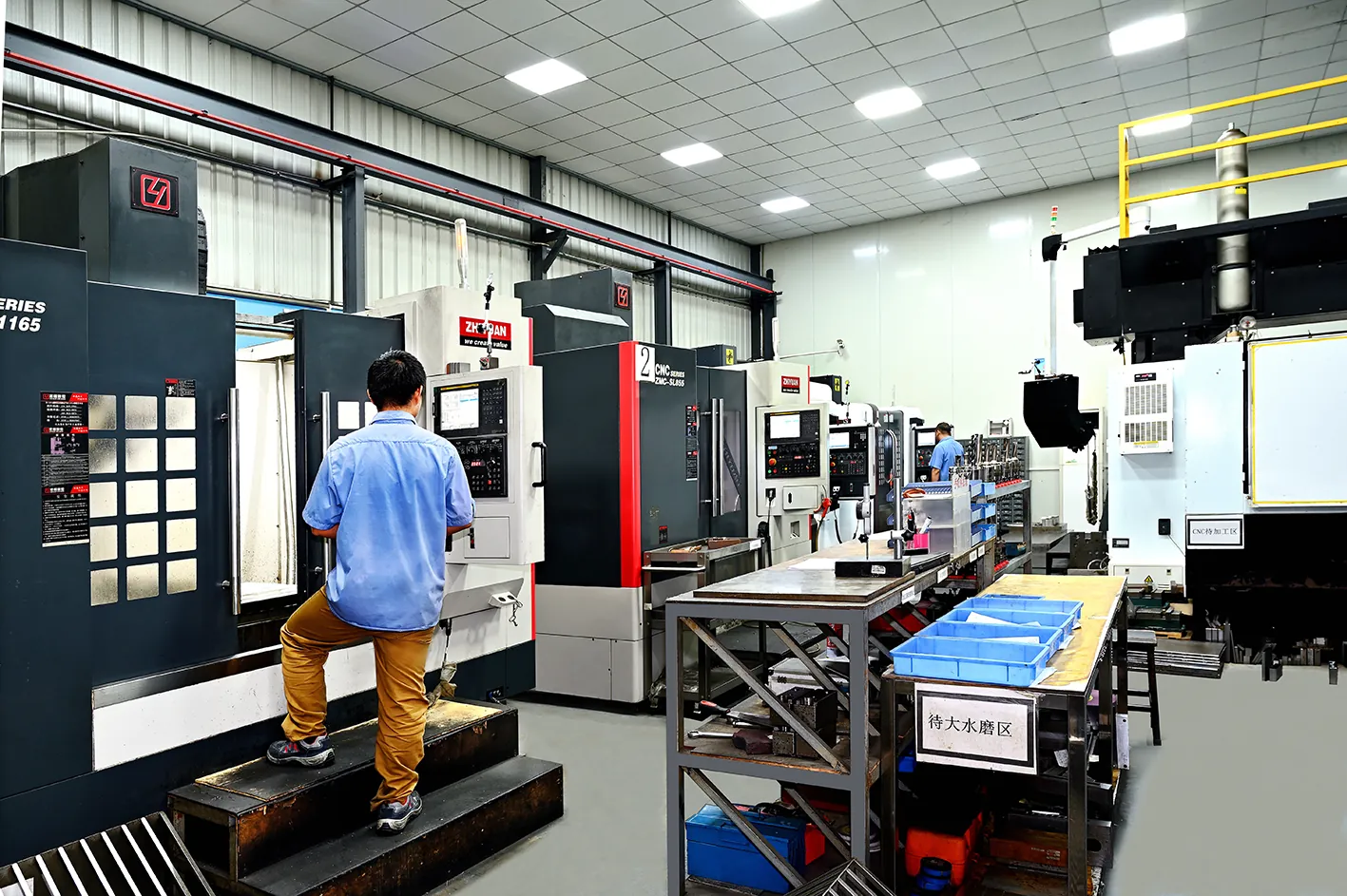
Buying a mold is not a single purchase. It is a stream of decisions that either compound into cost or cancel it out. A $30,000 mold that needs a $6,000 rework because a wall was drafted wrong costs more than a $40,000 mold that runs first time. In our shop, 120+ machines cut mold steel every day, and the tools that arrive on budget share the same five disciplines. This guide walks through them with the numbers that matter. The five levers are ordered by impact: DFM first because it is free, cavity count second because it moves the largest single number, components third because they compound across every mold, steel fourth because it is the most over-specified line item, and the iteration loop fifth because it protects the schedule that every other saving depends on.
The Snapshot
- DFM before quoting removes 5-15% of mold cost: a drafted wall or a relaxed tolerance costs nothing at CAD stage and thousands after steel is cut.
- Cavity count is a geometric decision: 2 cavities instead of 4 cuts mold cost roughly 30-40% while only doubling per-part cycle time on most programs.
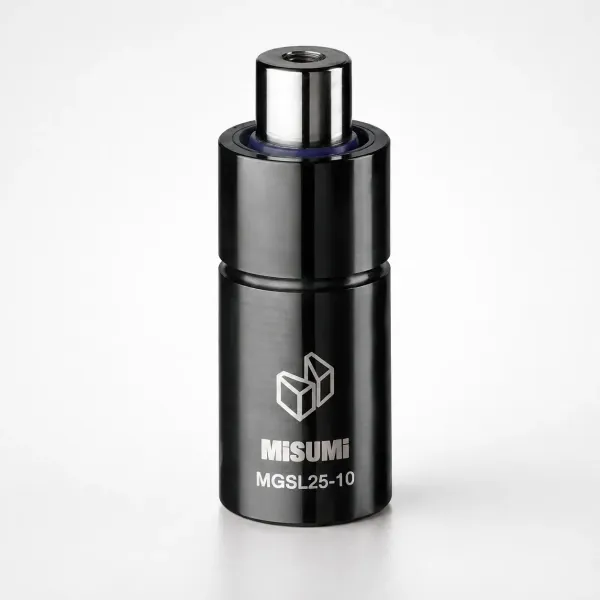
- Standard DME/HASCO/MISUMI components ship in 3-7 days and cost 40-60% less than customs; a typical mold carries 15-25 standard parts.
- Steel over-spec is silent waste: P20 at roughly $2.5-4/kg versus H13 at $6-9/kg matters when the program only needs 100,000 shots.
- A compressed iteration loop, 24-hour DFM feedback and one coordinated trial, protects the 15-20% of mold cost that lives in assembly, tryout and rework.
Where Mold Money Goes
Before cutting anything, split the quote into its natural buckets. On a typical 4-cavity production mold, machining of cavity and core blocks runs 30-40% of the total. The mold base itself, plates, guide pillars and bushings, runs 15-25%. Standard components such as ejector pins, springs, sprue bushings and interlocks add 10-15%. Assembly, polishing, tryout and documentation close out the remaining 20-30%.
Each bucket answers to a different lever. Machining cost follows part geometry and tolerance. Mold base cost follows size and brand. Components follow the ratio of standard to custom. Assembly and trial follow how clean the design was upstream. Cut across all five, and a typical 10-15% total saving is realistic without touching quality; cut only one, and the saving migrates into rework.
Way 1: DFM Before Quoting
The cheapest change in molding is the one made before steel is ordered. Every draft angle, wall thickness and tolerance on the drawing has a machining cost attached to it. A wall drafted at 1 degree instead of 0.5 degrees costs nothing to draw and saves the EDM and polishing time that a sticky part forces later. A flatness tolerance of 0.05 mm instead of 0.02 mm on a non-critical face can cut cavity finishing time by hours.
Send the part file to the mold maker before the RFQ, not with it. A proper DFM review reads the part for draft, wall balance, gate location, ejection and tolerance stack. Our DFM engineers return feedback within 24 hours, with each item ranked by cost impact. Items such as zero-draft textures, deep ribs with no draft, or a critical dimension placed across the parting line move the quote more than any other single factor.
The rule is simple: ask the mold maker to quote the part as designed, then quote the part as it should be designed. The gap between the two is the cost of skipping DFM, and it is typically 5-15% of the mold price, plus schedule days that a rework cycle would have eaten.
Way 2: Right-Size the Cavity Count
Cavity count is the fastest way to move mold cost, and the most misused. Adding cavities multiplies mold base size, steel volume, machining hours and component count, while dividing per-part cycle time. A 4-cavity mold typically costs 60-70% more than a 2-cavity version of the same part, not double. The economics only favor more cavities when annual volume justifies the tooling spend.
Work the crossover with a concrete example. A connector housing in PA66 GF30 runs a 35 second cycle on a 160-ton press at a machine rate of roughly $25-40 per hour. A 2-cavity mold at 35 seconds per cycle produces about 1,600 parts per 8-hour shift at 95% efficiency. A 4-cavity mold produces 3,200. If the program needs 80,000 parts per year, the 2-cavity tool runs 50 shifts a year and the 4-cavity tool runs 25. The machine-hour saving is real but small compared with the 60-70% tooling delta, so the decision belongs to the program horizon, not to optimism.
| Cavity count | Relative mold cost | Parts per 8h shift | Best fit |
|---|---|---|---|
| 1 cavity | Baseline (1.0x) | ~800 | Prototypes, low volume, large parts |
| 2 cavities | ~1.5-1.6x | ~1,600 | 20k-100k parts per year |
| 4 cavities | ~1.6-1.7x of 2-cavity | ~3,200 | 100k-500k parts per year |
| 8 cavities | ~1.4-1.5x of 4-cavity | ~6,400 | 500k+ parts per year, thin-wall parts |
← swipe to scroll →
Typical industry relationships; verify against your program volumes and part geometry.
Way 3: Standard Components, Not Customs
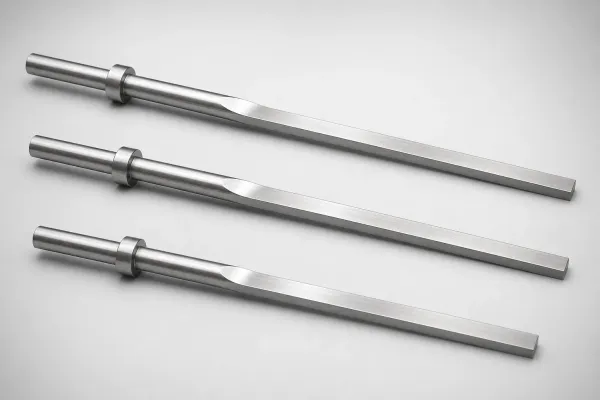
A mold is 15-25 standard parts wearing custom geometry. Ejector pins, springs, sprue bushings, leader pins, bushings, interlocks and limit switches are catalog items from DME, HASCO or MISUMI, and they arrive in 3-7 days. The moment a component is machined custom, it leaves the catalog, loses interchangeability and gains a 40-60% premium plus a 2-4 week lead time.
Component choice is where quotes diverge fastest. A standard ejector pin with a 3 mm stem and 0.01-0.02 mm clearance class costs a few dollars from the catalog. A pin with a custom head, a stepped length and a drawn thread costs 40-60% more and takes 2-4 weeks instead of 3-7 days. Multiplied across 15-25 components per mold, the spread is real money, and the custom parts are the ones that hold up maintenance later.
Two habits keep components standard. First, design the mold around catalog sizes: pin diameters in 0.1 mm steps, spring free lengths in 10 mm steps, standard plate thicknesses from the mold base catalog. Second, make the mold maker commit to standard parts in the quote, item by item. If an ejector pin sits in a standard bore with a standard clearance class, the replacement part is a phone call, not a machining job.
Our mold bases and component kits are specified from DME/HASCO/MISUMI catalogs as the default, with customs only where geometry demands it, such as core pins with customer-specific head shapes. On a typical 4-cavity tool this discipline holds component cost inside the 10-15% bucket and keeps standard replacement parts flowing in 3-7 days for the life of the mold.
Way 4: Match the Steel to the Program
Mold steel is sold by the kilogram and priced by its alloy. P20 runs roughly $2.5-4/kg, H13 $6-9/kg, and S136 or 420SS stainless $8-12/kg before machining. The machining cost multiplies the difference because hardened steel cuts slower and wears tools faster. Over-specifying steel for a 50,000-shot program spends money that buys nothing.
The matching rule follows volume and resin. P20 pre-hardened at 28-32 HRC serves prototype and low-volume tools, and it machines fast. H13 at 44-52 HRC, or AISI P20 nitrided, carries production tools with abrasive resins. S136 stainless, hardened to 48-52 HRC, serves medical and optical parts where corrosion resistance and polishability decide. High-cavity, long-life automotive tools go further, with H13 or S7 cores heat-treated to 50-58 HRC and cavity details in tool steel hardened to HRC 62 where wear is concentrated.
Ask one question for every block in the quote: what does this steel buy that the program actually needs? If the answer is margin, downgrade it. If the answer is shot life, keep it. The discipline applies at the detail level too, one cavity insert in premium steel surrounded by a standard base is often the cheapest way to get hard-wearing cavity details without paying for an all-premium tool.
Way 5: Compress the Iteration Loop
Rework is mold cost that was spent twice. A DFM miss caught at trial costs a machining cycle, a welding pass or a new insert, plus the schedule. Compressing the loop means fewer, faster iterations: DFM feedback in 24 hours, a complete mold card at handover, and a coordinated T1 trial where the part is measured against the drawing while the mold is still on the press.
Three specific habits protect the 20-30% of mold cost that lives in assembly and tryout. First, agree the acceptance criteria in the RFQ: which dimensions are critical, which tolerances are statistical, and what the trial gate looks like. Second, run the first trial with the molder, the mold maker and the part designer in the same review, so a dimensional deviation is judged against intent, not against a static print. Third, cap the trial loop at two or three iterations by front-loading the fixes; a mold that enters T1 with all DFM items closed typically exits in one round.
We quote mold trial and sampling as a defined stage, with a mold card covering steel grades, heat treatment, component list and maintenance intervals. Programs managed this way see 90%+ of molds pass T1 sampling without additional tooling changes, and the schedule stays inside the quoted 2-5 week lead for standard tooling. On the automotive side, the same discipline carries IATF 16949 documentation, PPAP-level reporting and the traceability records that tier-1 customers for TE Connectivity, Amphenol, Luxshare and Dongshan Precision require.
Where the Money Goes: A Worked Split
The table below maps a typical 4-cavity production mold to its cost buckets and the lever that moves each one.
| Cost bucket | Share of mold price | Reduction lever | Typical saving |
|---|---|---|---|
| Cavity/core machining | 30-40% | DFM: draft, wall balance, tolerance placement | 5-10% |
| Mold base | 15-25% | Right-sized plates, standard catalog base | 3-5% |
| Standard components | 10-15% | DME/HASCO/MISUMI catalog, no customs | 4-6% |
| Assembly, polish, tryout | 20-30% | Clean DFM, defined trial gate, one coordinated T1 | 5-8% |
← swipe to scroll →
Typical ranges from published mold cost studies and shop records; your program may differ.
What Not to Cut: The 80/20 Rule
Cost reduction has a floor. Cooling design is not a line item to shave; balanced cooling directly sets cycle time and part quality, and a 5 second cycle improvement on a 30 second cycle is worth more over the tool life than any component saving. Ejection design is not a line item either; under-sized ejector pins cause marks and sticking, and both scrap parts at the worst possible moment.
Maintenance is the sixth lever hiding inside the first five. A mold with a maintenance schedule in its mold card, lubricated slides, checked torques and logged shot counts, runs 500,000 shots at a predictable cost. The same mold without the schedule fails at half the life, and the failure lands as emergency repair, urgent insert replacement and unplanned downtime, all at premium rates. Specifying the maintenance interval at the quote stage, not after the mold is in production, costs nothing and protects the whole investment.
The 80/20 rule for mold spend is simple. Twenty percent of the decisions, draft, cooling, ejection, gate location and steel grade, control eighty percent of the cost, quality and schedule outcomes. Cut the other eighty percent of line items with discipline, and leave the twenty percent alone. A mold built on standard components, right-sized cavities and a clean DFM is cheaper and more reliable than a mold that was negotiated down by 10% and reworked once.
The Hidden Cost of a Cheap Quote
A low quote is not a low cost. The difference is what the quote leaves out. A quote that prices the mold, the standard components, the trial loops and the mold card is a complete number. A quote that prices only the mold and the steel is a down payment, and the rest arrives as change orders, trial time and rework after the tool is in the press.
Three omissions push cheap quotes over budget. The first is steel specification: a quote that names the grade, hardness and heat treatment for every block can be compared, one that says tool steel cannot. The second is trial coverage: a mold that reaches T1 with all DFM items closed needs one trial loop, while a mold that skips DFM needs two or three, and each loop costs machine time, melt and labor. The third is the mold card: maintenance intervals, component lists and wear limits are documentation, not decoration, and they decide whether the tool runs 500,000 shots or 50,000.
Run the numbers on one example. Mold A quotes at $32,000 with named H13 cores, standard components and one coordinated trial. Mold B quotes at $28,000 with unnamed steel and trial time excluded. Mold B needs a second trial round at roughly $1,500-3,000, a core insert reworked after 80,000 shots because the steel was underspec at an insert cost of $800-2,000, and a week of schedule. The real total lands above Mold A, and the part quality was worse for the whole run. The cheap quote was the expensive mold.
A 10-Point Mold Cost Decision Checklist
Use this checklist before you sign any mold quote. Each item is a cost lever with a pass condition.
- Part file sent for DFM before quoting, and every DFM item has a response, not a silence.
- Draft angles stated on the drawing, with at least 0.5-1 degree per side on walls and bosses, and 1-1.5 degrees on textured surfaces.
- Cavity count justified by annual volume, with the crossover math written down.
- Mold base and plate sizes from the catalog, not one-off dimensions.
- Component list names DME, HASCO or MISUMI part numbers, with no unnamed customs.
- Steel grade and hardness named for every block, matched to program volume and resin.
- Cooling layout shown in the proposal, with channel size and circuit count per cavity.
- Trial and sampling included as a defined stage with acceptance criteria.
- Mold card included, covering heat treatment, component list, lubrication and maintenance intervals.
- Delivery date committed in writing, with standard tooling at 2-5 weeks and standard parts at 3-7 days.
Every unchecked box is a line item that will surface later, as a change order, a rework or a schedule slip. A quote that checks all ten is a quote you can compare on price, because the scope is identical.
FAQ
Q1. What is the cheapest way to reduce mold cost?
DFM before quoting. A drafted wall, a relaxed non-critical tolerance, or a gate moved to a cosmetic-neutral location costs nothing at CAD stage and removes machining hours, rework and trial loops. Mold makers with in-house DFM, like ours, return feedback within 24 hours and quote the corrected part, not the raw one.
Q2. How much does a mold cost for a typical part?
A single-cavity production mold for a small plastic part typically runs $5,000-15,000, a 2-cavity tool $8,000-25,000, and a 4-cavity automotive-grade tool $30,000-80,000 depending on steel, size and tolerance. The spread is mostly geometry, cavity count and steel, which is exactly what the five levers above control.
Q3. Are standard mold components lower quality than custom?
No. DME, HASCO and MISUMI catalog components are manufactured to interchangeability tolerances and come with documented hardness and clearance classes. Customs are only justified when geometry forces them, such as customer-specific core pin heads. Standard parts also mean 3-7 day replacement availability.
Q4. When should I choose more cavities even if the mold costs more?
When the annual volume makes machine time the bottleneck. If the program runs 500,000+ parts per year, an 8-cavity tool pays for its higher upfront cost through cycle time and machine utilization. Below 100,000 parts per year, a 2-cavity tool is usually the economic sweet spot.
Q6. Does better cooling design cost more?
Conformal or well-placed straight cooling adds design hours, not machining hours, and it pays back in cycle time. A 5 second cycle saving on a 30 second cycle is roughly 14% more output from the same press, which beats any 2% component discount over the life of the tool. In our molds, cooling circuits are sized for the part geometry, with channel diameters from 6 mm up and circuit counts matched to cavity count.
Q7. When does a cheap mold become the expensive option?
When the savings are taken from steel grade, component quality or trial coverage. A mold that runs 80,000 shots before a core insert fails at $800-2,000 each replacement, plus downtime, is more expensive than the correctly specified tool that runs 500,000. Cheap upfront with a short life is the definition of a false economy, and it is the reason our quotes name every steel grade and every standard component.
Q5. What certifications should a cost-competitive mold maker hold?
For automotive programs, IATF 16949 is the baseline quality system. Our shop runs IATF 16949 with 120+ machines, holds critical mold dimensions to ±0.005 mm and component geometry to ±0.002 mm, and supplies tier-1 programs for TE Connectivity, Amphenol, Luxshare and Dongshan Precision.
The Bottom Line
Mold cost is decided in design, not in negotiation. DFM before quoting, right-sized cavities, standard components, matched steel and a compressed trial loop compound into a 10-15% saving with zero quality loss. A tool that runs first time is always cheaper than a tool that was bargained down and reworked.
If you want a mold cost review before you commit, send us your part drawing and program volume. DieStrike returns a DFM assessment within 24 hours and a quoted mold with the cost levers itemized. The quote names steel grades, heat treatment, standard component brands and trial coverage, so the number you compare is the number you pay.
KEEP READING
Related Reading
5 Mold Cooling Channel Design Tips for Faster Cycles
Mold maker's 5 cooling channel design rules: channel-to-cavity distance 2-2.
Read articleArticle5 Shrinkage Compensation Rules for Mold Design
Shrinkage compensation decides mold accuracy. Five rules: material rates from 0.3% to 2.
Read articleArticle7 Gate Design Best Practices for Balanced Filling
Mold maker's 7 gate design rules for balanced multi-cavity filling: gate depth 50-80% of wall thickness, land 0.5-1.
Read articleArticle7 Signs Your Mold Base Needs Replacement
A guide pillar with 0.04 mm play can scrap a 32-cavity run in one shift.
Read articleNEXT STEP
Ready to Start Your Mold?
Send us your element dimensions or part numbers — our team responds within 24 hours with pricing and lead time.

Written by
Ray ChanMold Buyer's Guide Author · Precision Mold Manufacturing Specialist. Ray helps global importers, distributors and OEMs source factory-direct molds and mold parts.