
How to Budget an Injection Mold: 5 Cost Levers
Table of Contents
You approved a $42,000 injection mold quote in March. By the time the tool shipped, change orders for a higher-grade steel, two extra cavities, and a valve-gate hot runner had pushed the final invoice to $54,600 — a 30% overrun that quietly ate the margin on your first production run. That scenario is not an outlier. Budget overruns of 30-50% on injection mold projects are common enough to be the industry's worst-kept secret, and they almost never come from machining mistakes. They come from budgeting a lump sum instead of budgeting the five cost levers that actually drive mold price. This guide shows you what those levers are, what each one costs in real money, and how to build a mold budget that survives contact with the quote.
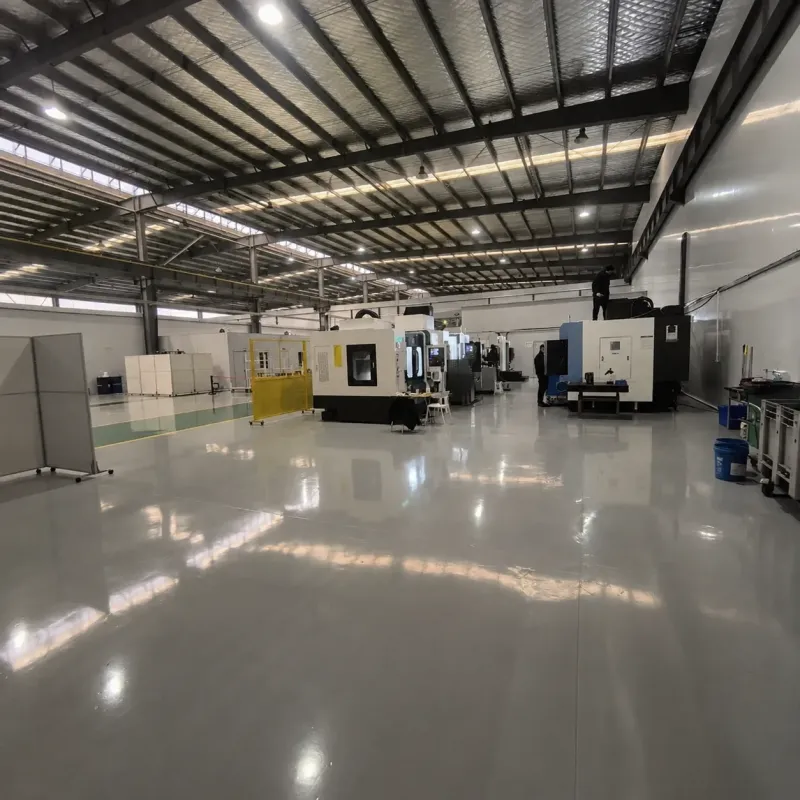
Here is the uncomfortable truth about mold budgets: the quote is rarely the problem. The problem is that most buyers budget a single number and let five variables move underneath it. The steel grade changes in a phone call. The cavity count changes after the volume forecast wobbles. Tolerances get tightened because "the customer asked." A hot runner appears on the final invoice because nobody priced it into the quote. Finishing work gets added at sampling. Every change looks small; the sum is a 30-50% overrun.
The Snapshot: What an Injection Mold Really Costs
Every serious mold cost conversation starts with a range, not a number. Published industry data puts the full spread of injection mold costs between $3,000 for a simple single-cavity prototype tool and $100,000+ for a 48-cavity hot-runner production mold. Within that spread, tools cluster by type (published):
- Single-cavity prototype or bridge mold: $3,000-$15,000
- Low-volume production mold (1-4 cavities, cold runner, pre-hardened steel): $15,000-$40,000
- Mid-volume production mold (4-8 cavities, hardened tooling): $40,000-$80,000
- High-cavitation hot-runner mold (16-48+ cavities): $80,000-$100,000+
- Insert, family, or multi-shot molds: quote-based, typically $50,000-$150,000+
In our quoting at DieStrike, roughly 80% of production mold quotes land between $15,000 and $80,000 (rule of thumb). Everything above that range is almost always driven by one of the five levers below — rarely by "a complicated part."
Where does the money actually go? The cost structure is remarkably consistent across suppliers (rule of thumb):
- Mold steel and heat treatment: 20-30%
- Machining (CNC, EDM, grinding): 30-40%
- Hot runner system (when specified): 15-25%
- Standards and components — mold bases, ejector pins, core pins, leader pins, springs, sprue bushings: 10-15%
- Mold design and DFM engineering: 5-10%
- Assembly, fitting, sampling, and trials: 10-15%
Two numbers anchor every budget conversation: total mold cost and cost per part. Mold cost is a fixed investment that amortizes across the tool's life; cost per part is what your competitors quote against. A $60,000 mold run over 1 million parts adds $0.06 per part in tooling alone — cheap. The same mold run over 50,000 parts adds $1.20 per part — often fatal for the product's margin. That arithmetic is why budgeting starts with the volume envelope, not with the drawing.
Worked example: a 4-cavity mold at $42,000 run over 400,000 parts adds $0.105 per part in tooling amortization. Add resin, machine time, and labor, and mold cost is typically 5-15% of the landed part cost (published). A 30% mold overrun on that program adds roughly $0.03 per part — survivable at 400,000 parts, painful at 40,000. Budget lever zero is therefore the volume number: it decides how much mold this product can afford. For a full line-item walkthrough with worked examples, see our complete injection mold cost breakdown.
Cost Lever #1: Mold Steel Selection — 20-30% of Mold Cost
The steel you spec controls more than the material line item. It sets the heat treatment schedule, the machining time, and the tool's usable life. Mold steel typically represents 20-30% of total mold cost (rule of thumb), and the grade ladder climbs fast:
- P20 / 718H pre-hardened (about HRC 28-36): the baseline. Fine for runs under roughly 500,000 cycles and most engineering plastics.
- H13 hot-work steel: roughly 20-30% more expensive than P20 (rule of thumb); hardened to HRC 45-52, it holds up better in abrasive and high-temperature resins.
- S136 / 420 stainless: a 30-50% premium over P20 (rule of thumb), effectively mandatory for corrosive resins and optically demanding parts.
- Full-hardened tooling to HRC 62: a 20-40% machining premium (rule of thumb) because hardened steel cuts slower, but tool life can triple — the right call for million-cycle programs.
The budgeting tactic is to match grade to lifecycle volume, not to intuition. Under 500,000 total cycles, a premium steel grade is usually a donation to the mold maker. Over 1 million cycles, underspecifying steel is how you end up buying a second mold you never budgeted for — and the second tool always costs more than the first, because the program is already live.
Steel choice also interacts with cycle time. Higher-thermal-conductivity grades cool faster and can shave seconds off each cycle. On a 15-second cycle, saving 2 seconds is roughly 13% more output from the same molding machine — a benefit worth more than the steel premium on high-volume programs (rule of thumb). Shrinkage and warpage behavior matters too: a steel with the wrong polishability or hardness for the resin can force rework at sampling, and rework is mold cost with no amortization at all.
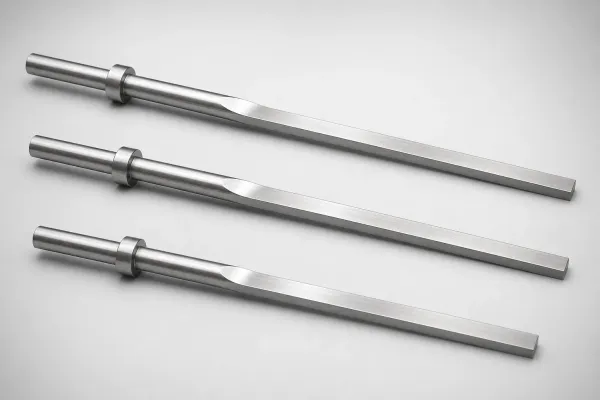
Component grades belong on the same page. Ejector pins, core pins, leader pins, and punches are wear parts that should be specified at or above the cavity hardness. At DieStrike we manufacture these in-house in HASCO, DME, and MISUMI dimensions, which keeps the replacement-cost line of your mold budget predictable for the life of the tool — no proprietary components, no captive pricing.
Cost Lever #2: Cavity Count — the Per-Cavity Cost Curve
Cavity count is the single biggest driver of mold price — and the most misunderstood one. The relationship is not linear. Each doubling of cavities typically adds 30-50% to mold price (rule of thumb), because the mold base grows, machining hours scale, and standards multiply, even though only some costs scale per cavity. Published quoting patterns look like this:
- 1 cavity: baseline mold price
- 2 cavities: +50-60% over single-cavity (published)
- 4 cavities: +90-120% (published)
- 8 cavities: +150-200% (published)
- 16-32 cavities: +300-500% (published)
The counterweight is per-part cost. Because cycle time is roughly constant per shot, per-part cost falls steeply as cavities rise — often 30-50% lower unit cost for every doubling of cavities at volume (rule of thumb). The break-even question is brutally simple: how many parts will this tool make in its life?
Use this rule of thumb as your starting point: about 100,000 parts per year → 4-8 cavities; 500,000+ parts per year → 16-32 cavities. Under 20,000 parts per year, a single cavity is usually the lowest mold cost per part over the tool's life, even though it looks expensive per shot.
Worked example: 8 vs 16 cavities on a 600,000-part-per-year program. The 8-cavity tool prices at roughly $58,000; the 16-cavity tool at roughly $92,000 — a 59% premium (published pattern). But the 16-cavity tool halves the shots per part, cutting machine-hour cost per part by roughly 30-40% at typical rates. The tooling premium pays back inside the first 200,000-300,000 parts. Under 150,000 parts per year, the same comparison usually favors the 8-cavity tool. That is the cavity lever in one paragraph.
Two cavity-count traps inflate mold budgets more than anything else. The first is over-cavitating for an annual volume that never materializes — you pay for 16 cavities and run 40,000 parts a year, and the extra mold cost never earns a single dollar back. The second is adding cavities to fix a cycle-time problem that actually belongs to cooling design or gating geometry. Fix the root cause in DFM, not in the cavity count; a well-designed 4-cavity tool will out-cycle a mediocre 8-cavity tool every time.
Cost Lever #3: Tolerance and Surface Finish — the Quiet Overrun
Tolerance is where mold cost balloons quietly, because every critical dimension tightened beyond standard adds machining, inspection, and fitting time. The published rule of thumb: tightening tolerance by one class adds roughly 10-20% to machining cost, and the curve steepens dramatically below ±0.02 mm:
- ±0.10 mm (general): baseline machining cost
- ±0.05 mm: +10-20% machining (rule of thumb)
- ±0.02 mm: +25-40% (rule of thumb)
- ±0.005 mm: precision-grinding territory, with CMM verification on every critical feature — quoted individually. DieStrike's capability is ±0.005 mm on machining and ±0.002 mm on precision components.
The budgeting discipline: tolerance every dimension in three buckets — functional, cosmetic, and "I copied it from the CAD model." Only functional dimensions need the tight callout. A first-article review that re-buckets your tolerances can cut 10-20% off machining cost before steel is ever ordered. That is precisely what a DFM review is for — run it before you ask for quotes, not after the mold is already in the machine.
Tight tolerances also mean inspection time. A feature called out at ±0.005 mm needs CMM verification, which adds hours and cost to the mold program and, later, to incoming QC on every production run (published). Mating surfaces and press-fit diameters earn their tolerance; cosmetic faces and hidden walls do not.
Surface finish sits on the same lever. SPI A1-A3 mirror polishing adds visible hours, and texture (chemical or EDM) typically adds $1,000-$5,000 per mold (published). If the cosmetic face is hidden in assembly, say so on the drawing — a B-2 finish instead of an A-2 finish is worth real money, and no mold maker will volunteer the downgrade for you.
Cost Lever #4: Hot Runner vs Cold Runner
A hot runner typically adds $8,000-$30,000+ to mold price depending on drop count and gating type (published) — often 15-25% of total mold cost (rule of thumb). Valve-gate systems cost more than thermal gates but deliver cleaner witness marks and better cosmetic control on visible parts.
The payback is real but conditional. Hot runners eliminate the runner from the shot, cutting resin consumption and cycle time; published payback analyses put the break-even between 50,000 and 150,000 parts (published), depending on resin price and cycle savings. Below that volume, a cold runner is usually the lower total mold cost — and it is dramatically easier to maintain and to change colors on.
Cold runner economics deserve a fair hearing too. Runners are regrindable in most commodity resins, but regrind changes material properties after a few passes; for glass-filled or flame-retardant grades, runner scrap is usually waste, and that is where hot runners earn their premium fastest (published). If your resin is expensive or your gate location is cosmetic-critical, push the payback math toward the low end of the 50k-150k range.
Budgeting rules for the hot-runner lever:
- Include the hot runner as a separate quote line — never buried in "tooling."
- Budget spare nozzles and tips; they are wear items on any multi-year program.
- Ask who manufactures the manifold. In-house hot runner manufacturing (DieStrike builds manifolds internally) shortens lead time and keeps service, spare parts, and troubleshooting in one place.
A classic 30-50% overspend scenario is the reverse of the obvious one: the buyer plans a hot runner, but the quote was priced cold — or the supplier prices the hot runner "included" with no make or model, which holds service and spare parts hostage later. Both are budgeting failures you can close by demanding a line item with a part number.
Cost Lever #5: Post-Processing and Secondary Operations
Finishing and secondary operations quietly add 10-15% to a mold's cost (rule of thumb). The big lines:
- Polishing and mirror finish (SPI A1-A3): visible labor hours, often $1,000-$4,000 on cosmetic tools (published).
- Texturing (chemical etching or EDM texture): $1,000-$5,000 per mold (published).
- Hard coatings (nitriding, TiN, PVD): typically +10-20% on treated components (rule of thumb), extending life on abrasive resins.
- Laser engraving and marking: $300-$1,500 per mold (published).
- Sampling and trials: $500-$3,000 per trial day plus resin; budget 2-5 trials on a new tool (published).
- PPAP / IATF 16949 documentation packages: $1,000-$5,000 depending on part complexity (published).
Beyond finishing, this lever includes anything bolted on after machining: in-mold labeling, threaded inserts, overmolding fixtures. Every secondary operation is a new line in the quote and a new failure mode in maintenance. Budget them as decisions, not as "miscellaneous."
The budgeting move is to decide the finish class in the DFM phase, then hold the supplier to it. "Polish it like the sample" is a change order in disguise; "SPI B-2 on functional faces, A-3 on the show face" is a budget. The difference between those two sentences is typically 5-15% of mold price.
Mold Cost Drivers at a Glance
This table condenses everything above into the numbers you should carry into your next quote call:
| Cost driver | Typical impact on mold price | Basis |
|---|---|---|
| Mold steel grade (P20 to H13/S136) | +20-30% / +30-50% | rule of thumb |
| Cavity count (per doubling) | +30-50% | rule of thumb |
| Tolerance tightening (per class) | +10-20% machining | rule of thumb |
| Hot runner system | +15-25% | rule of thumb |
| Surface finish / texture | +5-15% | rule of thumb |
| Mold base size growth | +10-20% | rule of thumb |
| Hardened tooling to HRC 62 | +20-40% | rule of thumb |
| IATF 16949 / PPAP documentation | +5-10% | published |
← swipe to scroll →
How to Build a Mold Budget: 6-Step Template
Budgeting a mold is a six-step process. Do it in this order and the number you present to management is the number you will pay — within the contingency you set.
- Fix the part spec and the volume envelope. Annual volume, total lifecycle volume, resin, and target cycle time. Everything else in this template hangs off those four numbers.
- Run a DFM review before quoting. A good DFM pass catches tolerance over-specification, draft problems, and wall-thickness issues while they are still free — and it gives every supplier one unambiguous spec to price.
- Require a line-item quote. Demand steel, machining, hot runner, standards and components, design, and trials as separate lines. A lump-sum mold price is a negotiation, not a budget.
- Build the break-even model. Mold cost is the investment; per-part cost is the return. Compare 1 vs 4 vs 8 cavities on total cost per part over the tool's life before you pick the cavity count.
- Add 10-15% contingency for change orders. The published norm for mold program contingency is 10-15% — and it is the line that turns a 30% overrun story into a non-event.
- Compare quotes apples-to-apples. If supplier A is 20% cheaper, find out which levers they moved — a cheaper steel, fewer cavities, a cold runner, or a looser tolerance. Our guide to buying injection molds walks through the quote-comparison checklist line by line.
Three quote behaviors to flag while you are comparing: a lump-sum base price with everything else in change orders — you cannot budget what you cannot see; "free DFM" that is actually loaded into machining hours; and a hot runner "included" with no make or model. All three are fixable with the line-item template above.
Your working budget template, populated with the rule-of-thumb ranges from this guide:
| Budget line | Share of mold price | Check |
|---|---|---|
| Mold steel + heat treatment | 20-30% | Grade matches lifecycle volume? |
| Machining (CNC, EDM, grinding) | 30-40% | Tolerances bucketed functional vs cosmetic? |
| Hot runner (if specified) | 15-25% | Separate line item, spare nozzles included? |
| Standards and components | 10-15% | HASCO / DME / MISUMI standards priced? |
| Design and DFM | 5-10% | DFM completed before quote? |
| Assembly, trials, sampling | 10-15% | 2-5 trial days budgeted? |
| Contingency | 10-15% | Reserved for change orders |
← swipe to scroll →
Frequently Asked Questions
How much does an injection mold cost?
Injection mold costs range from $3,000 for a simple single-cavity prototype tool to $100,000+ for a 48-cavity hot-runner production mold (published). The majority of production molds fall between $15,000 and $80,000. The five levers in this guide — steel, cavity count, tolerance, hot runner, and finishing — determine where in that range your mold lands.
What is the average mold price for a small plastic part?
For a small part (under roughly 100 mm) in a 1-4 cavity cold-runner tool, expect $10,000-$30,000 (published). Small parts often surprise buyers in the opposite direction: the tool is small, so the mold base is cheap, but ejector geometry and tolerance work still cost real machining hours.
Why do mold quotes vary so much between suppliers?
Because suppliers move different levers. A 20% cheaper quote usually means a lower steel grade, fewer cavities, a cold runner where you assumed hot, or looser tolerances — not a better deal. Compare quotes line by line, not by total, and ask each supplier to show you the five levers in their price.
What causes mold cost overruns?
Almost always a mix of three or four small moves: change orders on steel or finish, a hot runner that was never in the quote, optimistic cavity counts, and tolerance creep during sampling. That is why the 30-50% overrun is so common — no single decision looks big enough to stop, and the total arrives on the final invoice.
How can I reduce injection mold cost?
In order of leverage: run a DFM review before quoting, right-size the cavity count to real volume, re-bucket tolerances into functional vs cosmetic, use standard components (HASCO/DME/MISUMI-compatible ejector pins, core pins, and mold bases), specify the finish class explicitly, and demand line-item quotes so no lever moves silently.
Does plastic material affect mold price?
Indirectly. Resin chemistry can force a steel upgrade — corrosive or glass-filled materials push you toward stainless or hardened tooling — and shrinkage behavior shapes the DFM work. But resin price itself barely moves mold cost (published). The material's effect on mold price comes through the steel and tolerance levers, not through the resin line.
When does a hot runner pay for itself?
Published payback analyses put the break-even between 50,000 and 150,000 parts, depending on resin price and cycle-time savings (published). Below that volume, a cold runner is usually the lower total mold cost.
Is it ever worth paying more for a mold?
Yes, when the premium buys cycle time, tool life, or schedule. A mold that cuts 2 seconds per cycle on a million-part program is worth a steel upgrade. A mold that survives 2 million cycles instead of 600,000 avoids a second tool. A mold that hits your launch date avoids a far more expensive delay. Run those three numbers before you accept the cheapest quote.
How long does mold manufacturing take, and does speed affect mold price?
Typical industry lead times run 6-10 weeks. DieStrike quotes 2-4 weeks as standard on our IATF 16949 line because we manufacture the mold base, hot runner, and wear components in-house across 120+ machines. Expedited delivery can add 10-20% to mold price (rule of thumb) — budget it only when your launch date actually demands it.
The Bottom Line
Budget the five levers, not the lump sum. Steel is 20-30% of mold cost and should match lifecycle volume. Cavity count adds 30-50% per doubling and pays back through per-part cost. Tolerance costs 10-20% per class and is where most overspend hides. A hot runner adds 15-25% and pays back between 50k and 150k parts. Finishing adds 10-15% and should be decided on the drawing, not in the change-order log.
Run the six-step template, hold your supplier to line items, and keep a 10-15% contingency line — and a 30-50% overrun becomes a footnote instead of a board-meeting surprise. If you want a line-item quote built from the levers above, DieStrike's IATF 16949-certified team manufactures molds with ±0.005 mm machining accuracy, HRC 62 hardened tooling, in-house hot runners and components, and 2-4 week lead times. Start with the part model and the volume number — request a quote from our injection mold manufacturing team and we will show you exactly where every dollar of mold price goes.
KEEP READING
Related Reading
5 Mold Cooling Channel Design Tips for Faster Cycles
Mold maker's 5 cooling channel design rules: channel-to-cavity distance 2-2.
Read articleArticle5 Shrinkage Compensation Rules for Mold Design
Shrinkage compensation decides mold accuracy. Five rules: material rates from 0.3% to 2.
Read articleArticle5 Ways to Reduce Mold Cost Without Cutting Quality
Five proven ways to reduce injection mold cost without cutting quality: DFM before quoting, right-sized cavity count,…
Read articleArticle7 Gate Design Best Practices for Balanced Filling
Mold maker's 7 gate design rules for balanced multi-cavity filling: gate depth 50-80% of wall thickness, land 0.5-1.
Read articleNEXT STEP
Ready to Start Your Mold?
Send us your element dimensions or part numbers — our team responds within 24 hours with pricing and lead time.

Written by
Ray ChanMold Buyer's Guide Author · Precision Mold Manufacturing Specialist. Ray helps global importers, distributors and OEMs source factory-direct molds and mold parts.