
How to Buy Custom Injection Molds: A 2026 Procurement Guide
Table of Contents
Your mold ships six weeks late. First shots warp 0.15 mm past the tolerance on your drawing. The final invoice lands 23% above the signed purchase order. This is not a worst-case story. It is the standard failure pattern in custom injection molding projects that started with a weak buying process.
The buying decision, not the molding itself, decides the outcome. Tooling fixes most of a part's cost and quality before the first shot. Industry rule of thumb: about 70% of manufacturing cost is locked in at the design and tooling stage. So the RFQ, the supplier choice, and the mold design review carry more weight than anything on the molding floor.
DieStrike builds IATF 16949-certified precision molds in 2-4 weeks for plastic parts, with 24-hour DFM feedback and standard tolerances at ±0.005 mm. This guide walks the full procurement path. It covers when custom tooling makes sense and which mold architecture fits your volume. You also get an 8-step buying checklist, real cost drivers, and lead-time benchmarks. Plus the red flags that separate a solid quote from a trap.
The Snapshot
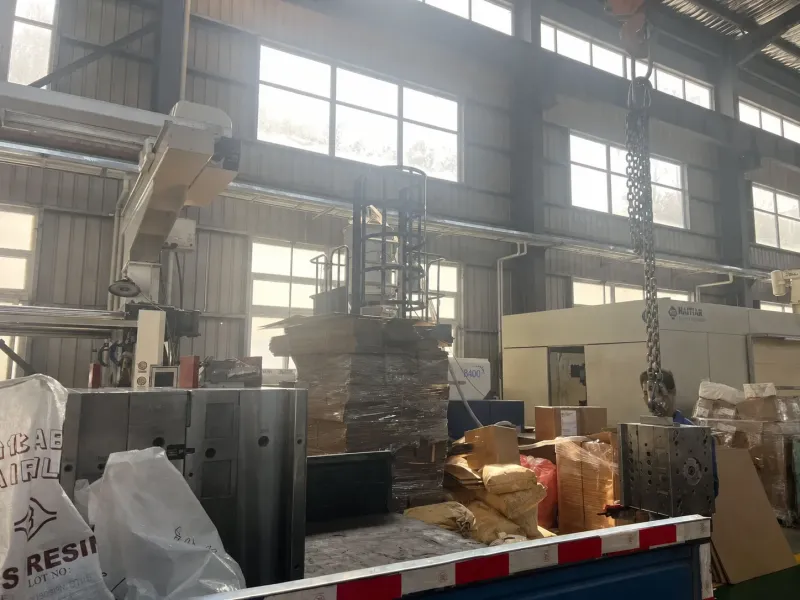
- Mold prices span $3,000 for an aluminum prototype tool to $100,000+ for a multi-cavity hot runner system, per published industry ranges.
- Production plastic molds average 4-6 weeks lead time industry-wide. A certified shop quoting 2-4 weeks with a 24-hour DFM response shortens your critical path.
- Standard machining holds ±0.005 mm. Critical features need ±0.002 mm, which demands jig grinding at 0.0005 mm machine capability.
- Demand PPAP Level 3 documentation for automotive and medical parts. A shop with 8+ CMMs can produce the dimensional evidence. A shop without CMMs cannot.
Why Custom Injection Molding Projects Go Off Track
The failure modes repeat across industries. Automotive buyers, medical device teams, and electronics brands all lose time and money on the same five mistakes.
Specs written from hope, not function
Tolerances get copied from a legacy drawing. A feature that needs ±0.2 mm gets specified at ±0.05 mm. As a rule of thumb, each 10x tightening of a tolerance band roughly doubles machining effort. Over-specification is the most common source of inflated quotes.
Supplier matched to price, not capability
A mold that needs jig grinding at 0.0005 mm cannot be made on a standard CNC shop's mill. Wire EDM at ±0.002 mm, mirror EDM at Ra 0.02 µm, SPDT at 0.0001 mm: these are specific machines. Check the machine list before you check the price.
DFM review skipped
One missing draft angle can turn ejection into a damaged part. A 0.5° draft on a deep rib will drag and crack during ejection. The working default is 1-2° per side. DFM review is not a courtesy. It is the cheapest insurance in the process, and it should arrive within 24 hours of your RFQ.
Steel chosen by spreadsheet
The cheapest steel is never the cheapest mold. P20 runs 28-32 HRC and suits short runs. A high-cavity production tool needs hardened steel at HRC 62, which changes machining strategy and quote math. The steel decision belongs in the RFQ, not in the change order.
No acceptance gate
Without a PPAP-style gate, the mold is done when the shop says so. With it, you sign off on CMM reports, material certs, and trial shots before the tool leaves the floor. The gate converts a delivered mold into a usable one.
The math on a late mold is brutal. A consumer product launch delayed by 4 weeks can cost more than the tool itself in lost channel revenue. Automotive programs face line-side penalties that run per minute of downtime. When the mold is the critical path, every week of supplier slippage lands directly on your margin. That is why the buying process, not the molding process, decides the schedule.
Buyers who fix these five points report fewer revision rounds and shorter schedules. The rest of this guide is the how.
Custom vs Standard: A Decision Matrix
Not every part needs a dedicated tool. Standard components, catalog parts, and modified stock shapes cover a real slice of demand. The matrix below sets the decision boundary for custom plastic parts.
| Decision factor | Buy standard | Go custom |
|---|---|---|
| Annual volume | Under 1,000 units, flat demand | 5,000+ units per year or a clear growth curve |
| Geometry | Matches an off-shelf shape | Unique contours, bosses, ribs, undercuts |
| Tolerance | ±0.1 mm or looser is fine | Below ±0.05 mm, or critical features at ±0.002 mm |
| Material | Commodity ABS, PP, PE | Engineering polymers, glass-filled, high-heat, UL-rated |
| Appearance | Function over finish | SPI finishes, texture, logos, color match |
| Part cost | Higher per unit, no tooling | Lower per unit once tooling amortizes |
| Timeline | Days from stock | 2-4 weeks for plastic tooling |
| Risk | No tooling write-off | Tooling at risk until PPAP passes |
← swipe to scroll →
The break-even formula decides the rest. Divide tooling cost by per-part savings against the standard option. A $20,000 mold that saves $0.50 per part pays for itself at 40,000 parts. Below that volume, question the tool. Above it, custom plastic injection molding wins on cost per unit and on quality control.
One hybrid path deserves attention: a standard mold base with custom inserts. The base and the ejector system come from the HASCO, DME, or MISUMI catalogs. Only the cavity inserts get machined to your geometry. This route cuts tooling cost by 15-30% and shortens lead time, because the base ships in days, not weeks. It is the right call when your geometry changes across product generations and the frame can stay.
Choose the Mold Architecture That Matches Your Volume
Cavity count and tool class set the price band before any quote arrives. Match the architecture to your annual volume and the shot life you actually need.
| Mold type | Best for | Typical lead time | Cost range |
|---|---|---|---|
| Aluminum prototype tool | Design validation, 100-10,000 shots | 10-15 days | $3,000-15,000 |
| Single-cavity production steel | Low-volume production, 10,000-100,000 shots | 3-5 weeks | $8,000-30,000 |
| Multi-cavity tool (2-16 cavities) | Medium to high volume, 100,000-5M shots | 4-6 weeks | $25,000-100,000+ |
| Family mold | Several small parts in one tool | 3-5 weeks | $10,000-40,000 |
| Stack mold | Very high volume, thin-wall parts | 6-8 weeks | 40-60% above single-level equivalent |
← swipe to scroll →
Cavity count follows a simple economics rule. An 8-cavity tool typically costs 2.5-3x a single-cavity equivalent. It also cuts per-part cost by 40-60% at volume through shorter effective cycle time. The crossover usually sits near 50,000-100,000 parts per year.
Steel choice interacts with every row above. P20 at 28-32 HRC is the budget grade for short runs. H13 and SKD11 take 44-52 HRC and handle heat.
S136 stainless runs 48-52 HRC, resists corrosion, and polishes to SPI A-1 mirror. ASP-23 powder steel at 60-64 HRC survives glass-filled resins. DieStrike hardens SKD11, 8407, and ASP-23 cavities to HRC 62 and verifies hardness on every tool.
Family molds carry a hidden trade-off. One tool makes several parts, which looks efficient on paper. But every cavity has different shrink and cooling needs, and the tool is down when one cavity needs repair. Run-rate mismatch is the classic failure: one part runs out of demand while another still needs the mold. Budget a spare-cavity plan if you go this route.
Runner selection is an architecture decision. Cold runners leave a sprue and runner to regrind, and regrind content above 20% starts to degrade mechanical properties in most resins. Hot runners eliminate the waste and cut cycle time, but they add $5,000-30,000 and require a controller your molder must support. Match the runner system to the resin and the volume, not to fashion.
The 8-Step Procurement Checklist
Run these eight steps in order. Each one closes a risk that shows up later as money or schedule.
- Define the part, not the mold. Record the material grade, shrink rate, annual volume, target cycle time, cosmetic surface, and functional tolerances. A clear part spec answers half the mold questions before anyone quotes.
- Classify every tolerance. Mark features as standard (±0.005 mm) or critical (±0.002 mm). Critical features need jig grinding at 0.0005 mm capability and CMM verification. If a feature does not have to be tight, say so. Loose is cheaper.
- Assemble a complete RFQ package. Send the 3D model (STEP), the 2D drawing with GD&T, material grade, annual volume, and the PPAP level you expect. An incomplete RFQ produces an incomplete quote. The gap gets priced in.
- Shortlist 3-5 qualified shops, then compare like for like. Fix the scope: same steel, same cavity count, same finish class, same documentation. A quote is only comparable when the scope lines are identical. Cheapest is meaningless against a different scope.
- Require DFM feedback before you approve anything. A serious shop returns a DFM report within 24 hours of receiving your files. The report should flag draft issues, weld lines, gate positions, and tolerance risks. Use our DFM checklist as the review sheet.
- Audit the quality system and the machine list. Look for IATF 16949 or ISO 9001 certification, CMM capacity, wire EDM at ±0.002 mm, and mirror EDM at Ra 0.02 µm. Certificates on a wall are cheap. Machine lists and inspection records are evidence.
- Review the mold design package before steel is cut. Check the mold base against HASCO, DME, or MISUMI standards. Confirm cooling layout, ejection system, gate type, and hot runner plan. Changes after steel cutting cost 2-3x what they cost on paper.
- Gate the schedule with milestones and a PPAP sign-off. Agree on dates for design release, steel cutting, machining, trial shot (T1), and final inspection. Release payment against milestones, not promises. The final gate is a signed PPAP Level 3 package with CMM reports and material certs.
Print this checklist and attach it to your RFQ. Shops that answer all eight points in writing are the ones that ship on schedule. Shops that push back on the process are telling you how the project will go.
What Actually Drives Custom Injection Mold Cost
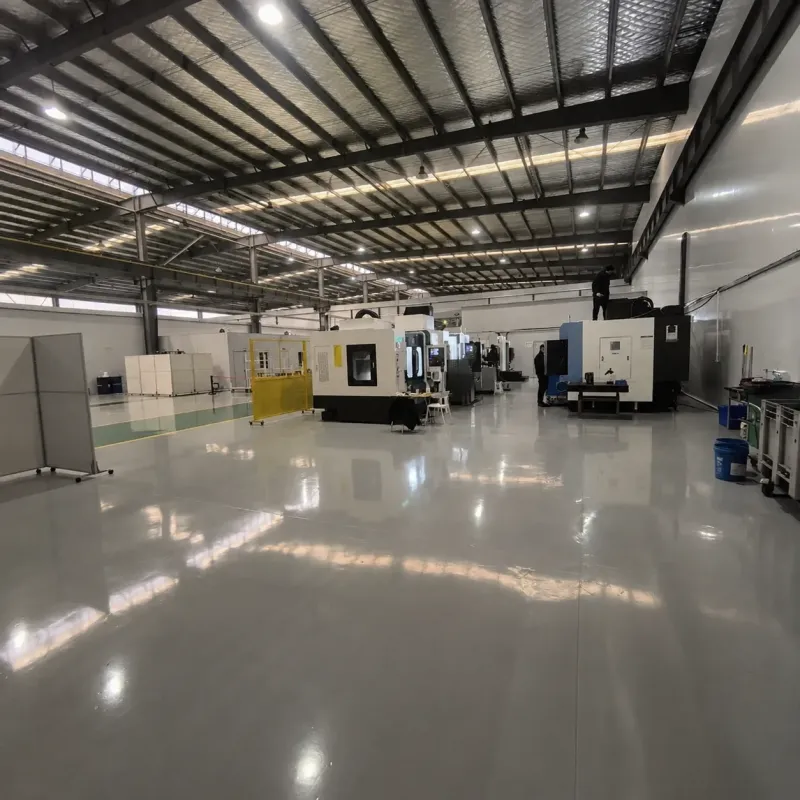
Quotes for the same mold vary by 30-50% between shops. The difference is rarely greed. It is scope: steel grade, cavity count, tolerance class, finish, and documentation. Here is where the money goes, with typical ranges across the industry.
- Steel: 20-30% of tool cost. P20 is the budget grade at 28-32 HRC. S136 stainless runs roughly 1.5-2x P20 per kilogram and buys corrosion resistance plus a mirror finish path. Hardened grades like SKD11 and ASP-23 add heat treatment on top.
- Machining: 40-60% of tool cost. This is cavity complexity, electrode work, and tolerance class. A critical feature at ±0.002 mm requires jig grinding at 0.0005 mm capability. Each step up the tolerance ladder adds machining hours, not just machine price.
- Surface finish. SPI A-1 mirror polish sits at Ra 0.02 µm and needs mirror EDM plus hand polish stages. Moving from a standard SPI B-2 finish to SPI A-1 can add days per cavity. Texture adds photochemical etching cost on top.
- Hot runner: 10-25% of tool cost. A system typically adds $5,000-30,000. It removes runner waste and cuts cycle time, which pays off above roughly 50,000 parts per year.
- Heat treatment: 5-10% of tool cost. Hardening to HRC 62 in vacuum furnaces, plus hardness verification, is a line item. It is not a favor.
- Mold base and standards: 5-15% of tool cost. HASCO, DME, and MISUMI compatible bases keep spares available worldwide. Buying standard parts direct from a manufacturer cuts the markup. DieStrike standard parts ship in 3-7 days at MOQ 1.
- Documentation and QC: 3-8% of tool cost. PPAP Level 3 paperwork, CMM reports, and ISIR cost real hours at a certified shop. That cost buys traceability. A shop that skips it is cheaper for a reason.
Plan a revision contingency of 5-10% of tool cost and 1-2 weeks of schedule. Most tools see at least one revision round before PPAP. The ones that do not were DFM-clean from the start. For the full cost breakdown by mold type, see our guide on injection mold cost.
Hidden costs sit outside the quote and catch first-time buyers. Freight and insurance add 2-5% for cross-border tooling. Import duties vary by destination and HS code.
Order a second set of ejector pins, core pins, and springs with the tool. DieStrike standard parts ship in 3-7 days, so spares never strand your production line. Ask the quote to include a spare-parts list and a recommended stock quantity.
Quality Systems: IATF 16949, PPAP, and What to Demand
Quality certification is a proxy for process control. Process control is what makes a mold repeatable. Three standards matter in 2026 procurement: ISO 9001, IATF 16949, and ISO 14001.
- ISO 9001 is the baseline quality system. Nearly every credible shop holds it. It proves documented processes, not precision.
- IATF 16949 extends ISO 9001 for automotive. It adds customer-specific requirements, PPAP, MSA, SPC, FMEA, and layered process audits. A shop with IATF 16949 has already built the documentation muscle your PPAP will need. DieStrike holds IATF 16949, ISO 9001, and ISO 14001.
- ISO 14001 covers environmental management. It is increasingly a filter in EU and automotive supply chains.
PPAP levels 1-5 define how much evidence ships with the tool. Level 3 is the default for production parts. It includes the design record, DFMEA, process flow, control plan, and ISIR dimensional results. Material certs, MSA studies, and capability data at Cpk 1.33 or higher complete the set. That heavy package is the only thing that protects you when a part fails in the field.
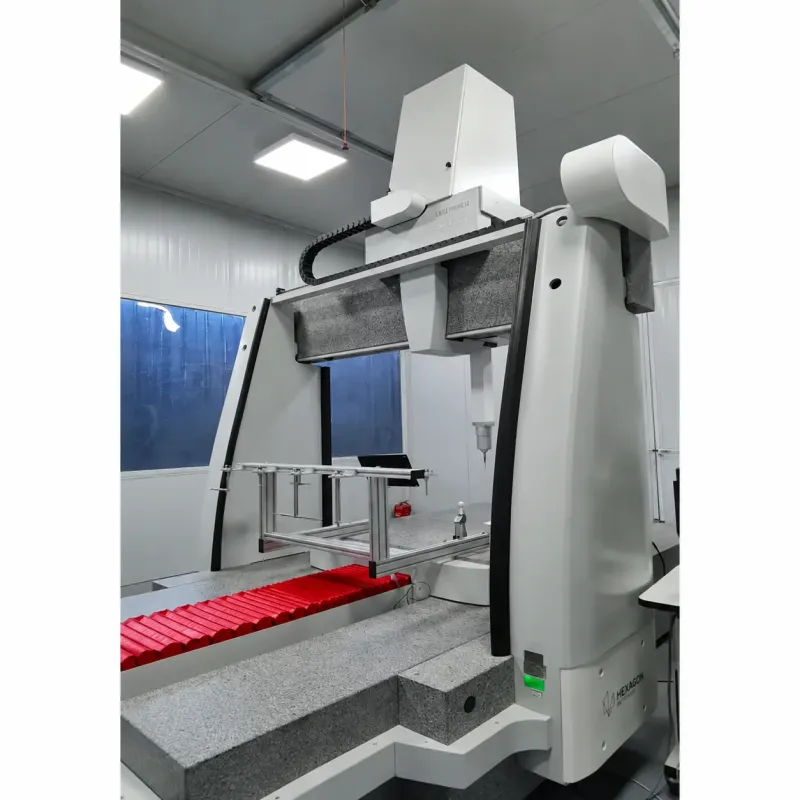
The practical test: ask for a sample ISIR and CMM report before you award the PO. An 8-CMM shop produces dimensional evidence in hours. A shop with no CMMs produces excuses. The medical and automotive industries route parts through this gate for a reason.
MSA studies verify that the measurement system itself is trustworthy. SPC tracks the process during trial runs to prove stability, not just capability. Both are paperwork until a defect appears. Then they are the difference between a root-caused fix in a week and a part recall that runs for months.
Lead Times: What to Expect, Mold Type by Mold Type
| Mold type | Industry typical | DieStrike | Cost level |
|---|---|---|---|
| Aluminum prototype | 10-15 days | Quoted per job | $3,000-15,000 |
| Single-cavity steel | 3-5 weeks | 2-4 weeks | $8,000-40,000 |
| Multi-cavity hot runner | 4-6 weeks | 2-4 weeks | $40,000-100,000+ |
| Mold repair and maintenance | 1-2 weeks | Repair service | Per scope |
| Standard mold parts | 1-4 weeks | 3-7 days, MOQ 1 | Per piece |
← swipe to scroll →
Two numbers govern the schedule. The first is machining capacity: 120+ machines with 30+ CNC centers means cavities run in parallel, not in a queue. The second is the approval loop: every day you take to answer a DFM or sign a drawing sits on the critical path. A 24-hour DFM response keeps the clock moving. This is the workflow behind our injection mold manufacturing service.
Three line items eat most of the schedule. Steel procurement runs 3-10 days depending on grade and stock. Heat treatment adds 5-10 days, and it sits on the critical path because hardening happens after machining. Surface finishing and hand polish can add a week on mirror-grade tools. A shop that sequences these steps in parallel, across 120+ machines, compresses the calendar without cutting corners.
Ask for a Gantt-style milestone plan, not a single delivery date. Plan 6-8 weeks from RFQ to production for a first tool, end to end, including your own review time. Tools that slip past 8 weeks are usually stuck in approvals, not in machining.
Red Flags in Custom Injection Mold Quotes
Ten signals tell you a quote is built to win, not to deliver.
- Price 30% or more below the nearest competitor. Check the scope: substituted steel, fewer cavities, no heat treatment, no PPAP documentation.
- No DFM report attached. They did not review your part. A DFM response within 24 hours is the working standard.
- Tolerances described as high precision without numbers. Precision is ±0.005 mm standard and ±0.002 mm on critical features. Anything vaguer is marketing.
- Steel named without hardness. S136 is not a spec. S136 at 48-52 HRC is. Hardened cavities at HRC 62 must include a heat treatment and hardness verification step.
- No inspection equipment listed. Without CMM capacity, dimensional reports are impossible. 8+ CMMs is the capacity you want to see.
- 100% upfront payment. Normal terms split 30-50% down, with milestones tied to design release, T1 trial, and final inspection.
- No revision clause. Every change becomes a new work order at premium rates. Fix the revision price structure before the PO.
- Unspecified mold base. Ask for HASCO, DME, or MISUMI compatible bases so spare parts exist worldwide.
- Same as our standard tool, without a drawing package. Review the mold design before steel is cut, not after.
- Lead time promises without a capacity story. Four weeks from a shop with 10 machines is a hope. Two to four weeks from a shop with 120+ machines and 30+ CNC centers is a schedule.
FAQ: Custom Injection Molding Questions, Answered
How much does custom plastic injection molding cost?
Mold prices follow published industry ranges. Expect $3,000-15,000 for an aluminum prototype tool and $8,000-40,000 for a single-cavity production tool. A multi-cavity hot runner system runs $40,000-100,000+. Steel, cavity count, tolerance class, and finish move the number within those bands. A revision round adds 5-10% on top, so budget for it.
What is custom plastic molding, and when do I need it?
Custom plastic molding means a dedicated tool machined to your geometry, versus a standard or catalog part. Choose it when volume, tolerance, material, or branding rules out off-shelf parts. The break-even math decides: a $20,000 tool saving $0.50 per part pays back at 40,000 units.
How long does custom injection molding tooling take?
Prototype aluminum tools run 10-15 days. Production steel tools run 4-6 weeks at most shops. DieStrike quotes 2-4 weeks for plastic molds with a 24-hour DFM response. Standard mold parts ship in 3-7 days.
What files do I need to request custom mould plastics quotes?
The same package in any spelling: a 3D STEP model, a 2D drawing with GD&T, and the material grade. Add annual volume, target cycle time, cosmetic class, and the required PPAP level. Shops that promise quotes without these files are quoting a guess.
Does custom machining matter for mold quality?
Directly. Critical features at ±0.002 mm need jig grinding at 0.0005 mm machine capability. Wire EDM holds ±0.002 mm, and mirror EDM reaches Ra 0.02 µm. Custom machining of cavity steel is where the tolerance ladder is won or lost.
What is the minimum order quantity for custom plastic parts?
Tooling has no meaningful MOQ. DieStrike builds molds at MOQ 1. Part-level MOQs follow your volume: prototype runs of hundreds, production runs of thousands. The mold is the investment. The parts are priced per shot.
The Bottom Line
A mold is a 10-year asset, and most of its performance is fixed at purchase. The buyers who get custom injection molding right do four things. They spec from function, demand DFM within 24 hours, and audit machines and certifications. They also gate delivery on PPAP evidence.
Skip any of those and you are betting the schedule on a supplier's word. Hold all of them and the tool lands on time, in tolerance, and ready to run. Start with the part definition, then let the DFM review do the arguing for you. The 8 steps above are the whole playbook. Follow them in order and the mold becomes the boring, reliable part of your launch.
KEEP READING
Related Reading
5 Mold Cooling Channel Design Tips for Faster Cycles
Mold maker's 5 cooling channel design rules: channel-to-cavity distance 2-2.
Read articleArticle5 Shrinkage Compensation Rules for Mold Design
Shrinkage compensation decides mold accuracy. Five rules: material rates from 0.3% to 2.
Read articleArticle5 Ways to Reduce Mold Cost Without Cutting Quality
Five proven ways to reduce injection mold cost without cutting quality: DFM before quoting, right-sized cavity count,…
Read articleArticle7 Gate Design Best Practices for Balanced Filling
Mold maker's 7 gate design rules for balanced multi-cavity filling: gate depth 50-80% of wall thickness, land 0.5-1.
Read articleNEXT STEP
Ready to Start Your Mold?
Send us your element dimensions or part numbers — our team responds within 24 hours with pricing and lead time.

Written by
Ray ChanMold Buyer's Guide Author · Precision Mold Manufacturing Specialist. Ray helps global importers, distributors and OEMs source factory-direct molds and mold parts.