
Injection Mold Validation: IQ, OQ, PQ for Medical Tooling
Table of Contents
A medical mold that ships without a validation record is an audit finding waiting for a pen. ISO 13485:2016 clause 7.5.6 and FDA 21 CFR Part 820.75 both demand documented validation of production processes. When the mold is the process's physical core, that demand lands on the tool. One typical scene: a syringe mold arrives, the IQ file is empty, and the auditor stops lot release on the spot. The investigation and rework typically cost more than the mold itself.
This guide reads IQ, OQ, and PQ from the tool side, not the process side. The distinction matters because two parties share the work. The mold maker builds the tool and documents it. The molder runs the process and documents it. A clean handoff between the two is what makes validation fast.
Each stage answers one question about the mold. IQ: is the tool exactly what the purchase order says? OQ: does the tool make parts to print across a defined window? PQ: does it hold that performance at production volume? The sections below walk each stage, the pass criteria, and the paperwork.
The Snapshot
- IQ verifies the mold against the purchase order: steel grades, HRC hardness, CMM dimensions, and cooling circuits before any sampling.
- OQ maps the process window and proves cavity-to-cavity consistency, with first article parts measured on CMM and vision systems.
- PQ runs production-scale batches with statistical control, typically holding Cpk ≥ 1.33, and ≥ 1.67 on critical dimensions.
- Validation adds 2-6 weeks typical to a medical mold program, most of it in sampling, press availability, and documentation.
- DieStrike ships medical tooling under IATF 16949 and ISO 9001, with 120+ machines and CMM precision to ±0.002 mm.
Why Validation Is a Mold Problem, Not Just a Process Problem
Process validation has a formal definition. FDA 21 CFR 820.75 calls it establishing by objective evidence that a process consistently produces product meeting predetermined specifications. The mold is the largest physical input to that evidence. If the mold geometry, steel, or cooling is wrong, no parameter set saves the process.
Auditors follow the chain. They ask for the process validation record. The record cites the IQ, OQ, and PQ studies. Each study cites mold measurements, trials, and capability data. A gap anywhere in that chain is a finding.
Device makers reject lots over tooling evidence, not just part measurements. A dimension may pass on the bench and still fail the audit if the mold record cannot prove the tool was qualified. Documentation is part of the part.
This is why medical mold orders differ from commodity tooling. The buyer is not just buying steel and machining. The buyer is buying evidence that the tool can be validated. Mold makers that treat IQ, OQ, and PQ as a deliverable are easier to audit, and their programs close faster.
What IQ, OQ, and PQ Mean for the Mold
The three stages form a logical ladder. IQ proves the tool exists as ordered. OQ proves the tool functions as designed. PQ proves the tool performs at production scale.
Installation Qualification is a receiving and setup gate. It covers the mold's identity, materials, dimensions, and connections. Nothing is molded yet at this stage.
Operational Qualification is the trial program. The mold runs across the intended process window. Parts are measured, functions are checked, and defects are logged.
Process Qualification is the production gate. The mold runs sustained batches under statistical process control. Capability numbers, not single parts, decide the pass.
ISO 13485 and 21 CFR 820.75 describe the process side. The mold maker's job is to supply the tool-level evidence those standards consume. That evidence is what this article documents.
IQ: Installation Qualification at the Mold Level
IQ starts the day the mold arrives. The receiving team checks the crate against the purchase order. Cavity count, mold base size, hot runner configuration, and side actions must all match. Deviations are logged and dispositioned before the mold touches a press.
The paper trail comes first. Material certificates confirm each steel grade. Heat treatment records confirm the hardening cycle. Hardness spot checks confirm the surface condition on critical inserts.
Then the physical checks begin. Mounting surfaces, locating ring, sprue bushing, and clamp slots are verified. Cooling circuits are pressure tested. Hot runner thermocouples and wiring are continuity checked.
Dimensional Verification on the CMM
The mold's critical dimensions get measured, not eyeballed. DieStrike verifies incoming tooling on coordinate measuring machines with reported accuracy of ±0.005 mm at standard tolerance and ±0.002 mm at precision tolerance. The CMM report becomes part of the IQ record.
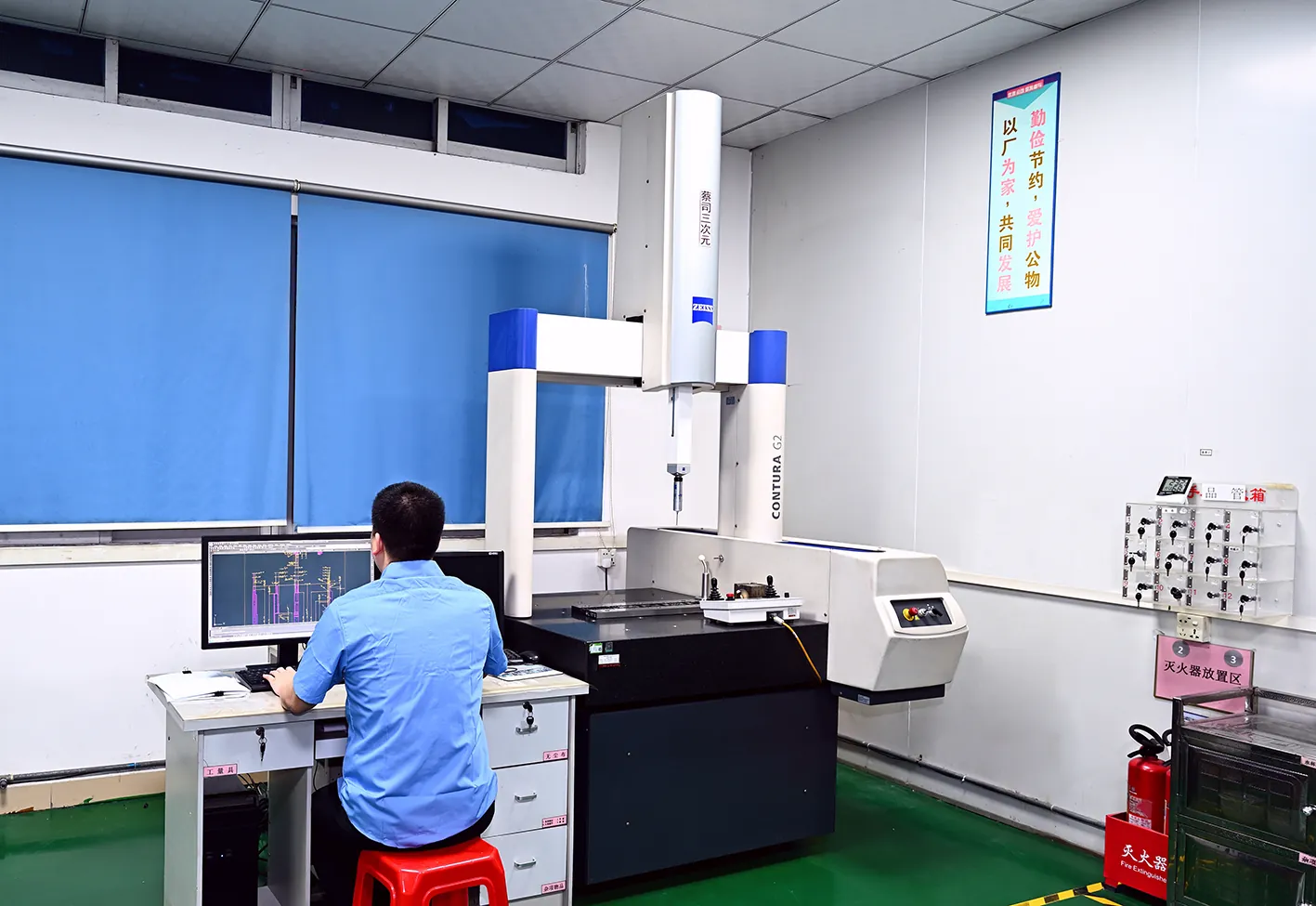
Watch for the as-built dimension. The cavity was cut to compensate for shrinkage. The IQ record should capture the as-built steel dimension, because OQ will compare molded part measurements against it.
Hardness and Material Certification
Steel grade is a promise, hardness is a fact. The heat treatment record says HRC 60. The hardness gauge on the insert face says what it says. DieStrike heat-treats medical tooling up to HRC 62 and verifies the result.
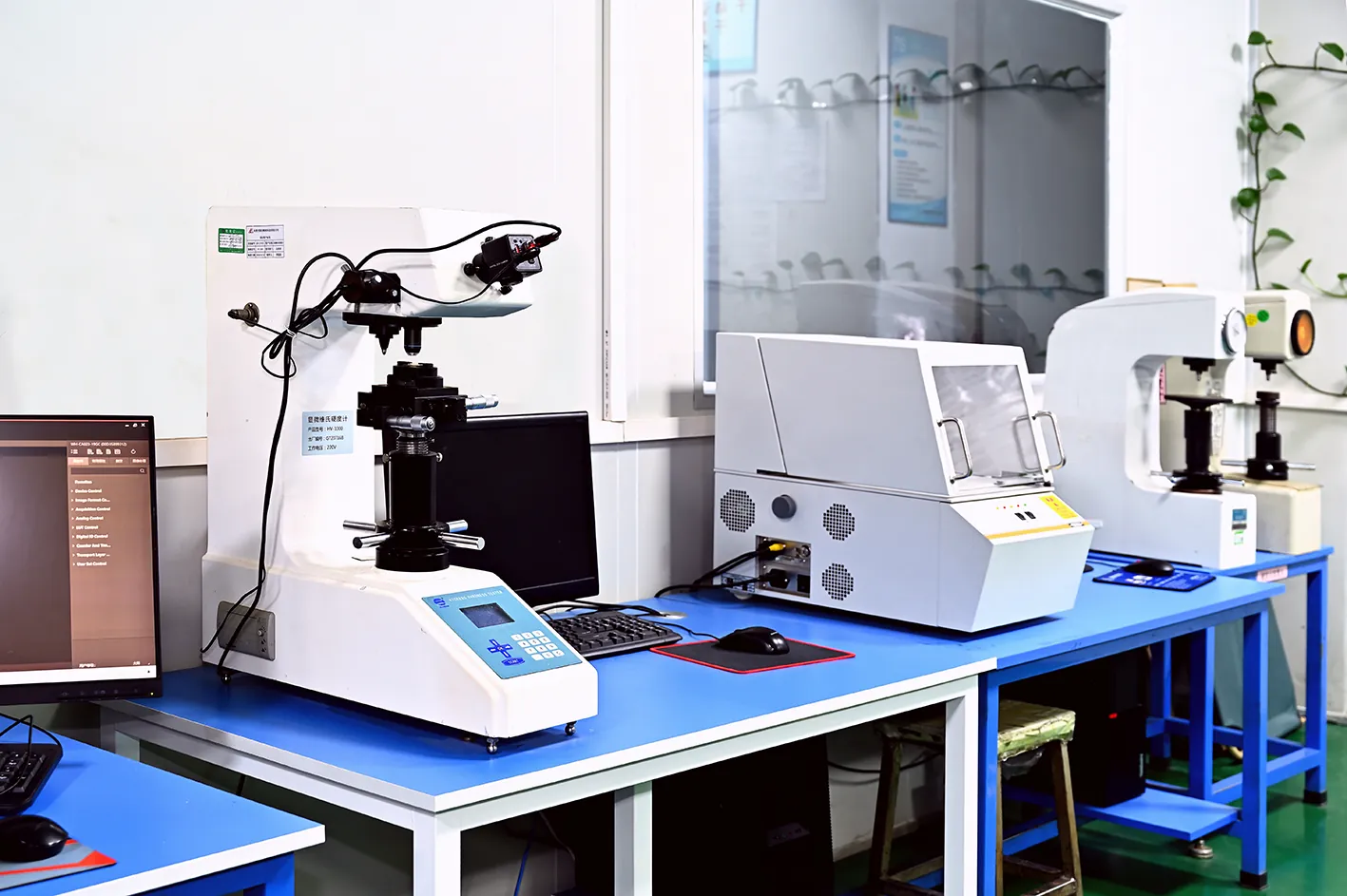
Ask for the certificates by lot. Material certs should name the supplier, the steel grade, and the heat number. A cert without a heat number is a piece of paper. Auditors know the difference.
IQ passes when every purchase order line is present and verified. The pass is recorded in an IQ checklist signed by the mold maker and the buyer's representative. That single signature is usually the first document an auditor requests.
OQ: Operational Qualification and the Trial Program
OQ is where the mold earns its keep. The tool mounts on a press and runs across the intended process window. This stage is the mold trial program applied to medical requirements. Our guide to running a mold trial shows how T0, T1, and T2 map onto this work.
The process window is mapped at OQ, not guessed. Melt temperature, injection pressure, cooling time, and mold temperature are moved between limits. The mold must hold dimension and appearance across the window, not at one lucky setpoint.
Mold functions are exercised under load. Ejection must be clean at production cycle time. Cooling must hold water temperature rise within design limits. Hot runner zones must balance across all cavities.
Parts are measured at the window limits, not just the center. A part molded at the low melt temperature edge must still meet print. The CMM and vision reports at each corner of the window are OQ evidence.
Thermal balance belongs on the OQ checklist too. Cavity temperature differences above a few degrees Celsius typical can shift dimensions from cavity to cavity. The mold's cooling layout, circuit routing, and water flow rates all appear in the OQ record. A thermally balanced mold is a stable mold.
Cavity Consistency and First Article
Multi-cavity medical molds live or die on cavity spread. The OQ report lists each cavity's measured dimensions side by side. A typical acceptance spread for precision medical parts is 0.02-0.05 mm between cavities, agreed before sampling.
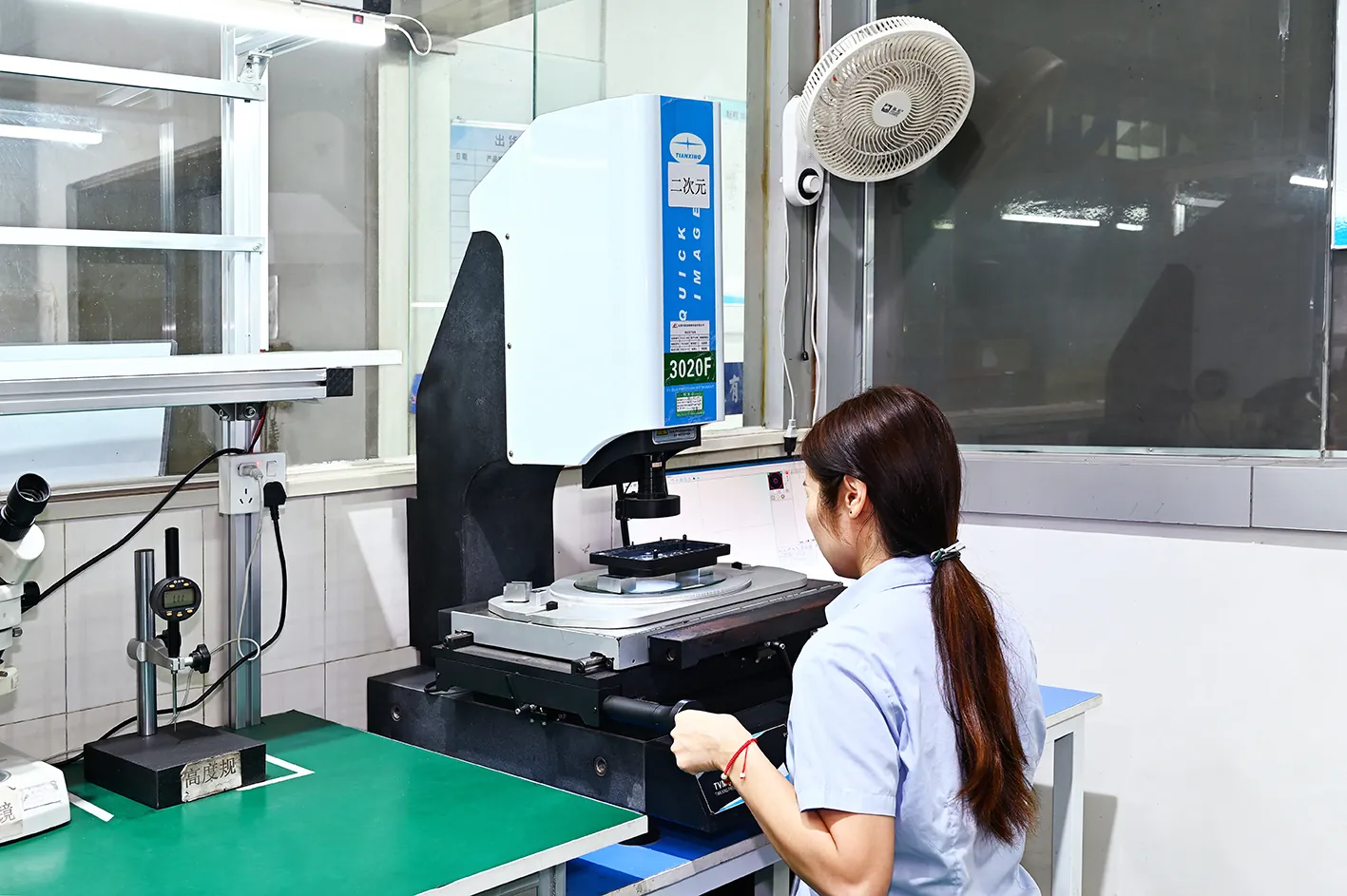
The first article is pulled at the window center. The first article inspection report records every dimension on the drawing, with measured value, deviation, and verdict. Sample counts for first article inspection typically run 50-500 parts depending on cavity count and customer protocol.
Keep the deviation pattern in view. If all cavities sit on the same side of nominal, shrinkage compensation was slightly off. If one cavity sits apart from the rest, that cavity's steel or cooling differs. Both are mold problems, and both are fixable before PQ.
When OQ Finds a Steel Problem
OQ failures divide into process problems and steel problems. Process problems stay with the molder. Steel problems come back to the mold maker.
A steel problem is a targeted correction. A gate land is lengthened, a cavity corner is opened, or an insert is re-polished. The correction happens on the machining floor, and the mold returns for another OQ round.
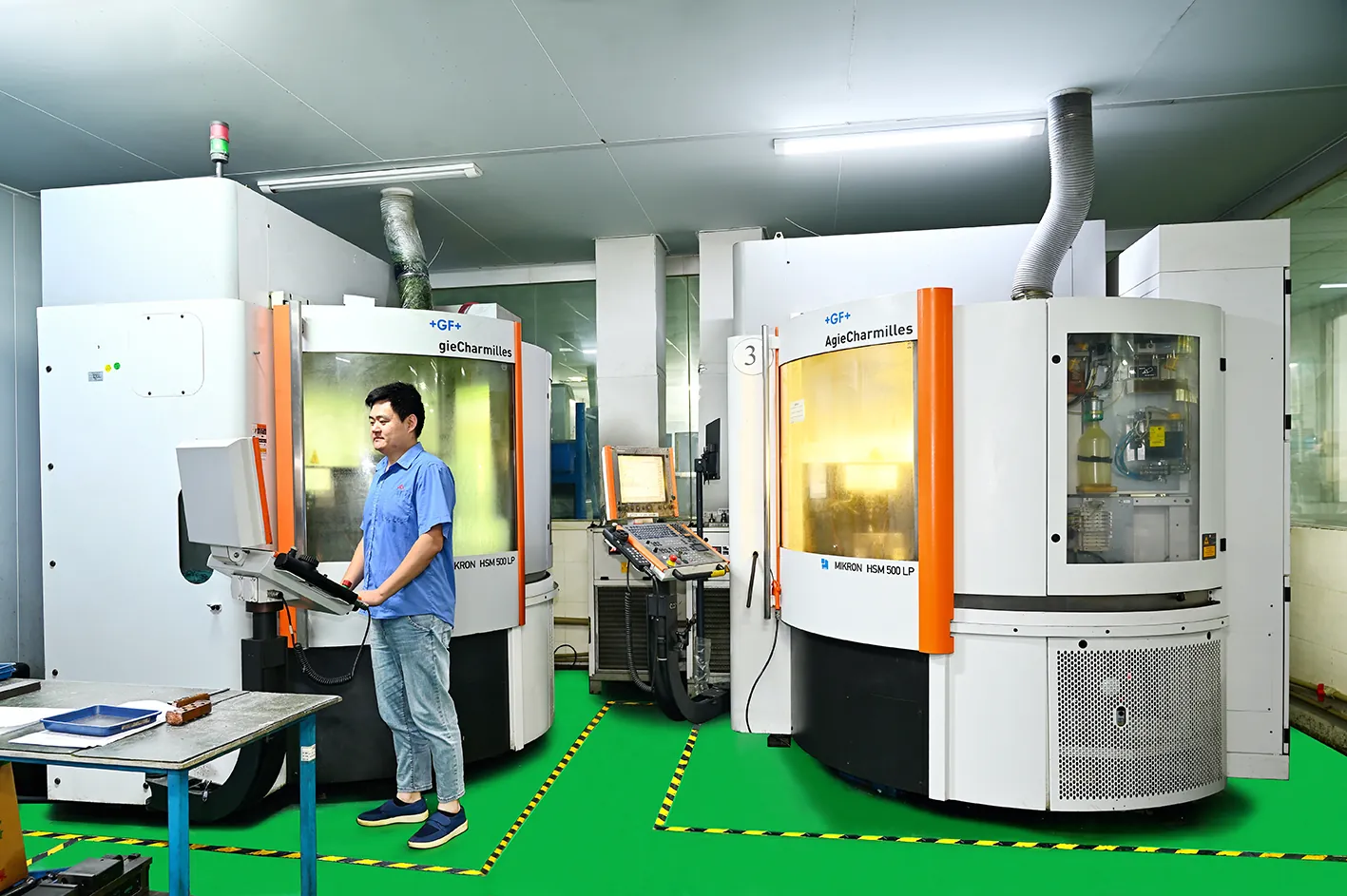
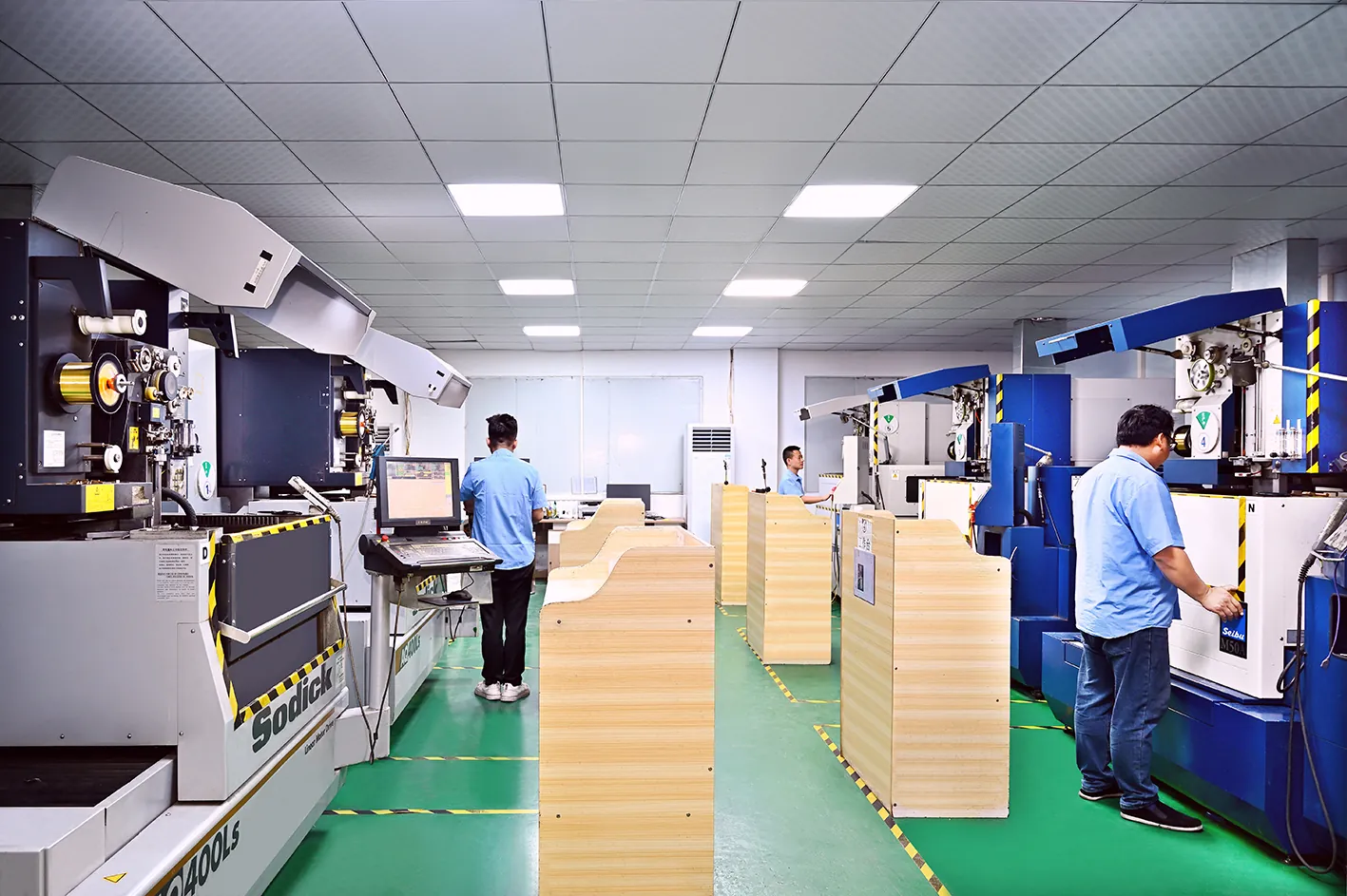
DieStrike runs 120+ machines, from high-speed machining centers to wire EDM, so corrections stay inside the building. That keeps the OQ loop to days. The trial report should name the root cause, not the symptom, because a root cause makes the next round productive.
OQ passes when the window is stable and the first article is dimensionally approved. The trial reports, parameter records, and first article inspection become the OQ documentation package.
PQ: Process Qualification at Production Scale
PQ moves from samples to production scale. The mold runs sustained batches under statistical process control. The question changes from whether it works to how consistently it works.
Capability is the PQ language. Cpk compares the process spread to the tolerance band. A typical acceptance is Cpk ≥ 1.33 for standard dimensions and Cpk ≥ 1.67 for critical dimensions. Some device makers require 1.67 across the board.
The numbers have meaning. Cpk 1.33 corresponds to roughly a 4-sigma process, about 63 parts per million outside limits for a centered process. Cpk 1.67 is roughly 5 sigma, about 0.6 parts per million. These are typical statistical values, and they are why auditors respect the number.
Sample quantities follow FDA and ISO practice rather than a fixed rule. A capability study typically uses 30 consecutive parts per dimension. Longer runs of several hundred to a few thousand shots prove the mold holds the window over time.
The capability study reads the mold plus the process together. A poor Cpk can mean a wide process, a narrow tolerance, or a drifting tool. The study data should separate the three, because each has a different owner. The molder owns the process, the part designer owns the tolerance, and the mold maker owns the tool.
Sustained Runs and the Spare Parts Loop
The sustained run exposes drift. Cycle time, scrap rate, and cavity temperatures are charted over the run. A mold that holds capability over 1,000 shots is a different object from one that passes 50.
PQ also demands a spare parts plan. The mold maker should list every replaceable component: ejector pins, springs, heaters, thermocouples, and seals. Replacement inserts are machined from the original CAM programs, so a swapped cavity stays close to the validated state. Steel selection drives that reproducibility, which is covered in our guide to selecting mold steel for medical molds.
Ongoing monitoring continues after PQ. SPC charts run in production. Mold condition is checked on a schedule. The maintenance documentation the mold maker supplied at delivery defines that schedule.
PQ closes when the capability study passes and the PQ protocol is signed. From that point, the mold has a validated baseline. Every future change to the tool is assessed against that baseline.
Validation at a Glance: The Stage Table
The table below summarizes the three stages from the tool side. Read it with your acceptance criteria in hand, because the pass criteria should be agreed before the mold order, not at the first audit.
| Stage | Tool-Level Activity | Pass Criteria | Documentation |
|---|---|---|---|
| IQ | Verify mold against purchase order; check material certs and heat treatment records; measure critical dimensions on CMM; confirm mounting, cooling, and hot runner connections | All purchase order lines present; steel and HRC match certs; cooling circuits hold 5-8 bar typical; CMM dimensions inside agreed tolerance | IQ checklist, CMM report, material certificates, heat treatment records |
| OQ | Trial runs across process window; cavity consistency checks; dimensional measurement at window limits; ejection, cooling, and hot runner function under load; first article | Stable window at production settings; cavities within agreed spread; first article dimensions per drawing; no unapproved defects | Trial reports, process parameter records, first article inspection report, dimensional reports |
| PQ | Production-scale runs; SPC on critical dimensions; capability study; ongoing mold condition monitoring | Cpk ≥ 1.33 typical, ≥ 1.67 on critical dimensions; scrap within agreed rate; mold condition stable | PQ protocol and report, SPC charts, capability study, maintenance records |
← swipe to scroll →
Two details deserve emphasis. First, the pass criteria are numbers both sides agree to before sampling. Second, every row ends in documentation, because validation is evidence, not activity.
Keep the table attached to the contract. When a stage fails, both sides return to the agreed pass criteria instead of negotiating mid-run. That discipline is what turns a validation program into a schedule that can be predicted.
Documentation the Mold Maker Must Deliver
The mold maker's documentation package is the buyer's validation raw material. Missing paperwork is the most common reason a medical mold program slips schedule.
The package starts with material certificates. Each steel grade is named with supplier and heat number. Heat treatment records show hardness, soak time, and process. CMM reports show the as-built dimensions.
Trial reports document each OQ round: machine, parameters, shot count, defects, and verdicts. The first article report records the full dimensional survey. Spare parts lists name every replaceable component with part numbers.
Maintenance documentation closes the loop. Lubrication points, cleaning procedure, storage conditions, and recommended inspection intervals are all written down. That document becomes the production floor's schedule.
Retention matters as much as content. FDA 21 CFR 820.180 requires records be kept for the life of the device, and no less than 2 years from release. ISO 13485 applies its own document control rules. Buyers should confirm the retention commitment in the mold purchase order.
The Standards Ecosystem: ISO 13485, 21 CFR 820, ISO 10993, and GMP
Four standards frame medical molding. Each one touches the mold in a different way, and buyers benefit from knowing which is which.
ISO 13485:2016 is the quality system standard for medical devices. Clause 7.5.6 requires validation of production processes. The mold's IQ, OQ, and PQ evidence feeds directly into that clause.
FDA 21 CFR Part 820 is the US quality system regulation. Section 820.75 sets the process validation requirement, and 820.180 sets record retention. For devices sold in the US, this is the rule the auditor applies.
ISO 10993 governs biocompatibility, and it sits on the resin side, not the tool side. The mold still matters indirectly. Mold finish, release agents, and residue can affect how a resin performs in biological testing. A validated mold surface is part of a defensible biocompatibility story.
GMP expectations wrap around all of it. Good manufacturing practice assumes validated processes, clean tooling, and controlled change. When the mold changes after validation, the change itself must be assessed. That is why change management is a line in every good mold contract.
How Validation Changes Timelines and Cost
Validation adds time to a medical mold program. A typical addition is 2-6 weeks over the base tooling schedule. Most of it is sampling, press availability, and documentation, not machining.
IQ is the fastest stage, typically 1-3 days of receiving checks and paperwork. OQ typically takes 1-2 weeks including trial rounds and corrections. PQ typically takes 1-3 weeks depending on run length and how quickly the capability study is scheduled.
The schedule compresses when the protocol is agreed early. Acceptance criteria, sample counts, and pass numbers should be signed before the mold order. Molds validated against a moving target always run over.
Budget the documentation effort too. Reports, CMM files, and records are labor. Buyers typically plan the validation effort as a line item in the mold quote, not an afterthought.
A failed validation is the expensive case. Every extra OQ round costs press time and tooling corrections. The cheapest validation is the one planned at quotation, because planning is where both sides align on what pass means.
Qualifying a Mold Maker for Medical Tooling
Not every mold shop can produce the evidence a medical audit demands. Qualifying a supplier means checking systems, machines, and reference programs.
Start with the quality system. IATF 16949 and ISO 9001 certification signal documented process discipline. DieStrike operates under both, which means the documentation habits of PPAP are already in place.
Check the metrology floor. Validation evidence is only as good as the measurement equipment. A CMM that reports ±0.005 mm standard and ±0.002 mm precision can support medical tolerances. A vision system and hardness gauge complete the set.
Ask about medical reference programs. DieStrike has built tooling for syringe programs and other medical devices, alongside customers such as TE Connectivity, Amphenol, Luxshare, and Dongshan. Reference programs tell you the shop has survived the audit before.
Put the validation deliverables in the RFQ. List the IQ, OQ, and PQ documentation package as contract items. Tie payment milestones to the signed IQ checklist, the first article report, and the PQ protocol. What is in the contract gets delivered; what is implied gets negotiated.
Frequently Asked Questions
Is mold validation the same as process validation?
No. Process validation is the device maker's obligation under ISO 13485 and 21 CFR 820.75. Mold validation is the tool-level evidence that feeds it. The mold maker supplies IQ, OQ, and PQ documentation for the tool, and the molder runs and documents the process.
Who writes the IQ, OQ, and PQ protocols?
Both sides, but the buyer owns the protocol. The device maker or molder defines acceptance criteria. The mold maker supplies the evidence format and the data. DieStrike delivers the documented package the buyer's protocol requires.
What does Cpk 1.33 mean for my mold?
It means the process spread fits the tolerance band with margin. Cpk 1.33 is roughly a 4-sigma process, about 63 parts per million outside limits, typical for standard dimensions. Critical medical dimensions usually demand 1.67 or better.
How much time does validation add to a mold program?
Typically 2-6 weeks over the base schedule. IQ runs in days, OQ in 1-2 weeks with trials, and PQ in 1-3 weeks with the capability study. Early protocol agreement is the main lever to compress it.
Can a mold maker validate a mold without the molder's press?
Partially. IQ and most of OQ can run on equivalent presses at the mold maker's plant. PQ should run on production equipment, because capability belongs to the mold plus the machine plus the process. Plan the final PQ at the production site.
What happens when a mold fails OQ?
The trial report names the root cause. Steel corrections go back to the mold maker, and process corrections stay with the molder. Another OQ round follows, typically faster because the cause is documented. The contract should state who pays for each correction class.
The Bottom Line
Validation is documentation of proof. IQ proves the tool is what was ordered. OQ proves it makes parts across a window. PQ proves it holds capability at production scale.
The mold maker's job is to hand the buyer a complete evidence package. It includes material certs, heat treatment records, CMM reports, trial reports, first article data, spares, and maintenance documentation. Without that package, a good mold can still fail an audit.
Buyers who plan validation at quotation, agree pass criteria in writing, and tie payment milestones to documentation get through audits faster. The 2-6 weeks typical validation add-on is manageable when planned, and painful when discovered.
If you are scoping your first medical mold, start with our medical injection molding guide. Then come back to this article with the protocol in hand. Validation is not a formality. It is the difference between a mold that makes parts and a mold that makes parts with proof.
NEXT STEP
Ready to Start Your Mold?
Send us your element dimensions or part numbers — our team responds within 24 hours with pricing and lead time.

Written by
Ray ChanMold Buyer's Guide Author · Precision Mold Manufacturing Specialist. Ray helps global importers, distributors and OEMs source factory-direct molds and mold parts.