
How to Select Mold Steel for Medical-Grade Molds
Table of Contents
Your 16-cavity luer hub mold starts pitting at the gate land after 40,000 shots. The P20 cavity has sat under purge residue and cleaning spray between shifts, and chloride pitting has opened 0.05 mm pits in the steel. Parts stick, ejection marks appear, and the line rejects 12% of output. The repair is a weld-and-recut cycle that takes four weeks and reopens the validation file.
Mold steel selection for medical tooling is one decision with three jobs. It must survive purge compounds, acid washes and disinfectant residues. It must polish to the mirror finish that optical and contact surfaces need. And it must hold geometry through the life of the program. Every one of those jobs fails differently when the grade is wrong.
This guide covers the grades that actually run in medical tooling. S136 and 420SS stainless cover most cavities. 17-4PH and 440C cover wear corners. P20 and 718H cover pilot runs. H13 and SKD61 cover abrasive and high-temperature resins, and each section gives the numbers you need for the drawing.
The stakes are concrete. A medical production mold typically costs $30,000 to $100,000+. A cavity steel mistake shows up as corrosion pitting, polish loss or premature wear at 100k-300k shots, not at tooling approval. Rebuilding a validated mold means new first article evidence, new IQ/OQ/PQ records and 6-12 months of revalidation in most device programs.
The Snapshot
- S136-class stainless, about 16% Cr hardened to HRC 48-52, is the medical default. It polishes to SPI A1 at roughly Ra 0.012 µm.
- P20 at 28-32 HRC pits under medical cleaning chemistry. Limit it to pilot molds under roughly 150k shots.
- Medical production molds typically run 50k-500k shots. Set the life target before you order steel.
- H13 and SKD61 at HRC 48-52 serve glass-filled and high-temperature resins, where abrasion outranks corrosion.
- DieStrike holds mold accuracy at ±0.005mm, treats hardened cavities to HRC 62, and returns DFM feedback within 24 hours.
Why Medical Molds Prefer Corrosion-Resistant Steel
Corrosion is the failure mode that separates medical tooling from commodity tooling. A standard mold runs dry, sees one resin and gets wiped down at the end of the shift. A medical mold is purged, steamed, acid-washed and disinfected on a schedule. Every one of those operations puts chemistry on the cavity surface.
Purge compounds are the first attack. Shops purge at every material change, typically at 180-260°C, and the residue bakes onto gate lands and core edges. Acid cleaning follows, with citric acid solutions at 5-10% a common descale practice. Disinfectants add the third attack, with sodium hypochlorite wipes carrying 500-2000 ppm of available chlorine in typical use.
Carbon steel does not survive that chemistry. P20 carries about 1.5-2% chromium, and chloride pitting accelerates below roughly 13% chromium in published guidance. The pits start at 0.05 mm or less, then grow into release defects and contamination sources.
Cleanliness makes it worse. Medical molding runs in ISO Class 7 or Class 8 cleanrooms, and corrosion products on the cavity are contamination events. A rust flake on a molded part is a reject, a quarantine and a documentation trail. Stainless steel removes that whole class of risk.
Hardness is part of the corrosion answer. Published guidance ties higher hardness to lower pitting susceptibility in chloride environments, which is why medical cavities run at HRC 48-52 instead of softer. Corrosion resistance and polishability are selected together, never separately.
Bacteria control adds a finish constraint. Published studies associate higher bacterial retention with surfaces rougher than roughly 0.8 µm Ra, so polishable stainless is not a luxury in medical tooling. It is the difference between a cleanable surface and a reservoir.
The Three Steel Families for Medical Molds
Three families cover nearly all medical tooling. Martensitic stainless steel carries corrosion resistance and mirror polish. Prehardened tool steel carries low cost and fast delivery. Hot-work tool steel carries heat and abrasion resistance. The family usually follows the resin and the life target.
The decision order matters. Start with the corrosion demand from the resin, the purge schedule and the cleaning chemistry. Then set the polish demand from the part drawing. Then set the life target from the program volume. Steel choice is the last step, not the first.
S136 and 420SS: The Medical Default
S136 is a modified 420-class martensitic stainless with about 16% chromium, and it is the closest thing to a default medical cavity steel. Electro-slag remelted grades reduce inclusions, which is what lets the surface reach SPI A1. Hardened and tempered to HRC 48-52, it resists purge chemistry and polishes to roughly Ra 0.012 µm.
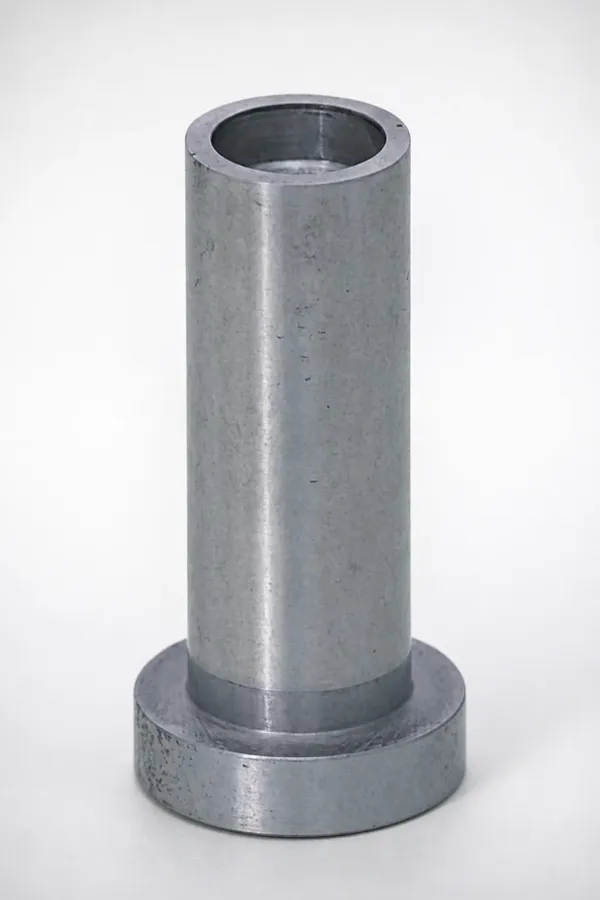
420SS is the workhorse version with 12-14% chromium, hardened to the same HRC 48-52 range. It polishes to about SPI A2, roughly Ra 0.025 µm, which covers most medical surfaces that are not optical. Use it for cavity plates, slides and wear pads where S136 ESR would be over-specification.
Prehardened P20 and 718H
P20 arrives prehardened at 28-32 HRC, machines fast and costs the least of the three families. It polishes to about SPI B1, roughly Ra 0.1 µm, which is fine for covered surfaces. It is not corrosion resistant, so gate lands and parting lines pit first when purge residue sits between shifts.
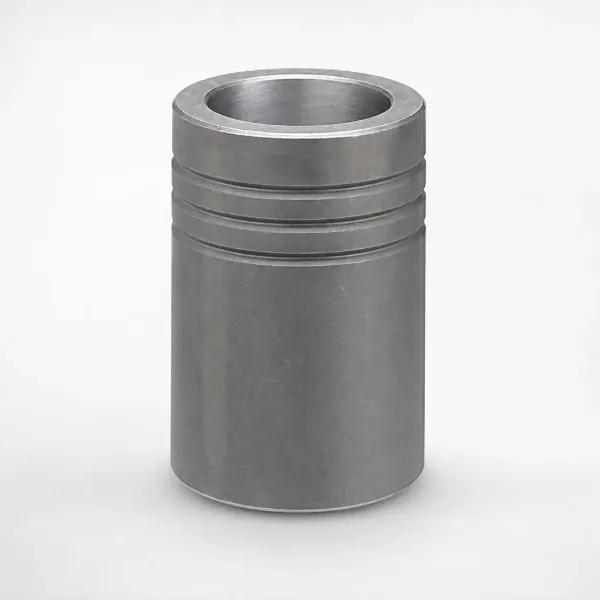
718H is the upgraded prehardened grade, a nickel-chromium-molybdenum steel at 33-38 HRC with more uniform hardness through thick sections. It polishes better than P20 and machines predictably. Both grades belong in pilot molds and short clinical runs, not in validated production tools.
H13 and SKD61: Heat and Abrasion
H13 and its Chinese equivalent SKD61 are hot-work tool steels, typically hardened to HRC 48-52 and reaching higher with surface treatment. They hold hardness where melt temperatures climb, which matters for PEEK and glass-filled resins with typical melt ranges of 340-400°C. They also resist the abrasion of glass fillers that erode softer cavities.
The trade-off is corrosion. H13 carries about 5% chromium, not enough for acid and disinfectant chemistry. It runs in runners, hot-runner manifolds and wear inserts rather than patient-contact cavity faces. Our P20 vs H13 vs S136 comparison covers the three grades side by side.
Hardness vs Polishability: The Trade-Off That Decides Cost
Hardness buys wear life. Polishability buys release, optics and cleanability. The two goals pull against each other, and no single grade maximizes both at once.
S136 at HRC 48-52 polishes to SPI A1. H13 in the same hardness range polishes to about SPI A2 or A3 with more bench time. P20 at 28-32 HRC polishes to SPI B1 and stops there. The ceiling is set by carbides, and higher carbon or vanadium-tungsten carbide content resists polishing. That is why 440C at HRC 58-60 polishes only to about SPI B1.
Release is where polish pays back. A mirror cavity releases parts at 0.5-1° of draft, while textured surfaces need 1-2°. Better release means fewer ejection marks, lower ejection force and less cycle-time variation, all of which matter in a validated medical process.
Polish cost is real and measurable. Moving from SPI B1 to SPI A1 roughly doubles hand-polish bench time in typical shop practice, and the cost lands on the mold price. The drawing decides it: if the surface is not optical and not patient-contact, name SPI B2 and save the hours.
The rule for medical work: put mirror finish only where the part needs it. Lenses, cuvettes and contact surfaces get A1 or A2. Hidden faces get B1 or B2. Every unnecessary A1 surface is polish hours on a tool that is already the most expensive line item in the program.
Corrosion-Resistant Grades Compared
When the application calls for corrosion resistance plus a specific wear or strength profile, the choice narrows to five grades. The table below compares composition, hardness and polish ceiling, with typical industry figures.
| Grade | Family | Chromium | Typical hardness | Polish ceiling | Best use |
|---|---|---|---|---|---|
| S136 (1.2083 ESR) | Martensitic stainless | ~16% | HRC 48-52 | SPI A1 (Ra ~0.012 µm) | Medical cavities, optical surfaces |
| 420SS | Martensitic stainless | 12-14% | HRC 48-52 | SPI A2 (Ra ~0.025 µm) | Cavity plates, slides, wear pads |
| 440C | High-carbon stainless | 16-18% | HRC 58-60 | SPI B1 (Ra ~0.1 µm) | Thin cores, gate inserts, wear edges |
| 17-4PH | Precipitation-hardening stainless | 15-17.5% | HRC 40-47 (H900) | SPI A3 / B1 | Slides, locking cores, strippers |
| Powder steel (ASP-23 / S90 class) | Powder metallurgy tool steel | Not stainless | HRC 62-66 | SPI B1 | Core pins, ejector pins, small inserts |
← swipe to scroll →
Table notes: composition, hardness and polish figures are typical industry values, not guaranteed material specifications. Verify the exact grade and heat treatment with your mold maker before ordering.
The table answers most selection questions. Cavity faces run S136. Thin cores and gate inserts run 440C when wear outranks polish. Slides and locking cores run 17-4PH, whose H900 temper around HRC 40-47 resists galling better than martensitic grades. Pins run powder steel at HRC 62+ because they are small, loaded and replaceable.
The same logic applies when you buy inserts instead of full cavities. Custom mold inserts let one mold mix grades, with S136 faces, 440C gate inserts and 17-4PH slides in a single tool.
Powder steel is the exception in the table. It is not stainless, so it carries no corrosion resistance, but pins and small inserts see less chemistry and more wear. A worn pin is a 3-7 day standard-part replacement, while a pitted cavity is a mold rebuild.
Sterilization Cycles and Thermal Stability
Sterilization happens to parts, but the mold feels it too. Autoclave cycles at 121-134°C, gamma at 25-40 kGy and EtO exposure anchor the device validation story. The mold survives the cleaning that supports those cycles. The steel must hold hardness and geometry through years of that routine.
Steam, Acid and Disinfectant Exposure
Molds get steamed and wiped with disinfectants between runs. Cooling circuits get descaled with citric acid at 5-10% concentration in typical practice. Published guidance puts the chloride limit for cooling water around 50 ppm, and carbon steel passes that limit long before the water does.
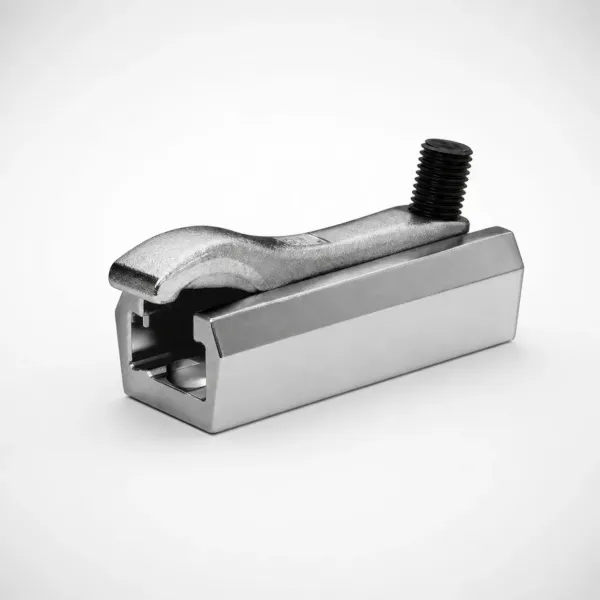
Stainless grades handle this routine at HRC 48-52. Below that hardness, pitting susceptibility rises in chloride environments. A pitted cooling line or gate land becomes a maintenance event every few months instead of every few years. The maintenance log tells the story faster than any datasheet.
Thermal Stability Under Molding Heat
Cavity steel sees resin melt on the surface and coolant at 10-80°C on the back. The danger is not the melt temperature, it is tempering. A cavity tempered at 150-250°C keeps its HRC 48-52 in service, while a steel tempered below its service temperature softens and wears faster.
Melt ranges set the thermal demand. PP runs at 200-250°C, PC at 280-320°C and PEEK at 340-400°C in typical processing. Hot-work grades extend the margin, with H13 holding hardness in service up to roughly 540°C, which is why it appears in hot-runner manifolds.
Thermal cycling moves dimensions. Mold steel expands about 11-12 µm/m·K at 80°C, and the DFM review accounts for that growth when critical dimensions run at ±0.005mm. Steel stability is a tolerance input, not a footnote.
Mold Life Expectations: 50k to 500k Shots
Life targets come from the program, not from the steel catalogue. Single-use disposables run millions of parts a year. Surgical instruments run thousands. The target decides the grade, the hardness and the replaceable-component plan.
| Application | Typical cavity steel | Typical hardness | Typical life target |
|---|---|---|---|
| Single-use syringe hub, multi-cavity | S136 or 420SS | HRC 48-52 | 300k-500k+ shots |
| Reusable instrument housing, polished surfaces | S136 (ESR) | HRC 48-52 | 200k-500k shots |
| Glass-filled valve and luer components | H13 or 440C inserts | HRC 48-60 | 150k-300k shots |
| Thin-wall microfluidic device, fine cores | S136 plus powder steel pins | HRC 52-62 | 100k-250k shots |
| Pilot or clinical-trial runs | P20 or 718H | HRC 28-38 | 50k-150k shots |
← swipe to scroll →
Table notes: life figures are typical industry expectations for well-maintained molds, not warranties. Actual life depends on resin, cycle conditions and maintenance discipline.
Where Wear Happens First
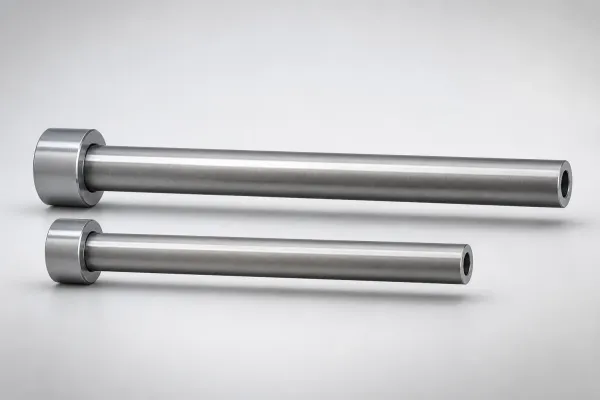
Wear shows up in predictable places. Gate orifices erode by 0.05-0.2 mm before rework. Ejector pins fail first because they are small, hot and loaded. Both are standard parts with standard lead times, and DieStrike ships ejector pins, core pins and gate components in 3-7 days.
The arithmetic helps. A device that needs 6 million units a year across a 16-cavity mold runs about 375,000 shots a year at 85% uptime. That puts the life target at 300k-500k shots for a 2-3 year program. A grade picked for 100k shots fails in the first year.
Hardened cavities extend the top of the range. DieStrike treats cavities to HRC 62 for abrasive medical resins. The geometry that survives 400,000 shots is the geometry cut at ±0.002mm and verified on a CMM. Long life is a machining result, not a material promise.
Plan the wear points at design time. Gate inserts, replaceable core tips and standard ejector pins keep the validated cavity block untouched. A replaceable gate insert costs a fraction of a cavity rebuild and does not reopen the validation file.
How Steel Choice Moves Cost and Lead Time
Steel is a small share of mold cost and a large share of mold risk. The material moves the quote by thousands, not tens of thousands, but the grade drives machining time, polish hours and rework exposure.
The Cost Ladder
The ladder is consistent across the industry. P20 and 718H are the low-cost entries. S136 ESR sits roughly 30-60% above prehardened grades per kilogram in typical sourcing. Powder steel and 440C sit above S136. On a $60,000 mold the steel spread is usually $3,000-8,000.
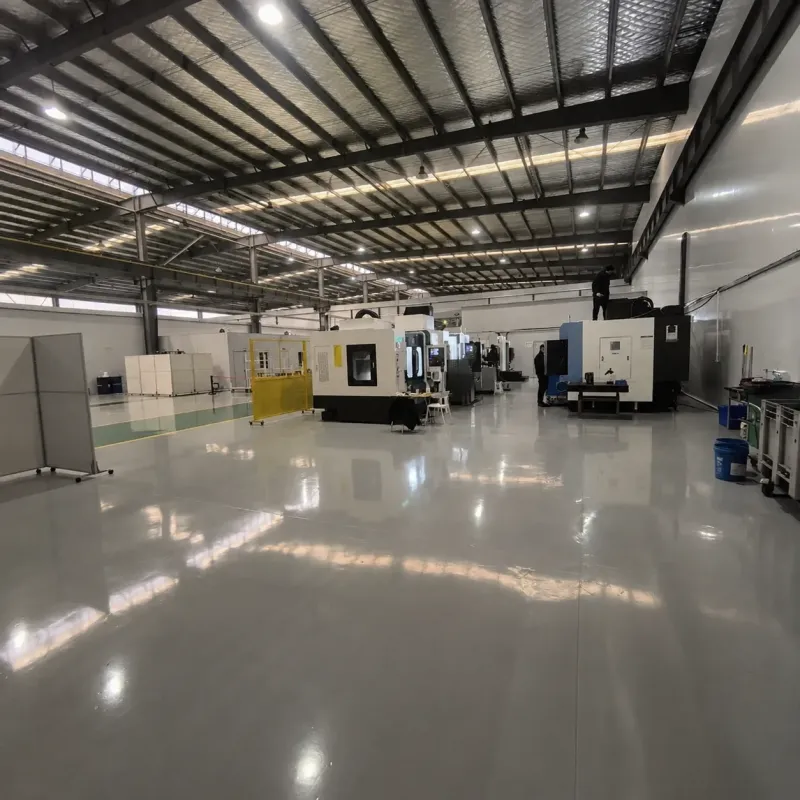
Processing adds more than material. Stainless machines and grinds slower, ESR grades cost more per kilogram, and mirror polish adds bench hours at the end. Lead time follows the same ladder, and DieStrike quotes injection molds at 2-4 weeks with standard stock grades arriving fastest.
Availability shapes the schedule too. P20 and 718H are stocked everywhere. S136 ESR and powder grades may add 1-2 weeks to sourcing in typical supply chains. Ordering the right grade on the first PO avoids the rework that a rushed substitution causes.
The false economy is easy to spot in hindsight. A P20 cavity that fails at 120,000 shots instead of 400,000 saves money on steel. It spends that saving on a rebuild, a revalidation and a supply interruption. Compare per-part cost over the full life target, not the purchase price.
How to Specify Surface Finish on the Drawing
Polish grade is a drawing call, not a shop preference. The SPI scale runs from A1 at about Ra 0.012 µm, through A2 and A3, down to B1-B3, C and D grades. Name the SPI grade and the Ra target, and the mold maker can price it and verify it.
From EDM to Mirror
EDM leaves a recast white layer of roughly 5-10 µm that must be removed before polishing. Wire EDM finishes typically land at Ra 0.4-0.8 µm, which is a starting point, not a final surface. The polishing pass removes the recast layer and sets the true finish.
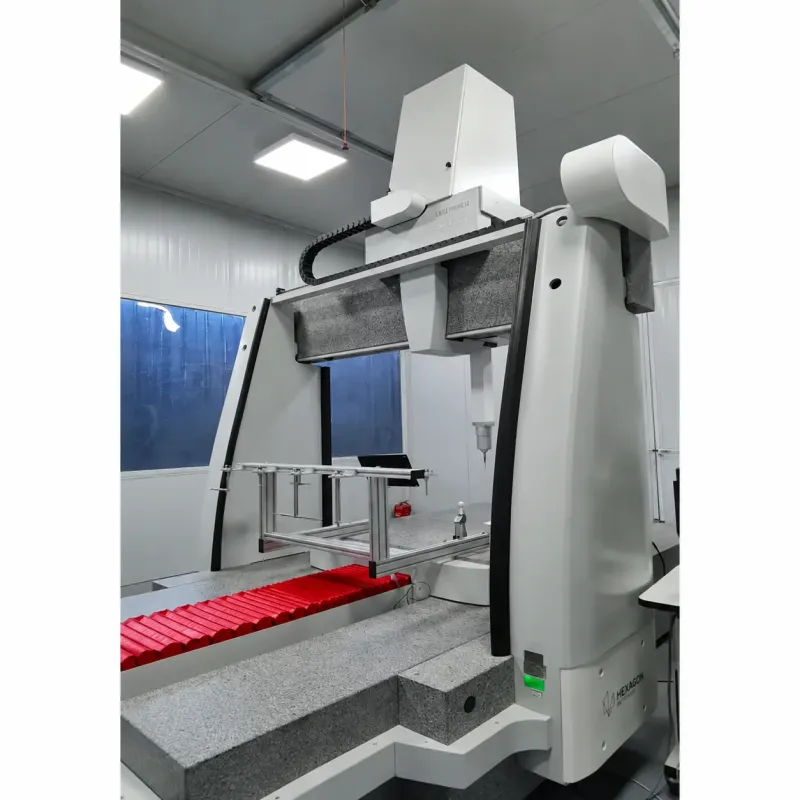
Polishing direction follows draw direction. A surface polished across the draw direction can hang up on release, and ejection marks appear where the finish fights the pull. The DFM review checks draft against finish, because an A1 surface needs only 0.5-1° of draft to release.
Gate and runner polish deserves the same attention. A rough gate land adds pressure drop and wears faster, and the gate is the first surface corrosion attacks. Polishing the gate land to the same spec as the cavity keeps the tool consistent.
Verify the finish at first article. A profilometer reading against the drawing Ra beats a visual judgment, and the measurement goes into the first article report. On medical tooling, the finish record becomes part of the validation file.
Locking the Grade at DFM
DFM is where the steel decision gets frozen. The mold maker reviews the part with five inputs in hand: resin and sterilization method, program volume, geometry and tolerance, surface finish spec, and budget. The output is a grade, a hardness range and a heat treatment route that survive into production.
DieStrike returns DFM feedback within 24 hours. The review flags tolerance-versus-shrinkage conflicts, finish-versus-release conflicts and steel-versus-corrosion conflicts before any steel is ordered. That window catches the expensive mistakes for free.
The DFM output should state the grade, the hardness range, the tempering temperature, the finish target and the life target. It should name critical features at ±0.002mm and the cavity hardness at HRC 62 where hardened tooling applies. Put all of it on the drawing.
Change control is unforgiving. A steel swap after the order is a drawing revision, a new quote and a schedule slip. Locking the grade at DFM keeps the validation file clean from the first record. Start with the mold design for manufacturability review and the grade decision comes with it.
Supplier evidence closes the loop. DieStrike supplies precision tooling to customers including TE Connectivity, Amphenol, Luxshare and Dongshan Precision, and ships injection molds in 2-4 weeks. The same factory treats cavities to HRC 62, holds ±0.005mm mold accuracy and returns CMM reports with the tool.
FAQ
Q1. Is S136 the right steel for every medical mold?
S136 covers most cavity faces, but not every feature. Thin cores and gate inserts wear faster in glass-filled resins, where 440C at HRC 58-60 or H13 at HRC 48-58 holds longer. Slides and locking cores run 17-4PH. Pins run powder steel at HRC 62+. Match the feature, not just the mold.
Q2. What hardness should a medical mold cavity run?
HRC 48-52 is the typical window for S136 and 420SS. Wear-critical features run HRC 58-62 in 440C, H13 or powder steel. Below HRC 45, pitting and wear both accelerate under medical cleaning chemistry, so keep the cavity out of that range.
Q3. Can I use P20 for a medical mold?
Yes, for pilot and clinical-trial runs under roughly 50k-150k shots. P20 at 28-32 HRC polishes to about SPI B1 but pits under purge residue, acid washes and disinfectants. If the program is headed to production, specify S136 from the start and avoid the steel change.
Q4. How many shots should a medical mold last?
Typical targets run 50k-500k shots. Single-use disposables run 300k-500k+ on S136 or 420SS. Reusable instrument housings run 200k-500k. Pilot molds run 50k-150k on P20 or 718H. Set the target at DFM and the grade follows.
The Bottom Line
A cavity steel decision made without corrosion, polish and life targets is a mold that fails at 120,000 shots and a validation file that restarts. DieStrike builds medical-grade molds under IATF 16949 with ±0.005mm accuracy, 120+ machines and a 24-hour DFM response, so the grade locks before steel is cut.
Send your part drawing to DieStrike and get the steel recommendation with your DFM review.
KEEP READING
Related Reading
5 Mold Cooling Channel Design Tips for Faster Cycles
Mold maker's 5 cooling channel design rules: channel-to-cavity distance 2-2.
Read articleArticle5 Shrinkage Compensation Rules for Mold Design
Shrinkage compensation decides mold accuracy. Five rules: material rates from 0.3% to 2.
Read articleArticle5 Ways to Reduce Mold Cost Without Cutting Quality
Five proven ways to reduce injection mold cost without cutting quality: DFM before quoting, right-sized cavity count,…
Read articleArticle7 Gate Design Best Practices for Balanced Filling
Mold maker's 7 gate design rules for balanced multi-cavity filling: gate depth 50-80% of wall thickness, land 0.5-1.
Read articleNEXT STEP
Ready to Start Your Mold?
Send us your element dimensions or part numbers — our team responds within 24 hours with pricing and lead time.

Written by
Ray ChanMold Buyer's Guide Author · Precision Mold Manufacturing Specialist. Ray helps global importers, distributors and OEMs source factory-direct molds and mold parts.