
Medical Injection Molding Guide: Materials, Tolerances & Compliance
Table of Contents
Your luer connector clears every dimensional check at the molder. It fails sterility testing after gamma irradiation. The datasheet said "medical grade," but the grade carried no radiation stabilizer, and 25 kGy of gamma embrittled the polymer. You now hold 40,000 quarantined units. Your 510(k) timeline slips a quarter.
And the mold's cavity finish cannot be touched without restarting process validation.
That failure pattern repeats across device programs because teams treat medical injection molding as ordinary injection molding in a cleanroom. It is not. The resin, the tool, the tolerance and the paperwork are one system, and each decision locks the others in place. This guide covers what device teams actually need to specify: resin selection, achievable tolerances, prototyping routes and audit-ready evidence. We start with the market, then the material, then the tool.
None of this is academic. The mold is the most expensive single decision in a device program, and it is the least reversible one. A $60,000 mold built around the wrong resin is not a process problem. It is a capital write-off plus a revalidation cycle that runs 6-12 months in most programs.
The Snapshot
- Medical injection molding is a published $25B+ market in 2025, growing near 6% per year. The decisions that matter are made 9-18 months before launch.
- Sterilization method decides the resin shortlist. PC survives roughly 10-20 autoclave cycles before hydrolysis cracking; stabilized PP handles 100-200, and PPSU exceeds 100.
- Production tooling for medical runs typically costs $3,000-$100,000+, with published lead times from 10-15 days to 4-6 weeks. Every post-validation change reopens documentation.
- Precision molds hold ±0.005mm standard and ±0.002mm on critical features, machined with 0.0005mm jig-ground accuracy and mirror finishes down to Ra 0.02µm.
What Makes Medical Injection Molding Different
Published estimates put medical injection molding at $25.1B in 2025, heading to $39.7B by 2033 (Grand View Research, 5.9% CAGR). A narrower analyst definition counts $7.5B in 2024, reaching $10.8B by 2031 (The Insight Partners). The spread is the point. Scope definitions differ wildly, but every definition grows at 5-6%. Devices are becoming plastic, and plastic devices are becoming regulated.
Three layers separate medical work from commodity molding:
- Material qualification. The resin must hold biocompatibility evidence in the finished, sterilized state, not just on a datasheet. ISO 10993-1 grades contact by type and duration: limited (up to 24h), prolonged (up to 30 days), permanent (over 30 days).
- Process validation. IQ/OQ/PQ documentation freezes the process. Melt temperature, hold pressure, mold temperature and cycle time become evidence, and changing any of them after validation is a documented event.
- Change control. Mold steel, gate design, cavity count and polish grade are locked at validation. The FDA design-control framework (21 CFR Part 820.30) and EU MDR 2017/745 both assume this frozen state.
Device class also shapes the work. Class I devices need far less evidence than Class II (syringes, infusion sets) or Class III (implantables). But the mold does not know your class. The cavity precision that keeps a Class I housing cheap is the same precision that keeps a Class II valve seat safe. That is why the tooling decisions below matter regardless of your submission path.
Environment is part of the definition too. Molded medical parts typically come off presses in ISO Class 7 or Class 8 cleanrooms. Air changes, gowning and material handling follow, and commodity shops never see any of it. That environment is priced into the molding rate, and it belongs in your cost model from the first quote.
Medical Plastics: Choose Resins Against Sterilization First
Lock the sterilization method before you lock the resin. Four methods dominate: steam autoclave at 121-134°C, gamma irradiation at a typical 25-40 kGy, ethylene oxide (EtO), and e-beam. Each one eliminates resins from your shortlist. The published failure mode is almost always sterilization-induced cracking or yellowing. Every medical plastic molding program runs on the same rule: the material and the process are validated together, or not at all.
Polycarbonate is the classic trap. It is strong, clear and cheap, so teams spec it for housings and luer fittings. Then the device is autoclaved and the PC hydrolyzes: published testing shows cracking and clouding after roughly 10-20 cycles. Gamma is not much kinder, yellowing PC and dropping impact strength.
Polypropylene works the other way. Standard PP embrittles after 25 kGy. Medical grades carry a stabilizer package of about 0.3% HALS, 0.2% phenolic antioxidant and 0.1% phosphite. Those grades survive repeated gamma cycles and 100-200 autoclave cycles.
The biocompatibility evidence has two tiers. USP Class VI is a fast screen: three tests (acute systemic toxicity, intracutaneous reactivity, implantation). ISO 10993 is the modern framework that FDA and the EU expect, and finished-part testing is always required. "USP Class VI compliant" pellets do not guarantee that the molded, sterilized part passes ISO 10993-5 cytotoxicity. Additives and process change the extractables profile.
| Resin | Typical medical use | Steam 121-134°C | Gamma / E-beam | EtO |
|---|---|---|---|---|
| PC (polycarbonate) | Housings, luer fittings, transparent parts | Poor, hydrolysis after ~10-20 cycles | Poor, yellows | Good, degas |
| PP (medical grade) | Syringes, labware, disposables | Good, 100-200 cycles | Good with stabilizer package | Good |
| PEEK | Implantables, reusable instruments | Good | Good | Good |
| PPSU / PSU | Reusable surgical instruments | Good, 100+ cycles | Good | Good |
| PEI (Ultem) | Housings, sterilization trays | Good | Good | Good |
| PMMA | Optical components, cuvettes | Poor | Good | Poor |
| COC / COP | Prefilled syringes, optical parts | Good | Good | Good |
| TPU / silicone (LSR) | Catheters, seals | Conditional | Good | Good |
← swipe to scroll →
Dimensional stability is the second filter, after sterilization. PA and POM absorb moisture and shift dimensions between molding and the inspection bench. PC and PEEK hold tighter, which is why precision features in semicrystalline resins need post-mold conditioning and a documented measurement window.
On the mold side, aggressive medical resins change tooling too. Glass-filled and carbon-filled grades and PEEK abrade cavity steel. Stainless mold steel in the 420SS/S136 class is standard for medical tooling. Hardened to about HRC 48-52, it resists corrosion and cleanroom chemistry, and it polishes to the mirror finish optical surfaces need.
Tolerance Classes: What a Medical Part Can Actually Hold
Molded tolerances follow ISO 20457, which replaced DIN 16901. Published practice sorts parts into tolerance classes. Commodity work runs at ±0.25mm, fine features at ±0.10mm, precision at ±0.05mm. Ultra-precision goes to ±0.005mm or tighter for microfluidic and optical features. Most medical devices live between fine and precision; implant interfaces and optical datum features live at the bottom of the ladder.
Two physics facts decide which class you can specify. First, shrinkage. Amorphous resins like PC and PMMA shrink 0.4-0.7%. Semicrystalline resins like POM, PA and PP shrink 1.5-2.5%. The variation in that shrinkage lands directly on your tolerance.
Second, geometry: non-uniform wall thickness, long flow lengths and late gate placement all widen the distribution. A DFM review that catches a 3mm-to-0.5mm wall transition before steel is cut is worth more than any inspection plan added after.
Process control is the third variable, and it is the one teams underestimate. Hold pressure, mold temperature and cooling time each move the part dimensionally. A 5°C swing in mold temperature can shift a critical dimension by several microns on semicrystalline resins. That is why validated molds run with recorded parameters per shot, not per shift.
| Tolerance class | Published range | Typical medical feature | What it demands |
|---|---|---|---|
| Commodity | ±0.25mm | Housings, covers | Standard tooling, any resin |
| Fine | ±0.10mm | Snap fits, threads, luer hubs | Uniform walls, controlled process |
| Precision | ±0.05mm | Valve seats, catheter hubs | Tight mold steel, CMM inspection |
| Ultra-precision | ±0.005mm, critical ±0.002mm | Microfluidic channels, optical datums | Jig-ground cavities, mirror polish, locked process |
| Micromolding | Features at 50-100µm | Implant components, sensors | Sub-1g parts, specialist tooling |
← swipe to scroll →
DieStrike molds hold ±0.005mm as the standard class and ±0.002mm on critical features. Wire EDM positioning holds ±0.002mm, and jig grinding holds 0.0005mm. That tooling accuracy is what makes the molded-part tolerance possible at all. A cavity that cannot be cut to 0.002mm cannot hold a 0.005mm part dimension through 500,000 shots.
Inspection matters equally; 8+ CMM stations give cavity-by-cavity and shot-by-shot evidence for your first article inspection and IQ/OQ/PQ files. Send drawings early: mold design for manufacturability review returns a 24-hour DFM response that flags tolerance-versus-shrinkage conflicts before you commit steel.
Medical Device Prototyping: De-Risk Before You Cut Steel
Prototyping has three rungs, and teams that skip rung two pay for it at validation. Rung one is additive. SLA or SLS prints at 0.1-0.2mm resolution cover ergonomics, fit and surgeon feedback.
Rung two is machined. CNC-machined PEEK, PC or PP parts come from bar stock in days, with no tooling cost. They are close enough to final properties to test function.
Rung three is molded: soft aluminum tooling for 100-10,000 parts with a published mold life of 10k-50k shots, then hardened steel tooling for 500k-1M+ shots.
The trap is treating machined prototypes as proof of the molded design. Machining does not reproduce molded shrinkage, gate vestige, weld lines or residual stress. A snap-fit that works in a machined PC part can crack in the molded part because of a gate location you did not think about. Validate geometry and material on real molded parts before you lock tolerances.
That is exactly what a pilot run on production-intent tooling buys you. For device teams, this is where medical device prototyping separates a de-risked program from a discovery program.
Documentation starts at the prototype stage, not at PQ. Material certificates, sterilization compatibility checks and DFM records from the pilot mold carry straight into the validation file. Teams that prototype without a paper trail rebuild that history later, usually under audit pressure.
Timing is a published hazard too. Tooling lead times in the industry range from 10-15 days for simple soft tooling to 4-6 weeks for production molds. DieStrike quotes plastic molds at 2-4 weeks with a 24-hour DFM response, which keeps the validation calendar honest. Plan the pilot so IQ/OQ/PQ runs on the same tool, the same steel and the same gate design you will ship with.
Mold Design Decisions That Drive Cost and Quality
Cavity steel is the first decision. P20 serves soft tooling and short runs. 420SS/S136-class stainless serves medical production, hardened to roughly HRC 48-52 for corrosion resistance, cleanroom chemistry and polishability. H13 and SKD11 serve abrasive, glass-filled resins and reach HRC 52-62. For ejector pins and core pins, ASP-23-class powder steel at HRC 62 resists the galling that kills standard pins in long medical runs.
Gate design decides both cost and cosmetics. A hot runner eliminates regrind contamination, which matters in cleanroom molding where regrind reintroduces degraded polymer and additive variability. Cold runners are simpler and cheaper, but every regrind cycle changes the melt history of the material.
On visible or contact surfaces, gate vestige is a rejection criterion. Submarine gates shear flush. A pin gate leaves a bump that a 0.1mm cosmetic spec will flag.
Draft and finish work together. Polished walls release parts at 0.5-1° of draft; textured walls need 1-2°. Undercuts force side actions, and every side action is a wear point and a validation variable. Keep the part line off critical sealing surfaces and put the witness line where inspection can reach it.
Mold trials are the cheapest insurance in the program. A trial run at production conditions catches flash, short shots and ejection marks while the tool is still in the builder's shop. Fixing them in a trial costs days. Fixing them after validation costs a revalidation cycle.
Cost follows a published ladder. Simple soft tooling runs $3,000-$10,000, and production molds with a few cavities run $10,000-$50,000. Multi-cavity, hot-runner, high-polish medical tooling runs $50,000-$100,000+. Cavity count is the lever on per-part cost, but it multiplies validation scope, because each cavity must prove itself in first article inspection.
That trade-off is covered in detail in our injection mold cost guide. DieStrike builds injection molds from single-cavity development tools to production multi-cavity systems.
Medical Machining: The Toolroom Behind the Tolerance
Medical machining shows up in three places. First, machined prototypes and metal device components. Second, the cavity itself: a mold cavity is one of the most precisely machined surfaces in manufacturing. Third, mold components that wear and need replacement with verified geometry.
The machine floor that makes ±0.005mm molded parts look easy is not ordinary. Jig grinding holds 0.0005mm on dowel holes and ejector positions. Wire EDM cuts at ±0.002mm. Mirror EDM finishes cavity surfaces to Ra 0.02µm. Single-point diamond turning reaches 0.0001mm for optical inserts.
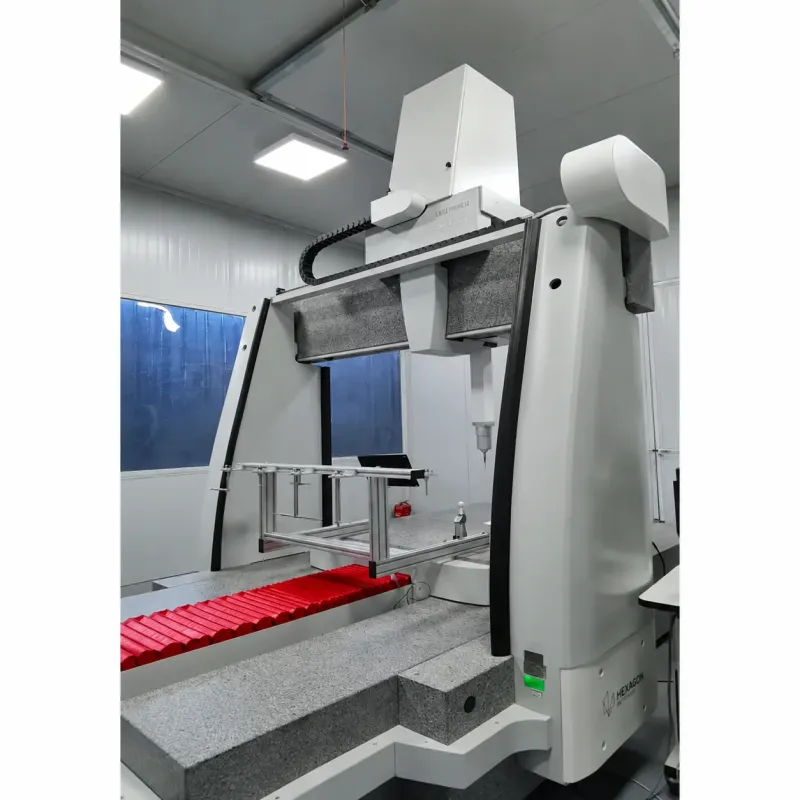
Add 30+ CNC machines and 8+ CMM stations, and you have the toolroom that makes tight tolerances repeatable rather than lucky.
Surface finish is a functional spec in medical tooling, not a cosmetic one. The SPI scale runs from A-1 (about Ra 0.012µm, a mirror) down through B and C grades to sandblasted textures. Published studies associate higher bacterial retention with surfaces rougher than roughly 0.8µm Ra. That is why cavity polish matters for anything that touches a patient or a sterile field. A-1 mirror polish also releases parts more reliably, reducing ejection marks and cycle-time variance.
Polish grade is a drawing call, not a shop preference. If the surface is not on the print, you will get whatever finish the builder runs as standard. Name the SPI grade, the Ra target and the measurement method on the drawing. Check it in first article inspection.
Wear is the hidden cost. Glass-filled and carbon-filled resins and PEEK erode cavity steel over hundreds of thousands of shots, and ejector pins are the first failure point. Hardened tool steel at HRC 62 (SKD11, 8407, ASP-23 classes) and replaceable standard components keep a validated mold alive. DieStrike ships ejector pins, core pins, sprue bushings and other standard parts in 3-7 days with MOQ 1. A worn pin does not force a mold rebuild or a validation restart.
Regulatory Reality: Certifications, Validation and Traceability
The paperwork chain has three links, and they are different certifications. The device maker holds ISO 13485 and FDA establishment registration. The contract molder often holds ISO 13485 as well. The mold maker holds manufacturing quality certifications. DieStrike operates under IATF 16949, ISO 9001 and ISO 14001.
None of these replaces your device QMS, but the mold maker's documentation becomes part of your validation file. That file is what an FDA or notified-body audit actually reads.
Process validation is where molded evidence is created. IQ (installation qualification) proves the mold and machine are what the drawings say. OQ (operational qualification) proves the process window. PQ (performance qualification) proves the process holds over production batches.
Every cavity needs its own first article inspection with CMM reports. Molding parameters recorded per shot become the evidence that a change in hold pressure is a documented event, not a tweak.
Process Validation: The DQ/IQ/OQ/PQ Sequence
Medical process validation is not one activity but four, and each stage has a distinct question it answers. Skipping a stage — or treating it as paperwork — is the most common way a medical molding project passes its first audit and then fails at scale. The table below lays out what each stage actually verifies and what a mold buyer should expect to see documented.
| Stage | Question It Answers | What Gets Verified | Mold Buyer's Evidence |
|---|---|---|---|
| DQ — Design Qualification | Is the tooling design right on paper? | Mold design meets the device requirement: cavity count, steel, tolerance plan, gate and cooling layout | Mold design review sign-off, DFM report, tolerance analysis |
| IQ — Installation Qualification | Is the mold what the drawings say it is? | Mold dimensions, steel grades, hardness, fit — verified against drawings on arrival | CMM first article report, material certificates, hardness reports |
| OQ — Operational Qualification | Does the process window hold? | Melt temperature, mold temperature, pressure and cycle-time ranges produce parts in spec across the window | Trial reports across process setpoints, short-run dimensional data |
| PQ — Performance Qualification | Does the process hold across production batches? | Repeated batches run in spec under production conditions — the proof of repeatability | Batch-level CMM data, process capability (Cpk) records, lot traceability |
← swipe to scroll →
DQ/IQ/OQ/PQ sequence per 21 CFR Part 820.75 and ISO 13485 process validation practice. A mold maker's deliverables typically cover DQ through IQ; OQ and PQ are run jointly with the molder and the device team.
The practical split for a device buyer: DQ and IQ are the mold maker's proof, OQ and PQ are the molder's proof. When you buy a mold directly, you own the interface between them. Ask for the DQ sign-off and the IQ reports as part of the mold delivery, then confirm who runs OQ and PQ before the mold ships. A mold that arrives with a CMM report but no DQ record leaves validation open — and the auditor will find the gap.
Traceability runs to the resin lot, not the material family. Name the grade on the drawing. PEEK-OPTIMA, Makrolon Rx, Radel R and Zeonex are published examples. Then require the certificate against the lot that actually ran your parts. Mold serial, cavity number and inspection report must line up on every record.
Change control is unforgiving: a cavity modification, a steel swap or a gate rework after validation reopens qualification. That is why mold maintenance and component replacement records matter as much as the initial build.
Sterilization validation has its own standards: ISO 11135 for EtO, ISO 11137 for radiation, ISO 17665 for steam. Risk management follows ISO 14971, and design controls per 21 CFR Part 820.30 tie every tooling decision back to a requirement. The practical translation: keep the DFM review, the material certificates, the CMM reports and the maintenance log in one file. The auditor will ask for all four.
Supplier quality agreements belong in this file too. A mold maker that ships with CMM reports, material certificates and a maintenance log gives your auditor a closed loop. One that ships only a mold leaves the loop open, and the auditor will close it with questions.
FAQ
What is medical device injection molding?
Medical device injection molding is the high-volume production of plastic components for Class I, II and III devices under documented process control. It combines biocompatible resins, validated tooling, cleanroom-capable processes and lot-level traceability. Published estimates size the market at $25.1B in 2025, growing near 6% per year. Growth is driven by single-use devices and the shift from metal to plastic in surgical instruments. European teams searching for injection moulding medical will find the same suppliers, standards and processes under the British spelling.
Which medical plastics survive gamma sterilization?
Gamma-stabilized polypropylene, PSU, PEI and PEEK survive gamma well. PC yellows and loses impact strength, while PA6 and POM chain-scission and embrittle. Medical PP grades carry a stabilizer package of roughly 0.3% HALS, 0.2% phenolic antioxidant and 0.1% phosphite. Standard PP is brittle after 25 kGy.
What tolerances can medical injection molding hold?
Fine features run at ±0.10mm, precision features at ±0.05mm, and ultra-precision features at ±0.005mm, with ±0.002mm achievable on critical dimensions. Micromolded features reach the 50-100µm scale. Achievable tolerance depends on resin shrinkage, wall thickness uniformity, tooling accuracy and process control. It does not depend on the molder's promise.
Can I prototype a medical device without a production mold?
Yes, in stages. 3D printing at 0.1-0.2mm resolution handles fit and ergonomics. CNC machining of PEEK, PC or PP parts delivers functional prototypes in days with no tooling cost. Aluminum soft tooling covers 100-10,000 parts at 10k-50k shots of mold life.
Validate the final design on molded parts, because machining does not reproduce shrinkage, weld lines or gate vestige. Keep the sterilization method fixed through all three rungs.
How does medical machining relate to injection molding?
Medical machining covers machined prototypes, metal device components, and the tooling itself. Cavities are jig-ground to 0.0005mm, wire-EDM cut at ±0.002mm, and mirror-finished to Ra 0.02µm. Machining also bridges parts that cannot be molded, like thin metal cannulas or features too small for a gate to fill.
Do I need ISO 13485 to buy injection molds for medical devices?
Your device QMS is your responsibility. What you need from a mold maker is a documented quality system: IATF 16949 or ISO 9001 class. You also need DFM records, CMM inspection reports, lot-level material certificates and change-control discipline. That evidence package feeds your validation file, regardless of who holds the device certification.
The Bottom Line
Every choice in this chain, resin, steel, tolerance, gate, polish, gets frozen the day the mold is validated. That is why the fix for a bad decision is a new mold, not a process tweak. A mold that cannot hold ±0.002mm or polish to SPI A-1 shows up in your field failure rate, not your mold quote. Device teams that bring the mold maker into the DFM conversation 9-12 months before launch, with the sterilization method already chosen, compress the risk window. They also keep the validation file clean, and that file is what gets the device to market.
KEEP READING
Related Reading
5 Mold Cooling Channel Design Tips for Faster Cycles
Mold maker's 5 cooling channel design rules: channel-to-cavity distance 2-2.
Read articleArticle5 Shrinkage Compensation Rules for Mold Design
Shrinkage compensation decides mold accuracy. Five rules: material rates from 0.3% to 2.
Read articleArticle5 Ways to Reduce Mold Cost Without Cutting Quality
Five proven ways to reduce injection mold cost without cutting quality: DFM before quoting, right-sized cavity count,…
Read articleArticle7 Gate Design Best Practices for Balanced Filling
Mold maker's 7 gate design rules for balanced multi-cavity filling: gate depth 50-80% of wall thickness, land 0.5-1.
Read articleNEXT STEP
Ready to Start Your Mold?
Send us your element dimensions or part numbers — our team responds within 24 hours with pricing and lead time.

Written by
Ray ChanMold Buyer's Guide Author · Precision Mold Manufacturing Specialist. Ray helps global importers, distributors and OEMs source factory-direct molds and mold parts.