
Laser Welding vs TIG for Mold Repair: Which Process When
Table of Contents
A 32-cavity connector mold left the press with a 12 mm crack across the parting line of cavity 17. The tool room welded it with TIG and no preheat. The crack reopened at 3,200 shots, the run scrapped 41,000 terminals, and the line-down bill added $18,000 before the insert was finally rebuilt. The failure was not a welding skill problem. It was a process selection problem on a hardened, finish-ground surface.
Laser welding and TIG welding both repair steel molds, and both belong in a precision tool room. The real difference is heat input, deposit size, and what happens to the hardened steel around the weld. Laser welding puts a 0.1-0.5 mm heat affected zone (HAZ) into the base metal. TIG welding pushes that zone to 1-3 mm and usually demands preheat at 200-350°C plus a post-weld temper near 480-550°C for hot-work grades. This article is a process selection guide for mold repair, written from the tool room side of the parting line.
The Snapshot
- Laser welding deposits 0.1-0.5 mm layers per pass with a HAZ of 0.1-0.5 mm, which suits finished parting lines and hardened cavities at HRC 50-62.
- TIG welding deposits metal fast with a 1-3 mm HAZ, which suits cavity corners, slide faces, and other volume that will be re-machined to print.
- TIG on hardened hot-work steel typically needs preheat at 200-350°C and a post-weld temper near 480-550°C, while a small laser repair on the same steel usually skips both (typical ranges, confirm per grade).
- A TIG repair changes hardness across a zone 6-10 times larger than a laser repair, which decides whether the weld sits on a load-bearing edge or a cosmetic surface.
- Replace, do not weld, when damage needs more than 2-3 mm of build-up across a large face, when heat checking covers 20-30% or more of a cavity, or when the same spot has been welded three or more times (typical shop thresholds).
Why Weld a Mold at All
Welding exists in mold repair for one reason: a damaged tool returns to production faster and cheaper than a new one. A fresh insert typically needs 2-5 weeks to be cut, hardened, and finished on a precision schedule. A weld repair can put a small damage site back in the press in 1-3 days when the process matches the steel and the surface condition.
Typical weld triggers include a dinged parting line at 0.1-0.5 mm depth, an eroded gate land, a scuffed shut-off edge, corrosion pitting on a cavity face, or a cracked corner on a slide. Each trigger has a preferred process. TIG on a 0.2 mm parting-line nick is a hammer on a watch, while laser on a 5 mm deep corner rebuild adds an hour of passes where TIG needs minutes.
The stakes are dimensional. DieStrike holds mold part geometry to ±0.002 mm and overall mold accuracy to ±0.005 mm on new tools. A weld that moves a parting line 0.02 mm, or leaves a 0.01 mm witness mark, scraps parts at the first trial. The process choice therefore starts with the tolerance of the surface being repaired, which is exactly how our mold repair and maintenance service routes every damaged tool that arrives at the door.
Laser Welding: Low Heat Input for Finished Surfaces
Laser welding melts a small puddle of filler and base metal with a focused pulsed beam. Deposits run 0.1-0.5 mm per pass in typical mold repair, and the HAZ stays in the 0.1-0.5 mm range. The weld lands close to net shape, so the tool is finished with light grinding and polishing instead of a full re-machining pass.
Small heat input is what makes laser welding safe on hardened steel. A cavity at HRC 50-62 can be laser repaired without re-tempering the surrounding material, because the annealed zone is only a few tenths of a millimeter deep (typical). That is why laser is the standard route for mirror-polished faces that must hold an SPI A1-class finish after the fix.
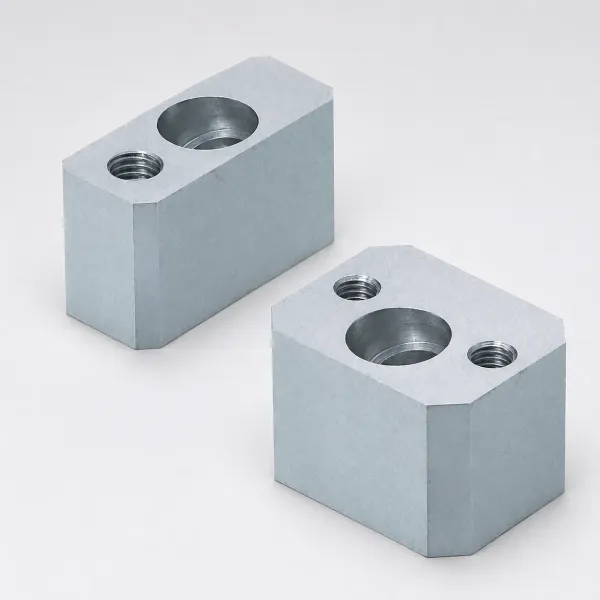
Parting line steel loss of 0.05-0.2 mm after a crash is a laser repair. An eroded gate land that has grown 0.1-0.3 mm can be rebuilt in thin layers and re-cut to its original width. Skilled hands typically land the bead within 0.02-0.05 mm of final geometry, so the remaining work is grinding, lapping, and polishing rather than milling (typical practice).
Laser welding is slow at moving volume. A welder lays 0.1-0.5 mm per pass, so rebuilding a pocket 3 mm deep takes many passes and real patience. The process wins on precision and surface preservation, not on speed or cubic millimeters per hour.
TIG Welding: High Deposition for Big Damage
TIG welding, formally gas tungsten arc welding, runs a tungsten electrode with filler rod under argon shielding. A single TIG pass on a mold deposits several times the metal of a laser pass, and the HAZ runs 1-3 mm (typical). It is the volume process for mold repair. Cracked cavity corners, worn slide faces, and damaged mold base sections are its natural territory.
TIG repairs are planned as build-up plus re-machining. The deposit is irregular and the HAZ is millimeters deep, so the repaired area is milled, ground, or EDM'd back to print. The final geometry comes from the machining step, not from the weld pass. TIG therefore tolerates deposit variation that would ruin a laser repair on a finished surface.
The heat bill is real and must be managed. On hardened tool steel, TIG typically requires preheat at 200-350°C to avoid hard-zone cracking, plus a post-weld temper often run at 480-550°C for hot-work grades such as H13 (typical ranges, always check the grade data sheet). That thermal cycle can shift dimensions by 0.01-0.05 mm, so TIG repairs suit areas that will be re-cut, not finished faces held to ±0.005 mm.
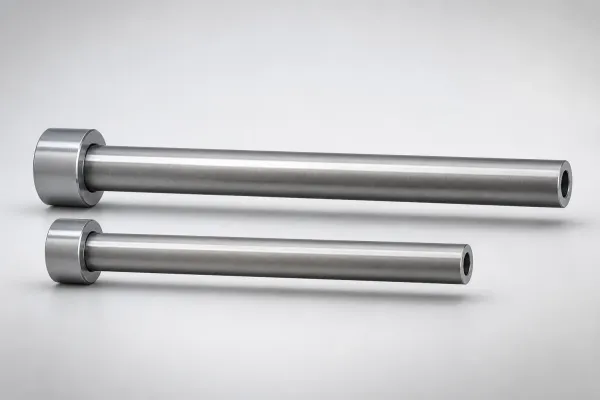
Do not read this as a verdict against TIG. A 6 mm corner rebuild, a 10 mm crack in a mold base, or a worn lifter face would be absurd to attempt with sub-millimeter laser passes. The correct question is never which process is better. It is which process fits the damage volume, the steel condition, and the surface finish requirement of that specific repair.
Heat Affected Zone: The Numbers That Drive the Choice
The HAZ is the ring of base steel whose hardness and microstructure the weld heat changes. Laser welding on a mold typically produces a HAZ of 0.1-0.5 mm. TIG welding typically produces 1-3 mm. That is a 6-10 times difference in the volume of steel that loses its original heat-treated condition.
In a hardened cavity at HRC 62, a 2 mm TIG HAZ creates a soft annulus around the weld. If that weld sits on a shut-off edge or a thin wall, the soft zone can crush, crack, or wear out in service. A laser HAZ of 0.2 mm on the same cavity leaves most of the load path in untouched hardened steel.
HAZ size also sets the post-weld plan. A laser repair on a hardened surface often needs no re-hardening, because the annealed zone is shallow enough to grind away or simply accept. A TIG repair changes hardness across a measurable region, which is why it pairs with tempering and, where the drawing demands it, a full re-hardening cycle on the insert.
Watch thin sections closely. A cavity wall of 3-5 mm thickness can lose a large share of its section to a 1-3 mm TIG HAZ coming from one side. Laser, at 0.1-0.5 mm, keeps the same wall structurally intact. Base material thickness is a legitimate tiebreaker whenever the two processes are otherwise even.
Filler Metals: Match the Weld to the Base Steel
Filler selection starts with chemistry. H13 cavities get H13-class filler, P20 tooling gets P20-class filler, and stainless mold steels such as S136, a 420-class grade, get matching martensitic stainless rod (typical practice). A filler that mismatches carbon or alloy content welds harder or softer than the parent, corrodes at a different rate, and polishes to a different texture.
Carbon content is the hidden variable. Tool steels carry roughly 0.3-1.5% carbon depending on grade (typical), and a wrong filler can produce a deposit that cracks on cooling or softens on temper. Repair shops keep filler inventory matched to the mold grades they see most. The repair drawing should state the base grade and its hardness before any arc is struck.
For laser work on finished surfaces, filler choice controls the post-polish result. A deposit that hardens differently than a HRC 52-62 parent will polish unevenly and show as a ghost patch on a mirror face. The repair record should list filler grade, base grade, and target hardness so the finisher knows what the steel will do under the wheel.
Never weld a mystery steel. If the insert is unmarked and the drawing is gone, a hardness test and a spark or spectrometer check settle the family before the filler is chosen. Welding an unknown 1.2343 block with 1.2344 filler usually survives. Welding an unknown carburized case with structural filler does not.
Preheat and Post-Weld Tempering: 200-350°C and 480-550°C
TIG on hardened tool steel is a thermal event, and the steel responds like one. Hot-work grades such as H13 are typically preheated to 200-350°C before welding to slow the cooling rate and prevent hard-zone cracking (typical range, confirm for the exact grade). After welding, the insert receives a post-weld temper, often at 480-550°C for hot-work steels, to restore toughness in the HAZ and the deposit.
Laser welding changes this picture. Small laser repairs on hardened cavities often run without preheat, because a 0.1-0.5 mm HAZ cools against the surrounding steel mass and does not form a harmful hard zone. Large laser build-ups that approach TIG-scale volume should still follow preheat logic. Let weld volume and section thickness, not the machine name, set the thermal plan.
Tempering also rearranges dimensions. A cycle at 480-550°C can shift an insert by 0.01-0.05 mm depending on geometry and prior stress relief (typical observation). That is why TIG repairs are scheduled before finish machining. Laser repairs on finished surfaces avoid that cycle, but the welder should still verify deposit hardness after the job with a rebound or Rockwell check.
Cold-work grades behave differently from hot-work grades. A low-alloy cold-work steel tempers in a different window than H13, and a pre-hardened plastic mold steel at 28-38 HRC needs a gentler thermal plan than a hot-work grade at 46-54 HRC. The rule is simple: pull the grade data sheet, set preheat and temper from it, and record both on the repair report. Our guide to specifying heat treatment for mold steel walks through the windows for each common family.
Laser Welding vs TIG: Side-by-Side Comparison
The table below compares typical values for mold repair work. Heat affected zone, deposit size, distortion, and post-weld treatment separate the two processes more than any other factor. Treat the numbers as typical ranges, because exact values move with steel grade, section thickness, and welder technique.
| Parameter | Laser Welding (typical) | TIG Welding (typical) |
|---|---|---|
| Heat affected zone | 0.1-0.5 mm | 1-3 mm |
| Deposit per pass | 0.1-0.5 mm thin layers | 0.5-2 mm or more per bead |
| Distortion | Minimal, often under 0.02 mm on small repairs | Visible, plan for re-machining |
| Hardened steel at HRC 50-62 | Routine, usually no preheat | Preheat at 200-350°C scale required |
| Post-weld treatment | Grind and polish, temper rarely needed | Temper near 480-550°C for hot-work grades, then machine |
| Best surface type | Finished parting lines, gates, mirror faces | Cavity walls and corners that will be re-cut |
| Repair depth range | Thin layers from 0.1 mm up | Bulk build-up from 1 mm to full corners |
| Labor per repair | Higher per mm³, lower total on small jobs | Lower per mm³, wins on large jobs |
| Typical turnaround | 1-3 days for small repairs | 2-7 days with machining and tempering |
← swipe to scroll →
Table note: Values are typical industry ranges for mold steel repair. Confirm preheat and temper windows against the base grade data sheet before welding.
When Laser Welding Wins
Choose laser when the damage sits on a finished, tolerance-critical surface. A parting line ding of 0.1-0.5 mm, an eroded gate land, a vent edge nick, or a scratch on a polished core face all qualify. The repair lands within 0.02-0.05 mm of geometry in skilled hands, so the surface keeps its function without a full machining pass (typical practice).
Choose laser on hardened cavities at HRC 50-62 when the area cannot tolerate a 1-3 mm soft zone. Mirror-polished faces that must hold SPI A1 or A2 class finish after repair are laser territory, because the small HAZ and a matched filler polish out without a ghost patch.
Precision connector tooling makes this concrete. DieStrike builds molds for connector OEMs including TE Connectivity, Amphenol and Luxshare, where inserts hold ±0.002 mm geometry and part features run at 0.05-0.1 mm scale. In that world, a repair that shifts a shut-off by 0.02 mm is a defect. Low heat input is not a preference on those tools. It is the only safe route on a finished surface.
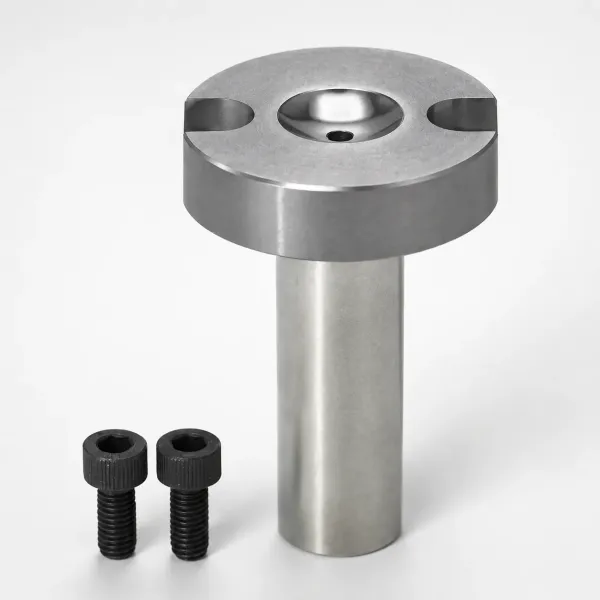
Cosmetic and texturized surfaces also point to laser. A grain-textured cavity face repaired by TIG would need re-texturing over the whole panel to hide the patch. A laser repair confined to the damaged cell area limits the re-texture work to a small zone, which matters when the texture cost runs $500-$2,000 per full face (typical service pricing).
When TIG Welding Wins
Choose TIG when the damage is volume, not surface. A cracked cavity corner that needs 3-8 mm of rebuild, a worn slide face, a broken ejector pin pocket, or a cracked mold base section are TIG jobs. The deposit is milled or EDM'd back to print, so bead cosmetics do not matter.
Choose TIG when cost per cubic millimeter matters. A welder can lay the volume for a 5 mm corner rebuild in minutes, where the same volume in laser passes takes an hour or more. When the cavity must be re-machined anyway, the large HAZ costs nothing, because the soft zone is machined away with the excess deposit.
TIG economics improve as damage grows. A tiny nick repaired by TIG can cost more in preheat, tempering, and thermal management than the damage justifies. A large corner rebuild repaired by laser can cost more in labor than the same job by TIG. Plot the repair against damage volume and finish requirement, and the choice usually resolves itself.
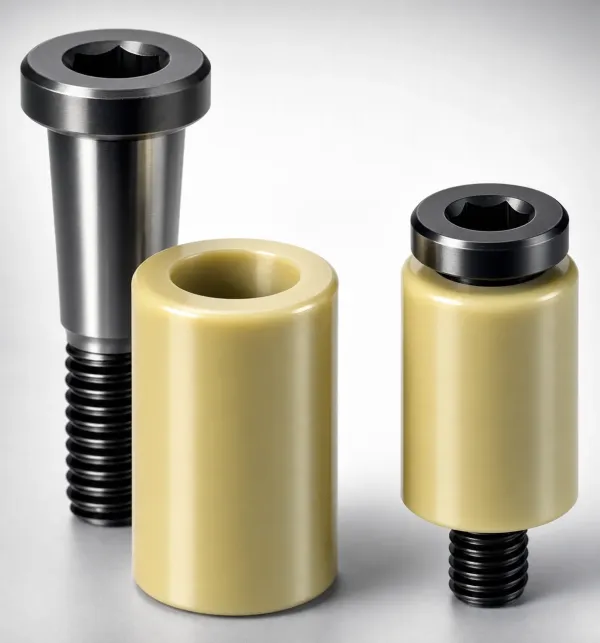
Structural steel also belongs to TIG. Mold bases, clamp plates, and support pillars are machined from P20-class and low-alloy plate at 28-38 HRC, and they see none of the cosmetic demands of a cavity. A cracked base section welded with TIG, stress-relieved, and re-machined restores full function at a fraction of the cost of a new base plate, which can run 10-20% of the total mold value (typical ratio).
Weld Quality and Inspection: Penetrant, Hardness and Porosity
Every weld repair needs inspection before the mold returns to the press. Porosity is the first risk. Trapped gas in the deposit can open as pinholes at 0.05-0.2 mm scale during polishing, which ruins a mirror surface and can trap resin along a parting line (typical defect mode).
Dye penetrant testing catches surface cracks that grinding smears shut. A post-weld, post-grind penetrant check on a hardened steel repair typically takes 30-60 minutes and reveals cracks that would reopen within the first 1,000-5,000 shots (typical practice). Cracks that reach the HAZ boundary are grounds to redo the weld or replace the insert. The full assessment sequence is laid out in our guide to repairing a damaged mold.
Hardness checks complete the picture. A portable hardness test on the deposit and at the HAZ edge shows whether the repair matched its target, for example 46-54 HRC on a hot-work insert versus 28-38 HRC on a pre-hardened plastic mold steel. A deposit reading 10 or more HRC off the parent is a process failure even when the surface looks clean.
Record the numbers on the repair sheet. Base grade, filler grade, preheat temperature, temper temperature and time, hardness readings, and penetrant results turn a one-off fix into data. That data is what a maintenance planner uses to decide whether the same damage is worth welding a second time or whether the insert should be scheduled for replacement.
When Replacement Beats Welding
Welding is not always the answer. Fatigue cracks that run deep into a structural section, heat checking that covers more than roughly 20-30% of a cavity face, and a history of three or more weld repairs in the same spot all push the decision toward a new insert (typical shop thresholds). Each weld adds a new HAZ, and stacked HAZs eventually turn a repair zone into a patchwork of mixed hardness.
Geometry sets another limit. A repair needing more than about 2-3 mm of build-up across a large area can cost more in welding, machining, and tempering cycles than a fresh insert costs to cut. On a high-cavitation tool, replacing one insert is cheaper than re-engineering a weld plan across a tenth of the cavity surface.
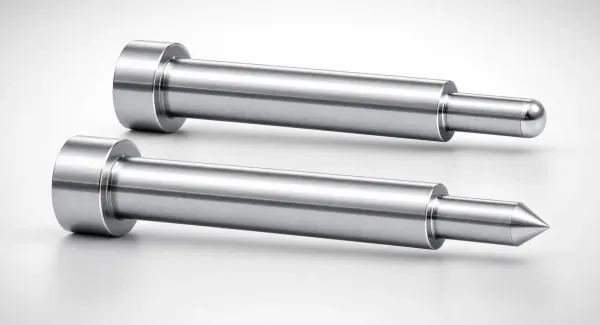
Time is often the deciding number. DieStrike builds new molds on 2-5 week lead times and ships standard components such as ejector pins and core pins in 3-7 days. A weld repair that needs 2-7 days plus inspection is rarely faster than a planned insert replacement, and it carries more uncertainty about how long the fix will last on a crack that has already failed once.
FAQ: Laser Welding vs TIG for Mold Repair
Q1. Can you laser weld a hardened cavity at HRC 62 without cracking it?
Yes, for small repairs, and it is done routinely. The HAZ stays at 0.1-0.5 mm, so the surrounding steel keeps its hardness and the cooling rate against the cold mass prevents hard-zone cracking (typical). Cracks in laser repairs usually trace back to contamination, wrong filler chemistry, or a weld volume large enough to behave like a TIG job.
Q2. Do I need preheat before TIG welding H13 mold steel?
Typically yes. Hot-work grades such as H13 are usually preheated to 200-350°C before TIG welding, then tempered after welding, often at 480-550°C, to restore toughness in the 1-3 mm HAZ (typical ranges). Skipping preheat on a hardened insert is the classic cause of a weld that looks fine and cracks within the first few thousand shots.
Q3. How do I know a parting line weld will hold?
Verify three things before trial. Dye penetrant after grinding should show no cracks, deposit hardness should sit within about 5 HRC of the parent target, and the repaired edge should hold geometry within 0.01-0.02 mm of the adjacent line. A 500-1,000 shot trial run then confirms the repair before full production resumes (typical validation practice).
Q4. Why did my TIG repair fail after 3,000 shots?
The usual causes are an untempered HAZ, a mismatched filler, or a repair on a fatigue crack that was never fully removed. An untempered TIG HAZ on a hardened insert can read 10-15 HRC below the parent and crushes or wears at the load point. Removal of the full crack before welding, plus a documented temper cycle, addresses most repeat failures.
Q5. When is it cheaper to replace the insert instead of welding?
When the repair needs more than about 2-3 mm of build-up across a large area, when heat checking or cracking covers 20-30% or more of the cavity face, or when the same location has been welded three or more times (typical thresholds). Each weld cycle adds HAZ stacking and risk, and a new insert removes both at a predictable cost.
The Bottom Line
Wrong process choice costs real money: a 1-3 mm soft zone on a hardened edge, a reopened crack at 3,000 shots, a scrapped mirror finish. Match heat input to damage size and steel condition. Laser for finished hardened surfaces. TIG for volume rebuilds. Verify every repair before the mold returns to the press.
Send DieStrike the mold drawing and damage photos, and get a weld-versus-replace assessment back within our 24-hour DFM response window via contact.
KEEP READING
Related Reading
How to Repair a Damaged Mold: 7-Step Workflow
A seven-step repair workflow covering damage assessment, weld-versus-replace review, machining, and trial validation before a mold returns to the press.
Read articleArticleHow to Specify Heat Treatment for Mold Steel
Hardening cycles, temper windows and grade data sheets explained so weld repairs land on the same hardness target as new builds.
Read articleArticleHow to Extend Mold Life: 5 Proven Strategies
Wear paths, coating payback and checkpoint schedules that push precision molds past 500,000 cycles on measurable thresholds.
Read articleServiceMold Repair and Maintenance
Weld-versus-replace assessments, insert replacement and surface restoration that return damaged tools to print with documented inspection.
Read articleNEXT STEP
Ready to Start Your Mold?
Send us your element dimensions or part numbers — our team responds within 24 hours with pricing and lead time.

Written by
Ray ChanMold Buyer's Guide Author · Precision Mold Manufacturing Specialist. Ray helps global importers, distributors and OEMs source factory-direct molds and mold parts.