
PC/ABS Injection Molding: Material Guide for Electronics Housings
Table of Contents
The audit sheet listed three findings on a V-0 laptop housing. Silver splay ran along the first 30 mm of fill. A 0.4 mm sink sat over the main boss. Gloss shifted between cavities 4 and 8. The grade was a flame-retardant PC/ABS blend, and every fix was mold-side: dryer discipline, boss geometry, and steel temperature uniformity.
PC/ABS is the alloy of polycarbonate and ABS, sold by Covestro as Bayblend, by SABIC as Cycoloy, and by Toray as Toyolac alloy. Typical blends run one to two parts PC per part ABS. The PC phase supplies impact strength and heat resistance. The ABS phase improves flow, surface finish, and price.
This guide treats PC/ABS as a third material, not as a footnote to our pure-PC and pure-ABS guides. The blend sits between the two resins on heat, stiffness, and cost, and it carries its own mold rules. Every value here is a typical published figure for injection-molding grades. Verify your grade datasheet before cutting steel.
The Snapshot
- PC/ABS blends one to two parts polycarbonate per part ABS, with typical published HDT of 90 to 115 °C at 1.82 MPa and continuous service near 70 to 90 °C.
- Mold shrinkage runs 0.5 to 0.7%, low and near-isotropic, which keeps cavity compensation simpler than semicrystalline resins.
- Typical melt window is 240 to 280 °C (250 to 270 °C common), with a mold at 50 to 90 °C and drying 2 to 4 hours at 80 to 100 °C to under 0.02 to 0.05% moisture.
- Flame-retardant grades carry UL94 V-0 at about 1.5 mm typical, run best on hardened steel at 48+ HRC, and punish long residence time.
- Notch sensitivity is moderate: keep internal radii at 0.5 mm or more, gate depth at 50 to 80% of wall, and parting-line vents at 0.02 to 0.04 mm.
What PC/ABS Is: Why the Blend Beats Either Pure Resin
An alloy exists because neither pure resin covers the housing market alone. Pure polycarbonate brings toughness, clarity, and 120 °C-class heat resistance, but it flows stiffly, dries hard, and asks for hot molds. Pure ABS flows easily, textures well, and prices low, but its heat ceiling and low-temperature impact trail what a housing with power electronics inside demands.
PC/ABS blends the two phases at ratios near 1:1 to 2:1 PC:ABS. On the datasheet the result reads like a compromise. On the production floor it reads as a window that fills thin cosmetic walls without the full hot-mold regime of pure PC.
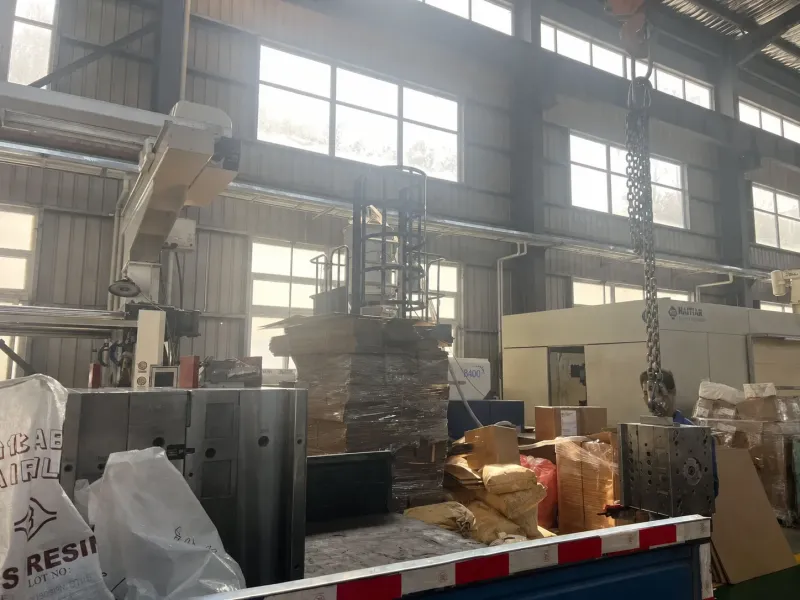
Melt behavior is the first reason buyers switch. The ABS phase keeps viscosity lower than pure PC at the same temperature. A PC/ABS part therefore fills longer flow paths and thinner walls at a 240 to 280 °C melt. The mold then runs at 50 to 90 °C, cool enough for pressurized water circuits. Pure PC tooling often needs oil-heated plates instead.
The structure stays amorphous, which means no crystalline melting point and no post-mold crystallization. Mold shrinkage settles at 0.5 to 0.7%, near-isotropic, so cavities compensate in all directions with one number instead of a flow-direction pair.
If you already run pure PC or pure ABS, the blend changes three habits. Mold temperature drops toward the ABS regime. Drying stays on PC discipline. Cosmetic surface control becomes the quality gate, because glossy housings expose every steel-temperature and venting mistake.
PC/ABS Properties That Drive Mold Design
Impact is why most buyers land on the blend. Typical published notched Izod values span roughly 200 to 600 J/m by grade, and parts fail in a ductile mode at room temperature. Standard grades keep a large share of room-temperature impact down to about -30 °C, where pure ABS starts to lose its practical toughness.
Heat resistance comes next. HDT sits at 90 to 115 °C under a 1.82 MPa load on typical injection-molding grades. Continuous service lands near 70 to 90 °C, and UL RTI values on flame-retardant grades fall in the same working band. That is enough for power electronics, chargers, and appliance internals, and it is short of the 120 °C-class duty that pure PC claims.
Density runs 1.10 to 1.17 g/cm³ on typical unfilled grades. That is lighter than pure PC near 1.20 g/cm³, which shows up directly in shipped part weight when a program runs millions of housings.
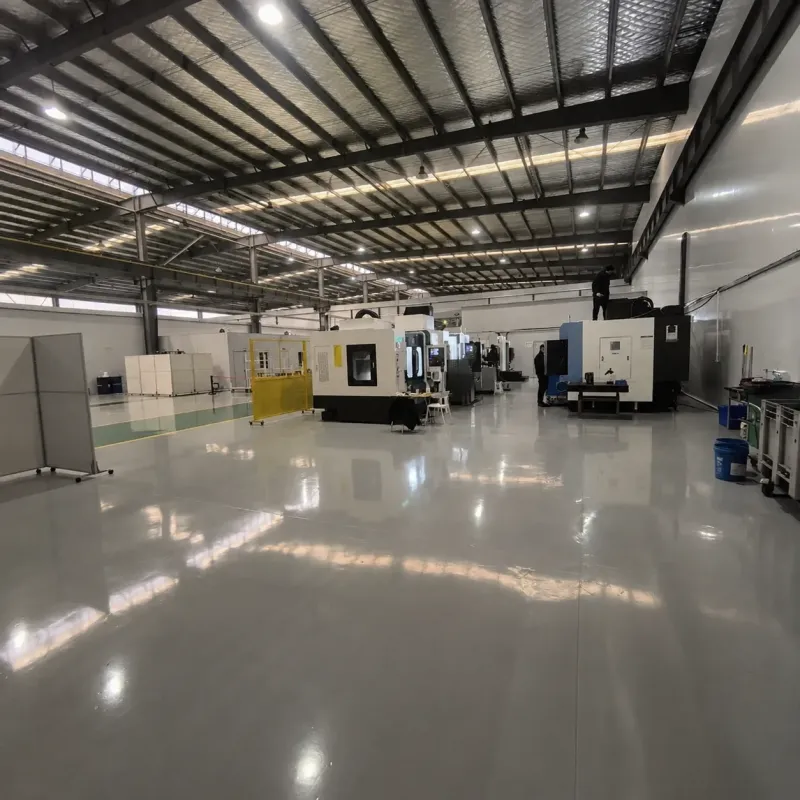
Chemical resistance is the quiet trap. PC/ABS resists water, dilute acids, and most household cleaning agents. Stressed parts crack in the presence of ketones, chlorinated solvents, and aggressive cleaners and lubricants. Molded-in stress turns a tolerable solvent into a crack initiator. Low packing pressure, generous radii, and polished gate lands are part of the chemical resistance strategy.
Flame-retardant grades dominate the housing market. Typical FR blends rate UL94 V-0 at about 1.5 mm wall, with halogenated and halogen-free packages both available. The V-0 rating at a thin wall is what lets a 1.5 to 2.0 mm laptop or charger housing pass without heavy metal parts.
Dimensional behavior is friendly once the cavity compensates. The blend is amorphous, so shrinkage is low, near-isotropic, and far easier to predict than a glass-filled semicrystalline resin. Warpage risk stays moderate because there is no crystalline shrinkage differential between flow and cross-flow directions.
Mold Design Rules for PC/ABS
Steel selection depends on volume and flame-retardant duty, not on the resin name. P20 or 718-class prehardened steel at 36 to 40 HRC handles low-volume runs and most non-FR parts. Long runs, abrasive pigments, and FR grades justify hardened cavities and cores at 48+ HRC, because flame-retardant packages can attack soft steel over time. DieStrike builds housing tools with hardened cavity steel at HRC 62 where production duty demands it.
Mold temperature is a water-friendly 50 to 90 °C. Plain cooling water needs pressure above 100 °C. A pressurized circuit easily holds 90 °C, so PC/ABS avoids the oil or cartridge heating that pure PC tooling often requires. Balance the lines anyway: a 10 to 20 °C gradient across a cavity plate shows up as gloss shift and warp on a cosmetic housing.
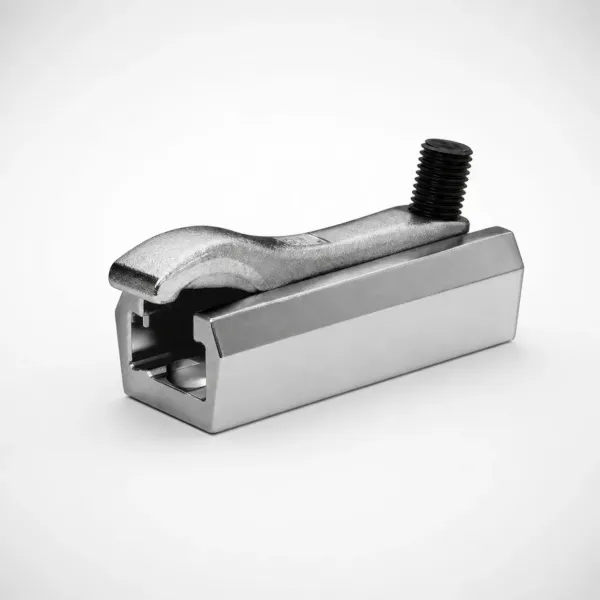
Venting follows the thin-flash rule. Cut parting-line vents 0.02 to 0.04 mm deep, shallower on ejector pins, with short polished lands. Undersized vents cause burn marks at the end of fill. On FR grades the gas load is higher, so add extra vents at the last-filled points and at knit lines.
Gates size for the PC phase, which is the stiff half of the alloy. Edge, tunnel, and sub-gates typically run 50 to 80% of wall thickness at the land, with the land polished so the melt does not tear. Fan gates spread flow and reduce blush on cosmetic faces. Gate location decides where weld lines land, so push knits off seal faces, logo areas, and loaded features.
Gloss and texture control is where housing molds win or lose. High-gloss A-surfaces need SPI A-2-class steel, a clean cavity, and mold temperature near the top of the window. Textured parts need the texture specified as a VDI or SPI code on the drawing, because the steel finish, not the resin, sets the final gloss. See our guide on how to specify mold texture for the VDI and SPI matching rules. Deep grains hide flow marks, but they also demand extra draft as etch depth grows.
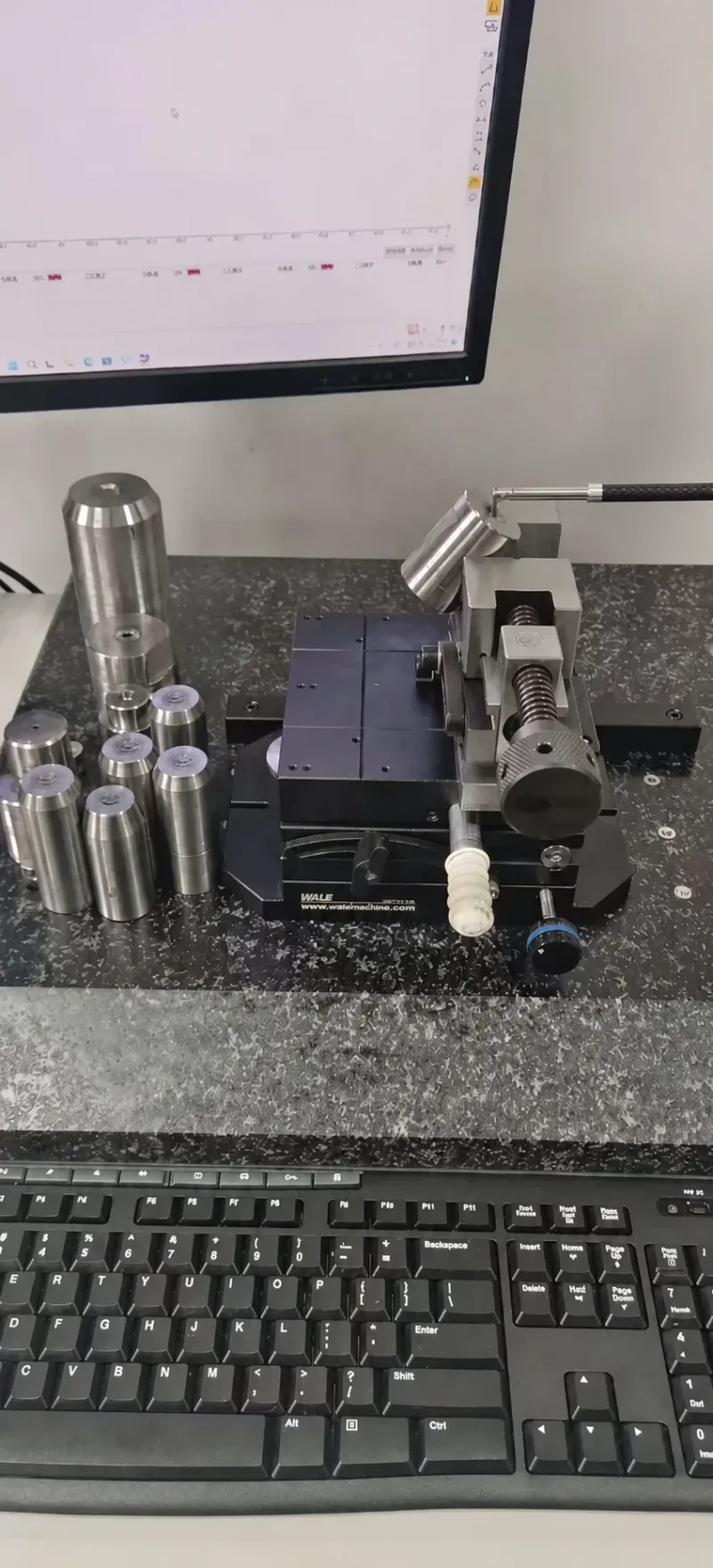
Notch sensitivity is moderate, so geometry rules matter. Keep internal radii at 0.5 mm or more everywhere a load path runs. Draft smooth walls at 1 degree or more per side. Add 1 to 1.5 degrees more on textured walls, scaled to etch depth, so parts release without ejector overload.
Bosses and ribs cause the sink problems before the mold ever runs. Hold rib thickness at 50 to 60% of the nominal wall, core out bosses where diameter allows, and keep wall transitions gradual. A 0.4 mm sink over a solid boss is a drawing fix, not a process fix.
Cooling layout on deep boxes and thick bosses decides cycle time and flatness. Use baffles or bubblers on deep cores and direct lines under heavy sections. PC/ABS cools like an amorphous resin. Once the gate freezes, the part stiffens quickly, so balanced cooling keeps every cavity on the same dimension and the same gloss.
PC/ABS Processing Window
The melt window runs 240 to 280 °C, with 250 to 270 °C the typical working range. Below 240 °C the PC phase makes the melt too stiff to fill thin walls and fine texture. Above 280 °C the resin risks degradation, and flame-retardant packages degrade earlier than standard grades.
Mold temperature holds 50 to 90 °C. Run the top of the window for gloss, texture reproduction, and weld-line strength. Run the middle for dimensional stability on non-cosmetic parts. A cold cavity below 50 °C freezes in stress, weakens welds, and shifts gloss on every part identically.
Drying is non-negotiable because the PC phase is hygroscopic. Dry pellets 2 to 4 hours at 80 to 100 °C to a moisture content under 0.02 to 0.05%, with the tighter number for glossy and FR parts. Wet resin shows up as silver splay in the first 30 mm of fill. A mis-set dryer can scrap a full shift before the first part is measured.
Shrinkage compensation uses one number. Start at 0.5 to 0.7% from the grade datasheet, confirm the grade value, and record the compensated cavity size on the drawing. Because the blend is amorphous and near-isotropic, the same rate applies across the cavity when flow is balanced, which is a real simplification over semicrystalline cavity math.
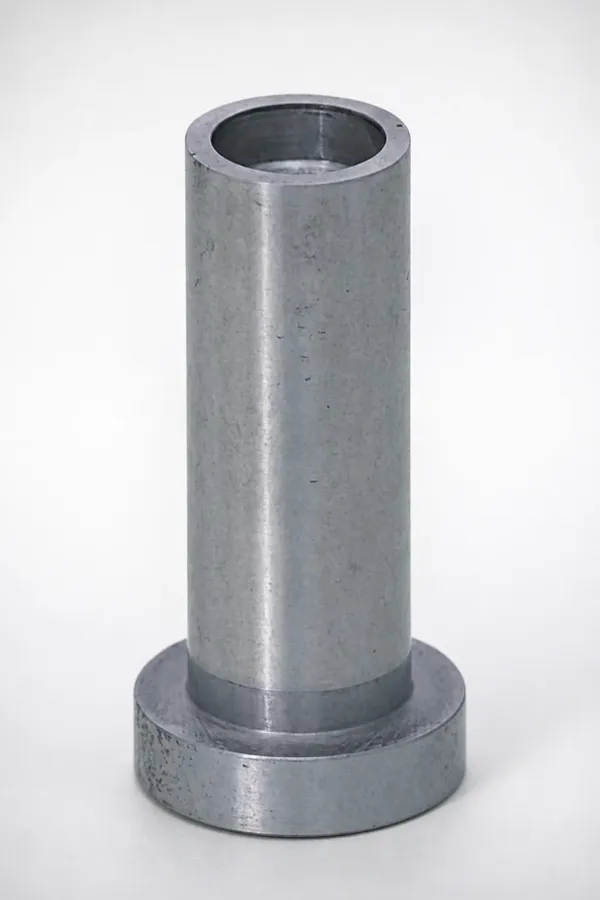
Injection profiling suits cosmetic housings. Stage the fill so the melt slows at the gate to prevent blush, then speeds up across thin walls. Hold pressure runs moderate to full: enough to pack bosses and ribs, never so high that it locks in stress that cracks later near the gate. Keep residence time short, especially on FR grades, and purge the barrel after any idle period.
| Parameter | Typical Range | Mold-Side Impact |
|---|---|---|
| Melt temperature | 240-280 °C (250-270 typical) | Gates sized for the stiff PC phase |
| Mold temperature | 50-90 °C | Pressurized water circuits hold 90 °C |
| Drying | 2-4 h at 80-100 °C to under 0.02-0.05% moisture | Wet pellets cause splay and streaks |
| Mold shrinkage | 0.5-0.7%, near-isotropic | One compensation rate across the cavity |
| Vent depth | 0.02-0.04 mm at parting line | Stops burns and short fills on FR grades |
| Gate depth | 50-80% of wall thickness | Sets blush, weld lines, and packing |
← swipe to scroll →
Table: Typical published processing values for PC/ABS injection-molding grades. Confirm with your grade datasheet before cutting steel.
A cavity pressure trace is the best process monitor for a housing mold. Repeatable fill and pack curves predict gloss, dimension, and sink better than shot weight alone, because they catch the small gate-freeze shifts that change part appearance.
Common PC/ABS Applications: Electronics and Appliance Housings
Electronics housings are the blend's home turf. Laptop covers and bases, server bezels, EV charger enclosures, and power adapters run on FR grades with walls from 1.5 to 2.5 mm, thin enough to test every flow and venting decision. Mold-side, that means multiple gates or a hot runner for long parts, weld lines kept off gasket grooves and visible A-surfaces, and ejector scars moved to hidden faces.
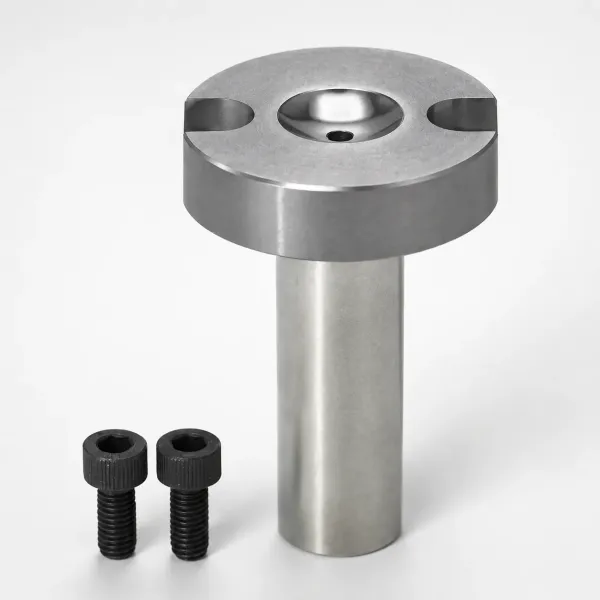
Automotive interior trim parts such as bezels, trim rings, and housings behind low-gloss surfaces use the blend for its impact, its molded-in color, and its texture response. Grains are specified as VDI codes and must match across cavities, because a gloss difference between two halves of a single trim panel is a visible rejection. Undercuts add slides, and long production runs justify hardened steel.
Appliance housings cover vacuum cleaners, coffee machines, air fryers, and floor-care bodies where appearance and drop performance matter more than raw heat. These parts lean on snap fits, bosses, and texture, so the mold conversation is about sink control, gate vestige placement, and steel finish rather than exotic heating.
Whichever industry the housing serves, the same four questions open the tooling review: Is an A-surface gloss or texture specified? Is the grade flame-retardant? What is the thinnest wall? Where are the weld lines allowed to land? Answer those before quoting, and the mold buys itself out of trial drama.
PC/ABS Defects: Mold-Side Root Causes
PC/ABS defects trace to five mold-side root causes: wet pellets, tight gates, cold cavities, thin vents, and unbalanced steel temperatures. When a defect shows up, inspect the tool and the dryer before blaming the resin.
Splay and silver streaks follow moisture. Pellet drying of 2 to 4 hours at 80 to 100 °C is the only cure, and the streak pattern near the gate is the tell. Re-dry the material, check the dryer dew point, and purge the barrel after any idle period.
Short shots follow restricted flow. Gates under 50% of wall, skinny runners, or a cavity below 50 °C stop the melt early on thin-wall housings. Fix with larger gates, full runners, and mold temperature near the top of the window.
Sinks follow thick sections that freeze after the gate. A solid boss at 100% of wall thickness pulls a visible depression, and no packing pressure fully removes it. Core out the boss or hold ribs at 50 to 60% of wall, and confirm the gate freezes after the boss packs.
Weak or visible weld lines follow gate placement, a cold mold, and missing knit venting. The ABS phase does not heal a knit like a semicrystalline resin grows crystals, so treat every weld as a permanent seam. Move gates to push the knit off visible and loaded surfaces, and vent the last-filled point.
Gloss differences follow steel temperature and finish. A 10 to 20 °C gradient across a cavity plate, a polishing mismatch between two cavities, or a texture difference after repair shows up as a gloss shift on a matte part. Balance the water lines, and cut both cavities from the same steel and finish program.
Burn marks follow blocked or shallow vents, and the risk climbs on FR grades whose additives release gas. Hold parting-line vents at 0.02 to 0.04 mm, add vents at the last-filled points, and clean vent lands on the maintenance schedule.
Stress cracking near the gate follows overpacking and sharp geometry. High hold pressure locks in stress exactly where a small radius concentrates it. Reduce hold pressure, radius internal corners to 0.5 mm or more, and polish the gate land so the melt does not tear.
Sticking and ejector pin marks follow draft and ejector layout. Smooth walls draft 1 degree per side or more, textured walls more. Size ejector area for ribs and bosses, and polish pin faces so a warm cosmetic part releases without witness marks on the A-surface.
Flame-Retardant Grades: Special Handling on the Mold
Flame-retardant PC/ABS changes the tooling conversation in four ways. The rating is typically UL94 V-0 at about 1.5 mm, the flame retardant is an additive package that decomposes under heat, the off-gas can attack steel, and the melt degrades faster than standard grades.
Steel specification tightens for FR programs. Flame-retardant decomposition products can corrode soft cavity steel over hundreds of thousands of shots. Hardened cavities at 48+ HRC or corrosion-resistant steel classes are the usual long-run choice. DieStrike specifies hardened cavity steel for FR housing tools and documents the hardness on the mold book.
Venting carries more load on FR grades. The additive package releases gas during fill, so keep vents at 0.02 to 0.04 mm, open the last-filled points, and add vent wells where gas collects under shutoffs. Undersized vents on an FR mold burn the part before the operator sees a short shot.
Residence time becomes a process limit. FR melts held too long in barrel or manifold degrade, plate out on cavity faces, and streak the next shot. Keep shot size close to barrel capacity, purge after shutdowns, and record melt temperature on every trial so the ceiling never drifts.
Plate-out needs a cleaning plan. FR residue can build a thin film on cavity surfaces that shifts gloss and texture over production. Plan periodic cavity cleaning and polishing intervals on the mold maintenance sheet, and inspect gate lands where plate-out concentrates first.
Regrind discipline closes the loop. Flame-retardant additives degrade with every pass, so keep regrind percentage fixed and low, and confirm the UL rating and mechanical claims against your regrind ratio. Property tables on an FR datasheet describe virgin resin unless stated otherwise.
PC/ABS vs PC vs ABS: Comparison Table
PC/ABS is not a poor-man's PC and not a stiffened ABS. It is a distinct grade family with its own balance, and the mold rules follow the balance. This comparison uses typical published values for unfilled injection-molding grades, with the FR caveat noted where it matters.
| Property | PC/ABS Blend | Pure PC | Pure ABS |
|---|---|---|---|
| Polymer type | Amorphous alloy, 1:1 to 2:1 PC:ABS | Amorphous | Amorphous |
| HDT at 1.82 MPa | 90-115 °C | 120-130 °C | 85-105 °C |
| Continuous service | 70-90 °C | ~110-120 °C | ~60-80 °C |
| Density | 1.10-1.17 g/cm³ | ~1.20 g/cm³ | 1.03-1.07 g/cm³ |
| Mold shrinkage | 0.5-0.7% | 0.5-0.7% | 0.4-0.7% |
| Melt temperature | 240-280 °C typical | 260-320 °C | 200-260 °C |
| Mold temperature | 50-90 °C | 80-120 °C | 40-80 °C |
| Notched Izod (typical) | 200-600 J/m by grade | 600-950 J/m | 150-350 J/m |
| Flame rating | V-0 at ~1.5 mm on FR grades | V-0 on FR grades | V-0 on FR grades |
| Relative resin cost | Between PC and ABS | Highest of the three | Lowest of the three |
← swipe to scroll →
Table: Typical published values for unfilled injection-molding grades. PC and ABS columns reflect figures covered in our pure-PC and pure-ABS guides. FR grades shift melt limits and steel requirements.
Choose the blend when a housing needs cosmetic finish, moderate heat, and real impact at a cost below pure PC. Choose pure PC when the part needs clarity, higher HDT near 120 °C class duty, or the toughest low-temperature impact. Choose ABS when the part is cheap, low-stress, and heat-light, and the price wins the argument.
The mold verdict stays simple. PC/ABS tooling is the easiest of the three to run: water-cooled steel at 50 to 90 °C, moderate steel hardness for short runs, and gates sized for a PC-phase melt. Pure PC asks more of the mold, and pure ABS asks less. Our polycarbonate material guide and ABS material guide cover each pure-resin regime in full.
FAQ: PC/ABS Injection Molding
Q1. What ratio of PC to ABS is typical in a PC/ABS blend?
Most commercial grades run roughly 1:1 to 2:1 parts polycarbonate per part ABS. Higher PC content raises heat, impact, and cost; higher ABS content improves flow and lowers price. The grade name, not the ratio, is what you quote, because datasheets carry the exact properties.
Q2. Does PC/ABS need drying before molding?
Yes, always. The PC phase is hygroscopic, so dry pellets 2 to 4 hours at 80 to 100 °C to a moisture content under 0.02 to 0.05%, depending on the grade. Undried pellets produce silver splay, streaks, and brittle parts that look like a material failure but start at the dryer.
Q3. Can I build a PC/ABS housing mold in P20 or 718 steel?
Yes, for low-volume runs and most non-FR parts. Prehardened P20 or 718 at 36 to 40 HRC machines well and holds gloss with good polishing practice. Move to hardened steel at 48+ HRC for long production runs, FR grades, and abrasive pigments. Soft steel wears and corrodes where the flame-retardant gas lands.
Q4. What mold temperature gives the best gloss on a cosmetic housing?
Run near the top of the 50 to 90 °C window, and keep the steel temperature even across the cavity. A glossy A-surface needs SPI A-2-class steel, a clean cavity, and balanced water lines, because a 10 to 20 °C gradient reads as a gloss shift between two halves of one part.
Q5. Why do my PC/ABS parts crack near the gate?
Overpacking is the usual cause. High hold pressure locks stress into the part exactly where a sharp corner concentrates it. Reduce hold pressure, radius internal corners to 0.5 mm or more, polish the gate land, and check that aggressive cleaning solvents do not attack the stressed area.
Q6. Can FR PC/ABS hold V-0 at walls under 1.5 mm?
Typical FR blends rate V-0 at about 1.5 mm, and some grades carry thinner-wall ratings. The UL94 rating is tied to a specific test thickness, so read the grade's rating table before designing a 1.0 mm wall around a V-0 assumption. Mold-side, thinner walls mean higher fill rates and tighter gate and vent discipline.
The Bottom Line
PC/ABS is the housing material that asks the mold for discipline instead of drama. The whole game is a water-cooled cavity at 50 to 90 °C, gates at 50 to 80% of wall, vents at 0.02 to 0.04 mm, and steel temperature even enough that gloss never shifts between cavities.
Compensate cavities for 0.5 to 0.7% shrinkage, dry pellets 2 to 4 hours at 80 to 100 °C, and keep FR residence time short. Do those four things and the blend repays you with thin cosmetic walls, V-0 housings, and impact performance that pure ABS cannot match at a price pure PC struggles to justify. Ask for the mold book: cavity temperature records, vent depths, and gate balance data prove the tool was built for the grade.
DieStrike builds PC/ABS and housing tooling under IATF 16949 across 120+ machines. Molds ship in 2 to 5 weeks with geometry at ±0.005 mm standard and ±0.002 mm precision, and standard mold components ship in 3 to 7 days. Connector and electronics OEMs including TE Connectivity, Amphenol, and Luxshare run programs on the same discipline.
KEEP READING
Related Reading
Polycarbonate (PC) Injection Molding: Material Guide
Pure PC is the tougher neighbor: HDT 120-130 °C at 1.82 MPa, mold 80-120 °C, shrinkage 0.5-0.7%. Read it beside this blend guide to see which tool you actually need.
Read articleArticleABS Injection Molding: The Complete Material Guide
ABS is the easier half of the alloy: HDT 85-105 °C, mold 40-80 °C, shrinkage 0.4-0.7%. Compare the pure resin before you commit to a blend grade.
Read articleArticleHow to Troubleshoot Mold Defects: 9 Common Causes
Splay, sinks, weld lines and gloss shifts each trace to a mold-side root cause. Nine diagnostic paths that start at the tool, not at the resin.
Read articleServiceMold Design & DFM
Gate placement, venting, boss geometry and cavity compensation reviewed before steel is cut. A DFM pass on your PC/ABS housing drawing catches gloss and sink problems early.
Read articleNEXT STEP
Ready to Start Your Mold?
Send us your element dimensions or part numbers — our team responds within 24 hours with pricing and lead time.

Written by
Ray ChanMold Buyer's Guide Author · Precision Mold Manufacturing Specialist. Ray helps global importers, distributors and OEMs source factory-direct molds and mold parts.