
ABS Injection Molding: The Complete Material Guide
Table of Contents
An ABS mold that fails on the first trial usually fails in the tool design, not the resin. A cavity compensated for 0.3% shrinkage on a material that shrinks 0.6% produces an undersized part and a steel change order that costs weeks. A gate placed at the wrong end of a housing puts a weld line directly across the drop-test zone. Both failures are visible on the drawing long before the steel is cut — and both are the reason this guide reads ABS from the mold side, not the chemistry side.
ABS — acrylonitrile butadiene styrene — is the workhorse thermoplastic behind car dashboards, appliance housings, keyboards, and LEGO bricks. It is an amorphous terpolymer that combines the strength of acrylonitrile, the toughness of butadiene rubber, and the easy processing of styrene. That combination is why mold shops quote it daily, and why tooling built for ABS outsells tooling built for almost anything else.
This guide is written for the people who buy and build the tool: mold buyers, tooling engineers, and manufacturing engineers. It walks from the properties that dictate mold decisions, through the design rules for ABS tooling, into the processing window the mold must survive, and ends with defects traced to their mold-side root causes. Processing numbers follow typical published values for injection-molding grades. Test methods are cited where they matter.
The Snapshot
- ABS is a terpolymer of acrylonitrile (15-35%), butadiene (5-30%), and styrene (40-60%) by weight (typical composition ranges).
- Mold shrinkage is 0.4-0.7% — low and uniform, because ABS is amorphous. This is the number your cavity compensation starts from.
- HDT is 85-105°C at 1.82 MPa (ASTM D648); Vicat softening runs 100-115°C, both grade-dependent.
- Notched Izod impact runs 150-400 J/m at 23°C (typical published range, ASTM D256).
- Dry at 80°C for 2-4 hours to under 0.1% moisture; process at a melt of 210-250°C into a mold at 40-80°C.
- ABS is the reference substrate for decorative chrome plating on plastics (ASTM B604 Ni/Cr systems) — plating-grade tooling needs a glossy cavity, typically polished steel.
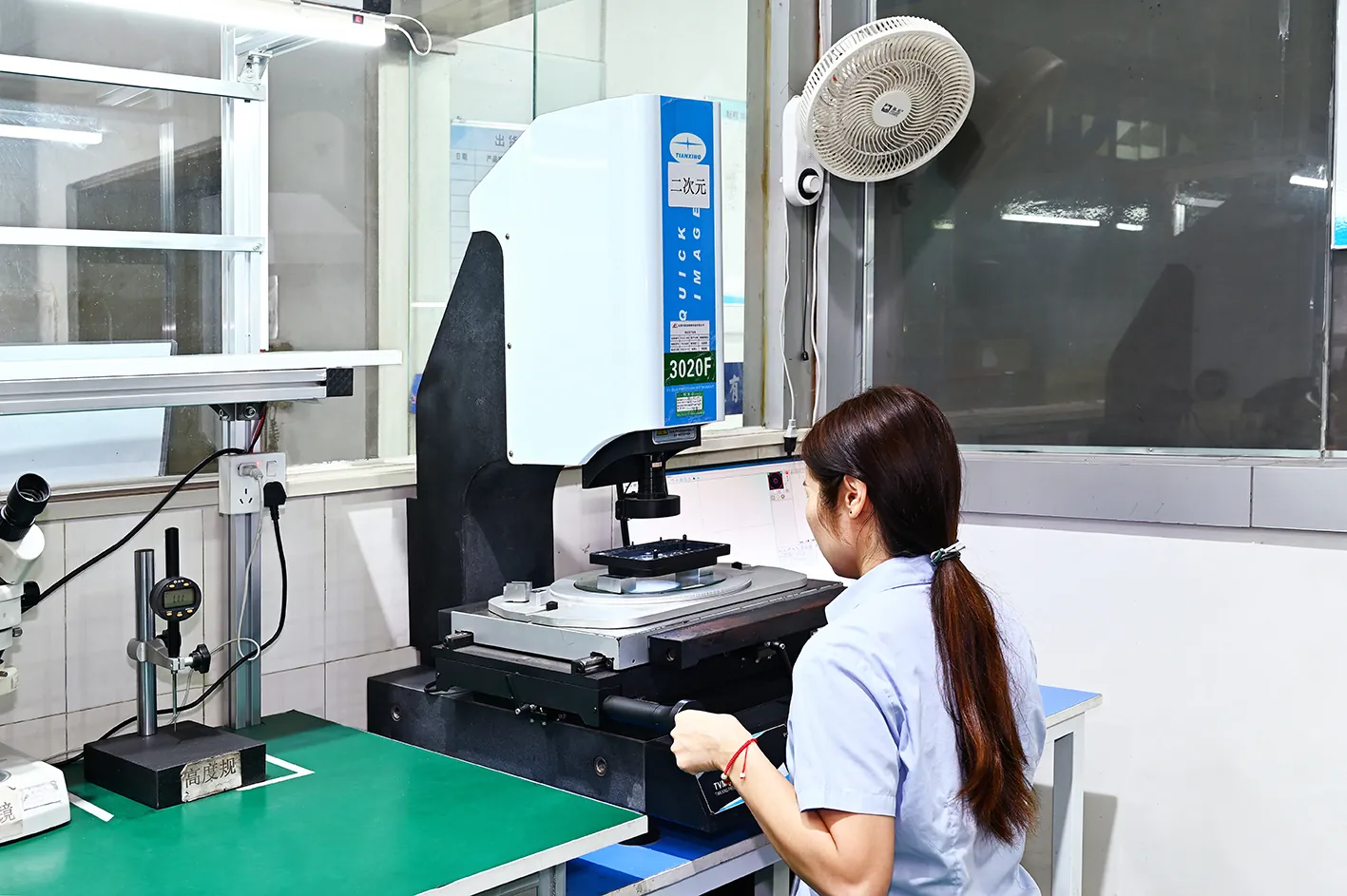
- DieStrike builds ABS-capable tooling to IATF 16949 / ISO 9001 systems, with CMM-verified dimensions on every mold.
What Is ABS Plastic?
ABS plastic is a thermoplastic terpolymer of acrylonitrile, butadiene, and styrene. Commercialized in the 1950s, it became the default material for parts that need impact toughness, a good surface, and low cost in the same shot. It is amorphous, so it has no sharp melting point — it softens gradually over a processing range. For the mold designer, that single fact matters more than any datasheet row: amorphous resins shrink less and more uniformly than semicrystalline ones, which is why ABS tooling compensates predictably and warps far less than PP or nylon tooling.
The material is a two-phase system: a continuous styrene-acrylonitrile (SAN) matrix with polybutadiene rubber particles grafted into it. The grafting chemically bonds the rubber to the matrix, which is what keeps the impact phase from separating during molding. Each monomer carries a job — acrylonitrile contributes stiffness and chemical resistance, butadiene contributes impact toughness, styrene contributes flow, rigidity, and surface gloss. Because the three components can be tuned independently, ABS is a family rather than a single grade: high-impact grades carry more butadiene, heat-resistant grades shift the formulation for a higher HDT, plating grades optimize rubber particle size for etch adhesion. The grade specification matters as much as the material choice, because a grade change moves both the processing window and the shrinkage number the tool was cut to.
Datasheet test data comes from standard methods. ASTM D638 covers tensile, D256 covers Izod impact, D648 covers HDT, and D1525 covers Vicat. ISO 527, ISO 180, and ISO 75 are the equivalents. Always compare grades using the same standard — numbers from different methods are not interchangeable.
ABS Properties That Drive Mold Design
Material selection and tool design are one decision, not two. The table below maps the ABS properties that matter most to the specific mold decisions they drive. If a datasheet number is missing at RFQ time, this is the list to ask for.
| ABS property | Typical value | What it drives in the mold |
|---|---|---|
| Mold shrinkage | 0.4-0.7% (uniform) | Cavity compensation per wall thickness zone; low warpage risk but sink marks at ribs/bosses |
| HDT at 1.82 MPa | 85-105°C | Cooling system layout and cycle; no special hot-side steel needed, but channel placement sets the cycle |
| Melt flow (MFR) | ~10-40 g/10 min, grade-dependent | Flow length, gate sizing, runner balance; thin-wall cosmetic parts need the high-flow end |
| Notched Izod impact | 150-400 J/m at 23°C | Wall thickness and rib design; the part must be gated so weld lines avoid loaded zones |
| Moisture pickup | 0.2-0.4% saturation | Venting depth (0.03-0.05 mm) and drying discipline; wet resin shows as splay, not as a tool problem |
| Surface gloss range | Matte to high-gloss | Cavity finish (EDM texture vs polished steel); mold temperature 40°C → matte, 80°C → glossy |
| Chemical resistance | Resists dilute acids/alkalis; attacked by ketones | Steel selection for plating-grade tools; S136-class stainless where etch chemicals contact the mold |
← swipe to scroll →
Values are typical published ranges for injection-molding grades; actual numbers vary by grade and test method.
Shrinkage and dimensional stability. Amorphous resins shrink less and more uniformly than semicrystalline ones, and ABS sits at 0.4-0.7% mold shrinkage. Uniform shrinkage means the part holds its shape across wall-thickness variations, and gross warpage risk is lower than with PP or nylon. The visible risk is local: sink marks where a rib or boss sits behind a surface. Cavities are compensated with the datasheet range, then tuned on the first molding trial. Water absorption of 0.2-0.4% in 24-hour immersion tests is modest — in-service dimensional creep stays manageable for housings.
Heat resistance. An HDT of 85-105°C at 1.82 MPa is fine for electronics enclosures and interior trim, and it rules ABS out of hot-fill, under-hood, or dishwasher environments. For the tool, the HDT sets expectations, not steel grade: a 40-80°C mold runs on standard P20 or 718-class inserts, and the cooling layout — not the steel — decides whether you hold a 30-second or a 45-second cycle.
Surface quality. ABS molds from high-gloss to matte texture on the same tool, and accepts paint, pad printing, laser marking, and plating. Gloss drops as mold temperature falls — a 40°C mold yields matte, an 80°C mold glossy — and the cavity finish must be specified to match: polished steel for gloss and plating, EDM texture for matte. A plating-grade part demands a stress-free, glossy surface, so plating tools run at the top of the mold-temperature window.
Impact and electrical behavior. Notched Izod values of 150-400 J/m at 23°C are typical (ASTM D256). Standard grades keep useful impact down to roughly -20°C, a direct consequence of the -80°C rubber transition. ABS is also a serviceable insulator with dielectric strength in the 15-30 kV/mm range (typical published values). Flammability is UL94 HB for standard grades; flame-retardant grades reach V-0 at the cost of some mechanicals and a higher price.
Mold Design Considerations for ABS
ABS is forgiving on the machine, but the tool still carries the design decisions that decide rejects, cycle, and tool life. The rules below are the ones that matter when the steel is being cut for an ABS part.
Shrinkage compensation. Compensate cavities for 0.4-0.7% shrinkage, split by wall-thickness zone — thick sections shrink more than thin ones. Because ABS shrinkage is uniform, the compensation is predictable, but the split between zones still matters on parts with ribs and bosses. The five shrinkage compensation rules apply directly to ABS parts and cover the zone-by-zone method.
Wall thickness and ribs. Nominal walls of 1.5-3.0 mm are the working range for most ABS housings; thin-wall cosmetics push to 1.0 mm with high-flow grades. Ribs should run 50-60% of the nominal wall thickness at the base — thicker ribs guarantee sink marks on the opposite surface. Radius rib bases at 0.25-0.5 mm to avoid stress concentrations, and keep transitions gradual so the uniform shrinkage stays uniform.
Gate design. ABS accepts edge, submarine, fan, and tab gates; the choice is driven by part size, cosmetics, and weld-line placement. Gate land length around 1 mm and gate depth at 50-80% of wall thickness are typical starting points, tuned at trial. Gate placement decides where weld lines land — place gates so flow fronts meet at a vent or a non-cosmetic, non-loaded zone. The gate design best practices guide covers the placement and sizing trade-offs in detail.
Runner system. Cold runners are standard for ABS: full-round runners in the 4-8 mm diameter range for typical parts, with the sprue bushing sized to the runner. Hot runners work well for high-volume ABS tools — the resin holds its window well — but keep the manifold temperature balanced across cavities, because ABS gloss and weld lines are sensitive to melt-temperature differences between cavities.
Venting. Vents of 0.03-0.05 mm depth are the typical guideline for ABS. Deeper vents flash; shallower vents trap air and cause burn marks at the end of fill. The cavity and the parting line need real venting paths, not just whatever the machining center left behind. Deep, blind pockets may need vacuum venting.
Draft and ejection. Minimum draft of 0.5-1° per side on untextured walls; textured surfaces need 1-2° per degree of texture depth. Ejector pins are standard for ABS, but pin marks and sticking are common rejects — balance draft, cooling, and pin placement together. The draft angle mistakes list is worth a pass before the steel is cut, because a draft correction after hardening is expensive.
Cooling. Mold temperature is 40-80°C, and the cooling layout decides the cycle. Conformal or drilled channels sized to the part geometry, with coolant flow that keeps the cavity and core within a few degrees of each other, protect both cycle time and dimensional stability. The cooling channel design tips cover the layout rules for uniform mold temperature.
Mold steel. Standard ABS tooling runs on P20 or 718-class prehardened steel (28-36 HRC) for most production volumes. High-gloss, plated, or medical parts move to S136 or 420 stainless, hardened and polished — the plating etch bath is chemical, and stainless resists it. High-cavity, high-volume tools step up to H13 or comparable for core life.
Injection Molding ABS: The Processing Window
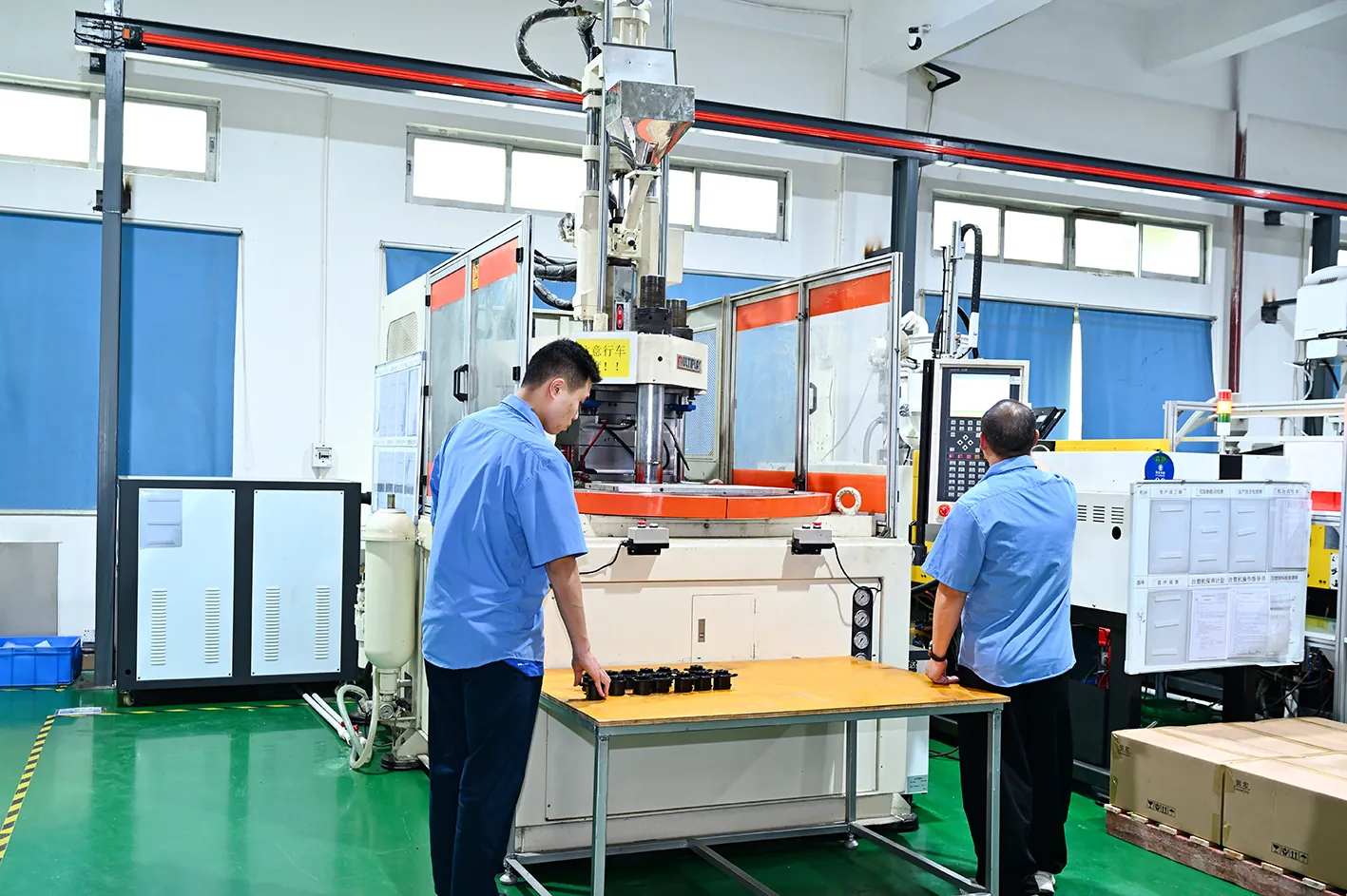
ABS is one of the most forgiving thermoplastics on the machine — that latitude is a core reason it is so widely used. But "forgiving" does not mean "no rules." The window below is the standard starting point for injection-molding grades (typical published practice); your grade datasheet overrides it.
Drying: 80°C for 2-4 hours. ABS picks up moisture from ambient air, with saturation in the 0.2-0.4% range depending on humidity. The processing target is under 0.1%, ideally below 0.05%. Wet resin produces silvery splay streaks, surface blisters, and a loss of impact strength. Dry with a hopper dryer at 80°C for 2-4 hours, and keep dried resin covered — ABS can re-absorb meaningful moisture in hours, not days.
Melt temperature: 210-250°C. The practical sweet spot for most grades is 220-250°C. ABS is amorphous, so the barrel profile is set for viscosity, not phase change. Extended residence above roughly 260°C starts yellowing the resin and degrading the butadiene phase, which shows up as odor, discoloration, and falling impact values. Short barrel residence at the top of the window is fine; long residence is not.
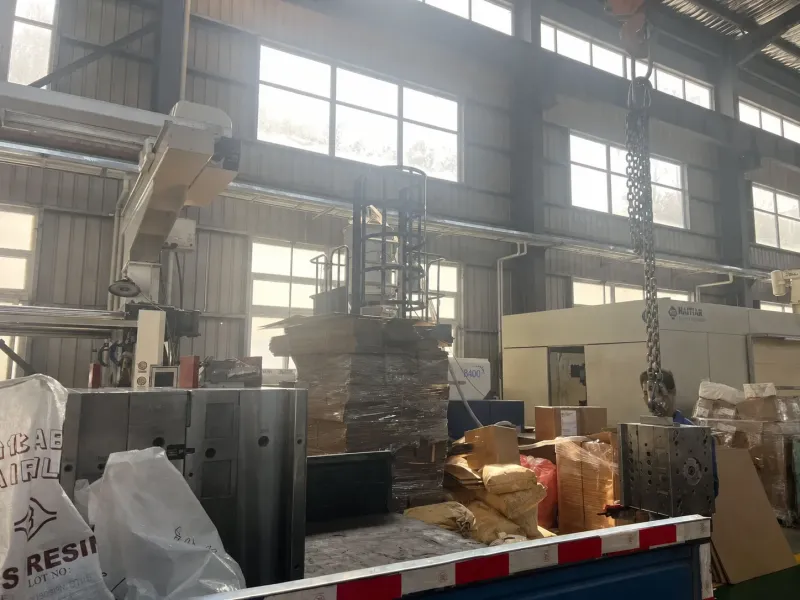
Mold temperature: 40-80°C. The low end gives shorter cycles and a matte surface. The high end improves gloss, reduces weld-line visibility, lowers molded-in stress, and improves adhesion for plating. Plating-grade parts run at the top of the window. If a cosmetic or plated part rejects, raising mold temperature is usually the first fix, not the last resort.
Pressures and speeds. Typical injection pressure runs 60-100 MPa (600-1,000 bar), with hold pressure at roughly 30-60% of injection pressure. Back pressure stays low — 0.3-1.0 MPa — because ABS melts easily and high back pressure risks shear heating and degradation. Screw speed should be moderate, and a screw with an L/D of at least 20:1 and a compression ratio of 2.0-2.5 handles ABS well.
Shrinkage: 0.4-0.7%. The number moves with grade, wall thickness, and process conditions: higher mold temperature and higher hold pressure push shrinkage toward the low end. Because the shrinkage is uniform, sink marks near ribs and bosses are the visible risk rather than gross warpage. Cavities are compensated with the datasheet range, then tuned on the first molding trial.
Venting. Vents of 0.03-0.05 mm depth are the typical guideline for ABS. Deeper vents flash; shallower vents trap air and cause burn marks at the end of fill.
Common ABS Applications
ABS parts cluster in four spaces: automotive interiors, consumer electronics, appliances, and toys. Automotive interior trim — instrument panels, door panels, center consoles — uses ABS for the paint-and-plate surface, and runs multi-cavity tools with high-gloss cavities at the top of the mold-temperature window; the tooling rules follow the same logic as our automotive injection molding work. Consumer electronics and appliance housings pick ABS for impact toughness and low cost, with flame-retardant grades reaching UL94 V-0; wall thickness and gate placement follow the design rules in this guide, and parts often move to PC/ABS blends when heat loads climb (see the consumer electronics industry page). Medical device housings use ABS where a low-cost, sterilizable enclosure is needed; biocompatible grades carry tighter process control, which our medical device molding page covers. Where none of these fit, the polycarbonate guide is the usual upgrade path.
ABS Defects: Mold-Side Root Causes and Fixes
Most ABS rejects trace to a mold design decision, not a bad shot. The table below maps each common defect to its mold-side root cause and the tooling fix — the process fixes that also work are noted where they matter. For the systematic version of this workflow, see how to troubleshoot mold defects.
| Defect | Mold-side root cause | Tooling fix |
|---|---|---|
| Sink marks | Ribs/bosses thicker than 50-60% of wall; gate freezes before cavity packs | Ribs at 50-60% of wall, gate sized so packing reaches the thick zones before freeze-off, adequate hold pressure and time |
| Weld lines | Flow fronts meet at a cosmetic or loaded zone; no vent at the weld | Move the gate so fronts meet at a vent or non-stressed zone; add venting at the meeting line; raise mold temperature |
| Burn marks | Trapped air compressed past the resin's degradation point | Real vents at 0.03-0.05 mm; vacuum venting on deep, blind pockets; slower second-stage fill |
| Ejector pin marks / sticking | Insufficient draft, unbalanced cooling, undersized ejector area | Draft of 0.5-1° minimum (1-2° textured), balanced cooling, larger pin diameter or added lifters |
| Glass fiber floatation | Fibers migrate to the surface on glass-reinforced grades | Mold temperature at 60-80°C, textured cavity surface hides remaining streaks, fast fill freezes fibers in place |
| Jetting | Worm-like flow through an undersized free gate | Larger gate, slower first-stage fill |
| Gloss mismatch between cavities | Cavity-to-cavity mold-temperature imbalance | Balanced cooling channels; manifold temperature balancing on hot-runner tools |
← swipe to scroll →
Moisture splay deserves its own line because it is the one ABS defect that is rarely a tool problem: silvery streaks radiating from the gate mean the resin was wet. The fix is drying discipline — 80°C for 2-4 hours, target under 0.1% moisture — and splay that reappears mid-run points at a leaking hopper dryer, not at the mold.
Yellowing mid-run is degradation from long residence or high barrel temperature: lower the barrel profile, shorten residence with a smaller shot relative to barrel capacity, and purge before color-critical runs. Yellowing is the visible warning that the butadiene phase is being cooked.
ABS vs PLA vs PC: Comparison Table
Two comparisons dominate ABS selection questions. ABS vs PLA, because both are common in prototyping and 3D printing. ABS vs PC, because PC is the usual upgrade path. The table below uses typical published values for injection-molding grades; actual numbers vary by grade and test method.
| Property | ABS | PLA | PC |
|---|---|---|---|
| Density (g/cm³) | 1.03-1.07 | ~1.24 | 1.19-1.20 |
| Tensile strength (MPa) | 35-50 | 50-70 | 60-70 |
| Notched Izod impact (J/m, 23°C) | 150-400 | 16-32 | 600-950 |
| HDT at 1.82 MPa (°C) | 85-105 | ~55 (standard) | 125-135 |
| Mold shrinkage (%) | 0.4-0.7 | 0.3-0.5 | 0.5-0.7 |
| Biodegradable | No | Yes (industrial compost) | No |
| Decorative plating | Benchmark substrate | Not practical | Possible with special etch |
| Relative resin cost | Low | Low | High |
| Typical use | Housings, trim, toys, pipes | Disposables, short-life parts | Glazing, lenses, high-impact housings |
← swipe to scroll →
Values are typical published ranges for injection-molding grades. Heat-resistant PLA and flame-retardant ABS grades move their rows.
ABS vs PLA: PLA is stiffer and, on paper, stronger in tension. Its notched Izod impact is an order of magnitude below ABS — PLA is brittle where ABS bounces. PLA's HDT of roughly 55°C rules it out of warm environments, while its biodegradability is a genuine environmental advantage for short-life parts. For handled, shipped, or production parts, ABS wins; for disposables and prototypes, PLA has a real case.
ABS vs PC: PC beats ABS on impact and HDT: 600-950 J/m vs 150-400 J/m, and 125-135°C vs 85-105°C. PC is also optically clear; ABS is not. PC costs more, processes hotter and drier (melt near 280-320°C, drying at 120°C), and does not plate as easily. ABS wins on cost, flow, surface finish, and plating; PC wins when the part must survive heat, impact, or see-through. The middle ground is PC/ABS blends, which trade some PC performance for ABS processing and price, and are standard in automotive interiors and power tools.
Frequently Asked Questions
Q1. What does ABS stand for?
ABS stands for acrylonitrile butadiene styrene — the three monomers polymerized into the terpolymer. Acrylonitrile provides heat and chemical resistance, butadiene provides impact toughness, and styrene provides processability and surface quality.
Q2. What is ABS plastic?
ABS plastic is an amorphous thermoplastic terpolymer of acrylonitrile, butadiene, and styrene. It combines impact strength, a good molded surface, and low cost, which makes it the default material for housings, automotive trim, toys, and appliance shells. Because it is amorphous, its shrinkage is low and uniform — which keeps mold design predictable.
Q3. Why does ABS contain butadiene?
Butadiene polymerizes into polybutadiene rubber particles that are grafted into the SAN matrix. The rubber phase absorbs impact energy, blunts crack growth, and keeps the material tough down to low temperatures — its glass transition sits near -80°C. More butadiene means more impact and less stiffness.
Q4. What is the ABS melting point?
ABS is amorphous, so it has no sharp melting point. It softens gradually and is processed at a melt temperature of 210-250°C, typically 220-250°C. Its Vicat softening temperature runs 100-115°C, which is the number that matters for heat resistance in service.
Q5. What is the ABS shrinkage rate?
Mold shrinkage for ABS is 0.4-0.7%, varying with grade, wall thickness, and process conditions. Because ABS is amorphous, shrinkage is low and uniform, which keeps warpage manageable and makes cavity compensation predictable.
Q6. Is ABS stronger than PLA?
In tension, PLA shows higher tensile strength (50-70 MPa vs 35-50 MPa). In impact, ABS is far stronger — 150-400 J/m notched Izod versus 16-32 J/m for PLA — and ABS holds up better in heat. For parts that get dropped or warmed, ABS is the tougher choice.
Q7. Does ABS need drying before injection molding?
Yes. ABS absorbs up to 0.2-0.4% moisture from ambient air and must be dried at 80°C for 2-4 hours to under 0.1%, ideally below 0.05%. Wet resin produces silvery splay, blisters, and reduced impact strength.
Q8. Can ABS be electroplated?
Yes — ABS is the benchmark material for decorative plating on plastics. The part is etched in chromic-sulfuric acid, then metallized and electroplated. Adhesion is verified by thermal cycling, per ASTM B604 practice. Plating-grade parts need a glossy, stress-free molded surface, so the tool runs at the top of the mold-temperature window.
Q9. Is ABS plastic safe?
Standard ABS is widely used in consumer products and toys. Food-contact grades comply with FDA 21 CFR 177.1020 in the US. It is not biodegradable and, like any thermoplastic, should not be exposed to sustained heat above its HDT.
Q10. Is ABS recyclable?
Yes. ABS is a thermoplastic, so clean regrind can be reprocessed, commonly blended with virgin resin at 10-30% levels depending on the application. Impact strength and surface quality drop as regrind content and heat history accumulate, so cosmetic parts carry tighter regrind limits than structural ones.
The Bottom Line
ABS earns its place on three points. Impact toughness comes from a butadiene rubber phase. The molded surface takes paint and plating. Processing latitude keeps rejects low — and the limits are just as clear. An HDT of 85-105°C at 1.82 MPa, a moisture target under 0.1%, and a melt window of 210-250°C define where it works.
The tooling chain is short. Compensate cavities for 0.4-0.7% uniform shrinkage, split by wall zone. Size gates so the cavity packs before freeze-off. Vent at 0.03-0.05 mm, draft at 0.5-1° minimum, and balance the cooling layout before the steel is cut — every one of those decisions shows up in the first trial shot. Our DFM team reviews your ABS part drawing and returns a moldability report within 24 hours, so the decisions that protect surface, shrinkage, and cycle are made on paper, not after the steel is cut.
KEEP READING
Related Reading
Ejector Pin Steel: SKD61 vs H13 — What's the Difference?
SKD61 (JIS) and H13 (AISI) are two names for the same 5% chromium hot-work steel; ejector pins in both grades harden to…
Read articleArticleLiquid Silicone Rubber (LSR) Injection Molding Guide
Liquid silicone rubber (LSR) is a two-component platinum-cured thermoset with -50°C to +250°C service life.
Read articleArticleNylon (PA) Injection Molding: Grades, Properties & Processing
Nylon (PA) injection molding guide: PA6, PA66, PA12, PA46 and glass-filled grades compared — melting points, shrinkage…
Read articleArticlePEEK Injection Molding: High-Temp Material Guide
PEEK injection molding for buyers and mold engineers: shrinkage 1.2-2.
Read articleNEXT STEP
Ready to Start Your Mold?
Send us your element dimensions or part numbers — our team responds within 24 hours with pricing and lead time.

Written by
Ray ChanMold Buyer's Guide Author · Precision Mold Manufacturing Specialist. Ray helps global importers, distributors and OEMs source factory-direct molds and mold parts.