
PEEK vs PEI (Ultem): Which High-Heat Resin Fits Your Mold
Table of Contents
A PEEK connector housing tool cut to normal rules froze its first six short shots at 0.6 mm walls. The fix was heated plates, two oil controllers and a rebuilt nozzle set. That took eleven weeks off the launch date and put 22 percent onto the amortized tool cost. The resin specification had quietly rewritten the tool bill before anyone priced the mold.
PEEK and PEI (sold as Ultem) are the two resins buyers reach for once PA and PBT run out of heat room. The decision hinges on melt temperature, wall temperature, shrinkage, abrasive wear and sterilization duty. A cost crossover flips the answer by part count, and this page carries the numbers behind each line, down to dollars per part at 100,000 units.
The Snapshot
- Melt windows offset by 10 to 60 C. PEEK processes at 380 to 400 C with a 343 C melting point; PEI processes at 340 to 370 C as an amorphous resin with a 217 C glass transition.
- Wall temperature decides the hardware. PEEK needs 160 to 200 C mold walls, which water cannot hold. PEI runs on oil control at 120 to 150 C.
- Shrinkage anisotropy. Filled PEEK shrinks 0.1 to 0.3 percent along flow and 0.5 to 0.9 percent across it; unfilled PEEK reaches 0.6 to 1.2 percent. PEI shrinks about 0.1 percent in every direction.
- Resin price gap of 2 to 3 times. PEEK runs 90 to 150 USD per kg against 35 to 60 USD per kg for PEI, before a 10 to 20 percent tool surcharge on the PEEK side.
The High-Heat Resin Decision in One Page
Heat-resistant thermoplastics form a ladder, and the top two rungs are crystalline and amorphous. PEEK sits on the crystalline rung: a semi-crystalline polymer that must be melted, held hot and cooled slowly enough to build crystals. PEI sits on the amorphous rung: a rigid polyetherimide that softens at a glass transition rather than melting at a defined point.
That single structural difference drives every tooling consequence here. Crystallinity gives PEEK its strength, wear life and 250 C continuous use rating. It also brings a 0.6 to 1.2 percent shrink window, a directional bias and a mold that must stay above 160 C. Amorphous PEI gives up strength and ceiling, and takes back dimensional stability and a resin price 30 to 50 percent lower.
Melt Properties Compared
The table below carries the numbers a mold shop works from, from published datasheet ranges for unreinforced and 30 percent fiber grades of each resin. Treat each figure as a band and confirm it against the supplier sheet before freezing the tool design.
| Property | PEEK | PEI (Ultem) | Tooling consequence |
|---|---|---|---|
| Glass transition | 143 C | 217 C | PEI keeps its stiffness 74 C above PEEK in use |
| Melting point | 343 C | None (amorphous) | PEEK freezes hard below 160 C wall temperature |
| Processing melt range | 380 to 400 C | 340 to 370 C | Hot-runner and check-ring ratings shift up one class |
| Mold wall range | 160 to 200 C | 120 to 150 C | Oil controllers or cartridge zones for PEEK only |
| Continuous use | 250 C | 170 to 180 C | Above about 180 C the choice is PEEK |
| Tensile strength | 97 MPa (unfilled) | 74 to 104 MPa | PEEK starts ahead before any reinforcement |
| Tensile (30 percent fiber) | up to 370 MPa (carbon) | 140 to 170 MPa | Only PEEK competes with die-cast metal here |
| Resin price | 90 to 150 USD per kg | 35 to 60 USD per kg | Material becomes the dominant cost above 10,000 units |
← swipe to scroll →
Table note: values are typical published datasheet bands for unreinforced and 30 percent fiber-reinforced grades. Confirm every figure against the exact grade certificate before the tool design is frozen.
One number surprises most mechanical designers: the glass transitions run opposite to the melting behavior. PEI softens at 217 C while PEEK softens at 143 C, yet PEEK carries load to 250 C. Semi-crystalline PEEK keeps its shape above its glass transition because the crystals act as physical crosslinks until the 343 C melting point. Amorphous PEI has nothing between stiffness and flow.
Read the two columns together. A part that sees 190 C continuous duty needs PEEK even though PEI has the higher Tg. A part that sees 140 C but demands plus/minus 0.05 mm flatness may need PEI, because only an amorphous resin shrinks near-isotropically.
Why Melt Temperature Sets the Tool
Melt temperature is the first number a tool is built around, and the two processing windows sit about 35 C apart at their midpoints. PEEK must be injected at 380 to 400 C, and its cavity steel must stay between 160 and 200 C during the shot. Below 160 C the crystallizing melt freezes skin-deep before the cavity fills, and the part delaminates or short shots. PEI processes at 340 to 370 C into walls held at 120 to 150 C. As an amorphous resin it thickens gradually rather than snapping solid.
Water cannot hold a 160 to 200 C circuit. Atmospheric water loops top out near 100 C, and pressurized units rarely exceed 120 C. A PEEK tool therefore runs on thermal oil controllers rated to 180 or 200 C, or on cartridge heaters with a thermocouple loop per zone. Many tools use both: oil through the base plates, cartridges behind the gate area and deep cores. PEI at 120 to 150 C also lives on oil control, but one controller usually carries the whole tool. Sizing and zone layout for those loops are covered in the mold temperature controller guide.
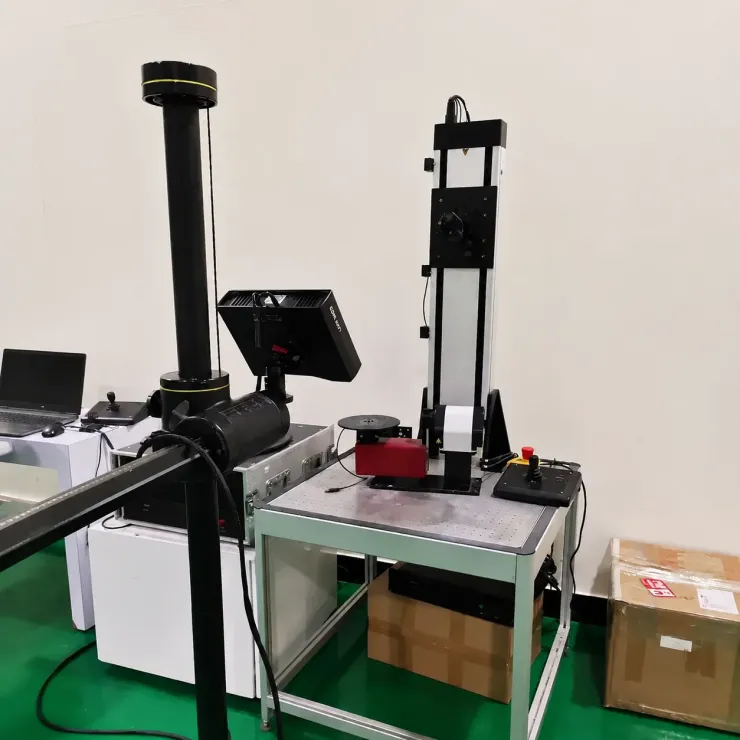
The steel then pays a thermal expansion tax. Mold steel grows roughly 0.012 mm per 100 C for every 100 mm of length. A PEEK tool at 180 C above a 23 C shop expands about 0.019 mm per 100 mm. That is more than half the working tolerance on many precision features. A PEI tool at 135 C moves about 0.013 mm per 100 mm. A PEEK mold base sees a 250 C gradient from melt face to platen, against the 80 C gradient of a normal tool. Core-to-cavity, pin-to-bore and slide-to-gib clearances all have to open up before the first heat.
Two shop rules follow. Design every running clearance hot, measure it cold, and re-check it on the heated tool at trial. Hold interchangeable components to the +/-0.005 mm mold standard, with EDM and grinding at +/-0.002 mm. The expansion allowance must not eat the fit. The gradient also loads the shut-offs: a plate bowed 0.05 mm by uneven heating will flash even a viscous melt.
The machine side shifts too. A 400 C melt needs a barrel, screw and check rings rated for continuous 400 C service, plus heated sprue bushings on most tools. Full plate architecture and expansion allowances belong to the high-temperature resin tooling guide.
Drying sits upstream of all of it. Both resins hydrolyze in the melt if fed wet. Dry PEEK at 150 C for 3 to 4 hours and PEI at 120 to 150 C for 2 to 4 hours, both to below 0.02 percent moisture, with a desiccant hopper at a minus 40 C dewpoint running continuously.
Gate and Runner Rules for High-Heat Resins
PEEK is a viscous, unforgiving melt at the gate. It needs a minimum gate size of 1.5 mm on typical industrial parts, and filled grades freeze so fast against a cold land that smaller gates park the flow. Runners are full round and generously sized, with every direction change radiused, because sharp corners multiply pressure loss. PEEK above 400 C degrades: heavy shear or a long residence time turns the melt brown and leaves dark specks and weak lines. A slug of PEEK held at temperature for more than a few minutes is degraded stock and purges as rejects.
PEI behaves almost the opposite way. Its shear-thinning response means high shear at a small gate heats the melt locally and drops viscosity further, so gates of 0.8 to 1.5 mm mold cleanly. That is a gift for part design and a trap for appearance: a gate running 30 C hotter than the melt setpoint shows as a blush at the surface. Both resins reward a valve gate on multi-cavity tools, where gate freeze can be timed per shot.
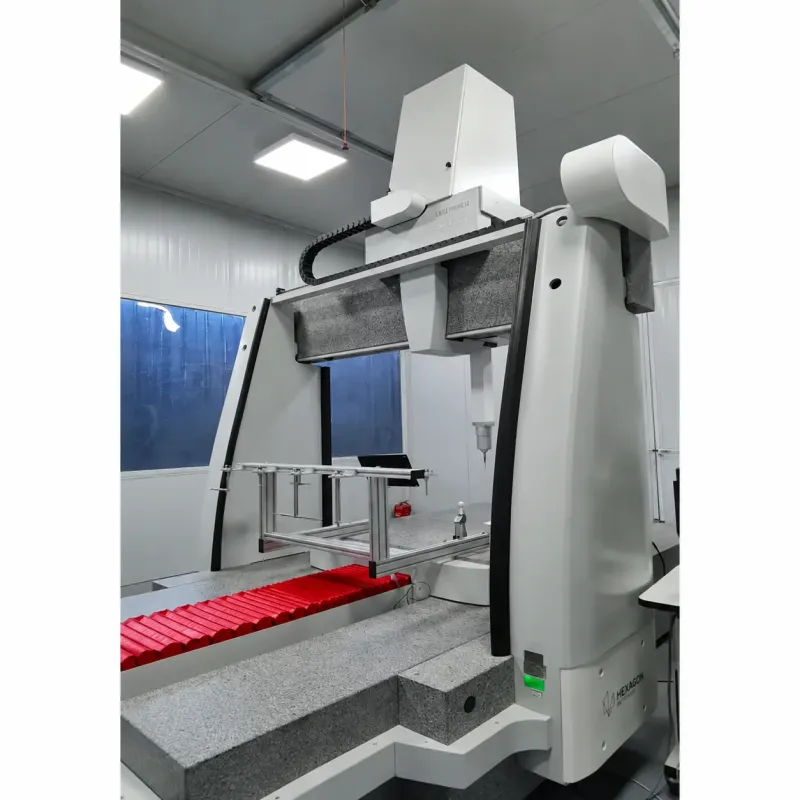
Cold runners carry a hidden price on PEEK. A 35 g sprue and runner system on a 120 USD per kg resin burns 4.20 USD per shot, and PEEK sprue is rarely downcycled inside the part stream. That arithmetic pushes most PEEK programs onto heated runner designs above 250 shots per day, while PEI scrap at 45 USD per kg is recovered more readily and cold runners stay common at lower cavity counts. Write a regrind limit per grade and re-dry before use, because fiber orientation and moisture shift shrinkage lot to lot.
Steel and Surface Defense Against Abrasive Resins
Carbon and glass fiber at 20 to 40 percent loading turn a melt into a honing compound, and the damage lands hardest at gates, in the first 25 mm of runner and on high-shear ribs. For filled PEEK the standard recommendation is hardened steel: 1.2344 hot-work or stainless S136 at HRC 50 to 54, with gate inserts carried one step further in coating or carbide. On a polished P20 cavity the same melt erases a Ra 0.2 mirror within tens of thousands of shots. PEI is kinder. P20 at HRC 28 to 32 runs short and medium programs without visible wear, and hardened inserts appear mainly above roughly 500,000 shots.
Vents deserve attention on both systems, and PEEK vents deserve a DLC coating of 1 to 3 µm. The layer protects the vent land from fiber scouring, keeps gas paths open longer and improves release at a hot wall. Plan vent depth at 0.02 to 0.03 mm on PEEK and 0.015 to 0.025 mm on PEI, cleaned on a schedule; 30 percent carbon-fiber PEEK fills a 0.05 mm vent into a hard whisker no process change removes.
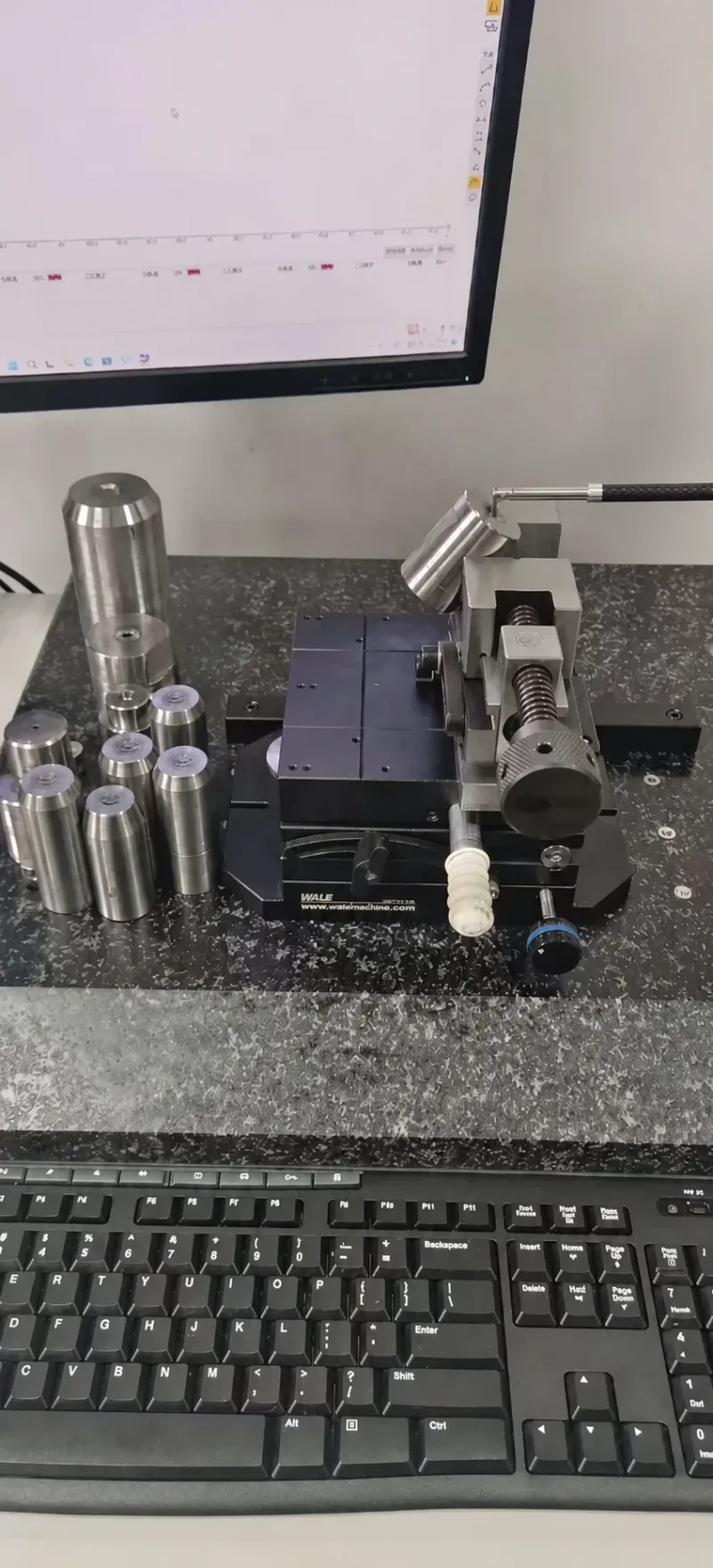
A mirror finish does not stop a semi-crystalline resin from sticking. In some geometries a fine bead blast or thin electroless nickel releases better because the part bridges the surface valleys. Where appearance demands a polish, put it in hardened steel so the polish survives the fiber, and write the intervals into the maintenance plan: a magnification check at 100,000 shots, re-polish at 300,000 to 500,000 on filled grades.
Shrinkage, Warpage and Dimensional Control
This is where crystallinity decides the argument. Unfilled PEEK shrinks 0.6 to 1.2 percent linear; its 30 percent filled grades shrink 0.1 to 0.3 percent along flow while still moving 0.5 to 0.9 percent across it. Oriented fibers and the crystals growing around them create the anisotropy. A round PEEK boss can come out 0.4 mm undersize across flow and true along it unless the cavity was cut with two radii. PEI shrinks about 0.1 percent almost evenly in every direction, because an amorphous resin simply contracts on cooling with no crystal stage to bias the movement.
Three levers control PEEK shrink. Wall temperature is strongest: a 180 C wall lets crystals grow and lifts shrink toward the top of the band, while a 140 C wall quenches crystallization and drops shrink but costs strength. Cooling rate is second: pulling a thick wall too fast traps internal stress and late drift. Annealing is third: a 2 to 4 hour hold near 200 C finishes crystallization deliberately, and critical PEEK drawings call out annealed-state dimensions measured 24 hours after that cycle.
Warpage follows the same split. PEEK warps wherever cooling asymmetry meets shrinkage anisotropy: off-center gates, walls stepping from 1.2 to 3 mm, fibers swinging around corners. PEI warps mainly from differential packing and flattens easily with the hold profile. For flatness-critical parts in the 150 to 180 C class, PEI is the dimensionally honest choice, and on multi-cavity tools PEI cavities replicate each other within a few hundredths while PEEK often needs cavity-by-cavity steel corrections after T1.
Sterilization and Medical Part Selection
The sterilization bench decides many medical programs. Both PEEK and PEI survive gamma at medical doses and both take ethylene oxide without protest. Autoclaving splits them. PEEK handles 134 C saturated steam cycles repeatedly, which is why it appears in reusable surgical instrument bodies, cassette frames and implant-grade components, and it publishes ISO 10993 biocompatibility classes plus radiolucency for imaging. PEI also takes steam, but its practical limit sits around 121 C, and published life beyond roughly 30 cycles begins to fall off, so a PEI part designed for 134 C retorts is a schedule risk.
For the tool shop these claims translate into steel and documentation. PEEK implant-adjacent parts push the tool toward S136 at HRC 50 to 54 with DLC at the vents and lot-to-cavity traceability. PEI surgical guides and sterilization trays run on simpler tools, but still need drying, dewpoint and cavity-pressure evidence. The medical device industry page covers validation under IATF 16949 discipline, and grade-level processing lives in the PEEK material guide and the PEI Ultem material guide.
Cycle Time, Tool Surcharge and Resin Price
A PEEK part cools slower because it is allowed to. The wall must stay hot long enough for the crystal structure to finish forming, and that costs a PEEK part 15 to 25 percent more cycle than an equivalent PEI part. On a 20 second PEI cycle versus a 25 second PEEK cycle, the gap is 0.15 USD per shot on a 90 USD per hour press. That number looks small until it is multiplied by 250,000 shots.
On the tool side the surcharge is real and bounded. A heated-plate PEEK tool with oil zones, per-zone thermocouple loops, hardened 1.2344 or S136 inserts and DLC vents lands 10 to 20 percent above the same tool built for PEI. The money buys three things: heated plates and insulating layers, extra machining passes on hardened steel, and the grinding time to hold +/-0.002 mm fits inside an expanding stack.
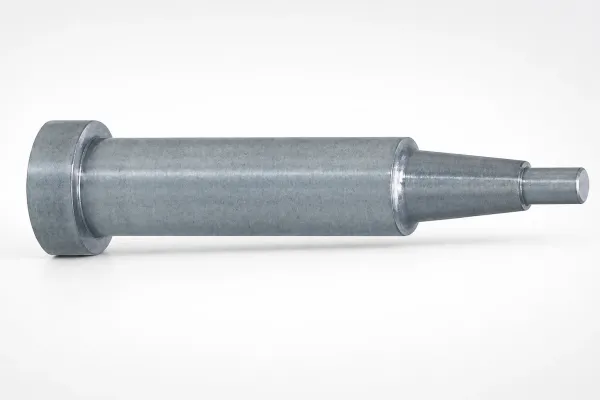
Lead time follows the same order. A standard PEI tool runs the normal 2 to 5 week injection mold lead time, with standard components shipping in 3 to 7 days. A PEEK heated-plate tool adds plate procurement, zone wiring and a longer trial, because the thermal map must be proved before dimensions are trusted. Build in one extra week of fitting time where the drawing tolerance sits at or below 0.05 mm.
The Cost Crossover Math
Because PEEK carries both a tool premium and a resin premium, the decision is arithmetic. The example below assumes a 25 g part, no regrind credit, machine cost held equal, and straight amortization of the tool over a 1,000,000 shot life.
| Cost element | PEEK build | PEI build | Basis |
|---|---|---|---|
| Resin per shot | 3.00 USD | 1.13 USD | 25 g part at 120 versus 45 USD per kg |
| Sprue loss per shot | 4.20 USD | 1.58 USD | 35 g cold runner at same kg prices |
| Cycle time | 25 s | 20 s | 15 to 25 percent slower cooling budget |
| Tool cost | 44,000 USD | 38,000 USD | 10 to 20 percent heated-plate surcharge |
| Amortized tool per shot | 0.044 USD | 0.038 USD | 1,000,000 shot tool life |
| Variable cost per shot | 7.29 USD | 2.80 USD | Resin plus sprue plus tool, machine held equal |
← swipe to scroll →
Table note: illustrative arithmetic at mid-band resin pricing (120 USD per kg PEEK, 45 USD per kg PEI) for a 25 g part with a 35 g cold runner. Replace every cell with your own quoted prices and shot count before using it in a budget.
Read the last row: the PEEK shot costs 4.49 USD more than the PEI shot before anyone buys a tool. At 10,000 units that gap is 44,900 USD, which dwarfs the 6,000 USD tool surcharge. Resin mass times part count decides the comparison, unless the sprue is genuinely recycled.
Three reversals matter. A 2 g part instead of 25 g shrinks the resin argument by a factor of twelve, and PEEK can win on engineering need at negligible cost penalty. A heated runner that removes the PEEK sprue loss cuts the per-shot gap from 4.49 to 0.29 USD. And when PEEK replaces a machined or die-cast metal part, the comparison moves to per-part cost against machining, where a 370 MPa carbon-fiber grade at 250 C regularly beats metal on weight and secondary operations.
Which Resin When: Selection Guide
Use the resin short list as a set of thresholds, not a scoring average. Any one hard requirement overrides the cost column.
- Continuous use above 180 C: PEEK, no contest. PEI tops out at 170 to 180 C in air.
- Continuous use 150 to 180 C with tight flatness: PEI. Amorphous, 0.1 percent near-isotropic shrink, no annealing dependency.
- Structural replacement of metal: PEEK at 30 percent carbon fiber to 370 MPa tensile, versus PEI filled grades topping near 170 MPa.
- Repeated 134 C autoclave: PEEK. PEI is limited around 121 C and past roughly 30 cycles.
- Gamma or EtO sterilization only: both pass; decide on temperature duty and cost.
- Sliding wear and low friction: PEEK, including its dedicated bearing grades.
- Flame rating and electrical parts under heat: PEI wins on cost per unit of heat resistance; check the specific UL grade.
- Under 2,000 units with no metal-replacement need: PEI, because the resin gap compounds at every part.
Automotive under-hood and e-motor components lean PEEK where 200 C-plus duty and sliding wear combine, and hot-fit clearances on those tools must be designed at working temperature. Consumer-electronics thermal parts, connector carriers and solder-reflow-adjacent brackets lean PEI, because 170 C is usually enough and the dimensional story is cleaner. Where a program genuinely straddles both, run the trial at the hot end. A PEEK T1 on a cold tool is not dimensional data.
PEEK vs PEI FAQ
Q1. Is Ultem the same as PEI?
Ultem is SABIC's brand name for PEI, polyetherimide. When a drawing says Ultem 1000 or 2300 it means unfilled or 30 percent glass-filled PEI, with only small shifts in the tool numbers between grades.
Q2. Can I run PEEK on a normal water-cooled mold?
No, not reliably. Water loops cap near 100 C and PEEK needs a 160 to 200 C cavity wall to fill without freeze-off. A cold tool will short shot or produce a skin that delaminates, and the fix is heated plates or cartridges with closed-loop control, not a higher injection pressure.
Q3. Which resin is more dimensionally accurate?
PEI, clearly. It shrinks about 0.1 percent near-isotropically, while filled PEEK moves 0.1 to 0.3 percent with flow and 0.5 to 0.9 percent across it. If the drawing holds plus/minus 0.05 mm on a flat part at 150 C service, PEI is the lower-risk path.
Q4. Does PEEK wear the mold steel?
Its filled grades do. Carbon and glass fiber at 20 to 40 percent loadings erase polished surfaces, so PEEK tools use 1.2344 or S136 at HRC 50 to 54 with DLC on vents and gate areas. PEI is mild enough that P20 serves short and medium programs.
Q5. How much more does a PEEK tool cost?
Plan on 10 to 20 percent above the equivalent PEI tool for heated plates, oil zoning, thermocouple loops and hardened inserts. The resin price gap of 2 to 3 times per kg is the bigger line on most production budgets.
Q6. Can both resins take sterilization?
Gamma and EtO, yes for both. Steam splits them: PEEK repeats 134 C autoclave cycles, while PEI's practical limit sits near 121 C and degrades beyond roughly 30 cycles.
The Bottom Line
PEEK and PEI are not two versions of the same decision. PEEK's 380 to 400 C melt forces a 160 to 200 C mold wall, thermal oil or cartridge zoning, hardened 1.2344 or S136 steel at HRC 50 to 54, DLC-protected vents, a 1.5 mm gate floor and a 15 to 25 percent cycle penalty, in exchange for 250 C continuous use, up to 370 MPa tensile and true metal replacement. PEI asks for 120 to 150 C oil-heated walls, 0.8 to 1.5 mm gates, P20 for reasonable volumes, and returns 0.1 percent near-isotropic shrink plus resin at 35 to 60 USD per kg against 90 to 150. Pick PEEK when heat, wear or strength crosses PEI's 170 to 180 C and 170 MPa ceiling, or when a 134 C autoclave is in the duty cycle. Pick PEI when the temperature is reachable and flatness or per-part cost is the constraint, and run the sprue arithmetic before you run the tool amortization.
DieStrike builds high-heat resin tooling to IATF 16949 with +/-0.005 mm mold accuracy, +/-0.002 mm EDM and jig-grinding fits, HRC 62 maximum heat treatment and 120+ machines, with standard components in 3 to 7 days and injection mold lead times of 2 to 5 weeks. DFM feedback on a PEEK or PEI part returns within 24 hours, including the heated-stack clearances and gate plan that this comparison decides.
KEEP READING
Related Reading
How to Design Molds for High-Temperature Resins
Heated plates, oil loops and expansion allowances for melts above 350 C.
Read articleArticleHow to Set Up Resin Drying
Desiccant dewpoints, hopper temperatures and moisture limits for engineering resins.
Read articleArticle12 Mold Steel Grades Compared
P20 to S136 to 1.2344: hardness, polish, wear resistance and where each grade belongs.
Read articleServiceInjection Mold Manufacturing
IATF 16949 mold building with 2 to 5 week lead times and DFM feedback in 24 hours.
Read articleNEXT STEP
Ready to Start Your Mold?
Send us your element dimensions or part numbers — our team responds within 24 hours with pricing and lead time.

Written by
Ray ChanMold Buyer's Guide Author · Precision Mold Manufacturing Specialist. Ray helps global importers, distributors and OEMs source factory-direct molds and mold parts.