
Core Pin Life & Consistency in a 64-Cavity Packaging Closure Mold
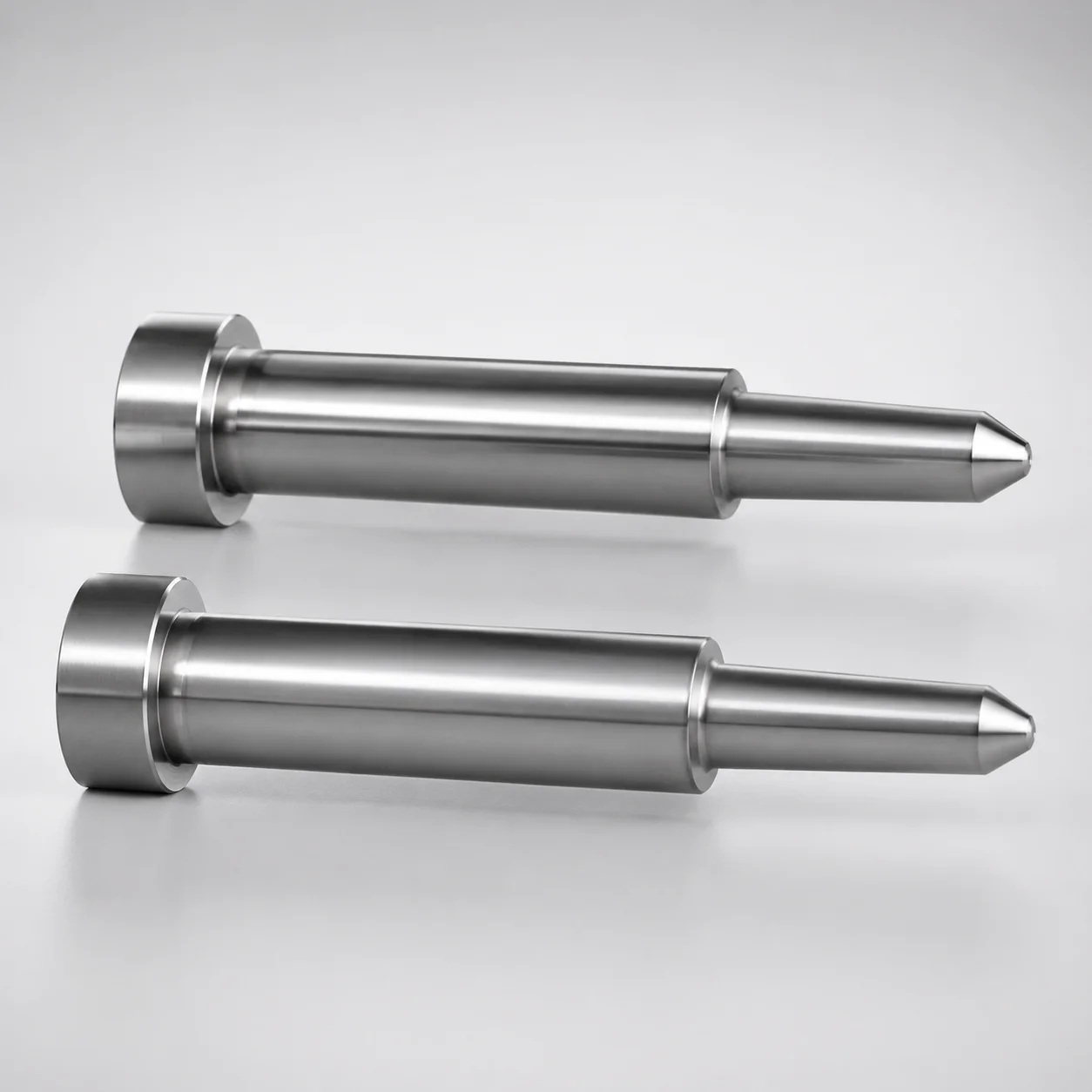
Table of Contents
Introduction
A packaging manufacturer running a 64-cavity mold for HDPE beverage closures was living with a tool that wore out on its own schedule. The tamper-evident ring on every closure was formed on one-step core pins, and at more than 5 million shots a year those pins saw relentless cycling. The problem was not that pins wore out — every pin wears. It was that they wore unevenly across the 64 cavities, and the first failures always arrived without warning. This was a high-volume, cost-sensitive program where the difference between profit and loss lived in uptime and scrap — and neither of those tolerates a surprise.
The cost of that uneven wear had two faces. One was production: a 24/7 packaging line cannot schedule an emergency. When a pin failed, the line stopped when it stopped — usually mid-shift, always at the worst moment. The other face was quality: as pins wore at different rates, the tamper-evident ring feature drifted cavity to cavity, and the scatter on the ring exceeded the closure spec. Closures from different cavities were no longer equivalent, and on a high-volume packaging line that is exactly the kind of variation that shows up later as sorting, rework and customer complaints. The ring is not decorative — it is the feature a consumer relies on to know a closure has not been opened, and inconsistency there erodes trust in the whole pack.
The manufacturer came to DieStrike for a single answer: a matched set of 64 core pins that would wear evenly, hold the ring feature inside spec across every cavity, and turn emergency replacements into scheduled maintenance.
The Snapshot
Here is the project at a glance — the part, the material, the tool, and the numbers that mattered.
| Part / Component | HDPE beverage closure, tamper-evident ring on one-step core pins |
| Resin / Material | HDPE closure / SKH51 (M2) core pins, HRC 62, TiN-coated |
| Mold / Die Type | 64-cavity injection mold |
| Cavity Count | 64 |
| Annual Volume | 5M+ shots/year |
| Critical Tolerance | ±0.002 mm on core pin diameter |
| Initial Problem | Uneven pin wear (~300,000 shots) + ring feature scatter + unscheduled line stops |
| Result Summary | 900,000+ shots pin life (3x), quarterly scheduled swaps, ±0.002 mm across all 64 positions |
- 64-cavity HDPE closure mold running 5M+ shots a year, with the tamper-evident ring formed on one-step core pins.
- First core pin failures arrived around 300,000 shots, unevenly across cavities, with no predictable pattern.
- Cavity-to-cavity scatter on the ring feature exceeded the closure spec as pins wore at different rates.
- Replaced with SKH51 + TiN pins ground to ±0.002 mm — 900,000+ shots and quarterly stops.
The Challenge
The failure began as a quiet difference between cavities. In a 64-cavity mold every pin is nominally the same part, but in service they are not — some cavities run hotter, some fill a fraction faster, some see slightly different packing pressure. Over hundreds of thousands of cycles those small asymmetries turned into uneven core pin wear across the 64 cavities, and the first failures showed up around 300,000 shots. Not all at once, and not in any cavity order the maintenance team could predict — just the first pin of many, with no warning. Worse, the pattern said nothing about which cavity would fail next, so every day was a gamble.
The second problem followed the first. As pins wore at different rates, the tamper-evident ring feature — formed on those pins — drifted from cavity to cavity. Cavity-to-cavity dimensional scatter on the ring exceeded the closure spec, which meant closures from different cavities were no longer interchangeable. For a packaging line running millions of closures, that scatter is not a cosmetic issue: the ring is a functional, safety-relevant feature, and out-of-spec rings get caught at inspection, sorted out by hand, or worse, reach the customer. Quality flagged it, the line kept running, and the gap between the two grew with every shift.
The third problem was the schedule. This was a 24/7 packaging operation. Every pin replacement meant an unscheduled line stop, and with failures arriving at odd intervals, the maintenance team could never plan around them. The line stopped when a pin gave out — not when the calendar said so. Roughly monthly stops, each one unplanned, each one costing production the line could not recover, and each one followed by the same anxious question: which cavity next?
How We Solved It
The fix started with a change in how the pins were treated: not as 64 spare parts, but as one matched set. If every pin is the same grade, the same hardness, the same coating and the same diameter, the mold wears as a system — and that turns random failures into a single predictable replacement interval. That reframing shaped every decision that followed, from material selection to the verification step.
One grade, one coating, one diameter. We specified SKH51 (M2) one-step core pins hardened to HRC 62, with TiN coating applied for consistent wear across the set. Hardness gives the pin the strength to run past 900,000 shots; the coating is what keeps wear uniform from cavity to cavity. All 64 pins were ground to ±0.002 mm with matched diameters, so every pin is dimensionally the same part — CMM-verified before delivery, so the set ships with proof, not promises. Matched diameters mean a replacement pin is not a compromise part; it is the same part, and the cavity it goes into keeps behaving the way it did before. That matched-diameter discipline is a core capability across our mold-making operation.
Design checked before steel was cut. The pin design went through a 24-hour DFM review — the same front-loaded discipline we apply in our DFM and mold design review. The review confirmed pin grade, venting and interchangeability for the closure design: that the pins would vent properly at the ring feature, that the grade would survive the HDPE cycle, and that any pin could be swapped into any cavity without affecting the tolerance stack. Interchangeability was the point — when a pin finally does come out, it is replaced with an identical pin, and the line runs on. The customer got the DFM findings up front, agreed the plan before a single pin was made, and signed off on a set that was defined, not hoped for.
The Results
| Core pin life | ~300,000 shots (uncoated) → 900,000+ shots (SKH51 + TiN) — 3x improvement |
| Cavity-to-cavity consistency | ±0.002 mm on pin diameter across all 64 positions |
| Line stops for pin replacement | Roughly monthly → once per quarter |
| Replacement scheduling | Scheduled swaps at a common interval instead of odd-interval failures |
The results changed the maintenance math. Core pin life went from roughly 300,000 shots on the uncoated pins to 900,000+ shots with SKH51 + TiN — a 3x improvement — and because all 64 pins now wear at the same rate, replacement stopped being a guessing game. Line stops for pin replacement dropped from roughly monthly to once per quarter, and each stop is now a scheduled swap at a common interval, planned on the calendar instead of forced by a failure. The maintenance team went from firefighting to planning, and that is a different job entirely.
Just as important, the quality scatter disappeared. With every pin ground to ±0.002 mm and wearing consistently, the tamper-evident ring feature holds to spec across all 64 cavities — closures from any cavity are the same closure. The line keeps the full cavity count it was built for, and the sorting, the hand-inspection and the emergency calls are gone. The three-way trade-off the plant used to make — pin life, ring consistency, or line uptime — stopped being a trade-off.
Why It Held
This fix held because it removed the root cause of the uneven wear instead of treating the symptom. The original pins wore unevenly because they were effectively different parts in service — different wear resistance, different surface behavior, different diameters. By standardizing the grade (SKH51 hardened to HRC 62), the coating (TiN) and the diameter (±0.002 mm, matched and CMM-verified), the set behaves as one part. The mold now wears as a system, which is exactly why one common replacement interval works across all 64 cavities. A maintenance plan built around a single interval survives contact with reality, because the pins themselves enforce it.
The second reason it held is the DFM discipline in front of it. The 24-hour DFM review locked the pin grade, venting and interchangeability before the first pin was made, and the CMM report that shipped with the set became the customer's incoming acceptance standard. When the toolmaker's verification and the customer's acceptance are the same document, there is nothing to argue about at the first swap — and nothing to rediscover at 900,000 shots. The set was designed to be maintained, and that is why the plant could hand the plan to a new shift and trust it.
KEEP READING
Related Reading
Extending Ejector Pin Life on a High-Cycle Connector Mold
TiN-coated ejector pins tripled pin life to 450,000+ shots on a high-cycle glass-filled PBT connector mold.
Read case studyCase StudyVented Core Pins for Deep Boss Pillars in a Consumer Electronics Housing
Gas-release core pins in SKH51 + TiN tripled tip life to 1.2M shots and killed flow lines on deep boss pillars.
Read case studyArticleEjector Pin vs Core Pin: When Each Wins
Core pins and ejector pins look alike but fail differently — knowing which one is forming the part decides the steel grade, coating, and wear life you plan for.
Read articleArticleHow to Extend Mold Life: 5 Proven Strategies
Mold life is set before steel is cut: steel grade, heat treatment, surface finish, and a maintenance plan that treats wear as scheduled instead of surprising.
Read articleNEXT STEP
Ready to Start Your Mold?
Send us your element dimensions or part numbers — our team responds within 24 hours with pricing and lead time.

Written by
Ray ChanMold Buyer's Guide Author · Precision Mold Manufacturing Specialist. Ray helps global importers, distributors and OEMs source factory-direct molds and mold parts.