
How to Design High-Strength Steel Stamping Dies: Springback, Wear
Table of Contents
A 1.2 mm DP980 B-pillar die built on mild steel rules fails in three places at once. The panel springs back 8 to 12 degrees after the form station. Trim edges chip inside 40,000 strokes. The checking fixture rejects the flange by 2 to 4 mm. None of those failures are material defects, and all three trace back to die design assumptions that were correct for DC04 and wrong for AHSS.
The Snapshot
- Springback rises from 2-4 degrees on DC04 to 7-11 degrees on DP980 and 10-14 degrees on CP1180 at R/t = 4.
- Blanking clearance for AHSS runs 10-14% of sheet thickness per side, against 5-8% for mild steel.
- Cutting edge life drops to 30,000-60,000 hits between regrinds on DP980 trim stations, against 150,000-250,000 on mild steel.
- Punching force scales with shear strength, so DP980 at roughly 650 MPa shear needs 1.5-2x the tonnage of DC04 at 300-350 MPa.
- Press-hardened 22MnB5 reaches 1,400-1,600 MPa after a quench above 27°C/s, which moves trimming to laser cutting.
Why AHSS Changes Every Die Design Rule
Elastic recovery drives the springback gap. Young's modulus sits near 210 GPa for every steel grade, so recovery scales almost linearly with yield strength. DP600 yields at 340-420 MPa, DP980 at 550-700 MPa, and CP1180 at 850-1,000 MPa on 1.0-1.6 mm sheet. Work hardening falls at the same time, with the n exponent dropping from 0.20 on mild steel to 0.08-0.12 on DP980.
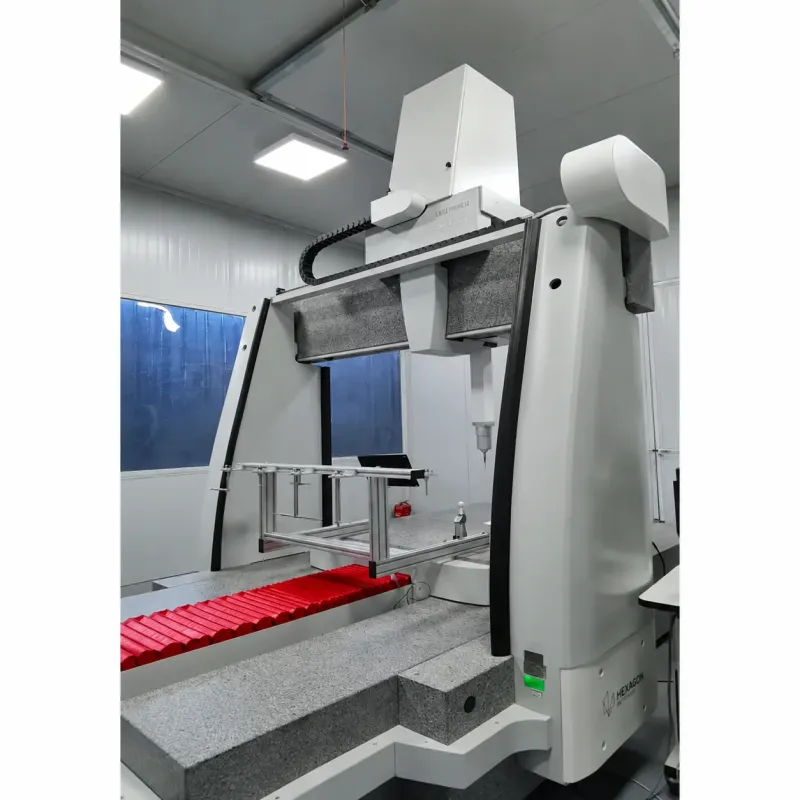
Ductility collapses as strength climbs. Total elongation falls from 35-40% on DC04 to 14-18% on DP600 and 8-12% on CP1180. A trim edge that tolerates 40% local strain on mild steel cracks at 15% on UHSS. Hot formed 22MnB5 is a separate case, since it reaches full martensite only after the die quenches it above 27°C/s.
Three habits carry over from mild steel and cause most early field failures. They are the old 5-8% blanking clearance, single-pass overbend compensation, and uncoated D2 trim edges. Each one removes 20-60% of expected die life before the first regrind.
Springback by Grade: DP600 to 22MnB5
Springback is not one number. It changes with bend radius, sheet thickness and the R/t ratio, so grades only compare at a fixed geometry. The table below uses R/t = 4 with a 1.2 mm sheet and a 90 degree bend, which matches most automotive structural panels.
| Grade | Yield strength (MPa) | Springback at R/t = 4 | First countermeasure |
|---|---|---|---|
| DC04 mild steel | 180-240 | 2-4 degrees | Nominal die, single tryout pass |
| DP600 | 340-420 | 4-7 degrees | Overbend 1-2 degrees |
| DP980 | 550-700 | 7-11 degrees | Overbend plus restrike station |
| CP1180 | 850-1,000 | 10-14 degrees | Restrike with 20-40% form tonnage |
| 22MnB5 hot formed | 1,000-1,200 after quench | 1-3 degrees plus distortion | Die quench and laser trim |
← swipe to scroll →
Table note: Angular ranges are typical industry figures for 1.2 mm sheet at R/t = 4 with a 90 degree bend. Actual values shift with tool radius, blank holder force and lubrication.
Angle tells only half the story. AHSS panels also twist and camber, and a 1.5 m rail can lose 3-6 mm of flatness after ejection. Twisting tracks the yield-to-tensile ratio, which runs 0.57-0.62 on DP980 and 0.72-0.85 on CP1180.
Bend radius sensitivity is the largest single lever in the die. Dropping from R/t = 4 to R/t = 2 raises springback 30-50% at the same yield strength. The elastic recovery zone then covers a larger share of the bend section. Open the radius before you add compensation travel.
Grade choice is therefore a die cost decision, not just a material one. Moving a rail from DP600 to DP980 cuts 0.2 mm of gauge and 12-14% of part mass. It also adds a restrike station at $40,000-90,000 to the tool. EV body programs still take that trade, which is why EV body tooling now drives most new AHSS die orders.
Springback Compensation: Overbend, Restrike and Simulation
Overbend is the cheapest first move. The die is cut 1-3 degrees beyond nominal on every bend radius, and the panel is measured after each tryout pass. Two to four compensation loops normally bring the angle inside ±0.5 degrees.
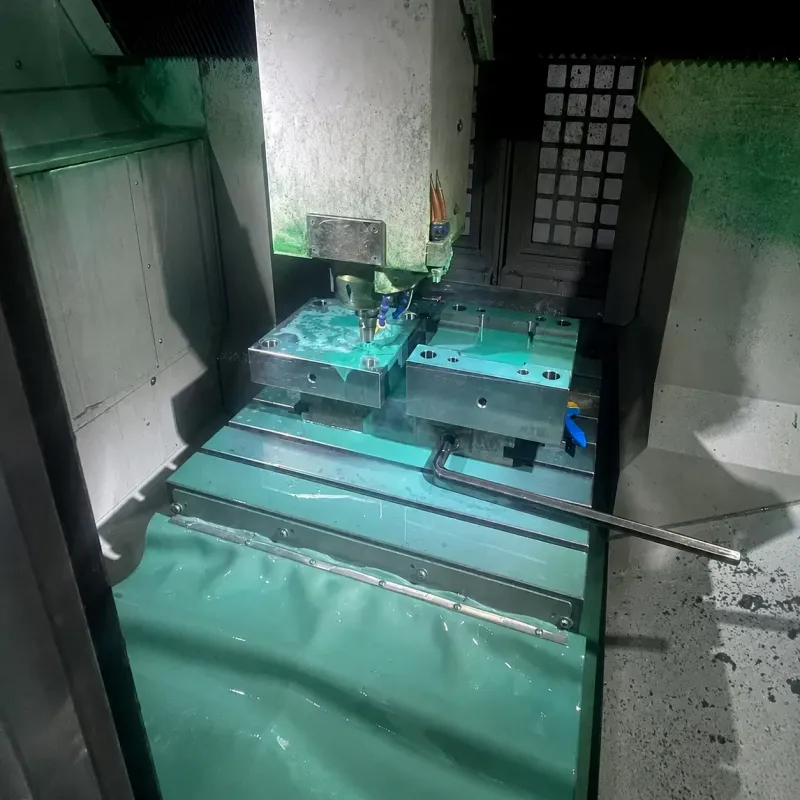
A restrike or calibration station removes the scatter that overbend cannot. It closes the panel under 20-40% of form tonnage in a locked die, which cuts springback variation from ±2 degrees to ±0.5 degrees. That station adds 8-15% to die cost and pays back whenever the tolerance is tighter than 1.0 mm over a 1 m section.
Binder pressure and draw beads form the second lever. Raising blank holder force from 300 kN to 700-900 kN adds tensile stress across the panel and pulls springback down 20-35%. Draw bead radius stays between 3 and 6 mm to avoid tearing on 8-12% elongation material.
Simulation guides the first cut, not the final shape. Springback prediction error runs 15-30% before compensation on DP980, so analysts read the trend and let the tryout loop close the rest. The full cycle from simulation to a locked panel takes 3-5 iterations and 2-4 weeks of press time.
Blanking and Piercing Clearance for AHSS
Clearance is the most common AHSS error in the die shop. Mild steel runs at 5-8% of thickness per side, and that value survives in older die standards. AHSS needs 10-14% per side because the material shears differently and work hardens at the cut edge.
| Material | Tensile strength (MPa) | Clearance per side | Burnish zone | Punch material |
|---|---|---|---|---|
| DC04 mild steel | 270-350 | 5-8% of t | 30-50% of t | D2 at HRC 58-60 |
| DP600 | 590-700 | 8-10% of t | 20-30% of t | D2 or PM-HSS |
| DP980 | 980-1,100 | 10-12% of t | 15-25% of t | PM-HSS at HRC 62-64 |
| CP1180 | 1,180-1,300 | 12-15% of t | 10-20% of t | PM-HSS or carbide |
| 22MnB5 after quench | 1,400-1,600 | Laser trim | Not applicable | Not applicable |
← swipe to scroll →
Table note: Clearance values are typical industry ranges expressed as a percentage of sheet thickness per side. Total die clearance is twice the per-side figure.
Total die clearance is double the per-side figure, so a 1.2 mm DP980 blank runs 0.24-0.29 mm total against 0.12-0.19 mm for mild steel. Punch force scales with shear strength, which sits near 650 MPa on DP980 and 300-350 MPa on DC04.
Tight clearance on AHSS does not buy a better edge. It raises punch load 20-40%, speeds up wear land growth and increases the risk of secondary shear cracks. The burnish zone falls from 30-50% of thickness on mild steel to 10-25% on UHSS no matter what clearance you run.
Pierced holes below 1.5x sheet thickness are a design problem on DP980 and above. Hole expansion ratio drops from 25-35% on DP600 to 8-15% on CP1180, so a stretched flange around a pierced hole cracks early. Move the hole to a separate station or add a shave pass.
Edge Cracking and Trimming on UHSS
Trim quality sets the fatigue life of the finished part. A sheared edge with a 0.10-0.15 mm crack initiation zone fails at 30-50% lower strain than a machined edge. On CP1180 the effect is severe enough to force a second trim pass or a shaved hole.
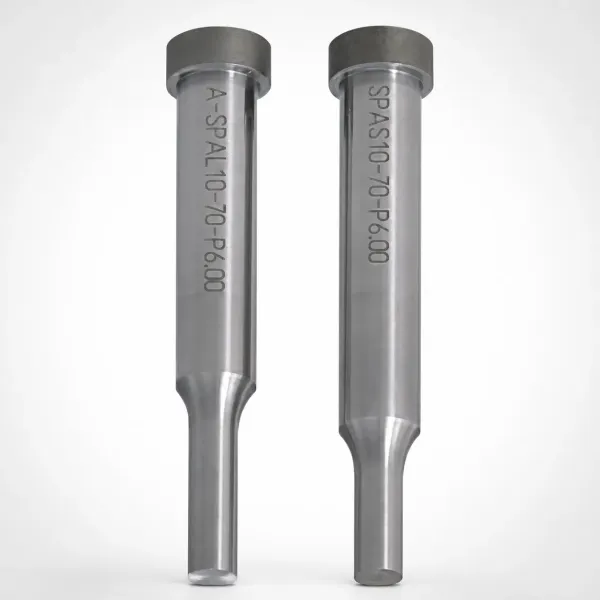
Measure the edge, do not judge it by eye. A 20x optical check of the sheared face shows burr height, fracture zone depth and die roll in one pass. Log all three values per coil, because edge quality shifts with coil-to-coil yield strength variation of 40-80 MPa.
Shear angle is the practical fix inside the die. Cutting with a 3-5 degree shear angle on the trim steel drops peak force 20-30% and spreads load along the cutting edge. That reduction is worth 200-400 kN on a large rail trim die, and it protects the press as much as the punch.
Edge radius control matters more than hardness alone. A trim edge worn past 0.10 mm radius tears instead of cutting, and burr height on 1.2 mm AHSS grows past 0.05 mm. Regrind before that point, never after.
Press-hardened 22MnB5 above 1,200 MPa is usually laser trimmed. Hard trimming at 1,500 MPa UTS chips carbide within 5,000-20,000 strokes and leaves a heat-affected zone crack risk at the cut edge. Laser trim adds $3-8 per part at low volume but removes a die station and its maintenance load.
Punch and Die Material for High-Strength Steel
D2 at HRC 58-62 remains sound for DP600 trim work and for pierce stations below 700 MPa tensile. Above that line, edge chipping and adhesive wear dominate the cost equation, and downtime outruns the price gap to powder metallurgy steel.
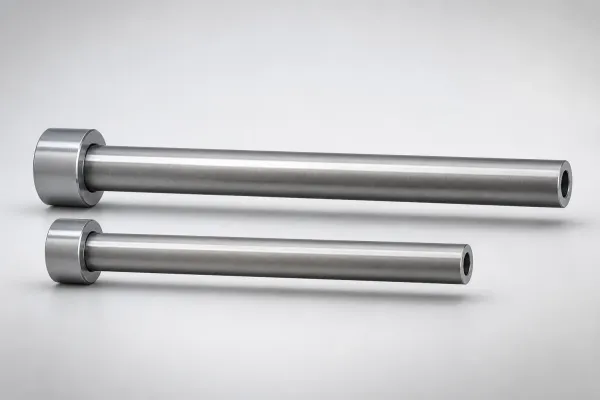
PM-HSS grades such as CPM 3V, Vanadis 4E and ASP 23 run HRC 60-64 with 2-4x the edge life of D2 on DP980. They hold a sharp edge longer because carbide distribution is finer and more uniform. A DP980 trim insert that lasts 60,000 hits in D2 typically reaches 150,000-250,000 hits in PM-HSS.
Carbide takes the top of the range. WC-Co grades with 6-12% cobalt reach 1,800-2,200 HV and suit volumes above 2 million hits on DP600 to DP780. Carbide chips under shock, so pair it with a guided stripper, hold punch-to-stripper clearance at 0.02-0.03 mm and never run a loose fit. For grade-by-grade properties and heat treatment routes, see our stamping die steel selection guide.
Heat treatment discipline decides whether any of those grades deliver. Austenitizing temperature within ±10°C, double tempering and 2-3 stress relief passes keep the cutting edge at a stable HRC 62. DieStrike holds die component geometry to ±0.002 mm and die dimensions to ±0.005 mm with in-house heat treatment and finish grinding.
Wear Mechanisms and Regrind Triggers
AHSS dies fail in four distinct wear modes. Adhesive galling pulls material from the die face. Abrasive wear rounds the cutting edge, chipping fractures it, and contact fatigue spalls the surface after 200,000-500,000 cycles. Each mode needs a different countermeasure.
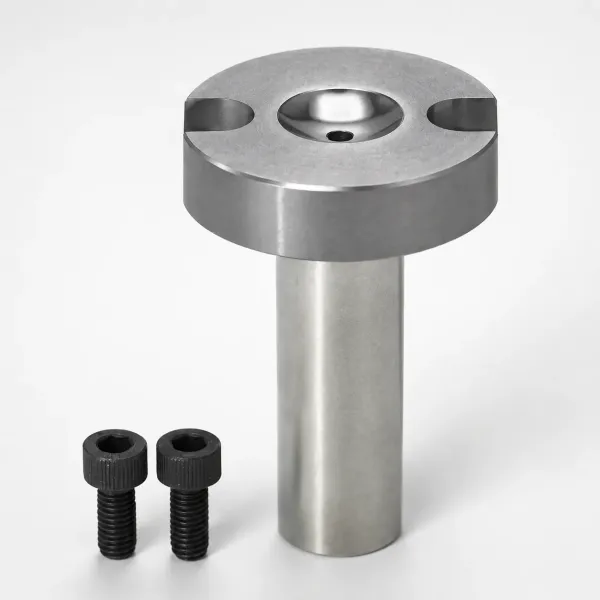
Wear land is the measurable trigger. On DP980 trim edges, regrind at 0.05-0.08 mm of wear land against 0.10-0.15 mm on mild steel. Removing 0.05-0.10 mm per pass keeps the edge sharp and holds burr growth under 0.05 mm on 1.2 mm sheet.
Stroke counts tell you what to budget. A DP980 trim station needs a regrind every 30,000-60,000 hits, while the same station on mild steel runs 150,000-250,000 hits. A die block with 5 mm of usable stock and 0.08 mm removed per regrind supports roughly 60 passes before replacement.
Galling is the AHSS-specific failure, and it appears first around draw radii and trim faces under high contact pressure. Our galling prevention guide lists the eight root causes and the die-side fix for each one.
Tonnage, Cushion and Press Selection
Tonnage on AHSS is a calculation, not an estimate. Multiply cut length by thickness by shear strength, then add 20% for shock and off-center loading. A 1,000 mm trim line on 1.2 mm DP980 at 650 MPa shear needs 780 kN, or about 94 tons with the safety factor.
Mild steel at 320 MPa shear would need 46 tons for the same cut. That 2x jump reshapes press selection for the whole line. Running an AHSS die above 60-70% of rated tonnage accelerates bed deflection and shortens die life, even when the die itself is built correctly.
Verify the press bed before you commit. An AHSS die with 90 tons of cutting load and 800 kN of binder force puts its peak load off center on most rail layouts. Bed deflection above 0.10 mm per meter tilts the ram, changes clearance at the corners and shortens edge life by 20-30%.
Stripping force rises with the same shear strength. Nitrogen gas springs sized at 15-25% of punching force hold the blank flat and stop the punch from dragging the strip. Coil springs are typically too slow for this duty and lose 10-15% of preload over 30,000-50,000 stroke intervals.
Cushion capacity must cover binder force, which climbs to 700-900 kN on a large AHSS panel. An undersized cushion opens under load and adds 1-3 degrees of springback variation to every hit, which no amount of die compensation can remove.
Lubrication and Die Coating Interaction
Interface pressure on AHSS draw operations reaches 800-1,500 MPa against 400-600 MPa on mild steel. Standard lubricant films break down at that pressure, metal touches metal, and galling starts within a few thousand strokes.
Use an EP-additive lubricant applied at 1.0-2.5 g/m2 and check film weight per run rather than per shift. Zinc and Zn-Al-Mg coated blanks need a dry film or a prelube. The soft coating transfers to the die face and builds up on draw radii within 5,000-10,000 strokes.
PVD coatings cut friction and wear together. AlCrN at 3,200 HV and TiAlN at 2,800-3,300 HV drop the friction coefficient from 0.12-0.15 to 0.08-0.10 on draw steel. Correctly applied coatings extend regrind intervals 1.5-3x on DP980 when the substrate is 60 HRC or harder.
Never coat a chipped or worn edge. Coating over a 0.10 mm wear land spalls within 10,000-20,000 strokes and takes substrate with it. Regrind first, coat second, then track stroke count as a separate line in the die maintenance log.
Simulation to Tryout: The Correction Loop
Simulation narrows the search space but does not close the tolerance. On DP980 panels, springback predicted by forming simulation lands within 15-30% of the measured value before compensation. Treat the first simulation pass as a starting geometry, not a released die.
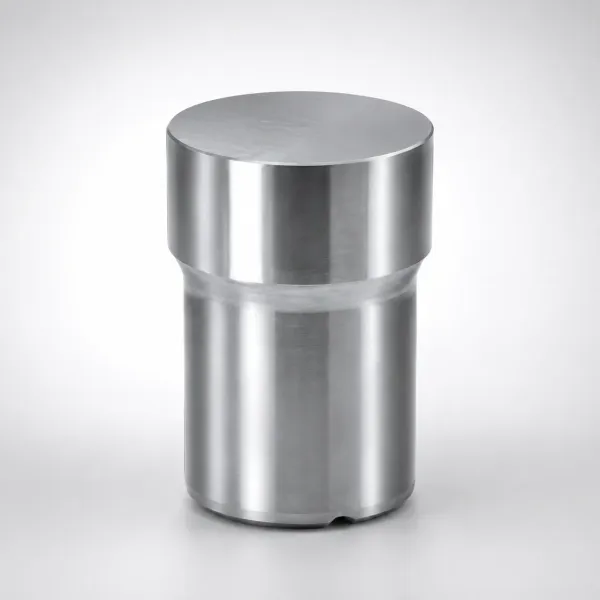
Metrology closes the loop. An optical scan of the formed panel returns a full-field deviation map, and the die shop corrects radii, addendum and bead geometry from that data. Three to five passes over 2-4 weeks typically bring a 1.5 m panel inside 0.5-1.0 mm.
Blue check and shim work runs alongside the scan data. Spotting compound shows contact percentage, and a die below 75-80% contact on the draw radius will produce inconsistent springback across the run. Add shim stock and re-spot before the next tryout pass instead of chasing the number in simulation.
Track every pass in one log. Record draw bead radius, binder force, panel deviation and blank holder shim thickness for each tryout. After 3-5 passes that log lets a different press team repeat the setup without re-learning the die, which saves 1-2 weeks on a transfer program.
DieStrike builds AHSS and hot forming tooling under IATF 16949 process control with 2-5 week stamping die lead times. Our stamping die manufacturing team returns DFM feedback within 24 hours of receiving a part drawing.
Hot Forming 22MnB5: Quench Dies and Cooling
Press-hardened parts invert the usual problem. Springback after the quench drops to 1-3 degrees, and thermal shrinkage distortion takes its place. A boron steel B-pillar at 1,500 MPa UTS is shaped by the die and fixed by the cooling rate inside it.
Quench dies run at 900-950°C austenitizing temperature on the blank, with a transfer time under 10 seconds. Cooling rate across the part must stay above 27°C/s to reach full martensite, and 30-50°C/s is the working target on 1.2-2.0 mm boron steel. Channel spacing of 20-30 mm and a 8-12 mm channel diameter hold that rate across the panel.
Die material for quench tooling is usually a hot work steel with high thermal conductivity. Cooling channels are drilled or cast in near the working surface. Die surface temperature swings 200-400°C per cycle, so thermal fatigue cracks appear after 80,000-200,000 hits on an uncoated surface. Nitriding at 0.05-0.10 mm case depth delays that cracking by 50-100%.
Trim and pierce on a quenched part happen after cooling, not inside the hot die. Most programs use laser cutting at 3-5 axes with a $3-8 per part cost at low volume. A hard trim die for a typical body panel set would add $150,000-400,000 in tooling cost.
Part and Die Checks Before You Cut Steel
Most AHSS tooling failures are settled at the drawing review, before the first block is machined. Run these checks on every part above 600 MPa tensile and the tryout loop gets 2-3 passes shorter.
Check bend radii first. Bending a 1.2 mm DP980 sheet below R/t = 3 raises the surface strain past 15% and cracks the outer fiber. Keep R/t between 3 and 5, and never go under 2.5 for CP1180 regardless of what the mild steel legacy part used.
Check hole-to-edge distance next. A pierced hole closer than 1.5x thickness to a trimmed edge produces a tear-out on DP980 and above. Move the hole, add a shave pass, or specify a laser or fine blanked edge for that feature.
Check the trim direction and slug control. AHSS slugs at 650 MPa shear carry 20-40% more kinetic energy and jam the die faster. Add slug retention and a drop-out door sized for the heavier scrap, and keep the trim steel 0.02-0.03 mm below the die surface on relief.
Check the maintenance plan last. Budget regrind intervals of 30,000-60,000 hits, hold two spare trim inserts per station in PM-HSS, and log wear land every 5,000 hits. A spare set costs 3-8% of the die price and removes 2-5 days of unplanned downtime per year.
FAQ
Q1. How much springback does DP980 have?
At R/t = 4 with a 1.2 mm sheet and a 90 degree bend, DP980 springs back 7-11 degrees and CP1180 reaches 10-14 degrees. DC04 mild steel at the same geometry recovers only 2-4 degrees.
Q2. What blanking clearance should I use for high-strength steel?
Use 10-14% of sheet thickness per side for DP980 and CP1180, against 5-8% for mild steel. Total die clearance is twice that figure, so a 1.2 mm DP980 blank runs 0.24-0.29 mm total.
Q3. Can I trim press-hardened 22MnB5 in a conventional die?
Only below about 1,200 MPa. At 1,400-1,600 MPa UTS, hard trimming chips carbide edges within 5,000-20,000 strokes, so most programs move to laser trimming at $3-8 per part.
Q4. How long do AHSS stamping dies last?
Expect 30,000-60,000 hits between regrinds on DP980 trim stations and 200,000-500,000 total hits on the cutting edges. Mild steel tooling runs 3-5x longer, so the regrind budget must be set from the first year of production.
Q5. What punch material handles DP980?
PM-HSS grades such as CPM 3V or Vanadis 4E at HRC 62-64 deliver 2-4x the edge life of D2. Carbide with 6-12% cobalt suits volumes above 2 million hits but needs a guided stripper and 0.02-0.03 mm punch-to-stripper clearance.
The Bottom Line
AHSS dies fail on springback, edge wear and chipping long before they fail on strength. Fix clearance, compensation and edge material together, and a DP980 die runs 2-4x longer. DieStrike builds precision stamping dies to ±0.005 mm in 2-5 weeks. Send your part drawing through our contact page for a DFM review.
KEEP READING
Related Reading
How to Maintain Punch Clearance in Progressive Dies
Clearance measurement, wear limits and regrind intervals for punches running 200,000 hits or more.
Read articleArticleNitrogen Gas Springs vs Coil Springs for Stamping Dies: How to Choose
Force curves, preload loss and service intervals for stripping AHSS at 15-25% of punching force.
Read articleArticleFine Blanking vs Conventional Stamping: How to Choose
When a clean sheared edge at 0.02 mm burr beats a conventional trim die with a shave pass.
Read articleServiceStamping Die Manufacturing
AHSS and hot forming tooling built to ±0.005 mm die accuracy with 2-5 week lead times.
Read articleNEXT STEP
Ready to Start Your Mold?
Send us your element dimensions or part numbers — our team responds within 24 hours with pricing and lead time.

Written by
Ray ChanMold Buyer's Guide Author · Precision Mold Manufacturing Specialist. Ray helps global importers, distributors and OEMs source factory-direct molds and mold parts.