
How to Set Up a Mold Spare Parts Inventory
Table of Contents
A snapped ejector pin stops a production cell in under one second. The real damage comes next. If the replacement pin is not on the shelf, the mold sits idle for the full supplier lead time, and an idle 300-ton press with tooling typically burns $50 to $150 per hour in lost margin. A 4-week wait for a custom core pin can therefore cost more than the entire annual mold maintenance budget. Most mold rooms do not fail because parts break. They fail because nobody recorded which parts break, how often, and how long replacements take to arrive.
A mold spare parts inventory fixes this with paperwork, not luck. It is a per-mold register of wear items, a consumption model in cycles, min-max stock levels tied to real lead times, and rules for shelf life and interchangeability. Plants that run a disciplined spares program typically cut unplanned tooling downtime by 30 to 50 percent, because 80 percent of mold stoppages trace back to a short list of predictable wear items: ejector pins, springs, sprue bushings, hot runner nozzles, slide wear plates and leader pin bushings.
The Snapshot
- 6 part families cause roughly 80 percent of mold stoppages: ejector pins and sleeves, die springs, sprue bushings and gates, hot runner nozzles and valve pins, slide wear plates and gibs, leader pins and bushings.
- Ejector pins in glass-filled resins last 100,000 to 300,000 shots, versus 500,000 to 1,000,000 shots in unfilled materials. Stock pins against the abrasive case, not the average.
- Min stock formula: minimum = (daily consumption x lead time in days) + safety stock, with safety stock at 1.5x lead-time demand for A-class items.
- Standard parts such as pins, bushings, springs and sprue bushings ship in 3 to 7 days from a stocked manufacturer. Custom-machined spares run 2 to 5 weeks, which is exactly why min levels differ per class.
- Dead stock typically hides 15 to 25 percent of spares inventory value. An annual review of molds that never ran is what recovers it.
Why Mold Spare Parts Inventories Fail
Most spares shelves fail in one of three ways. First, they stock the wrong things. A cabinet full of random screws and orphaned inserts looks like inventory but covers zero predictable failures. Second, they stock one mold's worth of parts with no link to mold ID, so during a 2 a.m. breakdown nobody knows which tool a 6.35 mm pin belongs to. Third, they never update. The register says 2 pins per mold, but the actual consumption after a gate redesign is 6 per quarter, and the stockout was already scheduled months ago.
Downtime math beats part cost math. A $15 ejector pin protects a cell that generates $50 to $150 per hour. Even a 2-day stockout on a single-cavity automotive connector mold can erase $2,400 to $7,200 of contribution. The correct service-level target for A-class wear items is 98 to 99 percent fill rate, and for C-class items 90 percent is acceptable. Buying to those targets is cheaper than expediting air freight at $150 to $400 per shipment.
Wear is predictable, breakage is not. Inventory should be sized around predictable wear: pins that thin at the head radius, springs that sag after 1 million cycles, bushings that lose press fit. Sudden breakage from misalignment or overpacking is a maintenance problem, not an inventory problem, and stocking for it masks the root cause. The register in Step 1 separates wear items from insurance spares so the two budgets stay honest.
Step 1: Build a Per-Mold Wear-Item Register
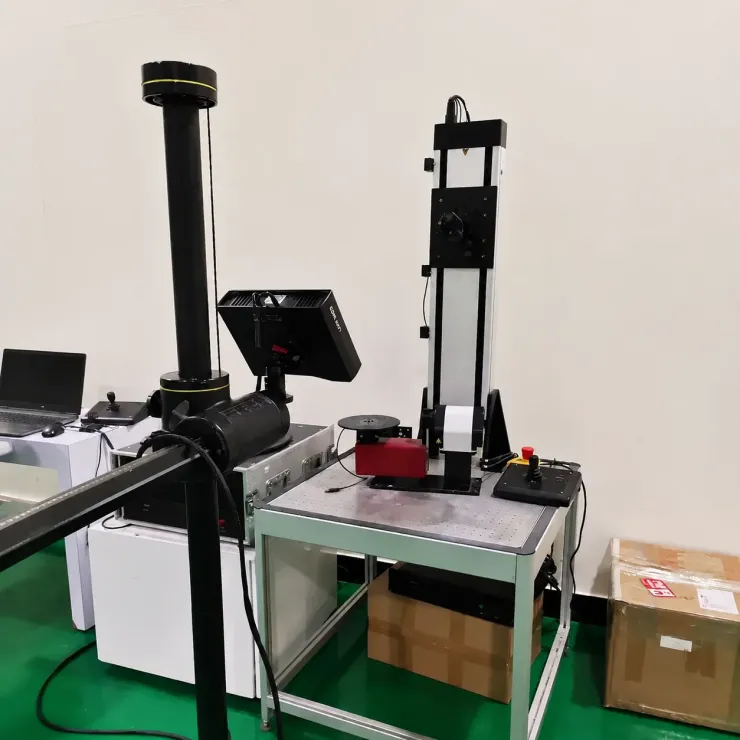
Start one register per mold, keyed to the mold ID that is stamped on the mold base and used in your maintenance system. The register lists every replaceable component with six fields: part name, mold-specific part number, standard or custom classification, quantity per mold, material and hardness, and drawing reference. For a 4-cavity connector mold built to ±0.002 mm component geometry, the register typically runs 30 to 60 line items. A family mold or a 32-cavity closure tool can exceed 120.
Cover the six families that cause most stoppages. Ejector pins and sleeves wear at the head radius and in the pin holes, especially with abrasive resins. Die springs fatigue, and a mold can carry 20 to 60 springs across stripper plates, slide retainers and ejector return systems. Sprue bushings and gate inserts erode from melt velocity, with the bushing radius and gate land wearing first. Hot runner nozzles, heater bands, thermocouples and valve pins are both wear items and electrical failures. Slide wear plates and gibs lose thickness and need shim stock on hand. Leader pins and bushings wear out of round and destroy alignment, which cascades into flash and pin breakage.
Classify each line A, B or C by criticality and value. A items stop the press and have no substitute, so they get the highest service level. B items stop the press but are interchangeable across molds. C items are cheap, fast-moving consumables such as O-rings, pipe plugs and SHCS fasteners, and get bulk min-max treatment. This classification drives every decision in Steps 3 through 5.
Record material and hardness exactly. An ejector pin in SKD61 at HRC 50 to 52 behaves differently from one in through-hardened H13, and cavity inserts at HRC 62 are not interchangeable with P20 spares. If you source spares from the mold maker, the register should match the original drawings, including the heat treatment callout. Connector OEMs including TE Connectivity, Amphenol and Luxshare run dozens of similar tools, and register discipline is what keeps their spares from becoming a mixed bin of look-alike pins.

Step 2: Estimate Part Life and Consumption Rates
You cannot set a min level without a consumption number. Where shot history is missing, use industry-typical wear life as the starting point, then correct it with your own data every quarter.
Ejector pins and sleeves. In unfilled PP or PE, hardened pins typically last 500,000 to 1,000,000 shots. In 30 percent glass-filled nylon or PBT, abrasive wear cuts that to 100,000 to 300,000 shots. Nitride or DLC-coated pins extend life by 2 to 3x in abrasive service. For a mold running 25,000 shots per month in glass-filled resin, plan on replacing the full pin set once per quarter.
Die springs. Spring life follows deflection, not time. A spring working at 20 to 25 percent of its free length may reach 1 to 3 million cycles, while the same spring at 35 to 40 percent deflection drops to a few hundred thousand. Any spring found set more than 5 percent shorter than free length is dead and should be replaced as a set, because mixed-strength springs unbalance stripper forces.
Sprue bushings and gate components. The bushing radius and gate land erode from melt velocity and abrasive fillers. Typical service is 300,000 to 800,000 shots in mineral-filled materials. A worn radius shows as drool and stringing at the sprue, and it is a scheduled replacement, not a surprise.
Hot runner nozzles, heaters and valve pins. Heater bands and thermocouples fail on a 12 to 24 month typical cycle with daily thermal cycling. Valve gate pins wear at the seal land and need replacement at 500,000 to 1,500,000 shots depending on resin abrasiveness. Stock at least one heater band and one thermocouple per nozzle style, because a single dead heater idles the whole manifold.
Wear plates, gibs and leader pins. Graphite-impregnated bronze wear plates carry slides for 1 to 2 million cycles before shim stock is exhausted. Leader pin bushings wear measurably after 500,000 to 1,000,000 cycles, and a bushing that has lost its press fit converts alignment wear into parting-line flash. Track these on the maintenance schedule from your preventive program, not on failure.
Convert each life figure into a consumption rate: shots per month divided by shots per replacement, times quantity per mold. That number feeds the min-max formula in Step 3. Rebuild the rates from actual issue data twice a year, because resin changes and gate repairs shift wear by 2 to 3x.
Step 3: Set Min-Max Levels and Safety Stock
Min-max is the right model for mold spares because demand is lumpy and per-part. The minimum is the reorder point. The maximum is the order-up-to level. Both are calculated, not guessed.
Minimum (reorder point) = daily consumption x supplier lead time in days + safety stock. Example: a 4-cavity mold consumes 2 ejector pins per month, or 0.07 per day. The supplier lead time is 7 days. Lead-time demand is 0.5 pins. For an A-class item with 98 to 99 percent service level, safety stock at 1.5x lead-time demand gives 0.75, which rounds to a practical min of 2 pins. Rounding up matters more than decimal precision, because a single pin costs $8 to $30 and a stockout costs thousands.
Maximum = minimum + economic order quantity. For low-value standard items, set the EOQ to 3 to 6 months of consumption or the supplier minimum order, whichever is larger. For custom-machined spares, cap max at 2 replacement sets, because drawings change and dead stock on a custom core pin can exceed $300 to $800 per piece.
Worked example for a mold running 25,000 shots per month in glass-filled resin: the ejector pin set is 16 pins, replaced quarterly, so consumption is 5.3 pins per month. With a 5-day lead time and 1.5x safety factor, min is 2 pins and max is 16, one full set. Die springs on the same mold number 24, with typical replacement of 4 per year, so min is 4 and max is 8. The sprue bushing consumes one every 6 months, so min is 1 and max is 2. These three lines alone prevent most stoppages on that tool.
Class-driven service levels. A items get 98 to 99 percent fill, B items 95 percent, C items 90 percent with bulk bins. Do not apply one service level to everything, or you will overstock cheap hardware and still miss the pin that stops the press.
| Item class | Typical parts | Service level | Min level rule | Max level rule |
|---|---|---|---|---|
| A (press-stopping, custom) | Cavity/core inserts, custom ejector pins, valve gate pins | 98 to 99% | 1.5x lead-time demand, round up | 2 replacement sets max |
| B (press-stopping, standard) | Springs, sprue bushings, leader pins, heater bands | 95% | 1x lead-time demand + 1 piece | 3 to 6 months consumption |
| C (consumable) | O-rings, pipe plugs, SHCS, shim stock | 90% | Bulk bin, 2-week supply | Supplier MOQ |
← swipe to scroll →
Table note: Service levels and multiplier rules are typical industry practice for tooling spare parts programs; adjust to your own downtime cost and lead-time data.
Step 4: Map Lead Times and Stockout Risk
Every min level depends on one number most shops get wrong: real lead time, including approval, machining, heat treatment and shipping, not the supplier's quoted turnaround.
Standard components ship in 3 to 7 days. Ejector pins, core pins, sprue bushings, punches, mold bases, springs and leader pins are catalog items at a stocked mold component manufacturer. A supplier like DieStrike ships these standard parts in 3 to 7 days, which is the lead time to plug into the reorder point formula.
Custom spares take 2 to 5 weeks. A replacement cavity insert machined from hardened steel, ground to ±0.002 mm and matched to HRC 62 heat treatment follows the same path as new mold components. Injection mold build lead time at a shop with 120+ machines is 2 to 5 weeks, and a single custom spare insert rides that same queue. This is why A-class custom items carry the 1.5x safety multiplier: the exposure window is four to seven times longer than for catalog parts.
Hot runner components have their own timeline. Replacement nozzles and manifolds from the hot runner OEM typically take 2 to 4 weeks, while heater bands and thermocouples ship in days. If your molds run valve gates, a spare nozzle per hot half design is the single highest-value insurance line in the register.
Rank every register line by risk score: annual consumption value times weeks of downtime exposure. The top 10 to 20 lines by that score get monitored weekly, the rest monthly. When a supplier changes lead time by more than 50 percent, recalculate the affected min levels the same week, because a reorder point built on a 7-day lead time silently becomes a stockout plan when the lead time doubles.
Step 5: Exploit Standard-Part Interchangeability
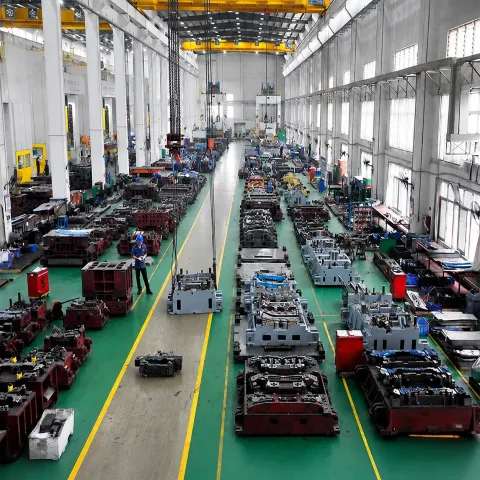
Interchangeability is how a multi-mold plant cuts spares value by 20 to 40 percent without touching service levels. If ten molds share the same ejector pin diameter, length and standard, they share one stock line instead of ten.
The three dominant mold component standards are DME (North American inch series), HASCO (European metric series) and MISUMI (metric catalog with configurable dimensions). A pin is only interchangeable when diameter, length, head style, material, hardness and fit tolerance all match across tools. Document the standard per mold in the register, and when you commission new tooling, specify the plant's dominant standard so future spares pool.
Common interchangeable families: ejector pins and sleeves in standard diameters from 3 to 25 mm, die springs by color code (yellow light, blue medium, red heavy) and size, leader pins and bushings in standard diameters, sprue bushings with standard radius and shank, and O-ring and pipe plug sizes for cooling circuits. Non-interchangeable by nature: cavity and core inserts, custom-shaped punches, valve gate nozzles matched to a specific manifold, and any component with mold-specific geometry or a texture match.
Apply a pooling rule to B-class items: one shared stock line per standard part number, with the register on each mold pointing to the shared bin location. Keep A-class custom items per-mold, physically tagged with the mold ID. Mixing the two is how plants end up installing a look-alike pin that is 0.02 mm off and scoring the pin hole, converting a $20 spare into a $2,000 repair.
When you standardize at design time, you also simplify sourcing. A single RFQ covering the pooled list of pins, springs and bushings gets better pricing and one 3 to 7 day ship commitment instead of five partial orders. This is the same leverage a mold maker uses when quoting standard components for multiple tools in one order.
Step 6: Control Shelf Life and Batch Identity
Spares age even when nobody touches them. Three families carry real shelf-life limits, and a stockroom that ignores them installs failures.
Elastomers and seals. Nitrile O-rings and rubber seals have a typical shelf life of 5 to 7 years from cure date when stored below 25°C away from light, and FKM seals reach 8 to 10 years. A hardened ring that has taken a compression set will leak cooling water into the mold, and a water line leak at the parting line costs more in downtime than the seal. Record the cure date or purchase date on the bag, and purge anything past 5 years annually.
Lubricants and rust preventives. Anti-seize compounds, guide pin greases and VCI rust preventives typically last 2 to 5 years. Grease that has separated oil will not protect a leader pin running at 40 cycles per minute. Date every tube at receipt.
Coated and plated components. Nitrided or DLC-coated pins are stable, but bare ground steel spares rust in humid air within weeks. Store uncoated pins and inserts in VCI paper or bags with desiccant, and keep the stockroom below 60 percent relative humidity. A rust-freckled pin surface scores the bushing on first use.
Batch identity matters for traceability. When a batch of pins fails early across three molds, you need the purchase order and lot number to contain the problem to one batch instead of rebuilding every register line. Keep the supplier certificate with the lot, and log heat treat hardness where the supplier provides it, especially for A-class custom spares specified at HRC 62 for cavity work or HRC 50 to 52 for ejector pins.
FIFO is the operating rule: first in, first out, enforced by bin layout rather than memory. Put new stock behind old stock in every bin, and review dates during the Step 8 audit.
Step 7: Organize Storage and Labeling
A 2 a.m. breakdown is the real test of storage layout. The technician must find the right part for the right mold in under 5 minutes, without a drawing.
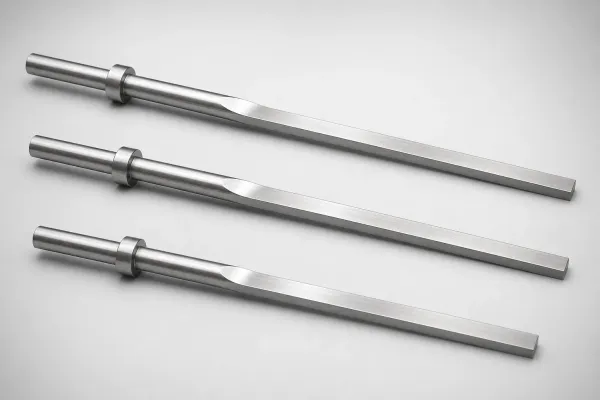
Two-zone layout. Zone one holds per-mold kits for the top 10 to 20 running molds: a labeled box or drawer per mold ID containing its A-class custom spares, one copy of the register, and the cavity/insert drawings. Zone two holds pooled standard items by family and size: pins by diameter and length, springs by color code, bushings by standard. This split mirrors the A/B classification from Step 1.
Label every bin with three fields: part number, mold ID or POOLED, and min-max levels. When stock drops to min, the technician sees the trigger at the bin, not in a spreadsheet nobody opens. Barcode or QR labels tied to the inventory system work well once consumption exceeds about 50 issues per month, but handwritten min-max cards are enough for smaller mold rooms.
Protect precision surfaces. Ground and polished spares, especially inserts matched to ±0.002 mm geometry, get individual packaging: VCI wrap, then a rigid box. Never store loose pins and inserts in a shared drawer where heads ding and lands nick. A damaged sealing land on a valve gate pin is a leak path that shows up as gate drool, and the repair cost dwarfs the packaging cost.
Location discipline. Fixed bin locations beat random put-away every time. Record the bin address in the register, so the mold's paperwork points to its spares physically. When a mold moves to another plant or gets sold, its kit moves or gets purged with it, which feeds the dead-stock review in Step 8.
Step 8: Audit Dead Stock and Review Annually
Dead stock is any spare with zero issues in 24 months for a mold that still runs, or any spare for a mold that no longer runs. Industry experience puts dead stock at 15 to 25 percent of spares inventory value, and custom mold spares concentrate it: a $600 insert for a tool that was moved offshore three years ago.
Run the review once a year in four passes. First, pull the issue history and flag every line with no movement in 24 months. Second, cross-check flagged lines against the active mold list, and purge or return spares for retired molds. Third, verify shelf-life dates on elastomers, greases and VCI stock, and replace anything expired. Fourth, recalculate min-max from the last 12 months of real consumption, not the original estimates.
Disposition options for dead stock, in order of value recovery: return to the supplier for credit where the contract allows, transfer to another plant running the same mold, relegate to the training shop for practice repairs, then scrap. Scrapping is not failure. Carrying $20,000 of dead steel at 20 to 25 percent annual holding cost burns $4,000 to $5,000 a year for nothing.
Two triggers force an out-of-cycle review. A mold change, such as a gate redesign or cavity replacement, invalidates the old register lines, so update within a week of the change. And when a mold goes into long-term storage, pull its A-class spares into a sealed kit with the storage procedure, so preservation and spares travel together.
Feed the audit back to sourcing too. If three molds consumed springs twice as fast as the register predicted, the spring class is wrong for the application, and the fix is a heavier-duty spring at design-in, not more stock. Inventory data is a maintenance signal as much as a purchasing signal.
Spare Parts Inventory Setup Checklist
Use this sequence when standing up the program from zero. A plant with 30 active molds typically completes a first full pass in 4 to 6 weeks.
Week 1: register build. List all 6 wear families per mold, classify A/B/C, and record material, hardness and drawing references. Pull the original mold data sheet from the maker where it exists.
Week 2: consumption baseline. Fill in shots per month per mold and apply typical wear-life figures for pins (100,000 to 1,000,000 shots by resin), springs (by deflection class), bushings (300,000 to 800,000 shots) and hot runner heaters (12 to 24 months).
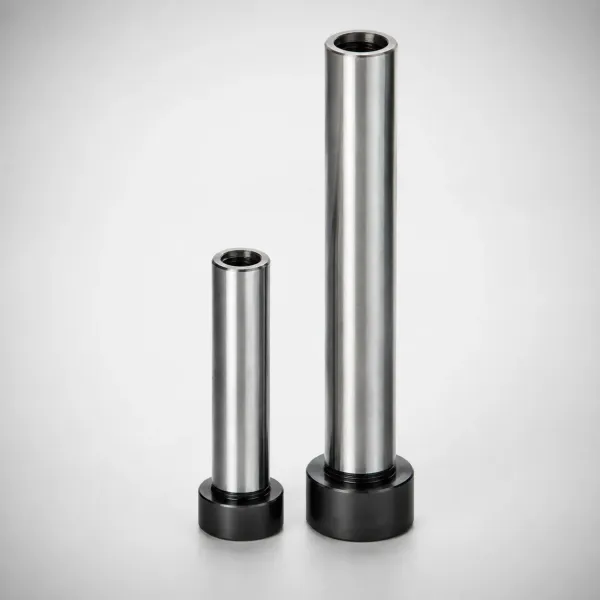
Week 3: lead-time mapping and min-max. Confirm supplier lead times, 3 to 7 days for catalog parts like the ejector pins and die springs in a stocked program, 2 to 5 weeks for custom-machined spares. Calculate min and max per class.
Week 4: pooling and storage. Merge interchangeable B-class lines across molds under one standard (DME, HASCO or MISUMI), assign fixed bin locations, and build per-mold kits for the top runners.
Weeks 5-6: system go-live. Load the register into the inventory system or card file, set reorder alerts at min, train technicians on bin-level triggers, and schedule the first quarterly consumption review. For hot runner tools, verify nozzle and valve pin coverage against the hot runner systems list before go-live, since those lines carry the longest lead times.
Maintenance teams that already run a preventive schedule can tie spares issues directly to PM work orders, so a pin replacement at the 250,000-shot service automatically decrements stock. If your program starts from a damaged tool rather than a clean sheet, a mold repair and maintenance partner can rebuild the register from the repair records while you stand up the stockroom.
FAQ
Q1. How much should a plant spend on mold spare parts inventory?
A practical benchmark is 3 to 8 percent of replacement mold value per year for running tools. A $120,000 mold program with 20 active tools typically carries $20,000 to $50,000 in spares, weighted toward A-class custom items and hot runner components. Plants above 10 percent usually carry dead stock, and plants below 2 percent usually eat the difference in downtime.
Q2. Should I stock spare cavity and core inserts for every mold?
Only for molds where the insert is a known wear or breakage point: gates, thin cores under 1.5 mm diameter, and inserts in abrasive glass-filled resins. Each custom insert costs $300 to $800 and takes 2 to 5 weeks to remake, so stock one spare where risk score justifies it, and rely on lead time plus safety stock calculations elsewhere.
Q3. How do I handle spares for molds built by a supplier that has gone out of business?
Reverse-engineer from the mold itself. Measure wear items, capture the standard (DME, HASCO or MISUMI covers most pins, springs and bushings), and have a precision mold maker reproduce custom components from CMM data. Expect to pay a one-time digitization cost of $100 to $300 per custom component, which is still cheaper than a forced 6 to 10 week emergency rebuild during a stockout.
Q4. What is the biggest mistake in mold spare parts programs?
Stocking without a register link. Parts without a mold ID become orphans within a year, and plants then re-buy what they already own. Every line needs three fields on the label: part number, mold ID or POOLED, and min-max. That single discipline prevents most of the 15 to 25 percent dead-stock ratio.
Q5. Should spares live at the molding plant or the mold maker?
Split by class. A-class press-stopping items must be at the plant, because a 3 to 7 day reship still idles the cell. C-class consumables and pooled B-class standards can sit with a component supplier under a consignment or blanket order with scheduled releases, cutting on-hand value by 20 to 40 percent while keeping fill rates at 95 percent or better.
The Bottom Line
A mold spare parts inventory is a calculation, not a cabinet. Register every wear item per mold, estimate consumption from real wear life, set min-max from actual lead times, pool standard parts, control shelf life, and audit dead stock yearly. Plants that do this cut unplanned tooling downtime 30 to 50 percent, because the pin, spring and nozzle are already on the shelf when the press stops. DieStrike supports both sides of the ledger: standard mold components shipping in 3 to 7 days, and custom spares machined to ±0.002 mm from an IATF 16949 certified shop. If you need a register rebuilt or a custom spare reproduced, talk to our team.
KEEP READING
Related Reading
How to Maintain a Mold: Weekly/Monthly/Annual Schedule
Preventive maintenance cadences that decide which spares you consume and when to reorder them.
Read articleArticleHow to Choose Mold Springs by Life Cycle and Load
Spring load classes, deflection limits and cycle life data for sizing your spring safety stock.
Read articleArticle7 Hot Runner Maintenance Checks Before Every Run
Nozzle, heater and valve-gate checks that predict which hot runner spares fail first.
Read articleServiceMold Repair and Maintenance
Repair, refurbishment and spare component support from an IATF 16949 certified mold maker.
Read articleNEXT STEP
Ready to Start Your Mold?
Send us your element dimensions or part numbers — our team responds within 24 hours with pricing and lead time.

Written by
Ray ChanMold Buyer's Guide Author · Precision Mold Manufacturing Specialist. Ray helps global importers, distributors and OEMs source factory-direct molds and mold parts.