
PPA Injection Molding: High-Heat Material Guide for Connectors
Table of Contents
Cavity 8 of a 32-cavity connector tool stopped at 91% fill on the first trial, and the parts that filled bowed 0.15 mm across the terminal lanes. The cavity had been compensated with PBT shrinkage figures, and the mold ran at 90 °C. PPA follows different rules: hotter melt, hotter cavity, and anisotropic shrinkage that PBT numbers never predict.
PPA, or polyphthalamide, is the semicrystalline aromatic polyamide family sold as Amodel by Solvay, Zytel HTN by DuPont, and Grivory HT by EMS. The main families are PA6T, PA9T, PA4T, and PA10T, named for the diamine chain length that sets melt temperature and moisture uptake. PPA is the connector resin that sits between PBT and LCP on heat. Typical glass-filled grades show HDT near 260 to 310 °C at 1.82 MPa, enough for 260 °C SMT reflow peaks and engine-bay duty that PBT cannot hold.
This guide reads PPA from the mold side for mold buyers and tooling engineers. It covers the properties that set cavity compensation, the hot-mold and hard-steel rules, gating and venting for 0.3 to 0.8 mm walls, the processing window, and defects traced to mold-side causes. Values are typical published figures for injection-molding grades. Verify your grade datasheet before cutting steel.
The Snapshot
- PPA is semicrystalline and aromatic. Glass-filled grades show HDT near 260-310 °C at 1.82 MPa, between PBT and LCP.
- Run the melt at 300 to 340 °C with a mold at 80 to 160 °C. Hold 120 to 160 °C for dimensional stability and full crystallization.
- Dry pellets 4 to 6 hours at 110 to 140 °C to below 0.02 to 0.05% moisture. Wet PPA hydrolyzes at melt temperature.
- Glass-filled shrinkage is anisotropic: roughly 0.2 to 0.6% in the flow direction and 0.4 to 1.2% across flow, grade dependent.
- Connector walls run 0.3 to 0.8 mm, so gates hold 50 to 80% of wall depth and parting-line vents stay at 0.01 to 0.03 mm.
- Glass reinforcement wears soft steel. Production cavities and cores run hardened tool steel at HRC 52 to 62.
Why PPA for Connectors: The Resin Between PBT and LCP
Surface-mount connectors pass through reflow ovens that peak near 260 °C for a few seconds. A connector body must hold its terminal pitch through that spike or the part is scrap on the board. Typical glass-filled PBT sags at 200 to 220 °C HDT territory. PPA carries the 260 to 310 °C class HDT, so the housing keeps its geometry while the solder joint forms. That single reflow event decides the material shortlist before any mold talk starts.
Engine-bay electronics add a second, longer heat load. ECU and transmission connectors sit near engines that hold 125 to 150 °C under the hood, with hot oil, coolant, and vibration as neighbors. PPA resists hot oil and glycol better than PBT, and its moisture uptake sits below PA66, so dimensions stay stable as humidity swings. Moisture absorption is lower than PA66 but higher than LCP, a gap that matters for long-pitch automotive connectors held to tight tolerances.

High-density IO tells the same story at thinner scale. USB-C and board-to-board connectors pack terminals on 0.3 to 0.5 mm pitch inside walls of 0.3 to 0.8 mm. The resin must fill those walls, keep dielectric properties stable, and survive repeated mating. PPA grades hold stable dielectric strength and track resistance across humidity, which is why relay housings and IO shells migrate from PBT when heat or creepage margins tighten.
EV high-voltage hardware pushes the same families further. High-voltage interlock loops, busbar housings, and charge-port connectors see sustained current heat plus short-circuit spikes. Glass-filled PPA at 30 to 45% fill keeps stiffness at temperature, and typical tensile strength lands near 150 to 200 MPa at those loadings. Where a connector sees continuous duty above PPA's service ceiling, LCP or PPS take over. Our LCP material guide covers that next step up.
Every one of these applications repeats the same tooling demands. The cavity must run hot enough to crystallize the part, the steel must survive glass fill, and the flow path must fill a thin wall without freezing. Nail those three and the resin choice does its job.
PPA Properties That Drive Mold Design
PPA is semicrystalline, so the mold sets how much crystal the part keeps. Melt peaks for the families run roughly 290 to 330 °C, and glass transition sits at 90 to 160 °C depending on family. A part ejected from a cold cavity holds less crystallinity, so it is softer, less stable, and drifts in service. Crystallinity level is a mold-temperature outcome, not a resin accident.
Glass-filled grades carry the numbers that matter to buyers. HDT near 260 to 310 °C at 1.82 MPa is typical for 30 to 45% glass fill, and flexural modulus rises into the 10 to 15 GPa class. Unfilled grades drop to HDT near 120 to 150 °C, which is why almost every connector grade is glass or mineral filled. Confirm the filled percentage before you set cavity steel expectations, because fill level drives wear, shrinkage, and flow in one bundle.
Shrinkage is the property that ruins the best-laid cavities. Glass fibers align along the flow direction during fill, so the part shrinks less along flow and more across it. Typical glass-filled numbers run 0.2 to 0.6% in the flow direction and 0.4 to 1.2% across flow, grade dependent. A cavity compensated with one isotropic number cuts every dimension wrong. The datasheet lists flow and cross-flow rates separately, and the mold drawing should record both.
Moisture behavior sets the drying rule and the venting rule at once. PPA absorbs less water than PA66 but more than LCP, so molded parts stay closer to spec under humidity. That same uptake means pellets must be dry before the barrel. Dry 4 to 6 hours at 110 to 140 °C to below 0.02 to 0.05% moisture, and keep dried material sealed, because PPA reabsorbs moisture faster than most high-heat resins.
Thermal expansion runs several times tool steel, so fits designed at 25 °C move when the mold runs at 140 °C. Slide clearances, core-pin fits, and ejector alignment all need the hot-state allowance. Density climbs from roughly 1.15 g/cm³ unfilled to 1.3 to 1.6 g/cm³ at high glass loadings, which shifts part weight and per-shot cost estimates.
Mold Design Rules: Hot Mold, Hard Steel
A PPA mold is a hot mold, and the heating method is decided before the cavity is cut. The window runs 80 to 160 °C, but production tools should target 120 to 160 °C so the part crystallizes fully and holds dimensions. Open water circuits stop at 100 °C, so plan oil, pressurized water, or cartridge heating in the cavity plate. Insulation plates of 10 to 20 mm between mold and platens keep the heat in the steel and off machine hydraulics.
Steel selection follows glass content. Unfilled PPA can prototype in P20 class steel, but 30 to 45% glass compounds abrade soft cavities, round gate edges, and wipe parting lines over production runs. Production cavities and cores should run hardened tool steel at HRC 48 to 62, with gate inserts and slides at the top of that range. DieStrike builds glass-filled PPA connector tools with cavity steel hardened to HRC 62 under IATF 16949, with production molds shipping in 2 to 5 weeks.
Wear concentrates at three points: the gate, the shutoffs, and the ejector pin holes. Gate erosion widens the opening and changes flow balance over 100,000 shots. Shutoff wear on slides produces flash on a low-viscosity melt. Pin holes opened up by abrasive glass cause flashing and stringing on thin ribs. All three argue for hardened inserts at the wear points and replacement inserts kept on the spare list.
Even cavity temperature is a dimensional spec, not a comfort setting. A 10 to 20 °C gradient across the plate produces a consistent warp in every part, and 32 cavities amplify one bad cooling line into a full reject lot. Lay out cooling or heating channels so every cavity sees the same temperature, and record the cavity temperature profile at trial so validation compares against the same number.
Ejection happens hot. Parts leave the cavity at 120 to 160 °C, above their Tg in some families, so a warm semicrystalline part grips steel more than a cooled one. Plan draft of 0.5 to 1.5 degrees per side on vertical walls, polish cores in the draw direction, and size ejector pins for area, not count. Thin connector ribs need extra pins with polished faces, because a pin mark at a rib root becomes a stress raiser under terminal insertion force.
Slides and lifters follow the same heat logic. A slide fitted at 25 °C can bind at 140 °C, so hot-state clearances belong on the drawing. Wear-coated slide faces survive abrasive glass longer, and hardened wear plates under slides cut maintenance between runs. Every moving component that touches the cavity is a steel selection decision in a PPA tool.
Gates and Venting for 0.3-0.8 mm Walls
Connector walls run 0.3 to 0.8 mm, thin enough that the gate is the flow bottleneck. Edge and tunnel gates typically cut 50 to 80% of the wall thickness in depth, with lands kept short so the gate freezes cleanly and the part breaks off without a scar. A gate at 30% of wall freezes early, stops packing, and leaves sink and weak knit lines. A gate at full wall depth tears the part at ejection.
Gate location controls fiber orientation, and fiber orientation controls warp and weld lines. Fibers align with flow from the gate, so the direction of shrinkage follows the gate layout. On a long connector housing, a single end gate pushes the knit line across the far end, where it may land on terminal lanes. Film gates and overlap gates spread the melt across the width and move the weld to the edge, which is why many PPA housing tools use them despite the longer gate trim cycle.
Weld lines are weak in glass-filled PPA for a structural reason. Fibers that meet at a knit line lie across the seam instead of bridging it, so the weld carries a fraction of the bulk strength. Vents at the weld let trapped air escape, but they do not restore fiber bridging. Place the weld off seal faces, terminal lanes, and loaded latches. If a knit must sit in a stressed zone, raise mold temperature toward the top of the window and pack the cavity so the seam heals as much as a semicrystalline melt allows.
Venting follows the low-melt-viscosity rule. At 300 to 340 °C the melt is fluid enough to flash into any gap it can reach, so parting-line vents run 0.01 to 0.03 mm deep, shallower than the 0.03 to 0.05 mm typical for PA66. Vent lands stay short and polished, roughly 2 to 4 mm wide, so flash does not weld itself into the part. Ejector pins and core pins get shallower vents again, around 0.01 mm, and cold slug wells at the runner ends catch the chilled first melt. Our mold venting guide details depth and placement for semicrystalline resins.
Runner design supports the thin-wall fill. Full-round runners keep pressure loss low and stay hot through the shot. A sprue and runner sized for PBT starves a PPA cavity of pressure at the gate, so run a flow analysis with the actual grade before committing to steel. Gate balance across 8 to 64 cavities decides whether every terminal position fills identically, and balance is a runner geometry question first.
Processing Window: Melt, Mold, Moisture
The melt window runs 300 to 340 °C, with 320 to 340 °C the typical working range for glass-filled connector grades. Below 300 °C the melt does not fill 0.3 mm walls. Above 340 °C, residence time must stay short or the resin degrades and the cavity shows the damage as black specks. Barrel residence is a mold-buyer question too, because cycle time and shot size set how long the melt waits between shots.
Mold temperature holds 80 to 160 °C across the datasheet range, but the working decision sits at 120 to 160 °C. At 120 °C and above, the part crystallizes in the cavity, holds its dimensions, and reproduces the shrinkage the cavity assumed. Cold cavities freeze in stress, leave crystallinity incomplete, and deliver parts that grow or creep after ejection. Dimensional stability and crystallization are both mold-temperature outcomes.
Moisture is the non-negotiable third leg. Dry 4 to 6 hours at 110 to 140 °C to below 0.02 to 0.05% moisture before the pellets hit the barrel. Wet PPA hydrolyzes at 300 to 340 °C, which shows up as splay, silver streaks, and brittle parts that crack under terminal insertion. A dryer that reads 130 °C at the hopper but delivers cold pellets to the throat can scrap a full shift before the first part is measured.
| Parameter | Typical Range | Mold-Side Impact |
|---|---|---|
| Melt temperature | 300-340 °C (320-340 typical) | Runners and gates must fill thin walls before freeze-off |
| Mold temperature | 80-160 °C (run 120-160) | Sets crystallinity, dimensional stability, and warp |
| Drying | 4-6 h at 110-140 °C to below 0.02-0.05% moisture | Wet pellets cause splay, streaks, and brittle parts |
| Shrinkage (glass-filled) | 0.2-0.6% flow / 0.4-1.2% across flow | Direction-dependent cavity compensation |
| Vent depth | 0.01-0.03 mm | Stops burn marks, short shots, and flash |
← swipe to scroll →
Table: Typical published processing values for PPA injection-molding grades. Confirm with your grade datasheet before cutting steel.
Packing and gate freeze timing finish the job the cavity started. The part continues to crystallize and shrink after ejection, so measure against the datasheet rate after full conditioning at 23 °C, not at the press. Gate depth and land length decide how long packing pressure reaches the cavity, and both are drawing decisions made before the first trial.
Connector Defects: Mold-Side Root Causes
PPA connector defects trace to a short list of mold-side causes: cold cavities, shallow gates, thin vents, and steel that wears. When a defect appears at trial, inspect the tool before blaming the resin.
Short shots follow flow that stops early. A gate at 30% of a 0.4 mm wall freezes before the cavity fills, and a cavity below 100 °C chills the melt at the far terminal lane. Fix with gate depth at 50 to 80% of wall, full-round runners, and a mold at 120 °C or higher. A short shot that appears only in some cavities points to gate balance, not material.
Flash follows vents cut too deep or shutoffs that have worn open. At 300 to 340 °C the melt is fluid, so a parting-line gap over 0.03 mm flashes before it freezes. Re-cut vent lands that opened up, check slide shutoff wear, and confirm clamp tonnage covers the fill pressure. Flash on one cavity edge is a wear signature, not a process accident.
Warp and twist follow fiber orientation plus uneven cooling. Fibers aligned by the gate shrink less along flow, so a part with one dominant gate direction curls across its length. Uneven cavity temperature adds a second bow on top. Move gates to balance orientation, core out thick sections, and hold a flat cavity temperature profile. PPA parts also warp differently after ejection as crystallization finishes, so judge warp on conditioned parts.
Weak weld lines follow gate placement and mold temperature. A knit at a terminal lane fails under insertion force because fibers lie across the seam. Move the weld away from loaded features, or spread the melt with a film gate. Mold temperature near the top of the 120 to 160 °C range lets the semicrystalline melt heal the knit line more than a cold cavity ever will.
Splay and silver streaks usually mean wet pellets, and the fix starts upstream of the mold. Check the dryer temperature at the throat, not the hopper, and purge the barrel after any idle period. On the mold side, a cold cavity below the dew point condenses moisture onto the steel at startup, so preheat the tool before the first shot.
Gate blush and black specks share a shear story. A small gate tears the melt at 320 °C and leaves blush at the gate line; polished lands reduce it. Black specks come from degraded resin in barrel dead spots or manifold zones, so keep residence short and purge with a cleaning compound. Dimensional drift cavity to cavity points back to gate balance and cooling layout, the two drawings that decide 32-cavity consistency.
PPA vs LCP vs PPS vs PBT: Resin Comparison
Connector buyers pick from four semicrystalline workhorses, and each one changes the mold. PBT is the low-cost entry, PPA covers the mid-heat tier, and LCP and PPS sit above it. Values below are typical published figures for glass-filled injection-molding grades, and they shift by fill level and brand, so verify the grade datasheet before you commit cavity numbers.
PBT is cheapest but runs out of heat quickly. PPA beats it on HDT, hot-oil resistance, and moisture-driven dimensional stability. LCP adds the highest heat and the lowest moisture uptake, but it is expensive and its shrinkage is sharply anisotropic. PPS brings top chemical resistance and stable electricals at high heat, at a cost near LCP. The mold rules tighten as the heat tier climbs: hotter cavities, harder steel, shallower vents.
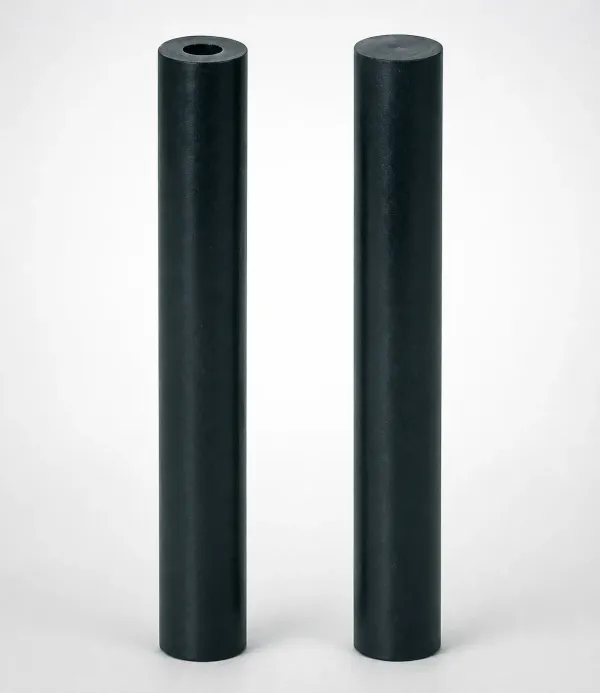
PPA usually wins the mid-tier connector program on balanced cost. It molds with more forgiveness than LCP, holds tighter dimensional stability than PBT, and its price sits below LCP and PPS. Our PBT material guide covers the entry tier, and the comparison below lays the four resins side by side.
| Property | PPA | LCP | PPS | PBT |
|---|---|---|---|---|
| Polymer type | Semicrystalline aromatic PA | Semicrystalline liquid crystal | Semicrystalline aromatic sulfide | Semicrystalline polyester |
| HDT at 1.82 MPa (glass-filled) | 260-310 °C | 280-335 °C | 250-280 °C | 190-220 °C |
| Melt temperature (typical) | 300-340 °C | 330-370 °C | 300-340 °C | 240-270 °C |
| Mold temperature (typical) | 120-160 °C | 80-120 °C | 130-160 °C | 40-80 °C |
| Shrinkage, glass-filled (typical) | 0.2-0.6% flow / 0.4-1.2% across | 0.1-0.3% flow / 0.4-1.0% across | 0.2-0.6% (less anisotropic) | 0.3-0.8% (less anisotropic) |
| Moisture uptake | Low (above LCP, below PA66) | Very low | Very low | Very low |
| Vent depth (typical) | 0.01-0.03 mm | 0.01-0.02 mm | 0.01-0.03 mm | 0.02-0.04 mm |
| Typical connector duty | Mid-heat, engine bay, reflow | Thin-wall, highest reflow | Hot chemical and EV duty | Ambient consumer IO |
| Relative resin cost | Baseline | Higher | Higher | Lower |
← swipe to scroll →
Table: Typical published values for glass-filled injection-molding grades. Ranges vary by fill level, family, and brand. Verify your grade datasheet before cutting steel.
The mold verdict keeps the decision honest. All four resins are semicrystalline and glass-filled in connector duty, so all four need hardened steel, direction-aware shrinkage compensation, and disciplined venting. PPA asks for the hottest cavity of the group after PPS, and its anisotropic shrinkage makes gate layout a dimensional decision. Buyers who compare datasheets without comparing mold requirements miss the cost that shows up in trials.
FAQ: PPA Injection Molding for Connectors
Q1. What mold temperature should a PPA connector tool run?
Datasheets list 80 to 160 °C, but production tools should run 120 to 160 °C. Below 100 °C the part holds less crystallinity, so dimensions drift, weld lines weaken, and warp appears after ejection. A hot cavity also lets the melt fill 0.3 mm walls before freeze-off. Record the cavity temperature profile at trial so every later run matches it.
Q2. How do I compensate a PPA cavity for shrinkage?
Use direction-dependent numbers, not one isotropic rate. Typical glass-filled grades list 0.2 to 0.6% in the flow direction and 0.4 to 1.2% across flow. Read both rates off the grade datasheet, record them on the drawing, and expect the trial to confirm them. Gate location shifts fiber orientation, so move the gate and the compensation moves with it.
Q3. Why does a PPA mold flash when the vents are already shallow?
At 300 to 340 °C the melt is fluid enough to enter any gap over about 0.03 mm. Check that parting-line vents hold 0.01 to 0.03 mm and that vent lands have not worn open during production. Also inspect slide shutoffs and confirm clamp tonnage, because a 32-cavity tool fills at high injection pressure and lifts the parting line if tonnage is short.
Q4. Do I need hardened steel for every PPA mold?
Unfilled PPA can prototype in P20 class steel, but glass-filled connector grades need hardened cavities and cores. Run HRC 48 to 62, with gate inserts and slides at the top of the range. Glass erosion rounds gate edges, widens pin holes, and wipes shutoffs, so soft steel costs you rebuilds inside the first production run.
Q5. Why do PPA parts warp even when the mold is balanced?
Warp usually mixes fiber orientation and uneven cooling. Fibers aligned along flow shrink less, so a single end gate curls the housing across its length. Uneven cavity temperature adds a second bow, and parts keep moving as crystallization finishes after ejection. Fix by rebalancing gate placement, evening the cavity temperature profile, and judging warp on conditioned parts, not at the press.
The Bottom Line
PPA is the connector resin that rewards a disciplined tool. The formula is short: hot cavity at 120 to 160 °C, hardened steel at HRC 48 to 62 against glass fill, gates at 50 to 80% of wall for 0.3 to 0.8 mm features, and vents at 0.01 to 0.03 mm.
Compensate cavities with flow and cross-flow shrinkage rates, dry below 0.05% moisture, and the 260 to 310 °C HDT class does its job through reflow and engine-bay duty. Mold buyers who put these numbers on the request for quote skip the trial failures that PBT-compensated tools deliver. Ask for the mold book: cavity temperature records, vent depths, and gate balance data prove the tool was built for PPA.
DieStrike builds PPA and connector tooling under IATF 16949 across 120+ machines, machining to ±0.005 mm standard and ±0.002 mm precision, with standard components shipping in 3 to 7 days. Connector OEMs including TE Connectivity, Amphenol, and Luxshare run programs on the same discipline.
KEEP READING
Related Reading
How to Design Molds for Automotive Connectors
Terminal spacing, plating tolerance, and creepage set cavity steel, stack design, and gate layout for high-pin-count connector tools.
Read articleArticleMold Venting: Depth, Location and Design Rules
Vent depth, land width, and placement rules for semicrystalline resins, including the 0.01-0.03 mm parting-line numbers that suit PPA.
Read articleArticleHow to Balance Multi-Cavity Molds: Runner, Gate and Cooling
Runner sizing, gate balance, and cooling layout for 8 to 64 cavity connector tools where part-to-part consistency decides yield.
Read articleServiceMold Trial & T1 Sampling
Professional mold trial services with T0/T1/T2/Tf sampling milestones, defect diagnosis, and dimensional validation before your PPA mold ships.
Read articleNEXT STEP
Ready to Start Your Mold?
Send us your element dimensions or part numbers — our team responds within 24 hours with pricing and lead time.

Written by
Ray ChanMold Buyer's Guide Author · Precision Mold Manufacturing Specialist. Ray helps global importers, distributors and OEMs source factory-direct molds and mold parts.