
Zinc vs Aluminum Die Casting: Alloy and Tooling Decision Guide
Table of Contents
A 400,000-piece connector housing program chose A380 aluminum because a gearbox bracket in the same assembly ran at 160 °C. The shell needed chrome plating, an EMI seal and a 0.9 mm wall to fit the connector envelope. The aluminum cracked the wall target. The decorative chrome peeled inside 240 h of salt spray, and the die heat-checked at 61,000 shots with 338,000 still to run. The housing went to Zamak 3, and the bracket stayed in A380, because the two parts had two different sets of requirements.
Die casting pushes molten zinc or aluminum into a hardened steel die at 20 to 100 MPa. Fill takes 10 to 80 ms, and thin walls freeze in seconds. Cycles run 15 to 90 seconds typical, depending on wall mass, cooling and machine type. Zinc usually runs on hot-chamber machines, where the die sits in a bath of melt. Aluminum runs on cold-chamber machines, with metal ladled into a shot sleeve on every cycle.
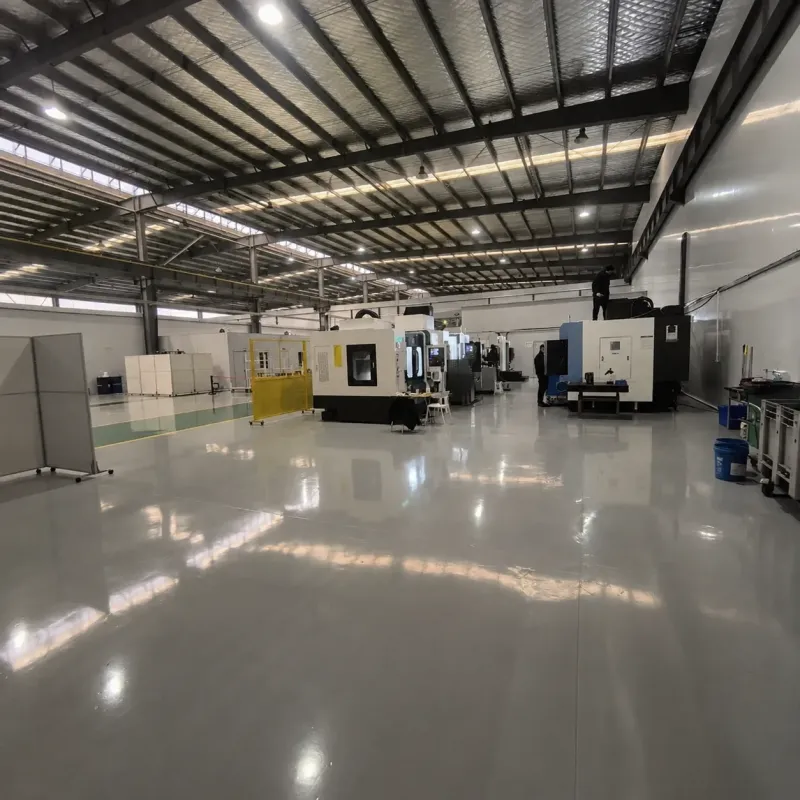
The alloy decision is a tooling decision first. It sets melt temperature, die steel heat treatment, cooling layout, expected die life, draft, tolerance and cycle time. Buyers who pick an alloy from a tensile table alone pay later in die life and rework. This guide compares zinc and aluminum from the die and tooling side, with typical industry figures. Geometry rules, mold maintenance and die steel selection each belong to the guides they link to.
The Snapshot
- Zamak 3 is the default zinc alloy at roughly 4% aluminum, balance zinc, with ~280 MPa UTS and ~10% elongation.
- A380 is the default aluminum alloy at 8 to 9.5% silicon, with ~320 MPa UTS and ~3% elongation.
- Zinc melts at 380-420 °C and runs dies at 150-250 °C typical. Aluminum melts at 650-700 °C and runs dies at 200-300 °C typical.
- Zinc dies last 100,000-500,000+ shots typical. Aluminum dies reach 50,000-150,000 before heat checking forces repair.
- Zinc casts walls of 0.5-1.0 mm at ±0.05-0.1 mm tolerance typical. Aluminum runs 1.5-3.0 mm walls at ±0.1-0.2 mm typical.
The Housing That Needed Both
Most assemblies do not need one alloy. They need one alloy per part, and the dividing line is not tensile strength. The connector shell above demanded plating adhesion, shielding and a thin wall, and all three point to zinc. The bracket demanded light weight, corrosion resistance and a 160 °C service band, and all three point to aluminum. Picking one metal for both parts would have failed one requirement set.
The cost of a wrong alloy shows up on the tooling side before it shows up on the part. An aluminum die built for a 400,000-shot program at a 50,000 to 150,000 shot life needs insert repair or replacement mid-program. A zinc die on the same geometry would outlast the program, but zinc would creep at 160 °C. The alloy sets die life, cooling circuits and steel hardness. The choice belongs in the mold design review, not the purchasing spreadsheet.
That is the frame for everything below. Zinc wins small, dense, decorative, shielded and fine-detail parts. Aluminum wins large, light, structural and hot-environment parts. The tooling consequences of each choice decide how the economics land.
Alloy Families: Zamak and A380 at a Glance
Zinc die casting alloys are the Zamak grades plus the ZA family. Zamak 3, with about 4% aluminum and the balance zinc, is the default. It balances strength, ductility, castability and cost, and most small zinc parts quote in Zamak 3. Zamak 5 adds roughly 1% copper for hardness, wear and creep resistance. Zamak 2 carries more copper and reaches the highest strength of the family at roughly 360 MPa typical UTS.
Zamak 7 trims magnesium to improve castability and surface finish in thin sections. ZA-8 holds about 8% aluminum and reaches roughly 365 MPa typical UTS with better high-temperature resistance. ZA-8 is the zinc pick when a part sits near the 100 °C line, because it creeps less than the Zamak grades at that temperature.

Aluminum die casting alloys center on the 3xx family. A380 is the global default at 8 to 9.5% silicon, and it covers most housings, brackets and structural parts. A383 raises silicon toward 9.5 to 11.5% to fill thin and complex sections better. A360 caps iron for higher ductility and corrosion resistance. A413 runs near 12% silicon, the eutectic composition with the best fluidity and pressure tightness.
Density differences matter before strength does. Zinc sits at 6.6 g/cm³ and aluminum at 2.7 g/cm³, so zinc is about 2.4 times heavier per unit volume. That single number drives the counterweight advantage of zinc and the weight advantage of aluminum everywhere else.
| Property, typical | Zinc (Zamak 3) | Aluminum (A380) |
|---|---|---|
| Density | 6.6 g/cm³ (about 2.4x heavier) | 2.7 g/cm³ |
| Melting range | 380-420 °C | 650-700 °C |
| Typical die surface temperature | 150-250 °C | 200-300 °C |
| Ultimate tensile strength | ~280 MPa | ~320 MPa |
| Elongation at break | ~10% | ~3% |
| Continuous service temperature | ~100 °C practical limit | 150-200 °C |
| Minimum wall thickness | 0.5-1.0 mm | 1.5-3.0 mm |
| As-cast tolerance | ±0.05-0.1 mm | ±0.1-0.2 mm |
← swipe to scroll →
Table note: Values are typical published datasheet figures and shop experience. Actual properties vary with chemistry, casting process and section thickness.
Melt Temperature and What It Does to the Die
Melt temperature is the first fork in the tooling design. Zinc melts at 380-420 °C and pours near 400-450 °C. Aluminum melts at 650-700 °C and pours near 680-720 °C typical. A die that sees zinc sees a much smaller thermal swing per shot than one that sees aluminum. The die surface runs 150-250 °C typical on zinc work and 200-300 °C on aluminum work.
Latent heat widens the gap. Aluminum gives off roughly 390 kJ/kg when it freezes. Zinc gives off about 110 kJ/kg typical. Every shot dumps that heat into the die face, and water lines at 20 to 60 °C typical carry it away between cycles. More heat per shot means more cooling circuits, closer line spacing and higher water flow on aluminum dies.
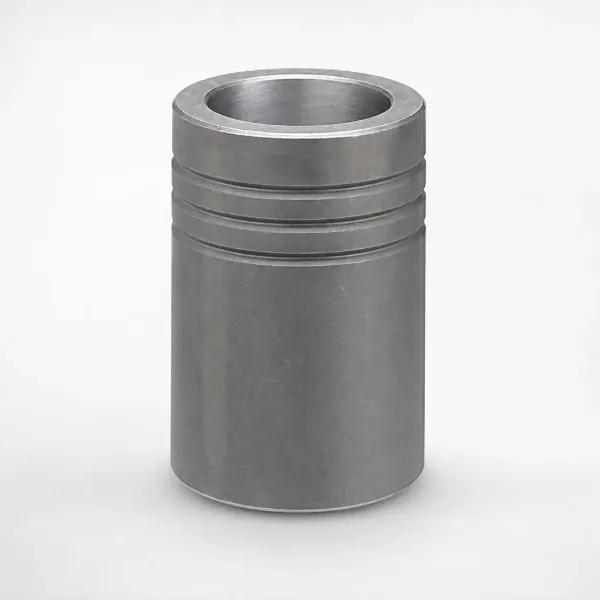
Bigger swings drive thermal fatigue. The die surface tries to expand against the cold core on every shot, and the strain reverses until cracks nucleate. Aluminum programs see heat-check initiation after roughly 20,000 to 50,000 shots typical. Zinc dies can run 100,000 shots before the same crack network appears. That difference is why die steel choice and cooling layout follow the alloy.
Steel choice follows the same logic. H13 is the default hot-work grade for both alloys, but the heat treatment target and temper resistance differ by melt temperature. Aluminum dies need the harder, more temper-resistant end of the grade range. Our hot-work steel comparison covers H13, H11 and 1.2367 and how their chemistry changes die life under aluminum versus zinc.
Die Life: Heat Checking vs Long Runs
Die life is where the two alloys diverge most on the tooling ledger. Zinc dies deliver 100,000-500,000+ shots typical, and simple Zamak dies on long-running hardware parts have exceeded 1,000,000 shots. Aluminum dies run 50,000-150,000 typical before heat checking forces insert repair or replacement. The ratio is often 3 to 5 times more parts per die on zinc.
The same die concept can be built in H13 for both alloys. What changes is the engineering around the steel. Aluminum dies need the upper hardness band at 46-52 HRC typical, dense cooling near gates and hot spots, and often surface treatment. Zinc dies run at 44-48 HRC typical and tolerate simpler cooling, because each shot delivers less thermal load.
| Die parameter, typical | Zinc (Zamak 3/5) | Aluminum (A380) |
|---|---|---|
| Melt temperature | 380-420 °C | 650-700 °C |
| Die surface temperature | 150-250 °C | 200-300 °C |
| Typical die life before heat checking | 100,000-500,000+ shots (1M+ on simple parts) | 50,000-150,000 shots |
| Dominant failure mode | Erosion and mechanical wear | Thermal fatigue heat checking |
| Cavity hardness target | 44-48 HRC | 46-52 HRC |
| Cooling design | Standard circuits | Dense circuits at gates and cores |
← swipe to scroll →
Table note: Die life figures are typical for well-designed, well-maintained tooling. Cooling layout, part geometry and maintenance cadence shift the range in either direction.
Heat checking starts as micro-cracks 0.02 to 0.05 mm deep on polished surfaces. They grow with every shot until parts show surface defects and the die goes to weld repair. A 0.1 mm deep crack is repairable by grinding. A 0.8 mm crack needs welding and a full heat-treatment risk. The inspection schedule decides which one you catch, and our die casting mold life guide sets the shot-count checkpoints for both alloys.
For a long-running zinc part, die life is rarely the constraint. For aluminum, plan the insert replacement or repair into the program budget from day one. Buyers who amortize the tool over 200,000 aluminum shots without a repair plan get a surprise at shot 120,000.
Wall Thickness, Draft and What You Can Cast
Wall thickness and draft come straight out of the melt behavior. Zinc pours cooler, stays fluid longer in thin sections and freezes against a die at 150-250 °C. Casters hold 0.5-1.0 mm zinc walls as routine, and small cosmetic parts run below that. Aluminum chills faster against a 200-300 °C die, so the practical minimum wall is 1.5-3.0 mm typical.
Below 1.5 mm, aluminum fills hard and freezes before the cavity is full, which produces short shots and cold laps. The fill window is also narrower because aluminum solidifies fast once it touches the die. Every wall step, rib and boss on an aluminum part is a freeze-order decision. The nine geometry rules for wall control, ribs and coring live in our die casting design guide. This article stays on the alloy decision instead of repeating them.
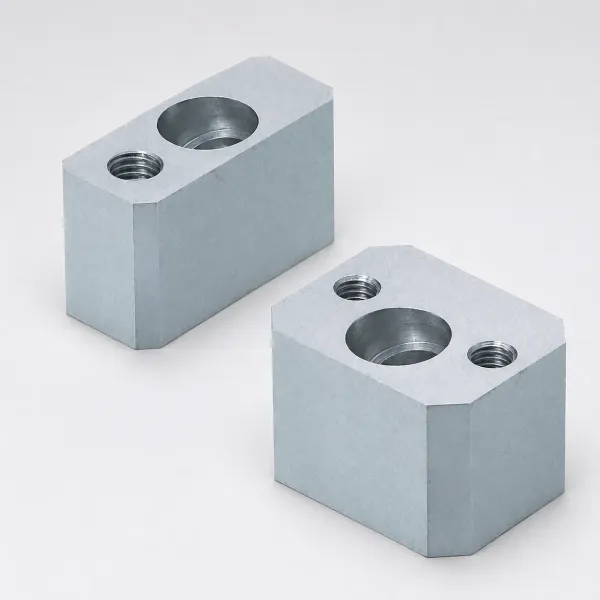
Draft angles follow the same divide. Zinc parts need 0.5-1° per side typical. Aluminum parts need 1-2° per side because the metal grips the steel harder at higher die temperature and shrinks onto cores with more force. Textured surfaces add roughly 1° per 25 µm of etch depth on both alloys. Deep ribs and bosses take the upper end of each band.
Cavity count follows part size. Zinc parts are small and often run 4 to 16 cavities per die on hot-chamber machines. Aluminum parts are larger, and dies usually carry 1 to 4 cavities. Higher cavity counts spread the tooling cost across more parts per shot, which reinforces the zinc advantage on small high-volume items.
Tolerances and Fine Detail
As-cast tolerance is where zinc earns its precision reputation. Small zinc features hold ±0.05-0.1 mm typical, and critical dimensions stay tight across long runs. Aluminum holds ±0.1-0.2 mm typical over the same geometry. On a 25 mm datum-to-datum distance, that is the difference between a press-fit and a clearance fit.
The reasons are thermal. A zinc die runs cooler, so the die and the part expand less between shots, and shrinkage scatter stays small. Zinc shrinkage runs about 0.4 to 0.6% linear typical. Aluminum parts cool from a bigger thermal mass and shrink about 0.5 to 0.7% typical, so the tolerance band widens and draft matters more.
Fine detail follows tolerance. Zinc resolves sharp lettering, knurling and ribs down to about 0.5 mm, and it can cast small cored holes from 1.0 to 2.5 mm typical. Aluminum rarely cores below 2.5-3.0 mm, so small holes get machined after casting. Every hole moved to a secondary operation adds a handling step and a datum problem.
Threads are a real zinc advantage. Fine-pitch threads cast cleanly into zinc on many designs, and small holes for self-tapping screws cast with enough form for assembly. Aluminum usually needs machined threads or threaded inserts, which adds an operation and a tolerance stack. If your part carries threads or fine detail, that single feature can decide the alloy.
Plating, Shielding and Function
Zinc is the best plating substrate in die casting. Zamak takes a copper strike, then nickel and chrome, with adhesion that survives 240+ h of salt spray on a correct cycle. Hardware makers plate Zamak door handles, lock cases, plumbing trim and appliance trim every day. The surface accepts the coating chemistry without the conversion steps aluminum needs.
Aluminum can be plated, but the path is longer. The surface needs a zincate or electroless nickel layer before chromium, and adhesion failures show up in thermal cycle tests when that prep is wrong. Most aluminum parts skip decorative plating and use paint or anodizing instead. If the finish specification says bright chrome, zinc is usually the lower-risk base.
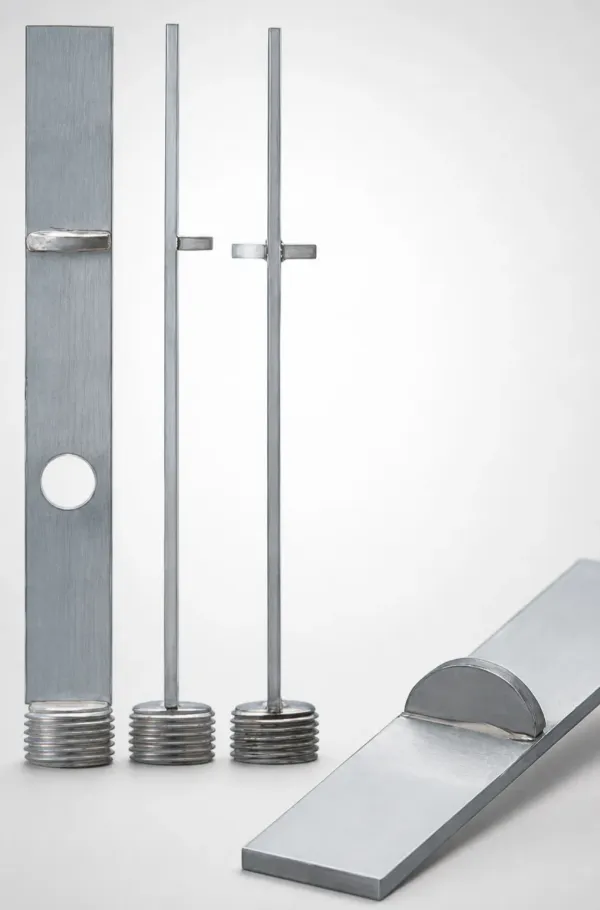
Shielding is a second zinc function. Zinc conductivity and density make it a natural EMI shield. Die cast zinc shells attenuate radiated noise across a typical 60 to 90 dB range for connector and enclosure shielding. Connector OEMs including TE Connectivity, Amphenol and Luxshare specify zinc shells for many interconnect products where a gasket and a plated finish must both work.
Function favors zinc for small mechanisms too. Locks, levers, gears, badges and catches use Zamak for one reason. It casts moving geometry, fine teeth and a decorative face in one shot. Aluminum handles the same functions at larger scale, where the part is structural first and cosmetic second.
Strength, Weight and Service Temperature
Strength is a per-volume and per-weight story. A380 at ~320 MPa UTS out-pulls Zamak 3 at ~280 MPa by only about 14% in a tensile test. Divide by density and aluminum delivers roughly 2.8 times the strength per kilogram, typical. For a load-bearing part where weight counts, aluminum wins on section and mass together.
Density is a feature when mass is the goal. Zinc at 6.6 g/cm³ is the standard for counterweights, balance masses and weighted levers, where a compact dense slug fits an envelope that steel cannot. Some zinc parts exist only because 2.4 times the density packs the required weight into the available space.
Service temperature splits the alloys next. Zinc creeps above its practical continuous limit of about 100 °C, and ZA-8 pushes that band toward 120 °C. Aluminum holds structural service at 150-200 °C typical, with some alloys running hotter in localized duty. An underhood bracket or a motor housing at 160 °C is an aluminum part regardless of the rest of the list.
Corrosion and pressure tightness point the same direction. A380 resists corrosion far better than bare zinc and can be anodized for more. Automotive buys A380 and ADC12 for pressure-tight housings, valve bodies and pump covers where leak-tight porosity control and heat both matter. Pair unplated zinc with aluminum or steel in wet service and the zinc corrodes sacrificially, which is why exposed zinc parts get plated.
Cost: Tooling, Material and Cycle
Tooling cost lands in the same order for both alloys. The die is still an H13 hot-work construction, machined by the same milling and EDM, with similar inserts, slides and ejector systems. A zinc die of the same cavity size does not cost radically less to build than an aluminum die. The economics separate over the life of the program, not at the quote.
Die life changes the arithmetic on long runs. At a 150,000-shot aluminum life and a 400,000-shot zinc life, the same tooling dollars spread across 2.5 times more parts on zinc. Tooling cost per part on the zinc program drops toward one third of the aluminum number. Programs above 200,000 parts should run that division before choosing the alloy.
Alloy price runs opposite to buyer expectations. Zinc alloy costs about 1.5 to 2.5 USD per kg typical. Aluminum alloy costs about 2 to 3 USD per kg typical. Zinc is cheaper per kilogram and 2.4 times denser, so per cubic centimeter the zinc material runs roughly double the aluminum. Use these ranges as an index, because LME-linked prices move with the market.
That is why dense small parts favor zinc. A 45 g lock handle uses about 9 cents of zinc alloy at 2 USD per kg typical. Its aluminum twin at the same envelope weighs about 18 g and costs about 4.5 cents of material. It needs plating prep, more draft and looser tolerance. Count finishing, secondary work and die life and the zinc part often wins the total-cost bid.
Cycle time pushes the same direction on small parts. Zinc runs hot-chamber with no ladling, solidifies faster at lower melt temperature and cycles thin parts in 10 to 30 s typical. Aluminum cold-chamber cycles run 30 to 90 s typical before trimming. Faster cycles cut machine hours and per-part cost on high volumes, which compounds the zinc advantage on small work.
The Decision Matrix
Run the matrix below once per part, not once per assembly. Where requirements split, the part with plating, shielding, fine detail or a long volume target goes zinc. The part with load, weight, heat or pressure-tightness goes aluminum. ZA-8 covers the narrow band where a zinc mechanism must also survive near 120 °C.
| Decision driver | Choose zinc (Zamak 3/5) | Choose aluminum (A380) |
|---|---|---|
| Part size and weight goal | Small, dense or a deliberate counterweight | Large, light or structural |
| Wall thickness and detail | 0.5-1.0 mm walls, fine detail, cored holes | 1.5-3.0 mm walls, larger sections |
| Program volume | 200,000+ shots over multi-year runs | 50,000-150,000 shots per die set |
| Finish specification | Decorative chrome or nickel plating | Paint, powder coat or anodizing |
| EMI shielding | Connector and enclosure shells | Rarely the primary reason |
| Service temperature | Up to ~100 °C (ZA-8 near 120 °C) | 150-200 °C continuous |
| Pressure tightness | Limited leak-tight duty | Automotive housings at controlled porosity |
← swipe to scroll →
Table note: Typical guidance. A DFM review on the actual part geometry overrides any generic matrix.
When the matrix points two ways, split the difference by function. A charging connector assembly can carry a zinc shell for shielding and plating beside an aluminum bracket for heat and stiffness. Both metals run in the same mold shop, and both dies follow the same H13 construction discipline.
Our die casting mold team reviews both alloys on every RFQ. Send the part drawing with the annual volume. The DFM feedback comes back within 24 hours with wall, draft, steel and cooling comments before any steel is cut.
FAQ: Zinc vs Aluminum Die Casting
Q1. Is zinc or aluminum die casting stronger?
Aluminum is stronger in a direct tensile test. A380 sits at ~320 MPa UTS typical versus ~280 MPa for Zamak 3. That is about 14% higher, and roughly 2.8 times higher per kilogram once density is counted. If the part carries load and weight matters, use aluminum. If it is a compact dense component, zinc strength in thin sections is enough for the job.
Q2. Why do zinc dies last longer than aluminum dies?
Zinc melts at 380-420 °C and aluminum at 650-700 °C. An aluminum die absorbs a bigger thermal swing and more latent heat on every shot. Zinc dies deliver 100,000-500,000+ shots typical against 50,000-150,000 for aluminum before heat checking. The hotter metal drives thermal fatigue, which is why aluminum dies need harder steel and denser cooling.
Q3. Can the same die cast both zinc and aluminum?
Not in practice. The melt temperatures differ by roughly 250 °C. The die surface targets differ at 150-250 °C versus 200-300 °C, and the cooling layout, steel hardness and gating are designed for one alloy. Zinc runs hot-chamber and aluminum runs cold-chamber on different machines. Converting a die between alloys means rework on cooling and gating, and the risk of early heat checking makes it rarely economic.
Q4. When is zinc die casting cheaper than aluminum?
Zinc wins on small, dense, plated parts at high volume. Hot-chamber cycles run 10 to 30 s typical. Zinc alloy costs about 1.5 to 2.5 USD per kg, and die life passes 100,000 to 500,000+ shots. Aluminum wins when the part is large and light. Aluminum costs about 2 to 3 USD per kg at one third the density, so it needs less material per part.
Q5. Can zinc replace aluminum in hot automotive environments?
No, above the zinc limit. Zamak holds about 100 °C continuous and ZA-8 about 120 °C before creep and dimensional drift appear. Aluminum holds 150-200 °C typical and carries the pressure-tight automotive work. Underhood zones near engines, motors or exhaust heat stay with aluminum regardless of the cost comparison.
The Bottom Line
Pick zinc for small, dense, plated or shielded parts with fine detail and long runs. Pick aluminum for large, light, structural parts in hot service. The die steel, cooling layout, draft and die life all follow that one decision, so make it before the tooling quote.
Send your part drawing and annual volume through the contact page, and DieStrike returns an alloy and tooling recommendation with DFM feedback inside 24 hours.
KEEP READING
Related Reading
How to Design for Die Casting: 9 Rules for Aluminum and Zinc
Alloy choice lands inside geometry rules: zinc walls 0.8-2.5 mm and draft 0.5-2 degrees, aluminum walls 1.5-4.0 mm, with coring and venting against porosity.
Read articleArticleH13 vs H11 vs 1.2367: Hot-Work Steel for Die Casting Dies
The die steel behind both alloys: 5% chromium hot-work grades at 44-52 HRC, heat checking above 600 C and die life from 50,000 to 150,000+ shots.
Read articleArticleInjection Mold vs Die Casting Mold: Which Process Fits Your Part
Metal or plastic is the earlier fork: molten metal at 650-700 C versus polymer at 200-300 C changes the die steel, cooling and tolerances before any alloy debate.
Read articleServiceDie Casting Molds: Aluminum and Zinc
Die casting mold line for ADC12, A380 and Zamak parts with DFM geometry review, H13 cavity steel and 2-5 week delivery.
Read articleNEXT STEP
Ready to Start Your Mold?
Send us your element dimensions or part numbers — our team responds within 24 hours with pricing and lead time.

Written by
Ray ChanMold Buyer's Guide Author · Precision Mold Manufacturing Specialist. Ray helps global importers, distributors and OEMs source factory-direct molds and mold parts.