
H13 vs H11 vs 1.2367: Hot-Work Steel for Die Casting Dies
Table of Contents
An aluminum gearbox die cracked on shot 41,836 of a 150,000-shot program. The cavity was AISI H13 at 47 HRC, and the die surface cycled between 150 and 300 °C on every shot. Heat checking had started around shot 22,000, and by shot 40,000 the crack network at the gate was 0.3 to 0.8 mm deep. The line lost 11 days to weld repair. The buyer paid for a second insert in 1.2367 at roughly 1.4 times the H13 price.
Die casting dies fail by heat, not by wear. Molten ADC12 or A380 aluminum enters the cavity at 650 to 700 °C, and zinc Zamak arrives at 400 to 450 °C. The die surface sees a thermal cycle every 15 to 90 seconds, and local spots near gates can spike above 600 °C. Steel choice decides whether that die survives 50,000 shots or 150,000 plus.
This guide compares the three 5 percent chromium hot-work grades used for die casting tooling: H13, H11 and 1.2367. It covers chemistry, in-service hardness, heat checking, surface treatment, heat treatment and cost. Figures are typical industry values from published datasheets and shop experience. Where DieStrike capability numbers appear, they are marked as such.
The Snapshot
- All three grades carry roughly 5 percent chromium. H13 matches DIN 1.2344 X40CrMoV5-1, H11 matches DIN 1.2343 X37CrMoV5-1, and 1.2367 matches X40CrMoV5-5-1.
- Molybdenum is the differentiator: H13 and H11 hold about 1.3 to 1.5 percent. 1.2367 holds about 4.5 to 5.5 percent, which buys temper resistance above 600 °C.
- Service hardness for die casting dies runs 44 to 52 HRC typical. Aluminum dies run 46 to 52 HRC, and zinc dies run 44 to 48 HRC.
- Aluminum die casting dies last 50,000 to 150,000 plus shots with good cooling and maintenance. Zinc dies reach 100,000 to 500,000 shots.
- Cost index on bar stock: H13 is the 1.0 baseline, and H11 runs about 0.9 to 1.0. 1.2367 carries a 1.3 to 1.6 premium typical.
The Die That Cracked at 40,000 Shots
Look at the failed insert before blaming the steel grade. The crack pattern told the story. A fine crack network covered the gate area. Deep single cracks ran at sharp corners, and a washed land showed where aluminum had eroded 0.4 mm of steel. That is three failure modes in one die, and each one points to a different fix.
Heat checking dominated the gate face. Every shot pushed the surface steel through a temperature swing while the core stayed near coolant temperature. The surface wants to expand, the cold core holds it back, and the strain reverses on every cycle. After roughly 20,000 to 50,000 shots on aluminum, micro-cracks 0.02 to 0.05 mm deep become visible on polished surfaces.
Softening made the damage worse. Surface peaks above 600 °C at the gate slowly tempered the H13 back. Surface hardness dropped 2 to 4 HRC typical in the hottest band. Soft steel erodes faster, and erosion feeds the crack growth. The die that left the shop at 47 HRC was running at 43 to 45 HRC at the gate by shot 35,000.
The economics punished the choice twice. The replacement insert in 1.2367 cost about 1.3 to 1.6 times H13 stock. Yet 11 days of downtime and weld repair cost far more than the steel premium. In long aluminum programs, the expensive question is not the grade price. It is the cost per shot over the whole die life.
Maintenance cadence matters as much as the grade. Dies need inspection and crack grinding at defined shot counts, not when a part defect appears. The 10,000-shot checkpoint schedule in our die casting mold life guide catches growth while it is still repairable. Repairing at 0.1 mm depth beats welding at 0.8 mm.
Why Hot-Work Steel Fails: Heat Checking, Softening, Soldering
Hot-work steels are designed for one job: holding hardness and toughness while a red-hot surface is cycled with coolant. Die casting pushes that design to its limit. Melt temperature for aluminum sits at 650 to 700 °C, and the die surface averages 150 to 300 °C between shots. The three failure modes below decide when the die retires.
Heat checking is thermal fatigue. Each shot heats the surface fast and cools it against water lines at 20 to 60 °C typical. The surface layer strains against the cold core, and repeated strain nucleates cracks. Crack depth grows from 0.02 mm at initiation to 0.5 to 1.0 mm at failure. At that point parts show surface defects, and the die goes to weld repair.
Softening is loss of hot hardness. Where metal flow concentrates, surface temperature can pass 600 °C. Every hot-work grade tempers back at a temperature related to its alloy content. Steel that softens by 3 to 8 HRC at the surface then deforms, washes out, and heat-checks faster. Temper resistance, not room-temperature hardness, separates the grades in service.
Soldering and washout attack gates and cores. Aluminum welds itself to a hot steel surface when the release film breaks down, typically above 400 °C surface temperature. Soldered aluminum tears steel on ejection, and gate velocities of 30 to 60 m/s typical erode lands and core edges. Washout of 0.2 to 0.5 mm on a gate land changes fill and scrap rate within days.

All three failure modes share one root cause: the surface cannot take the thermal cycle. Grade choice, hardness target, surface treatment and cooling layout all move the same number, which is the temperature swing the steel surface survives per shot. Part geometry that reduces local heat concentration is a design-side topic, covered in the die casting design rules guide rather than repeated here.
The Three Grades: Chemistry and What Mo Buys
H13, H11 and 1.2367 sit in the same family: 5 percent chromium hot-work steels hardened to a martensitic structure and tempered for toughness. They share the AISI H-series design philosophy, and European shops know them by their DIN numbers. The chemistry differences look small on paper, and they change die life in service.
H13 is the global default. It matches AISI H13 and DIN 1.2344 X40CrMoV5-1. Carbon runs 0.37 to 0.42 percent, chromium 5.0 to 5.5 percent, molybdenum 1.3 to 1.5 percent, vanadium 0.8 to 1.1 percent. H13 carries the deepest supply chain, the widest datasheet base, and the most published heat treatment data of any hot-work grade.
H11 is the tough cousin. It matches DIN 1.2343 X37CrMoV5-1, with slightly lower carbon near 0.32 to 0.40 percent and lower vanadium around 0.3 to 0.5 percent. At the same hardness, H11 trades a little temper resistance and wear resistance for higher toughness. It is the pick when cracking risk beats softening risk.
1.2367 is the high-molybdenum specialist. It matches DIN X40CrMoV5-5-1, and the chemistry name says it: roughly 5 percent chromium, 4.5 to 5.5 percent molybdenum, and 0.5 to 0.8 percent vanadium. Molybdenum is the whole story, because it forms stable carbides that resist tempering and keep hot strength at temperature.
| Element, typical | H13 (DIN 1.2344) | H11 (DIN 1.2343) | 1.2367 (DIN X40CrMoV5-5-1) |
|---|---|---|---|
| Chromium, Cr | 5.0-5.5% | 5.0-5.5% | 4.7-5.2% |
| Molybdenum, Mo | 1.3-1.5% | 1.1-1.3% | 4.5-5.5% |
| Vanadium, V | 0.8-1.1% | 0.3-0.5% | 0.5-0.8% |
| Carbon, C | 0.37-0.42% | 0.32-0.40% | 0.35-0.42% |
| Role of Mo | Temper resistance to ~600 °C | Moderate temper resistance | Temper resistance above 600 °C |
| Typical service hardness | 44-52 HRC | 44-50 HRC | 46-52 HRC |
← swipe to scroll →
Table note: Chemistry ranges are typical published values and vary slightly by mill, melt practice and certification standard.
Molybdenum buys two things in a hot-work die. First, it slows tempering, so the die holds its specified hardness after thousands of thermal cycles. Second, it raises hot yield strength, so the surface resists plastic deformation at 600 °C where leaner grades start to flow. That is why 1.2367 appears in gate inserts, cores and thin sections that see the hottest metal.
Vanadium adds the same effect at a smaller scale through fine, hard carbides. It improves wear resistance and refines grain, but vanadium carbides also make the steel harder to machine and grind. The broader 12-grade landscape, including stainless and pre-hardened grades for other mold families, is mapped in our 12 mold steel grades comparison article.
Hardness in Service: 44-52 HRC by Alloy
Die casting dies run softer than plastic mold cavities, and that surprises buyers who ask why a die is not at 58 to 62 HRC. A die casting die needs toughness to survive thermal shock. The standard service window sits at 44 to 52 HRC typical, and the target depends on the alloy being cast.
Aluminum dies run 46 to 52 HRC. The higher end suits long-run inserts and gate areas where softening resistance matters. The lower end suits large core blocks where crack risk rises with section size and restraint. Zinc dies run 44 to 48 HRC. Zinc melt at 400 to 450 °C delivers less thermal shock, so the main enemies are mechanical cracking and washout, not softening.
Hardness is set by the temper, not by luck. A die hardened in vacuum and double-tempered at 540 to 620 °C lands in a repeatable band. The temper temperature is the control knob: temper higher for toughness, temper lower for hot hardness. Test coupons from the same heat treatment load verify the number to plus or minus 1 HRC.
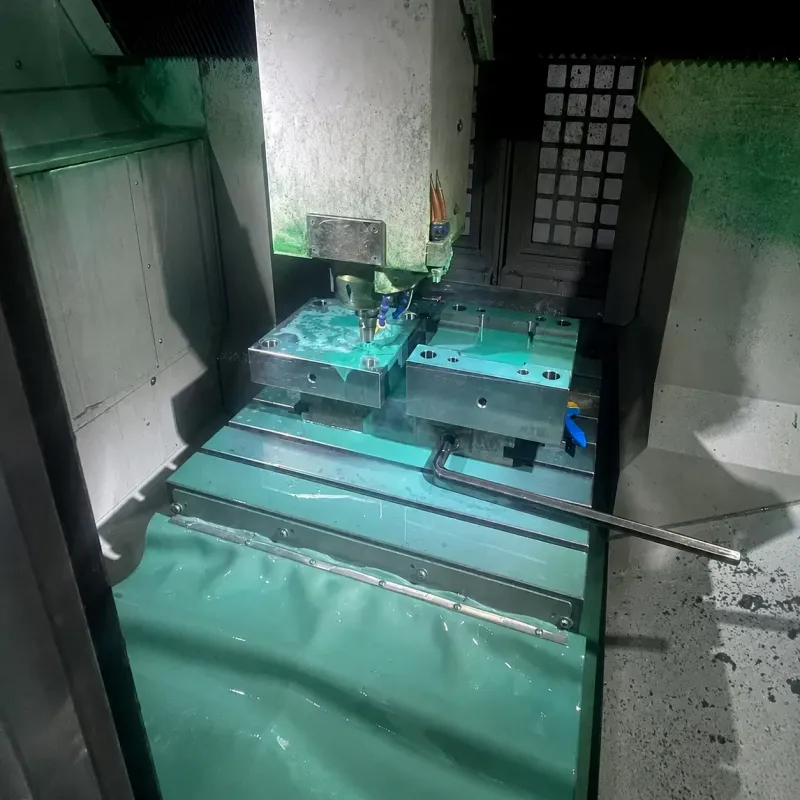
Room-temperature hardness is a proxy, not the whole story. Two dies at 48 HRC can behave differently at 600 °C if their temper resistance differs. That gap is exactly the H13 versus 1.2367 difference: similar hardness at 20 °C, different hardness retention at operating temperature.
Do not push hardness up to chase wear. A die at 54 to 56 HRC gains some erosion resistance and loses toughness, and thermal fatigue cracks initiate faster in harder, less forgiving steel. Most die shops treat 52 HRC as the practical ceiling for aluminum die casting inserts and 48 HRC as the comfort zone for large blocks. The right number comes from the failure mode you fear most.
Heat Checking: H13 vs H11 vs 1.2367
Heat checking decides grade selection on most aluminum programs. The die surface cycles between roughly 150 and 300 °C average. Local bands at gates and thin cores can spike above 600 °C for milliseconds during fill. Every cycle strains the surface, and crack nucleation follows when the strain exceeds the steel's fatigue limit.
H13 handles the middle of the envelope. It resists softening well to about 600 °C and carries enough toughness for most cores. H13 is the correct default for general purpose aluminum dies, zinc dies, and inserts that stay below the hot spots. Its weakness appears only when the surface regularly passes 600 °C, where it tempers back faster than the molybdenum-rich grade.
1.2367 exists for that hot band. Its higher molybdenum keeps hardness and hot strength where H13 gives up. That makes it the pick for long-run aluminum dies and for inserts at the hottest metal flow. Typical shop comparisons show 1.2367 gate inserts holding 2 to 4 HRC more than H13 neighbors after 40,000 to 60,000 shots on the same die.
H11 takes the other side of the trade. With lower carbon and vanadium, H11 at the same hardness is measurably tougher. Cracks initiate later at sharp corners, thin cores and high-restraint sections. Use H11 when cracking risk beats softening risk. Examples are long thin core pins, prototype dies, and short-run tooling where a cracked core is more likely than a softened gate.
| In-service behavior | H13 | H11 | 1.2367 |
|---|---|---|---|
| Heat check resistance, normal zones | Good to ~600 °C | Good, slightly lower than H13 | Best, holds above 600 °C |
| Softening resistance at gate | Moderate, loses 2-4 HRC typical | Lower than H13 | Highest of the three |
| Toughness at equal hardness | Good | Best of the three | Lower than H13 |
| Washout and erosion resistance | Good | Moderate | Good, best at high temperature |
| Typical aluminum die life, good cooling | 50,000-150,000+ shots | 50,000-120,000 shots | 100,000-200,000+ shots |
| Typical zinc die life | 100,000-500,000 shots | 100,000-400,000 shots | 200,000-500,000 shots |
← swipe to scroll →
Table note: Life ranges assume balanced cooling, maintained water lines and scheduled crack grinding. Actual results vary with part geometry, alloy and cycle discipline.
Mixed-steel dies are standard practice, not an admission of doubt. A long-run automotive die often carries a 1.2367 insert at the gate with H13 blocks behind it. H11 core pins take ejection loads and thin sections where crack risk rises. Each steel fights the failure mode that dominates its location.
Automotive structural aluminum pushes the logic further. Large thin castings mean high fill velocities, long flow lengths and hot, erosive conditions at every gate. For those programs, 1.2367 inserts with H13 backup sections deliver the run length. The cost premium stays on the steel that earns it.
Surface Treatments: Nitriding and PVD
Surface treatment extends die life at the exact location where failure starts. The steel surface sees the thermal cycle, the soldering and the erosion. A treated surface resists all three, and treatment costs a fraction of an insert replacement or a week of downtime.
Nitriding is the workhorse for hot-work dies. Gas or plasma nitriding at 480 to 560 °C builds a compound case of 0.05 to 0.15 mm typical. Surface hardness jumps to 900 to 1200 HV against 500 to 600 HV for untreated steel. The treatment stays below the final temper temperature, so core hardness at 44 to 52 HRC does not drop.
Nitriding does more than harden the surface. The nitride case sits in compression, which raises the stress needed to nucleate a heat check crack. Dies nitrided at program start typically show later crack initiation than untreated dies at the same hardness. The shift is measured in tens of thousands of shots on aluminum.
Apply nitriding selectively. Gates, cores and thin sections that see washout benefit most. Sharp edges and thread roots can crack if the case is too deep or too hard. Plasma nitriding controls case depth more tightly than gas on complex geometries, which is why mold shops favor it for die casting inserts.
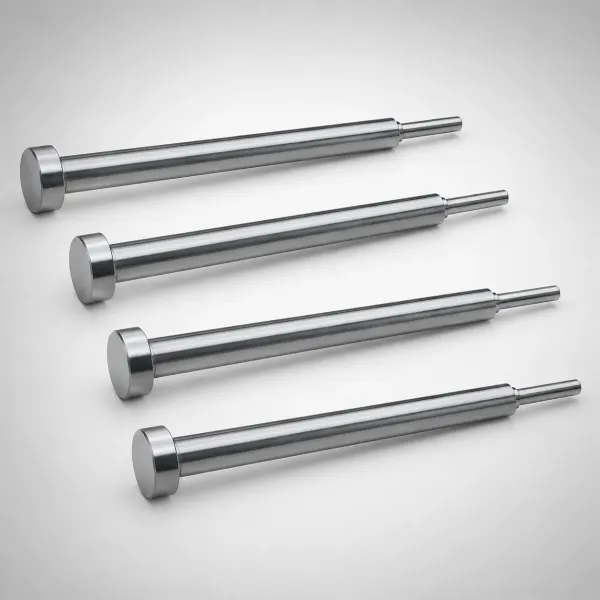
PVD coatings fight soldering directly. Chromium nitride or titanium aluminum nitride coatings run 2 to 4 µm thick at 2000 to 3500 HV. They sit on the steel and give aluminum nothing to wet. Coated inserts shed solder buildup, keep ejection forces low, and hold gate geometry longer between services. Re-coating every 20,000 to 50,000 shots typical is a planned maintenance event, not an emergency.
Do not stack treatments blindly. Nitriding under a PVD coating works on many dies, but a coating on a sharp edge can flake and accelerate local washout. The treatment map should match the failure map. Nitride for heat checking and wear, coat for soldering, and polish or re-nitride gates with early erosion.
Heat Treatment and the EDM White-Layer Trap
Heat treatment quality decides whether the chemistry on the certificate shows up in the die. The standard route for all three grades is vacuum hardening followed by two tempers. Vacuum protects the surface from decarburization and scale that open-air furnaces leave behind.
The sequence starts before hardening. Rough machine the block, then stress relieve at 550 to 650 °C to relax machining stresses that would distort the part in hardening. Then harden from the austenitizing range and temper twice at 540 to 620 °C, with each temper holding 2 hours or more typical. Double tempering converts retained austenite and stabilizes the hardness.
The final temper sets the service hardness. A 46 to 48 HRC target on H13 uses a higher temper temperature than a 50 to 52 HRC target. The same logic applies to H11 and 1.2367. Every heat treatment load should carry test coupons, and the coupon hardness should match the die within 1 HRC before the block goes to finishing.
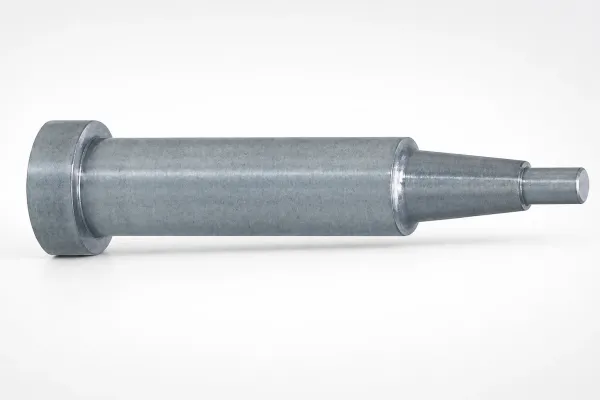
EDM finishing introduces the white layer trap. Sinker EDM leaves a re-cast, re-hardened skin 0.002 to 0.015 mm thick on the cavity surface, full of micro-cracks and tensile stress. Polished over without removal, that skin becomes the crack starter for heat checking. The white layer must be removed before final polish, and the finish pass strategy matters as much as the steel grade.
Hard milling versus EDM is a real decision on die casting inserts. Hard milling leaves a compressive surface and skips the white layer entirely. EDM wins on deep ribs and sharp internal corners where cutters cannot reach. The trade-off between them, including surface integrity checks, is covered in our hard milling versus EDM article.
Weld repair deserves the same discipline as new steel. Pre-heat the die to 300 to 400 °C. Weld with matching hot-work filler, then temper again at 540 to 620 °C to restore surrounding hardness. A weld made without post-weld temper leaves a soft heat-affected zone that heat-checks and washes out within a few thousand shots. The full specification workflow for hardening, tempering and verification lives in our mold steel heat treatment guide.
Cost, Supply and the Decision Table
Grade cost matters, and downtime cost matters more. On bar stock, H13 is the baseline at 1.0, H11 runs about 0.9 to 1.0, and 1.2367 carries a 1.3 to 1.6 premium typical. The premium comes from the 4.5 to 5.5 percent molybdenum content and the smaller production volume behind the grade.
Machining cost follows alloy content. H13 machines readily in the annealed condition, while 1.2367 with its higher molybdenum cuts slower and grinds harder. Shops quote 10 to 20 percent more machining time on 1.2367 inserts typical, and tool wear rises on the vanadium carbides. The cost index on a finished insert lands higher than the bar stock ratio.
Supply depth is the quiet factor. H13 stock exists in every industrial city, in every diameter, from multiple mills with certified melt practice. H11 is available but thinner on the shelf, and 1.2367 is often a special order with 2 to 4 weeks of lead time. A grade that saves one insert change can cost a program start if the stock is not there.
| Scenario | Pick | Why | Cost index |
|---|---|---|---|
| General purpose aluminum housing, 50,000-150,000 shots | H13 | Deep supply, known data, good balance | 1.0 |
| Automotive structural aluminum, large thin castings | 1.2367 inserts, H13 backup | Hot gates hold hardness above 600 °C | 1.3-1.6 on inserts |
| Short-run prototype die casting, under 20,000 shots | H11 | Toughness beats softening in short life | 0.9-1.0 |
| Long thin core pins and high-restraint sections | H11 | Cracking risk beats softening risk | 0.9-1.0 |
| Gate inserts on long-run aluminum dies | 1.2367 | Hottest metal flow, highest softening load | 1.3-1.6 |
| Zinc die casting, high cavitation | H13 | Cooler melt, 100,000-500,000 shot life | 1.0 |
← swipe to scroll →
Table note: Cost index compares bar stock cost with H13 as the 1.0 baseline. Finished insert cost adds machining and treatment differences.
The decision rule is short. Aluminum structural and long-run tooling with real heat load earns the 1.2367 premium on the inserts that see the hottest flow. Short runs and crack-prone geometry earn H11. Everything in the middle, which is most of the market, earns H13. When in doubt, the default grade is not a compromise, it is the industry benchmark for a reason.
Buyers who compare prices across the three grades should compare finished inserts, not bar stock. Ask what hardness the quote assumes, whether test coupons are included, and what surface treatment is planned. A 1.2367 insert quoted with nitriding and a hardness report is a different product from the same grade quoted bare at a lower price.
Specifying Steel on the Die-Casting RFQ
The RFQ is where grade decisions become enforceable. A die shop builds what the drawing and specification say. The buyer who writes the steel callout correctly gets the die life they paid for. Vague wording like heat treat to spec invites exactly the outcome the buyer did not want.
Write the grade with its standard names. AISI H13 premium ESR or DIN 1.2344 X40CrMoV5-1 leaves no room for substitution. For hot inserts, DIN 1.2367 X40CrMoV5-5-1 with the melt practice stated. ESR, or electro-slag remelting, reduces segregation and inclusion content, and premium dies for long aluminum runs specify it.
State the hardness as a window, not a floor. A callout of 46 to 50 HRC tells the heat treater the temper target. A floor of 48 HRC invites a higher temper temperature and lower toughness than the die needs. Add coupon requirements so the verification is objective, and request the temper temperature range on the report.
Specify surface treatment by zone. Gate inserts and cores: gas or plasma nitriding, 0.05 to 0.15 mm case. Soldering-prone ejector areas: PVD chromium nitride. Polished cavity faces: no coating, white layer removed. Zone maps on the drawing beat a one-line treatment note, because they tell the shop where each treatment belongs.
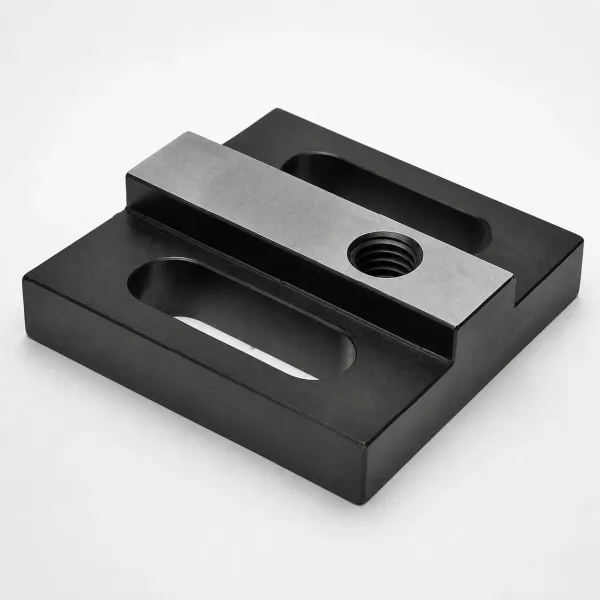
Die casting dies are built alongside injection molds on most mold maker floors, and the two tool families share heat treatment, machining and inspection resources. When you route a die casting RFQ, the same disciplines apply. That means DFM review of geometry, a steel callout with hardness window, and a delivery date matched to the program. DieStrike builds aluminum and zinc die casting molds in 2 to 5 weeks, with DFM feedback within 24 hours of receiving the part file. Standard hot-work components are hardened and verified.
FAQ: H13 vs H11 vs 1.2367
Q1. Is 1.2367 the same steel as H13?
No. Both are 5 percent chromium hot-work steels, but 1.2367 carries 4.5 to 5.5 percent molybdenum against the 1.3 to 1.5 percent of H13. That molybdenum raises temper resistance and hot strength above 600 °C, at a cost premium of 1.3 to 1.6 times H13 typical.
Q2. When does H13 stop being enough for a die casting die?
When die surface temperatures regularly pass 600 °C at gates, cores or thin sections on long aluminum programs. At that point H13 softens 2 to 4 HRC typical over tens of thousands of shots. 1.2367 inserts hold their hardness for the full run.
Q3. Can a die at 44 to 52 HRC be nitrided without losing its hardness?
Yes. Gas or plasma nitriding runs at 480 to 560 °C, below the final temper of 540 to 620 °C. Core hardness does not drop. The nitride case of 0.05 to 0.15 mm typical reaches 900 to 1200 HV at the surface.
Q4. Which grade should a zinc die casting die use?
H13 at 44 to 48 HRC covers most zinc programs. Zamak melt enters at 400 to 450 °C, which is far gentler than aluminum, and typical zinc die life runs 100,000 to 500,000 shots. Save the 1.2367 premium for zones that prove too hot.
Q5. How do I know a die is softening before it fails?
Hardness-check the hottest bands at planned intervals, for example every 10,000 shots on aluminum. A gate face reading 2 to 4 HRC below coupon hardness means softening is underway. The die then needs an insert review or a surface treatment change before cracks take over.
The Bottom Line
The die that cracks at 40,000 shots was decided months before it ran. H13 covers most jobs, 1.2367 buys hot hardness for long aluminum runs, and H11 buys toughness where cracks are the enemy. Match the steel to the heat load, treat the surface, verify the heat treatment, and the die reaches its shot count.
DieStrike is an IATF 16949 certified precision mold manufacturer with over 120 machines. It builds die casting molds and injection molds in 2 to 5 weeks, holding mold precision to ±0.005 mm and component geometry to ±0.002 mm. Discuss your steel callout and shot count with our engineers at contact us.
KEEP READING
Related Reading
Mold Steel Guide: P20 vs H13 vs S136
The injection-mold side of the same question: pre-hardened P20 for low runs, H13 for wear, S136 for corrosion, with hardness and polish trade-offs.
Read articleArticleHow to Design for Die Casting: 9 Rules for Aluminum and Zinc
Part geometry decides die life before steel is ordered: uniform walls 1.5-4.0 mm, draft 0.5-2 degrees and coring rules for ADC12 and Zamak.
Read articleArticleHard Milling vs EDM for Mold Finishing
Finishing a 44-52 HRC cavity: hard milling versus EDM, white-layer risk, and surface integrity checks that protect die life after heat treatment.
Read articleServiceDie Casting Molds: Aluminum and Zinc
Die casting mold line for ADC12, A380 and Zamak parts with DFM geometry review, hot-work cavity steel and 2-5 week delivery.
Read articleNEXT STEP
Ready to Start Your Mold?
Send us your element dimensions or part numbers — our team responds within 24 hours with pricing and lead time.

Written by
Ray ChanMold Buyer's Guide Author · Precision Mold Manufacturing Specialist. Ray helps global importers, distributors and OEMs source factory-direct molds and mold parts.