
Injection Mold vs Die Casting Mold: Which Process Fits Your Part
Table of Contents
An automotive supplier committed to a die casting mold for a housing that belonged in plastic. Eight weeks into sampling, heat checking had spidered across the cavity face, scrap ran at 12 percent, and the project had burned roughly $80,000 in steel, machining, and trial time. The tool was not defective. The process choice was.
The Snapshot
- Injection molds shape thermoplastic at 200-350 °C melt temperature. Die casting cavities face molten aluminum at 660-700 °C, zinc at 400-450 °C, and magnesium at 650-680 °C.
- Cavity life runs 300,000-1,000,000 shots for injection molds, versus 50,000-300,000 shots for aluminum die casting dies (typical industry figures).
- Precision injection tools hold mold dimension accuracy at ±0.005 mm, with mold part geometry at ±0.002 mm, as DieStrike builds them.
- Tooling cost spans $15,000-$100,000+ for injection molds and $20,000-$120,000+ for die casting dies.
This article compares the two mold families from the tooling side, not the machine side. Both processes force material into a closed cavity, one at 100-180 MPa melt pressure, the other under 30-80 MPa clamping. The material, the temperature, and the pressure change everything a mold maker controls: steel grade, hardness, cooling layout, gating, and expected life.
If you are sourcing a mold for a new part, the wrong process decision shows up first on the tool, then in the budget. An $80,000 project can become a $120,000 rescue mission when the steel route was wrong from day one. This guide gives you the numbers to make the call before steel is ordered.
The Core Difference: Thermoplastic Melt vs Molten Metal
An injection mold shapes polymer that softens at 200-350 °C and cools into a solid part. A die casting mold shapes metal that arrives molten: zinc at 400-450 °C, aluminum at 660-700 °C, magnesium at 650-680 °C. That melt temperature gap is the single biggest driver of tool design divergence.
Injection molding machines generate melt pressures of 100-180 MPa at the nozzle. Die casting machines clamp the die at 30-80 MPa while the shot sleeve and plunger drive the metal charge into the cavity in milliseconds (typical industry figures). The physics differ, and so does the tool that must survive them.
Machine scale differs as well. Injection molding machines range from 50 to 3,000 tonnes of clamp force, and mold base size scales with projected area. Die casting machines from 100 to 3,000 tonnes carry similar tonnage math, but the shot weight and the die's thermal load limit cavity count sooner. A die casting die is rarely pushed past 4-8 cavities, while plastic tools run 8, 16, or 32 cavities for connectors and caps (typical industry figures).
Thermal shock is the clearest example. Each die casting shot dumps a 660-700 °C metal charge onto a die face that is typically preheated to 150-250 °C. The cavity surface expands, compresses, and relaxes in every cycle. Injection cavities see a far smaller delta between the 200-350 °C melt and the 10-40 °C water-cooled steel, so the fatigue load on the steel is orders of magnitude lower.
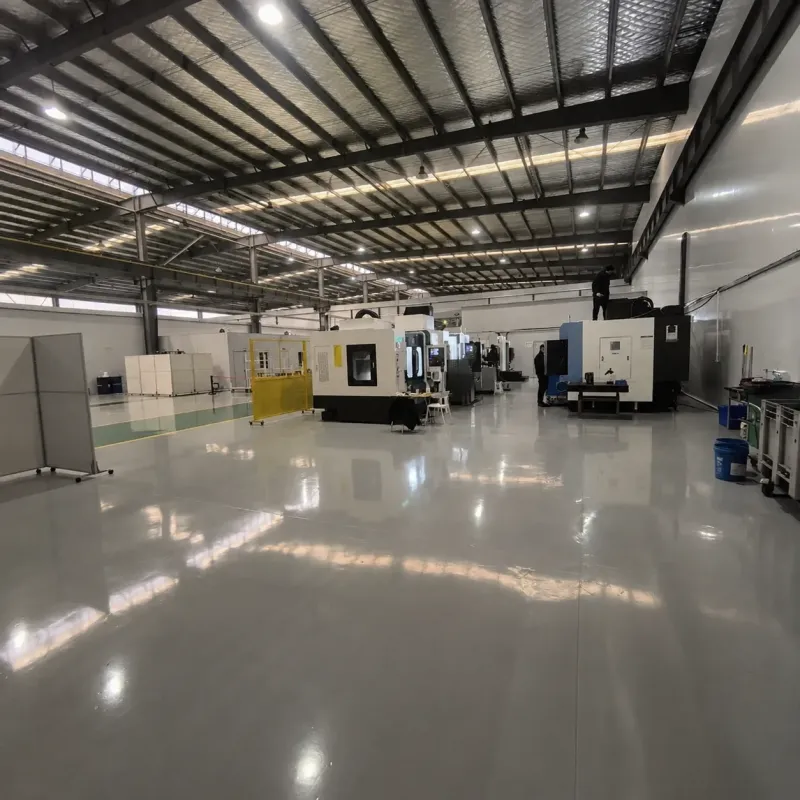
The melt temperature decides the steel, and the steel decides everything else. A die casting cavity runs H13 or SKD61 at HRC 44-52 with nitriding. A plastic cavity can run P20 prehardened at HRC 28-32, or H13 and S136 hardened to HRC 48-52 when the resin or the cycle count demands it. The spec table below sums up the two tooling worlds.
| Parameter | Injection Mold (Plastic) | Die Casting Mold (Metal) |
|---|---|---|
| Material formed | Thermoplastic: ABS, PC, PA66, POM, PEEK | Aluminum, zinc, magnesium alloys |
| Melt / metal temperature | 200-350 °C | Zinc 400-450 °C, aluminum 660-700 °C, magnesium 650-680 °C |
| Pressure regime | Melt pressure 100-180 MPa | Clamping pressure 30-80 MPa |
| Typical cavity steel | P20, H13, S136 | H13, SKD61, 8407 |
| Hardness range | P20 at 28-32 HRC, H13/S136 at 48-52 HRC, inserts to HRC 62 | HRC 44-52 plus nitriding or coating |
| Surface finish | SPI A1-A3 mirror to SPI D texture | Machined 1.6-3.2 Ra, textured or coated |
| Tolerance capability | ±0.005 mm achievable on precision tools | ±0.02-0.05 mm typical |
| Cavity life | 300,000-1,000,000 shots | 50,000-300,000 shots |
| Tooling cost | $15,000-$100,000+ | $20,000-$120,000+ |
| Typical lead time | 2-4 weeks (DieStrike quote) | 4-8 weeks (industry figure) |
← swipe to scroll →
Table: typical industry figures; verify against your program.
← swipe to scroll →
Table: typical industry figures; verify against your program.
← swipe to scroll →
Table: typical industry figures; verify against your program.
← swipe to scroll →
Note: values are typical industry ranges unless tied to DieStrike's stated capabilities. DieStrike quotes 2-4 weeks for injection molds and 3-7 days for standard components.
Mold Steel Selection and Heat Treatment
Plastic molds and die casting dies buy steel for different failure reasons. A plastic cavity fails by wear, corrosion, or gate erosion. A die casting cavity fails by heat checking first, then by washout and soldering. The steel grade must match the dominant failure mode.
Plastic Molds: P20, H13, S136
P20 prehardened to 28-32 HRC covers the majority of standard-resin tools. H13 at 48-52 HRC handles glass-filled resins, high cycle counts, and hot-running materials. S136 stainless at 48-52 HRC is specified for corrosive resins, transparent parts, and food or medical contact. The full grade-by-grade comparison sits in our P20 vs H13 vs S136 guide.
Die Casting Dies: H13 and SKD61
Die casting dies are a different material class. H13 and its JIS equivalent SKD61 dominate because hot-work steel keeps toughness at high working temperature. Cavities are vacuum heat treated, double tempered, and typically run HRC 44-52. Nitriding or PVD coating adds surface hardness and slows soldering.
Toughness is the metric that separates the two families. H13 at HRC 44-52 keeps enough toughness to absorb repeated thermal strain, which is why it survives 50,000-300,000 aluminum shots. A martensitic stainless like S136 is excellent in a plastic mold at HRC 48-52. It would crack faster in the same die, because its toughness profile suits corrosion and polish, not thermal shock (typical industry practice).
Harder is not automatically better in a die casting die. A cavity pushed to HRC 56-62 becomes crack-sensitive under thermal shock. DieStrike heat treats high-wear plastic mold inserts to HRC 62 for glass-filled connector work, but that hardness logic does not transfer to a 660-700 °C aluminum die. The heat treatment route matters as much as the grade: vacuum hardening, double temper at 540-620 °C, stress relief after roughing, and EDM white layer removal are standard steps on die casting tooling (typical industry practice).
Steel cost follows the route. P20 stock costs less than H13, and H13 costs less than S136. Heat treatment and machining dominate the final number, and a hardened die casting cavity with nitriding can add 15-25 percent to cavity cost versus an equivalent plastic tool insert (typical industry figure).
Thermal Management: Cooling Lines vs Die Cooling
Both mold families are heat exchangers first and shaping tools second. In injection molding, cooling typically accounts for 60-70 percent of cycle time, so channel placement decides throughput.
Injection mold cooling uses drilled channels placed 8-12 mm from the cavity surface, plus baffles, bubblers, and heat pipes where drilling geometry fails. Water at 10-40 °C is the standard medium. Conformal cooling channels, produced by additive manufacturing on inserts, cut cycle time by 15-30 percent on complex cores (typical industry figures).
Die casting dies cool differently. The die face runs at 150-250 °C preheat and spikes with every shot. Cooling lines must be kept back from the surface to avoid quenching cracks, and spray cooling, baffles, and fountain cores manage local hot spots. The goal is a stable thermal gradient, because a cold die cracks and a hot die solders.
Temperature control hardware differs too. Injection molds run mold temperature controllers and chillers that hold 10-40 °C, or up to 120-180 °C for engineering resins. Die casting dies rely on die heaters, spray systems, and water lines sized for the 150-250 °C preheat target. DieStrike's mold heating and cooling product line covers the plastic side of that spectrum.
Thermal cycling is the real enemy in die casting. Every shot drives the cavity surface from roughly 150-250 °C toward the 660-700 °C metal temperature, then back down. That cycle, repeated 50,000-300,000 times, is what produces heat checking. Die design mitigates it with generous radii, controlled cooling, and steel that can take the delta.
Gating, Venting and Standard Components
Gating systems look similar on paper and behave very differently. An injection mold feeds polymer through a sprue bushing, cold runners, or a hot runner system, and the gate geometry is tuned to the resin's flow behavior. A die casting die feeds metal through a shot sleeve and plunger into a runner system, with gates and overflow wells sized for a metal that solidifies in milliseconds.
The fill time difference explains the tooling. Polymer fills in seconds. Molten metal fills in 10-50 milliseconds, so die casting gates, vents, and overflows are designed to vent air and trap cold metal before it reaches the cavity. Vent depths run 0.02-0.05 mm on plastic molds and 0.10-0.20 mm on aluminum die casting dies (typical industry figures). Overflow wells are standard on die casting dies and absent on most injection molds.
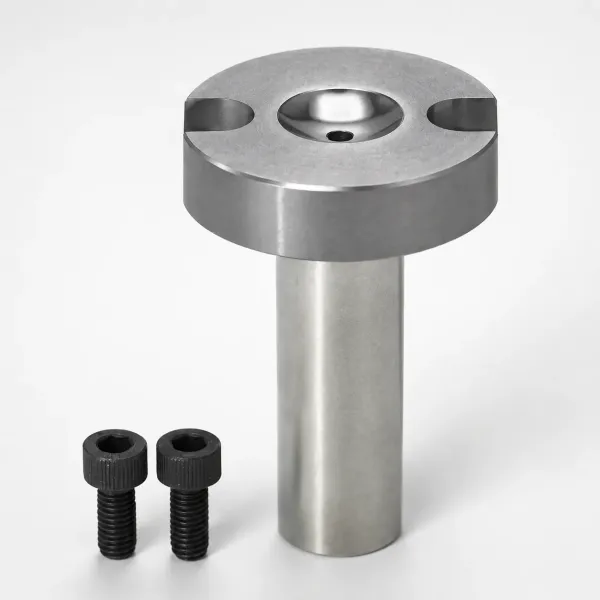
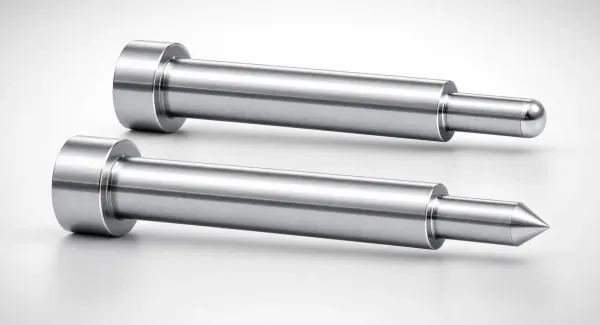
Standard components overlap heavily. Ejector pins, core pins, leader pins and bushings, mold bases, springs, and limit switches appear in both families. The differences are material and clearance. Die casting ejector pins run H13 or SKD61 with nitriding, at larger diameters and bigger clearances. The extra clearance accommodates thermal expansion at operating temperatures of 200-300 °C. Injection mold pins can run thinner, and DieStrike ships standard ejector pins, core pins, sprue bushings, mold bases, springs, and guide pins within 3-7 days.
Hot runner systems add $5,000-$30,000 to a plastic tool (typical industry figure) and pay back at high volumes. Die casting has no equivalent: the shot sleeve belongs to the machine, and the gating system is consumed as part of the die.
Tolerance Capability and Surface Finish
Precision claims need numbers. On injection molds, DieStrike holds mold dimension precision at ±0.005 mm and mold part geometry at ±0.002 mm. Part tolerances on plastic then depend on shrinkage, warpage, and process stability, but the tool is built to a known standard.
Die casting parts land in a wider band, typically ±0.02-0.05 mm depending on size, draft, and solidification shrinkage. Aluminum shrinks roughly 1.3 percent, zinc about 1.0 percent, and magnesium about 1.4 percent (typical industry figures). Draft angles run 1-2 degrees on die castings versus 0.5-1 degree on most plastic parts.
Surface finish follows the same story. Injection cavities are polished to SPI grades, from A1 mirror for optical parts down to SPI D for texture. Die casting cavities are machined to 1.6-3.2 Ra and then textured or coated, because a mirror finish on a die face does not survive contact with molten aluminum.
Verify tolerances the same way for both families: CMM inspection on the mold, then process capability studies on the parts. A die casting die that holds ±0.05 mm on a 200 mm flange is doing its job. A plastic mold built to ±0.005 mm mold precision still must prove part capability in trial. The tool number is the contract, and the part number is the proof.
Match the finish spec to the process reality. Specifying SPI A2 on a die casting die adds polishing cost on a surface that will be attacked within the first 10,000 shots. Specifying it on a plastic mold is normal for visible parts. The tolerance and finish conversation belongs in DFM, before the steel is cut.
Cavity Life and Failure Modes: Heat Checking
Cavity life is the number buyers underweight most. A P20 injection cavity typically survives 300,000-500,000 shots on standard resins. H13 or S136 hardened to 48-52 HRC extends that to 500,000-1,000,000 shots, and DieStrike's HRC 62 inserts push wear life further on glass-filled materials (typical industry figures).
Aluminum die casting dies run shorter: 50,000-150,000 shots is the common band on H13/SKD61. With nitriding, coatings, and disciplined die design, 200,000-300,000 is achievable. Zinc, at a lower 400-450 °C metal temperature, reaches 200,000-500,000 shots. These ranges are industry norms, not guarantees, and the spread is driven by thermal management more than anything else.
Heat checking is the dominant die casting failure. Thermal fatigue opens fine cracks on the cavity surface, usually at corners, gate edges, and thin steel sections. Each shot propagates them. Cracks eventually cause soldering, washout, and dimensional drift, and the die comes back for welding, stress relief, and re-machining.
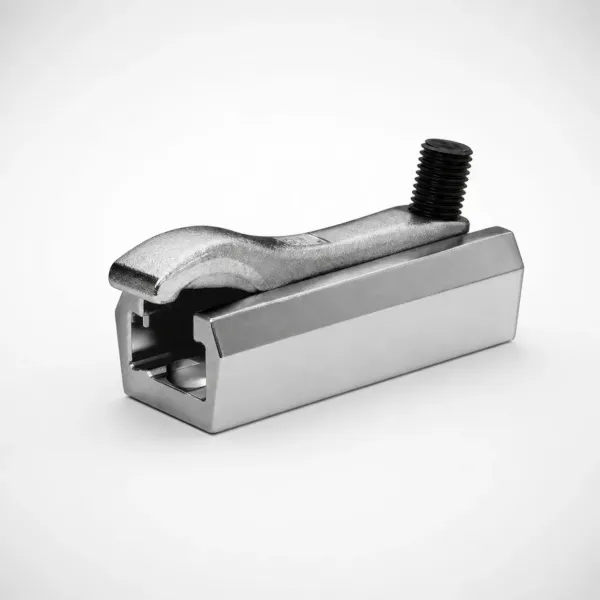
Plastic molds fail differently: gate erosion on glass-filled resins, parting line wear, vent clogging, and corrosion from flame-retardant compounds. The repair economics differ too. A plastic mold cavity is often re-polished or replaced in isolation. A heat-checked die casting die needs full strip-down, weld repair, re-heat treatment, and re-EDM, which is why die casting maintenance budgets run higher per shot.
Prevention starts in design: generous corner radii, gate placement away from thin steel, controlled die temperature, and a steel selection matched to the alloy. A die designed to run 80,000 shots without heat checking costs no more to quote than one that cracks at 30,000.
Cost and Lead Time: $15k to $120k+
Tooling cost tracks steel mass, cavity count, and failure risk. Injection molds typically run $15,000-$100,000+ depending on size, cavity count, hot runner content, and finish. Die casting dies typically run $20,000-$120,000+ because they use more steel, heavier heat treatment, and tighter design margins against thermal fatigue (typical industry figures).
The breakdown differs more than the total. A plastic tool spends more on gating hardware and finish work. A die casting die spends more on H13/SKD61 stock, vacuum heat treatment, nitriding, and a longer sampling window with die spray and preheat tuning. Cavity count scales both families. A four-cavity tool typically costs 40-60 percent more than a two-cavity tool and doubles output (typical industry figure).
Lead time follows the steel route. DieStrike quotes 2-4 weeks for injection molds, with standard components such as ejector pins, core pins, sprue bushings, mold bases, springs, and guide pins shipping in 3-7 days. Die casting dies at specialist shops typically run 4-8 weeks because of heat treatment and thermal-fatigue validation steps (industry figure).
For a plastic part, our injection mold manufacturing service works from your part drawing to DFM feedback in 24 hours and a cost breakdown in 48 hours. Those two documents, before any steel order, are where most budget surprises die. The same standards apply across a customer base that includes TE Connectivity, Amphenol, Luxshare, and Dongshan Precision.
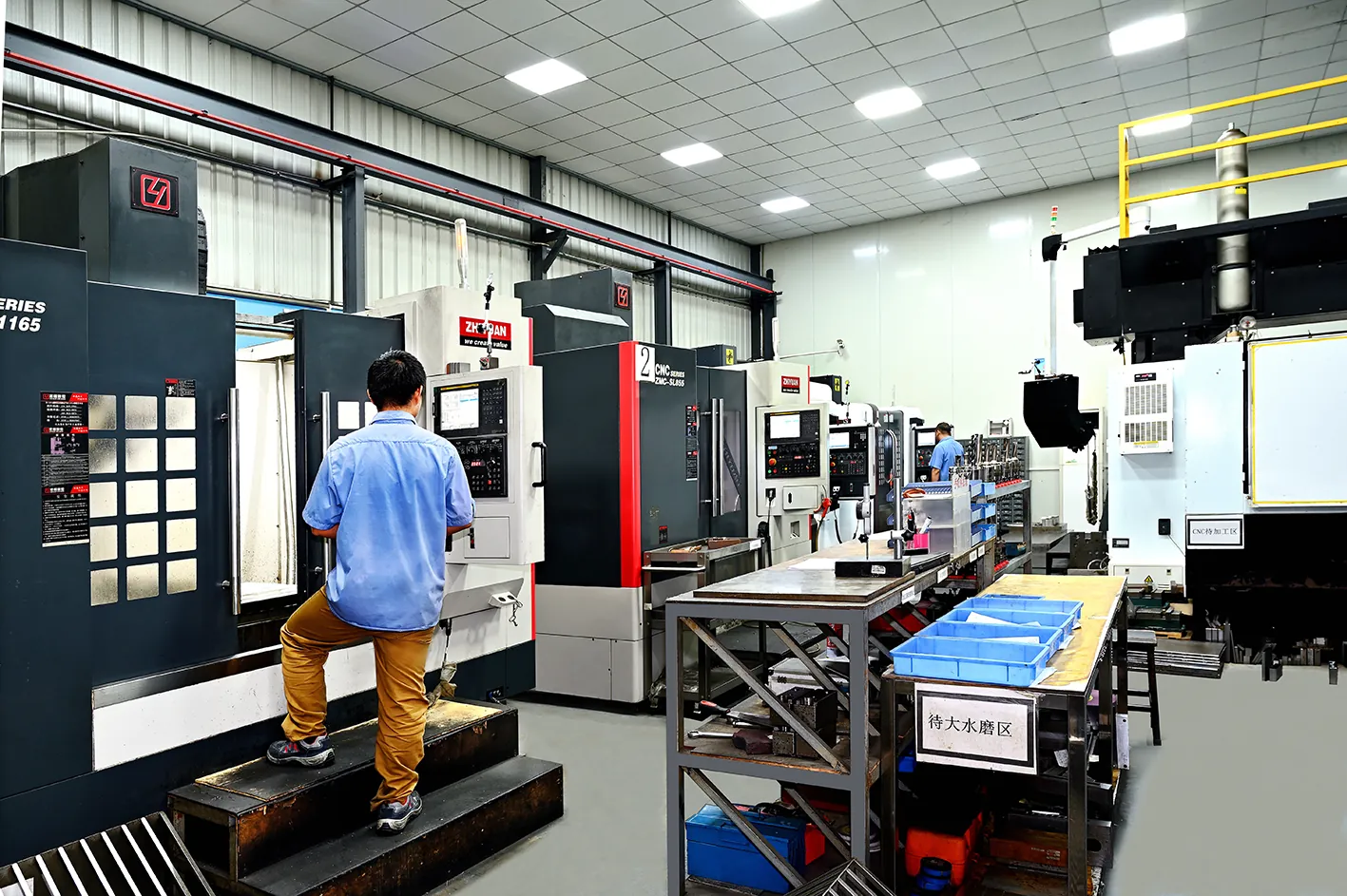
Bridge tooling changes the math. A P20 injection mold at $15,000-$30,000 can validate a design before the hardened production tool at $60,000-$100,000 commits. Die casting offers no cheap bridge: even a prototype die runs H13 and heat treatment, so design freeze matters more before the steel order.
Amortize the tool against the part price. A $50,000 injection mold across 100,000 parts adds $0.50 per part in tooling cost. A $70,000 die casting die across the same volume adds $0.70 per part, before the per-shot consumables and trimming that metal parts carry.
The Decision Matrix: Which Mold Fits Your Part
Both processes can make a housing, a bracket, or a frame. The decision comes down to material requirements, geometry, volume, and tolerance band. Work the matrix below in order, and the answer usually survives contact with a quote.
| Decision Factor | Choose Injection Mold When | Choose Die Casting Mold When |
|---|---|---|
| Part material | Plastic works: weight, cost, insulation, corrosion | Metal is required: strength, EMI shielding, heat resistance |
| Wall thickness | 0.8-3 mm thin walls, deep ribs | 1.5-4 mm sections, thick walls, cast-in inserts |
| Annual volume | 10,000-1,000,000 parts, multi-cavity amortization | 10,000-500,000 parts where metal is mandatory |
| Tolerance band | ±0.005 mm needed on precision tooling | ±0.02-0.05 mm acceptable |
| Operating temperature | Below 100-120 °C continuous exposure | Above 100-120 °C, flame or heat exposure |
| Part weight | Lightweight is a requirement | Weight is secondary or mass is desired |
| Surface finish | SPI A/B visible surfaces | Machined, textured, or painted surfaces |
| Tooling budget | $15,000-$100,000+ | $20,000-$120,000+ |
← swipe to scroll →
Table: typical industry figures; verify against your program.
← swipe to scroll →
Table: typical industry figures; verify against your program.
← swipe to scroll →
Table: typical industry figures; verify against your program.
← swipe to scroll →
Note: work the matrix from the material row down. Thresholds are typical industry figures.
Read the matrix from the material row first. If the application can live in plastic, injection molding almost always wins on tooling cost, cycle time, and finish. If metal is non-negotiable, the question is not whether to die cast, but how well the die is engineered.
Geometry filters next. Deep ribs and thin walls favor plastic. Large flat areas, thick sections, and parts that must carry threads or inserts cast in place favor die casting. Volume decides the tooling tier: multi-cavity injection tools amortize fast above 100,000 parts a year, while a single-cavity die casting die can still make sense for 10,000-50,000 metal parts a year.
When the process is settled, the mold maker's job starts. For plastic parts, send the part drawing for DFM review and you get feedback within 24 hours, plus a selection recommendation and cost breakdown within 48 hours. For metal parts, review the tooling with a shop that documents its H13/SKD61 die history, like our die casting mold service.
FAQ: Five Questions Buyers Ask
Q1. Can the same mold maker build both injection molds and die casting dies?
The skill sets overlap in machining, assembly, and standard components, but the steel routes and heat treatment differ. DieStrike is an IATF 16949 certified precision mold maker with 120+ machines, and builds precision injection molds with 2-4 week lead times and ±0.005 mm mold precision. For die casting work, verify the shop's H13/SKD61 experience, its vacuum heat treatment furnace, and its record on heat checking before ordering steel.
Q2. Which process is cheaper at 100,000 parts a year?
If the part can be plastic, injection molding wins on both tooling and part cost. The mold runs $15,000-$100,000+ and the cycle sits at 20-60 seconds typical. A die casting die runs $20,000-$120,000+ with a 30-90 second cycle plus trimming and finishing. At 100,000 parts, a $20,000 tooling delta adds about $0.20 per part, and plastic's faster cycle adds savings on top.
Q3. How many shots does each mold type survive?
Injection molds typically deliver 300,000-1,000,000 shots, with P20 at the low end and hardened H13, S136, or HRC 62 inserts at the high end. Aluminum die casting dies typically deliver 50,000-300,000 shots, with heat checking the usual end-of-life cause. Zinc dies last longer at 200,000-500,000 shots because the metal arrives at 400-450 °C instead of 660-700 °C.
Q4. Can a die casting die run plastic parts, or vice versa?
Technically no, and economically never. A P20 plastic cavity would soften and heat check within hours against 660-700 °C aluminum. A hardened die casting die used for plastic over-specifies steel, carries thermal mass that slows cycles, and costs more for no benefit. Each process needs its own tool, and steel selection starts from the melt temperature, not the part shape.
Q5. What causes heat checking, and how do you stop it?
Heat checking is thermal fatigue. Each shot cycles the cavity surface from preheat toward the metal temperature. The surface cracks when the delta is too big for the steel's toughness. Prevention: H13/SKD61 at HRC 44-52, nitriding or PVD coating, die preheat at 150-250 °C, generous corner radii, cooling lines kept back from the surface, and gate placement away from thin steel sections.
The Final Call
Wrong process selection burns money in steel, then in scrap, then in rush repairs. The numbers in this guide close the gap: melt temperature, steel route, tolerance band, and cavity life each point one way. DieStrike builds precision injection molds to ±0.005 mm under IATF 16949, and answers DFM questions in 24 hours.
Send us your part drawing and get a process recommendation with the numbers behind it: contact DieStrike.
KEEP READING
Related Reading
5 Mold Cooling Channel Design Tips for Faster Cycles
Mold maker's 5 cooling channel design rules: channel-to-cavity distance 2-2.
Read articleArticle5 Shrinkage Compensation Rules for Mold Design
Shrinkage compensation decides mold accuracy. Five rules: material rates from 0.3% to 2.
Read articleArticle5 Ways to Reduce Mold Cost Without Cutting Quality
Five proven ways to reduce injection mold cost without cutting quality: DFM before quoting, right-sized cavity count,…
Read articleArticle7 Gate Design Best Practices for Balanced Filling
Mold maker's 7 gate design rules for balanced multi-cavity filling: gate depth 50-80% of wall thickness, land 0.5-1.
Read articleNEXT STEP
Ready to Start Your Mold?
Send us your element dimensions or part numbers — our team responds within 24 hours with pricing and lead time.

Written by
Ray ChanMold Buyer's Guide Author · Precision Mold Manufacturing Specialist. Ray helps global importers, distributors and OEMs source factory-direct molds and mold parts.