
How to Clean Mold Cooling Channels: Scale, Rust and Flow Recovery | DieStrike
Table of Contents
A 16-cavity connector mold cycled at 41 seconds at T1 and at 49 seconds eleven months later. Circuit 3 had lost 22% of its flow at the same pump setting. Cavity 8 ran 7 °C hotter than cavity 2, and 0.5 mm of calcium scale lined the 10 mm bores. The steel was sound and the cavity finish passed inspection. The water lines were the defect. That tool gave away 18% of press capacity and produced 2,100 housings with sink marks before anyone measured coolant flow.
Fouled cooling channels are a mold maintenance problem with a mold shop solution. Channel geometry is decided at design, but flow, scale, and rust are managed after the steel ships. This guide covers the cleaning and restoration workflow only. It walks through how scale and rust form, which signals trigger a clean, ranked cleaning chemistry, an 8-step procedure, water quality, and a verification standard. It does not repeat design rules or the general maintenance calendar, and it links to those guides where they apply.
The Snapshot
- Scale deposits accelerate once water temperature passes 60 °C, and a 0.5 mm layer roughly halves heat transfer through the channel wall (typical industry figure).
- Cleaning triggers: flow down 15-20%+ from baseline, pressure rise at a fixed pump setting, or a circuit delta-T above 3-5 °C on a balanced part.
- Chemical circulation wins first: 5-15% citric or phosphoric acid, or a commercial descaler, run 30-90 min at 40-70 °C. Follow with an alkaline rinse and a 2-5% rust inhibitor.
- Preventive cleaning lands every 100,000-500,000 shots by water hardness, or quarterly on high-use tools.
- An uncleaned circuit adding 15% to a 45 s cycle costs about $1-2 per hour per cavity in lost machine time (typical). A full clean is a 4-8 h shop task.
The Silent Cycle-Time Leak
Scale and rust build slowly, so the loss is invisible week to week. A channel that removes 15% less heat does not alarm anyone. It just extends cooling time, and the operator trims process settings to hold part quality. Over months, the 41-second tool becomes a 49-second tool and nobody can say when it happened.
The cost math is direct. Press time runs $40-80 per hour typical. On a 45-second cycle, a 15% penalty is about 7 seconds per shot, or 12-13% of press capacity. At $60 per hour on a 24/5 schedule, one fouled circuit on one mold costs roughly $1-2 per hour per cavity in lost machine time (typical estimate). A mold running 32 cavities burns that loss 32 times over.
Part quality drifts in the same direction. A hot cavity corner keeps thick sections molten during packing, which produces sink marks and warpage. Semi-crystalline resins such as PP, POM, and nylon show crystallinity shifts when cooling time and cavity temperature move (typical). The spherulite structure depends on the cooling rate. The defect list reads like a material problem, so shops chase drying, melt temperature, and hold pressure before they check the water lines.
The fix is measurable and cheap. A baseline flow reading per circuit at T1, monthly re-checks, and a scheduled chemical clean restore the channel to its original heat removal. This article gives the numbers for every step.
How Scale and Rust Form
Scale is dissolved mineral that precipitates onto hot steel. City water carries calcium and magnesium bicarbonates, measured as hardness, typically 100-300 ppm CaCO3 equivalent. When water temperature passes roughly 60 °C, the bicarbonates break down and deposit calcium carbonate and magnesium carbonate on the channel wall (typical chemistry). Mold temperature controllers run water at 60-90 °C for many resins, so the inside of a cooling bore sits inside the precipitation window all day.
Scale thickness is the damage. Calcium carbonate conducts heat at roughly 0.5-2 W/mK, against 29-45 W/mK for P20 and S136 mold steel (typical published values). A 0.5 mm scale layer in a 10 mm bore acts like an insulating sleeve and cuts heat transfer roughly in half at the channel wall. Cooling time climbs 10-30% typical, and cavity surface temperature rises unevenly where the deposit is thickest.
Rust is the second fouling mode. Carbon-steel plates such as P20 and 718 rust wherever water and oxygen meet, and condensation inside a channel during shutdown provides both. The iron oxide layer is another insulator, and flaking rust particles travel with the flow to clog baffle slots and spray nozzles. Stainless grades resist this. S136 and 420 stainless channels, and carbon-steel bores protected with nickel or electroless-nickel plating, stay clean far longer than bare P20 (typical practice).
Fouling also narrows the bore. A 10 mm channel with 1.0 mm of scale all around leaves an 8 mm water path. Velocity rises, and pressure drop rises steeply. The drop scales with roughly the fifth power of the diameter at constant flow (calculated). The pump works harder, flow falls, and the fouling accelerates itself.
| Symptom | Likely Cause | Fix |
|---|---|---|
| Flow down 15-20%+ from baseline at fixed pump setting | Scale narrowing the bore, or debris | Chemical circulation, backflush each circuit in reverse |
| Pressure drop up 20%+ with no flow change | Scale layer thickening, blocked baffle slot | Remove baffles, chemical clean, brush straight bores |
| Circuit delta-T above 5 °C where it ran 2-3 °C | One leg starved by scale or a clogged plug | Clean that circuit, check plugs and flow balance |
| Rust-colored discharge on backflush | Corroding carbon-steel channel walls | Phosphoric clean, alkaline neutralize, 2-5% inhibitor |
| Sink marks on one cavity side only | That leg fouled, hot spot under the gate | Clean the circuit, verify restored flow, recheck delta-T |
| Cycle crept 10-30% with no process change | Systemic scale across multiple circuits | Full clean, then switch to softened water with inhibitor |
← swipe to scroll →
Table note: thresholds are typical shop practice. Judge every reading against the mold book baseline, not against another mold.
Reading the Signals: Flow, Pressure, Delta-T
You cannot see inside a cooling bore, so you read it through three numbers. Flow per circuit in L/min at a fixed pump setting, pressure drop across the circuit, and the water temperature rise from inlet to outlet. All three need a baseline recorded when the mold is known to be clean, ideally at T1 sampling.
Flow is the primary signal. Connect a flow meter in line, or use the controller readout, and log L/min per circuit at one pump setting and one water temperature. Water viscosity changes with temperature, so always compare at the same set point. A drop of 15-20% from baseline means the bore has narrowed enough to act on (typical trigger). Below 80% of baseline, the circuit is costing real cycle time.

Pressure tells you where the restriction is. A rise in pressure drop at the same flow points to scale or debris. A flow loss with steady pressure points to a pump or controller problem. Gauges on both the supply and return of each circuit, or a single gauge read against the controller display, give the number. Log pressure in MPa or bar at the same conditions as the flow reading.
Delta-T is the heat-removal signal. A balanced circuit running at proper flow shows an inlet to outlet rise of 2-3 °C typical. A rise above 3-5 °C on a part that has not changed means the water spends too long in the channel (typical). That is another way of saying flow has fallen. Measure with the controller thermometers or two contact thermometers on the hose barbs.
Run these checks on a fixed cadence. Monthly flow and delta-T checks on high-use molds, and a full three-number reading whenever cycle time creeps or part quality drifts, catch fouling early. Record every reading in the mold book, the same log used for the general checks in our mold maintenance schedule guide.
When to Clean: Triggers and Intervals
Clean on triggers, and clean on a schedule. Triggers catch the failure that started yesterday. The schedule catches the slow build that never triggers an alarm.
Hard triggers are the numbers from the previous section. Flow down 15-20%+ from baseline, pressure up with flow steady, or delta-T above 3-5 °C on a balanced part. Any one of them justifies pulling the mold or cleaning it in place with a portable circulation cart. Rust-colored backflush water is an immediate trigger, because active corrosion sheds particles into baffles and spray nozzles.
The preventive interval depends on water hardness and controller temperature. A shop running untreated city water at 150-300 ppm hardness and 60-90 °C set points should clean every 100,000-200,000 shots typical. With softened or deionized water and an inhibitor, the interval extends toward 300,000-500,000 shots typical. High-use tools running 24/5 deserve a quarterly clean regardless of shot count. A year of fouling is a bigger job than a clean caught at three months.
Some shops clean every mold at the same point in the preventive maintenance calendar, which is simple but wasteful. Clean a low-use tool on schedule and you remove little scale. Clean a hot, hard-water tool late and you accept weeks of lost cycle time. Tie the interval to measured flow, and treat the schedule as a maximum, not a default.
Interval records belong in the mold book next to flow history. When a tool is cleaned, write the shot count, the water hardness at the time, and the flow recovered.
Cleaning Methods Ranked
Methods rank by how well they reach the fouling without damaging the steel. Rank them in this order, and escalate only when the previous method fails.
1. Chemical circulation. This is the first choice for plates, cores, and assembled molds. Dilute acid dissolves scale and rust where it sits. Citric acid at 5-15% handles calcium and magnesium scale cleanly. Phosphoric acid at 5-15% adds rust removal, which makes it the pick for corroded carbon-steel channels. Commercial descalers blend acid with inhibitors and wetting agents. Circulate at 40-70 °C for 30-90 minutes, hotter and longer for heavy deposits. Never leave acid in a circuit overnight, because extended contact pits carbon steel (typical practice).
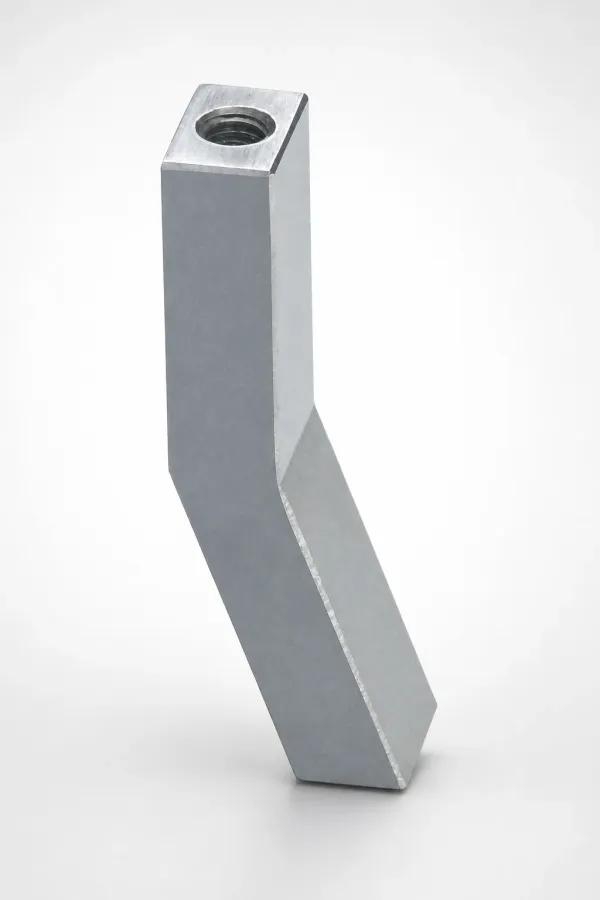
2. Ultrasonic bath. Small inserts, bubblers, baffles, and spray nozzles clean best out of the mold. An ultrasonic bath at 30-50 kHz with a mild alkaline or citric solution strips scale from slots and blind holes that flow cannot reach (typical). Plate-size tools do not fit, which is why circulation handles those.
3. Mechanical brushing. A nylon or brass brush on a flexible shaft removes soft scale and biofilm from straight-through bores only. It cannot follow drilled bends, and forcing a brush through a scaled bore can score the wall. Use brushing after chemical softening, and only on 8-12 mm straight channels (typical).
4. Dry-ice or media blasting. Last resort. Dry ice sublimates on impact and lifts deposits without abrasive residue, but a 6 mm bore is easy to erode at the inlet. Media blasting leaves grit in blind channels unless the tool is fully disassembled and flushed. Reserve both for channels that resist chemical cleaning after two cycles (typical practice).
Two rules apply to every method. Neutralize after acid with an alkaline rinse. Then run a rust inhibitor at 2-5% concentration. Freshly exposed steel will otherwise flash-rust before the mold runs again. And protect the cavity. Every cleaning method starts with the parting line sealed and the cavities covered. A descaling spill on an SPI A2 surface is a $300-1,500 re-polish job per cavity typical.
The Cleaning Procedure Step by Step
This 8-step procedure covers a full chemical clean with a portable circulation cart. Budget 4-8 hours of shop time for a complete job including teardown and reassembly (typical). Clean a mold that is due, not one that just failed.
Step 1: Isolate and drain. Lock out the mold temperature controller and disconnect every hose. Tag each line with its circuit number so reassembly matches the drawing. Drain each circuit fully and catch the first liter to inspect the discharge.
Step 2: Remove what needs removing. Pull baffles, spray nozzles, and flow restrictors. They clean better in an ultrasonic bath, and scale hides under them. Leave straight plate bores intact. If plugs must come out to reach a blind bore, note the thread type and reseal correctly, using the guidance in our pipe plug selection guide.
Step 3: Confirm the trigger. Re-read flow and pressure before cleaning. The numbers give you the before state, and they confirm which circuits need the longest acid dwell. A circuit at 70% of baseline flow needs the full 90 minutes.
Step 4: Set up circulation. Connect each circuit to a cart with a 10-30 L/min pump, a 50-100 micron filter in the return line, and a heater. Warm the descaling solution to 40-70 °C. Wear acid-rated gloves and eye protection, and keep the area ventilated.
Step 5: Circulate in reverse. Run the solution against normal flow direction so deposits break free from both sides. Circulate 30-90 minutes. Watch the discharge color and the filter. Dark brown discharge means rust is dissolving. White slurry means scale. Agitate every 15 minutes with a flow surge or a manual backflush.
Step 6: Rinse to neutral. Drain the acid and flush each circuit with clean water until the outlet reads pH 6-8 on test paper. That takes roughly 3-5 circuit volumes or 5-10 minutes per circuit (typical). Any acid left in the bore keeps etching steel.
Step 7: Passivate and dry. Circulate an alkaline rinse with a rust inhibitor at 2-5% concentration for 10-20 minutes. Drain, then blow each circuit dry with filtered air. If the mold goes to storage instead of back to the press, follow our mold storage guide so the dry, inhibited bores stay that way.
Step 8: Reassemble and pressure test. Refit baffles, nozzles, and plugs. Pressure test every circuit at 1.0-1.5 MPa for 30 minutes with no drop, the same acceptance used on new tools (typical). Then reconnect hoses to the tagged lines and run the verification in the next section.
Water Quality: The Root-Cause Fix
Cleaning restores the channel. Water quality keeps it restored. A shop that cleans fouled circuits but keeps feeding them hard city water repeats the job every few months, at 4-8 hours of shop time each round.
Run softened or deionized water in the cooling loop. Softening exchanges calcium and magnesium for sodium, so scale-forming ions never reach the bore. Deionized water removes dissolved solids almost entirely, which also cuts corrosion current in the loop (typical practice). If the plant feeds one central cooling system, treat that water and every mold benefits.
Add a corrosion inhibitor at 2-5% concentration in the recirculating water (typical). Inhibitors build a thin film on the steel wall that slows oxidation, which matters most for P20 and 718 plates. Check inhibitor concentration monthly with a test kit, because the additive is consumed and topped up with makeup water.
Hold the water pH in the 7.5-9 range typical. Below 7.5 the water turns mildly acidic and attacks carbon steel. Above 9, alkaline water can attack aluminum components and some seal materials. Test pH weekly on a high-use system and monthly elsewhere, and log it next to the flow readings in the mold book.
Keep the loop clean at the source. A 50-100 micron filter on the supply catches rust particles and debris before they reach baffle slots. Bleed and replace water on a set schedule, because dissolved solids concentrate as water evaporates from an open tower. A closed-loop system with treated water holds its chemistry far better than an open one (typical).
Water temperature set points interact with all of this. Controllers that run above 60 °C push the water into the scale precipitation window, so treated water matters more on hot molds. Matching the controller to the tool is part of the picture, and our mold heating and cooling systems range covers the controller side of the loop.
Verifying a Clean Circuit
A clean is only finished when the numbers say so. Three checks confirm the circuit is restored, and all three compare against the baseline from the mold book.
Flow comes first. Re-run each circuit at the baseline pump setting and water temperature. Flow restored to within 5-10% of the original reading passes. Anything still below 85% of baseline means scale remains or a baffle is mis-seated, so repeat the chemical cycle on that circuit before reassembly (typical).
Pressure backs it up. Pressure drop should return to the original spec, usually under 0.3-0.5 MPa (3-5 bar) for a standard plate circuit. A pressure reading that stays high after flow recovers points to a mechanical restriction, such as a crushed hose or a clogged spray nozzle, not chemistry.
Heat transfer is the real test. With the mold back on the press, check the circuit delta-T returns to 2-3 °C, and scan the cavity with an IR camera or contact thermometer. Cavity surface spread within 5 °C across a balanced tool confirms the heat removal is even again (typical). Parts follow the numbers. Cycle time returns 10-30% if fouling was driving it. Sink marks and warpage disappear from the cavity that ran hot before the clean.
Log the result. Record the post-clean flow, pressure, and delta-T next to the pre-clean readings and the date. That row becomes the new reference point for the next interval, and it turns the cleaning history into a number instead of a memory.
FAQ: Mold Cooling Channel Cleaning
Q1. How do I know when cooling channels need cleaning?
Compare current readings to baseline. Flow down 15-20%+ at the same pump setting, pressure up with flow steady, or a circuit delta-T above 3-5 °C on an unchanged part are the triggers. Rust-colored backflush water is an immediate trigger.
Q2. Which acid should I use, and at what strength?
Citric acid at 5-15% for calcium and magnesium scale. Phosphoric acid at 5-15% when rust is present too. Commercial descalers add inhibitors. Circulate 30-90 minutes at 40-70 °C. Never leave acid in overnight, and always follow with an alkaline rinse and a 2-5% rust inhibitor.
Q3. How often should a mold be cleaned?
Every 100,000-200,000 shots on hard city water, extending toward 300,000-500,000 shots with softened water and inhibitor. High-use tools get a quarterly clean regardless of shot count. Let measured flow, not the calendar alone, set the interval.
Q4. Will acid cleaning damage mold steel?
Not when done in spec. Dilute citric or phosphoric acid at 5-15%, held at 40-70 °C for 30-90 minutes, is safe for P20, S136, and 420 steels (typical). Use an inhibited commercial product. Damage comes from overnight soaking, from skipping the neutralization rinse, or from letting acid sit on polished cavity faces.
Q5. Can an ultrasonic bath clean a whole plate?
No. Tanks handle small inserts, bubblers, baffles, and spray nozzles. Plates and assembled molds need chemical circulation, because the bath cannot move enough solution through a 300 mm bore. Use both in one job: circulate the plates, and ultrasonic the small parts you pulled in Step 2.
The Bottom Line
Fouled lines steal 10-30% of cycle time and $1-2 per hour per cavity until cleaned. Measure flow monthly, clean by chemistry first, and fix the water. DieStrike builds precision molds under IATF 16949 with 120+ machines, holds mold accuracy to ±0.005 mm, and returns DFM feedback in 24 hours. Send your mold file through our contact page for a cooling review or repair scope.
KEEP READING
Related Reading
5 Mold Cooling Channel Design Tips for Faster Cycles
Channel to cavity distance, bore size, turbulent flow and baffle layouts that decide how much heat the water line can remove.
Read articleArticleHow to Maintain a Mold: Weekly/Monthly/Annual Schedule
A 30-minute weekly check catches ejector drag and cooling flow drops before 0.02 mm of wear turns into a $25,000 rebuild.
Read articleArticleHow to Store a Mold: Preservation Between Production Runs
Keep idle tools below 50% RH with rust preventive or VCI protection so stored channels do not flash-rust into a $8,000 repair.
Read articleServiceMold Repair and Maintenance
Crack repair, insert replacement, surface restoration and preventive maintenance programs that bring fouled and damaged tools back to spec.
Read articleNEXT STEP
Ready to Start Your Mold?
Send us your element dimensions or part numbers — our team responds within 24 hours with pricing and lead time.

Written by
Ray ChanMold Buyer's Guide Author · Precision Mold Manufacturing Specialist. Ray helps global importers, distributors and OEMs source factory-direct molds and mold parts.