
How to Select Pipe Plugs for Mold Cooling Circuits
Table of Contents
A 32-cavity automotive connector mold lost a full shift when a 1/4 inch NPT pipe plug started weeping at 2,500 psi test pressure. Water tracked along the cooling channel and reached the cavity face. Rust bloomed inside the manifold bore, and 400 housings were scrapped before the leak was found. The plug swap took 60 minutes, but the repair bill included re-polishing the cavity, replacing two corroded inserts and re-qualifying the process. That sequence repeats across shops because pipe plugs are bought as a commodity and installed by feel instead of by spec.
A pipe plug is the last component in every mold cooling circuit. It seals the gun-drilled channel where it exits the plate, the manifold or the core. A typical mold plate carries 8 to 40 plugs, and a 64-cavity tool with four circuits per cavity can carry 150 or more. On a high-cycle program running 20 to 30 shots per minute, one weeping plug drips 0.1 to 0.5 L per hour onto the mold face. Water on the parting line causes rust, splay and dimensional drift in the cavity.
This guide covers plug types, thread standards, materials, sealing methods, installation torque and maintenance for mold cooling circuits rated at 1,500 to 3,000 psi. Figures are typical industry values unless marked as DieStrike capabilities.
The Snapshot
- One weeping cooling plug costs 30 to 60 minutes of press downtime and up to 2% scrap per occurrence.
- Standard NPT pipe plugs hold 1,500 to 3,000 psi test pressure in mold cooling circuits.
- 304/316 stainless resists corrosion, brass resists scale, and zinc-plated steel is cheapest but rusts after the plating wears.
- Torque a 1/4 inch NPT plug to 10 to 15 ft-lb. Over-torque cracks thin manifold bosses.
- DieStrike supplies standard pipe plugs with the mold component line at 3 to 7 day lead times.
Why Pipe Plug Selection Fails
Cooling channels are gun-drilled, so every channel end that is not a fitting port needs a plug. The plug sees the full circuit pressure, thermal cycling from 20 to 80 °C, water chemistry and vibration from the press. Selection fails when any one of those four loads is ignored.
The dominant failure modes are weeping leaks, stuck plugs, cracked bosses and galvanic corrosion. A weeping leak shows as water stains on the plate face, rust streaks in the pocket and splay on the molded part. A stuck plug turns a 10 minute PM check into a 2 hour extraction job. A cracked boss means welded repair or a thread insert, both of which pull the mold from the press. Each mode costs 30 to 60 minutes of downtime, and each is preventable at the drawing stage.
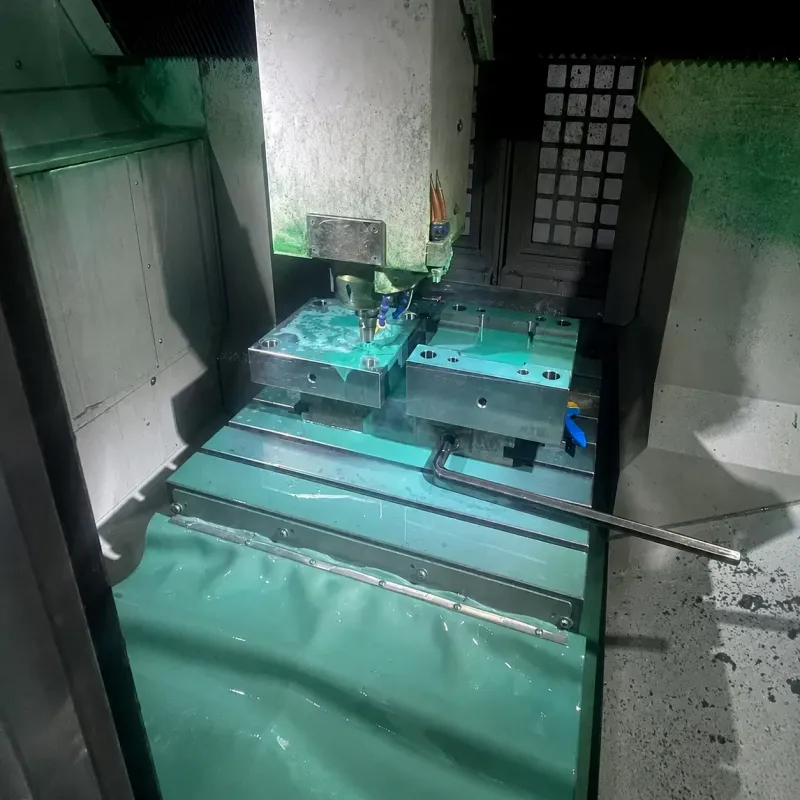
Pressure testing is where the failure shows first. Mold cooling circuits are pressure tested at 1,500 to 3,000 psi, typically 1.5 times the maximum operating pressure. A plug that passes the dry test can still fail after thermal cycling, because steel expands about 12.6 µm per meter per kelvin and the plug seat moves with the plate. That is why plug selection belongs in the DFM review, not in the maintenance cart.
DieStrike reviews cooling circuit plug plans during the DFM pass and returns comments within 24 hours. The review covers thread type, material, seal method and torque for every plugged channel end.
Pipe Plug Types for Mold Cooling Circuits
Five plug families cover nearly every cooling circuit application. The choice follows the channel access, the sealing requirement and how often the plug will be removed.
Hex socket pipe plugs
The hex socket plug is the default for mold plates and manifolds. A hex socket drive sits recessed in the head, so the plug installs flush or below the plate surface. Socket sizes run 1/8 to 3/8 inch drive across NPT sizes from 1/8 to 3/4 inch. Use it wherever a low profile matters, which is almost everywhere in a mold.
Square head pipe plugs
The square head plug accepts a wrench on the outside and suits large sizes and high torque. It protrudes above the plate surface, so it belongs in pockets or on open faces. Square heads are common on 1/2 and 3/4 inch manifold ports where socket drive torque would strip.
Cup plugs
A cup plug uses a cup-shaped end and seals on the thread with a shallow counterbore under the head. It works where a standard hex head would interfere with a clamp or a moving plate. Cup plugs are a specialty item and should be verified against the drawing before ordering.
Expansion plugs
Expansion plugs seal a drilled hole without threads. The plug is driven into the bore and the cup end expands against the wall. They suit sealed blind holes in blocks where tapping is not practical, but they are not rated for repeated removal. Use threaded plugs anywhere the circuit will be opened for cleaning.
O-ring face seal plugs
O-ring face seal plugs carry a bonded O-ring under the head and seal on the face instead of the threads. They work with parallel BSPP threads and reuse cleanly, which makes them the best choice for circuits opened at every PM. The O-ring needs replacement, typically every 50,000 to 100,000 cycles or every year.
The table below maps six common cooling circuit situations to a starting plug selection. Treat each row as a first pass, then verify the thread against the tap that cut the hole.
| Application | Plug Type | Thread | Material | Note |
|---|---|---|---|---|
| Standard plate and manifold channels, 6-16 mm | Hex socket | NPT 1/8 to 3/4 | Brass or 304 SS | Default choice, flush install, 3-7 day lead time |
| Large manifold ports, frequent access | Square head | NPT 1/2 to 3/4 | 316 SS | Wrench drive, higher torque capacity |
| Sealed blind holes, no thread access | Expansion | None, press fit | Zinc-plated steel | Not reusable, keep out of opened circuits |
| Circuits opened at every PM | O-ring face seal | BSPP G1/4 to G1/2 | 316 SS with NBR O-ring | Clean reuse, replace O-ring annually |
| Glycol or treated water, corrosive chemistry | Hex socket | NPT 1/8 to 3/4 | 316 SS | 316 preferred over 304 for chloride water |
| Scale-prone hard water circuits | Hex socket | NPT 1/8 to 3/4 | Brass | Brass sheds scale better than steel |
← swipe to scroll →
Table: typical industry figures; verify against your program.
Stainless Steel, Brass and Zinc-Plated Carbon Steel
Three material families cover nearly every cooling circuit plug. The choice follows the water chemistry, the plate material and the removal frequency, in that order.
304 and 316 stainless steel
304 stainless resists rust and suits neutral treated water. 316 stainless adds molybdenum and resists chlorides, so it belongs in glycol mixtures and aggressive water treatment programs. Stainless plugs cost 2 to 3 times more than brass, but they survive 500,000 plus cycles without corrosion. Watch the galvanic couple when a stainless plug seats in an aluminum manifold, which is covered in the failure modes section.
Brass
Free-cutting brass (C36000) machines cleanly, sheds scale better than steel, and never rusts on the thread. It is the cheapest corrosion-resistant choice and the default for scale-prone hard water. Brass is softer than steel, so it is less likely to crack a thin boss under torque. The trade is dezincification in aggressive water chemistry, which turns the thread porous over years of service.
Zinc-plated carbon steel
Zinc-plated carbon steel is the cheapest plug, at roughly half the price of brass. The plating carries the corrosion load, and it wears at the thread during installation. Once the plating is scratched, rust starts in 6 to 12 months on untreated water. Use plated steel for prototype tools and short-run molds, not for 500,000 cycle production programs.
| Material | Relative Cost | Corrosion Behavior | Best For | Watch Out |
|---|---|---|---|---|
| 304 / 316 stainless | 2-3x brass | 316 resists chlorides and glycol | Treated water, long-run production molds | Galvanic corrosion in aluminum manifolds |
| Brass C36000 | Baseline | Resists rust, sheds scale | Scale-prone hard water circuits | Dezincification in aggressive water |
| Zinc-plated carbon steel | ~0.5x brass | Plating wears, rust starts in 6-12 months | Prototype and short-run molds | Scratched threads rust first |
← swipe to scroll →
Table: typical industry figures; verify against your program.
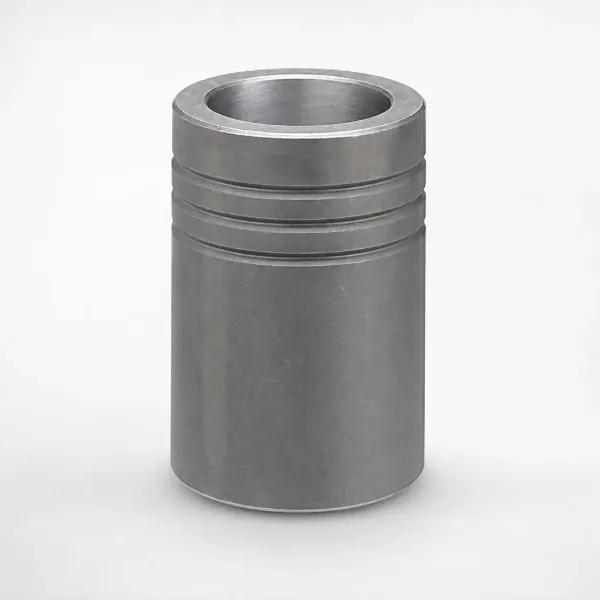
The vertical rule is simple. Match the plug to the water chemistry, then to the manifold material, then to the removal schedule. Plated steel on a 500,000 cycle program saves pennies and costs a shift.
Thread Standards: NPT, PT, BSPP and Metric
The thread decides the seal. Cooling circuit plugs in mold work use four standards, and mixing them is the most common installation error in the shop.
NPT taper pipe thread
NPT is the North American standard, a 60 degree thread form with a 1:16 taper. The seal comes from thread interference, so the plug wedges into the tapped hole. Common sizes are 1/8-27, 1/4-18, 3/8-18, 1/2-14 and 3/4-14. NPTF is the dryseal variant that seals without tape or sealant.
PT (JIS) taper thread
PT is the Japanese taper pipe thread, a 55 degree form with a 1:16 taper, close to BSPT in pitch. It appears on Japanese presses, molds and mold temperature controllers. PT and BSPT plugs are mechanically interchangeable in most applications, but verify the pitch against the tapped hole before assembly.
BSPP parallel thread
BSPP (G series) is a 55 degree parallel thread that seals on a washer or an O-ring under the head, never on the thread itself. Common sizes are G1/8-28, G1/4-19, G3/8-19 and G1/2-14. BSPP is the standard for European manifolds and for any plug that must be removed and reused.
Metric parallel threads
Metric parallel threads appear on Chinese and German mold components. They also seal with a washer or O-ring under the head. Metric sizes follow ISO 228, for example M14 x 1.5 and M18 x 1.5. When the drawing calls for metric, do not substitute an NPT plug of similar diameter.
Never force an NPT plug into a BSPP hole. The 60 degree versus 55 degree flank angle leaves a gap at the thread root, and the plug weeps at test pressure every time. Check the tap that cut the hole, or measure the thread pitch with a thread gage, before ordering the plug.
Sizing and Pressure Ratings
Plug size follows the channel diameter, and the pressure rating follows the circuit design. Both are decided before the channel is drilled, because the tap drill size and the counterbore depth live in the drawing.
Channel diameters of 6 to 16 mm map to plug sizes 1/8 to 3/4 inch. A 6 to 7 mm channel takes a 1/8 inch plug. An 8 to 10 mm channel takes 1/4 inch. A 12 to 13 mm channel takes 3/8 inch, and a 14 to 16 mm channel takes 1/2 inch. Match the plug to the channel, not to habit, because an undersized plug leaves a step that traps scale.
Standard NPT pipe plugs are rated to 1,500 to 3,000 psi, which covers mold cooling circuit test pressure. Hold three to four full threads of engagement on a taper plug. Fewer threads strip under thermal cycling, and more threads push the plug into the channel, where the tip obstructs flow and collects scale.
Water hammer is the pressure wildcard. A quick-closing valve on the mold temperature controller can spike circuit pressure 2 to 3 times above operating level for a few milliseconds. If the circuit runs with fast valves, spec the plug and the tapped boss for the spike, not for the steady state.
Sealing Methods: PTFE Tape, Sealant and O-Ring Seals
The seal method decides whether the plug leaks on day one or after 100,000 cycles. Three methods cover cooling circuit work, and each has a correct application.
PTFE tape
PTFE tape is the default for NPT plugs. Wrap three to four layers in the direction of thread rotation, and leave the first thread bare so tape shreds do not wash into the circuit. Tape shreds clog narrow channels and cooling nozzles, so inspect the first purge after assembly. Tape works to 1,500 to 3,000 psi on clean threads.
Thread sealant
Anaerobic thread sealants such as Loctite 577 cure in the thread and seal without shreds. They carry higher pressure ratings than tape and fill thread irregularities in worn tapped holes. Apply to the full thread length, assemble to torque, and allow the stated cure time before pressure testing. Sealant is the better choice for plugs that must hold test pressure immediately.
O-ring face seals
O-ring face seal plugs seal on the head, not the thread, so they need no tape or sealant. Use them on BSPP and metric parallel threads. They are the cleanest to remove and reuse, which matters in circuits opened at every PM. Replace the O-ring annually or every 50,000 to 100,000 cycles, whichever comes first. NBR O-rings handle water and glycol to about 100 °C, and EPDM handles hotter water.
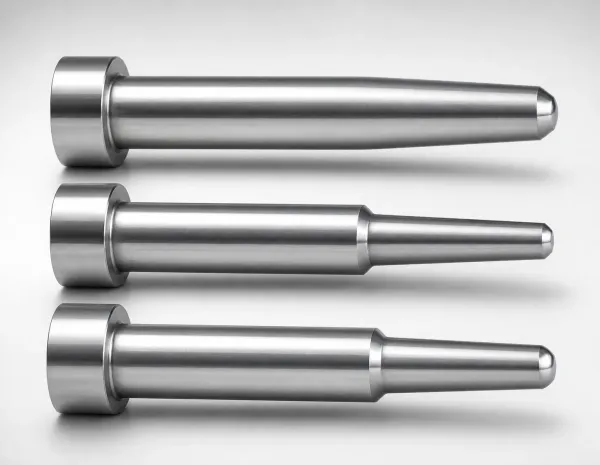
One rule covers all three methods. The seal surface must be clean, dry and free of scale before assembly. A plug seated on a scale deposit leaks even with a fresh O-ring.
Installation Torque and Depth
Torque decides whether the plug seals or cracks the boss. Taper plugs need enough torque to wedge, but thin manifold walls crack at the thread root when torque climbs too far.
Typical installation torques for clean, lubricated NPT threads run 5 to 8 ft-lb for 1/8 inch, 10 to 15 ft-lb for 1/4 inch, 15 to 20 ft-lb for 3/8 inch and 20 to 25 ft-lb for 1/2 inch. Brass plugs take the low end, and stainless plugs take the high end. Use a torque wrench or a calibrated driver, never an impact driver. An impact driver can exceed the range by 3 to 4 times in one pull.
Depth follows the thread engagement rule. A taper plug seats with three to four full threads engaged and must not bottom out in the hole. Mark the plug head to record the seated position, and check that the socket recess clears the plate surface. A plug driven below the counterbore face still seals, but it is harder to remove and collects scale in the pocket.
Preparation matters as much as torque. Clean the tapped hole of chips before assembly, and chase damaged threads with the correct NPT tap. A worn tap cuts oversized threads that weep no matter how much torque the plug sees.
Failure Modes in Mold Cooling Circuits
Cooling circuit plugs fail in five recognizable ways. Each mode has a cause, a symptom and a fix, and each is preventable at selection time.
Weeping leaks
A weeping plug drips 0.1 to 0.5 L per hour at the plate face. Causes are a mismatched thread form, a damaged tapped hole, tape shreds breaking the seal, or a plug seated on scale. Symptoms are water stains, rust streaks and splay on nearby parts. Fix by re-tapping the hole, replacing the plug and re-testing at 1,500 to 3,000 psi.
Scale buildup
Scale deposits narrow the channel behind the plug and can reduce circuit flow by 10 to 30% before anyone notices. The plug tip protruding into the channel acts as a scale anchor. Fix by specifying the correct plug length and by flushing circuits on the PM schedule. Hard water above 300 ppm hardness accelerates the deposit rate.
Galvanic corrosion
Dissimilar metals in a wet circuit form a galvanic couple. A stainless plug in an aluminum manifold is the worst common case, and a brass plug in a steel plate is a milder one. Corrosion products seize the thread, and removal strips the socket. Fix by matching materials where possible, or by isolating the couple with an O-ring seal plug that keeps water off the thread.
Cracked bosses
Over-torque or thermal cycling cracks the boss at the thread root. The crack grows on every thermal cycle from 20 to 80 °C and shows as a hairline wet line. Fix requires welded build-up or a thread insert, and the mold leaves the press. The 10 to 15 ft-lb range for 1/4 inch plugs exists to prevent this mode.
Backed-out plugs
Thermal cycling and press vibration slowly unscrew a plug that seated with too little torque. The plug backs out over 10,000 to 50,000 cycles, and the leak starts without any wrench having touched it. Torque-check all plugs at the annual PM. A leak that shows as splay or water stains on the part can be mistaken for a process fault, so read the symptom carefully in our guide on troubleshooting mold defects. The interplay between cooling layout and leak risk is covered in our guide on mold cooling channel design.
Maintenance and Replacement Cycles
Pipe plugs are consumables. A plug costs 0.50 to 5 USD depending on size and material, which is less than the cost of the labor to clean it. The maintenance rule is simple: replace the plug every time the circuit is opened.
At the annual PM, or every 50,000 to 100,000 cycles for high-cycle programs, torque-check every plug, flush the circuits, and replace any plug with rust, stripped drive, or scale on the threads. Keep a spare plug kit per mold with two of each size in the mold's material. The kit pays for itself the first time a socket strips at 2 am.
Stuck plugs need the right removal sequence. Apply penetrating oil, wait 15 minutes, and use the correct hex socket fully seated in the drive. If the socket strips, heat the boss to 80 to 100 °C with a hot-air gun and try again. A drilled and extracted plug leaves chips in the circuit, so purge the channel before reassembly. Full mold maintenance scheduling is covered in our guide on how to maintain a mold.
Record plug replacements in the mold log. The log shows which circuits leak, which materials fail and which torque settings hold, so the next mold ships with the right plugs the first time.
FAQ: Pipe Plug Selection
Q1. What size pipe plug do I need for a 10 mm cooling channel?
A 10 mm channel takes a 1/4 inch NPT plug as the starting point. Verify the tapped hole with a thread gage, because the hole may already be cut to BSPP or metric. Hold three to four full threads of engagement, and torque to 10 to 15 ft-lb for a clean lubricated thread.
Q2. NPT or BSPP for mold cooling plugs?
Match the existing tapped hole. NPT seals on the thread taper and is standard in North American molds. BSPP is parallel and seals on an O-ring or washer under the head, which makes it the better choice when the plug is removed often. Never force one into the other, the 60 versus 55 degree flank angle guarantees a leak.
Q3. Stainless steel or brass pipe plugs?
Choose by water chemistry. Treated water and glycol systems favor 304 or 316 stainless, with 316 for chloride-bearing water. Scale-prone hard water favors brass, which sheds scale and never rusts. Zinc-plated steel belongs only on prototype and short-run tools.
Q4. How tight should a pipe plug be?
Torque to 5 to 8 ft-lb for 1/8 inch, 10 to 15 ft-lb for 1/4 inch, 15 to 20 ft-lb for 3/8 inch and 20 to 25 ft-lb for 1/2 inch on clean, lubricated NPT threads. Use a torque wrench or calibrated driver. Impact drivers overtighten and crack manifold bosses.
Q5. Why does my cooling plug leak after a few months of running?
Three causes cover most cases. Thermal cycling backed the plug out because it seated with too little torque. Scale built up under the head and broke the seal. Or galvanic corrosion ate the thread. Torque-check the plug, replace it with the correct material, and consider an O-ring face seal plug for circuits opened at every PM. If the leak returns after replacement, pressure test the circuit at 1,500 to 3,000 psi and inspect the boss for cracks.
The Bottom Line
A pipe plug is a 0.50 to 5 USD part that seals a 1,500 to 3,000 psi cooling circuit for 500,000 cycles. Spec the thread, the material, the seal method and the torque on the drawing, not at the press. Match the plug to the water chemistry, and keep a spare kit per mold. DieStrike builds precision molds and supplies standard pipe plugs with the mold component line, at ±0.002 mm geometry discipline and 3 to 7 day lead times.
Send us your cooling circuit drawing and we will return a plug and sealing plan with a cost breakdown in 48 hours.
KEEP READING
Related Reading
5 Mold Cooling Channel Design Tips for Faster Cycles
Mold maker's 5 cooling channel design rules: channel-to-cavity distance 2-2.
Read articleArticle5 Shrinkage Compensation Rules for Mold Design
Shrinkage compensation decides mold accuracy. Five rules: material rates from 0.3% to 2.
Read articleArticle5 Ways to Reduce Mold Cost Without Cutting Quality
Five proven ways to reduce injection mold cost without cutting quality: DFM before quoting, right-sized cavity count,…
Read articleArticle7 Gate Design Best Practices for Balanced Filling
Mold maker's 7 gate design rules for balanced multi-cavity filling: gate depth 50-80% of wall thickness, land 0.5-1.
Read articleNEXT STEP
Ready to Start Your Mold?
Send us your element dimensions or part numbers — our team responds within 24 hours with pricing and lead time.

Written by
Ray ChanMold Buyer's Guide Author · Precision Mold Manufacturing Specialist. Ray helps global importers, distributors and OEMs source factory-direct molds and mold parts.