
PPSU Injection Molding: Sterilizable Medical Material Guide
Table of Contents
Shot 14 of a 24-cavity PPSU tray latch mold split at the weld line, and the parts measured 45 J/m notched instead of the 600 to 700 J/m the grade promised. The tool ran PSU-sized gates with the cavity held near 90 °C. Polyphenylsulfone needs a hotter cavity and larger gates than its cheaper sibling, and the price of getting it wrong is cracked parts after autoclave cycle 300.
PPSU, polyphenylsulfone, is the impact-tough member of the polysulfone family, sold as Radel R by Solvay and Ultrason P by BASF. Its glass transition (Tg) sits near 220 °C, its heat deflection temperature near 207 °C at 1.82 MPa, and its continuous service range near 180 °C. Notched Izod runs 600 to 700 J/m on typical unfilled grades, roughly 8 to 10 times the near 70 J/m of PSU. That gap is why reusable sterilizable devices pick PPSU over PSU.
This guide reads PPSU from the mold side for mold buyers, tooling engineers, and manufacturing engineers. It covers the properties that set cavity compensation, the hot-mold design rules, the processing window, and the defects that trace back to the tool. Values are typical published figures for injection-molding grades. Verify your grade datasheet before cutting steel.
The Snapshot
- PPSU is amorphous with a Tg near 220 °C, HDT near 207 °C at 1.82 MPa, and continuous service near 180 °C. Unfilled density runs about 1.29 g/cm³.
- Notched Izod hits 600 to 700 J/m on typical unfilled grades, 8 to 10 times PSU. Parts survive 1,000+ autoclave cycles at 134 °C and gamma doses of 25 to 100 kGy.
- Run the melt at 360 to 400 °C, typically 370 to 390 °C, with a mold at 150 to 200 °C heated by oil or electrical cartridges, never open water.
- Dry pellets 3 to 5 hours at 135 to 150 °C to below 0.02 to 0.05% moisture. Mold shrinkage is 0.6 to 0.8%, low and nearly isotropic.
- Mold-side rules: hardened corrosion-resistant steel, full runners with large gates, generous draft for hot ejection, vents 0.02 to 0.04 mm, and mirror polish in fluid paths.
What Is PPSU and Where It Beats PSU
The polysulfone family shares a backbone of sulfone and ether links that resists hydrolysis. PPSU swaps in biphenyl units that add chain mobility and toughness, which is why it absorbs impact that shatters PSU. For a mold designer the chemistry matters less than the three numbers it produces: Tg near 220 °C, HDT near 207 °C at 1.82 MPa, and notched Izod of 600 to 700 J/m.
Compare that with PSU, which sits near 185 °C on Tg, 170 to 175 °C on HDT, and about 70 J/m on notched Izod. PPSU runs roughly 35 °C hotter and 8 to 10 times tougher. Both stay amorphous, so neither has a crystalline melting point and both deliver low, nearly isotropic shrinkage. The mold therefore heats for the same reasons, but 40 to 50 °C hotter for PPSU.
Against PEI (Ultem), the comparison shifts. PEI matches PPSU on heat with a Tg near 217 °C, yet its notched Izod lands near 50 J/m on typical grades. PPSU wins where parts take drops, torque, or repeated handling. PEI wins where stiffness at temperature matters more than impact. The two mold differently mainly through PPSU's higher melt viscosity at the hotter window.
The melt is thick across the whole PPSU window, so flow resistance is a design input, not an accident. Flow length per unit of pressure stays short, and thin walls demand large gates. Amorphous parts also keep weak weld lines because no crystalline phase grows back to heal the knit. Every gate location decision is a weld-line decision.
Natural PPSU is light amber and translucent, which lets inspectors see bubbles and knit lines in fluid paths without sectioning. Glass-reinforced grades turn opaque, climb toward 1.45 g/cm³, and stiffen at the cost of abrasion on steel and most of the impact advantage. Shrinkage drops with glass, so never cut a cavity with unfilled numbers on a filled grade.
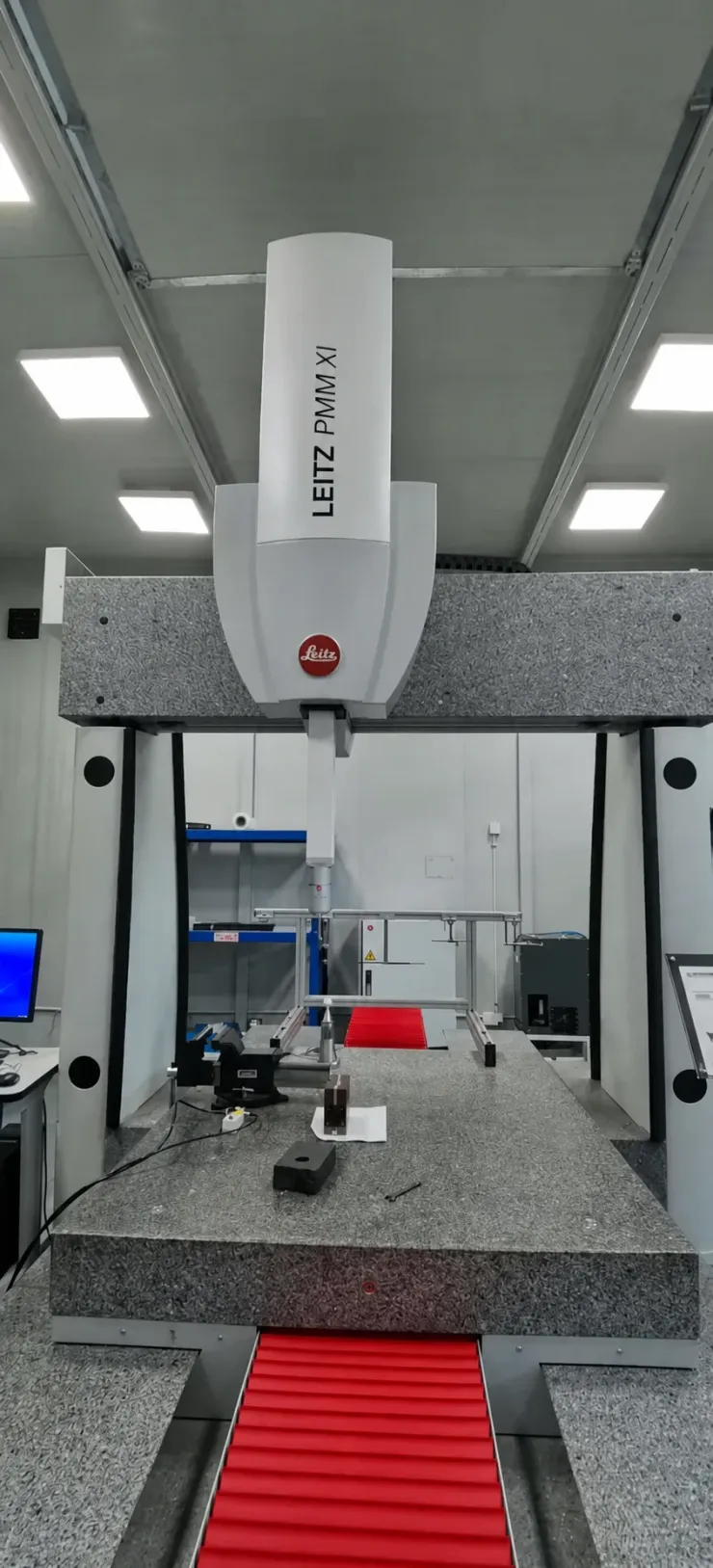
Part measurement adds a temperature lesson. A PPSU part ejected above 150 °C keeps shrinking as it cools to the 23 °C measurement standard. Condition parts fully before measuring, and compare results against the shrinkage rate built into the cavity. Gate freeze, packing pressure, and mold temperature all shift final dimensions by fractions of a percent. The site covers the baseline resin separately in the PSU material guide, and this article assumes you know where PPSU leaves PSU behind.
Properties That Drive Mold Design
Autoclave survival is where PPSU earns its medical role. Parts hold through 1,000+ cycles at typical 134 °C steam conditions, which covers years of instrument reprocessing. Steam is hot water under pressure, and PPSU's hydrolysis resistance keeps the chain intact through that punishment. Gamma doses of 25 to 100 kGy pass without chemical attack, and EtO exposure is routine. Repeated gamma darkens the amber tint, but mechanical properties hold.
Hospital chemistry sits inside the resistance envelope: detergents, disinfectants, saline, and steam condensate all pass. The exception is solvent stress cracking. Ketones, chlorinated solvents, and some aromatic hydrocarbons attack stressed parts, so confirm cleaning agents early in the program. A cleaning-agent change late in validation has scrapped more than one sterilizable device program.
Impact resistance changes the part design conversation. Where PSU forces generous radii and polished surfaces just to survive handling, PPSU absorbs real abuse. Instrument handles take torque, trays take drops, and snap-fit assemblies survive hundreds of open-close cycles. Even so, PPSU is still amorphous and notch sensitive relative to metals, so keep internal radii at 0.5 mm or more and keep ejector scars off load paths.
Thermal expansion runs 4 to 5 times tool steel, which sets hot-fit clearances for slides, pins, and inserts. A core pin centered at 25 °C is not centered at 180 °C. Differential expansion between a steel core and a hot amorphous part also explains why PPSU grips steel at ejection.
Dimensional behavior is friendly once the cavity compensates. Shrinkage of 0.6 to 0.8% is low and nearly isotropic, which simplifies cavity math compared with semicrystalline resins at 1.2 to 2.0%. Amorphous parts shrink evenly in all directions when flow is balanced. Wall thickness still does the rest: keep sections uniform and transitions gradual.
Sterilization validation belongs in the mold conversation. Autoclave cycling is a fatigue test on molded-in stress, and gamma exposure probes chemical stability. Parts molded on a cold cavity develop microcracks that only appear after cycle 200. Mold-side records of cavity temperature, gate balance, and packing become evidence for the sterilization dossier, so specify them in the mold book from day one.
Mold Design Rules: Hot Mold, Hard Steel, Polished Cavity
A PPSU mold is a 150 to 200 °C mold, and every component must tolerate the heat. Water boils at 100 °C at atmospheric pressure, so standard water circuits cannot do the job. Fit oil heating or electrical cartridge heating to the cavity plate, and add insulation plates between mold and platens to cut heat loss and protect machine hydraulics and sensors.
Heating must reach slides, cores, and inserts, not just the cavity face. A cold slide locks up or drags at every cycle. Insulation plates of 10 to 20 mm hold cavity temperature steady against a machine bed near ambient, and they earn their cost on high-cavity tools. Keep water fittings, sensors, and connector routing off the hottest faces.
Steel selection follows the wet, hot duty. Autoclave-grade molds see steam condensate, detergents, and polishing compounds, so corrosion-resistant hardened steels such as 420 ESR and S136 class are the working choice. DieStrike builds these tools in hardened steel to HRC 62, with the same corrosion-resistant spec in cavities, cores, and gate inserts. Glass-filled PPSU compounds add abrasion, so wear coatings belong on slides and shutoffs.
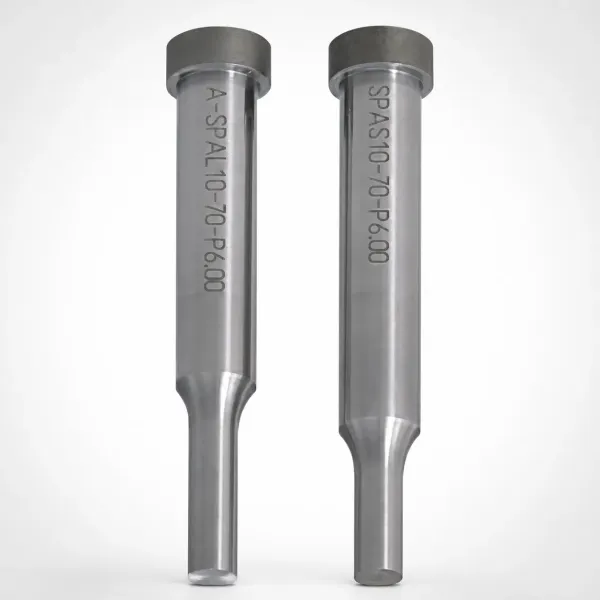
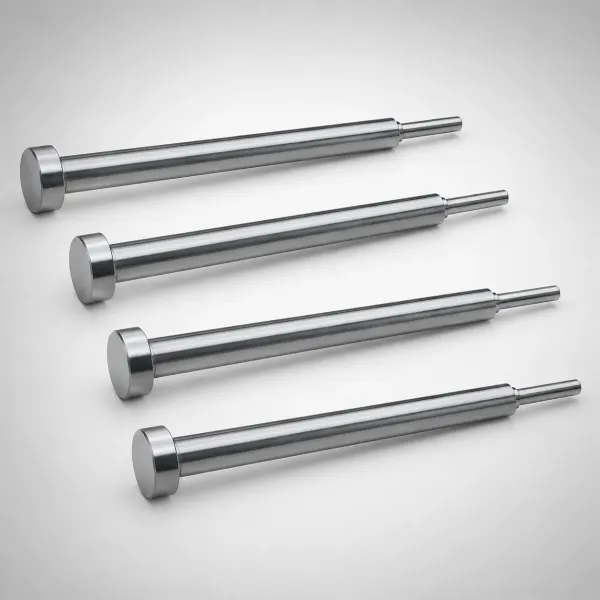
Ejection happens hot. Parts leave the cavity above 150 °C, still soft enough to stick, bend, and mark. Plan draft of 1.5 to 3 degrees per side on vertical walls, more on deep boxes. Ejector pins need polished faces and generous area, because a warm amorphous part grips steel harder than a cooled one. Add air-assist or larger pins where vacuum holds the part on the core.
Surface finish follows the part's job. Fluid paths and seal areas need mirror polish, SPI A2 or better, because the cavity finish transfers directly to the part and steam deposits cling to rough walls. The medical mold steel guide covers the alloy logic, and the mold polishing guide covers the SPI A1 to A3 sequence for these cavities.
Gate and runner design follows melt viscosity. Use full-round runners sized for the flow length, with draft so the shot releases cleanly. Edge and tunnel gates need generous lands and a depth of 60 to 80% of wall thickness. Gate location decides weld lines, so place the knit away from seal faces and loaded features. A weld line under a handle grip is cosmetic; a weld line on a latch beam is a crack waiting for autoclave cycle 400.
Venting is a quality gate at 370 to 390 °C melt. Vent depth runs 0.02 to 0.04 mm at the parting line and shallower on ejector pins. Undersized vents cause burn marks and short shots, while oversized vents flash a melt this thin. Keep vent lands polished and short, 3 to 5 mm, because PPSU flash welds to the part and resists removal.
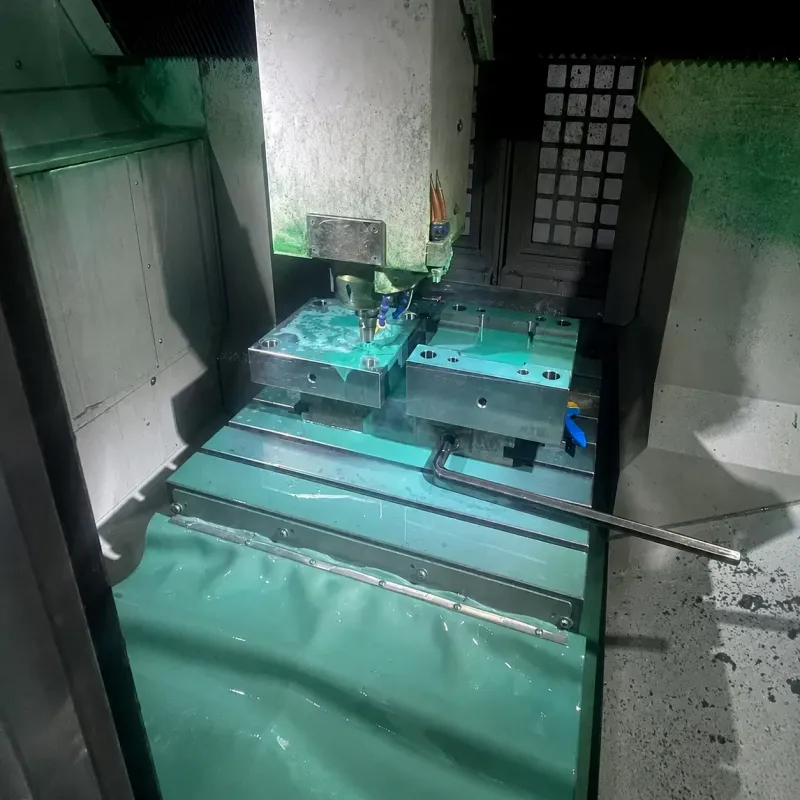
Hot operation changes fits from the drawing. A cavity and slide fitted at 25 °C moves when the mold runs near 180 °C. Allow thermal expansion in slide clearances, ejector alignment, and core-pin fits, or parts stick and pins bind. Cooling layout must keep cavity temperature even, because a 20 °C gradient across the plate bows every part the same way.
Hot-runner systems shorten cycles and open gate placement options. PPSU runs through open or valve gates when the manifold holds no dead spots above 400 °C. If the program cannot justify a hot runner, keep the cold runner large and the sprue drafted. Either way, shrinkage compensation follows the grade data, and gate balance across 8 to 32 cavities decides part-to-part consistency.
Processing Window for PPSU
The processing window is wide but unforgiving at its edges. Melt temperature runs 360 to 400 °C, with 370 to 390 °C the typical working range. Below 360 °C the melt is too stiff to fill thin sections. Above 400 °C, residence time must stay short or the resin degrades into black specks.
Mold temperature holds 150 to 200 °C, matched to wall thickness and flow length. Cold molds freeze in stress, weaken weld lines, and shift dimensions. Hot molds relax orientation, fill thin walls, and reproduce the shrinkage the cavity assumed. The hotter end of the range suits thin walls and long flow lengths.
Drying is non-negotiable. Dry pellets 3 to 5 hours at 135 to 150 °C to below 0.02 to 0.05% moisture, with 0.02% the safer process target. Wet resin hydrolyzes at melt temperature and shows up as splay, streaks, and brittleness. An under-dried silo can scrap a full shift before the first part is read.
Residence time is the quiet killer in PPSU molding. Balance shots so melt does not linger above 380 °C in barrel or manifold. Injection pressure runs high because viscosity is high, so machine capacity must cover the fill. DieStrike stocks standard hot-tool components and ships them in 3 to 7 days for fast-track programs.
| Parameter | Typical Range | Mold-Side Impact |
|---|---|---|
| Melt temperature | 360-400 °C (370-390 typical) | Gates and runners must move a stiff, hot melt |
| Mold temperature | 150-200 °C | Oil or electrical heating; water cannot reach this range |
| Drying | 3-5 h at 135-150 °C to below 0.02-0.05% moisture | Wet pellets cause splay, streaks, and brittleness |
| Mold shrinkage | 0.6-0.8% (nearly isotropic) | Sets cavity compensation and tolerances |
| Vent depth | 0.02-0.04 mm | Stops burn marks and short shots at high melt temperature |
← swipe to scroll →
Table: Typical published processing values for PPSU injection-molding grades. Confirm with your grade datasheet before cutting steel.
A cavity pressure curve is the best PPSU process monitor. Repeatable fill and pack curves predict dimension and autoclave survival better than shot weight alone. Record the curve at T1 sampling so validation and production compare against the same fingerprint.
PPSU Defects: Mold-Side Root Causes
PPSU defects trace to five mold-side root causes: cold cavities, small gates, thin or worn vents, wet pellets, and hot uneven steel. When a defect shows up, inspect the tool before blaming the resin.
Short shots follow restricted flow. Undersized gates, skinny runners, or a cavity below 150 °C stop the melt early. Fix with larger gates, full-round runners, and a hotter cavity. A flow-length check on runner diameter before steel saves a full tool revision later.
Flash follows vents cut too deep or a worn shutoff. Hold parting-line vents at 0.02 to 0.04 mm and re-cut lands that have opened up. Check clamp tonnage too, because PPSU fills at high injection pressure.
Weak weld lines follow gate placement and a cold mold. Amorphous PPSU cannot heal a knit, so treat every weld as a design seam. Move gates to push the weld off seal faces and loaded features. Raising mold temperature toward 180 to 200 °C also strengthens the knit.
Splay, streaks, and brittleness usually mean wet resin. Moisture below 0.02 to 0.05% is the target; hydrolysis at 370 °C and above turns pellets into bubbles and short chains. Re-dry the material, check the dryer, and purge the barrel after any idle period.
Black specks follow degraded resin. PPSU holds above 360 °C for the whole cycle, so manifold dead spots and long residence carbonize droplets. Purge with a cleaning compound and open every stagnant flow path.
Gate blush and stress marks follow high shear at a small gate. Enlarge the gate and polish the land, because rough steel tears the melt at 380 °C. Cold cavities add frozen-in stress, and parts later crack at the gate line during autoclave cycling.
Sticking and pin marks follow hot ejection. Parts leaving above 150 °C need draft of 1.5 degrees or more and mirror-polished cores. Add ejector area on deep ribs, and time ejection so the part releases before it grips.
Warpage follows uneven heating in a hot mold. A cavity at 200 °C on one side and 150 °C on the other bows every part identically. Balance the heating layout and keep thick-to-thin transitions under a 2 to 1 ratio.
Autoclave microcracks are the late-stage defect. Parts that look clean at trial crack after cycle 200 when molded-in stress was high. Hot cavities, balanced packing, and generous radii are the only mold-side defenses. Every fix in this section is a drawing change, which is why PPSU quality starts at mold design, not at the press.
PPSU vs PSU vs PEI: Choosing the Tough Sterilizable Resin
PPSU is the middle rung of the sterilizable ladder. PSU costs less and covers lighter duty. PEI sits near PPSU on heat but far below it on impact. PEEK outruns all three on temperature and chemicals at 5 to 10 times the resin price. This comparison uses typical published values for unfilled grades.
PSU is the entry point, and the site covers it in full. PPSU adds about 35 °C of heat capability and roughly 8 to 10 times the notched impact for a resin premium in the 2 to 3 times range. That premium buys trays that survive drops, handles that survive torque, and assemblies that survive reprocessing without cracks.
PEI is the closest heat neighbor. It shares amorphous behavior, adds stiffness, and costs in a similar range, but its notched Izod near 50 J/m leaves it brittle in impact duty. Choose PEI when the part holds dimensional stiffness near heat sources. Choose PPSU when the part gets hit, twisted, or dropped. The mold rules differ mainly in PPSU's hotter cavity and thicker melt.
| Property | PPSU | PSU | PEI (Ultem) |
|---|---|---|---|
| Polymer type | Amorphous | Amorphous | Amorphous |
| Glass transition (Tg) | ~220 °C | ~185 °C | ~217 °C |
| HDT at 1.82 MPa | ~207 °C | 170-175 °C | 200-210 °C |
| Continuous service | ~180 °C | ~150 °C | ~170 °C |
| Notched Izod (unfilled) | 600-700 J/m | ~70 J/m | ~50 J/m |
| Mold shrinkage | 0.6-0.8% | 0.6-0.7% | 0.5-0.7% |
| Density | ~1.29 g/cm³ | ~1.24 g/cm³ | ~1.27 g/cm³ |
| Melt temperature | 360-400 °C (370-390 typical) | 330-380 °C (340-370 typical) | 370-400 °C |
| Mold temperature | 150-200 °C | 100-160 °C | 120-180 °C |
| Autoclave at 134 °C | 1,000+ cycles | 1,000+ cycles | 1,000+ cycles |
| Relative resin cost | ~2-3x PSU | Baseline | ~2-3x PSU |
← swipe to scroll →
Table: Typical published values for unfilled injection-molding grades. Autoclave counts reflect typical datasheet claims; validate your own part. Resin cost is a typical market range and varies by grade, volume, and region.
The mold verdict stays simple. All three resins need hot, hardened, well-vented, corrosion-resistant tools. PPSU asks for the hottest cavity of the amorphous trio and the largest gates relative to wall thickness. Buyers who compare datasheets without comparing mold requirements miss the real cost driver. Ask the molder for the grade's published shrinkage, HDT, and impact figures up front.
PPSU Applications: Reusable Sterilizable Medical Devices
Reusable sterilizable devices are PPSU's home turf. Typical parts include surgical instrument handles, sterilization trays and containers, valve bodies, fluid-path housings, and dental tool handles. They must hold dimensions and toughness through 1,000+ autoclave cycles and survive daily handling, so the resin debate closes early. The debate that remains is the mold.
Instrument handles explain the PPSU premium better than any datasheet. A handle takes torque during surgery, detergent baths, steam cycles, and drops onto a stainless table. PSU handles survive until the first impact; PPSU handles take the impact and keep going. Handles also hide knit lines poorly, so gate placement decides where the cosmetic weld lands.
Sterilization trays and containers carry the same story in bigger geometry. Tray walls run 2 to 3 mm typical, with long flow lengths and corner ribs that act as drop protection. A 24-cavity tray-latch tool depends on gate balance and cavity temperature for every one of its 1,000+ cycle years. Flow analysis pays for itself before steel is ordered.
Valve bodies and fluid-path housings add the surface-finish conversation. Natural PPSU's amber translucency lets operators see fluid level and contamination, but only if the cavity is polished. Mirror polish at SPI A2 or better transfers to the part, keeps steam deposits from clinging, and makes the flow path inspectable. Ra 0.4 µm or better on the cavity is the working spec where flow contact matters.
Dental tools follow the same mold logic with smaller geometry. Thin-wall housings, fine ribs, and molded-in channels push core and cavity steel to the limit. Draft angles that look generous on paper still bind at 180 °C ejection if the steel is unpolished. Every application in this list is a hot-mold problem first and a resin problem second.
FAQ: PPSU Injection Molding
Q1. How many autoclave cycles can PPSU parts survive?
Datasheets and published reports cite 1,000+ cycles for PPSU parts under typical 134 °C steam conditions. Cycle count depends on part geometry, molded-in stress, and water quality, so validate your own device. Dimensional checks every 100 cycles catch drift before it matters.
Q2. Why must a PPSU mold run at 150 to 200 °C?
A cold cavity freezes in stress and produces weak welds, warpage, and off-spec shrinkage. PPSU's Tg sits near 220 °C, so the part must cool slowly enough to relax orientation. A hot mold also lets a thick melt fill thin walls before it freezes off, and it reproduces the shrinkage the cavity assumed.
Q3. What shrinkage do I use to compensate the cavity?
Start with 0.6 to 0.8% for typical unfilled grades, then confirm the exact value on the grade datasheet. Glass-reinforced versions shrink less and lose most of the impact advantage. PPSU shrinks nearly isotropically, so the same rate applies across the cavity when flow is balanced. Record the compensated cavity size on the drawing so trials and validation compare against the same number.
Q4. Can an existing PSU mold run PPSU?
Sometimes, but never assume. PPSU needs a melt 30 to 50 °C hotter and a cavity 40 to 90 °C hotter, so confirm the heating system can hold 150 to 200 °C evenly, the steel is corrosion-resistant, and the O-rings and seals survive. Gates sized for PSU may starve PPSU, and the 0.1% shrinkage difference between the grades moves tolerance limits. Review the tool drawing before you commit steel to resin.
Q5. Is PPSU really 8 to 10 times tougher than PSU?
On typical published notched Izod values, yes: 600 to 700 J/m for unfilled PPSU against about 70 J/m for PSU. Real parts still need radii of 0.5 mm or more, because amorphous resins concentrate stress at sharp corners regardless of the datasheet number. The toughness advantage shows up in handling abuse and repeated sterilization, not in forgiving a bad tool.
Q6. What moisture target do I dry PPSU to?
Dry 3 to 5 hours at 135 to 150 °C to below 0.02 to 0.05% moisture, with 0.02% the safer process target. Wet pellets hydrolyze at 370 °C and above, showing up as splay, streaks, and brittleness in the part. Check the dryer's dew point before blaming the mold.
The Bottom Line
PPSU is the sterilizable resin that asks the mold to run hot and the steel to stay clean. The whole game is a cavity at 150 to 200 °C, oil or electrical heating, corrosion-resistant hardened steel, gates sized for a thick melt, and vents at 0.02 to 0.04 mm.
Compensate cavities for 0.6 to 0.8% shrinkage, dry to below 0.02% moisture, polish fluid paths to SPI A2 or better, and 1,000+ autoclave cycles take care of themselves. Mold buyers who specify these numbers up front skip the trial failures that repurposed PSU or nylon tools deliver. Ask for the mold book: cavity temperature records, vent depths, and gate balance data prove the tool was built for PPSU, not adapted to it.
DieStrike builds PPSU and medical tooling under IATF 16949 across 120+ machines. Molds ship in 2 to 5 weeks with geometry at ±0.005 mm standard and ±0.002 mm precision. Connector and device OEMs including TE Connectivity, Amphenol, and Luxshare run programs on the same discipline.
KEEP READING
Related Reading
PSU Injection Molding: Sterilizable Medical Material Guide
PSU is the cost-baseline sibling in this family: Tg near 185 °C, notched Izod near 70 J/m, and the same hot-mold discipline. Read both before you pick.
Read articleArticleHow to Select Mold Steel for Medical-Grade Molds
Corrosion-resistant cavity steel decides tool life under wet autoclave duty. 420 ESR and S136 class choices for sterilizable resin molds.
Read articleArticleMedical Injection Molding Guide: Materials, Tolerances & Compliance
Medical tooling runs on tolerance, material, and validation discipline. Sterilizable resins and IATF-level process control in one read.
Read articleServiceMold Trial & T1 Sampling
Professional mold trial with T0/T1/T2/Tf milestones, defect diagnosis, and dimensional validation before your PPSU mold ships.
Read articleNEXT STEP
Ready to Start Your Mold?
Send us your element dimensions or part numbers — our team responds within 24 hours with pricing and lead time.

Written by
Ray ChanMold Buyer's Guide Author · Precision Mold Manufacturing Specialist. Ray helps global importers, distributors and OEMs source factory-direct molds and mold parts.