
Soft Tooling Vs Hard Tooling
Table of Contents
The wrong tooling decision can burn the budget and the schedule at the same time. A DieStrike customer approved a $42,000 steel production mold for a connector housing that sold only 700 units in its first year. The tool now sits in storage, and that program effectively paid $60 per part. The opposite failure is just as common. A prototype aluminum mold pushed to 20,000 shots wears through at shot 4,300. Flash appears on the parting line, and the contract manufacturer eats $11,000 in sorting and rework.
Both outcomes trace back to one question: soft tooling or hard tooling? This guide answers it with real numbers, covering production volume, cavity life, tolerance, cost, and lead time for each route. It also walks through rapid tooling and prototype tooling, the umbrella terms that confuse most buyers. You will finish with a decision matrix that maps your part, resin, and forecast to the right tooling path.
DieStrike builds this comparison from daily shop-floor data. We are an IATF 16949 precision mold maker running 120+ machines. We hold critical mold dimensions to ±0.005mm and heat-treat cavities to HRC 62. Standard mold components such as ejector pins, core pins, sprue bushings, and punches ship in 3-7 days. We see the soft-versus-hard decision every week, and this article is the framework our engineers use in those conversations.
The Snapshot
- Soft tooling: 100-1,000 parts, $3,000-8,000 tool cost, 1-3 week lead, ±0.1mm tolerance, 500-5,000 shot cavity life.
- Hard tooling: 100,000+ parts, $15,000-100,000+ tool cost, 4-8 week lead, ±0.005mm tolerance, 100,000-1,000,000+ shot life.
- Unit cost crossover: at roughly 5,800 parts the steel tool pays back versus the aluminum tool in the worked example below.
- Glass-filled resins: 30% GF PA66 cuts an aluminum cavity's life from about 5,000 shots to 1,200-2,000 shots.
- Design iteration cost: a soft tool re-cut runs $500-2,000, while a hardened steel re-cut runs $2,000-8,000.
Soft tooling is prototype tooling built from materials that are fast to machine and cheap to replace. The cavity is typically CNC-machined from 7075-T6 aluminum, sometimes cast in aluminum-filled epoxy or RTV silicone. Occasionally it is built with 3D-printed polymer inserts for complex cooling geometry. It exists to get real injection-molded parts into your hands in weeks, not months.
The numbers explain its appeal. A 7075-T6 aluminum cavity block costs $3,000-8,000 fully machined and delivers first parts in 1-3 weeks. The material hardness is around 150 HB, far below tool steel. Its thermal conductivity of about 130 W/m·K is more than four times that of P20 steel at roughly 29 W/m·K. That conductivity shortens cooling time, and a soft tool often runs a 20-40% shorter cycle than an equivalent steel cavity in the same resin.
Life is the trade-off. An aluminum cavity survives 500-5,000 shots depending on resin and maintenance. With unfilled PP, PE, or ABS and careful handling, 5,000 shots is realistic. Switch to 30% glass-filled PA66, and the same cavity may be finished at 1,200-2,000 shots. The glass fibers act as abrasive on the cavity wall. Soft tooling is a volume play, and its volume ceiling is real.
Soft tooling suits design verification, functional prototype testing, pilot batches, trade-show samples, and pre-production submissions. It also tolerates design iteration. A re-cut on an aluminum cavity costs $500-2,000 and takes days, which is why teams expecting two or three design changes usually start soft.
Three variants cover most prototype tooling orders. RTV silicone molds suit low-pressure casting of small batches under 100 parts. Aluminum-filled epoxy cavities handle cosmetic low-volume parts that need a harder surface than pure resin. CNC-machined 7075-T6 aluminum blocks are the workhorse, holding detail and tolerances that cast tooling cannot.
Machining a soft cavity takes 2-5 days of spindle time on a typical program. A single cavity with straight cooling channels is the norm, and the mold base is usually a standard 2330 or 2738 frame from stock. Total soft tool cost lands at $3,000-8,000 including the base, the cavity, and one round of sampling.
What Is Hard Tooling?
Hard tooling is production tooling machined from hardened tool steel and built for a decade of duty. The cavity materials are the standard die steel family. P20 arrives pre-hardened at 28-32 HRC, and S136 (1.2083) runs 48-52 HRC with corrosion resistance for aggressive resins. SKD11 (D2) at 58-62 HRC handles abrasive wear, while H13 hot-work steel suits high-temperature molding. Production tools also run multi-cavitation, from 2 to 32+ cavities, and often carry hot runner systems to eliminate cold-runner scrap.
The capacity numbers define the class. A hard tool holds critical dimensions to ±0.005mm, and premium mold builders hold mold component geometry to ±0.002mm. Cavity life runs 100,000 to 1,000,000+ shots, with wear-resistant coatings such as TiN or CrN extending life 2-3 times on abrasive programs. Surface finish reaches SPI A-2 mirror grade. Hardened cavities hold that finish for the life of the tool, instead of polishing out after a few thousand shots.
Cost and lead time scale with capability. A production tool runs $15,000-100,000+ and takes 4-8 weeks, sometimes more with complex hot runner layouts or unscrewing mechanisms. Quality systems also enter the picture. Programs that require PPAP Level 3 submission, Cpk ≥ 1.33, and IATF 16949 certification cannot be supported by a soft tool. The process window is not stable enough over a long run.
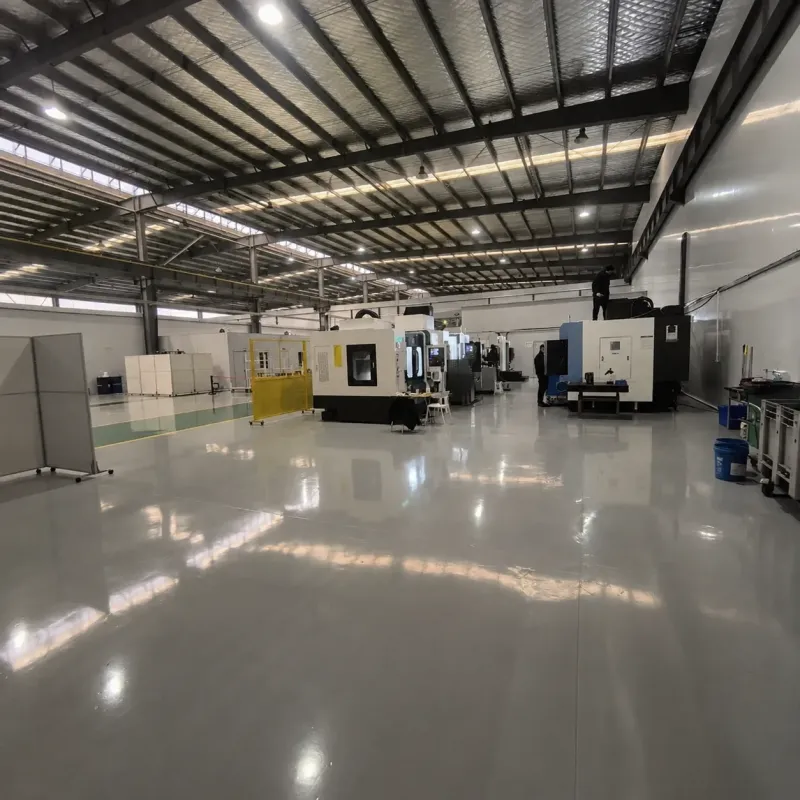
At DieStrike, hard tooling is the daily core. Our 120+ machines build plastic injection molds in 2-4 weeks and stamping dies in 2-5 weeks. Cavity steel is heat-treated to HRC 62, and critical dimensions are verified at ±0.005mm. Our standard mold components, including ejector pins, core pins, sprue bushings, hot runner systems, springs, leader pins, punches, and mold bases, ship in 3-7 days. This production depth is why TE Connectivity, Amphenol, Luxshare, and Dongshan Precision programs run on our tooling.
Soft Tooling vs Hard Tooling: Spec-by-Spec Comparison
The table below compresses the two routes into a side-by-side spec sheet. Read it against your own part requirements, not against a generic checklist.
| Dimension | Soft tooling | Hard tooling |
|---|---|---|
| Production volume | 100-1,000 pcs (bridge tools to 10,000) | 100,000+ pcs |
| Cavity life | 500-5,000 shots | 100,000-1,000,000+ shots |
| Cavity material | Aluminum 7075, resin, pre-hard steel | P20, S136, SKD11, H13 |
| Tool cost | $3,000-8,000 | $15,000-100,000+ |
| Lead time | 1-3 weeks | 4-8 weeks |
| Tolerance | ±0.1mm typical | ±0.005mm achievable |
| Injection pressure | 70 MPa safe ceiling | 100-180 MPa |
| Surface finish | SPI C-3 to B-2 | SPI A-2 to B-1 |
| Cavitation | 1 (rarely 2) | 2-32+ |
| Resin compatibility | PP, PE, ABS, PC at low fill | All resins, incl. 30-50% GF, LCP, PEEK |
| Design iteration cost | $500-2,000 per re-cut | $2,000-8,000 per re-cut |
← swipe to scroll →
Values are typical industry figures for standard tooling programs; verify against your part geometry, resin, and mold builder.
The pattern is clear. Soft tooling buys speed and flexibility at the low-volume end. Hard tooling buys precision, throughput, and stability at scale. The next two sections turn that pattern into a decision rule.
Read the matrix against three questions. How many parts will this program really sell in the first twelve months? What is the tightest tolerance on the drawing? Which resin family is specified? Two soft-tooling answers and one hard-tooling answer usually settle the route.
The matrix also shows why hybrid programs exist. A soft tool validates the design while a hard tool is quoted and ordered in parallel. The validation data feeds the production tool, and the soft tool becomes a bridge mold that absorbs early sales volume.
When to Use Soft Tooling
Soft tooling wins when the question is about the product, not the process. If you still need to validate fit, function, feel, or market demand, paying $40,000 for a steel tool is premature. The decision rules below carry numbers so you can test your program against them.
Forecast volume under 1,000 parts. A $5,000 aluminum tool amortizes to $5-50 per part across 100-1,000 units. The same program on a $40,000 steel tool starts at $400 per part before molding costs, a ratio no controller will sign. Below 1,000 forecast units, soft tooling is the default.
Design is still moving. Functional prototypes for snap-fit engagement, drop testing, or thermal cycling usually reveal two or three geometry changes. Each aluminum re-cut costs $500-2,000 and takes days. Each hardened-steel re-cut costs $2,000-8,000, plus re-polishing and re-coating, and burns weeks. If change is likely, iterate on soft tooling.
Short program windows. Trade shows, clinical sample submissions, and UL pre-testing do not wait for an 8-week steel tool. A 1-3 week soft tool puts parts on the table now. Some teams pair this with a 3D-printed insert featuring conformal cooling. It cuts cycle time 25-40% and offsets the aluminum tool's wear risk on shorter runs.
Pilot and field testing. A 200-2,000 piece pilot across real customers surfaces quality issues that bench testing misses. The cost of a soft tool here is a rounding error against the cost of recalling a production run. Run the pilot, capture the data, then freeze the design for steel.
Soft tooling has hard limits. Keep part walls above 1.0mm, because thin walls deflect an aluminum cavity under pressure. Keep resin unfilled or low-fill, and respect the 70 MPa injection pressure ceiling. If your part needs ±0.05mm or tighter, or 30%+ glass fill, the soft route is not viable regardless of volume.
When to Use Hard Tooling
Hard tooling wins when volume, tolerance, or compliance makes the per-part economics work. The crossover is not a feeling, it is arithmetic, and the arithmetic favors steel faster than most buyers expect.
Forecast volume above 50,000 parts. A $40,000 steel tool at 100,000 units amortizes to $0.40 per part. The same volume through a soft tool means repeated cavity rebuilds, each $3,000-8,000, with scrap accumulating at every wear failure. Above 50,000 units, hard tooling is rarely a debate.
Tolerance at or below ±0.05mm. Mating surfaces, press-fit diameters, and optical features do not survive aluminum cavity wear. A hard tool holds ±0.005mm on critical dimensions through 1,000,000 shots, and Cpk ≥ 1.33 keeps the process inside the spec band. If your drawing carries a ± symbol tighter than 0.05mm, plan for steel.
Engineering and abrasive resins. PEEK, LCP, and 30-50% glass-filled PA66 require 100-180 MPa injection pressure and punish soft cavities. SKD11 at HRC 58-62 with a TiN or CrN coating handles them for hundreds of thousands of shots. The material selection on the cavity must match the resin on the part, and the hard tooling route is the only match for high-performance polymers.
Compliance-driven programs. Automotive and medical supply chains demand PPAP Level 3, IATF 16949, and documented process capability. A soft tool cannot hold a stable process window over a long run, so the audit fails before the first shipment. PPAP Level 3 alone means 18 required elements, from design records to control plans, and each one needs a stable process behind it. Cpk ≥ 1.33 is the common capability gate, and a wearing aluminum cavity cannot sustain it. If the customer's quality manual is 200 pages, the tool is steel.
Multi-cavity economics. At 8, 16, or 32 cavities, a single machine cycle produces a batch of parts, and cycle cost drops with every added cavity. This is where our mold-making services earn their keep, with hot runner systems and precision standard components sized for high cavitation.
Rapid Tooling and Rapid Injection Molding
Rapid tooling is the umbrella over every technique that shortens the path from CAD to molded part. Prototype tooling, soft tooling, bridge tooling, and 3D-printed tool inserts all sit under it. Rapid injection molding is the molding service that runs on those rapid tools, typically producing 10-10,000 parts with production resins and production-like process settings.
The lead-time ladder is the practical map. Soft tooling delivers first shots in 1-3 weeks. Conventional hard tooling runs 4-8 weeks. Bridge tooling slots between them, an aluminum or low-cavity steel tool built for 1,000-10,000 parts. It keeps a launch moving while the production tool finishes. A typical program sequence is soft tool for validation, bridge tool for market entry, then hard tool for scale.
Rapid tooling also includes a harder variant worth knowing. Conformal cooling channels printed into steel inserts cut cycle time 25-40% compared with straight-drilled channels, and they survive production volumes. This is rapid hard tooling, and it quietly erases the old rule that fast tooling must be soft. If your program needs both speed and volume, ask your mold builder about printed inserts before defaulting to aluminum.
A typical rapid injection molding program runs in five steps. The CAD model is checked for draft, wall thickness, and gate placement. The cavity is machined from 7075-T6 aluminum or cut with printed inserts. First shots land within 1-3 weeks of order release. The first 50 parts are dimensionally checked against the drawing. The remaining quantity is molded in one or two shifts.
The same program on a hard tool adds two steps. Cavity steel is hardened and tempered to spec, and the tool runs first-article inspection with a full dimensional report. That is why hard tooling lead times run 4-8 weeks, and why the program economics, not the calendar, should drive the choice.
Know where rapid tooling fails. It does not fix a bad part design, hold ±0.005mm, or support 30%+ glass-filled engineering resins over a long run. It is a time-to-market instrument, not a quality system. Our engineering blog covers these limits in depth, including shrinkage behavior and cooling design for short-run molds.
The Hidden Trade-offs: Material, Tolerance, and Unit Cost
The spec sheet shows the headline numbers. The hidden trade-offs live in the cavity material, in tolerance drift, and in the unit cost curve, and they change the decision at the margins.
Cavity material physics. Aluminum cools fast but wears soft. Steel wears slow but needs careful heat treatment and thermal management. The table below compares the five cavity materials most mold builders actually quote.
| Material | Hardness | Thermal conductivity | Corrosion resistance | Cost index | Typical cavity life |
|---|---|---|---|---|---|
| 7075-T6 aluminum | ~150 HB | ~130 W/m·K | Fair | 1.0 | 500-5,000 shots |
| P20 (pre-hardened) | 28-32 HRC | ~29 W/m·K | Good | 1.6 | 100,000-300,000 shots |
| S136 / 1.2083 | 48-52 HRC | ~24 W/m·K | Excellent | 2.4 | 300,000-800,000 shots |
| SKD11 / D2 | 58-62 HRC | ~20 W/m·K | Good | 2.6 | 500,000-1,000,000+ shots |
| H13 hot-work steel | 44-52 HRC | ~28 W/m·K | Good | 2.2 | 200,000-500,000 shots |
← swipe to scroll →
Values are typical published material data; cost index is relative to 7075-T6 aluminum at 1.0.
Tolerance drift is the silent killer. An aluminum cavity does not fail suddenly. It opens up 0.02-0.05mm over its life as edges erode, so parts leave the process window gradually. If your customer measures every batch, the first 500 parts pass and shot 3,000 fails. Steel cavities hold dimension for the full run, which is why automotive and medical programs refuse soft tooling outright.
Surface finish decays with wear. A soft tool polished to SPI B-2 will not stay there. Abrasive resins erode the polish, and weld-line and flash defects appear at the parting line after a few thousand shots. Hardened steel with a coating keeps SPI A-2 mirror surfaces through 100,000+ shots. Our material selection guides detail which steel pairs with which resin family.
The unit cost crossover decides the winner. Work one example. A $5,000 soft tool at $8.00 per molded part versus a $40,000 hard tool at $2.00 per part.
| Volume | Soft route total cost | Hard route total cost | Better route |
|---|---|---|---|
| 100 pcs | $5,800 | $40,200 | Soft |
| 1,000 pcs | $13,000 | $42,000 | Soft |
| 5,833 pcs | $51,664 | $51,666 | Tied |
| 10,000 pcs | $85,000 | $60,000 | Hard |
| 100,000 pcs | $805,000 | $240,000 | Hard |
← swipe to scroll →
Values are typical worked-example figures for a $5,000 soft tool versus a $40,000 hard tool; recalculate with your own quotes.
The breakeven lands at about 5,833 parts, and the hard route never looks back after 10,000. Run this calculation with your actual quotes and your actual part price, because the crossover point moves with both. The decision matrix below generalizes the result.
The Decision Matrix: Soft or Hard in Six Minutes
Use the matrix as a first-pass filter. Score your program against each row, and the pattern will point to one route. When the rows split, run the cost crossover from the previous section with your real numbers.
| Decision factor | Choose soft tooling if | Choose hard tooling if |
|---|---|---|
| Forecast volume | 1,000 pcs or less | 50,000 pcs or more |
| Tolerance | ±0.10mm or looser accepted | ±0.05mm or tighter required |
| Resin family | Unfilled PP, PE, ABS, PC | 30-50% glass-filled, LCP, PEEK |
| Surface finish | SPI B-2 or rougher | SPI A-2 mirror or textured |
| Time to first parts | 1-3 weeks needed | 4-8 weeks acceptable |
| Design maturity | 2+ iterations expected | Design frozen |
| Compliance | No PPAP requirement | PPAP Level 3, IATF 16949 |
| Unit cost target | Above $5-8 per part acceptable | Below $2-3 per part required |
← swipe to scroll →
Values are typical decision thresholds; weight them by your program's actual constraints.
Three rules cover most real programs. First, volume under 1,000 always starts soft. Second, volume above 50,000 always ends hard, and the only question is cavity count. Third, the 1,000-50,000 band is where the math matters, so price both routes and compare total cost at your midpoint forecast.
Two rows override everything else. If the drawing demands ±0.05mm or tighter, or the resin carries 30%+ glass fill, choose hard tooling regardless of volume. And if the customer requires PPAP or IATF 16949, the decision is made before the meeting starts.
Before you commit, run three checks. Confirm the forecast with the sales team, not the founder's optimism. Verify the drawing tolerance against the chosen cavity material. And price the second tooling round, because successful products usually need a second cavity set within two years.
A final planning note: when hard tooling is committed, lock the mold base, hot runner, and standard components early. They sit on the critical path. Our stamping die lead time is 2-5 weeks, and plastic mold lead time is 2-4 weeks. Standard components ship in 3-7 days, so a tight program can stay on schedule if the sequencing is right.
Soft Tooling vs Hard Tooling: FAQ
Q1. How many shots does a soft tool last?
Typically 500-5,000 shots. Unfilled PP, PE, and ABS reach the top of that range, while 30% glass-filled PA66 can cut life to 1,200-2,000 shots. Regular polishing and cavity repair extend the count, but budget for replacement once edges erode.
Q2. Can you convert a soft tool into a hard tool?
No direct conversion. The cavity must be remachined in steel, but the mold base, ejector layout, and part geometry transfer, which saves 10-20% of the new tool cost. Plan the conversion as a separate hard-tooling program.
Q3. What is bridge tooling, and when does it make sense?
Bridge tooling is an aluminum or low-cavity steel tool built for 1,000-10,000 parts. It makes sense when the 4-8 week hard tool lead exceeds your launch window, letting you sell real parts while the production tool finishes.
Q4. At what volume does hard tooling pay for itself?
In the worked example above, the crossover is about 5,833 parts. Above 10,000 parts, the hard route wins decisively. Recalculate with your tool quotes and part price, because the breakeven moves with both.
The Final Call
The real risk is not choosing the wrong technology. It is paying production-tool prices for prototype volumes, or pushing a 5,000-shot aluminum cavity past 20,000 parts. DieStrike builds IATF 16949 steel tooling, stamping dies, and standard mold components, so your production path is covered from the first pilot run.
Send us your part drawing and target volume, and our engineers will return a tooling recommendation with a cost breakdown within 48 hours. If the volume is already clear, request a quote for production tooling or standard mold components. We will confirm the build plan the same week.
KEEP READING
Related Reading
5 Mold Cooling Channel Design Tips for Faster Cycles
Mold maker's 5 cooling channel design rules: channel-to-cavity distance 2-2.
Read articleArticle5 Shrinkage Compensation Rules for Mold Design
Shrinkage compensation decides mold accuracy. Five rules: material rates from 0.3% to 2.
Read articleArticle5 Ways to Reduce Mold Cost Without Cutting Quality
Five proven ways to reduce injection mold cost without cutting quality: DFM before quoting, right-sized cavity count,…
Read articleArticle7 Gate Design Best Practices for Balanced Filling
Mold maker's 7 gate design rules for balanced multi-cavity filling: gate depth 50-80% of wall thickness, land 0.5-1.
Read articleNEXT STEP
Ready to Start Your Mold?
Send us your element dimensions or part numbers — our team responds within 24 hours with pricing and lead time.

Written by
Ray ChanMold Buyer's Guide Author · Precision Mold Manufacturing Specialist. Ray helps global importers, distributors and OEMs source factory-direct molds and mold parts.