
Tritan Copolyester Injection Molding: Mold Design Guide
Table of Contents
A 180 mm tall Tritan sports bottle drops out of the mold with the label panel bowed 0.6 mm out of flat. The cavity was compensated with a 1.5% shrinkage allowance copied from a polycarbonate datasheet, but Tritan shrinks 0.55-0.7%, so every dimension came out on the wrong side of tolerance. The first 10,000-piece production run yields roughly 1,400 rejects, a 14% scrap rate on a part that retails for under two dollars. The fix is a steel re-cut that adds weeks. That failure is a drawing error, not a molding error, and it is the reason this guide exists.
Tritan is Eastman's brand of copolyester, an amorphous, BPA-free engineering resin built for food-contact products. It sits behind the clear water bottles, baby bottles, food-storage containers, blender jars, and small-appliance parts that need glass-like clarity, dishwasher survival, and no bisphenol-A. For the mold engineer the material looks easy on paper: amorphous resins shrink less than semicrystalline ones and flow predictably. The failures hide in the details, and nearly all of them are mold-side details: gate placement, cavity finish, venting depth, and cooling balance.
This guide is written for mold buyers, tooling engineers, and manufacturing engineers. It walks from the properties that set the tooling agenda, through the mold decisions that decide scrap and cycle time, into the processing window the tool must survive. It ends with defects traced to their mold-side root causes. Numbers follow typical published values for injection-molding grades; your grade datasheet overrides them, and test methods are named where they matter.
The Snapshot
- Tritan is Eastman's copolyester: amorphous, BPA-free, and FDA food-contact compliant (21 CFR 177.1315), with light transmission around 90%.
- Mold shrinkage is 0.55-0.7%, about half the allowance of semicrystalline PET, so cavities are compensated tight and mostly isotropic.
- HDT is 94-109°C at 1.82 MPa (ASTM D648), which is what makes Tritan dishwasher-safe; mold temperature stays a modest 35-65°C.
- Density is 1.18 g/cm³ and the melt window is 260-292°C; dry the resin at 82°C for 4-6 hours at a -40°C dew point before molding.
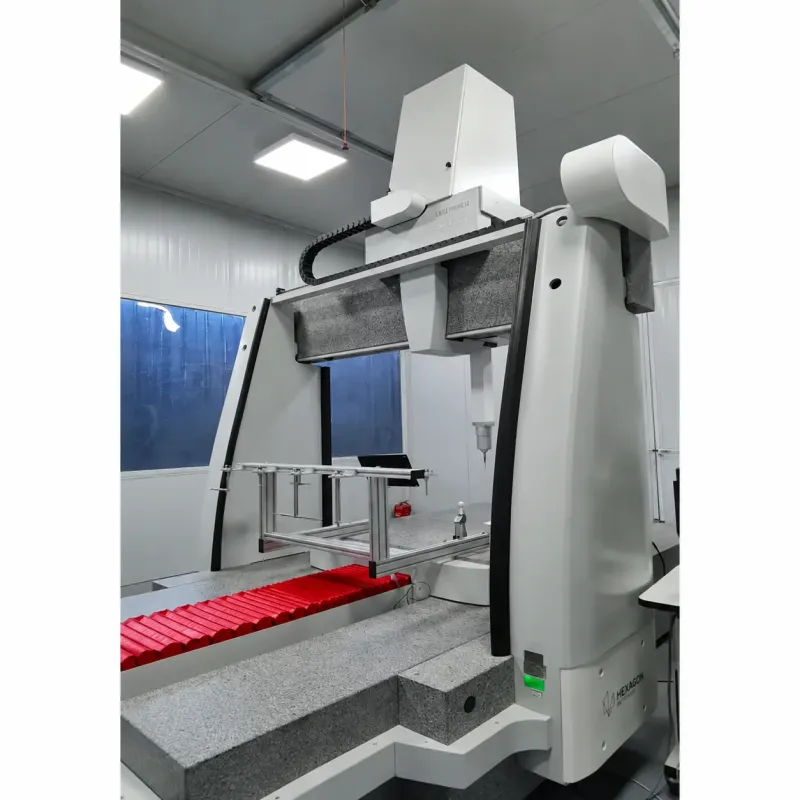
- DieStrike builds Tritan-capable tooling to IATF 16949 / ISO 9001 systems, with mirror-polished transparent-zone cavities and CMM-verified dimensions quoted at DFM.
What Is Tritan Copolyester?
Tritan plastic is a copolyester made by Eastman Chemical, produced from terephthalic acid and a cyclohexanedimethanol (CHDM) comonomer instead of the bisphenol-A used in polycarbonate. The CHDM backbone is what removes BPA from the recipe and gives the resin its combination of clarity, impact strength, and resistance to food acids and lipids. Tritan is amorphous, meaning it has no crystalline melting point. It softens through a glass transition around 108°C (typical published value) and is processed above that, in the 260-292°C melt range.
The amorphous structure is the single most important fact for the mold designer. Semicrystalline resins like PET or PBT shrink 1.5-3% and need crystallization time in the mold. Tritan shrinks 0.55-0.7% and freezes as soon as the part cools below its glass transition. That keeps cavity compensation small and mostly isotropic. Good news for dimensional control, bad news for anyone who copied shrinkage numbers from a PC or PET datasheet.
Tritan is a grade family, not one material. General-purpose grades such as TX1001 cover bottles and housewares. TX1501 is optimized for baby care and repeated sterilization, and TX2001 trades a little stiffness for more impact toughness. All grades share the same food-contact story: FDA 21 CFR 177.1315 for copolyester food-contact articles, EU 10/2011 for European markets, and BPA-free chemistry. Compare grades under the same standard, ASTM D638 for tensile, D648 for HDT, D792 for density; numbers from different methods are not interchangeable.
Tritan Properties That Drive Mold Design
Material selection and tool design are one decision, not two. The table below maps the Tritan properties that matter most to the specific mold decisions they drive. If a datasheet number is missing at RFQ time, this is the list to ask for.
| Tritan property | Typical value | What it drives in the mold |
|---|---|---|
| Mold shrinkage | 0.55-0.7%, mostly isotropic | Zone-by-zone cavity compensation; trial-shot tuning instead of large allowances |
| Density | 1.18 g/cm³ | Part weight and shot-size calculations; cavity fill balance on multi-cavity tools |
| HDT at 1.82 MPa | 94-109°C | Dishwasher-safe expectation; the mold still runs at 35-65°C, so cooling, not steel, sets cycle time |
| Glass transition | ~108°C | Freeze-off behavior; cooling layout decides cycle time once the part passes Tg |
| Tensile strength at yield | ~44-50 MPa | Wall thickness and snap-fit design; structural ribs carry real load |
| Flexural modulus | ~1.6-2.1 GPa | Stiffness of thin container walls; rib and boss geometry |
| Notched Izod impact (23°C) | 94-650 J/m by grade | Drop performance of bottles; gate placement keeps weld lines out of impact zones |
| Light transmission / haze | ~90% / <1% | Mirror-polished cavities (SPI A-1/A-2) and controlled mold temperature for clarity |
| Water absorption (24 h) | <0.1% | Drying discipline: 82°C for 4-6 hours; wet resin shows up as splay on transparent parts |
← swipe to scroll →
Values are typical published ranges for injection-molding grades; actual numbers vary by grade and test method.
Shrinkage and dimensional stability. At 0.55-0.7%, Tritan shrinkage sits at the low end of the engineering thermoplastic range, about half of what a semicrystalline PET mold allows. Because the resin is amorphous, flow-direction and transverse shrinkage stay close, so a single compensation per zone works instead of a direction-by-direction model. The cavity is still cut zone-by-zone, thick sections shrink more than thin ones, and the numbers are confirmed on the first molding trial. A global multiplier copied from another resin is the most common source of out-of-tolerance Tritan parts.
Heat resistance. An HDT of 94-109°C at 1.82 MPa (ASTM D648) puts Tritan below polycarbonate (120-130°C) and above PETG (~70°C). That range is the practical definition of dishwasher-safe for short cycles. For the tool, the HDT sets expectations, not steel grade. The mold runs at 35-65°C, so a standard temperature controller suffices. The cooling layout, not the steel, decides cycle time: 25 seconds or 45 seconds on a thick-walled food container.
Mechanical and optical behavior. Tensile strength at yield of roughly 44-50 MPa, with a flexural modulus of 1.6-2.1 GPa, makes Tritan a structural food-contact material. Bottle walls survive squeeze loads, snap-fit lids survive repeated opening, and blender jars survive impact. The optical numbers matter just as much. Light transmission around 90% with haze under 1% is why the product is sold as glass-like, and that clarity is a mold achievement, not a resin promise. The cavity surface and the mold temperature decide the haze, which is why mirror finishing appears in the design rules below.
Chemical resistance. Tritan resists food acids, oils, lipids, and household cleaners across the dishwasher temperature range, which is its practical advantage over polycarbonate, which hydrolyzes and stress-cracks in hot alkaline service. Strong aromatic solvents and aggressive bases at elevated temperature can attack copolyesters, so grade selection still matters for industrial applications. The mold-side takeaway is simpler: the resin does not corrode the tool and demands no special steels, which keeps the conversation focused on surface finish and cooling.
Mold Design Considerations for Tritan
Tritan does not punish the mold designer the way semicrystalline or corrosive resins do, but it has three sensitivities that show up as scrap if the steel is cut wrong: shrinkage compensation, cooling balance, and surface finish. The rules below are the ones that matter when the cavity is being cut.
Shrinkage compensation. Compensate cavities for 0.55-0.7% shrinkage, split by wall-thickness zone. Because the resin is amorphous, direction effects stay small, but thick-wall zones still contract more than thin ones, and a single global multiplier leaves thick ribs and bosses high. Plan a trial-shot iteration on the compensation before the mold is released, exactly as described in the five shrinkage compensation rules.
Wall thickness. Nominal walls of 1.0-3.5 mm cover most Tritan products: bottles, cups, food containers, and appliance housings. Keep wall transitions gradual, no more than a 2:1 step, and hold ribs at 50-60% of the nominal wall at the base, with a 0.5 mm minimum radius at the root. Sharp corners concentrate molded-in stress, and on a material sold for drop performance, that stress shows up as cracked bottles in the field.
Cooling. Mold temperature is 35-65°C, which requires a temperature controller and a cooling layout that holds both halves within a few degrees of each other. Unbalanced cooling shows up as warpage on thin-wall containers and as dimensional drift on threaded closures. Conformal channels sized to the part geometry protect both cycle time and dimensional stability; the controller is sized to hold 35-65°C on both halves.
Gates, Runners, and Venting for Tritan
Gate design. Gates for Tritan follow standard amorphous-resin practice with one extra constraint: the gate zone is often visible on a transparent part. Edge, fan, and submarine gates keep the vestige off cosmetic surfaces and suit bottles, containers, and housings; pin gates leave a blush and a vestige that are hard to hide on a clear wall. Gate depth of 60-80% of wall thickness with a short land, roughly 0.5-1.0 mm, is a typical starting point, tuned at trial.
Gate placement. Gate placement matters twice on transparent parts. First, weld lines: where two flow fronts meet, the line is both visible and mechanically weaker, so place gates so fronts meet at a vent, a parting line, or a non-cosmetic zone. Second, shear: Tritan shear-thins well, but an undersized gate overheats the melt locally and produces gate blush and flow marks that no polishing removes. On thick-walled jars, a fan or submarine gate spreads the flow instead of jetting it.
Runner system. Full-round cold runners in the 5-8 mm range suit typical Tritan parts and keep pressure drop low. Hot runners work for high-volume bottles and closures, but the manifold must be balanced and free of dead spots; Tritan held at the top of its window for long residence yellows and degrades, and degraded melt shows up as black specks on a clear part. If a hot runner is in scope, run it 5-10°C below the mid-range melt temperature and purge between color changes.
Venting. Vents of 0.02-0.05 mm depth are the typical guideline for Tritan. Deeper vents flash, and on a polished transparent part flashing is a visible defect; shallower vents trap air, which burns the resin at the end of fill and shows as a brown streak on clear walls. Deep cups, bottles, and jars with long cores need generous parting-line venting and, on very deep blind cavities, vacuum venting to pull the air out before the flow front closes.
Transparent Surface and Ejection Design
Cavity finish. Clarity is a mold achievement. For cosmetic transparent surfaces, spec SPI A-1 or A-2 mirror polish, roughly Ra 0.05-0.1 µm, on the cavity side that forms the visible wall, and polish in a consistent direction to avoid visible polish lines. Texture belongs only in non-cosmetic zones, and never on the viewing surface; etch depth shows up as haze on a clear part. Gate blush and ejector marks cannot be polished out of a molded part, so the design must prevent them, not fix them.
Draft. Minimum draft of 0.5-1° per side on polished, untextured walls is the working rule for Tritan. It is an amorphous resin, so it does not stick the way nylon or POM does, but deep cores, threaded closures, and tall bottles still need the low end respected: a 150 mm tall bottle wall with 0° draft can drag on ejection and leave stress-whitening on the surface. Textured surfaces need 1-3° per side.
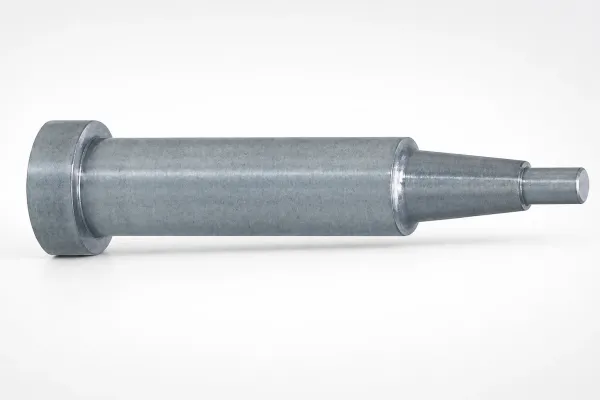
Ejection. Use large-diameter pins on non-cosmetic surfaces, ejector sleeves on deep cores and bosses, and lifters where geometry demands. On transparent parts, pin marks on the viewing wall are rejects, so eject on ribs, the parting line, or hidden surfaces. Air poppets or stripper rings suit deep cups and jars where the part shrinks onto the core.
Injection Molding Tritan: The Processing Window
Tritan is forgiving compared with semicrystalline resins, but the window is real. The numbers below are the standard starting point for injection-molding grades (typical published practice); your grade datasheet overrides them.
Drying: 82°C for 4-6 hours, target under 0.05% moisture. Tritan absorbs less than 0.1% in 24-hour immersion, so it is not a moisture monster like nylon, but wet resin hydrolyzes at melt temperature and shows up as splay and silver streaks on transparent parts, where it is a scrap driver. Use a dehumidifying dryer at 82°C for 4-6 hours with a dew point around -40°C; a hopper dryer without dew-point control is not enough.
Melt temperature: 260-292°C. The practical sweet spot for most grades is 265-275°C. Above 292°C, or with long residence at the top of the window, the resin yellows and degrades; on a clear part, yellowing is a reject, not a color variation. Keep residence short, size the shot to the barrel, and treat 292°C as a ceiling, not a target.
Mold temperature: 35-65°C. The window is wide because it buys surface quality: a hotter mold (50-65°C) produces better surface replication, fewer flow marks, and stronger weld lines at the cost of a longer cycle. A colder mold (35-45°C) cycles faster but leaves more molded-in stress and more visible flow marks on large, thin parts. Cosmetic transparent parts run at the top of the window; the cooling layout has to deliver it.
Pressures and speeds. Typical injection pressure runs 70-140 MPa (700-1,400 bar); the melt is viscous but shear-thins well. Hold pressure should be moderate and sustained until the gate freezes, because the 0.55-0.7% shrinkage still needs packing. Back pressure of 0.3-1.0 MPa, moderate screw speed, and a screw with an L/D of 18-22 handle Tritan well. Fill speed is the tuning lever: fast fill fights flow marks, a slow start at the gate prevents blush, and the balance is found at trial.
Common Tritan Applications
Tritan parts cluster in five spaces: drinkware, baby care, food storage, small appliances, and healthcare. Drinkware, bottles, tumblers, and mugs is the material's home turf, where clarity, dishwasher survival, and the BPA-free claim sell the product; the tooling rules are the transparent-surface ones in this guide. Baby care, bottles, cups, and teethers in TX1501 grades adds sterilization cycles, repeated boiling or autoclaving, to the same requirements.
Food storage, containers, lids, and lunch boxes leans on lipid and acid resistance plus thermal cycling. Small appliances, blender jars, air-fryer baskets, juicer cups, and coffee-maker reservoirs, adds snap-fit assembly and threaded closures to the clarity story. Healthcare devices and water-filtration housings use the food-grade compliance and the chemical resistance. All five share the same mold agenda: mirror-finished cavities, balanced cooling, and gate placement that keeps weld lines off loaded zones, executed through our injection mold manufacturing service, which quotes Tritan-specific surface finish and cooling layouts at DFM stage.
Tritan Defects: Mold-Side Root Causes and Fixes
Most Tritan rejects trace to a mold design decision, not a bad shot. The table below maps each common defect to its mold-side root cause and the tooling fix.
| Defect | Mold-side root cause | Tooling fix |
|---|---|---|
| Flow marks / gate blush | Small gate or cold mold; high fill speed at the gate | Enlarge gate, raise mold to 50-65°C, slow the first 10-20% of fill |
| Splay / silver streaks | Wet resin, or shear overheating at the gate | Dry 82°C for 4-6 h at -40°C dew point; enlarge gate, lower melt toward 265°C |
| Haze on clear walls | Cavity not mirror-polished; mold too cold | SPI A-1/A-2 polish (Ra 0.05-0.1 µm), mold at 45-65°C |
| Bubbles / voids | Trapped air in blind zones; gate freezes before packing | Vents at 0.02-0.05 mm, vacuum venting on deep cores, sustained hold pressure |
| Warpage | Unbalanced cooling or wall transitions over 2:1 | Conformal cooling on both halves, gradual wall steps, mold temperature even per half |
| Ejector marks / sticking | 0° draft on deep cores; small pins on cosmetic walls | Draft 0.5-1° minimum, sleeves on deep cores, eject on hidden surfaces |
| Weld lines | Flow fronts meet cold in a cosmetic or loaded zone | Move the gate, vent at the weld line, hotter mold, faster fill |
| Gate vestige / stress whitening | Undersized pin gate, excessive shear | Fan or submarine gate, gate depth 60-80% of wall, polished gate land |
← swipe to scroll →
Black specks deserve a separate line because they are the degradation signature. Tritan that sits too long at the top of the window, or in a hot-runner dead spot, yellows first and then throws specks. The fix is on the machine and the runner: purge, shorten residence, and keep melt below 292°C. Specks that reappear mid-run are a maintenance flag, not a cosmetic one.
Tritan vs PC vs PETG: Comparison Table
Two comparisons dominate Tritan selection questions. Tritan vs polycarbonate, because both are clear, impact-resistant engineering resins. Tritan vs PETG, because both are BPA-free copolyesters. The table below uses typical published values for injection-molding grades; actual numbers vary by grade and test method.
| Property | Tritan | Polycarbonate | PETG |
|---|---|---|---|
| Resin family | Copolyester (amorphous) | Polycarbonate (amorphous) | Copolyester (amorphous) |
| BPA content | No | Yes (standard grades) | No |
| Density (g/cm³) | 1.18 | 1.20 | 1.27 |
| Mold shrinkage (%) | 0.55-0.7 | 0.5-0.7 | 0.2-0.6 |
| HDT at 1.82 MPa (°C) | 94-109 | 120-130 | ~70 |
| Notched Izod impact, 23°C (J/m) | 94-650 by grade | 600-900 | 60-100 |
| Light transmission | ~90% | ~88-90% | ~90% |
| Hot alkaline / hydrolysis resistance | Good | Poor (stress cracking, hydrolysis) | Moderate |
| Food-contact status | FDA 21 CFR 177.1315, BPA-free | FDA compliant, BPA concern | FDA compliant |
| Typical molded parts | Bottles, baby care, food storage, appliances | Lenses, housings, glazing | Bottles, signage, blister packs |
← swipe to scroll →
Values are typical published ranges for injection-molding grades; actual numbers vary by grade and test method.
Tritan vs polycarbonate. Polycarbonate beats Tritan on impact (600-900 J/m vs 94-650 J/m) and HDT (120-130°C vs 94-109°C), which is why PC still owns heavy-duty housings and glazing. It loses on the two things food-contact buyers ask about: BPA in the polymer backbone, and hydrolysis, because PC chains break down in hot alkaline service, which is why PC drinkware fails dishwasher cycles that Tritan survives. The tooling side is covered in our polycarbonate injection molding guide, but for food-contact clarity parts, Tritan's chemistry wins the selection argument.
Tritan vs PETG. PETG is the cheaper copolyester, also BPA-free, and it molds even more easily, with shrinkage around 0.2-0.6%. Its HDT of roughly 70°C caps it below dishwasher temperatures, and its resistance to food acids and oils is weaker, so PETG owns signage, blister packs, and disposable packaging while Tritan owns the reusable, dishwasher-safe, hot-fill segment. The mold rules are similar: both are amorphous and both need mirror-finished cavities for clarity, but the Tritan mold runs hotter (35-65°C) than a PETG mold, and the Tritan part is designed for thermal cycling the PETG part never sees.
Frequently Asked Questions
Q1. Is Tritan the same as PETG?
No. Both are copolyesters and both are BPA-free, but they are different resins. Tritan is Eastman's CHDM-based copolyester with an HDT of 94-109°C and strong food-acid and lipid resistance, built for dishwasher-safe reusable products. PETG is a glycol-modified PET with an HDT near 70°C, more suited to signage and packaging. The molds differ too: Tritan runs at a 35-65°C mold temperature and needs mirror-finish cavities for the same clarity standards.
Q2. Is Tritan BPA-free?
Yes. Tritan is manufactured without bisphenol-A and without other bisphenols, which is its core advantage over standard polycarbonate. The chemistry uses cyclohexanedimethanol instead of BPA, and Eastman markets the resin specifically on the no-BPA claim for food-contact products.
Q3. Can Tritan be injection molded?
Yes, and it is one of the easier engineering thermoplastics to mold. Process at a melt temperature of 260-292°C into a mold at 35-65°C, with typical injection pressures of 70-140 MPa. Dry the resin at 82°C for 4-6 hours first. The challenges are cosmetic: flow marks and haze on clear parts, handled by gate design, cavity finish, and mold temperature, not exotic equipment.
Q4. What is the shrinkage rate of Tritan?
Mold shrinkage is 0.55-0.7%, varying with grade, wall thickness, mold temperature, and hold pressure. Because Tritan is amorphous, shrinkage is mostly isotropic, so cavities are compensated zone-by-zone with a single multiplier per zone and confirmed on the first molding trial. Hotter molds and higher hold pressure push the actual number toward the low end.
Q5. Tritan vs polycarbonate: which should I use?
For food-contact clarity parts that will see dishwashers, hot liquids, or repeated cleaning, Tritan is usually the safer choice: no BPA and no hydrolysis in hot alkaline service. Polycarbonate wins on impact strength (600-900 J/m notched Izod) and HDT (120-130°C), so heavy-duty structural housings and glazing still go to PC. The selection question is chemistry first, mechanics second.
Q6. Does Tritan need a mirror-polished mold?
For transparent parts, yes. Spec SPI A-1 or A-2 polish, roughly Ra 0.05-0.1 µm, on the cavity side that forms the visible wall, because haze on a clear part is a reject and cannot be polished out after molding. Non-cosmetic surfaces can run standard finishes, and textured zones belong only where the customer wants them.
The Bottom Line
Tritan tooling fails in three ways: shrinkage compensation copied from another resin, cavities that were never mirror-polished, and cooling layouts that run one half hot and one half cold. Compensate 0.55-0.7% per zone, spec SPI A-1/A-2 on visible walls, and hold the mold at 35-65°C on both halves. DieStrike builds IATF 16949 precision molds with 24-hour DFM and 2-5 week lead times, and the Tritan-specific surface and cooling plan comes back with the DFM, before the steel is cut.
KEEP READING
Related Reading
ABS Injection Molding: The Complete Material Guide
ABS injection molding for buyers and mold engineers: shrinkage 0.4-0.
Read articleArticleEjector Pin Steel: SKD61 vs H13 — What's the Difference?
SKD61 (JIS) and H13 (AISI) are two names for the same 5% chromium hot-work steel; ejector pins in both grades harden to…
Read articleArticleLiquid Silicone Rubber (LSR) Injection Molding Guide
Liquid silicone rubber (LSR) is a two-component platinum-cured thermoset with -50°C to +250°C service life.
Read articleArticleNylon (PA) Injection Molding: Grades, Properties & Processing
Nylon (PA) injection molding guide: PA6, PA66, PA12, PA46 and glass-filled grades compared — melting points, shrinkage…
Read articleNEXT STEP
Ready to Start Your Mold?
Send us your element dimensions or part numbers — our team responds within 24 hours with pricing and lead time.

Written by
Ray ChanMold Buyer's Guide Author · Precision Mold Manufacturing Specialist. Ray helps global importers, distributors and OEMs source factory-direct molds and mold parts.