
Acrylic (PMMA) Injection Molding: Optical Clarity Guide
Table of Contents
An acrylic part that shows flow marks on shot 5,000 is rarely a resin problem. It is a decision chain that was fixed before the steel was cut: a cavity finish class left off the drawing, a restrictive gate shearing a high-viscosity melt, cooling channels laid out for cycle instead of uniform temperature, and a drying spec written for the datasheet instead of the hopper. Poly methyl methacrylate (PMMA) is the clearest injection-moldable plastic — about 92% visible light transmission through a 3 mm section — and it punishes shortcuts more visibly than almost any other resin, because every flaw shows up in transmitted light.
Acrylic is not a separate plastic. Acrylic is the everyday name for poly methyl methacrylate, the polymer of methyl methacrylate monomer. In this guide the terms are interchangeable, and PMMA is used where precision matters. On the mold side, one fact outranks every datasheet row: PMMA is amorphous, so it shrinks low and nearly isotropic (0.3-0.7%), it has no sharp melting point, and it is brittle — notched Izod impact runs only about 1-2 kJ/m². Those three facts drive the tooling decisions in this guide, from cavity compensation to gate placement to ejection design.
This guide is written for the people who buy and build the tool: mold buyers, tooling engineers, and manufacturing engineers. It walks from the properties that dictate mold decisions, through the design rules for optical-grade PMMA tooling, into the processing window the mold must survive, and ends with defects traced to their mold-side root causes. The numbers follow typical published datasheet ranges from PMMA resin suppliers; verify against your specific grade before quoting, because optical grades and general-purpose grades differ.
The Snapshot
- PMMA transmits about 92% of visible light at 3 mm thickness — the highest of any common transparent plastic; polycarbonate sits at 88-90%. That transmission is only achievable if the cavity delivers it: optical zones are specified to SPI A-1 mirror finish (~0.012 µm Ra).
- Refractive index ~1.49; haze below 1% on optical-grade molded parts (typical datasheet values).
- Glass transition temperature (Tg) ~105°C; HDT at 1.82 MPa ~95°C. PMMA is amorphous, so there is no true melting point; process the melt at 220-260°C into a mold at 40-80°C (60-80°C for optical surfaces).
- Mold shrinkage 0.3-0.7%, nearly isotropic — the cavity is compensated zone by zone before steel is cut.
- Drying is a tooling decision, not a process afterthought: 80-90°C for 2-4 hours (4 hours for optical parts) in a dehumidifying dryer at -30°C dew point, targeting residual moisture below 0.02%; wet resin shows as silver streaks in the optics.
- PMMA is brittle — notched Izod ~1-2 kJ/m² — so the mold must keep weld lines out of loaded and optical zones, and draft, radii, and ejection design carry real consequences.
- DieStrike builds PMMA-capable optical molds with SPI A-1 mirror finishes and CMM-verified cavities on every tool.
What Is Acrylic (PMMA)?
Poly methyl methacrylate — PMMA — is the polymer of methyl methacrylate monomer (MMA). It is an amorphous thermoplastic: the polymer chains pack without crystalline order, and that random structure is exactly why the material is transparent. Light passes through instead of scattering at crystal boundaries, the way it does in semicrystalline plastics like PP or nylon. For the mold designer, amorphous structure has a second, quieter consequence that matters every day: shrinkage is low and uniform, which keeps cavity compensation predictable and gross warpage risk far lower than with semicrystalline resins.
The name "acrylic" comes from the acrylate family, the chemical group at the core of the monomer. Suppliers and engineers use "acrylic" for sheets, rods, and molded parts alike. When a buyer asks "is acrylic plastic?", the answer is yes: acrylic is PMMA, and PMMA is a plastic. Commercial history explains the naming — Röhm & Haas commercialized the material as PLEXIGLAS in the 1930s; ICI's Perspex and DuPont's Lucite followed — and the brand names stuck while "acrylic" became the generic term.
Grades split by end use, and the split matters at RFQ time because a grade change moves both the processing window and the shrinkage number the tool was cut to. Optical grades hold haze below 1% and carry tight molecular weight control; general-purpose grades trade some clarity for flow. Impact-modified acrylics blend in rubber particles and multiply notched Izod several times, at the cost of haze and transmission. Read the haze line on the datasheet before you commit an optical part to a general-purpose grade, and confirm the shrinkage range with the supplier before the cavity is compensated.
Two thermal numbers define the material for a mold designer. The glass transition temperature (Tg) is about 105°C — above it the polymer softens into a rubbery state — and the heat deflection temperature (HDT) at 1.82 MPa is roughly 95°C. Both sit below polycarbonate's equivalents, and both set the service limits for the molded part and the expectations for the tool: a 40-80°C mold runs on standard prehardened steel, and the cooling layout — not the steel grade — decides whether you hold a short cycle or a long one.
PMMA Properties That Drive Mold Design
Material selection and tool design are one decision, not two. The table below maps the PMMA properties that matter most to the specific mold decisions they drive. If a datasheet number is missing at RFQ time, this is the list to ask for.
| PMMA property | Typical value | What it drives in the mold |
|---|---|---|
| Light transmission (3 mm) | ~92% | Cavity finish class: SPI A-1 polish on optical zones; every polish scratch becomes a light-scattering line |
| Refractive index | ~1.49 | Surface replication in reflection zones; no texture or witness lines in the light path |
| Mold shrinkage | 0.3-0.7% (near-isotropic) | Cavity compensation per wall-thickness zone; low warpage risk, but sink marks at thick sections |
| HDT at 1.82 MPa / Tg | ~95°C / ~105°C | Cooling layout and cycle time; ejection temperature discipline; no special hot-side steel |
| Melt viscosity (MFR) | Low-to-medium, grade-dependent | Gate sizing and land length, runner diameters, shear control; restrictive gates cause flow marks |
| Notched Izod impact | ~1-2 kJ/m² (brittle) | Wall thickness, draft, ejection design; weld lines must sit out of loaded and optical zones |
| Moisture pickup | ~0.3% at equilibrium | Hopper dryer spec (-30°C dew point) and venting depth; wet resin shows as splay, not a tool problem |
| Surface hardness | 2H-3H pencil | Ejection drag and drag marks; polished cavity plus adequate draft protect the surface |
| Chemical resistance | Poor vs solvents and alcohol | Insert steel and coating choice; stress-free molded surface to resist crazing in service |
← swipe to scroll →
Values are typical published ranges for injection-molding grades; actual numbers vary by grade and test method.
Optical clarity. PMMA transmits about 92% of visible light through a 3 mm section, with a refractive index near 1.49 and haze below 1% on optical grades. No common transparent plastic exceeds it; glass achieves similar transmission. On the tool side, that headline number is a specification with teeth: the cavity surface that forms the optical zone must be polished to the finish class on the drawing — typically SPI A-1, about 0.012 µm Ra — and every scratch, EDM remnant, or witness line transfers to every shot.
Shrinkage and dimensional stability. Mold shrinkage runs 0.3-0.7%, typical of an amorphous polymer and nearly isotropic. Uniform shrinkage means the part holds its shape across wall-thickness variations, and gross warpage risk is lower than with PP or nylon. The visible risk is local: sink marks where a rib or boss sits behind a surface, and molded-in stress from uneven cooling. Cavities are compensated with the datasheet range, split by wall-thickness zone, then tuned on the first molding trial.
Heat resistance. An HDT of roughly 95°C at 1.82 MPa and a Tg near 105°C rule PMMA out of hot-fill, under-hood, and dishwasher environments — polycarbonate at 125-130°C covers those. For the tool, the HDT sets expectations, not steel grade: a 40-80°C mold runs on standard P20 or 718-class inserts, and the cooling layout — not the steel — decides whether the cycle holds at 30 seconds or 45.
Mechanical behavior. Tensile strength runs 60-75 MPa, flexural modulus about 3.0-3.3 GPa, and density 1.17-1.20 g/cm³ (typical datasheet ranges). The weak point is impact: notched Izod runs about 1-2 kJ/m² and elongation at break only 2-5%. PMMA snaps rather than bends. The mold cannot change that, but it can stop making it worse: keep weld lines out of loaded zones, radius every corner, keep wall thickness uniform, and design draft and ejection so the brittle part leaves the cavity without being dragged or cracked.
Surface hardness and weathering. Pencil hardness is typically 2H-3H, above polycarbonate's HB-1H range, and PMMA absorbs UV in the 290-320 nm band and stays clear outdoors for decades — signage panels and automotive lens covers rely on this, where PC yellows without a stabilizer or coating. Hard-coat treatments raise surface resistance further on exposed lenses. For the mold, the practical consequence is ejection drag: a polished cavity plus 1-2 degrees of draft keeps the surface that customers will scratch-test free of drag marks.
Stress cracking and flammability. The hidden failure mode is stress cracking: molded-in stress plus contact with solvents, alcohols, or cleaning agents can craze and crack the surface. Annealing at 70-80°C relieves molded-in stress, and part design must avoid sharp corners and thick-thin transitions. Flammability matters for approvals — PMMA is combustible and typically rates UL94 HB — so verify the UL rating for the application. Both constraints land on the mold: cooling uniformity and gate design decide how much stress is molded in, and the drawing decides where the stress raisers sit.
Mold Design Considerations for PMMA
PMMA is demanding on the machine and unforgiving in the optics, and the tool carries the design decisions that decide rejects, cycle, and tool life. The rules below are the ones that matter when the steel is being cut for an acrylic part — every one of them shows up in the first trial shot.
Shrinkage compensation. Compensate cavities for 0.3-0.7% shrinkage, split by wall-thickness zone — thick sections shrink more than thin ones. Because PMMA shrinkage is near-isotropic, the compensation is predictable, but the split between zones still matters on parts with ribs, bosses, and thick optical sections. The five shrinkage compensation rules apply directly to PMMA parts and cover the zone-by-zone method, including how to verify the compensated cavity on the CMM before the mold ships.
Wall thickness and ribs. Keep wall thickness uniform within about 25% variation — thick-thin transitions cause sink and stress concentration in a brittle material. Nominal walls of 2-4 mm are the working range for most PMMA parts; thin-wall optical parts push toward 1.5 mm with high-flow grades. Ribs should run 50-60% of the nominal wall thickness at the base — thicker ribs guarantee sink marks on the opposite surface. Radius rib bases at 0.5-1 mm and avoid sharp corners everywhere: PMMA does not yield, it cracks, so every internal radius is a stress decision.
Gate design. PMMA's melt is viscous, and that fact drives the gate more than anything else. Restrictive gates shear the melt and freeze early, leaving flow marks and high molded-in stress in the optics. Use edge, fan, or diaphragm gates; film gates are standard for light guide plates. Keep gate land length short — around 1 mm — and polish the land and runner walls so the melt surface stays clean. Gate placement decides where weld lines land: place gates so flow fronts meet at a vent or a non-optical, non-loaded zone, and on lenses gate at the edge and let the melt fill radially. The gate design best practices guide covers the placement and sizing trade-offs in detail.
Runner system. Cold runners are the lower-risk default for optical parts: full-round runners in the 5-8 mm diameter range for typical parts, with the sprue bushing sized to the runner and runner walls polished to delay freeze and avoid drag. Hot runners work with PMMA when the manifold is sized for short residence — long residence at 240°C plus degrades the resin and yellows the part — and the manifold temperature must be balanced across cavities, because PMMA gloss and weld-line visibility are sensitive to melt-temperature differences between cavities. The hot runner vs cold runner comparison walks through when the extra cost buys a better optical part and when it only buys risk.
Venting. Vents of 0.02-0.04 mm depth are the typical guideline for PMMA — shallower than ABS because the viscous melt flashes less easily. Deeper vents flash and leave witness lines on optical surfaces; shallower vents trap air and cause burn marks and short shots at the end of fill. The cavity and the parting line need real venting paths, and deep, blind pockets may need vacuum venting. A weld line that sits at a vent welds stronger and shows less; a weld line with no vent traps air and shows a visible streak.
Draft and ejection. Minimum draft of 1-2° per side on polished surfaces; optical surfaces still carry their own finish class, and the draft is what keeps the part from dragging on them at ejection. Ejector pins are standard, but PMMA sticks to unpolished surfaces and cracks under point loads — balance draft, cooling, and pin placement together, use larger pin diameters or added lifters where the part is thin, and keep ejection speed low. The draft angle mistakes list is worth a pass before the steel is cut, because a draft correction after hardening is expensive.
Cooling. Mold temperature is 40-80°C, with optical surfaces held in the upper half of the window, and the cooling layout decides the cycle and the molded-in stress. Uneven cooling across the cavity creates uneven shrinkage and locks stress into the optics — the part warps, the lens distorts, and stress-crack resistance drops. Conformal or drilled channels sized to the part geometry, with coolant flow that keeps the cavity and core within a few degrees of each other, protect both cycle time and optical quality. The cooling channel design tips cover the layout rules for uniform mold temperature, and the thin-wall warpage guide extends them to how to avoid warpage in thin-wall molds where optical parts get thin.
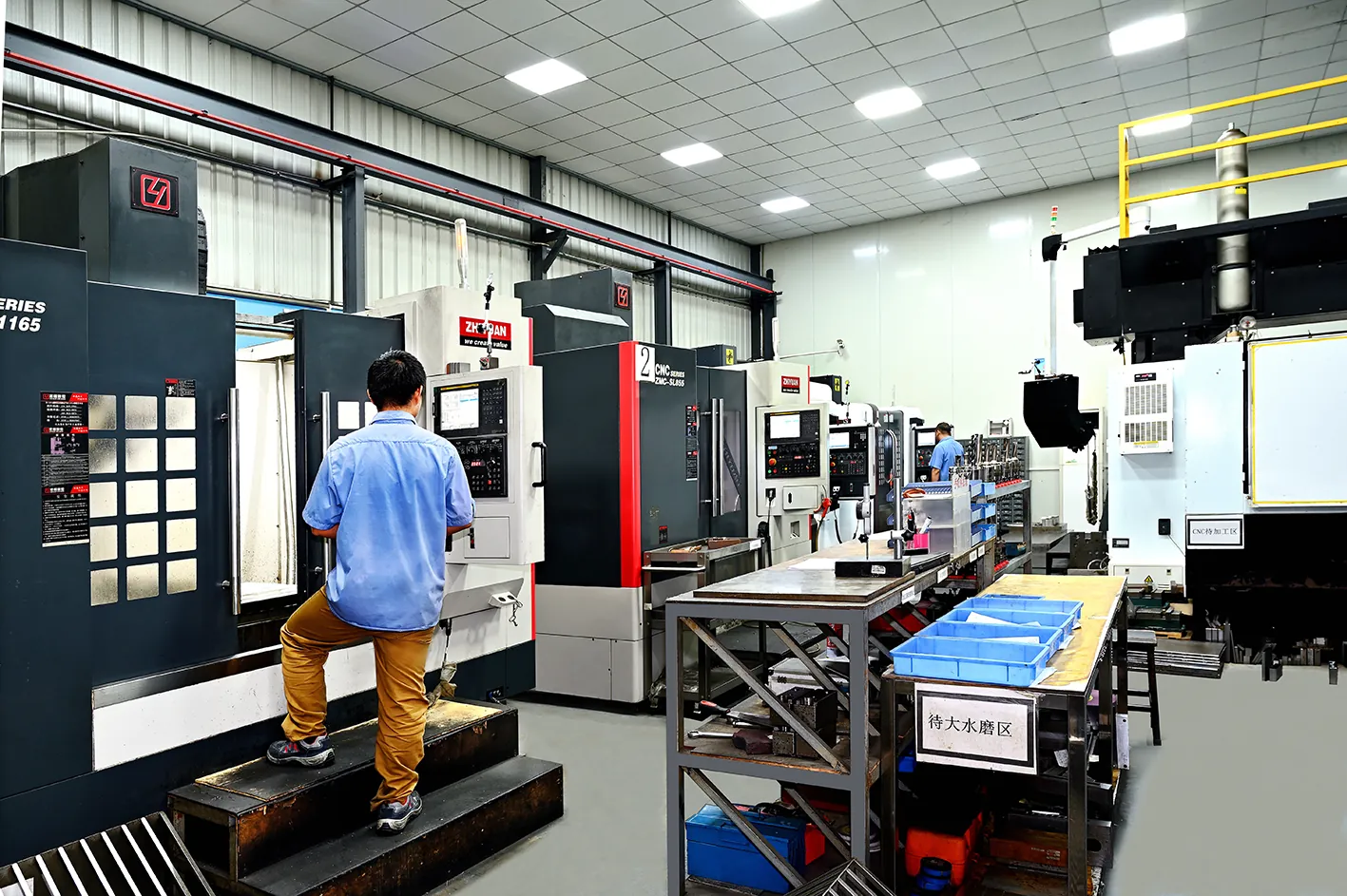
Mold steel and cavity finish. Standard PMMA tooling runs on P20 or 718-class prehardened steel (28-36 HRC). Optical cavities step up to 718H-class or stainless S136-class, hardened and polished to SPI A-1 — about 0.012 µm Ra — and stainless grades resist corrosion from mold release residues and hold the mirror finish through long runs. Sinker EDM needs care on optical molds: it leaves a recast white layer, typically 0.01-0.05 mm, that is hard, brittle, and micro-cracked, and on a mirror cavity that layer must be polished out completely. Use EDM for gate details and shutoffs, then polish the optical zone to A-1. For wear zones that see sliding contact, hard coatings extend life without touching the optical surface, but the polish class on the drawing decides what the optical zones actually get. The mold-making industry page covers how these decisions flow through a full tool build.
Injection Molding PMMA: The Processing Window
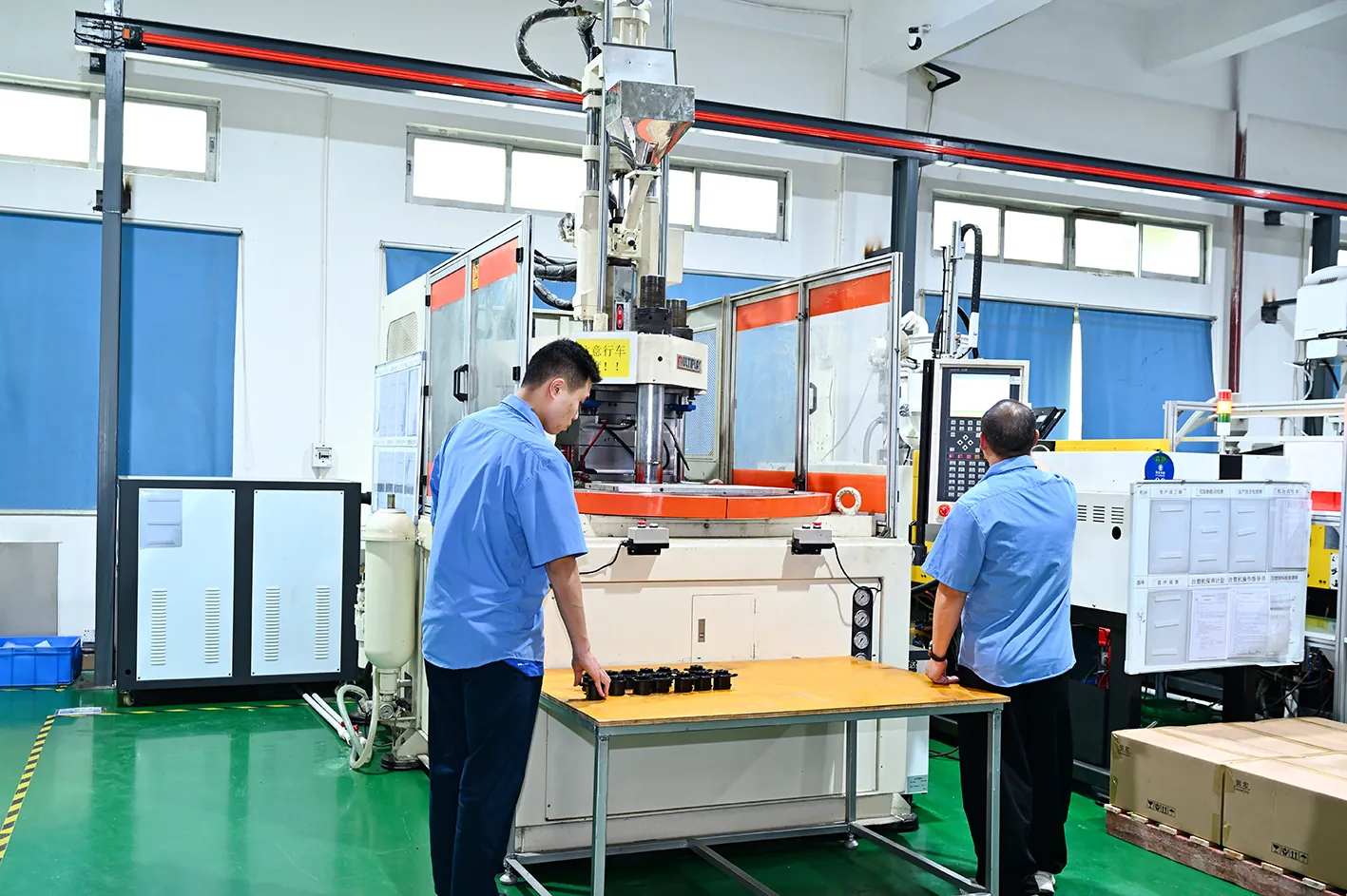
PMMA rewards discipline. The window below is the standard starting point for injection-molding grades (typical published practice); your grade datasheet overrides it. Every number in it maps to a mold-side decision, and the mold must be built to survive — and exploit — the window, not just the resin.
Drying: 80-90°C for 2-4 hours. PMMA absorbs about 0.3% moisture at equilibrium. At melt temperatures that water flashes to steam, and the molded part shows silver streaks (splay) that no process adjustment removes — the fix is upstream. Use a dehumidifying dryer, not a hot-air oven, for optical work: hot air at 80-90°C cannot reach the sub-0.02% moisture target reliably, while dehumidifying dryers at -30°C dew point can. Run 4 hours for optical parts, target residual moisture under 0.02%, and keep dried resin covered — PMMA re-absorbs meaningful moisture in about 1-2 hours in an 80°C hopper. Splay that reappears mid-run points at a leaking dryer, not at the mold.
Melt temperature: 220-260°C. Stay below 270°C and keep residence time short: overheating depolymerizes the resin, releases monomer gas, and yellows the part. PMMA is amorphous, so the barrel profile is set for viscosity, not phase change. A purge check of barrel color catches degradation before it reaches the cavity — yellowing is a temperature history, not a material defect, and it is the visible warning that residence needs shortening.
Mold temperature: 40-80°C. For optical surfaces, hold the upper half of the range, 60-80°C: a hotter cavity replicates the mirror finish, delays skin freeze, lowers molded-in stress, and reduces weld-line visibility. Cold molds produce dull, streaked optics. If a cosmetic or optical part rejects, raising mold temperature is usually the first fix, not the last resort — and the cooling layout has to be able to hold it.
Pressures and speeds. Typical injection pressure runs 80-140 MPa, with hold pressure at roughly half to two-thirds of injection pressure (typical practice) — enough to pack the cavity and prevent sink without packing stress into the optics. Use a two-stage injection profile: slow start to wet the gate, steady mid-fill, then a controlled switch to hold. Fill speed is medium-slow; fast fill generates shear heat and flow marks in the viscous melt. A general-purpose screw with L/D about 20:1 and compression ratio 1.8-2.5:1 handles PMMA well.
Shrinkage: 0.3-0.7%. The number moves with grade, wall thickness, and process conditions: higher mold temperature and higher hold pressure push shrinkage toward the low end. Because the shrinkage is nearly isotropic, sink marks near ribs and bosses are the visible risk rather than gross warpage. Cavities are compensated with the datasheet range, then tuned on the first molding trial. Anneal thick optical parts at 70-80°C after molding to release molded-in stress.
Venting. Vents of 0.02-0.04 mm depth are the typical guideline for PMMA. Deeper vents flash; shallower vents trap air and cause burn marks at the end of fill.
Common PMMA Applications
PMMA parts cluster in four spaces: optical lenses, display covers, automotive lighting, and lighting diffusers. Optical lenses and light guides — eyeglass lenses, camera lenses, LCD backlight plates — are the material's home turf, molded with film gating and A-1 cavities so brightness stays uniform across the panel. Display covers for consumer electronics and instrument panels pick PMMA for clarity and scratch resistance, while automotive light covers and tail lamp lenses run multi-cavity tools with polished cavities and gates that keep weld lines off the optical zone — the tooling rules follow the same logic as our automotive injection molding work. Lighting diffusers and light pipes carry PMMA's edge-lit behavior into signage, retail displays, and EV interior ambient lighting, where EV and energy applications are growing fast. Medical optics — cuvettes, IV connectors, inspection windows — use biocompatible grades with tighter process control, which our medical device molding page covers. Where a housing needs impact toughness instead of clarity, the consumer electronics page shows where ABS or PC/ABS takes over.
PMMA Defects: Mold-Side Root Causes and Fixes
Most PMMA rejects trace to a mold design decision, not a bad shot — and on optical parts the rejects are visible in transmitted light. The table below maps each common defect to its mold-side root cause and the tooling fix; the process fixes that also work are noted where they matter.
| Defect | Mold-side root cause | Tooling fix |
|---|---|---|
| Silver streaks (splay) | Wet resin flashing to steam; degraded resin from long residence | Dehumidifying hopper dryer at -30°C dew point, 4 hours at 80-90°C, target under 0.02%; purge check on every setup |
| Flow marks (waviness) | Melt freezing at different rates across the surface; cold mold; restrictive gate | Raise mold temperature to 60-80°C, enlarge gate, shorten land, slow fill, polish runner walls |
| Weld lines | Flow fronts meet in the optical zone; no vent at the meeting line | Reposition gates so fronts meet at a vent or non-optical zone; add venting at the weld; raise melt and mold temperature |
| Sink marks | Thick sections; gate freezes before the cavity packs | Uniform wall thickness, ribs at 50-60% of wall, gate sized so packing reaches thick zones before freeze-off, adequate hold pressure and time |
| Bubbles and voids | Trapped air at the flow end; gas from overheating | Real vents at 0.02-0.04 mm; vacuum venting on deep, blind pockets; shorter residence; moderate back pressure |
| Crazing and cracking | Molded-in stress from uneven cooling plus solvent contact in service | Balanced cooling for uniform temperature, anneal at 70-80°C, radii and draft on the drawing, keep alcohols and solvents off the part |
| Ejector marks / drag lines | Part sticking on an unpolished cavity; insufficient draft; undersized ejector area | SPI A-1 polish on optical zones, draft of 1-2°, larger pin diameters or added lifters, low ejection speed |
← swipe to scroll →
Moisture splay deserves its own line because it is the one PMMA defect that is rarely a tool problem: silvery streaks radiating from the gate mean the resin was wet. The fix is drying discipline — 80-90°C for 4 hours in a dehumidifying dryer, target under 0.02% — and splay that reappears mid-run points at a leaking hopper dryer, not at the mold.
Yellowing mid-run is degradation from long residence or high barrel temperature: lower the barrel profile, shorten residence with a smaller shot relative to barrel capacity, and purge before color-critical runs. Yellowing is the visible warning that the resin is being cooked — it costs transmission before it costs dimensions.
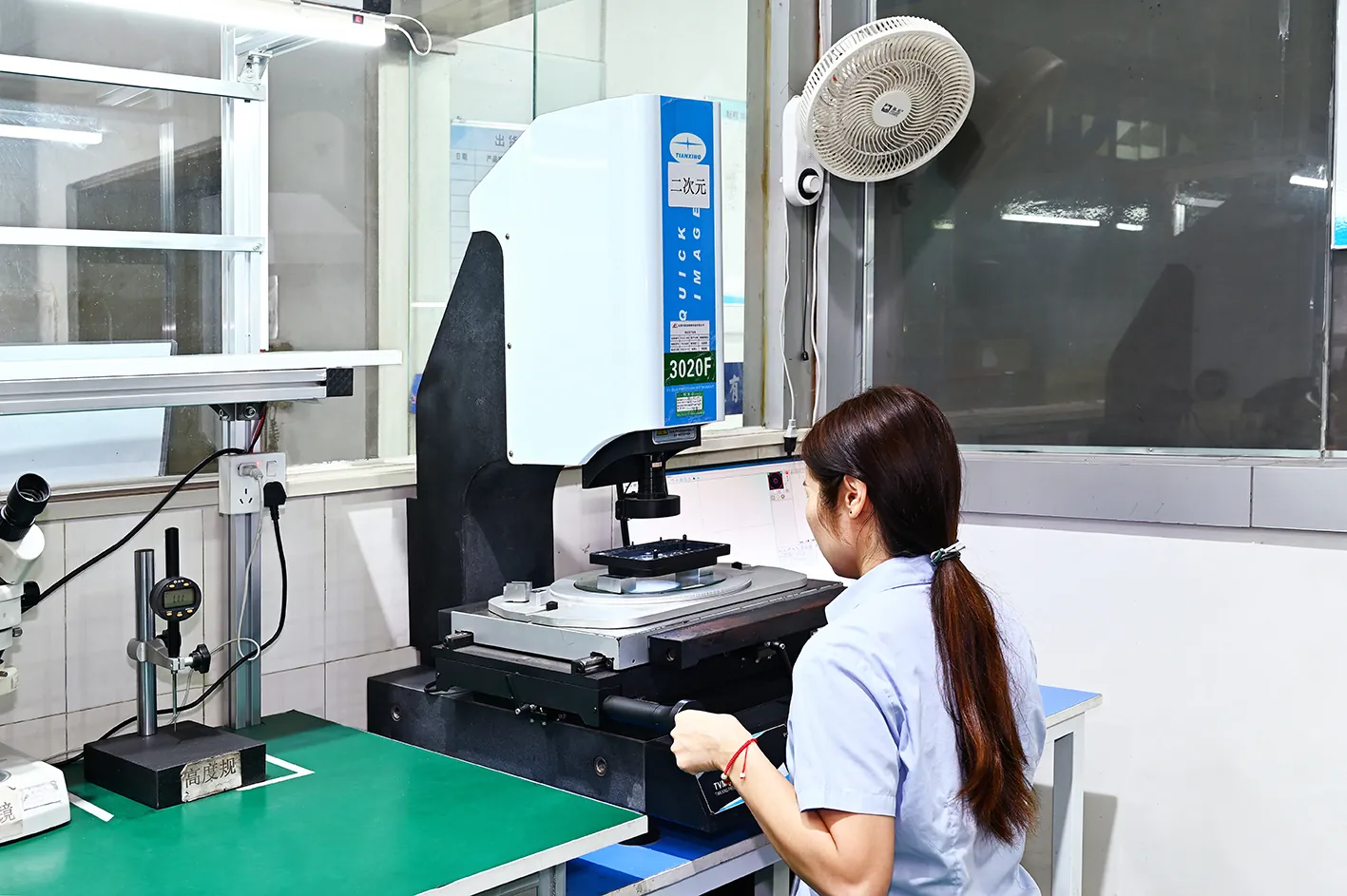
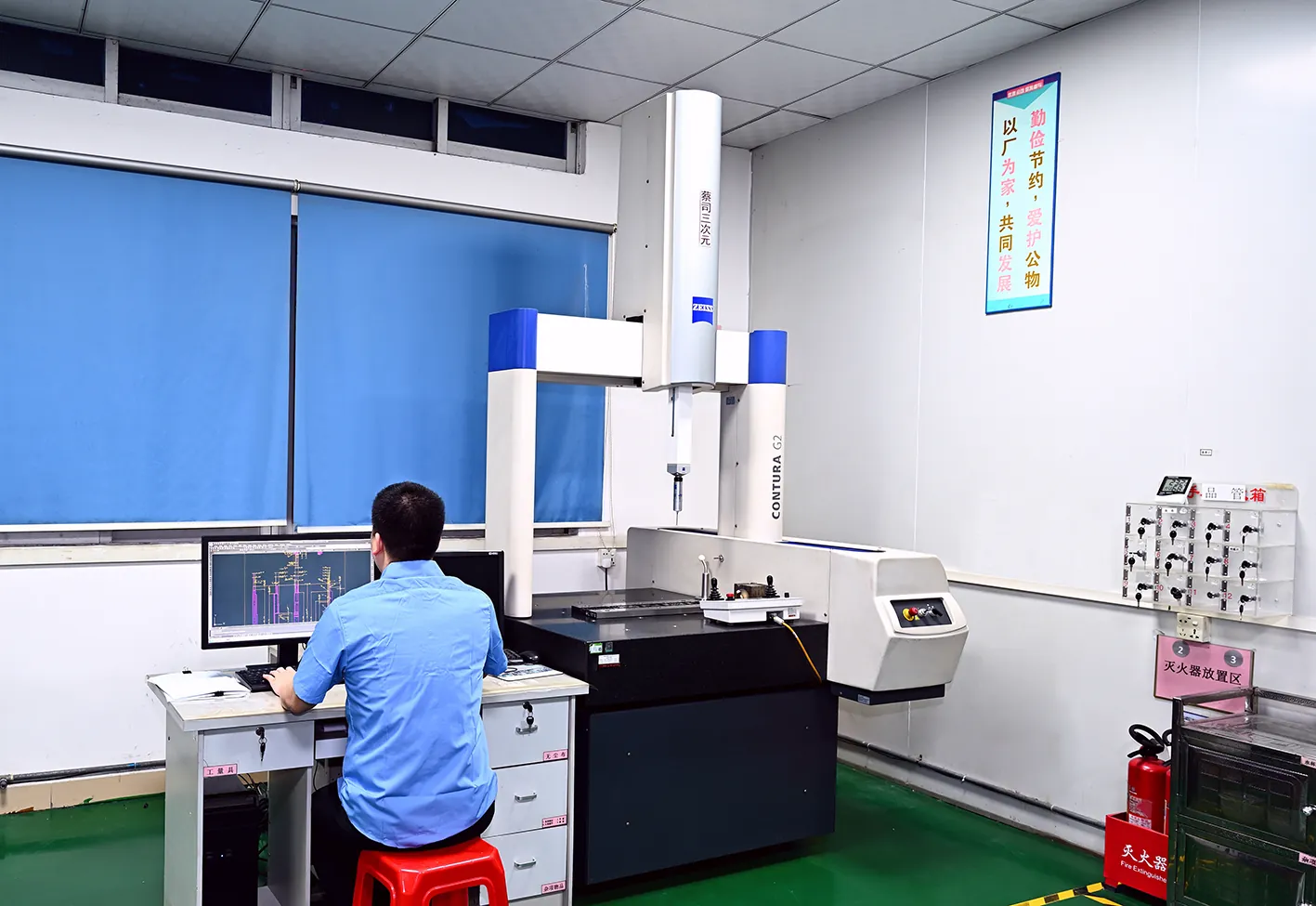
Inspection closes the loop. Vision measuring systems check molded optics for haze, streaks, and dimensional drift on the production floor. A flow mark caught in trial shots is a gate change; one caught at shot 50,000 is a recall. CMM verification of the compensated cavity before the mold ships confirms the shrinkage math before a single part is made.
PMMA vs Polycarbonate: Which Transparent Plastic?
Both materials are transparent, and both get specified for clear parts. The differences are not subtle, and choosing wrong shows up as field failures: scratched glazing, yellowed lenses, or shattered covers. The table below uses typical published datasheet ranges; actual numbers vary by grade and test method.
| Property | PMMA (Acrylic) | Polycarbonate (PC) | Design impact |
|---|---|---|---|
| Light transmission (3 mm) | ~92% | ~88-90% | PMMA wins clarity-critical optics |
| Notched Izod impact | ~1-2 kJ/m² | ~70-80 kJ/m² | PC absorbs impacts; PMMA snaps |
| Elongation at break | ~2-5% | ~100-130% | PC bends under load; PMMA fractures |
| Surface hardness (pencil) | ~2H-3H | ~HB-1H | PMMA scratches less easily |
| UV weathering | Excellent; decades of clarity | Yellows without stabilizer or coating | Outdoor parts favor PMMA |
| HDT at 1.82 MPa | ~95°C | ~125-130°C | PC survives hotter service |
| Chemical resistance | Poor vs solvents and alcohol | Poor vs alkalis, some solvents | Both need design protection |
| Relative resin cost | Lower (baseline) | Typically 1.5-2x PMMA | Budget-sensitive runs favor PMMA |
| Typical uses | Lenses, light guides, signage | Glazing, impact housings, shields | Match the part to the plastic |
← swipe to scroll →
Values are typical published datasheet ranges, not a DieStrike specification.
Choose PMMA when the part is about seeing through it: lenses, light guides, signage, display covers, and outdoor parts that must stay clear. Its transmission, scratch resistance, UV stability, and lower resin cost line up with those jobs — and its mold shrinkage is low and isotropic enough that optical cavities compensate predictably. The full polycarbonate material guide covers the other side of this comparison in depth.
Choose polycarbonate when the part will get hit: machine guards, safety shields, helmet visors, and housings. PC's impact toughness and higher heat deflection outweigh its lower clarity and scratch susceptibility. Where both matter, coatings and design protect PC's surfaces. And when the part needs neither full clarity nor full toughness — a housing that just has to survive shipping — ABS is usually the cheaper, more forgiving alternative that molds faster and plats better than either.
Automotive lighting shows the split in practice. Tail lamp covers are often PMMA for UV and clarity; the surrounding housing is PC for impact and heat. The material follows the local requirement, not the part name — and the mold follows the material, with A-1 polish on the PMMA optical zones and standard finish on the PC structure.
Frequently Asked Questions
Q1. Is acrylic plastic?
Yes. "Acrylic" is the common name for poly methyl methacrylate (PMMA). The term covers molded parts, sheets, and rods made from the same polymer. When a spec says acrylic, the material is PMMA.
Q2. What is poly methyl methacrylate (PMMA)?
PMMA is the polymer of methyl methacrylate monomer. It is an amorphous thermoplastic with about 92% light transmission, a refractive index near 1.49, a glass transition temperature around 105°C, and a mold shrinkage of 0.3-0.7% — the number your cavity compensation starts from.
Q3. Acrylic vs polycarbonate: which is better?
Neither is universally better. PMMA wins on clarity (92% vs 88-90% transmission), scratch resistance, UV weathering, and price. PC wins on impact toughness (70-80 kJ/m² vs 1-2 kJ/m² notched Izod) and heat deflection (~125-130°C vs ~95°C). Pick by the part's dominant requirement — and by the mold, since PMMA optical zones demand A-1 finishes while PC parts tolerate standard cavities.
Q4. Is acrylic plastic safe?
Fully polymerized PMMA is generally considered safe for consumer and medical use. FDA 21 CFR 177.1010 lists acrylic grades for food contact, and PMMA appears in medical devices from cuvettes to intraocular lenses. Residual monomer is controlled by the resin grade; the bulk polymer is inert. Verify the specific grade's certifications for your application.
Q5. What is the PMMA melting point?
PMMA is amorphous, so it has no true melting point. It softens above its glass transition temperature of about 105°C and is processed in the melt at 220-260°C. The heat deflection temperature at 1.82 MPa is about 95°C, which is the number that matters for service limits.
Q6. What is acrylic shrinkage?
Mold shrinkage is 0.3-0.7%, typical of amorphous polymers and nearly isotropic. The cavity is sized for the expected shrinkage before machining, split by wall-thickness zone; 0.5% is a common starting assumption for general-purpose grades, verified on the first molding trial.
Q7. Does acrylic yellow in sunlight?
Slowly, and far slower than polycarbonate. PMMA absorbs UV in the 290-320 nm band and stays clear for decades outdoors; UV-stabilized grades extend this further. All plastics yellow eventually; PMMA's rate is the low end of the range. Yellowing in the mold, by contrast, is a temperature history — long residence or an overheated barrel — and is fixed by process, not material.
Q8. Is acrylic plastic flammable?
PMMA is combustible. It typically rates UL94 HB and burns with a clean flame. Flame-retardant grades exist for applications that require them. Keep ignition sources away and confirm the UL rating for your use.
Q9. Can acrylic be recycled?
Yes. PMMA regrind is commonly reused at 10-30% with virgin resin for non-optical parts, and thermal depolymerization can convert scrap back to MMA monomer. Optical parts usually run on virgin resin because regrind raises haze — a surface effect the mold cannot polish out.
Q10. What temperature can acrylic withstand?
Continuous service sits around 70-90°C depending on grade and load. HDT at 1.82 MPa is about 95°C, and the material softens above its glass transition of 105°C. Keep PMMA parts below those limits; hot environments favor polycarbonate — and the mold's cooling layout has to hold the cavity at 60-80°C regardless, or the optics will show it.
The Bottom Line
PMMA is the clearest plastic you can injection mold, and it rewards discipline — on both sides of the press. Dry the resin to under 0.02% in a dehumidifying dryer. Hold the melt at 220-260°C with short residence. Run the mold at 60-80°C for optics, gate to keep weld lines out of the optical zone, and polish the cavity to SPI A-1. Cut any of those corners and the part shows it in transmitted light.
The tooling chain is short and unforgiving. Compensate cavities for 0.3-0.7% near-isotropic shrinkage, split by wall zone. Size gates for a viscous melt, vent at 0.02-0.04 mm, draft at 1-2° minimum, and balance the cooling layout so the cavity and core stay within a few degrees of each other — every one of those decisions shows up in the first trial shot. Run the drawing through our DFM checklist before the steel order, and use the how to choose a mold manufacturer guide to qualify the shop on optical finish capability, CMM verification, and drying discipline — because on an optical part, the mold decides the outcome as much as the resin.
KEEP READING
Related Reading
ABS Injection Molding: The Complete Material Guide
ABS injection molding for buyers and mold engineers: shrinkage 0.4-0.
Read articleArticleEjector Pin Steel: SKD61 vs H13 — What's the Difference?
SKD61 (JIS) and H13 (AISI) are two names for the same 5% chromium hot-work steel; ejector pins in both grades harden to…
Read articleArticleLiquid Silicone Rubber (LSR) Injection Molding Guide
Liquid silicone rubber (LSR) is a two-component platinum-cured thermoset with -50°C to +250°C service life.
Read articleArticleNylon (PA) Injection Molding: Grades, Properties & Processing
Nylon (PA) injection molding guide: PA6, PA66, PA12, PA46 and glass-filled grades compared — melting points, shrinkage…
Read articleNEXT STEP
Ready to Start Your Mold?
Send us your element dimensions or part numbers — our team responds within 24 hours with pricing and lead time.

Written by
Ray ChanMold Buyer's Guide Author · Precision Mold Manufacturing Specialist. Ray helps global importers, distributors and OEMs source factory-direct molds and mold parts.