
Ball-Lock Punches vs Shoulder Punches: Stamping Die Selection | DieStrike
Table of Contents
The Retention Mistake That Stops a Press
A 12.0 mm ball-lock punch pulled out of its retainer on stroke 22,400 of a night shift. The blank rode up with the punch into the stripper, the die jammed, and the press tripped on overload. Clearing the tool cost 90 minutes at a typical press rate of $180 per hour, and 22,000 already-stamped terminals were quarantined at $0.04 each. The failure was not the steel. The retention family was wrong.
The punch had the right diameter, steel, and length. The die had a ball-lock slot because the station was specified for quick changes. The shoulder seat the load needed was not there. Ball-lock and shoulder punches cut the same holes. They hold the cutting edge differently, and that difference drives changeover time, load capacity, and positional accuracy.
Retention choice happens before the first station drawing, usually inside the first 30 minutes of DFM review. Dies on stock under 3.0 mm commonly run ball-lock stations. Tools with station loads above 30 kN run shoulder punches. The two families differ in head, holder, and removal path, and a wrong call usually shows up inside the first 10,000 strokes.
The Snapshot
- Ball-lock punches swap in 30 to 90 seconds in-press, while shoulder punches take 15 to 45 minutes with the die pulled.
- Shoulder heads carry full cutting and stripping loads, and ball-lock retention suits stations under roughly 30 kN, typical.
- Per-side cutting clearance runs 5 to 15 percent of stock thickness for steel up to 3.0 mm, typical.
- M2 punches run at HRC 60-63 and powder-metal grades at HRC 63-67, typical, before coating.
- DieStrike ships standard punches in 3 to 7 days and builds stamping dies in 2 to 5 weeks.
Punch retention interacts with every other station variable. Changeover frequency sets the first split, and cutting force sets the second. Stripping force runs 10 to 20 percent of cutting force, typical, so an 11 kN cut pulls with 1.1 to 2.2 kN. Punch shape, press speed, and tolerance targets finish the decision.
How Each Punch Is Retained
A ball-lock punch carries a flat head that slides sideways into a slot in the punch retainer. A spring-loaded ball seats into a detent groove on the head and stops the punch from sliding out. Standard retainers hold two balls per punch, typical, for bodies from 3 to 25 mm. Removal works from the back with a knockout rod, so the die never leaves the press.
A shoulder punch carries a full circular head. The head sits in a counterbore in the retainer plate, and a back-up plate clamps it from the rear. Cutting and stripping loads pass through the head face into the plate stack. There is no ball, no spring, and no moving part to wear. The punch cannot back out while the plates stay together.
The stripper is the second locator in both systems. A close-fit bore in the stripper guides the punch body on every stroke. Typical slip between punch body and stripper bore is 0.01 to 0.02 mm. Guide length in the stripper should reach 1.5 to 2 times the punch diameter, typical practice, before the cutting edge exits.
Head style also sets holder cost and maintenance access. Ball-lock slots mill through the retainer edge, so punches load from the side. Shoulder counterbores load from the rear, and the back-up plate comes off first. Dies with limited rear access, common below 10 stations, often pick ball-lock for that reason alone.
| Feature | Ball-Lock Punch | Shoulder Punch |
|---|---|---|
| Retention element | Ball in detent groove on flat head | Head clamped between retainer and back-up plate |
| Removal path | Knockout rod from rear, 30-90 s | Strip plates, 15-45 min typical |
| Axial load path | Cutting load on slot face, stripping on ball | Full head face carries both directions |
| Cross-section | Round, standard to 25 mm typical | Round, square, oblong, shaped |
| Rotation control | Not provided by ball | Key or ground flat clocks the section |
| Position stack | Slot play plus stripper bore | Ground counterbore seat, tighter stack |
← swipe to scroll →
Table 1. Retention comparison for standard punches. Changeover times and fits are typical shop figures.
Ball-Lock Punches: Best Use
Ball-lock punches earn their place where the die stays mounted and the press keeps running. High-speed connector dies change punches between lots, and a 30 to 90 second swap beats an hour of strip-down. A die with 12 ball-lock stations can change every punch in under 15 minutes, typical, with the die still in the press.
They suit standard round holes from 3 to 25 mm in thin to medium stock. Comfort-zone cutting force sits below about 30 kN per station, typical. A 10.0 mm punch cutting 1.0 mm mild steel develops about 11 kN at a typical shear strength of 350 MPa. That leaves most connector and terminal stations inside the ball-lock envelope.
The ball resists stripping pull-down, not bending or rotation. Stripping force on flat stock runs 10 to 20 percent of cutting force, typical. An 11 kN cut therefore pulls with 1.1 to 2.2 kN, and a standard two-ball unit holds several times that when new. The margin shrinks as balls and grooves wear, which is why ball-lock stations need scheduled inspection.
Run length decides the payback. Lots under 20,000 strokes favor ball-lock because changeover time dominates the shift. Review the ball-lock punch range at DieStrike for bodies from 3 to 25 mm, ground to ISO h6 and shipped in 3 to 7 days. Longer, heavier runs still belong to the shoulder family, which is the next section.
Shoulder Punches: Best Use
Shoulder punches carry the heavy side of the catalog. Use them when cutting force climbs past 30 kN per station, when stock passes 3.0 mm, or when the section is not round. The clamped head turns the whole plate stack into the load path, so nothing wears except the cutting edge.
A 20.0 mm punch cutting 2.0 mm stainless steel develops about 75 kN at a typical shear strength of 600 MPa. That load would hammer a ball detent on every stroke. On a shoulder seat the same load spreads across the full head face. The punch then runs to a scheduled regrind instead of an unscheduled pull.
Shaped sections push the choice further toward shoulder. A square or oblong punch cannot be held by a ball because nothing stops rotation. Even a few degrees of twist slams the section into the die button wall and chips both edges. Shoulder punches take a ground key or flat, typically 2.0 to 5.0 mm wide, that clocks the section to the die.
Positional accuracy also favors the shoulder. Head-to-body concentricity is ground and checked to 0.005 to 0.01 mm, typical, and the head seats in a ground counterbore. Ball-lock slots carry more play by design, so the stripper bore becomes the real locator. Dies holding hole position to ±0.02 mm between stations usually spec shoulder punches.
Trim, form, and final-cut stations in progressive dies run shoulder punches for this reason. Punch replacement runs 15 to 45 minutes typical, so the trade is accepted where loads and tolerances demand it. The next section shows how head and body geometry sets that tolerance stack.
Head and Body Geometry
The head decides how the punch mounts. The body decides how it cuts and how it is guided. Standard metric series cover bodies from 3 to 25 mm in 1.0 mm steps, typical, which keeps holders and strippers interchangeable across vendors.
Body diameters are finish ground to ISO h6, typical of catalog punch series. For a 6 to 10 mm body, the h6 band holds 0 to minus 9 µm. The stripper bore that guides it runs 0.01 to 0.02 mm larger, so the punch slides without measurable side play.
Head-to-body concentricity is the tolerance that matters at the cut. Typical ground punches hold it to 0.005 to 0.01 mm. DieStrike verifies critical punch geometry to ±0.002 mm and general dimensions to ±0.005 mm under IATF 16949. More than 120 machines sit behind the grinding line.
Measuring keeps punch geometry honest on the floor. Optical projectors and vision systems check head diameter and length in under 5 minutes per punch, typical. Height gauges verify length after every regrind. Length drift above 0.05 mm changes penetration and shifts the burr direction.
Overall length is set by die shut height. Standard punches hold total length to ±0.1 mm, typical, and carry 3 to 10 mm of regrind allowance above the cutting end. When a regrind removes material from the face, the head or shim stack takes up the difference.
Every regrind shortens the punch, and shut height must follow. Shim packs in 0.1 mm steps under the head restore position, typical practice. Dies log punch length at each regrind so the stack never drifts.
The transition between head and body also has geometry rules. A 0.2 to 0.5 mm relief radius at the head-to-body transition is typical. A sharp corner there concentrates stress, and head cracks start at that corner after thousands of strokes.
Steel Grades and Hardness
Steel choice follows the same logic as retention. Match the grade to edge loading, abrasion, and run length. The grade sets hardness between HRC 58 and 67, typical, and with it the regrind interval and the cost per hole.
M2 high-speed steel covers most steel and aluminum blanking. It hardens to HRC 60 to 63, typical, and keeps hardness at cutting temperatures up to roughly 550 °C. In 1.0 mm carbon steel, M2 punches typically regrind every 50,000 to 200,000 strokes. The DieStrike punch line stocks standard M2 bodies from 3 to 25 mm ground to h6.
Powder-metal grades take over where runs are long or stock is abrasive. ASP 2030 class steel hardens to HRC 63 to 66, typical, and ASP 2052 class reaches HRC 64 to 67. In stainless and copper alloys, PM edges typically outlast M2 by 2 to 3 times between regrinds. The punch costs 40 to 80 percent more, typical, and pays back at high speed and long run.
D2 cold-work steel covers the big, slow punches. It hardens to HRC 58 to 62, typical, with strong wear resistance and lower toughness than high-speed steel. D2 suits bodies over 20 mm where edge speed and impact stay low.
Carbide takes the million-stroke jobs. Carbide-tipped punches reach about 90 HRA, typical, and outlast high-speed steel by 5 to 10 times between regrinds. The edge is brittle, so carbide demands rigid alignment and a die that never shifts.
Coatings extend the same geometry. TiN and TiCN coatings reduce galling on stainless, aluminum, and copper, and coated edges commonly run 2 to 4 times longer between regrinds, typical. Coatings add a few dollars per punch and change the failure mode from pickup to clean wear.
Heat treatment controls the final hardness spread. Standard practice tempers M2 and PM grades twice, and a 1.0 to 2.0 HRC spread across one lot is typical. Hardness is verified with a Rockwell tester before grinding. A punch at HRC 58 running beside an HRC 62 punch wears first, so lot records matter.
Table 2 compares the common punch grades. Hardness and price index are typical catalog values, and the right row depends on stock, speed, and run length.
| Grade | Class | Hardness (typical) | Best suited to | Price index (M2 = 1.0) |
|---|---|---|---|---|
| M2 | Wrought high-speed steel | HRC 60-63 | Steel and aluminum blanking, general use | 1.0 |
| ASP 2030 class | Powder-metal high-speed steel | HRC 63-66 | Stainless and abrasive stock, high speed | 1.4-1.8 |
| ASP 2052 class | Powder-metal high-speed steel | HRC 64-67 | Long runs, heavy wear, thin hard stock | 1.8-2.2 |
| D2 | Cold-work tool steel | HRC 58-62 | Large punches over 20 mm, lower speed | 0.8-0.9 |
| Carbide tip | Tungsten carbide on steel body | 90 HRA | Runs over 1 million strokes, rigid dies | 3.0-4.0 |
← swipe to scroll →
Table 2. Punch steel grades. Hardness ranges and price indices are typical industry values for standard round punches.
Clearance and Alignment
Clearance is the gap between the punch side and the die button side. Per-side clearance of 5 to 15 percent of stock thickness is typical for steel up to 3.0 mm. Thin, high-strength stock uses the low end of that band. Soft, ductile stock runs at the high end.
Wrong clearance shows up fast. Below 5 percent per side, cutting load climbs, edge wear accelerates, and chipping starts inside thousands of strokes, typical. Above 15 percent, rollover and burr grow, and the hole edge quality fails the print. Clearance is set once at tool build and checked after every regrind.
Alignment is the second half of the equation. Total runout between punch and die button should stay under 0.02 mm at the cutting edge, typical practice. Dies running 400 strokes per minute or more demand that budget. The stripper bore carries most of the job, which is why the 0.01 to 0.02 mm slip fit matters.
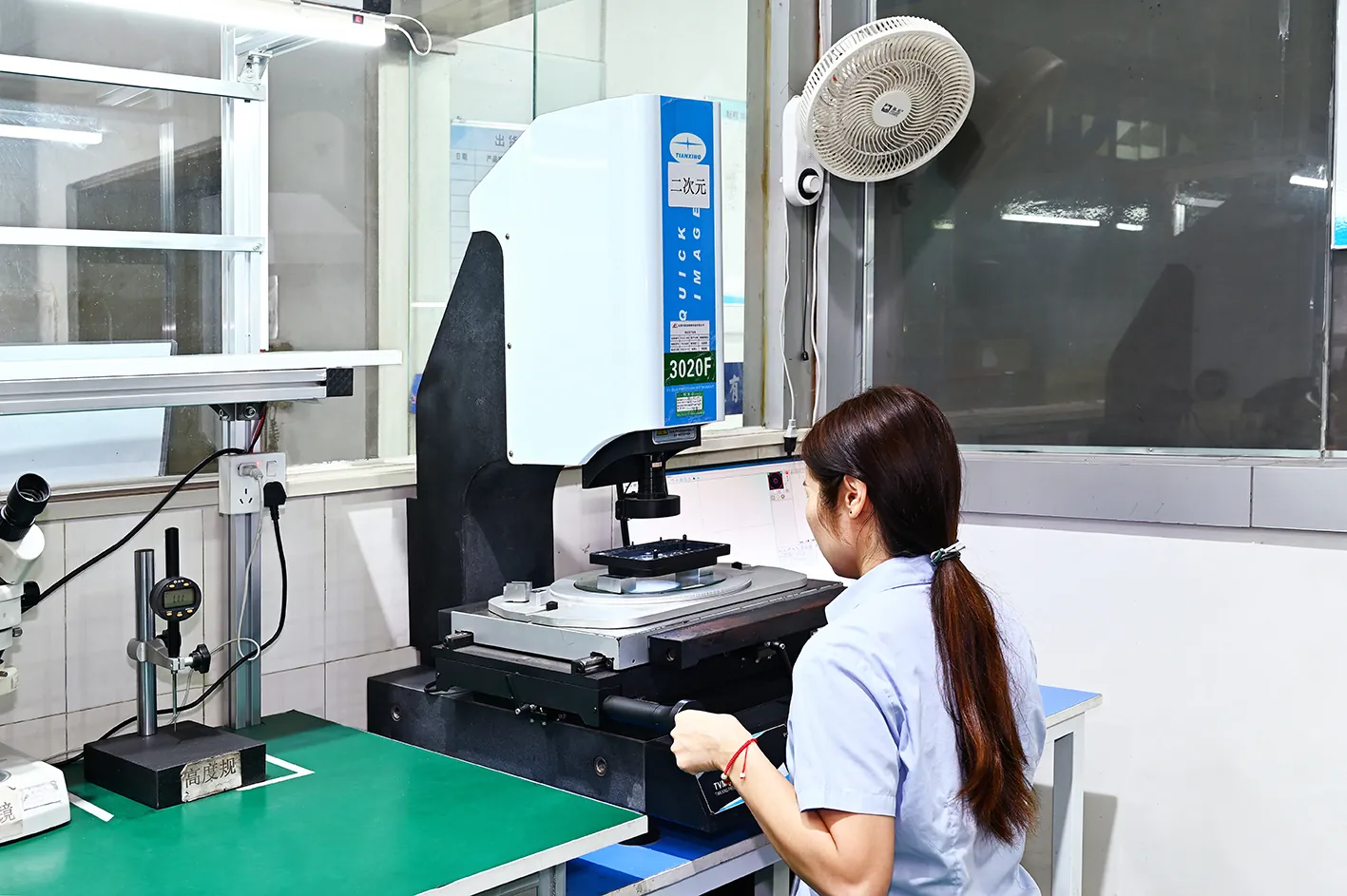
Measurement keeps the pair honest. Vision systems and CMMs at 0.002 mm resolution check punch body, head, and die button on the same setup. DieStrike inspects punches and die buttons with this class of equipment, and the die build record logs clearance per station before tryout. A station that drifts 0.02 mm shows up in the record, not in the burr report.
Die buttons wear faster than punches in abrasive stock. A button that opens 0.05 mm beyond print changes the clearance band and the burr direction. Dies in high-volume connector work re-quote buttons at every major service, typical every 500,000 to 1,000,000 strokes.
Failure Modes and Prevention
Three failures dominate punch service records in progressive dies. Pullout, head breakage, and edge chipping drive over 80 percent of unscheduled punch stops, typical, and each has a preventable root cause.
Pullout starts when stripping force overruns the detent grip. Ball wear, a grooved head, or stock thicker than spec cuts the safety margin. A coil that runs 10 percent over nominal thickness raises cutting and stripping force by roughly 10 percent. The punch walks out on a stroke where the margin hits zero.
Head breakage follows support loss. A shoulder head cracks when the back-up plate is relieved, chipped, or missing a shim. A 0.1 mm gap under the head lets it flex on every stroke, and the crack starts at the neck radius, typical. Ball-lock heads fail the same way when the slot floor wears uneven.
Edge chipping tracks alignment and clearance. A punch that runs out 0.03 mm, or a button clearance that closes after regrind, loads one corner of the edge. Chips deeper than 0.05 mm force a regrind, typical, and repeated chips point to the die, not the steel.
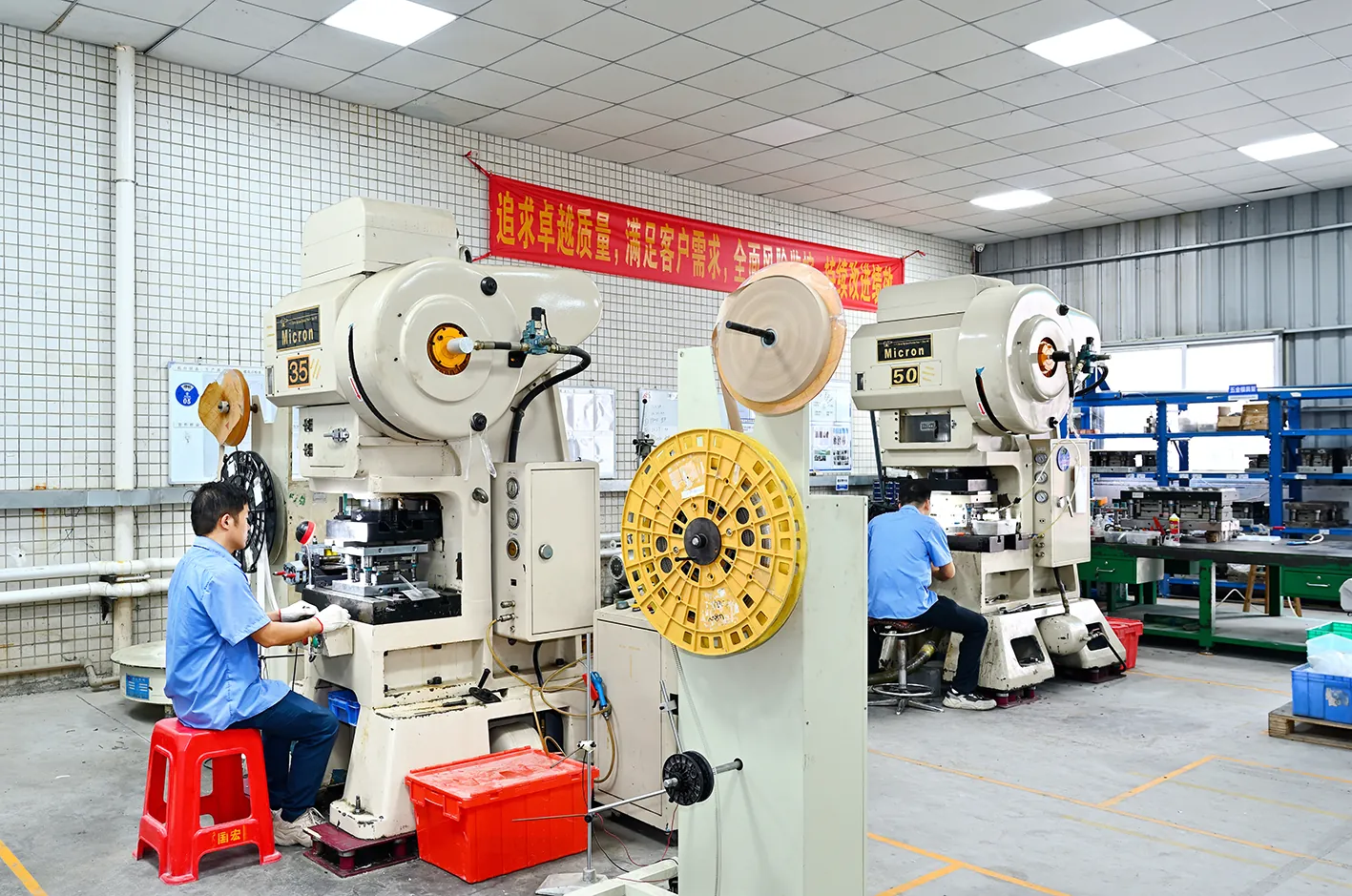
Prevention is scheduled, not reactive. Log punch regrinds at fixed stroke counts, 50,000 to 200,000 typical by material and grade. Replace ball units and check grooves at every changeover, roughly every 100,000 to 200,000 strokes, typical. Measure clearance and runout after every die pull.
Speed raises the stakes. At 800 strokes per minute, one off-center hit repeats about 13 times per second. A loose punch that survives at 200 strokes per minute can pull a head inside one shift at 800. Retention choice and press speed belong on the same worksheet.
Cost and Lead Time Comparison
Punch price is a small part of station cost. Ball-lock seats need a milled slot and a ball unit, while shoulder seats are plain counterbores. A 10 mm M2 ball-lock punch runs $18 to $45 typical, and its retainer seat costs $25 to $60 to machine. Table 3 lists typical catalog ranges for standard metric punches.
Lead time follows the same split. Catalog punches ship off the shelf, and DieStrike ships standard punches in 3 to 7 days. Shaped punches run 1 to 2 weeks typical. Complete stamping dies build in 2 to 5 weeks, with DFM feedback in 24 hours.
| Item | Ball-Lock (typical) | Shoulder (typical) |
|---|---|---|
| Round punch 3-10 mm, M2, standard length | $8-20 | $12-28 |
| Round punch 10-25 mm, M2, standard length | $18-45 | $25-70 |
| PM-HSS upgrade, same geometry | +40-80% | +40-80% |
| Shaped section with key or flat | +$20-80 | +$20-80 |
| TiN or TiCN coating | +$2-6 | +$2-6 |
| Regrind service per punch | $5-15 | $5-15 |
← swipe to scroll →
Table 3. Typical price ranges for standard round punches in M2. Values are industry catalog ranges, and shaped or coated work is quoted per print.
Inventory policy closes the loop. Shops keep one spare set per die for wear punches, typical, and reorder when the spare is consumed. At $180 per hour of press time, a 3 to 7 day standard punch delivery beats a two-week custom order every time.
Regrind scheduling also has a cost side. Each service removes 0.05 to 0.15 mm from the face, typical. A standard punch with 3 to 10 mm of regrind allowance survives 30 to 100 regrinds before replacement. That arithmetic belongs in the spare-part forecast, not in the repair log.
Selection Decision Matrix
Use the matrix when the choice is not obvious. Read the load, changeover, and tolerance numbers in each row, then pick the family and the reason. When both families qualify, cost and changeover schedule break the tie.
| Station condition | Punch family | Why |
|---|---|---|
| 2+ changeovers per shift, lots under 20,000 strokes | Ball-lock | In-press swap in 30-90 s per punch |
| Cutting force above 30 kN per station | Shoulder | Clamped head carries the load, nothing wears |
| Stock above 3.0 mm or heavy trim | Shoulder | Stripping and cutting loads pull both directions |
| Square, oblong, or shaped section | Shoulder | Key or flat clocks the section, a ball cannot stop rotation |
| Hole position held to ±0.02 mm between stations | Shoulder | Ground counterbore seat beats slot play |
| Punches must change without pulling the die | Ball-lock | Rear knockout access, die stays mounted |
| Thin stock 0.1-0.5 mm above 600 strokes per minute | Ball-lock | Stripper bore guides the body, die stays mounted |
| Abrasive stock, runs over 500,000 strokes per regrind | Shoulder plus PM-HSS | PM edge outlasts M2 by 2-3 times typical |
← swipe to scroll →
Table 4. Punch selection decision matrix. Loads, clearances, and changeover figures are typical values for standard round and shaped punches.
The matrix favors ball-lock where service drives cost. It favors shoulder where load, shape, and position rule. Thin stock at high speed can run either family because the stripper bore, not the head, controls alignment.
Send the strip layout and station list for review before steel is ordered. DieStrike returns DFM feedback within 24 hours, and punch selection with a cost breakdown within 48 hours. The same review path serves dies for TE Connectivity, Amphenol, Luxshare, and Dongshan Precision programs. Retention, clearance, and grade get fixed on paper, not after the first pullout stops the press.
Frequently Asked Questions
Q1. Can a ball-lock punch replace a shoulder punch of the same diameter?
Only when the retainer has the matching slot and ball unit. Head geometry differs, so overall length and stripper position shift and shut height must be rechecked. Keep the swap under the 30 kN comfort limit, typical, and confirm the stripper bore guides the body. A die built around shoulder seats needs retainer machining before a ball-lock punch can run.
Q2. Why do ball-lock punches pull out, and how do we stop it?
Pulls start when stripping force overruns the detent grip. Stripping runs 10 to 20 percent of cutting force, typical, and a worn ball or grooved head cuts the safety margin. Replace ball units every 100,000 to 200,000 strokes, typical, and inspect the head groove at each changeover. Stock thickness is the other lever, since a 10 percent thicker coil raises cutting and stripping force by about 10 percent.
Q3. Which steel should we specify for 0.5 mm stainless steel parts?
Start with powder-metal high-speed steel in the ASP 2030 class at HRC 63 to 66, typical. Stainless work hardens and abrades, and PM edges hold 2 to 3 times longer than M2 between regrinds, typical. Add a TiCN coating so galling stays off the cutting land. The 40 to 80 percent PM price premium, typical, pays back only in long or high-speed runs.
Q4. How often should punches be reground?
Schedule by stroke count, not by burr complaints. Typical intervals run 50,000 to 200,000 strokes in 0.5 to 3.0 mm steel, depending on grade and coating. Regrind takes 0.05 to 0.15 mm off the face and resets the cutting edge. Track counts per station in the die log, and pull the punch when the wear land on the edge reaches about 0.1 mm.
The Bottom Line
Wrong retention is a silent schedule killer. Pullouts and cracked heads show up only after the press stops. Ball-lock serves changeover speed, and shoulder serves load and position. DieStrike builds dies to ±0.005 mm with critical geometry at ±0.002 mm under IATF 16949.
Send the strip layout to the stamping die manufacturing line for retention, clearance, and steel review before tool steel is ordered.
KEEP READING
Related Reading
How to Build a Progressive Die (Step by Step)
Progressive die build from strip layout to tryout: pilot spacing, stripping force at 10-20% of cutting force, and station counts for 400+ SPM tools.
Read articleArticleHow to Maintain Punch Clearance in Progressive Dies
Clearance drift between regrinds: measuring per-side gaps of 5-15% of stock thickness and restoring die buttons before slug pulling starts.
Read articleArticle12 Mold Steel Grades Compared: Properties, Cost and Use
Twelve grades from P20 to H13 and D2 side by side: hardness ranges, toughness, and price index for mold and die components.
Read articleArticleMild Steel vs Tool Steel for Mold Components: Which to Use
Mild steel yields near 250 MPa while D2 holds HRC 58-62, and the grade choice changes failure mode and tool downtime.
Read articleNEXT STEP
Ready to Start Your Mold?
Send us your element dimensions or part numbers — our team responds within 24 hours with pricing and lead time.

Written by
Ray ChanMold Buyer's Guide Author · Precision Mold Manufacturing Specialist. Ray helps global importers, distributors and OEMs source factory-direct molds and mold parts.