
How to Select Perforators for Stamping Dies
Table of Contents
A progressive die running 1.0 mm SPCC sheet lost its 6.0 mm perforator at 40,000 strokes. The punch was a stock SKD11 straight with a ground head, and its retainer pocket carried 0.05 mm of play. The punch tilted on the downstroke, chipped at the cutting edge, then snapped below the head. The line stopped for 6 hours while the toolroom made a replacement, and the 28,000-frame batch was scrapped. The die builder saved 40 USD on the punch and lost roughly 2,400 USD in downtime plus the parts.
A perforator, also called a punch or pierce punch, is the male cutting member that blanks or pierces a hole in sheet metal. It cuts the slug, passes through the die button, and retracts on the upstroke. A 12-station progressive die can hold 30 to 80 punches that must all work within microns of each other at 200 to 600 strokes per minute.
This guide covers perforator types, steels, hardness, head styles, retainer fit, diameter limits, clearance, cutting force, failure modes and regrind life. Figures are typical industry values unless marked as DieStrike capabilities.
The Snapshot
- A snapped 6 mm perforator stopped a progressive line for 6 hours and scrapped a 28,000-part batch, a typical single-event cost of 2,000 to 5,000 USD.
- Die clearance runs 5 to 15% of stock thickness per side, with 8 to 10% for mild steel and 3 to 5% for high-strength and stainless steel.
- Cutting force follows F = L x t x tau, where L is the cut perimeter, t is the stock thickness and tau is the shear strength at 0.6 to 0.8 of tensile strength.
- SKD11 (D2) runs 58 to 62 HRC, PM-HSS runs 62 to 66 HRC, and tungsten carbide runs 88 to 92 HRA with 3 to 5 times the wear life of D2.
- Perforators ship from DieStrike in 3 to 7 days at ±0.002 mm grinding tolerance, with regrind recommendations per stock material.
Why Perforator Selection Fails
Perforator failures cluster into three modes: chipping, breakage and wear. Chipping is a small edge fracture that leaves a rough hole. Breakage is a full fracture below the head, and it stops the die. Wear rounds the cutting edge and raises burr height. Each mode has a different root cause, and each is preventable at the drawing stage.
The cost stack is real. A broken 6 mm perforator at 300 strokes per minute stops the press for 2 to 6 hours, and toolroom replacement parts need 15 to 60 minutes of fit work. On a 12-station progressive die, one broken punch kills all 12 stations. Typical single-event cost lands between 2,000 and 5,000 USD once scrapped parts, labor and downtime are added.
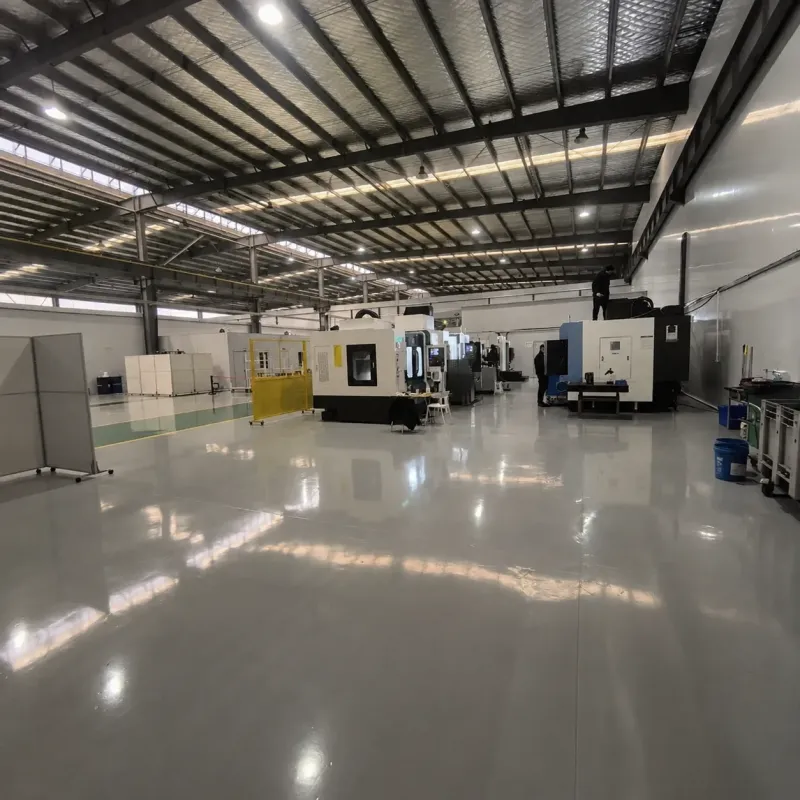
Most selection errors share one pattern: the punch was chosen from a catalog by hole size alone. The die builder ignored stock thickness, material strength, press speed, alignment and lubrication. A perforator is a cutting tool, not a fastener, and it needs a force check, a clearance check and a stiffness check before it goes into the retainer.
DieStrike grinds perforators to ±0.002 mm geometry with concentricity under 0.01 mm TIR, the same discipline used for ejector pins and core pins. Those numbers keep a progressive die balanced past 5,000,000 strokes.
Perforator Types
Five perforator families cover nearly every piercing job in a progressive or blanking die. The choice starts with hole size, stock thickness and press speed, then the head style and the guidance.
Standard straight perforator
The standard straight perforator has a body that matches the cutting diameter and a head that registers in the retainer. Standard diameters run 1.0 to 25.0 mm in 0.1 mm steps. It suits holes at least as large as the stock thickness and loads under 30 kN. Most DieStrike punch orders land here, with a 3 to 7 day lead time.
Shoulder perforator
A shoulder perforator carries a head 1.5 to 2.0 mm larger than the body. The head seats against the retainer counterbore, so the punch cannot push upward under stripping load. Use it for heavy sections and holes above 6 mm, where stripping can lift a straight punch out of its retainer.
Shear angle perforator
A shear angle perforator has the cutting face ground with a roof-top or concave shear instead of a flat face. Shear drops peak cutting force by 30 to 50% and softens breakthrough shock. Use it for holes above 10 mm and stock above 2.0 mm. The die button must match the shear shape, so it is a heavy-section option, not a default.
Guided perforator
A guided perforator runs in a punch guide bushing mounted in the stripper, not just in the retainer. The guide holds the cutting edge true to the die button. Choose a guided perforator when the hole diameter is smaller than the stock thickness, when the length-to-diameter ratio exceeds 5 to 1, or when the press runs above 400 strokes per minute. Guidance prevents buckling and deflection, the two silent killers of small punches. For the full station-by-station layout logic, see our guide on how to build a progressive die.
Ball-lock perforator
A ball-lock perforator uses a groove near the head that snaps into a ball retainer. Changeover takes seconds instead of a retainer strip-down. Use ball-lock punches for short-run dies and quick-change programs where regrind and replacement happen on the press. The trade is slightly lower load capacity than a shoulder head.
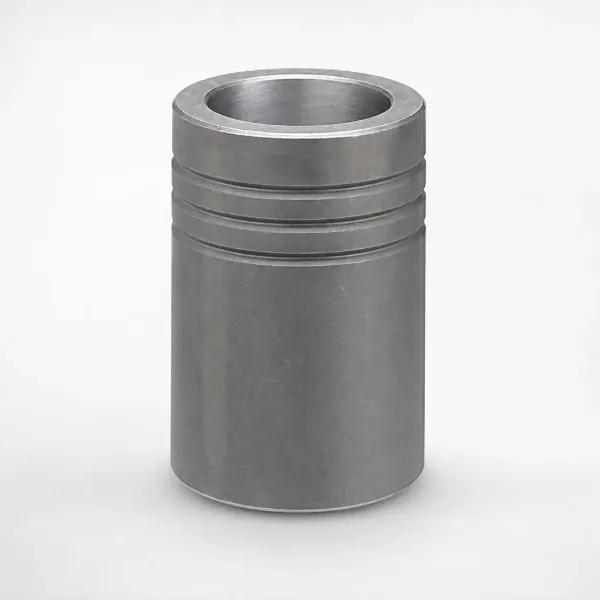
The table below maps the five families to typical piercing jobs. Treat each row as a first pass, then verify against your program.
| Type | Head Style | Diameter Range | Typical Use | Watch Out |
|---|---|---|---|---|
| Standard straight | Round head | 1.0-25.0 mm | Holes at least stock thickness, loads under 30 kN | Needs retainer fit under 0.02 mm of play |
| Shoulder | Shoulder head, 1.5-2.0 mm larger | 3.0-25.0 mm | Heavy sections, high stripping load | More grinding stock, higher cost |
| Shear angle | Flat with roof-top or concave shear | 10.0-50.0 mm | Thick stock, large holes, force reduction | Slug distortion, matching die button |
| Guided | Round or shoulder | 0.5-10.0 mm | Small holes, L/D over 5 to 1, speed above 400 SPM | Costs more, needs guide bushing in stripper |
| Ball-lock | Grooved head | 1.0-20.0 mm | Quick change, short runs, on-press regrind | Lower load capacity than shoulder head |
← swipe to scroll →
Table: typical industry figures; verify against your program.
Steel Selection: SKD11, PM-HSS and Carbide
Three steel families cover nearly every perforator application. The choice follows three questions: how abrasive is the stock, how fast does the press run, and how small is the hole.
SKD11 (D2)
SKD11, the JIS equivalent of AISI D2, hardens to 58 to 62 HRC and balances wear resistance with toughness. It is the default for carbon steel and aluminum up to 2.0 mm thick, with typical regrind life of 100,000 to 500,000 strokes. Below 3 mm diameter, D2's coarse carbide structure starts to chip, which is the boundary where shops move up to PM-HSS.
PM-HSS
Powder metallurgy high-speed steel, in grades like ASP23 and ASP60, hardens to 62 to 66 HRC with a fine, uniform carbide structure. The fine carbides give it 2 to 3 times the chipping resistance of D2 at equal hardness. Use PM-HSS for holes from 1.0 to 5.0 mm, presses above 400 strokes per minute, and stock like stainless or spring steel that shocks the edge.
Tungsten carbide
Tungsten carbide, usually WC-Co, runs 88 to 92 HRA with wear life 3 to 5 times that of D2. It is the choice for holes under 2.0 mm, abrasive stock like silicon steel and electrical steel, and programs above 1,000,000 strokes. Carbide is brittle, so it demands a guided design, concentric alignment and a rigid retainer. A carbide punch in a sloppy pocket shatters instead of wearing.
| Material | Hardness | Regrind Life (Typical) | Best For | Watch Out |
|---|---|---|---|---|
| SKD11 (D2) | 58-62 HRC | 100k-500k strokes | Carbon steel and aluminum up to 2.0 mm | Chips below 3 mm diameter |
| PM-HSS (ASP23, ASP60) | 62-66 HRC | 300k-800k strokes | Small holes 1-5 mm, high speed, stainless | Costs 2 to 3 times D2 |
| Tungsten carbide (WC-Co) | 88-92 HRA | 1M+ strokes | Holes under 2 mm, abrasive stock, high volume | Brittle, needs guidance and rigid alignment |
← swipe to scroll →
Table: typical industry figures; verify against your program.
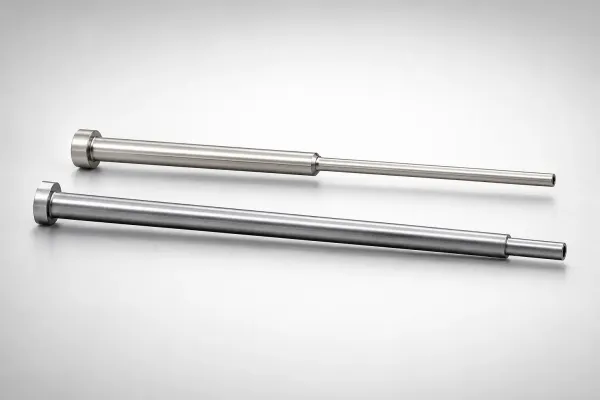
The vertical rule is simple. Match the steel to the stock and the hardness to the hole size. A catalog-grade D2 punch below 3 mm is a chipping incident waiting for a press cycle.
Hardness and Surface Treatment
Hardness is the first lever on perforator life, and it is set by the steel, not by the coating. D2 through-hardens to 58 to 62 HRC. PM-HSS reaches 62 to 66 HRC. Carbide sits far above both. Match the hardness to the stock: soft carbon steel wears a 58 HRC edge slowly, while abrasive silicon steel erodes it fast.
Coatings are the second lever. TiN runs 2,200 to 2,400 HV with a friction coefficient near 0.5 to 0.7 and lifts regrind life 2 to 3 times on abrasive stock. TiCN and TiAlN add heat resistance for high-speed work. CrN suits adhesive materials that gall. A coated perforator costs 15 to 30% more than bare steel and pays for itself before the first regrind.
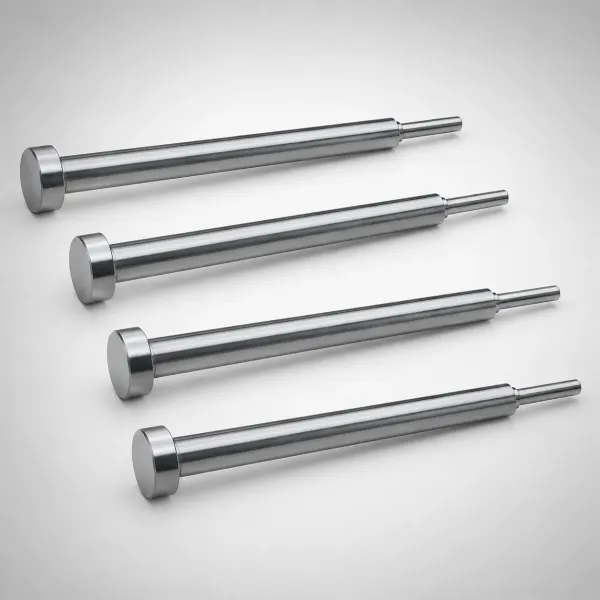
One warning: the retainer and the guide bushing must be harder than the punch that slides in them, or the punch wears the pocket instead of the stock. Hardened retainers at 58 to 60 HRC and guide bushings at 60 to 62 HRC are typical. A soft retainer turns a 0.01 mm pocket into 0.05 mm of play in 200,000 strokes, and that play is the root cause of half the punch breakage in the field.
Head Styles and Retainer Fit
The head transfers the punch force to the retainer, and the retainer transfers it to the punch plate. Three head styles cover the catalog: round head for standard straight punches, shoulder head for positive location, and ball-lock groove for quick change.
Fit is where perforators fail silently. Body-to-guide clearance should run 0.005 to 0.015 mm, and head pocket clearance 0.01 to 0.02 mm. More than 0.02 mm of play lets the punch tilt, and a tilted punch chips on entry and breaks on exit. The back-up plate must sit square under the head, or the head cracks in fatigue after 100,000 to 300,000 strokes.
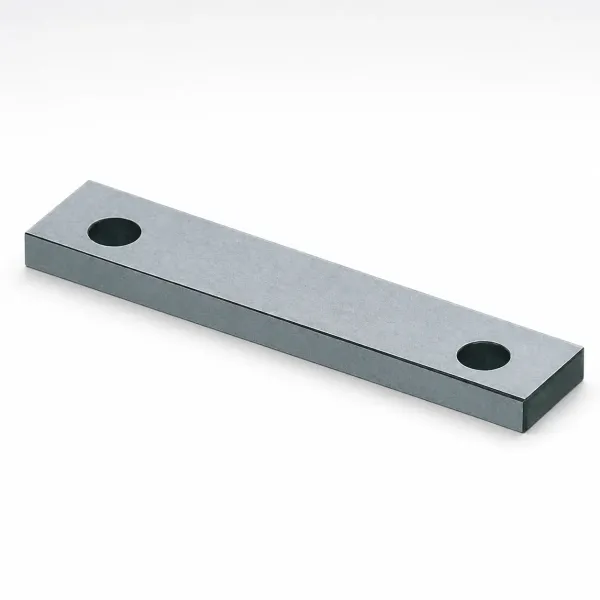
DieStrike grinds heads and bodies in one setup, so head-to-body concentricity holds under 0.01 mm TIR. The punch line covers standard, shoulder and ball-lock styles with matching retainers and guide bushings in the same tolerance class.
Diameter Range and Clearance Rules
Standard perforator diameters run 0.5 to 25.0 mm. Below 1.0 mm the punch becomes a stiffness problem: use PM-HSS or carbide, a guided design, and expect shorter life. Above 25 mm the job usually moves to a custom punch, but the selection rules stay the same.
Die clearance is the gap between the punch and the die button, and it runs 5 to 15% of stock thickness per side. Mild steel takes 8 to 10%. Soft ductile stock like brass and aluminum takes 10 to 15%. Hard stock like stainless and high-strength steel takes 3 to 5%. Too little clearance doubles the cutting force and chips the edge. Too much clearance rolls the slug edge and raises the burr.
Perforating holes allow a clearance at the upper end of the range because the slug is scrap. A punched hole that locates a dowel or a screw needs the tighter end. Verify the rule against the part drawing, then lock it into the die button spec. For the full clearance calculation with worked examples, see our guide on punch clearance in progressive dies.
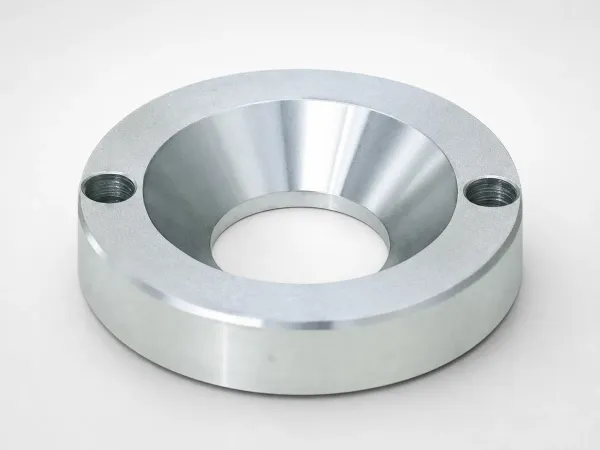
Cutting Force: F = L x t x tau
Every perforator needs a force check before it goes into a die. The formula is F = L x t x tau, where L is the cut perimeter in mm, t is the stock thickness in mm, and tau is the shear strength in N per square mm. Shear strength runs 0.6 to 0.8 of tensile strength for most sheet metals.
Worked example: a 6.0 mm round hole in 1.0 mm SPCC with 350 MPa tensile strength. L equals pi times 6.0, or 18.85 mm. t is 1.0 mm. tau is 0.7 times 350, or 245 MPa. F equals 18.85 x 1.0 x 245, which is 4,618 N, roughly 4.6 kN per hole.
Now scale it: a progressive die with 30 perforators at 6.0 mm in 1.0 mm SPCC peaks near 139 kN just for piercing, before stripping and forming loads. Add 20% margin and the press needs 167 kN of usable capacity. Run the same die with shear angle punches and the peak drops 30 to 50%, which is why shear punches save press tonnage on thick stock.
Stripping force is a second number nobody budgets: typical values run 5 to 20% of cutting force. A die with 139 kN of cutting force strips with 7 to 28 kN. The punch head, the stripper springs and the die buttons all carry that load.
Failure Modes and Regrind Life
Four failure modes dominate field returns: chipping, breakage, wear and galling. Chipping shows as rough hole walls and a star-shaped cutting edge. Breakage snaps the punch below the head. Wear rounds the edge and raises burr height. Galling welds stock material onto the punch.
Regrind life is the practical number. Typical perforators run 100,000 to 500,000 strokes between regrinds on carbon steel, and a die can expect 1,000,000 to 10,000,000 total strokes before punch replacement. Each regrind removes 0.1 to 0.3 mm from the cutting face, and a punch survives 5 to 15 regrinds before the head-to-body stock runs out.
Know when to regrind by the part, not the calendar. Regrind when the burr height exceeds 0.1 mm, when the hole wall shows a burnished band wider than 20% of the stock thickness, or when the cutting edge reflects light, because a bright edge is a worn edge.
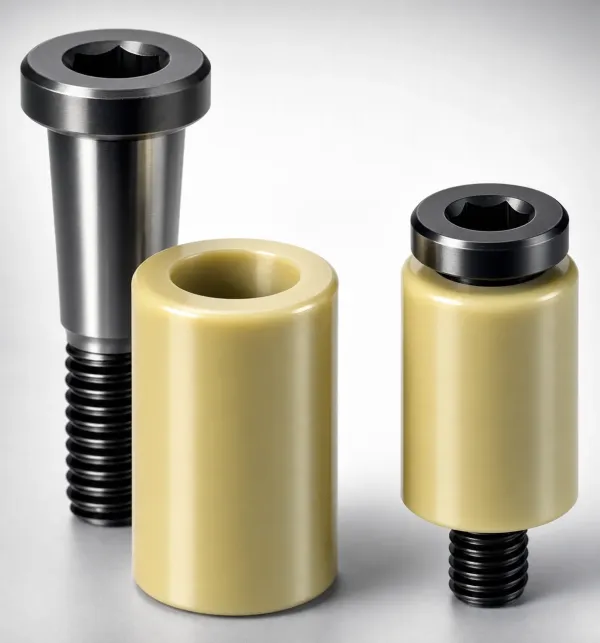
Maintenance holds the gains. Lubricate the punch and the guide bushing every shift with a low-viscosity stamping oil. Check punch-to-button concentricity at every PM, holding 0.005 to 0.01 mm. Watch the stripper: a worn stripper lets the punch buckle before it cuts.
FAQ: Perforator Selection for Stamping Dies
Q1. What size perforator do I need for a 2.0 mm hole in 1.5 mm steel?
Start with a 2.0 mm PM-HSS straight perforator. The hole equals the stock thickness, so the length-to-diameter ratio stays under 5 to 1 and a standard retainer works. Clearance runs 8 to 10% of 1.5 mm, or 0.12 to 0.15 mm per side in the die button. Expect 300,000 to 500,000 strokes between regrinds on mild steel.
Q2. SKD11, PM-HSS or carbide for my perforators?
Match the steel to the hole and the stock. Holes above 3 mm in carbon steel take SKD11 at 58 to 62 HRC. Holes from 1 to 5 mm, high-speed presses and stainless take PM-HSS at 62 to 66 HRC. Holes under 2 mm, abrasive electrical steel and programs above 1,000,000 strokes take carbide at 88 to 92 HRA.
Q3. What clearance do I use for perforating 1.0 mm stainless steel?
Stainless is hard stock, so clearance runs 3 to 5% of thickness per side, or 0.03 to 0.05 mm. The tighter gap raises cutting force, so check F = L x t x tau against the press and consider a coated PM-HSS punch to manage edge wear.
Q4. When should I use a guided perforator?
Use a guided perforator when the hole diameter is smaller than the stock thickness, when the length-to-diameter ratio exceeds 5 to 1, or when the press runs above 400 strokes per minute. The guide bushing keeps the punch true to the button and stops buckling, the most common cause of small-punch breakage.
Q5. How often should I regrind, and how do I know it is time?
Regrind when part burr exceeds 0.1 mm, when the hole wall shows a burnished band wider than 20% of stock thickness, or when the cutting edge looks bright. Typical intervals run 100,000 to 500,000 strokes. Remove 0.1 to 0.3 mm per regrind and track the count in the die log.
The Bottom Line
A perforator is a small part with a big job. One 40 USD punch stopped a die for 6 hours and scrapped a 28,000-part batch, and that sequence repeats wherever selection is treated as a catalog order. Spec the type, steel, hardness, head, clearance and force on the drawing, then verify the retainer fit at assembly.
Choose the guided option when the numbers call for it, regrind on the part's burr instead of the calendar, and keep the retainer and guide bushing harder than the punch. DieStrike grinds perforators from SKD11, PM-HSS and carbide at ±0.002 mm geometry, with heads, retainers and guide bushings in the same tolerance class.
KEEP READING
Related Reading
5 Mold Cooling Channel Design Tips for Faster Cycles
Mold maker's 5 cooling channel design rules: channel-to-cavity distance 2-2.
Read articleArticle5 Shrinkage Compensation Rules for Mold Design
Shrinkage compensation decides mold accuracy. Five rules: material rates from 0.3% to 2.
Read articleArticle5 Ways to Reduce Mold Cost Without Cutting Quality
Five proven ways to reduce injection mold cost without cutting quality: DFM before quoting, right-sized cavity count,…
Read articleArticle7 Gate Design Best Practices for Balanced Filling
Mold maker's 7 gate design rules for balanced multi-cavity filling: gate depth 50-80% of wall thickness, land 0.5-1.
Read articleNEXT STEP
Ready to Start Your Mold?
Send us your element dimensions or part numbers — our team responds within 24 hours with pricing and lead time.

Written by
Ray ChanMold Buyer's Guide Author · Precision Mold Manufacturing Specialist. Ray helps global importers, distributors and OEMs source factory-direct molds and mold parts.