
CNC Machining vs Injection Molding: Which Route for Your Parts
Table of Contents
At 9:40 a.m. on Monday, a pump OEM buyer compared a 420-piece housing run at $18.60 each machined versus $2.10 each molded. The $16.50 gap looked decisive until the engineer added the $26,000 mold and the 9 week tooling schedule. Six weeks later the program had shipped 420 machined parts, absorbed 2 design revisions, and carried zero tooling risk.
Every plastic part program from 1 to 5,000 pieces hits the same fork. CNC machining starts cutting the day the drawing lands, with no tooling investment and a per-part price of $5 to $200. Injection molding spends $3,000 to $100,000 on a mold first, then makes parts for cents with cycle times under a minute. DieStrike does both, precision CNC machining for mold components and complete injection mold builds. This guide compares the two routes without a bias toward tooling spend.
This guide walks the decision in the order a buyer actually thinks: quantity, geometry, material, tolerance, cost and lead time. The hybrid route that most programs should run comes last. Figures are typical industry values with ranges. DieStrike capabilities are called out only where they change your planning.
The Snapshot
- CNC machining needs no tooling and prices parts at $5 to $200 each, scaled by size and material.
- Production molds run $3,000 to $100,000, then make parts at $0.30 to $5.00 before amortization.
- The cost crossover usually sits between 500 and 10,000 parts, moving with part size and geometry density.
- Machined parts hold ±0.05 mm typically and ±0.01 mm on precision work; molded parts hold ±0.1 mm typically and about ±0.05 mm under shrinkage control.
- Machined parts ship in 3 to 10 days, while a mold takes 2 to 5 weeks plus T1 sampling before volume runs.
The Quantity Question: 10 Parts or 100,000
Quantity sets the anchor of the whole decision. A 10 piece run never pays for a mold, and a 100,000 piece run never survives long on one CNC machine. The crossover zone, where total cost curves cross, typically spans 500 to 10,000 parts. Where a program lands inside that zone depends on size, geometry and material.
Below roughly 500 pieces, machining wins on almost every program. Total cost stays flat because there is no tooling line, and the buyer keeps the freedom to change geometry between orders. The same $26,000 mold that made the opening quote look cheap would add $62 per part at 420 pieces before the first shot.
A 10 piece validation run costs $50 to $600 machined, against $3,000 just to start a mold program. That ratio alone sends most low-volume buyers to CNC.
Between 500 and 10,000 pieces the answer splits by part. A thick 160 mm valve body favors machining past 5,000 units, because molded wall thickness limits would force a redesign. A thin-wall housing with ribs, bosses and snap-fits favors molding near 1,000 units. Those features are nearly free in a mold and slow to machine.
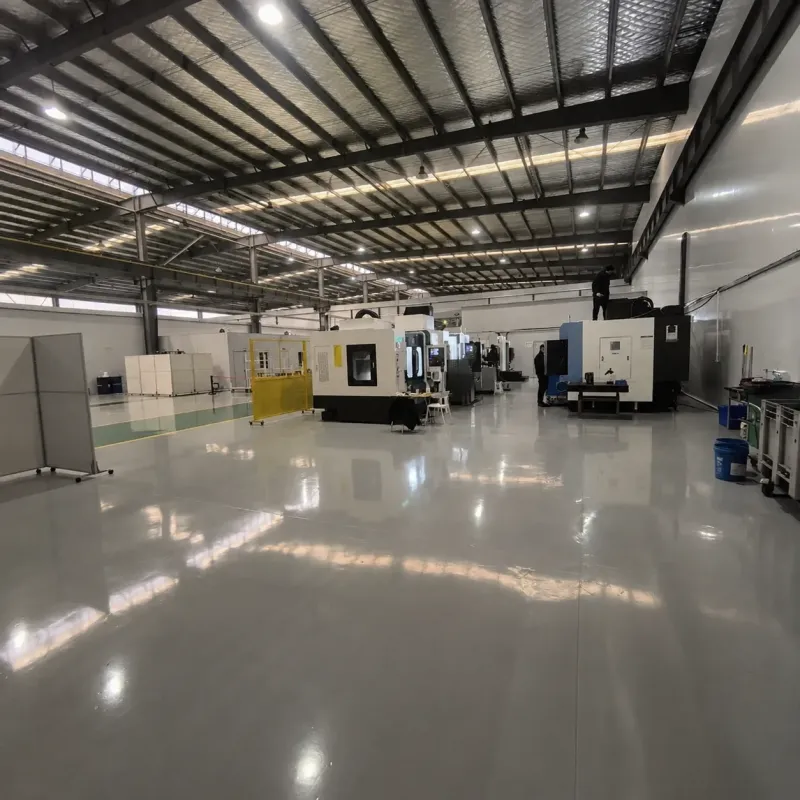
Above 10,000 parts with steady demand, molding usually wins on per-part cost and consistency. Multi-cavity tools push output past 100,000 parts per week at cycle times of 15 to 60 seconds. A single CNC at 30 minutes per part makes 48 parts per day, so 10,000 parts needs 208 machine days.
Watch demand certainty too. A molded program pays its tool cost once and amortizes it over confirmed orders. If the forecast slips by 30%, the tool still must be paid. Machining scales down gracefully; molding carries sunk cost.
Geometry: What Machining Cannot Make
Machining removes material from a block, so every feature must be reachable by a cutter. Injection molding fills a cavity, so it can form a closed box, a hollow handle or an internal chamber in one shot. That single difference drives most geometry decisions between the two routes.
Internal corners are the first tell. A cutter leaves a radius at every inside corner, roughly 0.3 to 1.0 mm depending on tool diameter. A mold can produce a corner near zero radius. Designers usually specify 0.25 to 0.5 mm in molded corners anyway, so the gap matters most on square pockets and keyways.
Thin walls show the second limit. Machined walls below 1 mm deflect under cutter load and chatter. Machining prefers walls of 1.5 mm and up, and thick sections give it no trouble at all. Molding runs 0.8 to 3.5 mm walls as standard and penalizes sections over 4 to 5 mm with sink marks. Thick parts belong to machining; thin-wall boxes belong to molding.
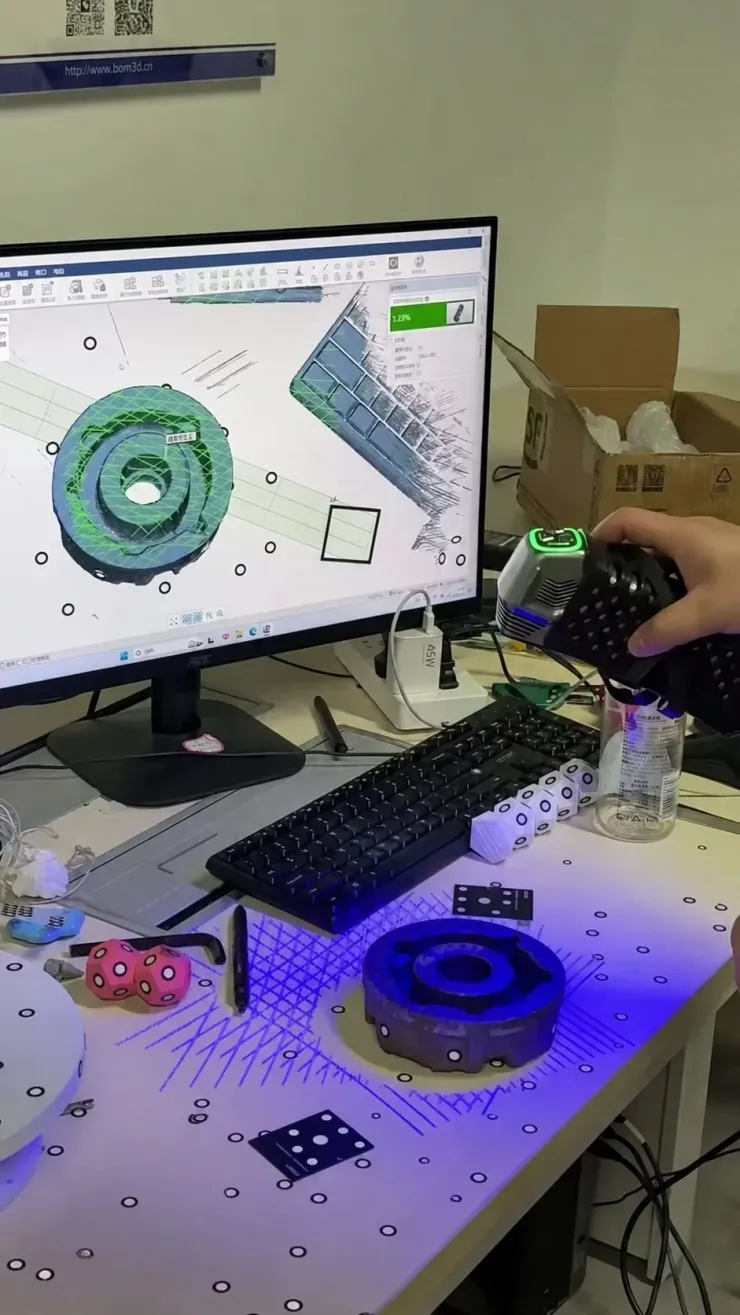
Ribs, bosses, snap-fits and living hinges are where molding runs away with the economics. A rib adds almost nothing to a mold, and 4 to 6 snap-fit features cost the same cycle. Machining each rib or snap means extra tool paths, and many thin snap fingers cannot survive machining without breaking.
Undercuts separate the routes less cleanly. A 5-axis machine can reach many undercuts that a 3-axis mill cannot, and draftless vertical walls are no problem at all. A molding undercut needs a side action or lifter that adds $2,000 to $15,000 to the tool. Closed undercuts, like a fully enclosed ball socket, force machining to split the part into two pieces and join them.
Internal features decide the route before corners do. A machined pocket stays open to the cutter, but a mold hides a thread, a valve seat or a barbed fitting inside a closed form. When the drawing shows more than 3 internal features, ask whether the part can be cut at all or must be molded.
Geometry change frequency is the last factor. Every revision to a machined part is a program edit; every revision to a molded part may mean cutting steel. Programs with 2 or more expected design iterations should start machined, and our design-for-moldability rules apply before any steel is cut.
Material: Plate Stock vs Molded Compound
The two routes start from different material forms. CNC machining cuts plate, rod and tube stock of acetal (POM), nylon, PTFE, PEEK, UHMWPE and acrylic, among others. Injection molding melts pellets that can carry glass fibers, minerals, lubricants and flame retardants.
Machined unfilled stock is largely isotropic. Extruded and cast bar may show mild orientation. A machined acetal part carries the same stiffness and creep behavior in every direction, tied to the resin datasheet of the stock. Bulk mechanical values stay predictable because the part is cut from the material you test.
Molded compounds trade that isotropy for reinforcement. Glass fibers at 10 to 40% by weight lift stiffness and strength by 2 to 3 times, but fibers orient along flow during fill. A molded 30% glass POM part is stiff in the flow direction and softer across it. Weld lines where flow fronts meet are the weak seam.
Property certification differs between the routes. Machined parts can ship with mill test reports from the stock lot, giving traceable modulus and hardness data for regulated files. Molded parts carry the resin certificate plus process records, and final properties depend on how the part was molded. Ask which document your customer's file actually needs.
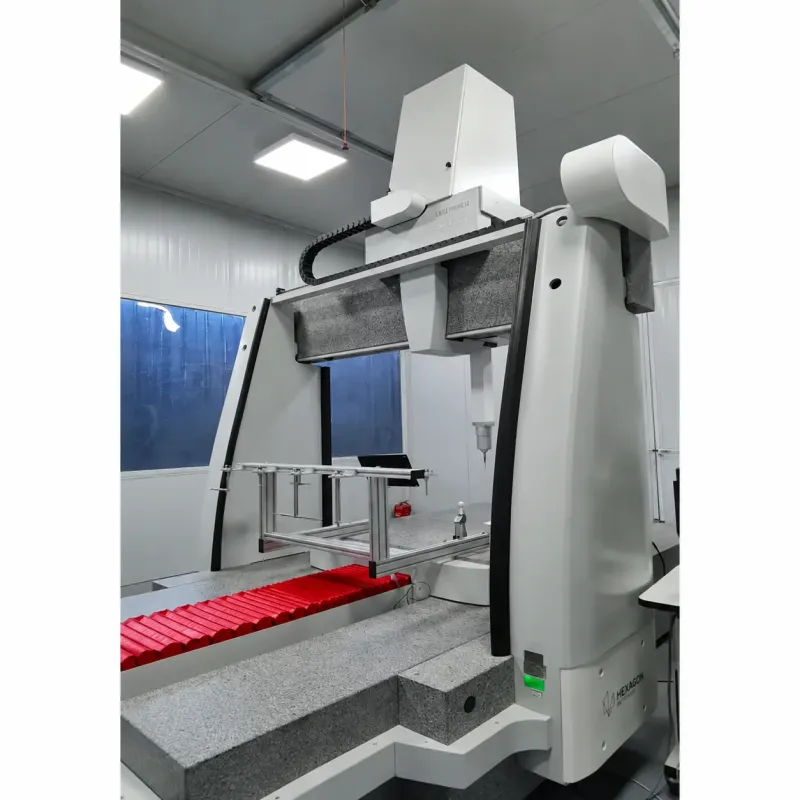
Price per kilogram moves too. Filled compounds can deliver more stiffness per dollar than virgin resin, because reinforcement replaces expensive polymer. Machined stock waste is real: cutting a 40 mm housing from a 60 mm plate discards 30 to 50% of the material as chips. Molding puts nearly every gram into the part plus a recyclable runner.
Some materials are only practical on one route. PTFE rarely molds well and is usually machined or skived from stock. A resin that ships only as 40% glass pellets is molding-only. Check stock availability before you commit to machining, and check molded property orientation before you commit to molding.
Tolerance and Surface Finish
Tolerance bands set expectations early. CNC machining holds ±0.05 mm on typical features and ±0.01 mm on precision controlled work. Injection molding holds ±0.1 mm on commodity dimensions, tightening to about ±0.05 mm on critical features under shrinkage control.
The gap comes from how each process makes size. A machined dimension is cut once by a tool path with a known position error, so it repeats part to part. A molded dimension depends on resin shrinkage of 0.3 to 2.0%, packing pressure, cooling rate and ejection temperature. Every variable must be tuned to hold a tight band.
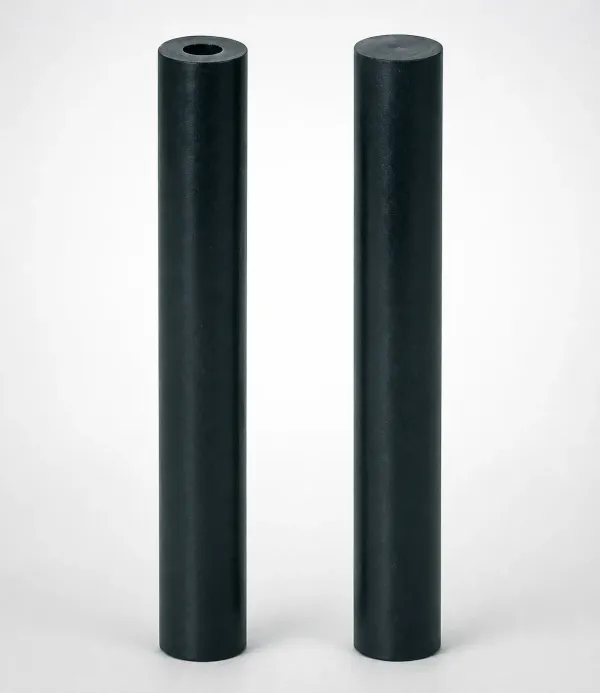
Shrinkage control is the toolmaker's answer. The cavity is cut oversize by the predicted shrink, then trial samples at T1 are measured and the cavity is corrected. Precision molding programs hold critical dimensions to about ±0.05 mm this way. The steel cavity itself is machined and ground to ±0.005 mm, so the starting geometry is not the weak link.
Warpage is the molded tolerance killer. Thin walls, glass fill and uneven cooling twist a part after ejection, moving dimensions the cavity never controlled. Machined parts keep their cut geometry because no shrink or cooling gradient exists. Flatness-critical faces often decide the route before any other feature.
Surface finish follows a similar split. Machined plastic shows cutter marks at Ra 0.4 to 1.6 µm as standard, improvable with finer tools, polishing or vapor smoothing. Molded parts replicate the cavity finish, from a mirror SPI A-1 polish down to textured surfaces. They carry their own signatures: gate vestige, ejector pin marks and weld lines where flow fronts meet.
Mating surfaces matter most in practice. When a plastic part locates a metal insert or seals against a counterface, machined datums are cut on the same setup and hold position repeatably. Molded fits depend on gate placement, packing and warpage across the whole cavity.
Cost Model: No Tooling vs Tooling Amortization
The clean comparison is total cost at a planned quantity. Machined total cost is quantity times a per-part price of $5 to $200. Molded total cost is the tool, $3,000 to $100,000, plus quantity times a per-part price that often lands between $0.30 and $5.00 before amortization.
The crossover quantity is the tool cost divided by the per-part saving. A $26,000 mold against a $16.50 saving per part crosses at about 1,576 parts. Below that quantity the buyer pays a premium for tooling; above it, molding pays back.
Example programs show how part size moves the crossover.
| Program Example | Mold Cost (USD) | Machined Each (USD) | Molded Each (USD) | Crossover Quantity |
|---|---|---|---|---|
| Small clip, 20 mm | 9,000 | 6.00 | 0.40 | ≈ 1,600 |
| Mid housing, 80 mm | 26,000 | 38.00 | 1.90 | ≈ 720 |
| Large valve body, 160 mm | 48,000 | 78.00 | 4.80 | ≈ 655 |
← swipe to scroll →
Table: example crossover math. Crossover = mold cost divided by the per-part saving. Planning figures only, quote your own program.
Small simple parts cross over high, because machining them is cheap per unit. Large thick parts cross over low, because machined cost climbs with material and machine time. The 500 to 10,000 part band covers most real programs.
Do not stop at the happy-path table. Molded economics assume the geometry is frozen, and a change after steel cutting costs $500 to $5,000 per modification round plus schedule. Machined economics assume a stable material and quantity, with per-part price falling as you order more. The levers that move a $20,000 tool to an $80,000 tool are covered in our how to budget an injection mold guide.
Lead Times: Days vs Weeks
Time to first parts is the second biggest differentiator. A machined order with a 3D model quotes in 1 to 2 days and ships in 3 to 10 days. A mold program spends 2 to 5 weeks building steel, then runs T1 sampling before parts are usable.
Mold lead splits into build and sample. Most production tools build in 2 to 5 weeks depending on size and cavity count. T1 trial, measurement and correction then add 1 to 2 weeks. A volume release with PPAP documentation can stretch the program to 6 to 8 weeks total.
Sampling adds a stage machining never sees. Molded parts go through T0 to T2 trials, dimensional reports and process window checks before the press is released. Machined parts need one inspection report, then they ship. For a 3 month program, that sampling overhead can eat 20 to 30% of the schedule.
Every design iteration on the machined route costs days, not weeks, because the program file is simply re-cut. On the molded route, an iteration after steel cutting means a $500 to $5,000 modification and a fresh trial. If the release date can move, machining absorbs the risk; molding does not.
Once approved, molding outruns machining on output. A single cavity makes one part every 15 to 60 seconds, so one press day yields 1,400 to 5,700 parts. A CNC machine at 20 to 90 minutes per part makes 16 to 72 parts a day. A run of 10,000 parts at 45 minutes each is 7,500 machine hours, or 10 machines running around the clock for a month.
Lead time also decides who carries inventory risk. Machined parts are ordered against demand and arrive in days, so stock stays thin. Molded economics reward long, stable runs, so the buyer carries weeks of finished goods. For a program with 2 or more release windows a year, that inventory difference alone can justify machining.
The Hybrid Route: Machined Prototypes, Molded Production
Most professional programs do not pick one route; they sequence both. Machined prototypes validate fit, function and the real material, then the proven geometry is committed to steel. The prototype phase typically costs $500 to $5,000 and removes the most expensive mold revisions.
Machining serves validation best when the prototype is cut from the production-grade resin. Testing a 30% glass compound is only meaningful if the sample uses 30% glass stock or a molded coupon of the same grade. Function, tolerance stack and assembly tests all transfer directly into the mold design.
Repeat the validation at the right quantity. One machined sample proves the concept, but 30 to 100 samples prove the assembly line, the torque spec and the drop test. That second batch still costs far less than a mold revision made after production starts.
Keep the machined parts once the mold runs. They become the dimensional reference for T1 measurement, the master for color approval and the spares for test fixtures. A mold program without machined masters spends extra trial cycles proving what the drawing already says.
Bridge tooling extends the hybrid into early production. Machined aluminum or P20 inserts run the first hundreds of parts while a hardened steel tool is still being cut. Our related guide on 3D printed versus machined inserts examines that trade-off. When volumes stay under a few thousand, some programs keep the soft tool as the final tool.
Bridge tooling matters most when the program is urgent. A soft insert tool delivers parts while the production tool finishes, and the hybrid pays for itself when revenue starts 2 to 4 weeks early. The schedule math rarely favors waiting for the hard tool to sample first.
T1 sampling is where the hybrid handover happens. The mold builder runs trial shots, measures the parts against the machined prototype, and corrects shrinkage and gating issues. Our mold trial and T1 sampling service runs that loop with a dimensional report at every step.
Choose the hybrid when the design is still moving but the volume is real. Go straight to molding only when the geometry is frozen, the forecast is firm and the features are molding-native. The machined prototype is never wasted, because its measurements feed the cavity compensation.
Decision Table: Machined or Molded
The table below condenses the comparison into one screen. Treat quantity as the first gate, then filter by geometry and material. Rows describe typical industry behavior, not a promise for your specific program.
| Decision Factor | CNC Machined | Injection Molded |
|---|---|---|
| Quantity sweet spot | 1 to 500 parts, up to 5,000 for thick parts | 1,000 to 100,000+ parts with firm demand |
| Tooling cost | None | $3,000 to $100,000 |
| First parts lead | 3 to 10 days | 2 to 5 weeks plus T1 trial |
| Tolerance band | ±0.05 mm typical, ±0.01 mm precision | ±0.1 mm typical, ±0.05 mm controlled |
| Wall thickness | 1.5 mm and up; thick sections fine | 0.8 to 3.5 mm typical; thick sections sink |
| Ribs, snap-fits, bosses | Slow tool paths; thin snaps fragile | Nearly free once the cavity is cut |
| Undercuts | 5-axis reaches many; closed ones need splits | Side actions and lifters add $2,000 to $15,000 |
| Draft requirement | None, vertical walls fine | 0.5 to 2 degrees per side typical |
| Material form | Plate, rod and tube stock, isotropic | Pellets with glass, minerals and additives |
| Best for | Prototypes, low volume, thick parts, changes | Volume, thin-wall complexity, per-part cost |
← swipe to scroll →
Table: typical industry comparison by decision factor. Verify crossover and tolerance claims against quotes for your own drawing.
No row decides alone. A part can be low volume yet molding-native, or high volume yet machining-only because it is thick and simple. Use the crossover math from the cost section to turn this table into a number.
FAQ: CNC vs Injection Molding
Q1. How many parts before injection molding beats CNC machining?
Run the crossover math: mold cost divided by the per-part saving. Typical programs cross between 500 and 10,000 parts. Small simple parts cross near the top of that band; large or thick parts cross near the bottom, because machined cost per part is higher.
Q2. Can CNC machining make ribs, snap-fits and bosses?
Yes, but each feature adds tool paths and cycle time, and thin snap fingers below 1 mm are fragile to cut. Molding adds the same features at almost no cost once the cavity is cut. If a design leans on thin ribs and snaps, treat that as a signal toward molding at sufficient volume.
Q3. Which materials can be CNC machined versus molded?
Machining uses plate and rod stock: acetal (POM), nylon, PTFE, PEEK, UHMWPE and acrylic are common. Molding starts from pellets, so it can add glass at 10 to 40%, minerals, lubricants and flame retardants. PTFE is usually machined; highly filled compounds are usually molded.
Q4. Why do molded parts hold looser tolerances than machined parts?
A machined dimension is cut once with a known tool path error, so it repeats. A molded dimension depends on shrinkage of 0.3 to 2.0%, packing, cooling and ejection temperature. Precision molding with shrinkage control holds about ±0.05 mm on critical features, where precision machining holds ±0.01 mm.
Q5. Should I prototype in CNC even if production will be molded?
Yes, in most cases. Machined samples validate fit, function and material choice before tooling money is spent, and their measurements feed the cavity compensation. A $500 to $5,000 prototype phase routinely prevents a $5,000 to $50,000 steel correction later.
The Bottom Line
CNC machining and injection molding are complements, not rivals. Machining wins at low quantity, thick geometry, moving designs and fast delivery, with no tooling at risk. Molding wins at volume, thin-wall complexity and per-part cost once the tool is amortized.
DieStrike builds IATF 16949 molds on 120+ machines in 2 to 5 weeks, with cavity steel at HRC 62 and ±0.005 mm standard precision. Its programs for connector OEMs including TE Connectivity, Amphenol and Luxshare apply the same discipline to machined components and molded parts alike.
Start with machined samples while the design moves, and move to a mold when the geometry freezes. Run the crossover math at your real quantity, then send the same drawing to both sides of the shop.
KEEP READING
Related Reading
3D Printed Inserts vs Machined Inserts: When Each Wins
Machined steel inserts hold ±0.005 mm and survive 500+ shots; printed inserts cut cost at 1-100 parts but wear fast. When each wins, in one read.
Read articleArticleHow to Budget an Injection Mold: 5 Cost Levers
Five levers set mold price: cavity count, steel grade, tolerance class, automation and surface finish. Each can move a $20k quote to $80k.
Read articleArticleHow to Prototype Molds in 2 Weeks
Machined cavity inserts, DFM by day 1 and parallel trial planning cut prototype mold lead to 2 weeks. The full fast-track path, step by step.
Read articleServiceInjection Mold Manufacturing
Precision injection molds built in house, single cavity to 64-cavity hot-runner tooling, IATF 16949 quality system with PPAP-ready documentation.
Read articleNEXT STEP
Ready to Start Your Mold?
Send us your element dimensions or part numbers — our team responds within 24 hours with pricing and lead time.

Written by
Ray ChanMold Buyer's Guide Author · Precision Mold Manufacturing Specialist. Ray helps global importers, distributors and OEMs source factory-direct molds and mold parts.