
How to Budget a Stamping Die: Cost Drivers and Quoting
Table of Contents
A 12 station progressive die quoted at 18,500 USD looks like a 12,000 USD saving against the next bid. Then the die plate wears 0.15 mm out of tolerance, the punches take four regrinds instead of twenty, and the tool stops at 400,000 strokes instead of the 6 million promised at kickoff. The rebuild lands at 26,400 USD. The press sits idle for 11 days while two stations are re-cut and re-spotted. The savings vanished in the second month of a five year program.
Stamping die cost is not a mystery number that depends on the supplier's mood. It is the sum of measurable things: how many stations the strip needs, how far the strip advances per stroke, how wide it is, which steel the cutting edges use, and how many hours of design, machining, EDM and bench time the tool consumes. Size the stations and the strip and you can predict 70% of the price before you ever send an RFQ. This guide breaks the structure apart with industry figures, works a full 12 station progressive die quote line by line, and shows the two rows where suppliers hide margin.
The Snapshot
- A 10 to 14 station progressive die typically lands at 25,000 to 55,000 USD in Asia-built tooling and 2.5 to 3.5 times that in Western builds, driven mostly by machine hours, not steel.
- Die cost scales with station count at roughly a 0.6 to 0.8 exponent, so an 8 station die is not half the price of a 16 station die.
- Standard components such as punches, guide posts, gas springs and cam units run 15% to 20% of the die price, and they are the first line item a low bidder trims.
- Die life for D2 cutting edges runs 3 to 8 million strokes with 15 to 25 regrind events, which amortizes tooling to 0.003 to 0.005 USD per part at 6 million strokes on a two-out die.
- Tryout, coating and inspection are commonly excluded from headline pricing and add 2,400 to 7,500 USD across three trial rounds.
Why Stamping Die Budgets Fail
Most stamping tooling budgets fail in one of three places. The buyer compares prices between suppliers who quoted different die classes. The buyer treats the die as a one-time cost and ignores the regrind and spare parts stream. Or the buyer anchors on a number from a simpler part that shared none of the same features.
Quotes are not comparable without scope. Two suppliers can quote the same bracket and land 2.5 to 3.5 times apart, both honestly. One quoted an 8 station die with soft die plates and no coating. The other quoted a 12 station die with hardened inserts, TiCN coated cut edges and three tryout rounds. The strip layouts are different. Only one of them will hold a 0.05 mm burr limit at 900 strokes per minute.
The die cost is not the tooling cost. A 32,460 USD die that runs 6 million strokes at two parts per stroke spreads 0.0038 USD of tooling onto every part. The same die run for 400,000 strokes spreads 0.229 USD per part, sixty times more. Volume decides which die class is correct, and the die class decides the price. Budgeting the die before you fix the annual volume is the single most common error in stamping procurement.
Hour-driven cost is invisible in a lump sum. Roughly 55% of a die price is someone's machine, bench or design time: CNC milling, wire EDM, sinker EDM, grinding, spotting and tryout. A supplier who cannot show hours per category is asking you to trust a number you cannot audit. Ask for hours and rates. An honest shop will send them.
What Drives Stamping Die Cost
Five variables move a stamping die price. In order of impact they are station count, strip width, part tolerance and feature mix, die class or required stroke life, and the forming content inside the strip layout. Material grade sits further down the list than most buyers expect.
Station count sets the shell of the tool. A blanking die with one station and a 20 station progressive die share the same design labour, the same die shoe, the same press connections and the same inspection report. That fixed base is why cost does not halve when station count halves. Industry data fits a power law with an exponent near 0.6 to 0.8. Going from 8 to 16 stations raises price by roughly 55% to 75%, not 100%.
Strip width sets the mass and the machine envelope. Every 10 mm of extra strip width adds 10 mm to the die block, the punch holder, the stripper and both shoes. Plate mass rises about 12% for a 10 mm width increase on an 85 mm strip. Mass then drives handling, crane time, grinding capacity and press compatibility checks.
Tolerances and features set the machining route. A cut edge held to ±0.02 mm needs wire EDM, not milling. A form radius blending into a 15 mm flange needs a polished form insert and extra tryout iterations. Each tolerance step down from general ±0.1 mm to ±0.02 mm adds an estimated 8% to 15% to the station cost because it changes which machine does the work.
Die class sets the steel and the build quality. A prototype class die with 300,000 stroke target uses pre-hardened plates and uncoated D2. A Class A automotive die targeting 10 million strokes uses hardened inserts, coated cut edges, replaceable wear sections and full documentation. The gap between those two tools is 2 to 3 times the price, and neither is wrong if the volume matches.
Station Count, Pitch and Strip Width
Station count, pitch and strip width are the three numbers that define how much steel, how much machining and how much bench time the die consumes. Get them from the strip layout, not from a catalogue.
Die length follows pitch. Working length is roughly station count times pitch, plus 60 to 100 mm for entry and exit, scrap cutters and end blocks. Twelve stations on a 42 mm pitch gives 12 times 42 mm plus 80 mm, so about 584 mm of working length. The die shoe runs 600 to 700 mm long and the die mass lands at 700 to 1,200 kg for the full stack.
Pitch is the most expensive millimetre in the layout. Adding 10 mm of pitch on a 12 station die adds 120 mm of plate length. The steel for that change costs about 123 USD at 4.2 USD per kg. The machine time costs 1,800 to 2,600 USD, because wire EDM travel, milling envelope and grinding all grow with plate size. Compress the pitch by cutting carrier waste, and the savings are real.
Per-station cost is not uniform. A plain piercing station runs 700 to 1,200 USD once the base is amortized. A forming station with a form insert, radius blending and spring pressure runs 1,400 to 2,600 USD. A cam station for side piercing or side forming adds 2,800 to 4,500 USD because of the cam unit, wear plates, return springs and the extra spacing the cam body demands.
Strip width is a mass multiplier. Widening the strip 20 mm on an 85 mm layout raises plate area about 24% and adds an estimated 2,400 to 3,400 USD of machining and material. It also pushes the die toward the next press size class. Check press bed and shut height compatibility before you approve a wider strip to save material yield.
Web and carrier width are cost, not just strength. A 3 mm carrier web instead of 6 mm releases 3 mm of strip width and shortens the die block. Thin carriers demand better strip guidance and stricter clearance control. Budget 400 to 900 USD for added pilot pins and side guides if you go thin.
Standard Components: 17.1% of the Die Price
Standard components are the purchased parts inside the die: punches, pilots, guide posts and bushings, springs, cam units, dowels and fasteners. They run 15% to 20% of a typical die price, and they are the line item a low bidder trims first because buyers rarely open the bill of materials.
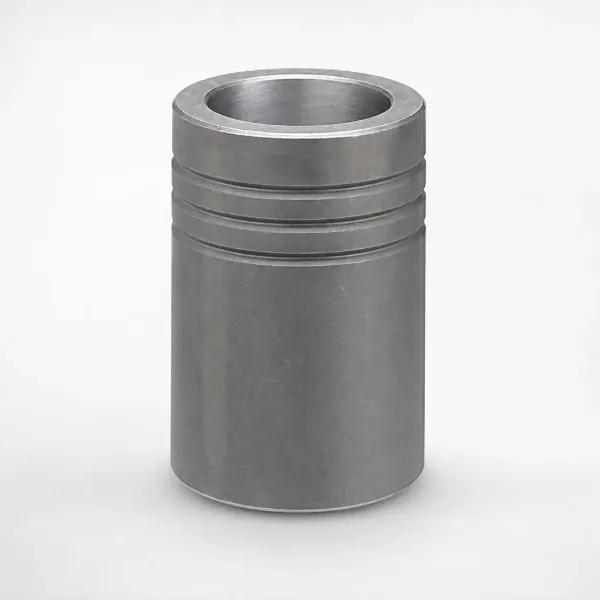
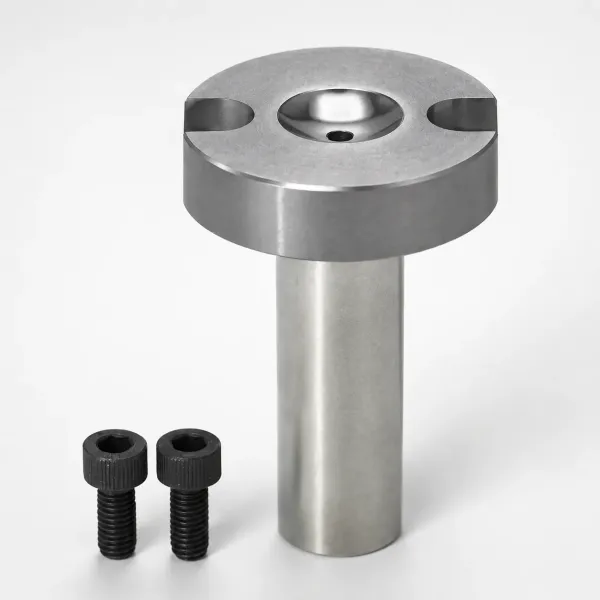
Per-piece costs are published and comparable. A ball-lock punch in D2 or M2 with a 10 to 20 mm body runs 28 to 95 USD. The same punch in PM-HSS runs 70 to 180 USD and multiplies edge life by 2 to 4 on abrasive stock. Perforators and pilot pins run 35 to 70 USD. Shoulder punches run 22 to 60 USD. These are catalogue parts, so a quote that inflates them by 3 times is easy to spot.
Larger components carry more leverage. A guide post and bushing set in the 25 to 32 mm range costs 180 to 480 USD, and a 12 station die uses four sets. Coil springs cost 12 to 45 USD each, while an ISO 11901 nitrogen gas spring costs 220 to 650 USD and holds a flat force curve over 1 to 2 million strokes. A standard side cam unit costs 320 to 900 USD depending on stroke length from 25 to 80 mm and its force rating.
Count the parts, then price the count. Our 12 station example uses 28 punches averaging 42 USD, 6 pilots and perforators at 55 USD, 4 guide sets at 320 USD, 16 coil springs at 45 USD, 2 gas springs at 480 USD, 2 cam units at 420 USD and 250 USD of dowels, SHCS and stripper bolts. That is 5,556 USD, or 17.1% of the die price. A bid that lands at 3,200 USD for the same scope has substituted uncoated punches, thinner guide posts or non-replaceable inserts.
Replaceability is the hidden specification. Ball-lock punches from any mainstream standard supplier drop into a standard retainer without re-machining. Custom punches welded or pressed into a holder do not. Ask for the as-built punch list with sizes and part numbers so replacement is a catalogue order instead of a die rebuild. Our catalogue punch range covers ball-lock and shoulder formats, and stock sizes ship in 3 to 7 days.
Stock availability compresses schedule. Standard parts ship in 3 to 7 days from stock, while special punches and inserts take 10 to 15 days. The part list therefore decides whether a die can be finished in a 2 to 5 week window or slips a week waiting on a custom punch.
Steel and Carbide: The Material Account
Steel is 20% to 26% of the die price, and the grade mix inside that number decides how often the die comes out of the press. Published figures per kilogram keep the account honest.
Plate steel is the bulk, not the expense. Unhardened die shoes, backing plates and spacers in 1.1730 or S50C run 2 to 4 USD per kg. A 12 station die uses 600 to 800 kg of plate steel, so the plate bill lands near 2,900 USD. Plate steel dominates mass and handling cost, but tool steel dominates wear performance.
Cutting and forming steel carries the money. D2 (1.2379) plate runs 6 to 12 USD per kg and hardens to HRC 58 to 60 after austenitizing and triple tempering. A2 (1.2363) runs 7 to 13 USD per kg and tolerates better tough shock loading at HRC 57 to 59. M2 high speed steel runs 15 to 30 USD per kg. Powder metallurgy grades such as ASP 23 class PM-HSS run 45 to 90 USD per kg and hold edge sharpness 3 to 5 times longer on stainless or high strength low alloy stock. Our die steel selection guide compares toughness, wear and cost per stroke.
Carbide changes the math on very high volume. Tungsten carbide inserts cost 25 to 120 USD per small punch, or roughly 60 to 150 USD per kg of equivalent stock. Carbide resists abrasive wear 4 to 8 times longer than D2 and holds ±0.005 mm edge geometry far longer, but it is brittle under side load. Carbide earns its place when annual volume exceeds 1 million parts and the press and feed system are tight enough to protect it.
Where the material account lands. Our example consumes 700 kg of plate steel, 180 kg of D2 inserts, 80 kg of A2 forming sections, 14 kg of PM-HSS punch stock and 242 USD of shims and spare blanks. That totals 6,990 USD, down from a common assumption that steel dominates the price. It is 21.5%. Hour-driven work is larger. We harden components up to HRC 62 where abrasive stock demands it, and every batch carries a hardness report.
Design Hours and Machine Hours
Design and machining are about 55% of the die price combined in most builds, and they are the categories suppliers describe least. Here are the ranges behind a 12 station progressive die.
Design and DFM. A 10 to 14 station progressive die takes 50 to 80 design hours at 40 to 60 USD per hour, covering strip layout, station sequencing, punch and die block design, spring and pilot selection, and press interface drawings. Feasibility feedback on the part itself comes back in 24 hours, before any detailed design starts. Cutting design hours below 40 for a 12 station tool usually moves the errors into tryout, where each correction costs 3 to 5 times a design change.
CNC milling and grinding. Plate preparation, pocket milling, heel and block grinding run 200 to 280 hours at 25 to 35 USD per hour. Hardened insert pockets need hard milling or jig grinding after heat treatment, and that step alone runs 20 to 40 hours.
Wire EDM and sinker EDM. Wire EDM cuts punch and die contours and sets the clearance geometry, running 150 to 220 hours at 20 to 28 USD per hour. Sinker EDM handles closed corners, blind pockets and form radii, adding 15 to 40 hours at 28 to 38 USD per hour. Tolerance drives this number: a ±0.02 mm contour needs multiple skim passes, which roughly double the machine time over a single rough pass.
Bench assembly, fit and tryout. Fitting punches, spotting dies, setting spring pressure and rebuilding after each tryout runs 140 to 220 bench hours at 22 to 32 USD per hour. A typical tool needs 2 to 3 tryout rounds, each 8 to 16 hours including press time and part measurement. Our stamping die manufacturing workflow runs stamping dies on a 2 to 5 week lead time with tryout and first article data included in the scope, not billed as a surprise.
Ask for the hour sheet. When hours and rates are listed by category, a buyer can benchmark the two biggest line items in ten minutes. When a quote shows design, steel, machining and tryout as one lump, nothing inside it can be verified.
Die Life and Regrind Amortization
Die price divided by die life gives the per-part tooling cost, and that number decides whether a 32,476 USD die is good value or a liability. Die life depends on steel, clearance control and the regrind program.
Stroke life baselines. D2 punches and die inserts at HRC 58 to 60 deliver 3 to 8 million strokes before a major rebuild when clearance is held at 5% to 10% of stock thickness per side. Carbide inserts reach 10 to 20 million strokes under the same discipline. Soft die plates at HRC 45 or lower often stop the tool at 300,000 to 800,000 strokes, which is where a cheap quote shows its true cost.
Regrinds are the servicing cost. On 1.2 mm cold rolled steel, regrind intervals run 150,000 to 400,000 strokes. Each pass removes 0.05 to 0.08 mm from the punch face, and a punch with 1.2 to 1.5 mm of usable stock takes 15 to 25 passes. A regrind event on a 12 station die, including grinding the punches and die inserts, re-shimming height and re-spotting the station, costs 350 to 900 USD. The regrind schedule you set at handover decides whether those events are planned 3 hour stops or unplanned 14 hour failures.
Amortization math on the example die. Take 6 million strokes on a two-out die. That is 12 million parts. The die at 32,476 USD costs 0.0027 USD per part. Eighteen regrind events at 600 USD add 10,800 USD, or 0.0009 USD per part. Replacing 28 punches twice at 45 USD adds 2,520 USD, or 0.0002 USD per part. Total tooling cost lands at 45,796 USD over 12 million parts, which is 0.0038 USD per part, under half a cent.
The same die at low volume is a different tool. Run the same 32,476 USD die for only 200,000 parts and the tooling cost per part becomes 0.229 USD, sixty times higher. At that volume a compound die at 11,500 USD would cover the same parts at a far lower tooling cost per part. Die life and annual volume belong in the same budget worksheet, not in separate departments.
Tooling Cost Breakdown by Category
The table below is the cost structure of a 10 to 14 station progressive die. The shares are typical values, and they add to 100%. Use them to test whether a quote has a category that is implausibly low.
| Cost category | Typical share | What moves it |
|---|---|---|
| Die steel and plate material | 21.5% | Strip width, plate mass, D2 and A2 insert weight, PM-HSS punch stock |
| CNC milling and grinding | 20.0% | Plate size, pocket count, hardness at the time of cutting |
| Standard components | 17.1% | Punch count, guide post sets, springs, gas springs, cam units |
| Wire and sinker EDM | 14.0% | Contour tolerance, closed corners, skim passes, form radii |
| Bench assembly, fit and tryout | 13.6% | Station count, forming content, number of tryout rounds |
| Design, DFM and strip layout | 7.8% | Station count, forming sequence, tolerance stack-up work |
| Heat treatment, coating and inspection | 6.0% | Hardened weight, coating area, CMM and first article reporting |
← swipe to scroll →
Table note: typical shares for a 10 to 14 station progressive die based on industry figures and the worked example in this article. Shares add to 100%. Individual dies vary with station count, strip width and die class.
Die Type and Volume Break-Even
Die class is a volume decision, not a preference. The cheapest die that meets the annual volume wins on total cost, and above a certain volume the cheap die becomes the expensive one.
Die types and price bands. A single station blanking die costs 3,000 to 8,000 USD and produces one feature per stroke, so every additional feature needs another die or a secondary operation. A compound die costs 8,000 to 18,000 USD and combines blanking and piercing in one stroke at 40 to 60 strokes per minute, limited to flat parts. A progressive die with 8 to 16 stations costs 25,000 to 55,000 USD built in Asia, runs 100 to 400 strokes per minute and delivers finished parts with no secondary handling. Transfer and multi-slide dies start around 60,000 USD and climb past 150,000 USD for large automotive structural parts.
Volume bands that hold up in practice. Below 20,000 total parts, a soft tool or a single station die plus secondary operations is the right spend. From 20,000 to 150,000 parts per year, a compound die usually wins. From 150,000 to 500,000 parts per year, an 8 to 12 station progressive die pays back within the first year. Above 500,000 parts per year, move to 16 to 24 stations with coated cutting edges and replaceable inserts.
The break-even calculation. Compare our 12 station progressive die at 32,476 USD against a compound die at 11,500 USD for the same part. The extra tooling is 20,976 USD. The progressive die removes two secondary press operations and one operator, worth about 0.06 USD per part in labor and press time. Divide 20,976 by 0.06 and the progressive die closes the gap at roughly 350,000 parts, about 18 months at 20,000 parts per month. Above that volume every extra part is pure margin.
Adding a station is cheaper than adding a process. When a design change adds a hole, the incremental cost of a new progressive station is 700 to 2,600 USD. Drilling it as a secondary operation adds 0.02 to 0.05 USD per part, which passes the station cost at 50,000 to 100,000 parts. Price the station, not the operation, whenever volume is known.
A Worked Example: 12 Station Progressive Die
The table below is a complete stamping die cost breakdown for a 12 station progressive die. The part is a connector bracket in 1.2 mm cold rolled steel, strip width 85 mm, pitch 42 mm, two parts per stroke, with one cam station for a side lance.
| Cost line | Basis | Amount (USD) | Share |
|---|---|---|---|
| Design, DFM and strip layout | 60 h at 42 USD/h | 2,520 | 7.8% |
| Die steel and plate material | 700 kg 1.1730, 180 kg D2, 80 kg A2, 14 kg PM-HSS | 6,990 | 21.5% |
| Standard components | 28 punches, 6 pilots, 4 guide sets, 16 springs, 2 gas springs, 2 cam units | 5,556 | 17.1% |
| CNC milling and grinding | 240 h at 27 USD/h | 6,480 | 20.0% |
| Wire and sinker EDM | 180 h wire at 22 USD/h, 20 h sinker at 30 USD/h | 4,560 | 14.0% |
| Bench assembly, fit and tryout | 170 h at 26 USD/h, 3 tryout rounds | 4,420 | 13.6% |
| Heat treatment, coating and inspection | Hardening 260 kg, TiCN coating, CMM and first article report | 1,950 | 6.0% |
| Total die price | 12 stations, 2 out, 2 to 5 week lead time | 32,476 | 100% |
← swipe to scroll →
Table note: worked example at typical 2026 industry rates for Asia-built progressive tooling. Amounts add to 32,476 USD and shares add to 100%. Western-built equivalents of the same scope run 2.5 to 3.5 times this figure.
Three checks on this quote. Price per station lands at 2,706 USD, inside the normal 2,000 to 4,500 USD band for progressive stations. Hour-driven work, meaning CNC, EDM and bench time, is 15,460 USD or 47.6% of the total. Standard components are 17.1%, which matches a scope where every punch is a catalogue part. Any of those three ratios far off the marks means the scope is not what the headline number suggests.
How to Read a Stamping Die Quote
A defensible stamping die quote shows scope, not just price. Twelve fields belong on it, and each one maps to a cost driver covered above.
Structural fields. The quote should state die type and station count, the strip layout with pitch and strip width, the target stroke life, and the press the die is built for. A quote that omits stroke life is quoting steel, not a tool.
Material and component fields. Steel grades per station group, the hardness after heat treatment, coating type and thickness, and the standard component brands and quantities. Substitutions at this level are invisible on an invoice and obvious at the press.
Work fields. Hours and rates by category for design, CNC, EDM and bench. Tryout rounds included and who pays for parts and press time. Whether the price includes a CMM report and a first article inspection sheet.
Handover fields. As-built drawings, a spare punch and insert list with part numbers and current prices, a regrind allowance statement, and a maintenance schedule. A die handed over without a punch list turns a 45 USD catalogue order into a 900 USD station rebuild.
Quote Traps, Lead Time and Rush Premiums
Six traps account for most of the gap between a low stamping die quote and a bad stamping die purchase. All of them are visible before you place the order.
Soft steel substitution. The quote says D2 and the die arrives with plates at HRC 45. Stroke life moves from 3 to 8 million down to 300,000 to 800,000, and regrind intervals shrink by half. Ask for the hardness report per lot.
Non-replaceable inserts. Welded or press-fit inserts make every wear event a die rebuild instead of an insert swap. Require replaceable inserts with published part numbers.
Tryout billed separately. Three tryout rounds cost 2,400 to 7,500 USD at typical rates. If tryout is excluded from the headline price, the real cost arrives in three invoices after delivery.
No stated die life. Without a stroke life target there is no warranty to enforce. Tie final payment to a run of 50,000 parts held to burr and dimension limits.
Press compatibility skipped. A die that does not match shut height, bed size or tonnage is a paperweight. Demand a press interface drawing before steel is cut.
Thin station count. A 6 station progressive die quoted for a part that needs 12 stations produces scrap on every stroke. Compare station count against the strip layout, not against the price.
Lead time and rush premiums. A stamping die takes 2 to 5 weeks when standard components are ordered in the first 3 days and standard parts ship in 3 to 7 days. Compressing the schedule to 2 to 3 weeks adds 15% to 30% in overtime machining and expedited freight. Air freight for a set of special punches adds 300 to 900 USD. A quote that promises 10 days for a 12 station progressive die is not compressing the schedule, it is dropping scope.
FAQ
Q1. How much does a stamping die cost?
A single station blanking die runs 3,000 to 8,000 USD, a compound die 8,000 to 18,000 USD, and an 8 to 16 station progressive die 25,000 to 55,000 USD built in Asia. Western-built progressive dies of the same scope run 2.5 to 3.5 times higher. Station count, pitch, strip width and required stroke life explain most of the spread.
Q2. How do I reduce stamping die cost without cutting die life?
Shorten the pitch and thin the carrier web to shrink the plate, standardize punches on catalogue sizes so they cost 28 to 95 USD each, and buy standard parts in week one to protect the schedule. Keep hardened inserts and coating in the scope, because uncoated soft edges cut stroke life from millions to hundreds of thousands and cost more per part than the coating.
Q3. How long does it take to build a stamping die?
A progressive die takes 2 to 5 weeks with standard components shipping in 3 to 7 days. Dies above 20 stations, carbide insert dies, and tools that need three or more tryout rounds run 6 to 8 weeks. Rush builds at 2 to 3 weeks carry a 15% to 30% premium.
Q4. How do I calculate regrind amortization per part?
Add die price, regrind cost and punch replacement cost, then divide by total parts. On a 32,476 USD die running 6 million strokes at two parts per stroke, 18 regrinds at 600 USD and two punch sets at 2,520 USD bring the total to 45,796 USD over 12 million parts, or 0.0038 USD per part.
Q5. When is a progressive die cheaper than a compound die?
When the extra tooling pays back in saved operations. The gap between a 32,476 USD progressive die and an 11,500 USD compound die is 20,976 USD, and at 0.06 USD per part of saved labor and press time the break-even lands near 350,000 parts, roughly 18 months at 20,000 parts per month.
The Bottom Line
Budget a stamping die from the strip layout out: stations, pitch and strip width set the material and machine hours, and stroke life decides the per-part cost. A die priced 40% below the field usually gives back more than that in regrinds and downtime. DieStrike builds progressive, compound and blanking dies to IATF 16949 with ±0.005 mm die accuracy, ±0.002 mm component geometry and 2 to 5 week lead times. Send your part and volume to start an RFQ through our contact page.
KEEP READING
Related Reading
5 Ways to Reduce Mold Cost Without Cutting Quality
Where cost actually sits in a tooling quote, and which reductions survive 1,000,000 cycles.
Read articleArticleHow to Set a Die Regrind Schedule
Regrind triggers at 0.05 mm burr height, plus how stroke life sets your per-part tooling cost.
Read articleArticleHow to Write a Mold RFQ: 10 Fields That Get You Better Quotes
The scope fields that stop two suppliers quoting two different tools for the same part.
Read articleServiceStamping Die Manufacturing
Progressive, compound and blanking dies built to IATF 16949 with 2 to 5 week lead times.
Read articleNEXT STEP
Ready to Start Your Mold?
Send us your element dimensions or part numbers — our team responds within 24 hours with pricing and lead time.

Written by
Ray ChanMold Buyer's Guide Author · Precision Mold Manufacturing Specialist. Ray helps global importers, distributors and OEMs source factory-direct molds and mold parts.