
How to Mold Threads: Unscrewing Cores, Collapsible Cores, Splits
Table of Contents
At shot 186,000 of a 32-cavity polypropylene cap program, the collapsible core in station 27 stopped collapsing. Its segment tip had worn 0.11 mm past the landing, and the next ejection tore the thread form. The line stopped for 14 hours and scrapped 9,800 caps. The buyer learned that a mechanism rated near 300,000 shots had been scheduled for a 1.2 million shot program.
Threaded parts dominate molded goods. Closures, fluid fittings, sensor housings, knobs and luer components all carry threads. The feature that sets their molds apart is simple: a thread is a full-circle undercut. It cannot slide off steel along the mold opening direction. The mold must rotate, collapse, split, strip or deform to release it, and every route has a cost and a cycle penalty.
This guide covers the five practical release routes: unscrewing cores, collapsible cores, thread splits, thread stripping and molded-in metal inserts. It adds post-mold tapping for thread classes plastic cannot hold. Each section gives the geometry fit, typical cost ranges and cycle numbers. Figures are typical industry values, and the method table at the end prices the whole decision.
The Snapshot
- Unscrewing cores add $8,000 to $25,000 per cavity station and 5 to 20 s of cycle time per shot.
- Collapsible cores cover internal threads from about 5 to 32 mm diameter, with segment life of 200,000 to 500,000 shots.
- Thread splits and side actions cost $3,000 to $15,000 per action and add 1 to 3 s to the cycle.
- Stripping works only on flexible resins such as HDPE, PP and TPE, with threads under about 0.8 mm depth and a 30 to 60 degree lead.
- Molded-in brass inserts cost $0.05 to $0.30 each and need 1.5 to 2.0 mm of plastic wall around the knurl.
Why Threaded Parts Break Mold Programs
A threaded part breaks a mold program when the release method is decided too late or for the wrong reason. Three failure patterns repeat. The first is a mechanism chosen by habit, such as an unscrewing core on a part that split cavities could release at half the cycle. The second is a commercial thread class drawn on a part that plastic can never hold. The third is shrinkage ignored until the first go gauge fails.
Tolerance reality sets the frame: molded threads hold functional fit at UN Class 2A/2B or metric 6g/6H when the tooling is right. Tight classes such as 3A/3B are machined territory. Shrinkage scales the thread pitch, not just the diameter. At 2% shrink, a 10 mm engaged thread accumulates roughly 0.2 mm of pitch error against a steel mating screw. That error binds the joint before strength ever matters.
The cost of getting it wrong is concrete. A straight-pull mold redesigned for unscrewing after T1 runs $6,000 to $15,000 in rework plus 2 to 4 extra weeks. A collapsible core pushed past its service life stops a line for a full shift, as the opening story showed. Every method in this guide has a stated life, a cost band and a geometry window. Match them at the design for manufacturability stage, before steel is ordered.
Buyers avoid all three patterns with one habit: name the thread release method in the RFQ. Give the mold maker the thread class, the engaged length, the cycle target and the annual volume. A 1-million-part program justifies mechanisms a 50,000-part run does not. The comparison table in the cost section turns that habit into numbers.
Internal vs External Threads: Method Fit
Thread position decides which steel forms it. Internal threads sit in the bore of the part, so a core carries the male thread form. External threads sit on the outside diameter, so the cavity or split inserts carry the female form. Release routes divide along the same line.
Internal threads release four ways. Unscrewing cores rotate the part off the thread, and collapsible cores pull segments inward. Stripping pushes a thin, flexible part straight off the core. Partial internal threads wrap less than a full turn. Luer threads and bayonet slots release from small side inserts or rotating pins instead of full stations.
External threads release three ways. Split cavities are the default: each half carries part of the thread groove and pulls away before ejection. A threaded cavity ring that unscrews is the fallback when the customer bans witness lines on the thread surface. External threads also accept molded-in or post-molded metal inserts when the plastic thread cannot take the load.
A plastic thread needs only 2 to 4 engaged turns for function in most resins, so engagement length decides how much mechanism the design needs. Quarter-turn lugs and bayonet slots cover 90 to 120 degrees of arc. A partial-turn stroke releases them. That cuts rotation time by 60 to 80% versus a continuous thread. Specifying a quarter-turn feature is the cheapest thread decision a designer can make, and the full cap trade-offs sit in our base cap molding guide.
Unscrewing Cores: Rack, Hydraulic and Servo Drives
An unscrewing core carries the male thread form of an internal thread. After the mold opens, the core rotates while the part is held, or it rotates and retracts on its own lead. The part then lifts with a clean flank and no witness line. Unscrewing is the reference method for full internal threads in rigid resins.
Rotation time is geometry, not guesswork. A cap with 4 engaged turns needs about 4.5 revolutions including clearance. At a typical drive speed of 20 to 60 rpm, that is 4.5 to 13.5 s of pure rotation. This rotation sits inside the cycle and explains the 5 to 20 s adder attributed to unscrewing throughout this guide.
Rack and pinion drives convert the ejector stroke into rotation. A toothed rack on the ejector plate turns a pinion on the core axis. There is no power source and no press modification. Cost runs $8,000 to $15,000 per cavity station, and rotation rides the ejection stroke, so the cycle adder stays near 2 to 5 s. Backlash and wear are the known costs, and racks need inspection roughly every 100,000 shots.
Hydraulic rotary cylinders give each core independent timing. The drive costs $10,000 to $18,000 per station, plus a pressure unit with oil cooling and filtration. The cycle adder runs 5 to 10 s because rotation is sequential rather than shared with ejection. Oil leaks near cavities and slow response at high cavity counts are the limits. Hydraulic unscrewing still dominates large closure molds where torque demand is high.
Servo drives rotate each core with an encoder and a controller. Position repeatability lands near ±0.1 degree, and acceleration profiles cut rotation time versus fixed-speed hydraulic drives. Stations cost $15,000 to $25,000 each. Medical and electronics buyers accept the premium because multi-start threads and fine pitches need controlled position, not just rotation.
The part must never spin with the core. Designers add anti-rotation ribs, knurls or light texture to the part wall so the cavity holds it during rotation. Gear trains balance torque across 8 to 32 cavities, and torque drift between stations shows up as drag marks or thread flash. Core threads are wire EDM cut or ground, and a small lead chamfer at the thread start cuts drag on every release.
Collapsible Cores: When They Fit and Their Limits
A collapsible core replaces rotation with collapse. Three to six segments ride an angled center pin. When the ejector pulls the assembly back, the segments slide inward and free the thread. The part lifts straight out, which is why collapsible cores add 0 to 3 s to a cycle instead of 5 to 20 s.
The diameter window sets the first fit rule. Most collapsible cores serve internal thread diameters of about 5 to 32 mm. Pitches from 0.75 mm up to coarse forms release cleanly. Below 0.75 mm pitch, the segment lands tear sharp flanks, and unscrewing wins.
Because the mechanism is mechanical and synchronous, high cavity counts stay practical. Closure molds run collapsible cores at 32 to 64 cavities with no drive electronics. The segments, center pins and return springs are catalog parts on most supplier shelves, which keeps service and replacement simple.
Service life is the hard limit. Thin segment lands wear, and 200,000 to 500,000 shots is the working range before seams print flash. Every segment seam marks a fine line inside the bore, which matters for sealing threads. Cooling suffers too, because a collapsible core has no solid center for water lines. Cooling time rises roughly 20 to 40% versus a solid unscrewing core.
The economics explain where collapsible cores win. A $4,000 to $10,000 per-cavity mechanism saves 10 s per shot over unscrewing. At a $65 per hour rate, that returns about $180,000 of press time per million shots. That math favors collapsible cores on high-volume caps and pump parts, and unscrewing on fine-pitch or low-volume programs where segment life is the constraint.
Thread Splits and Side Actions
Thread splits form an external thread in halves. Each split carries part of the thread groove and pulls away along its own line of travel. The part then ejects straight. Two splits at 180 degrees cover a full external thread with zero rotation and no rotating steel.
Every split prints a witness line where the halves meet, normally along the thread crest. Crest flash of 0.02 to 0.05 mm is typical once wear sets in, and a slight crest rounding reduces snagging on assembly. Parts that need a flawless thread surface, such as cosmetic closures, push designers toward unscrewing despite its cost.
Side action cost and sizing follow standard rules. A side action runs $3,000 to $15,000, scaled by travel, steel grade and locking package. Angle pins drive most actions at 10 to 20 degrees, with cams to 30 degrees. Travel must clear the thread depth plus 2 to 3 mm of clearance. Locking blocks carry closing force with heel angles 2 to 3 degrees steeper than the drive pin.
Thread splits also handle interrupted internal threads. When the thread arc covers less than 360 degrees, side inserts can travel in to form the arc and retract before ejection. Luer threads, which wrap only part of the circumference, are the classic example in medical molding. The full family, slides, lifters, angle pins and locking blocks, is covered in our undercut design guide. The components themselves ship as standard undercut and plate hardware.
Splits beat unscrewing on most external threads. Knobs, sensor bodies and pipe fittings rarely need rotating steel. Splits add 1 to 3 s, cost less than rotating stations, and run to 64 or 128 cavities because each action stays small. If the drawing allows a witness line on the thread, splits are usually the lowest-cost complete-thread answer.
Stripping Threads: The No-Mechanism Option
Thread stripping is ejection, not machining. A thin, flexible part is pushed straight off the threaded core, and the thread cams outward as it leaves. No mechanism rotates or collapses. The mold stays a straight-pull tool with a cycle adder of 0 to 2 s.
Stripping needs resin that flexes without cracking. LDPE, HDPE, PP and TPE strip reliably. Rigid resins such as ABS, polycarbonate and nylon tear their flanks, so stripping is out. Wall thickness under the thread should sit near 0.6 to 1.0 mm, thin enough for the bore to expand elastically over the core.
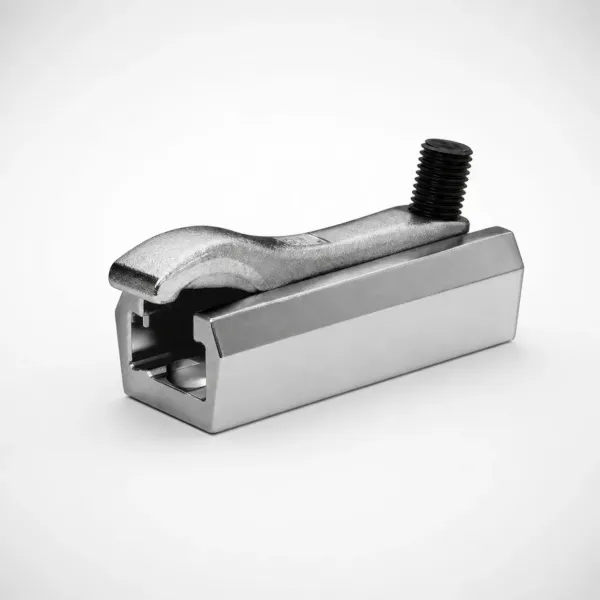
Thread form decides whether the part can cam over steel. An entry lead or chamfer of 30 to 60 degrees lets the flank ride outward smoothly. Thread depth stays under about 0.8 mm on diameters to 50 mm, and sharp V forms tear where rounded forms release. Shallow, rounded, generous-lead threads are the stripping envelope.
The stripper ring does the work. A ring or sleeve pushes at the part base and spreads the load around the whole circumference, so the bore expands evenly. Ring land width of 1.5 to 3.0 mm on the push face avoids ring marks that a narrow ejector would press into the part.
Stripping is the cheapest threaded route on the board, adding $1,000 to $3,000 for the tool package. HDPE continuous-thread closures strip at 5 to 8 s cycles on 32 to 64 cavity molds. The price is design freedom: thin walls, shallow threads, flexible materials. A rigid 1.5 mm wall or a 2 mm deep thread moves the part back to unscrewing or collapsible cores. Stripped threads gauge looser, so plan a go gauge and a functional torque test instead of tight fit classes.
Molded-in Metal Thread Inserts
Molded-in inserts put machined metal threads where plastic threads fail. The insert sits on a locating pin in the cavity, and plastic flows around its retention features. The thread itself never sees molding stress. Brass C360 and stainless 303 are the common bodies, with knurls, hexes or undercuts carrying the retention load.
Use them where the thread gets worked. A plastic thread on a nylon boss tolerates roughly 15 to 30 assembly cycles before strip risk appears. A brass insert survives thousands. Fluid fittings, sensor housings and knobs with set screws all justify metal threads when re-torque, sealing or field service is in the requirement.
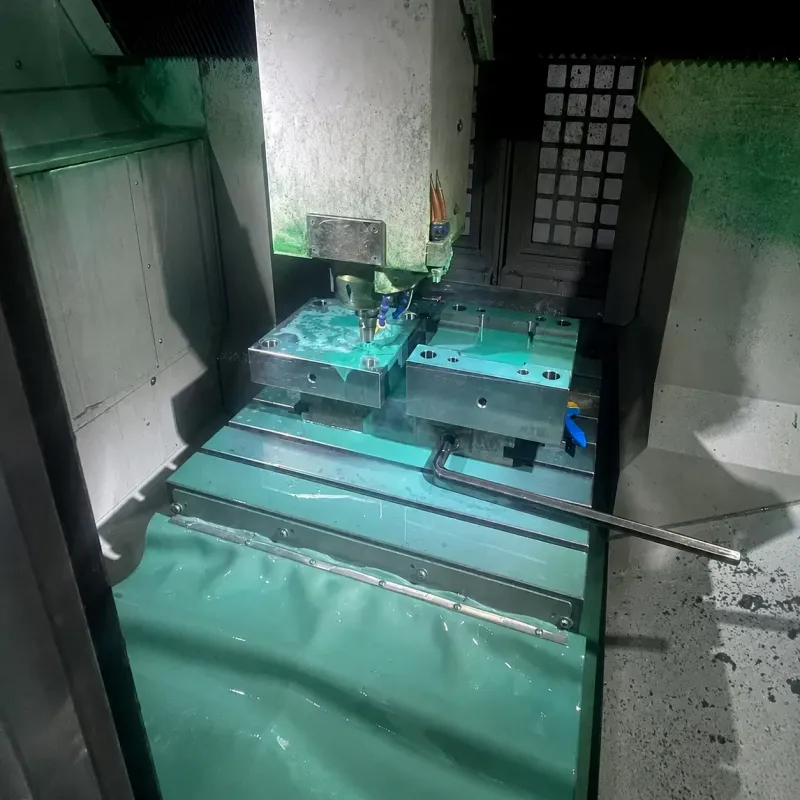
Loading drives the cost: inserts run $0.05 to $0.30 each, and a manual operator adds 3 to 6 s per insert. An 8-cavity mold with one insert per cavity adds 24 to 48 s of labor before every shot. That is why high-volume programs automate with bowl feeders and pick-and-place cells. The brass body is also a heat sink that slows local cooling by roughly 10 to 30%, so gate and cooling design must compensate.
Wall wrap sets retention. Keep 1.5 to 2.0 mm of plastic around the knurl on every side. An M3 brass insert with a 4.2 mm outside diameter therefore needs a boss of roughly 7.5 to 8.5 mm in most resins. Hex bodies resist torque-out better than round knurls, and knurls resist pull-out, so specify retention by the dominant load.
Compare molded-in against heat or ultrasonic inserts before choosing. Molded-in placement is locked during the shot, and plastic shrinks onto the full retention profile. Position scatter runs ±0.05 to 0.15 mm against part datums. Post-mold heat staking keeps the mold simple and the cycle short.
The trade is a secondary station and published retention curves that usually sit lower for the same insert family. Catalogs give both sets of numbers. Compare pull-out and torque-out values for your resin.
Thread Geometry Rules for Moldability
Wall thickness under an internal thread sets the floor. Keep at least 1.0 mm of wall in rigid resins, and treat 0.8 mm as the absolute floor in flexible ones. Below that, the thread collapses on ejection or prints sink marks on the outside surface.
Pitch and class travel together, so plan for pitches of 0.5 mm and above in unscrewing tools. Fine threads below 0.75 mm pitch rule out collapsible cores and stripping. Design to UN Class 2A/2B or metric 6g/6H for a functional fit, and tap after molding when the print demands 3A/3B. Shrinkage scales pitch as well as diameter, so long engagements accumulate error. Keep engaged turns at 2 to 4, and three turns typically carry most of the joint load.
Form details release the part. Round thread roots to a radius of 0.05 to 0.1 mm minimum. Add a lead chamfer at thread starts and exits, and keep sealing flanks free of draft. Interrupted threads and lug arcs are the free route: orient the open segment at the parting line and the mold pulls straight.
| Geometry Feature | Rule | Typical Value | Why It Matters |
|---|---|---|---|
| Wall under internal thread | 1.0 mm minimum rigid, 0.8 mm floor flexible | 1.0 to 1.5 mm | Prevents collapse and sink marks |
| Minimum pitch | 0.5 mm unscrewing, above 0.75 mm for collapse | 0.5 to 1.5 mm | Fine flanks tear on release steel |
| Thread class | Functional fit, not machined classes | UN 2A/2B, metric 6g/6H | 3A/3B needs post-mold tapping |
| Engaged turns | Keep short, 2 to 4 turns | 2 to 4 | Long runs accumulate pitch error |
| Stripping geometry | Flexible resin, thin wall, shallow depth | 30 to 60 degree lead, under 0.8 mm depth | Allows elastic cam-over on ejection |
| Insert wall wrap | Plastic around knurl on all sides | 1.5 to 2.0 mm | Sets torque-out and pull-out values |
| Root radius | Round every internal corner | 0.05 to 0.1 mm minimum | Cuts stress and release friction |
| Thread start chamfer | Lead-in on entry and exit | 0.2 to 0.5 mm at 30 to 45 degrees | Reduces drag and thread flash |
← swipe to scroll →
Table: typical moldability targets for threaded features, verify against resin data and the thread standard on the drawing.
Resin choice closes the section. POM makes the strongest self-lubricating threads and holds fine pitches, which is why it dominates gears and fittings, covered in our POM material guide. Nylon threads lose strength when wet because absorbed moisture plasticizes the resin, so saturated nylon can drop to roughly half its dry thread strength. Run the geometry rules against the material before the mechanism is chosen, and the full moldability checklist is in our design for moldability guide.
Cost and Cycle Impact by Method
Release method is the single biggest variable in a threaded-part quote. On a 16-cavity mold, the mechanism choice can swing tooling price by tens of thousands of dollars and cycle time by 5 to 20 s. Machine time converts directly to money. At a $65 per hour press rate on an 8-cavity mold, every added cycle second costs about $0.002 per part. A 10 s mechanism penalty runs near $0.02 per part, about $100,000 across a 5-million-part program.
Spend mechanism budget to remove cycle time, not to add it. A $12,000 unscrewing station amortized over 5 million parts costs $0.0024 per part, a rounding error next to a cycle penalty. The table below prices every method against both axes.
| Method | Thread Type | Cost Adder | Cycle Impact | Main Limits | Best Parts |
|---|---|---|---|---|---|
| Straight-pull lug or bayonet | Partial arc or cam thread | $0 to $500 in features | None | Thread arc must leave an open gap | Quarter-turn caps, bayonet covers |
| Thread splits, side action | External full threads | $3,000 to $15,000 per action | +1 to 3 s | Witness line on crest, fine-pitch flash | Knobs, sensor bodies, fittings |
| Unscrewing, rack and pinion | Internal full threads | $8,000 to $15,000 per station | +2 to 5 s over ejection | Gear backlash and torque balance | Caps, nuts, fittings to 16 cavities |
| Unscrewing, hydraulic | Internal or external | $10,000 to $18,000 per station | +5 to 10 s | Oil, plumbing, maintenance | Large closure molds, deep threads |
| Unscrewing, servo drive | Internal, multi-start, fine pitch | $15,000 to $25,000 per station | +5 to 8 s, most repeatable | Highest station cost and electronics | Medical luer, precision sensors |
| Collapsible core | Internal, 5 to 32 mm | $4,000 to $10,000 per cavity | +0 to 3 s | 200,000 to 500,000 shot life, seam lines | High-volume caps, pump parts |
| Thread stripping | Internal, thin flexible part | $1,000 to $3,000 per mold | +0 to 2 s | Soft resins only, shallow, thin wall | HDPE and PP closures, TPE grips |
| Molded-in metal insert | Metal thread in boss | $0.05 to $0.30 per insert plus loading | +2 to 5 s automated, 3 to 6 s manual per insert | Wall wrap 1.5 to 2.0 mm, pin wear | Fluid fittings, sensor housings, knobs |
| Post-mold tapping | Machined thread in molded boss | $0.02 to $0.15 per part | +1 to 2 s in secondary | Chip control and rework handling | Tight 3A classes, glass-filled resins |
← swipe to scroll →
Table: typical industry cost and cycle ranges. Scale station costs by cavity count, travel, steel grade and press size.
Cavity count follows the method: fine-pitch unscrewing tools usually run 4 to 16 cavities because each station carries a drive. Collapsible and stripping tools reach 32 to 64 cavities, and split-action tools reach 64 to 128 because every action is small and independent. Mechanism maintenance is a line item too. Racks get inspected at intervals near 100,000 shots. Collapsible segments are budgeted for replacement between 300,000 and 500,000 shots.
Put the method decision in the RFQ so the quote and the tool agree. Name the thread standard, the class, engaged turns, cycle target and annual volume, and the mold maker prices the mechanism once. Our mold RFQ guide lists the fields that make a threaded-part quote comparable across suppliers.
FAQ: Molding Threads
Q1. When should I mold an internal thread with a collapsible core instead of unscrewing?
Choose collapsible when the bore runs about 5 to 32 mm, the pitch stays above 0.75 mm, and cycle time matters. It adds 0 to 3 s versus 5 to 20 s for unscrewing. Choose unscrewing when the pitch is finer than 0.75 mm. Also choose it when the program exceeds the 200,000 to 500,000 shot segment life without a tool change window.
Q2. Can injection-molded threads hold a Class 2A tolerance?
Yes, with compensated tooling. Molded threads hold functional fit at UN Class 2A/2B or metric 6g/6H in most resins. Tight classes such as 3A/3B need post-mold tapping, which adds $0.02 to $0.15 per part and a 1 to 2 s secondary step.
Q3. How much cycle time does an unscrewing mechanism really add?
Plan for 5 to 20 s per shot. A cap with 4 engaged turns needs about 4.5 revolutions. At a typical 20 to 60 rpm drive speed, that is 4.5 to 13.5 s of rotation before the part ejects. Servo drives trim the top of that range with acceleration profiles.
Q4. What is the lowest-cost way to mold a threaded part?
Design the thread away first. A quarter-turn lug or bayonet arc of 90 to 120 degrees adds $0 to $500 in features and no cycle time. If a full thread is required, stripping a thin HDPE or PP part runs $1,000 to $3,000 in tooling. It fails only when the material is rigid or the thread is deep.
Q5. Do I need a metal thread insert?
Not always, but metal threads pay off where the joint is worked repeatedly. A plastic thread on nylon survives roughly 15 to 30 assembly cycles before strip risk, while a brass insert holds for thousands. Inserts cost $0.05 to $0.30 each plus 3 to 6 s of manual loading. Automation pays back once volume passes a few hundred thousand parts a year.
The Bottom Line
Threads break mold programs when the release method is chosen late or by habit. The numbers are stable across the industry: unscrewing costs $8,000 to $25,000 per station and 5 to 20 s per cycle. Collapsible cores trade a 200,000 to 500,000 shot life for a near-zero cycle penalty. Splits cost $3,000 to $15,000 per action, and stripping runs a straight-pull tool at $1,000 to $3,000 when the material flexes. Name the method at the DFM stage, and the $6,000 to $15,000 post-T1 conversions never happen.
Price the decision per part, not per tool. At a $65 per hour press rate on an 8-cavity mold, each added second is about $0.002 per part. A mechanism that removes 10 s is worth near $0.02 per part, or $100,000 per 5-million-part program. Buy cycle time with mechanism budget, keep engaged turns at 2 to 4, and hold walls above 1.0 mm under the thread. Verify every new tool with a go gauge at 20 °C after 24 hours of post-shrink.
DieStrike quotes threaded features at the DFM stage, where release method, class and cycle are priced before steel is cut. The shop is IATF 16949 certified with 120+ machines. It hardens cavity steel to HRC 62 and ships production molds in 2 to 5 weeks. Its long-running connector programs serve OEMs such as TE Connectivity, Amphenol and Luxshare.
KEEP READING
Related Reading
Undercuts & Plates: Slide Cores, Lifters and Angle Pins
Thread splits need side actions: angle pins 10-20 degrees, undercut travel plus 2-3 mm, standard parts in 3-7 days.
Read articleCASE STUDYCore Pin Life & Consistency in a 64-Cavity Packaging Closure Mold
A 64-cavity HDPE closure mold at 5M+ shots lost core pins unevenly. SKH51 + TiN at ±0.002 mm cut line stops.
Read articleMATERIAL GUIDEPOM (Delrin) Injection Molding: Complete Guide
POM for threaded parts: shrinkage near 2% scales pitch, friction 0.2-0.35 strips cleanly, mold temperature 80-100 °C.
Read articleMEDICAL GUIDEMedical Injection Molding Guide: Materials, Tolerances & Compliance
Threaded medical parts from luer to sensors: ±0.002 mm precision, IQ-OQ-PQ validation, process windows for fine pitch.
Read articleNEXT STEP
Ready to Start Your Mold?
Send us your element dimensions or part numbers — our team responds within 24 hours with pricing and lead time.

Written by
Ray ChanMold Buyer's Guide Author · Precision Mold Manufacturing Specialist. Ray helps global importers, distributors and OEMs source factory-direct molds and mold parts.