
How to Select Mold Steel for Die Casting Dies
Table of Contents
An aluminum high pressure die casting tool running 680 °C metal at 40 shots per minute can lose 0.05 mm of cavity detail to heat checking in under 30,000 shots. That is roughly 12 production hours. The die still closes, parts still pass the first visual check, and then flash and cosmetic rejects climb until the tool comes out for polishing or scrap. The root cause is almost never the machine. It is the steel grade, its heat treatment and its surface condition, chosen before the first cut.
Die casting steel selection is a trade-off between hot hardness, toughness, thermal fatigue resistance and cost per kilogram. Get the balance wrong and a USD 80,000 tool becomes a USD 15,000 lesson. Get it right and the same tool runs 120,000 shots before major refurbishment. This guide walks through the decision path a mold maker actually uses, grade by grade and number by number.
The Snapshot
- H13, SKD61 and 1.2343 are one steel family with small chemistry shifts, all running at 44-52 HRC in die casting service (typical industry figures).
- Aluminum melt contacts the die surface at 660-720 °C; zinc runs far cooler at 415-430 °C, which changes the entire grade selection.
- Premium low-silicon 5% Cr Mo-V grades cost 2-4x more per kg than standard H13 but can add 30-50% thermal fatigue life on aggressive aluminum cycles.
- Gas nitriding adds a 0.08-0.25 mm case at 900-1,100 HV, but a brittle compound layer above 0.05 mm spalls and accelerates heat checking.
- Core hardness must stay within about 4 HRC of surface hardness across thick blocks, or the die deforms under 1,000+ bar injection pressure.
Why Die Casting Steel Is a Different Problem
Injection molding steel fights wear and corrosion at 200-320 °C. Die casting steel fights thermal shock at twice that temperature, plus molten metal erosion at up to 60 m/s gate velocity. Every shot is a heating cycle, and every spray cycle is a quench. A die surface can swing 200-300 °C in a few seconds, which is the classic recipe for thermal fatigue.
Three loads define the material requirement. First, cyclic thermal stress: the surface expands against a cooler core, yields in compression, then cracks in tension as it cools. That crack network is heat checking, and it is the number one scrap driver for die casting cavities. Second, erosion: liquid aluminum at 40-60 m/s cuts into gate areas, runners and overflow wells like a waterjet over hundreds of thousands of shots. Third, pressure: injection intensification reaches 800-1,200 bar, so the steel needs enough hot strength and core hardness to hold ±0.005 mm on critical dimensions without sinking.
Cold work steels like D2 or oil-hardening grades fail here within a few thousand shots because they temper soft above 200-250 °C. Hot-work steels in the 5% chromium family keep 45+ HRC equivalent strength at red heat because their secondary-hardening carbides (Mo, V) stabilize the tempered martensite up to 550-600 °C. That is why essentially every serious aluminum die casting cavity in the world runs on a chromium hot-work grade.
The process context matters too. Zinc and magnesium alloys run different temperatures, and hot chamber zinc machines expose steel to molten zinc at 415-430 °C, which brings iron solubility and soldering into the picture. If you are still deciding the alloy itself, the tooling implications in our zinc vs aluminum die casting guide change the steel answer before grade selection even starts.
H13 vs SKD61 vs 1.2343: Same Family, Different Labels
H13 (AISI, North America), SKD61 (JIS, Japan) and 1.2343 (DIN, Europe) are chemistry cousins, not identical twins. All sit in the 5% Cr hot-work family with roughly 0.4% carbon, 5% chromium, 1.3% molybdenum and around 1% vanadium. The differences are small on paper and meaningful in service.
H13 typically runs 0.32-0.45% C, 4.75-5.50% Cr, 1.10-1.75% Mo and 0.80-1.20% V. SKD61 sits slightly higher on carbon and vanadium, around 0.39-0.42% C and 0.80-1.20% V, which buys a little more hot hardness and wear resistance at a small toughness cost. 1.2343 holds vanadium at the low end (0.90-1.20%) and silicon capped near 1.0%, which improves toughness and polishability. 1.2344 is the European near-twin of H13 with vanadium at 0.90-1.10% and tighter sulfur control.
In die casting practice the three behave within 5-10% of each other on thermal fatigue life when heat treated to the same hardness and supplied to the same cleanliness standard. The label matters less than three spec lines on your purchase order: ESR remelt (electroslag) or equivalent clean-steel practice, hardness 44-52 HRC after quench and temper, and verified core hardness per NADCA #207 style guidelines. A non-ESR H13 with heavy carbide banding will heat check earlier than an ESR 1.2343, regardless of the grade name.
| Grade | Typical Chemistry (C / Cr / Mo / V) | Service Hardness | Relative Cost per kg | Best For |
|---|---|---|---|---|
| H13 (AISI) | 0.4 / 5.2 / 1.3 / 1.0 | 44-52 HRC | 1.0x baseline | General aluminum and zinc dies, inserts, cores |
| SKD61 (JIS) | 0.40 / 5.0 / 1.2 / 1.0 | 45-52 HRC | 1.0-1.2x | High-wear gates and pins, Japanese tooling chains |
| 1.2343 (DIN) | 0.38 / 5.0 / 1.3 / 0.55 | 44-50 HRC | 1.0-1.2x | Toughness-first cavities, large die blocks |
| 1.2344 (DIN) | 0.40 / 5.0 / 1.3 / 1.0 | 46-52 HRC | 1.1-1.3x | European H13 equivalent for HPDC dies |
| Premium low-Si 5% Cr Mo-V | ~0.35 / 5.0 / 2.5-3.0 / 0.5-1.0 | 48-54 HRC | 2.5-4x | Long-run aluminum dies, severe heat checking zones |
← swipe to scroll →
Table note: Chemistry values are typical published ranges for each grade; hardness and cost figures are typical industry values, not a single mill's datasheet.
One more label trap: 1.2343/1.2344 sold as "modified" or "ESR+" is not a standard grade. Ask the mill certificate for actual chemistry, sulfur content below 0.005% for premium service, and the delivery condition hardness (annealed at about 230 HB max is normal for machining).
Premium Hot-Work Steels: When 5% Cr Upgrades Pay
Premium hot-work grades are engineered versions of the 5% Cr family. The recipe is consistent across suppliers: drop silicon from about 1.0% to 0.25% or lower, raise molybdenum from 1.3% to 2.5-3.0%, and keep vanadium moderate at 0.4-1.0%. Lower silicon slows temper softening and improves toughness, while extra molybdenum strengthens secondary hardening so the steel holds 48-54 HRC properties at 550-600 °C surface peaks.
The measurable wins are thermal fatigue and hot strength. In published NADCA-style thermal cycling tests, premium low-silicon grades typically show 1.5-2x the crack initiation life of standard H13 at the same surface temperature swing. ESR or vacuum-arc remelt versions add cleanliness: fewer oxide inclusions means fewer crack nucleation sites, and die makers routinely quote 20-40% longer polish intervals on ESR steel versus standard air-melted stock.
The cost is real. Premium grades run USD 8-15 per kg against USD 3-6 per kg for commercial H13 (typical 2026 market ranges), so a 500 kg die block jumps from about USD 2,500 to about USD 6,000 in steel alone. That delta is trivial against a USD 60,000-120,000 tool cost, but it is only justified by the duty cycle. Use premium steel where surface temperature exceeds 600 °C, where cycle time is under 30 seconds, or where a single die must survive 150,000+ shots without a cavity rebuild.
A practical middle path wins most jobs: standard ESR H13 for the main cavity blocks, premium grade inserts only in the gates, runners and hot spots that see the worst thermal cycling. Inserts cost 5-10% of the block weight, so a premium insert set adds perhaps USD 300-600 to a die while protecting the expensive geometry underneath. For the full three-way comparison including H11 and 1.2367, see our H13 vs H11 vs 1.2367 guide.

What premium steel cannot do is fix bad process. If die preheat sits at 120 °C instead of the recommended 180-250 °C for aluminum, the surface shock per shot roughly doubles and even the best grade will check early. Steel selection buys margin; lubrication, preheat and cycle discipline decide whether you spend it.
Hardenability and Core Hardness in Thick Blocks
A die casting cavity block is often 100-300 mm thick. Through-hardening steel means the center must quench fast enough to form martensite, and the 5% Cr Mo-V family is chosen precisely because molybdenum gives deep hardenability: a fully dense cross-section up to about 150 mm should reach near-surface hardness if quenched properly in vacuum with high-pressure gas.
The acceptance number that matters is core hardness. NADCA-style guidance for premium H13 die blocks calls for the core within roughly 4 HRC of the surface. If the surface tempers to 48 HRC and the core comes out at 40 HRC, the block is under-hardened at depth and will deform. Under 800-1,200 bar intensification pressure, a soft core lets the cavity sink and grow: expect dimensional drift of 0.01-0.05 mm over tens of thousands of shots, which kills shut-off fits and parting-line integrity long before the steel itself wears out.
Two procurement levers protect you. First, specify maximum block thickness against the mill's hardenability data, or split thick sections into bolster plus cavity insert so no hardened piece exceeds about 100 mm. Second, require core hardness verification on the certificate: a trepanned core sample tested at mid-thickness, reported per heat. Reputable mills supply this for ESR grades; if a supplier cannot, assume standard air-melted quality and price the risk accordingly.
Hardenability also sets the heat treatment route. Thick blocks in oil quench crack; that is why vacuum hardening with 6-10 bar nitrogen quench is the norm for die casting steels above 80 mm. Distortion from vacuum quench is typically 0.05-0.15 mm before final machining allowance, which your stock plan must absorb.
Heat Treatment Spec for Die Casting Steels
Grade selection is only half the decision. The heat treatment line on your drawing decides what the steel becomes. For H13-class die steels the standard path is: stress relieve after rough machining, vacuum austenitize at 1,020-1,050 °C, high-pressure gas quench, then double temper at 540-620 °C to hit target hardness.
Temper temperature is your hardness dial, and die casting wants a compromise. Aluminum dies typically run 46-50 HRC: soft enough to resist thermal fatigue cracking, hard enough to resist erosion and soldering. High-wear features like gate inserts can go to 50-52 HRC. Zinc dies often run 2-4 HRC softer, at 44-48 HRC, because soldering risk is lower and toughness matters more. Anything below 44 HRC in aluminum service erodes quickly; anything above 52 HRC cracks early under thermal shock.
| Process Step | Typical Parameters | Why It Matters for Dies |
|---|---|---|
| Stress relief (rough-machined) | 600-650 °C, 2-4 h, slow cool | Prevents 0.05-0.2 mm movement after hardening |
| Preheat before austenitize | Two steps: 550 °C then 850 °C | Avoids thermal shock distortion in thick blocks |
| Austenitize (vacuum) | 1,020-1,050 °C, 30 min per 25 mm section | Dissolves carbides for secondary hardening |
| Quench | Vacuum, 6-10 bar N2 gas | Crack-free martensite to core in 150 mm sections |
| Double temper | 540-620 °C, 2 h + 2 h, cool between | Sets 46-50 HRC and removes quench stress |
| Final stress relief (after EDM) | 50-100 °C below temper temp | Releases EDM white-layer stress before production |
← swipe to scroll →
Table note: Parameters are typical industry ranges for H13-class hot-work steel; always confirm against your mill's datasheet and your heat treater's furnace survey.
Two spec details separate good dies from average ones. First, require double tempering, never single: the first temper converts brittle as-quenched martensite, the second stabilizes dimensions and drops retained austenite. Second, control surface condition during austenitizing. Vacuum furnaces prevent decarburization; atmosphere furnaces without protective wrap can lose 0.05-0.2 mm of surface carbon, which tempers soft and becomes the first place soldering starts. If your heat treater cannot show vacuum capability or documented surface protection for die blocks, find another one.
The deeper playbook on quench media, tempering curves and acceptance hardness testing is in our heat treatment specification guide. For die casting, treat that spec sheet as part of the steel purchase: grade plus heat treatment plus surface treatment, one continuous decision.
Nitriding and Surface Treatments for Die Cavities
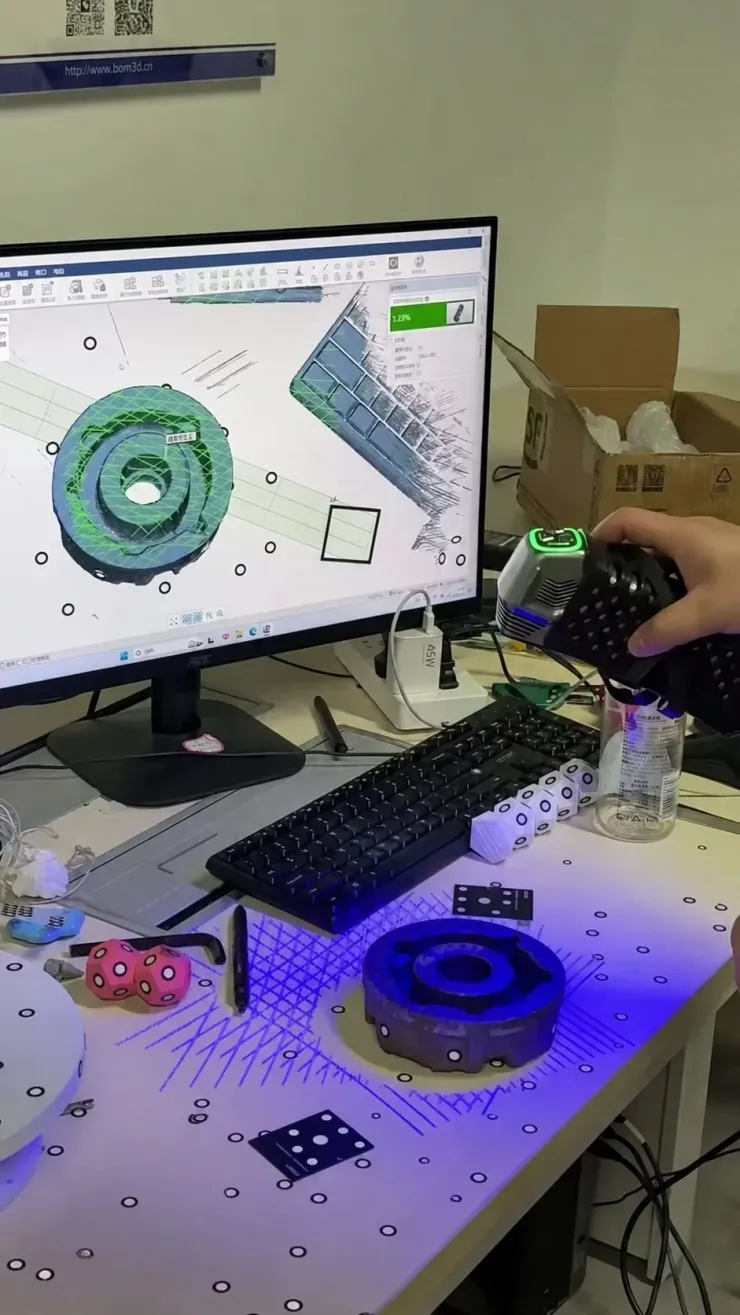
Gas nitriding is the standard armor for die casting cavities. At 500-560 °C in ammonia, nitrogen diffuses into the H13 surface and forms a case 0.08-0.25 mm deep measuring 900-1,100 HV (about 68-72 HRC equivalent). That case resists soldering from aluminum, slows erosion at gates, and delays the first heat check cracks.
The critical variable is the compound (white) layer. A thin compound layer of 0.005-0.01 mm with a dense diffusion zone below is protective. A thick white layer above 0.05 mm is brittle: it micro-spalls under thermal cycling, and each spall pit becomes a stress riser that accelerates heat checking. Specify nitriding depth and compound layer separately on the drawing, and require a microhardness traverse on the heat treater's report.
Nitriding also lowers the effective temper margin. Because the process runs at 500-560 °C, a cavity tempered at only 540 °C can lose 1-2 HRC from the nitriding cycle itself. Temper the core to at least 20-30 °C above the planned nitriding temperature, or accept the softening in your hardness budget.
Re-nitriding is a maintenance decision, not a freebie. Polishing away heat checks removes 0.02-0.05 mm per refurbishment; after 3-4 polish-and-renitride cycles the case geometry on thin cores starts to drift. Plan cavity life around total stock, not just hardness. Where the surface attack is worst, PVD coatings like AlCrN at 3,000+ HV and 0.002-0.004 mm thickness outperform nitriding on erosion, but they need a hard, well-prepared substrate and they cannot bridge existing cracks. The full comparison lives in our nitriding vs PVD coatings guide.
One combination rule: never nitride and then weld-repair without re-annealing discipline. Welding H13 at 400+ °C preheat, then locally re-hardening and re-nitriding, is the standard repair loop. Skipping the local stress relief after weld repair is how dies crack through the repair zone within 5,000-10,000 shots.
Inserts, Internal Cooling and Steel Strategy
The cheapest way to manage die steel risk is to never put expensive steel where it is not needed. A modern die casting tool splits into three zones with different material strategies. The die holder and structural plates see no molten metal: 4140 or P20 pre-hardened at 28-32 HRC is plenty at one-third the cost. Cavity blocks see the thermal cycle: ESR H13-class at 46-50 HRC. And hot spots (gates, runners, overflow entries, cores under direct impingement) see 60-80% of the total damage: premium 5% Cr grades or even tungsten-based inserts at 50+ HRC.
Insert-based design also fixes the cooling problem. Thick H13 blocks conduct heat at only about 24 W/m·K, so a massive cavity cannot shed the roughly 200-300 W per kg of aluminum that solidifies into it each shot without internal cooling. Insert designs let you route water channels 15-25 mm behind the cavity surface and use beryllium-copper or high-conductivity copper alloy pins (100-200 W/m·K) directly under hot spots, cutting local surface temperature by 50-100 °C. That temperature drop does more for die life than one grade upgrade.
Follow three rules when combining steels. First, keep insert hardness within 2-4 HRC of the surrounding block: a much harder insert in a softer pocket creates an erosion step at the joint, and a softer insert sinks. Second, match thermal expansion within about 1x10⁻⁶ /K; H13-family grades all sit near 11.5-12.4 x10⁻⁶ /K from 20-600 °C, so intra-family inserts are safe, while copper alloy pins need clearance fits of 0.05-0.10 mm per side to avoid crushing. Third, never let an insert corner land under a gate impingement point; add a premium-grade cap or radius the flow path instead.
Cooling layout interacts with steel grade choice more than buyers expect. A die running premium steel but with channels 40 mm from the surface will still heat check, because the surface temperature swing is set by heat extraction, not by grade. Specify channel depth, spacing and flow rate (aim for turbulent flow above Reynolds 10,000, typically 8-12 L/min per circuit) alongside the steel callout on the same drawing.
The Thermal Fatigue Life Budget
Every die has a thermal fatigue budget, and steel grade sets the starting balance. Published die casting data shows enormous spread for the same job: an aluminum die cavity in standard H13 might see first visible heat checking at 20,000-40,000 shots, while premium ESR low-silicon grades under identical process conditions push that to 60,000-100,000+ shots. Total die life before cavity rebuild typically lands between 80,000 and 150,000 shots for aluminum, and 300,000-500,000 shots for zinc because of the lower melt temperature.
Do the life math before you buy steel. Suppose a part runs 250,000 pieces lifetime on a 4-cavity die, so 62,500 shots. A standard H13 cavity at 44-48 HRC with good nitriding will likely survive that with one or two polish refurbishments, and premium steel adds cost without adding needed life. Now suppose the same volume runs at a 25-second cycle with poor cooling: surface peaks hit 650 °C and checks form at 20,000 shots. Three polish cycles at 0.03 mm each eats 0.09 mm of stock, dimensional drift forces an insert rebuild at USD 8,000-15,000, and the premium grade would have paid for itself twice over.
Three inputs decide the budget. Peak surface temperature (measure it with infrared during die trial, not from a handbook), cycle time (shorter cycles mean more thermal swings per hour), and die preheat control (a 150-250 °C preheat window with ±20 °C stability roughly halves thermal stress versus cold starts). Steel grade is the fourth input, not the first.
Track the budget in production. Log shots per cavity at each maintenance interval and photograph heat check density at fixed locations. A doubling of crack density between 10,000-shot intervals is your signal to re-nitride, re-polish or plan the insert replacement. The maintenance-side playbook for stretching these numbers is covered in our guide on extending die casting mold life, linked in the related reading below.
Steel Choices by Alloy: Zinc, Aluminum, Magnesium
The cast alloy sets surface temperature, chemical attack and therefore the grade. Zinc alloys (Zamak 3, 5) pour at 415-430 °C, roughly 250-300 °C cooler than aluminum. Thermal fatigue load is far lower, so zinc dies often run standard H13 at 44-48 HRC, or even pre-hardened P20-class steel at 28-32 HRC for prototype and low-volume tools under 20,000 shots. The zinc-specific risk is dissolution: liquid zinc slowly dissolves iron, so avoid plain carbon steel surfaces in direct contact and prefer nitrided H13 for anything over 50,000 shots.
Aluminum alloys (A380, ADC12, A356) pour at 660-720 °C and inject at up to 1,200 bar. This is the demanding case: ESR H13-class at 46-50 HRC minimum for production dies, premium low-silicon grades for cycles over 100,000 shots, and nitriding on every cavity surface that touches metal. Soldering (aluminum welding to the die face) starts at untreated steel above roughly 500 °C surface temperature, which is why iron-zinc reactions never bother zinc dies but aluminum dies need nitride cases or AlCrN coatings at gates.
Magnesium alloys (AZ91D, AM60B) pour at 680-720 °C, similar to aluminum, but magnesium is more chemically aggressive toward iron oxides and burns if the die design allows trapped oxide pockets. Magnesium dies typically use the same H13-class steels at 46-50 HRC with more frequent nitride maintenance every 15,000-25,000 shots, and stricter flux management. Because magnesium cycles are often faster (20-35 seconds) than aluminum, thermal fatigue rather than erosion tends to be the life limiter.
One cross-alloy rule: match hardness to temperature, not to alloy name. Any process whose surface peaks exceed 600 °C should run at least 48 HRC core with a nitrided face; any process under 450 °C can trade 2-4 HRC of hardness for toughness and cost. If your die must run both alloys on shared slides and cores, spec to the hotter case and accept the premium.
7 Common Die Steel Selection Mistakes
1. Buying grade names instead of quality classes. Two blocks both labeled H13 can differ 2-3x in thermal fatigue life depending on melt route (air vs ESR), sulfur level and carbide banding. Always specify remelt practice and cleanliness on the PO.
2. Over-hardening the cavity. Pushing 54+ HRC for "wear resistance" on aluminum dies backfires: crack initiation life drops roughly in half for every 2 HRC gained above the 50 HRC zone. Wear should be handled by nitriding or PVD, not by core hardness.
3. Ignoring core hardness. Accepting surface hardness only, with no core verification on blocks over 100 mm, is how dies deform 0.02-0.05 mm under intensification pressure and lose parting-line shut-off.
4. Premium steel everywhere. Upgrading holder plates and non-contact components to hot-work grades wastes 2-4x steel cost where 4140 at 28-32 HRC does the job. Reserve premium for gates, cores and hot spots.
5. Nitriding without layer control. A thick 0.05+ mm white layer spalls in 10,000-20,000 shots and seeds heat checks. Specify compound layer thickness separately from case depth.
6. Mismatched hardness across mating parts. Slide against block, or insert against pocket, differing by more than 3-4 HRC wears a step into the softer face at 0.005-0.02 mm per 10,000 cycles, creating flash paths.
7. No spare stock of the same heat. When an insert cracks at 60,000 shots, a replacement cut from a different heat can behave differently. Buy 10-15% extra from the same certified lot for critical inserts; it costs about USD 200-500 and saves a full requalification.
Avoiding these seven is worth more than any single grade upgrade. They map directly onto the incoming inspection and heat treatment controls that an IATF 16949 tooling supplier runs as standard, including documented hardness traverses and material traceability per heat.
Die Casting Steel Selection FAQ
Q1. Is H13 the same as SKD61 for die casting?
Functionally yes, chemically almost. Both are 5% Cr hot-work steels running 44-52 HRC in die service. SKD61 sits slightly higher in carbon and vanadium for marginally better hot wear, while 1.2343 favors toughness. With ESR quality and correct heat treatment, expect less than 10% life difference between the three on the same duty.
Q2. What hardness should an aluminum die casting cavity run?
46-50 HRC at the core, with gates and high-wear inserts at 50-52 HRC. Below 44 HRC the cavity erodes and solders; above 52 HRC thermal fatigue cracks initiate much earlier. Nitriding then adds a 900-1,100 HV case on top of that substrate.
Q3. When is premium hot-work steel worth the 2-4x price?
Three triggers: lifetime shots above roughly 100,000 per cavity, cycle times under 30 seconds with surface peaks above 600 °C, or features that cannot be polished without losing dimensions. For zinc dies or aluminum runs under 50,000 shots, ESR H13-class steel with good cooling wins on total cost.
Q4. Can I nitride a die casting cavity multiple times?
Yes, but count the stock. Each polish-and-renitride cycle removes 0.02-0.05 mm; thin cores and tight tolerances tolerate 3-4 cycles maximum. Plan insert replacement when cumulative stock loss approaches your dimensional budget, typically 0.10-0.15 mm on critical features.
Q5. What steel for zinc die casting hot chamber dies?
Standard H13-class at 44-48 HRC for production, nitrided for runs over 50,000 shots to resist iron dissolution in molten zinc at 415-430 °C. P20-class pre-hardened steel at 28-32 HRC is acceptable for prototypes and tools under 20,000 shots.
The Bottom Line
Die casting steel selection is a system decision: melt temperature sets the grade family, shot count sets the quality class, cooling sets the survival odds. ESR H13-class at 46-50 HRC with controlled nitriding covers most aluminum work; premium low-silicon grades earn their 2-4x price only above 100,000-shot lives. Specify heat treatment and core hardness on the same drawing as the grade, or the grade name alone means little. DieStrike builds IATF 16949 die casting molds on 120+ machines, holding ±0.005 mm on die dimensions with 2-5 week lead times and DFM feedback within 24 hours; start the steel conversation with the tooling team via our contact page.
KEEP READING
Related Reading
How to Specify Heat Treatment for Mold Steel
Quench media, tempering curves and hardness specs that protect your die casting steel investment.
Read articleArticleNitriding vs PVD Coatings for Mold Steel
Layer depth, hardness and re-nitriding cycles compared for hot-work die surfaces.
Read articleArticleHow to Design for Die Casting: 9 Rules for Aluminum and Zinc
Wall thickness, draft and fillet rules that reduce the thermal load your die steel must survive.
Read articleServiceDie Casting Mold Manufacturing
IATF 16949 die casting molds with 2-5 week lead times and DFM feedback in 24 hours.
Read articleNEXT STEP
Ready to Start Your Mold?
Send us your element dimensions or part numbers — our team responds within 24 hours with pricing and lead time.

Written by
Ray ChanMold Buyer's Guide Author · Precision Mold Manufacturing Specialist. Ray helps global importers, distributors and OEMs source factory-direct molds and mold parts.