
Hot Chamber vs Cold Chamber Die Casting: How to Choose
Table of Contents
A purchasing engineer moved a 180 g connector bracket from aluminium to Zamak 5 to save 14 percent on unit cost. The part ran clean for 400,000 shots. At 130 °C under the hood it crept 0.4 mm past its tolerance in month 9, because zinc loses stiffness above roughly 100 °C and the hot chamber decision is a metallurgy decision before it is a cost decision. A machine change is 2 to 5 weeks of tool lead time and a scrapped die set; a material decision made at the wrong temperature band shows up 12 months after the launch.
This guide compares the two machine families across the seven factors that actually drive the choice: alloy compatibility, cycle structure, pressure window, shot size, porosity and wall limits, consumable wear and per-part economics, with a selection table at the end.
The Snapshot
- Melt temperature splits the families. Hot chamber runs zinc at a 400 to 420 °C pot, magnesium at 640 to 660 °C and lead-tin at 250 to 300 °C. Aluminium at 680 to 740 °C dissolves iron from the gooseneck, so it must run cold chamber.
- Cycle bands barely overlap. Hot chamber fills 15 to 60 seconds with a submerged plunger. Cold chamber fills 30 to 120 seconds because a ladle must dip, skim and pour into an open sleeve.
- Pressure windows differ by 2 to 3 times. Hot chamber injection sits at 10 to 30 MPa. Cold chamber runs 20 to 70 MPa with plunger tip speeds up to 5 m per second.
- Part mass decides the machine, not the drawing. Hot chamber stops near 2 kg shot weight. Cold chamber covers 1 to 50 kg and the tooling that goes with it.
The Metallurgical Line That Splits the Two Processes
A hot chamber machine has no separate injection unit. The plunger tip sits inside the molten metal. Every shot begins with the gooseneck already full, which is why the cycle is short and why the shot volume is small.
That design is only possible if the metal does not attack the iron and steel in the path. Zinc at 400 to 420 °C has low solubility for iron, so a mild-steel or chilled-cast-iron gooseneck lasts hundreds of thousands of shots. Magnesium behaves the same way at 640 to 660 °C when the melt is protected with a cover gas.
Aluminium is the opposite case. Molten aluminium above 660 °C dissolves iron aggressively. A gooseneck exposed to A380 at 700 °C picks up dissolved iron, thickens the melt, and drops pieces of eroded steel into the shot. Those inclusions show as hard specks in machining and as dark lines on a painted surface.
The consequence is structural, not cosmetic. Cold chamber moves the melting pot away from the machine. A ladle dips metal, skims the dross layer and pours it into a horizontal or vertical shot sleeve. The steel in the fill path sees aluminium for the 3 to 8 seconds of a single shot instead of continuously, and the sleeve is a replaceable consumable rather than part of the machine.
Lead-tin alloys complete the hot chamber list. Their 250 to 300 °C melting range is gentle on every component in the path, which is why decorative and counterweight parts still run on this family. Their use has narrowed because of RoHS pressure on lead, not because of any process defect.
Copper alloys sit outside both comfort zones. Brasses and bronzes at 900 to 1,000 °C erode sleeves and tips fast, so they run cold chamber on heavy machines with short tool life, typically 20,000 to 60,000 shots. If your RFQ names a copper die casting, expect to argue about die life before price.
One more metallurgical note drives die design rather than machine choice. Aluminium alloys need 0.6 to 1.2 percent iron in the chemistry precisely to stop the melt from soldering itself to the die steel. Zinc has no such requirement, so a zinc die can be polished to a lower surface roughness without fear of aluminium pick-up. The alloy chemistry writes the tool maintenance plan before the first trial shot.
Cycle Structure and Shot Response
The cycle split is where the two families show their cost difference most clearly. Both machines spend most of the cycle on cooling and spraying, but the fill sequence is not comparable.
A hot chamber cycle runs like this: mold closes, plunger advances, metal already in the gooseneck enters the cavity in 8 to 25 milliseconds, intensification holds, mold opens, ejector pushes, spray fans and a flush cool the die. Total cycle lands at 15 to 60 seconds, with thin-walled zinc parts of 20 to 60 g reaching 12 to 20 seconds on a well balanced die.
A cold chamber cycle adds three steps that cannot be shortened much. Ladle travel and dip takes 1 to 2 seconds. Skimming the dross and pouring into the sleeve takes another 1 to 3 seconds, and the metal loses 5 to 15 °C in the transfer. Then the biscuit must be sheared out of the sleeve at parting, which needs its own knife or pull pin.
Typical cold chamber cycles run 30 to 120 seconds. A 250 g aluminium housing on a 500 tonne machine commonly lands at 35 to 55 seconds. A structural component with a 12 mm section and three inserts can pass 90 seconds, most of it cooling time.
Shot response also differs. In a hot chamber the metal column is continuous from pot to cavity, so pressure transmission starts almost instantly and the fill curve is repeatable shot to shot. In a cold chamber the sleeve holds air until the metal covers the gate, which is why the slow shot phase exists at all and why 0.1 to 0.5 m per second of tip speed is set before the fast shot.
Production planning follows the band, not the average. A hot chamber cell with four tools on a rotary indexing table can produce 3,000 to 6,000 zinc parts per 8 hour shift. A cold chamber cell with one tool, a ladle and an automatic dispenser produces 300 to 900 aluminium parts per shift. Those numbers set how many die faces you need to quote, which is the real tooling cost question.
Vacuum systems change the arithmetic in both families. A seal-off valve and a pump at 50 to 200 mbar absolute in the cavity shorten the fill window, add 3 to 10 seconds to the cycle and make thin-wall aluminium at 1.0 to 1.5 mm castable. Hot chamber vacuum exists but is rarer, because zinc at 15 to 30 MPa already fills thin sections cleanly.
Pressure Windows and Plunger Speed
Injection pressure is the number buyers quote, and it is usually the wrong one to compare. Specific gate pressure and intensification pressure matter more, and they sit in different bands for each family.
Hot chamber injection pressure runs 10 to 30 MPa at the plunger, with gate pressures commonly 15 to 40 MPa. Zinc fills at low pressure because its viscosity is roughly 1.5 to 2.5 mPa·s at casting temperature, about half that of most aluminium alloys. Low viscosity plus low pressure means a zinc die can carry a 0.5 mm wall without a short-shot battle.
Cold chamber injection pressure runs 20 to 70 MPa, and structural work pushes higher. Intensification pressure is applied for 0.2 to 1.5 seconds after fill and can reach 90 to 120 MPa on machines built for it. That second phase is what compensates for the 1.3 percent volumetric shrinkage of an A380 alloy, which zinc does not need at 0.5 percent.
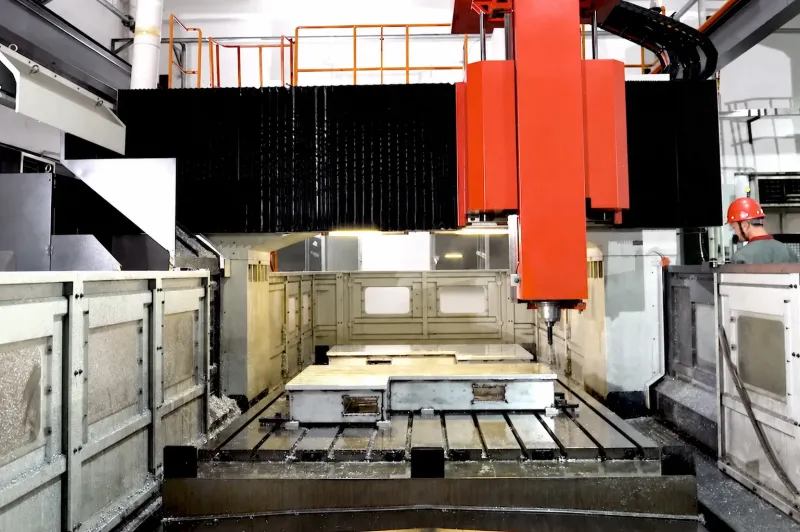
Plunger tip speed is where cold chamber earns its porosity problem. Slow shot runs 0.1 to 0.5 m per second until the gate is covered, then fast shot ramps to 2 to 5 m per second. Fill time in the cavity is 5 to 40 milliseconds. Push the fast shot above what the gate area can accept and the metal entrains air, and that air does not leave a 3 mm wall section.
Hot chamber plunger speeds run 1 to 3 m per second, with fill times of 10 to 30 milliseconds. The submerged system cannot draw air the way an open sleeve can, so the entrainment defect mode is much milder. The trade is that gooseneck geometry and its 3 to 8 millimetre overflow web trap their own oxide, which is why zinc parts need careful overflow design at the end of the flow path.
Clamp force follows pressure times projected area. A 4-cavity zinc bracket with 2,400 mm2 total projected area at 25 MPa needs 60 tonnes plus margin, so it runs on a 125 to 250 tonne hot chamber machine. A 2-cavity aluminium housing with 18,000 mm2 projected area at 55 MPa needs 990 tonnes, which lands on a 1,250 to 1,650 tonne cold chamber machine. Getting this pair wrong is the single most common quoting error on a die casting RFQ.
The gate and runner layout sets the real pressure at the cavity, not the machine gauge, because a long runner path eats 5 to 15 MPa before the metal arrives. That design layer is covered in the guide to die casting gates and runners, and the same runner geometry decides the biscuit weight quoted in the next section.
Shot Weight and Part Size Bands
Every die casting RFQ answers one physical question first: how many grams leave the sprue per shot. Shot weight is part weight plus biscuit plus runner, and the machine families own non-overlapping bands.
Hot chamber machines cover shot weights from 5 g to about 2 kg, with the center of the market at 10 to 400 g. The gooseneck holds a fixed volume of metal, typically 2 to 3 times the shot, and a large neck means a large thermal mass that drags the zinc temperature down between shots. Beyond roughly 2 kg the physics stops paying and the ladle route takes over.
Cold chamber machines cover 1 to 50 kg of shot weight and everything above. The ladle size, sleeve diameter and accumulator capacity scale together: a 250 tonne machine carries a 60 to 120 mm sleeve, a 900 tonne machine carries 120 to 160 mm, and the largest machines serve 2,000 to 3,500 tonne clamping for automotive structural castings above 10 kg.
| Parameter | Hot chamber | Cold chamber |
|---|---|---|
| Alloys served | Zinc, magnesium, lead-tin | Aluminium, magnesium, copper, grey iron |
| Shot weight band | 5 g to 2 kg | 1 kg to 50 kg |
| Cycle time | 15 to 60 s | 30 to 120 s |
| Injection pressure | 10 to 30 MPa | 20 to 70 MPa |
| Plunger tip speed | 1 to 3 m per s | slow 0.1 to 0.5, fast 2 to 5 m per s |
| Melt handling | Submerged pot, no ladle | Ladle dip, skim, pour, 5 to 15 °C loss |
| Typical clamp range | 15 to 400 tonnes | 250 to 3,500 tonnes |
← swipe to scroll →
Table note: bands are typical published machine-family values across current European and Asian die casting equipment. Confirm against the specific machine spec sheet before committing a tool design.
The overlap zone of 1 to 2 kg is the only mass range where both families can argue. Magnesium runs it on hot chamber, aluminium runs it on cold chamber, and the decision moves to porosity class and post-processing, which is the next section.
Porosity and Wall Thickness Limits
Porosity is not a defect you schedule out; it is a property of the fill method. The two families generate it differently, and that difference decides whether your part can be heat treated or welded.
Cold chamber entrains air. The ladle pour carries oxide films, the open sleeve traps gas ahead of the front, and fast shot at 2 to 5 m per second folds turbulence into the casting. Typical gas porosity on a standard aluminium casting measures 2 to 6 percent by volume on X-ray, and section-average pore sizes of 0.5 to 2 mm are normal. That is why most A380 structural parts are never solution heat treated: the pores expand at 480 to 540 °C and the part blisters.
Hot chamber has a milder gas problem and a different one. The submerged system rarely entrains air, but the constant sloshing of the gooseneck generates oxide skum that travels into the shot. Well designed overflows of 3 to 8 mm catch most of it, and porosity in zinc castings usually measures under 1 percent. Zinc parts can be welded and brazed; aluminium die castings can be welded only with vacuum-assisted or friction stir processes on low-porosity grades.
Wall thickness limits follow the fill physics. Hot chamber zinc routinely casts 0.4 to 0.6 mm minimum walls because the melt viscosity is low and the pressure system responds instantly. Below 0.4 mm the gate freezes before the cavity fills and the die needs vacuum. Cold chamber aluminium practical minimums sit at 0.8 to 1.2 mm on small parts and 1.5 to 2.5 mm on parts above 1 kg, and below that band short shots and cold shuts dominate.
If a drawing demands a watertight pressure-tested casting at 0.9 mm wall, neither family gives a cheap answer. The realistic routes are vacuum-assisted high-pressure die casting at 1 to 3 percent added cell cost, or a move to sand or gravity casting with longer cycles. That conversation happens at DFM, and die work for both machine families is what the die casting mold service line builds to ±0.005 mm.
Surface quality splits the same way. Zinc hot chamber parts come off with an as-cast roughness around Ra 1.0 to 1.6 micrometres and plate directly. Aluminium cold chamber parts carry more dross and flow marks, Ra 1.6 to 3.2 micrometres, and need a machined or media-blasted face before cosmetic plating. Buyers who want a mirror-finish zinc-look part in aluminium are budgeting an extra 8 to 15 percent for finishing.
Tool Temperature Control: Two Different Jobs
Both families run tempered dies, but the physics differs enough that copying a cooling layout from one machine type to the other fails within 20,000 shots.
A hot chamber die runs at 150 to 220 °C and the heat load is modest. Zinc enters at 400 to 420 °C and solidifies quickly, so a die on a 30-second cycle drifts up only 5 to 10 °C between sprays. Control is mostly a spray problem: fans at 200 to 400 L per minute per nozzle, water flush at 0.1 to 0.3 MPa for 0.5 to 2 seconds, and a release film kept at 10 to 25 micrometres dry. The full spray sequence is covered in the guide to setting die spray and release agent.
A cold chamber die is a heat-extraction problem. Aluminium enters at 680 to 740 °C carrying roughly three times the heat per kilogram of a zinc shot at its own pouring temperature, and the die target of 180 to 280 °C is easy to overshoot. Water-cooled circuits at 8 to 15 L per minute per line, beryllium copper inserts in hot spots at 190 to 220 W per m-K against 30 W per m-K for H13, and shaped-nozzle spray robots are standard. A die that runs 30 °C above target loses roughly 3 to 5 percent of its life per 10 °C of steady overshoot because heat checking accelerates.
The failure mode at the cold end matters too. A die held below 150 °C on aluminium raises apparent viscosity at the gate, promotes cold shuts on walls under 2 mm, and lets the sprayed film thicken so gas is pumped into every shot. Soldering of aluminium to bare steel also starts faster on a cold, dry die. The workable band is narrow, and the trial is where you find it for a specific part.
Gooseneck, Plunger and Sleeve Wear as a Cost Line
Hot chamber machines carry a consumable that cold chamber machines do not: the gooseneck, tip and plunger assembly, bathed in metal every cycle. Budget it as a line item, because an unmanaged gooseneck degrades part quality before it fails outright.
A chrome-silicon-moly or mild-steel gooseneck on a 410 °C zinc pot lasts 300,000 to 1,000,000 shots before re-tipping or replacement. The wear mechanisms are slow iron dissolution into zinc, plus erosion by the returning metal stream at the gooseneck elbow, which is faster. A worn neck shows first as a 1 to 3 percent rise in flash rate and shot-weight scatter above 0.5 g.
Tip and plunger life runs shorter: 50,000 to 150,000 shots for a cast-iron tip in zinc, and 200,000 to 400,000 with a tungsten carbide tip. The carbide tip costs 3 to 6 times the iron one and pays back where changeover labor across three shifts is the constraint. Re-tipping is a 2 to 4 hour job with the machine down.
Cold chamber consumables are the sleeve and the plunger tip. A tool-steel sleeve in aluminium duty lasts 30,000 to 100,000 shots; a tungsten carbide tipped sleeve reaches 150,000 to 400,000. Plunger tips in the same machine run 5,000 to 20,000 shots on coated H13, because they slam against hardened biscuit and hot metal at 2 to 5 m per second with no lubrication. Tip change is a 30 to 90 minute job, which is why shops track shots per tip and pull on schedule rather than on failure.
Compare the annuity. A hot chamber zinc cell spends roughly 4 to 8 machine-hours per 100,000 shots on gooseneck and tip work. A cold chamber aluminium cell spends 20 to 60 machine-hours per 100,000 shots on tips, sleeves and biscuit-knife edges. The gap compounds at 400,000 shots per year and always favors hot chamber when the alloy allows it.
Steel choice inside the die follows the same split. Zinc dies run P20 pre-hardened at HRC 28 to 32 in many applications and reach 1,000,000 shots. Aluminium dies need H13 through-hardened at HRC 44 to 48 with nitriding or PVD on wetted faces, and typical life bands are 80,000 to 300,000 shots before regrinding. Every one of those consumable and regrind intervals belongs in a written shot-count plan, and the die casting die maintenance plan article lays out the intervals that keep both machine families predictable.
Zinc Versus Aluminium Economics for One Housing
Take a 150 g bracket, 1.5 mm nominal wall, 400,000 pieces per year. The hot chamber route: Zamak 5 at roughly 19 to 23 CNY per kilogram, 150 g part plus 60 g biscuit and runner at 30 percent recycle credit, 25-second cycle, 2 cavities, die class 40 to 60 thousand CNY. The cold chamber route: A380 at roughly 20 to 24 CNY per kilogram, 150 g part plus 110 g biscuit at 25 percent credit because dross lowers recycle yield, 45-second cycle, 2 cavities, die class 80 to 140 thousand CNY for the same geometry.
On the machine-rate side, the hot chamber cell at 120 to 180 CNY per hour including its consumable annuity produces about 2,880 parts per shift on two cavities. The cold chamber cell at 220 to 320 CNY per hour for a 500 tonne machine produces about 1,600. Per-part machine cost lands at 0.04 to 0.07 CNY for zinc against 0.14 to 0.22 CNY for aluminium on this bracket, before metal.
Then subtract what zinc cannot do. Zinc density is 6.6 g per cm3 against 2.7 g per cm3 for aluminium, so the same envelope in zinc weighs 2.4 times more, and stiffness per kilogram is roughly 40 percent lower. Creep above 100 °C is the hard ceiling: a zinc bracket that holds at room temperature loses shape under a constant 120 °C bolt preload within months. That is why under-hood parts stay aluminium even when zinc wins the unit-cost sheet.
Thread behaviour closes the gap in both directions. Aluminium holds a formed M3 thread to 4 to 8 N·m strip torque at 0.5 mm wall; zinc yields at 2 to 4 N·m and needs thicker bosses or heat-set inserts, which adds grams back. A full side-by-side of alloy properties, recycle yields and finishing routes lives in the zinc versus aluminium die casting comparison.
When a Magnesium Hot Chamber Part Replaces Aluminium
Magnesium is the alloy that breaks the assumption that mass decides the family. AZ91D and AM60B melt at 640 to 660 °C, high enough to worry about the gooseneck and low enough that iron pick-up stays manageable when the pot is protected. Modern magnesium hot chamber cells run SF6 or SO2 cover gas at 0.5 to 1.5 percent concentration, keep dross to a skim between shifts, and cycle at 20 to 60 seconds.
The mass argument is simple arithmetic. Magnesium density is 1.74 g per cm3 against 2.7 g per cm3 for A380, so the same casting envelope comes out 35 percent lighter. Stiffness per kilogram is roughly 50 percent higher because the modulus of 45 GPa costs so little per gram. A 240 g aluminium laptop frame replaced in magnesium lands near 155 g without rib changes, and the hot chamber cycle runs shorter than the cold chamber cycle it displaces.
Three properties keep magnesium from eating the aluminium market. Corrosion needs design attention: bare magnesium in a salt-spray cabinet at 96 hours shows white rust where an aluminium part with chromate would not, so magnesium housings carry a conversion coating plus paint at a finishing cost of 0.4 to 0.9 CNY per part. Service temperature is the other ceiling; AZ91D creeps above 120 to 150 °C and aluminium survives to 180 to 200 °C. And the melt fires if it meets water or air at a broken stream, which forces the cover-gas and handling discipline a zinc shop never needs.
The decision rule: choose magnesium hot chamber when the part is between 50 g and 2 kg, service temperature stays below 120 °C, mass or stiffness-per-gram matters, and the finishing plan includes a coating. Choose aluminium cold chamber above 2 kg, above 150 °C, or when the supply base for magnesium dies near your plant is thin. Die life on magnesium tools sits between the two families at 150,000 to 400,000 shots on coated H13.
Selection Table by Alloy, Mass and Volume
With the physics on the table, the selection collapses into a lookup. Mass band picks the machine family, alloy confirms it, and annual volume decides whether a die in that family earns its price.
| Part profile | Machine family | Alloy | Volume sweet spot |
|---|---|---|---|
| Bracket, clip, knob under 100 g, room temp | Hot chamber | Zamak 3 or 5 | 50,000 to 5,000,000 per year |
| 100 to 500 g housing, plateable finish | Hot chamber | Zamak 5 | 100,000 to 2,000,000 per year |
| 50 to 2,000 g, mass-critical, under 120 °C | Hot chamber | AZ91D magnesium | 50,000 to 1,000,000 per year |
| 100 to 2,000 g structural, 180 °C under hood | Cold chamber | A380 or BMS-30 | 25,000 to 1,000,000 per year |
| 2 to 20 kg housing, chassis, bracket weldment | Cold chamber | A380, A360, C45D | 10,000 to 500,000 per year |
| Watertight or heat-treatedable casting | Cold chamber plus vacuum | C45D or 319 | Above 50,000 per year |
| Counterweight, decorative, solderable | Hot chamber | Lead-tin bearing alloy | Niche, compliance checked |
| Corrosion-resistant hardware above 200 g | Cold chamber | C83600 brass | 20,000 to 200,000 per year |
← swipe to scroll →
Table note: volume bands assume single-cavity-equivalent tooling and are typical for IATF 16949 die castings at these masses. Confirm alloy equivalents against your regional standard before releasing the RFQ.
Two rules sit under the table. First, never run aluminium on hot chamber at any mass; the iron pick-up makes the first 1,000 shots beautiful and shot 5,000 defective. Second, mass below 100 g in aluminium is technically fine on a small cold chamber machine but rarely economic, because a 250 tonne machine costs per hour what four hot chamber cells cost, and zinc or magnesium almost always fills the requirement.
Hot Chamber vs Cold Chamber FAQ
Q1. Can a zinc part be moved to aluminium without changing the machine family?
No. Zinc runs hot chamber and aluminium must run cold chamber, so the move changes machine, die architecture, biscuit handling and the porosity class of the part. Budget a new die, not a steel swap, and re-verify wall minimums from 0.6 mm up to 1.2 mm.
Q2. Why does aluminium attack the gooseneck but magnesium mostly does not?
Aluminium dissolves iron fast above 660 °C, which is below its own casting range of 680 to 740 °C. Magnesium at 640 to 660 °C has far lower iron solubility, and the cover gas keeps the melt from oxidizing into the steel. The pick-up rate difference is roughly an order of magnitude, which is why the ladle exists.
Q3. Which process gives better surface finish for a visible part?
Hot chamber zinc. As-cast roughness of Ra 1.0 to 1.6 micrometres, low gas porosity, and direct plateability beat aluminium's Ra 1.6 to 3.2 with dross. An aluminium part designed to look like zinc pays 8 to 15 percent more in finishing and still shows pores at the edge of machining.
Q4. How do I know the gooseneck is wearing out?
Track three signals: shot-weight scatter beyond 0.5 g, flash rate up 1 to 3 percent with no die change, and zinc temperature drift at the nozzle. A gooseneck at 300,000 to 1,000,000 shots is a scheduled replacement, not a surprise, and the interval belongs in the maintenance plan with the spray and regrind numbers.
Q5. Is vacuum worth adding on either machine?
On cold chamber aluminium, frequently yes: porosity drops from 2 to 6 percent toward under 1 percent, thin walls to 1.0 mm become castable, and heat treatment becomes possible on vacuum grades. The cost is 3 to 10 seconds per cycle and 1 to 3 percent cell cost. On hot chamber zinc, vacuum is rarely needed because the submerged fill already entrains little air.
The Bottom Line
The machine family is chosen by metallurgy before anything else. Zinc, magnesium and lead-tin run hot chamber because their melts leave iron alone; aluminium, copper and large magnesium shots run cold chamber because the ladle is the only thing between the melt and a destroyed gooseneck. Inside that split, the numbers decide: 15 to 60 second cycles against 30 to 120, 10 to 30 MPa against 20 to 70, 2 kg against 50 kg, and 4 to 8 against 20 to 60 hours of consumable work per 100,000 shots.
Run the selection from the alloy upward, check the mass band, then price the per-part annuity of tooling and consumables. A housing quoted at 14 percent savings in zinc can come back as creep at 130 °C, and an aluminium bracket quoted on the wrong tonnage flashes from shot one. DieStrike builds zinc, magnesium and aluminium die casting dies to IATF 16949 with ±0.005 mm mold accuracy on 120+ machines, tool lead times of 2 to 5 weeks and standard components shipping in 3 to 7 days, with DFM feedback that names the machine family before the first steel is cut.
KEEP READING
Related Reading
How to Plan Die Casting Die Maintenance
Shot-count intervals for spray fans, sleeves and inserts on tools that run 400,000 cycles a year.
Read articleArticleHow to Extend Die Casting Mold Life
Heat checking, soldering and coating choices that move an aluminium die past 300,000 shots.
Read articleArticleInjection Mold vs Die Casting Mold
Why a metal tool runs cooler steel, heavier plates and different ejector loads than a plastic tool.
Read articleServiceDie Casting Mold Manufacturing
IATF 16949 zinc and aluminium dies to ±0.005 mm, built in 2 to 5 weeks on 120+ machines.
Read articleNEXT STEP
Ready to Start Your Mold?
Send us your element dimensions or part numbers — our team responds within 24 hours with pricing and lead time.

Written by
Ray ChanMold Buyer's Guide Author · Precision Mold Manufacturing Specialist. Ray helps global importers, distributors and OEMs source factory-direct molds and mold parts.