
How to Choose Mold Steel for Corrosive Resins: PVC, CPVC and Acetal
Table of Contents
A PVC conduit mold ran 14 months on a pre-hardened P20 cavity. Then parts started showing a raised ring near the gate, flash opened up on the seal land, and a 10x loupe showed 0.3 mm pits across the last-fill area. The cavity was scrapped for about $4,500 plus 4 days of lost press time. Nothing in the process had changed. The resin had been eating that steel since week one and nobody was measuring it.
Mold steel selection decides whether a corrosive resin project runs 5 years or 14 months. PVC, CPVC, acetal and halogenated flame-retardant systems release acid species at ordinary processing temperatures, and those acids attack any steel with too little chromium in solid solution. This guide covers the corrosion mechanism per resin family, the stainless grades that resist it, the hardness and plating trade-offs, and the shutdown and inspection habits that stop pitting before it reaches a sealing surface.
The Snapshot
- Passive film on mold steel needs roughly 12% chromium in solid solution. P20-class steel carries under 2%, so it pits at 0.05 mm to 0.2 mm per year in PVC service.
- PVC dehydrochlorinates from about 140°C upward and releases hydrogen chloride. Above 200°C the release rate climbs sharply, and moisture turns that gas into hydrochloric acid.
- Acetal (POM) breaks down to formaldehyde, which oxidizes to formic acid. Unplated tool steel shows measurable attack above 220°C melt temperature.
- S136-class steel at 13.6% Cr hardened to HRC 52 to 54 and 1.2316 at 16% Cr pre-hardened to HRC 30 to 34 are the two workhorse corrosion grades for PVC and CPVC.
- Electroless nickel at 20 µm to 50 µm with 10% to 13% phosphorus is the plating that survives acid condensate. Hard chrome microcracks at 400 to 800 cracks per cm and lets acid reach the substrate.
Why Corrosive Resins Attack Steel
Corrosion in a mold is an electrochemical cell that runs inside a groove, a vent or a stagnant runner pocket. The resin releases an acid gas, moisture from the resin or the shop air dissolves it, and the condensate sits against steel that cannot form a stable passive layer. The reaction then eats the matrix and accelerates at inclusions.
Chromium is the whole story at the top level. When steel holds at least 12% chromium in solid solution, the surface forms a chromium oxide film 1 nm to 3 nm thick that rebuilds itself when scratched. Under 12% and the film is patchy or absent. That is why a 1.2738 P20 cavity rated HRC 30 to 34, hard enough for hundreds of thousands of shots in polypropylene, becomes the weak point in a PVC tool.
Attack starts at the weak spots. Manganese sulfide inclusions, carbide stringers and the recast layer left by EDM all sit at a different electrochemical potential than the surrounding matrix. In chloride or acid condensate those sites become micro anodes and pit within weeks. A cavity finished by sinker EDM and never polished past the white layer will pit first, even in a stainless grade.
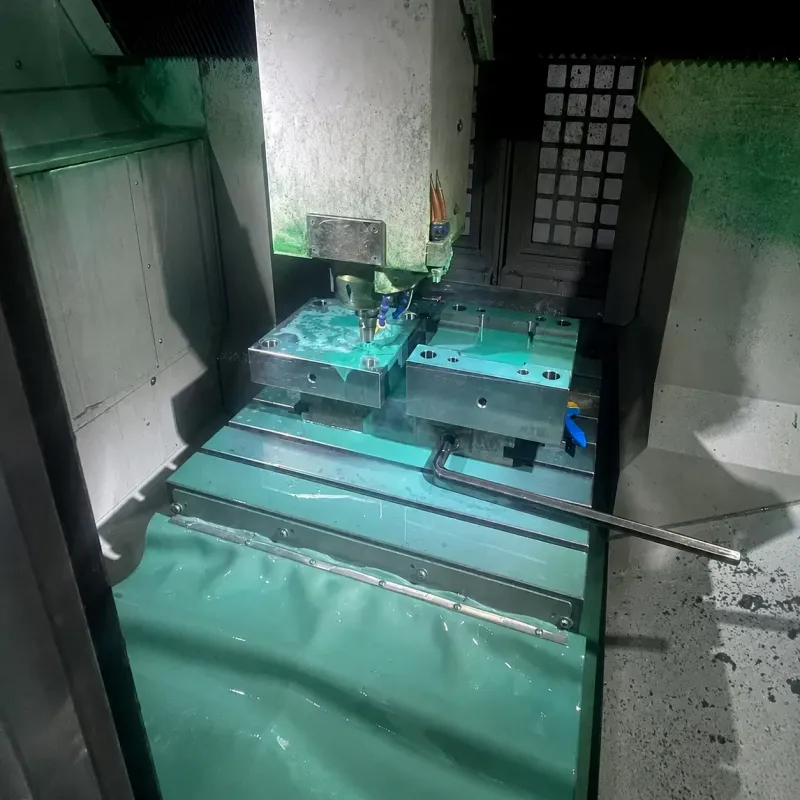
The economics are blunt. A pitted sealing land cannot be polished out once pit depth passes about 0.15 mm, because removing that much stock opens the shut-off clearance and the part flashes. At that point the insert is replaced. Budget $2,000 to $6,000 for a mid-size cavity insert, plus 3 to 5 days of mold downtime and a fresh T1 sampling round. A stainless upgrade on the same cavity typically adds 30% to 50% to raw material cost, which is a fraction of one unplanned replacement.
Corrosion by Resin Family
Not every resin attacks steel the same way or at the same temperature. Knowing which species you are dealing with tells you what the steel and the plating have to survive.
PVC and CPVC release hydrogen chloride. Rigid PVC processes at 175°C to 195°C, and dehydrochlorination begins well below that, around 140°C. Shear heating in a tight gate or a stalled screw can push local temperature past 220°C, and the HCl release rate roughly doubles for every 10°C above the window. CPVC runs 200°C to 225°C and can reach 235°C in some compounds, so it is the harsher of the two. Combined with humidity, the gas becomes hydrochloric acid with a condensate pH that can sit near 2.
Plasticized PVC adds organic acids. Flexible compounds carry 40 to 60 phr of plasticizer. Those compounds process cooler, at 165°C to 185°C, but the plasticizer and its breakdown products add to the acid load and leave an oily film in runner pockets that holds condensate against the steel.
Acetal releases formaldehyde, then formic acid. POM homopolymer is less thermally stable than copolymer. Above roughly 200°C for homopolymer and 220°C for POM-C, chain scission produces formaldehyde, which oxidizes on contact with moist air into formic acid. That acid is a strong pitting agent on unprotected tool steel, and it also attacks aluminum mold components. This is why acetal tools are often specified with stainless cavities and stainless or nickel-plated water fittings.
Halogenated flame retardants release hydrogen bromide. PBT, PA and PC/ABS grades with brominated FR systems process at 250°C to 280°C and release HBr, which is more aggressive than HCl at the same concentration. Add glass fiber at 15% to 30% loading and the tool now faces corrosion plus three-body wear at the same time.
Fluoropolymers release hydrogen fluoride. PVDF, ETFE and PFA run at 350°C to 400°C and generate HF at the upper end of that window. HF attacks glass, most stainless grades and nickel plating. Flow-path contact surfaces in that service need a nickel alloy such as C-276 or a specially qualified coating. Standard mold steel is not a viable answer.
Two practical corollaries follow. First, corrosion risk is a function of melt temperature as much as chemistry, so an overheating barrel turns a mild resin into an aggressive one. Second, corrosion and wear often arrive together. A glass-filled corrosive compound needs a hardness answer and a chemistry answer, not one or the other.
Resin Aggressiveness and Steel Targets
The table below maps the common corrosive families to the species they release, the typical unfilled melt window, and the minimum steel target that survives multi-year production. Use it as the starting point for the DFM discussion, then adjust for fillers, flame retardants and cycle time.
| Resin Family | Corrosive Species | Typical Melt Temp | Minimum Steel Target |
|---|---|---|---|
| Rigid PVC (U-PVC) | Hydrogen chloride to hydrochloric acid | 175°C to 195°C | 13% Cr stainless, S136 or 1.2316 |
| CPVC | Hydrogen chloride at a higher rate | 200°C to 225°C | 13% to 16% Cr stainless plus EN plating |
| Plasticized PVC | Hydrogen chloride plus organic acids | 165°C to 185°C | 13% Cr stainless at HRC 48 or harder |
| Acetal (POM homopolymer) | Formaldehyde to formic acid | 200°C to 215°C | 13% Cr stainless or EN-plated tool steel |
| POM-C (copolymer) | Formaldehyde at a slower rate | 205°C to 220°C | 13% Cr stainless at HRC 50 or harder |
| PBT or PA with brominated FR | Hydrogen bromide | 250°C to 280°C | 13% to 17% Cr stainless plus EN plating |
| PVDF, ETFE, PFA | Hydrogen fluoride | 350°C to 400°C | Nickel alloy insert or qualified coating |
← swipe to scroll →
Table note: Melt temperatures are typical industry ranges for unfilled grades. Filled and flame-retardant compounds can sit 10°C to 20°C lower with a much higher acid load.
Read the table as a floor, not a specification. A CPVC fitting mold with a 90 second cycle and a hot runner sees far more acid exposure than an acetal prototype running 2 shifts a week. Cycle count and residence time matter as much as chemistry, and both belong in the mold design brief.
Stainless Mold Steels: S136, 420 and 17-4PH
Four grades cover most corrosive resin work, and each has a clear home. The choice comes down to chromium content, achievable hardness, heat treatment distortion and machinability.
S136 (1.2083) is the default stainless cavity steel. It carries about 13.6% chromium, is usually supplied ESR melted for low inclusion content, hardens to HRC 52 to 54, and takes a mirror polish down to SPI A1. Its carbon level near 0.38% keeps the matrix chromium in solution instead of locking it into carbides, which is why the corrosion performance holds up. It is the right answer for PVC pipe fittings, medical-adjacent corrosive parts and any cavity that needs both corrosion resistance and a fine surface.
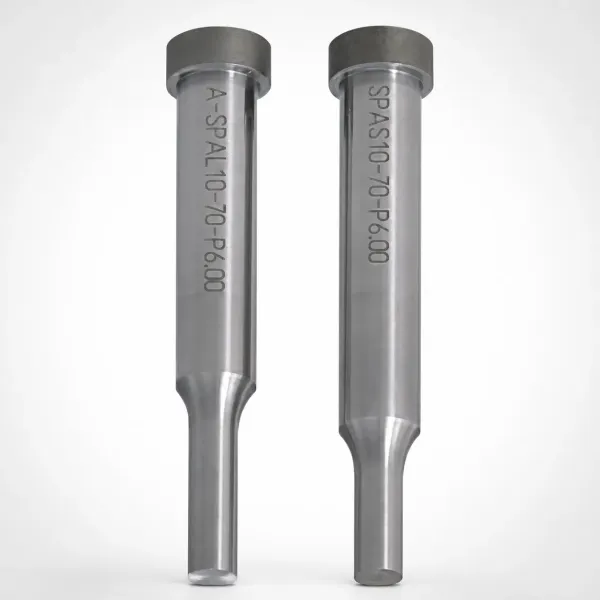
420 stainless is the lower-cost workhorse. At 12% to 14% chromium it sits right at the passive film threshold. Hardened to HRC 48 to 52 it handles PVC and acetal production for years, provided it is properly hardened, tempered below 300°C and polished past any EDM recast. Cost runs 15% to 25% below S136. Where the production volume is modest and the geometry is simple, 420 delivers the corrosion protection without the premium.
1.2316 is the pre-hardened stainless option. About 16% chromium with roughly 1% molybdenum, delivered at HRC 30 to 34. No hardening step means no heat treatment distortion and no post-hardening finishing, which shortens lead time and keeps tight geometry intact. Use it for large cavities where hardening a big block risks movement, and where the abrasion load is light. It machines closer to P20 than to hardened S136.
17-4PH (1.4542) covers thin sections and core pins. It holds 15% to 17.5% chromium with 3% to 5% nickel and 3% to 3.5% copper, and age hardens to HRC 44 to 48 with minimal dimensional change, often under 0.05% linear. That combination of corrosion resistance and low-distortion hardening makes it the choice for thin core pins, long slender inserts and parts where a quench would move the geometry out of the ±0.002 mm band you designed. It is tougher than 420 at the same hardness, which matters on pins that see side load.
Two grades that people reach for and regret: 440C and unqualified generic stainless. 440C holds 17% chromium but carries about 1% carbon, and that carbon ties up a large share of the chromium as carbides. Its free chromium in solution can fall below the passivation threshold, so it corrodes worse than 13% Cr grades in acid condensate despite the higher chromium number on the certificate. Generic 420 billet without ESR or a controlled inclusion spec will pit at its sulfide stringers within months.
Steel Grade Comparison for Corrosive Service
Numbers settle the argument faster than adjectives. The table below puts P20 next to the four stainless options on chromium, molybdenum, PREN, achievable hardness, relative cost and machining behavior. PREN is the pitting resistance equivalent number, calculated as chromium plus 3.3 times molybdenum plus 16 times nitrogen, all in weight percent. It is the single best proxy for how a grade behaves in acid or chloride condensate.
| Grade | Cr and Mo | PREN | Achievable Hardness | Relative Cost | Best Fit |
|---|---|---|---|---|---|
| 1.2738 P20 | 1.9% Cr, 0.2% Mo | 2.6 | HRC 30 to 34 pre-hardened | 1.0 (baseline) | Non-corrosive commodity resins only |
| 420 stainless | 12% to 14% Cr, under 0.5% Mo | 13 to 14 | HRC 48 to 52 | 1.6 to 1.9 | PVC and acetal, moderate volume |
| S136 (1.2083) | 13.6% Cr, under 0.5% Mo | 13 to 15 | HRC 52 to 54 | 2.0 to 2.4 | Mirror-finish PVC, medical-adjacent parts |
| 1.2316 | 16% Cr, 1.0% Mo | 16 to 18 | HRC 30 to 34 pre-hardened | 1.8 to 2.2 | Large cavities, no hardening step |
| 17-4PH (1.4542) | 15% to 17.5% Cr, under 0.5% Mo | 16 to 18 | HRC 44 to 48 by age hardening | 2.2 to 2.8 | Thin core pins, low-distortion inserts |
← swipe to scroll →
Table note: PREN and chromium ranges are typical industry figures for these grades. Relative cost indexes material purchase only and exclude machining and heat treatment.
Machinability is the hidden line item. A HRC 52 S136 cavity cuts 30% to 40% slower than HRC 30 P20, which shows up in milling hours rather than in the material invoice. Pre-hardened 1.2316 at HRC 30 to 34 cuts closer to P20 while still delivering 16% chromium, so on large cavities it often nets out cheaper than hardened S136 once you count both the cutting time and the heat treatment cycle.
Molybdenum and PREN Math
Molybdenum is the cheapest corrosion upgrade you can buy into. Each 1% of molybdenum adds about 3.3 points to PREN, which is why 1.2316 at 1% Mo scores 16 to 18 against 13 to 14 for a molybdenum-free 420. At 13.6% Cr with 1% Mo, PREN lands near 17, and pitting resistance in chloride condensate improves measurably without giving up hardness.
Nitrogen does the same job for a fraction of the cost, adding 16 points per percent, but nitrogen in mold steel is limited by solubility. Practical nitrogen contents stay under 0.08% in these grades. That is why nitrogen alloying shows up as a surface effect through nitriding rather than a bulk purchase decision. Nitriding 13% Cr steel is a separate problem covered in the next section.
Use PREN as a screening filter, not a guarantee. Two grades with the same PREN can behave differently because inclusion content, carbide distribution and surface finish decide where pitting actually nucleates. ESR melting plus a polish below Ra 0.4 µm buys more real corrosion resistance than another two points of PREN on paper.
The Hardness Versus Corrosion Trade-Off
Hardness and corrosion resistance pull in opposite directions on 13% Cr steel, and the tempering temperature is where the conflict lands. Get the temper wrong and you can harden a grade properly while destroying the passive film chemistry at the same time.
Chromium carbides precipitate at grain boundaries when 13% Cr steel is tempered in the 425°C to 550°C band. Those carbides pull chromium out of the adjacent matrix. The local chromium level can drop from 13.6% to under 10%, and that narrow depleted band becomes a continuous corrosion path along the grain boundaries. The bulk certificate still reads 13.6%. The surface still reads HRC 50. The part still pits, right along the boundaries, and the pits look like a network rather than random spots.
The practical rule is simple. If corrosion resistance is the priority, temper either below 300°C or above 600°C and stay out of the 425°C to 550°C window entirely. S136 hardened at 1,020°C to 1,050°C and double tempered at 200°C to 250°C reaches HRC 52 to 54 with the matrix chromium kept in solution, which is the best corrosion result the grade can deliver. Tempering the same steel at 500°C for higher toughness throws away a large share of its corrosion margin.
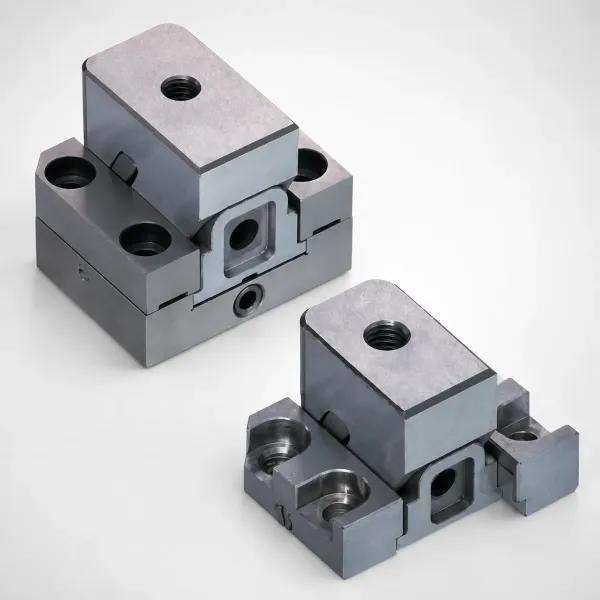
Hardness still matters, just as the second question rather than the first. A harder matrix resists the mechanical damage that exposes fresh metal to acid, and mechanical damage is what restarts the corrosion clock. A surface at HRC 52 holds a polish longer than one at HRC 34, so it keeps fewer pit initiation sites open. Where the compound carries glass fiber or mineral filler at 15% to 30%, wear and corrosion arrive together and hardness climbs back to first priority.
That combined case is where hardfacing and plating decisions get made instead of steel decisions. A glass-filled PVC part needs a corrosion-resistant substrate plus a wear-resistant surface, and the plating section below covers that pairing. For purely abrasive service with no acid, cavity hardening to HRC 62 is the standard answer and DieStrike quotes that treatment on tool steel inserts as a matter of routine. For acid service, high hardness on a low-chromium steel is a losing combination and the stainless route wins.
Surface Treatments: Electroless Nickel and Hard Chrome
Plating lets a cheaper substrate survive a corrosive resin, and it also protects the flow path in a mold whose cavity is already stainless. The choice between electroless nickel and hard chrome comes down to how each barrier fails.
Electroless nickel (EN) is the acid answer. A 20 µm to 50 µm deposit with 10% to 13% phosphorus is amorphous, has no grain boundaries to attack and covers complex geometry uniformly, including blind holes, thread flanks and cooling channels that electroplating cannot reach. As-deposited hardness is roughly 500 HV, and a 4 hour bake at 400°C raises it toward 900 HV, close to HRC 50 at the surface. Corrosion performance in acid condensate is strong because there is no through-thickness crack network. Watch the bake temperature against the substrate temper, and note that the bake must happen before final polishing if the geometry is tight.
Hard chrome is the wear answer with a corrosion catch. It deposits at HRC 65 to 70, resists abrasion far better than EN, and is the standard fix for glass-filled and mineral-filled compounds. The problem is that hard chrome is inherently microcracked, with roughly 400 to 800 cracks per cm across the deposit. Acid condensate wicks along those cracks to the substrate, and once it reaches a low-chromium base steel the pit grows underneath the plating until the chrome flakes off in a patch. Hard chrome survives a mildly corrosive resin. It does not survive continuous HCl exposure on a P20 substrate.
Do not nitride 13% Cr stainless to fight corrosion. Nitriding forms chromium nitride in the surface layer, which pulls chromium out of solid solution exactly the way the wrong temper does. A nitrided 420 or S136 surface can end up with better wear resistance and worse pitting resistance than the same steel un-nitrided. Nitriding earns its place on 13% Cr for glass-filled compounds where wear dominates, not for PVC.
DLC is a niche barrier. A 2 µm to 5 µm diamond-like carbon layer is chemically inert and very hard, which suits small precision inserts and core pins in corrosive service. It is thin, it relies on a clean substrate for adhesion, and pinholes become local corrosion sites. Use it where geometry rules out a 30 µm nickel layer.
Budget figures help the decision. Electroless nickel on a mid-size cavity set runs roughly $300 to $900 depending on surface area and masking, with recoating every 12 to 24 months if wear is present. A 30 µm EN layer on a 13% Cr substrate is the combination that most PVC and CPVC production molds should be specified with, because the plating handles surface attack and the substrate handles anything that gets through.
Runner, Gate and Vent Design Rules
Corrosion rate depends on how long the acid sits against the steel. Runner, gate and vent design decides residence time, and it decides where condensate collects. A corrosion-resistant steel in a bad flow path still pits, just more slowly.
Size the runner for heat, not for fill. Unfilled PVC runs a full round runner of at least 6 mm diameter in most single-cavity tools. Undersized runners need high injection pressure, and high pressure raises melt temperature through shear, which pushes HCl release up. Oversized runners reduce shear but increase residence time, so the target is the smallest runner that fills at moderate pressure rather than the largest one that fits.
Radius every internal corner at 1 mm or more. Sharp internal corners in a runner system are low-flow zones where material stalls and degrades. Degraded PVC at 220°C releases several times the HCl of material at 180°C, and that pocket sits directly against the steel. Generous radii also remove the stress concentration that turns a small corrosion pit into a propagating crack.
Vent the acid out, do not trap it. PVC and CPVC need vent depth around 0.02 mm to 0.03 mm with a land length of 3 mm to 5 mm on the first step. Proper vents release the HCl and water vapor that would otherwise raise cavity pressure and concentration. A starved vent traps gas, triggers dieseling, and leaves a hot acidic film on the steel at every shot.
Eliminate blind pockets and dead ends. Every un-drained pocket below the parting line collects condensate and holds it between runs. Where a design needs a deep feature, add a drain or place it so gravity clears it. The same rule applies to un-vented sub-insert seams, which are classic first-pit locations on PVC tools.
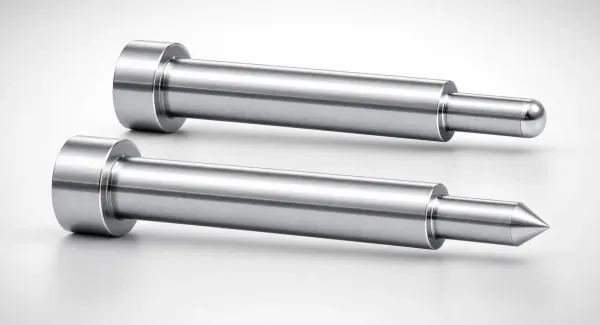
Finish targets follow the same logic. Polish the flow path to Ra 0.4 µm or finer and remove the EDM recast layer completely, 0.02 mm to 0.05 mm of stock removal depending on the cut settings. Smooth steel sheds condensate and offers fewer inclusion sites for pits to nucleate. On a PVC tool, surface finish is a corrosion specification, not a cosmetic one.
Cooling Circuit Corrosion on the Water Side
The water side of a PVC mold corrodes on a different chemistry than the cavity, and it is usually ignored until heat transfer drops. Chloride in the cooling water attacks steel at any chromium level if the chloride content is high enough, and a stainless cavity paired with carbon steel fittings creates a galvanic cell that eats the fittings.
Hold cooling water between pH 7.5 and 9.5 with chloride below 50 ppm for stainless circuits. Above roughly 200 ppm chloride, even 13% Cr steel becomes vulnerable to pitting, and 300 series stainless starts to show it too. Closed-loop chillers with treated water hit these numbers easily. Raw plant water or a once-through connection often does not.
Galvanic pairs are the second problem. A 13% Cr cavity with plain carbon steel pipe plugs, baffles or a mild steel manifold concentrates corrosion on the less noble part. Brass is not a safe substitute in acid service because dezincification strips the zinc and leaves a spongy copper residue that blocks the circuit. Specify 316 stainless or nickel-plated fittings throughout, and keep the circuit electrically consistent from inlet to outlet.
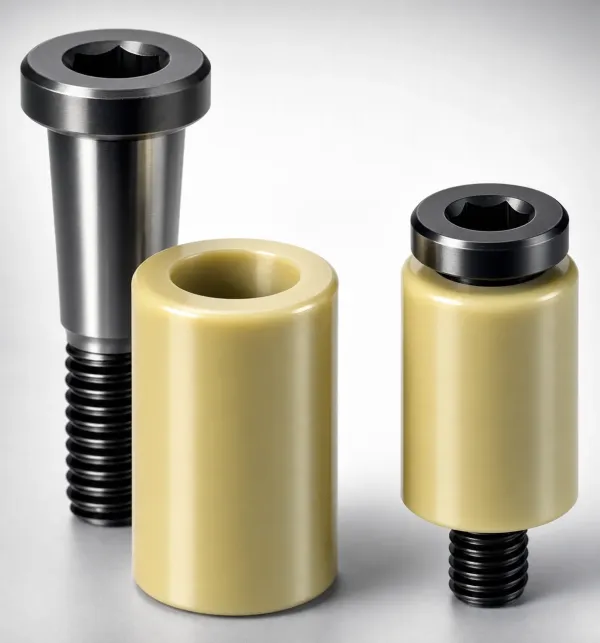
Once corrosion starts, the symptom shows up as temperature, not as a leak. A scale layer 0.1 mm thick on a cooling channel cuts heat transfer by roughly 5% to 10% and lengthens the cycle, while an uneven circuit layout makes one side of the cavity run hotter than the other. On a PVC part with tight dimensional control, that differential shows up as warpage long before anyone inspects the steel. Full cleaning steps are covered in this guide to cleaning mold cooling channels, and correct circuit sizing and fitting selection is covered under mold heating and cooling components.
Blow every circuit out with dry air at shutdown. Standing water in a mold that is cooling down pulls dissolved oxygen and acid residue into the channel walls at the waterline, which is the classic location for a horizontal pit line.
Shutdown, Purging and Storage Practice
Corrosion does most of its damage while the press is stopped. Acid residue left in a runner pocket or a cavity detail keeps reacting with whatever moisture the shop air supplies, and a weekend or a summer shutdown gives it 48 to 500 hours of uninterrupted contact.
Purge before you stop. Run 3 to 5 shots of polypropylene or HDPE through the barrel and the tool at normal purge temperature before shutdown. Leaving PVC or CPVC sit in a barrel at 180°C to 220°C for even a few hours drives dehydrochlorination, and the residue left in the runner is acidic when it cools. Never shut down with corrosive resin in the screw or the hot runner.
Clean and protect the steel the same day. Wipe the cavity and runner with a lint-free cloth, remove any visible deposit, and apply a corrosion-inhibiting oil designed for mold storage rather than a general-purpose machine oil. Water-displacing sprays that leave a dry film are the wrong choice for acid service, because they do not neutralize residue. Where a mold has seen a heavy PVC campaign, rinse the flow path with a light alkaline solution, dry it fully, then oil it.
Store dry. Relative humidity under 50% plus desiccant packs inside the closed mold plate stack keeps the cavity in the safe zone. A mold stored in a humid corner with residual acid can pit 0.05 mm to 0.1 mm in two to three weeks, which is enough to open a shut-off and cause flash on the next start-up. On a big tool where an insert swap costs $2,000 to $6,000, that is the most expensive form of neglect in the shop. Replacement custom mold inserts are built to print when the damage reaches that point, and the insert cost is rarely the largest number on the incident report.
For longer storage, wrap the mold in vapor barrier film with a desiccant, record the date and the steel grade on a tag, and preset the ejector system so springs and pins are unloaded. Tooling left with pins under load takes a set that shows up as uneven ejection in the next campaign.
Inspection and Maintenance Schedule
A corrosion program only works with measurements attached. The schedule below uses a 10x loupe, a pit depth gauge and a portable hardness tester, and it catches the problem while it is still reversible. The logic is the same one used for documented mold design and DFM reviews, where every risk gets an owner and a number.
Weekly. Inspect the gate area and the last-fill zone at 10x. These are the two hottest, most acid-exposed locations on a PVC tool. Look for a dull, etched surface and pinpoint spots. Note anything that reflects less light than the polished cavity around it.
Monthly. Measure pit depth with a depth gauge at any suspicious location and log the number. A pit under 0.05 mm on a sealing surface polishes out. A pit over 0.15 mm on a shut-off land means the insert needs replacement planning. Re-plate when the EN layer shows through-thickness damage over more than a few square millimeters.
Every 6 to 12 months. Check cavity hardness with a portable Leeb tester at ±1.5 HRC and compare against the original certificate. Softening means the steel has been running above its tempering temperature, and soft steel plus acid is a much faster corrosion path than hard steel plus acid.
Annually. Calculate the corrosion rate in mm per year from logged pit depths. A properly specified 13% Cr tool in PVC service stays under 0.01 mm per year. Unplated P20 in the same service typically shows 0.05 to 0.2 mm per year, and that number lets you forecast the replacement date instead of discovering it on a flash reject.
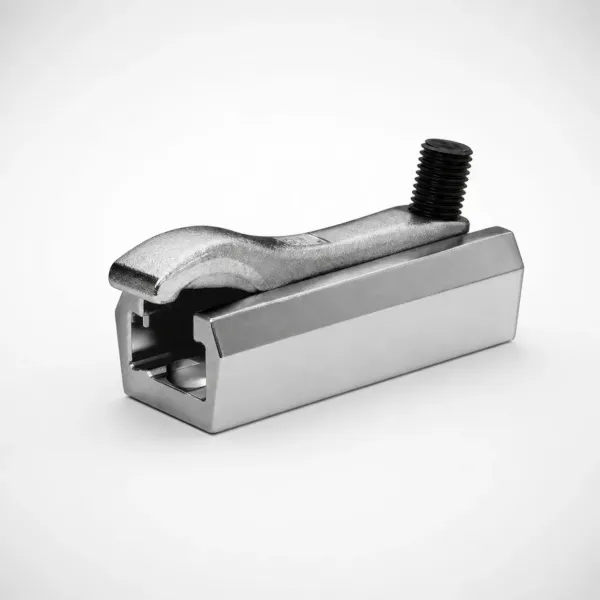
Keep the log with the mold. Grade, plating type, plating date, tempering temperature, cavity hardness and every measured pit depth belong in one record, along with the material processed. When a tool gets refinished or re-plated, that history tells the next shop what actually worked. DieStrike builds corrosive-service molds on IATF 16949 controlled processes across 120+ machines, holds mold dimensions to ±0.005 mm and component geometry to ±0.002 mm, and returns DFM feedback within 24 hours of a drawing package. Injection mold lead times run 2 to 5 weeks, and standard components ship in 3 to 7 days when a replacement insert is needed mid-campaign.
FAQ: Mold Steel for Corrosive Resins
Q1. Can I run PVC in a P20 mold for a short trial?
Yes, for a limited campaign. Keep melt temperature at or below 190°C, purge with PP between runs, oil the cavity the same day, and expect 0.02 mm to 0.05 mm of pitting in the first 5,000 to 10,000 shots. That is acceptable for a bridge tool. It is not acceptable for a 500,000 shot program, where P20 will force an insert replacement within 12 to 18 months.
Q2. Is S136 the same as 420 stainless?
Same family, different spec. S136 at 13.6% Cr is normally ESR melted, hardens to HRC 52 to 54 and polishes to SPI A1, which suits mirror-finish PVC parts and tight tolerance work. Generic 420 at 12% to 14% Cr reaches HRC 48 to 52 and costs 15% to 25% less on material. Both need a temper below 300°C to keep their corrosion margin intact.
Q3. Does electroless nickel survive a glass-filled PVC compound?
Partially. A 20 µm to 50 µm EN deposit handles the acid chemistry well, but 20% to 30% glass fiber abrades it, and the deposit wears through in high-shear areas like gates and narrow runners. Bake the deposit at 400°C for 4 hours to reach roughly 900 HV, and plan re-plating every 6 to 12 months in glass-filled service rather than 12 to 24 months.
Q4. Should I nitride a 13% Cr mold for PVC?
No. Nitriding forms chromium nitride in the surface layer and pulls chromium out of solid solution, which reduces pitting resistance below the un-nitrided surface. Nitriding belongs on glass-filled compounds where abrasion dominates, and on hot-work tooling where thermal fatigue is the failure mode. For PVC and CPVC, spend the money on plating instead.
Q5. How much more does a stainless cavity cost than P20?
Total cavity cost typically runs 20% to 35% higher. Material is 1.6 to 2.4 times the P20 price, and hardened S136 at HRC 52 cuts 30% to 40% slower than HRC 30 P20. On a $3,000 P20 cavity, that is roughly $600 to $1,100 more. One avoided insert replacement at $2,000 to $6,000 plus 3 to 5 days of downtime covers the premium several times over.
The Bottom Line
Corrosive resins reward steel chemistry, not hardness. Anything with acid species needs 12% chromium or more in solution, a temper outside 425°C to 550°C, and either electroless nickel or a properly polished stainless flow path. P20 in PVC service is a scheduled replacement, not a savings. Bring the resin and cycle count to our team before steel is ordered.
KEEP READING
Related Reading
Mild Steel vs Tool Steel for Mold Components: Which to Use
Where low-carbon steel is acceptable in a mold and where it starts costing you inserts and downtime.
Read articleArticleHow to Specify Heat Treatment for Mold Steel
Hardening, tempering and vacuum cycles written on the purchase order so the delivered steel matches the design.
Read articleArticleMold Polishing Guide: From Ra 3.2 to SPI A1
Polishing sequence and stock removal targets, including how much material to take off to erase EDM recast layer.
Read articleServiceInjection Mold Manufacturing
IATF 16949 injection mold build with stainless cavity steel, electroless nickel plating and 2 to 5 week lead times.
Read articleNEXT STEP
Ready to Start Your Mold?
Send us your element dimensions or part numbers — our team responds within 24 hours with pricing and lead time.

Written by
Ray ChanMold Buyer's Guide Author · Precision Mold Manufacturing Specialist. Ray helps global importers, distributors and OEMs source factory-direct molds and mold parts.