
How to Select SHCS for Mold Assembly
Table of Contents
At 2:10 a.m. on the 41st week of a 24-cavity connector program, an M8 socket head cap screw let go inside the ejector assembly. The ejector plate shifted 0.35 mm under spring load, three pins bent, and the line stopped. The toolmaker spent 5 hours stripping the stack. The shop scrapped 380 housings and logged 9 hours of downtime before the fault surfaced: a Class 8.8 zinc-plated screw, torqued by feel with an air gun, that had lost about 60% of its clamp load.
Socket head cap screws, or SHCS, are the standard fastener of mold assembly. They clamp ejector plates, lock blocks, cooling plates, guide pillar clamps and cavity plates. A 16-plate mold stack uses 40 to 120 of them, and each carries a share of the preload that keeps the stack rigid. One loose screw shifts a plate; a 0.05 mm shift shows up as flash, pin marks or short shots in every cavity it feeds.
This guide covers the M3 to M20 and 10-24 to 5/8-11 size series, classes 8.8 to 12.9 and stainless 304/316, coatings from black oxide to DLC, torque tables, preload math, failure modes and the RFQ line items that pin the decision down. Values follow ISO 4762, DIN 912, ANSI/ASME B18.3 and ISO 898-1. Figures are typical industry values unless marked as DieStrike capabilities.
The Snapshot
- Class 12.9 means 1,220 MPa minimum tensile strength, 1,100 MPa yield and 385 to 435 HV hardness, per ISO 898-1.
- Torque converts to clamp load through T = K x D x F. An M8 Class 12.9 screw at 26 N·m delivers roughly 16 kN of preload.
- Target preload is 60 to 75% of proof load for static joints. Below 40% the joint loosens under vibration.
- Thread stripping and socket rounding cause about 70% of mold fastener field failures, most traced to under-torque or a wrong grade.
- A loose ejector-plate screw costs 4 to 9 hours of downtime and hundreds of rejected parts per occurrence.
Why SHCS Fail in Mold Assembly
Mold fasteners fail in four patterns, all traced to a selection or torque decision made before the mold shipped. Loosening is most common. A mold cycles 1,000 to 5,000 times per week, and every cycle swings plate temperature 40 to 90 °C. That cycling plus press vibration relaxes the joint when preload sits below the friction threshold.
Thread stripping is second, from engagement under 1.0 x diameter or plate steel softer than the screw. Socket rounding is third, from worn hex keys, air guns and re-used screws. Tensile fracture is fourth, from over-torque, fatigue in high-cycle ejector systems, or hydrogen embrittlement in electroplated 12.9 parts that skipped baking.
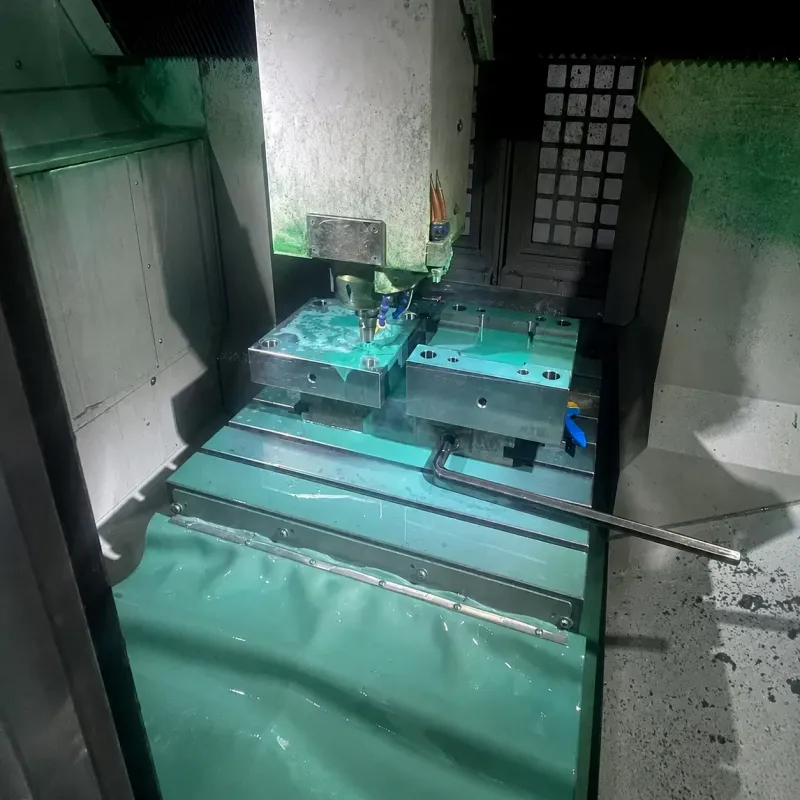
Each mode has a different cost: a helicoil repair or a new plate for a stripped thread, a burned-out screw and a waiting press for a rounded socket. Grade, coating and torque were chosen independently instead of as one system. That is the mistake this guide removes.
SHCS Size Series: M3 to M20 and 10-24 to 5/8
Mold assembly runs on two size systems. Metric parts follow ISO 4762, the successor to DIN 912, in sizes M3 to M20 with M4 to M12 doing most of the work. A 250 to 500 tonne mold base uses M8 and M10 for ejector and cavity plates, M6 for stripper clamps, and M12 to M16 for locking blocks and the top clamp plate.
Imperial molds follow ANSI/ASME B18.3, sized 10-24 up to 5/8-11 UNC. Common crossovers are 1/4-20 near M6, 5/16-18 near M8, 3/8-16 near M10 and 1/2-13 near M12. Do not swap by guesswork; pitch and stress area differ, so the torque table changes.
Three geometry facts decide fit. Head diameter runs near 1.5 x d, so an M8 head is about 13 mm across. Head height runs near 1.0 x d, and the hex socket runs 0.6 to 0.75 x d, which sets the key size. Lengths run 8 to 120 mm in 5 mm increments below 50 mm and 10 mm above.
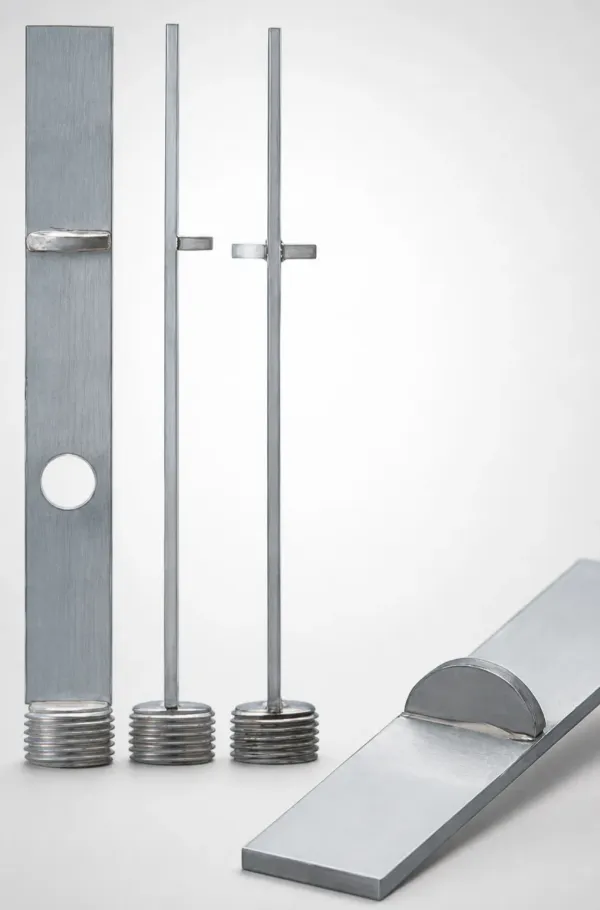
Match the size to the load, not habit. Ejector plates on 16 to 32 cavity molds take M6 to M8. Cooling plates take M8 to M16 because they carry water pressure and clamp load together. If the tapped plate is thin, go down in size and up in count.
Material Grades: Class 12.9, Alloy Steel and Stainless
Class 12.9 is the mold default for a reason. Per ISO 898-1 it holds a minimum tensile strength of 1,220 MPa, a yield strength of 1,100 MPa and a hardness of 385 to 435 HV. It is made from quenched and tempered alloy steel such as 42CrMo4, SCM440 or AISI 4140, and it keeps its strength to roughly 150 °C. A hot runner plate at 230 °C needs a derate of about 10%.
Class 10.9 sits at 1,040 MPa tensile and 940 MPa yield, about 15% below 12.9. Pick it when plating rules limit 12.9, when the shop over-torques, or when fastener cost matters across a large base program. Class 8.8, at 800 MPa, belongs only in non-critical clamps and temporary fixtures.
Stainless covers corrosion, not strength. A2-70 (304) runs about 700 MPa and A4-80 (316) about 800 MPa, so a 316 screw delivers roughly two-thirds of the clamp load of a 12.9 screw at the same size. Use it where water, coolant or humidity attacks steel: wet circuits, clean rooms, coastal shops. Budget for galling during assembly and a 20% torque derate.
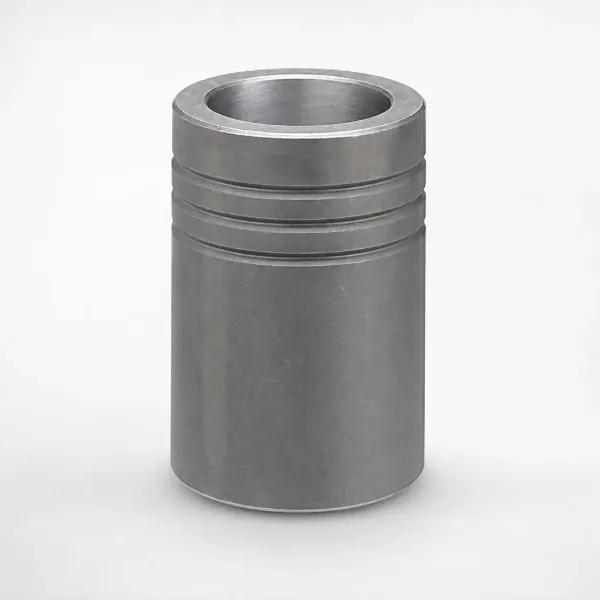
Never mix grades in one joint stack. A 12.9 screw torqued to its own table over-stretches an 8.8 boss or strips a soft plate. Match grade to plate hardness and record it on the assembly drawing.
Surface Treatments: Black Oxide, Zinc and DLC
Coating choice follows three questions: corrosion exposure, disassembly frequency, and whether the screw is Class 12.9. Black oxide is the mold default. At 0.5 to 2 µm it changes dimensions by almost nothing, needs an oil film to resist rust, and carries no hydrogen embrittlement risk. Expect roughly 96 hours of salt spray resistance.
Zinc electroplating gives 5 to 8 µm of sacrificial protection and 72 to 200 hours of salt spray, which is why it shows up on export molds. The catch is hydrogen embrittlement. Plating a 12.9 screw without a bake of 4 to 24 hours at 190 to 230 °C can leave it brittle enough to snap days later. Many shops cap electroplated fasteners at 10.9 or switch to mechanical zinc plating.
DLC, or diamond-like carbon, is the high-cycle choice. At 1 to 3 µm it reaches 1,500 to 3,000 HV, drops the friction coefficient from about 0.2 to 0.3 down to 0.05 to 0.1, and survives 500 or more assembly cycles. Ideal for ejector-plate screws stripped at every preventive maintenance interval and for lock blocks under shear. It costs 2 to 4 times zinc.
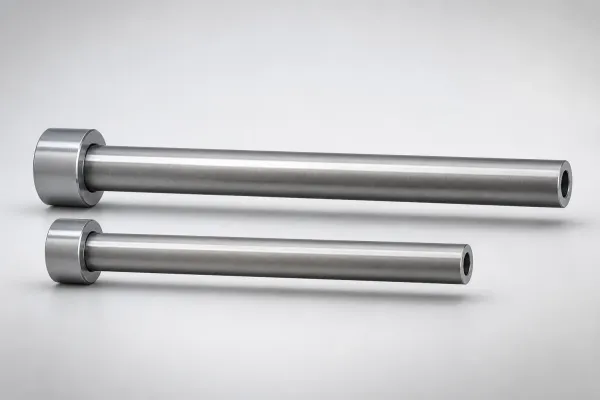
One rule closes the section. Class 12.9 plus unbaked electroplated zinc is the most dangerous combination in mold fastening. For strength plus corrosion resistance, choose black oxide with oil, DLC, or mechanical zinc plating.
Tightening Torque by Size and Grade
Torque is how the shop converts wrench effort into clamp load. The relation is T = K x D x F, where T is torque in N·m, K is the friction factor, D the nominal diameter in meters and F the preload in kN. K runs about 0.20 for lightly oiled steel threads, 0.12 to 0.15 with molybdenum grease, and up to 0.30 for dry or dirty threads. Change the lubricant and the same torque delivers a very different preload.
| Metric Size | Torque, Class 12.9 (N·m) | Approx. Clamp Load (kN) | Imperial Size | Torque, Grade 8 (ft·lb) | Approx. Clamp Load (kN) |
|---|---|---|---|---|---|
| M3 x 0.5 | 1.5 | 2.5 | 10-24 | 4.2 | 5.9 |
| M4 x 0.7 | 3.0 | 3.8 | 1/4-20 | 9 | 9.6 |
| M5 x 0.8 | 6.0 | 6.0 | 5/16-18 | 18 | 15.4 |
| M6 x 1.0 | 10.5 | 8.8 | 3/8-16 | 33 | 23.5 |
| M8 x 1.25 | 26 | 16.3 | 7/16-14 | 53 | 32.3 |
| M10 x 1.5 | 52 | 26.0 | 1/2-13 | 78 | 41.6 |
| M12 x 1.75 | 90 | 37.5 | 5/8-11 | 155 | 66.0 |
| M16 x 2.0 | 225 | 70.0 | - | - | - |
| M20 x 2.5 | 440 | 110.0 | - | - | - |
← swipe to scroll →
Table: Class 12.9 and Grade 8, lightly oiled, K = 0.20, plus or minus 15%. Derate stainless 20%. Verify against your fastener supplier.
Use a torque wrench above M6; air guns overshoot by 30 to 50%. For ejector plates and lock blocks on high-cavity tools, torque plus angle control holds preload scatter within ±10%. Record torque and lubricant in the mold book so the next rebuild reproduces the same clamp load.
Preload and the Three Failure Modes
Preload is the design variable; torque is its control knob. A static joint should carry 60 to 75% of proof load. At that level friction alone resists loosening; below about 40%, cyclic transverse movement rotates the screw out. The 8.8 screw in the opening story was torqued for an 8.8 target, then saw 900,000 cycles of ejector motion it was never sized to hold.
Three failure modes cover nearly every incident. Tensile fracture snaps the screw at the first loaded thread, following over-torque, fatigue or hydrogen embrittlement. Socket rounding crushes the hex recess, following worn keys, air guns and soft sockets. Thread stripping tears the female thread, following engagement under 1.0 x diameter in steel or 1.5 x diameter in aluminum. All three are preventable at specification time.
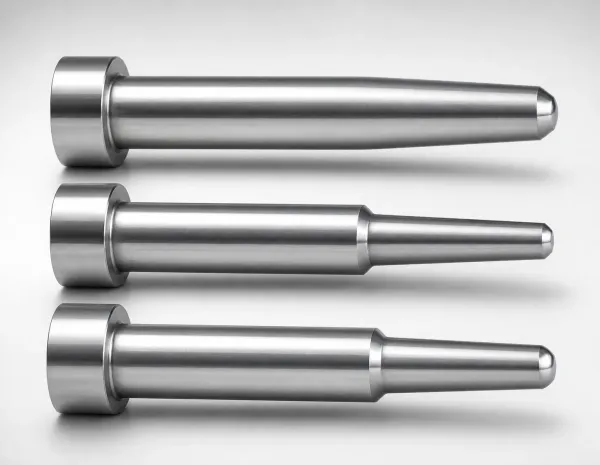
Thermal cycling adds a second enemy. Steel grows about 12.6 µm per meter per kelvin, so a 40 mm M10 screw stretches about 25 µm across a 50 °C swing. If the joint was under-torqued, that stretch relaxes preload further and the screw backs out. Medium-strength thread locker (243 grade) or witness-mark re-torque checks at preventive maintenance catch it before the plate shifts. Replace any ejector-assembly screw removed for repair; 12.9 parts lose preload consistency after repeated torquing.
Where SHCS Do the Work in a Mold
Five assemblies carry almost all the SHCS in a mold, and each sets its own rule. The ejector plate assembly runs M6 to M10 screws, 16 to 64 per mold on high-cavity tools. It is the highest-cycle location in the mold, so it gets Class 12.9, black oxide or DLC, and controlled torque. The plate must hold flat within 0.01 mm across its stroke, and that starts at screw preload.
Lock blocks, or heel blocks, take M8 to M12 screws and carry core-side shear. Blocks run HRC 58 to 60, so the screws must be 12.9 with at least 1.5 x diameter of engagement behind them. Cooling and core plates take M8 to M16 in wet circuits, so stainless A4-80 is justified where coolant attacks threads. Guide pillar clamp plates take M8 to M10 and get the same torque discipline as the ejector side.
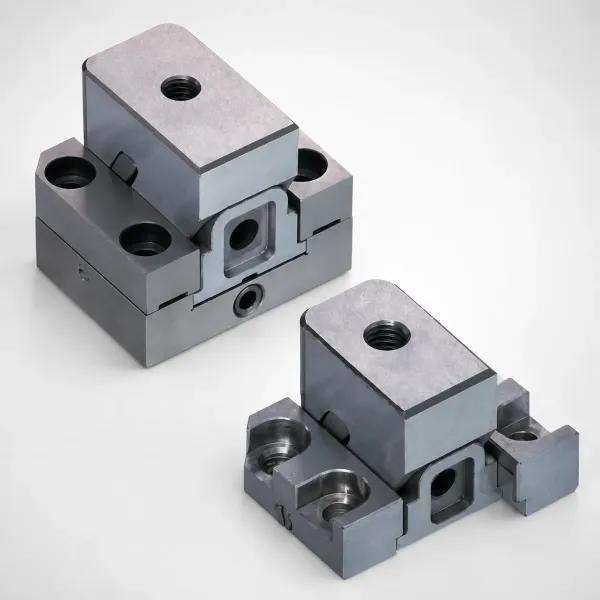
Cavity plates to backing plates take M10 to M16, and the rule is engagement: the tapped depth must reach 1.5 to 2.0 x diameter in the backing plate. If the plate is thin, add screws instead of lengthening them. The plate stack logic around these joints is covered in our guide on how to specify a mold base, and loosening symptoms in our 7 signs your mold base needs replacement guide.
SHCS vs Cross-Recess vs Hexalobular
SHCS dominates mold assembly because the hex socket transfers torque deep into the screw without cam-out. A full-size key engages the full socket depth, and the head stays compact at about 1.0 x d, letting it sit flush in a counterbore. The cost is socket rounding when the key is worn or the torque is hammered.
Cross-recess drives, Phillips and Posidriv, cam out under load, which limits them to M3 to M5 trim screws and covers. Hexalobular, or Torx, transfers up to 25% more torque than a hex socket at the same size and resists cam-out at high angles, a strong choice for M10 and above structural clamps. The trade is tooling: Torx keys cost more, the recess packs with dirt, and most shops still stock hex keys.
| Drive Type | Torque Transfer | Cam-Out Risk | Best Mold Use | Watch Out |
|---|---|---|---|---|
| Hex socket (SHCS) | High, full-depth engagement | Low | Ejector plates, lock blocks, cavity clamps | Socket rounds with worn keys or air guns |
| Cross recess (Phillips) | Low | High, cams out under load | M3-M5 trim screws and covers | Cannot hold high clamp torque |
| Hexalobular (Torx) | Up to 25% more than hex socket | Very low | M10+ structural clamps and shear joints | Dirt packs in recess, keys cost more |
← swipe to scroll →
Table: typical industry comparison; verify against your fastener standard.
The practical default stays simple. SHCS below M10, hexalobular for high-torque structural clamps if tooling supports it, and cross recess only for trim that leaves the mold. One drive across the mold book cuts key inventory and mis-torque rates together.
How to Specify SHCS in a Mold RFQ
A mold RFQ that says "screws as standard" gives the toolmaker permission to choose cheap. A fastener spec that survives audit names every variable: the standard (ISO 4762 or ANSI B18.3), the size and pitch, the length, the class (12.9 default), the material (42CrMo4 or SCM440), the coating (black oxide, DLC, or stainless for wet circuits) and the torque target with lubricant and K factor.
Add three inspection line items. Hardness spot checks on incoming 12.9 stock land at 385 to 435 HV. Torque verification on the first assembled mold hits the table within ±15%. Engagement checks confirm 1.5 x diameter minimum in critical tapped holes. On ejector assemblies, request a torque plus angle report so preload scatter is documented, not assumed.
DieStrike assembles and ships molds with the fastener spec on the drawing, and the mold accessories line covers SHCS, springs and locating hardware to the same ±0.002 mm component discipline. Put the spec in the RFQ and the spare kit in the mold box, and the press side stops improvising.
FAQ: SHCS Selection for Mold Assembly
Q1. What size SHCS should I use for an ejector plate?
Start with M6 to M8 Class 12.9 on 16 to 32 cavity molds in the 250 to 500 tonne range. Confirm tapped engagement reaches 1.5 x diameter in the retainer plate, torque to the table, and use DLC if the assembly is stripped at every preventive maintenance interval.
Q2. Class 12.9 or stainless 316 for mold screws?
Class 12.9 unless corrosion forces the issue. Its 1,220 MPa tensile and 1,100 MPa yield outmatch A4-80 stainless at 800 MPa. Use stainless only in wet circuits, humid environments or clean rooms, and derate its torque 20%.
Q3. How tight should I torque an M8 SHCS?
26 N·m for Class 12.9, lightly oiled, delivering roughly 16 kN of clamp load. Use a torque wrench, hold within ±15%, and drop to about 21 N·m for stainless. Dry or dirty threads raise friction and cut preload at the same torque.
Q4. Why do ejector-plate screws keep backing out?
Preload is too low for the vibration and thermal cycling the joint sees. Raise torque toward 60 to 75% of proof load, use a 243 thread locker, add witness marks, and re-torque at preventive maintenance. Replace removed 12.9 screws instead of re-torquing them.
Q5. Can I reuse SHCS after a mold rebuild?
Inspect every screw and replace the doubters. Discard any part with a rounded socket, visible stretch, corrosion pitting or a galled thread. On high-cycle ejector assemblies, replace all removed 12.9 screws as a set. One new screw is a rounding error next to a stripped thread in a cavity plate.
The Bottom Line
An SHCS is a 1 to 3 dollar part that can stop a 24-cavity line for a full shift. Choose grade, coating and torque as one system: Class 12.9 black oxide as the default, DLC for high-cycle assemblies, stainless only where corrosion wins, and torque table values applied with a wrench. Put the full spec in the RFQ and the spare kit in the mold box. DieStrike builds precision molds and ships mold accessories at ±0.002 mm component geometry, with fastener specs on the drawing so the press side never guesses.
KEEP READING
Related Reading
5 Mold Cooling Channel Design Tips for Faster Cycles
Mold maker's 5 cooling channel design rules: channel-to-cavity distance 2-2.
Read articleArticle5 Shrinkage Compensation Rules for Mold Design
Shrinkage compensation decides mold accuracy. Five rules: material rates from 0.3% to 2.
Read articleArticle5 Ways to Reduce Mold Cost Without Cutting Quality
Five proven ways to reduce injection mold cost without cutting quality: DFM before quoting, right-sized cavity count,…
Read articleArticle7 Gate Design Best Practices for Balanced Filling
Mold maker's 7 gate design rules for balanced multi-cavity filling: gate depth 50-80% of wall thickness, land 0.5-1.
Read articleNEXT STEP
Ready to Start Your Mold?
Send us your element dimensions or part numbers — our team responds within 24 hours with pricing and lead time.

Written by
Ray ChanMold Buyer's Guide Author · Precision Mold Manufacturing Specialist. Ray helps global importers, distributors and OEMs source factory-direct molds and mold parts.