
Sheet Metal Stamping vs Injection Molding: How to Choose
Table of Contents
A 48,000-unit annual run of an automotive bracket went to injection molding in 30% glass-filled nylon at $1.86 per unit. Nobody priced the progressive die route at $0.74. The program overspent roughly $54,000 in year one, then cracked mounting ears in cold-room tests at -40 °C.
That bracket could have gone either way. It carried two bends, four holes and a stiffness target that a 1.5 mm steel blank met easily. Both tooling routes were physically possible, and both suppliers had quoted on time. The real decision was temperature, tolerance, volume and unit cost, and nobody scored them before the tooling order went out.
This guide compares sheet metal stamping with injection molding for parts that sit in that middle zone: brackets, shields, housings, terminals and small enclosures. It comes from DieStrike, a toolmaker that builds progressive dies and injection molds in-house, so the article takes no side. The only bias is toward the process that delivers the part cheapest at the quality the print demands.
The Snapshot
- A progressive die completes a metal part in one press stroke at 50 to 800 SPM, with typical piece prices from $0.05 to $2.00.
- An injection mold cycles every 15 to 90 seconds, so a 16-cavity tool turns out roughly 640 to 3,840 parts per hour.
- Die tooling runs $15,000 to $100,000+ while mold tooling runs $3,000 to $100,000+, with the cost crossover usually between 10,000 and 500,000 parts per year.
- Stamped tolerances hold ±0.05 mm typical and ±0.01 mm precision, against ±0.1 mm typical and ±0.005 mm precision for molded parts.
- Steel strip runs 0.1 to 6.0 mm thick while molded walls run 0.5 to 5 mm, and dies survive millions of hits versus 100,000 to 1 million mold shots.
When the Choice Is Real: Parts That Fit Both Processes
Most parts never force this decision. A connector terminal has to conduct current, so it is stamped. A gasket housing has to seal and insulate, so it is molded. The interesting parts sit between those poles, where function does not rule out either process and the quote decides the winner.
Brackets are the largest group. A motor mount, sensor bracket or pump plate can be bent from 1.0 to 3.0 mm steel at a piece price under $1.00. The same part molds in glass-filled nylon, with ribs added for stiffness, at $1.50 to $3.00. Shields behave the same way at the EMI level, because a stamped steel shield conducts and grounds for free. A plastic shield needs conductive paint or plating that adds $0.30 to $1.50 per part.
Housings split by duty. An open frame that carries a PCB and sheds heat favors stamping. A sealed enclosure with a gasket groove, snap fits and a Class A surface favors molding. Small enclosures under 100 mm across are routinely quoted both ways. Terminals with overmolded bodies are quoted both ways too, because they are really two parts joined in one program.
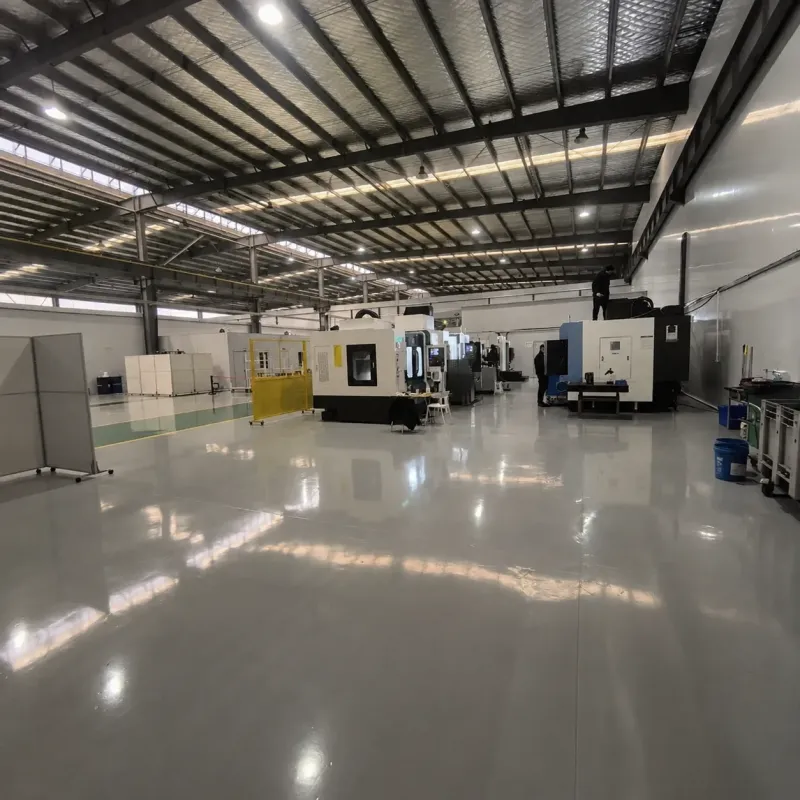
Volume does not settle the argument by itself. Both processes support millions of parts a year, stamping at 50 to 800 SPM and molding through 16 to 64 cavity tools. The crossover lives in fixed cost versus variable cost, which section four works through with real numbers. Before that, the geometry and material limits in section two cut the field down fast.
One rule clears most debates early. If the part must carry current, ground a circuit or survive above 150 °C, stamping is usually the only honest answer. If it must seal, flex repeatedly or meet a cosmetic finish, molding wins. Everything between those lines is a pricing exercise, and the rest of this guide is that exercise.
Geometry and Material: What Each Process Can Form
Stamping forms metal from flat strip, so every feature must be reachable from one plane. A progressive die blanks, pierces, forms, bends and lances in sequence, and the part unfolds into a strip layout. Steel strip is available from 0.1 to 6.0 mm thick, with 0.5 to 3.0 mm covering most automotive brackets and electronics shields.
Bending sets the real geometry limit. A bend radius below 0.5 to 1.0 times the material thickness cracks most steels. Bend springback of 0.5 to 2.0 degrees must be compensated in the die. Deep formed cups beyond about 40% of blank diameter draw into wrinkles or tears without redraw stations. Those constraints are why stampings stay mostly 2.5D: walls, flanges, lances and bosses, with draft-free cuts that no molding process can match.
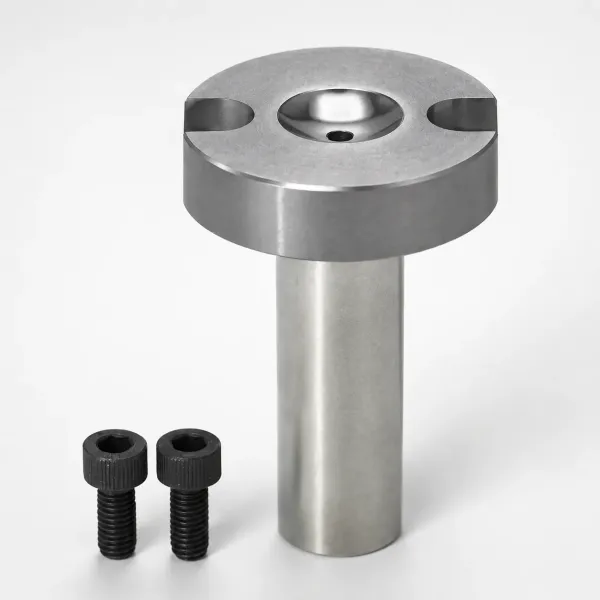
Injection molding is the opposite in every way. The mold shapes the part in three dimensions, so ribs, bosses, snap fits, gussets and internal features cost nothing extra in the tool. Wall thickness typically runs 1.5 to 3.0 mm for structural parts and can drop to 0.5 mm on thin-wall electronics. Undercuts need side actions or lifters that add $2,000 to $10,000 per action. Every wall needs draft of 0.5 to 1.5 degrees per side to eject cleanly.
Low-carbon steel yields at 270 to 350 MPa and conducts heat and current. Common engineering resins run far softer. PA66 with 30% glass reaches about 180 MPa tensile, and PC sits near 65 MPa. Steel costs $0.80 to $1.20 per kg versus $2.00 to $4.00 per kg for engineering resin, while density is where the two split. Steel at 7.85 g/cm³ weighs 5 to 7 times a polymer at 1.1 to 1.6 g/cm³, which is why molded parts win many enclosure jobs.
If the metal route is right but the shape is deep, cored and three-dimensional, aluminum die casting is the third candidate that competes with both. The comparison tooling and cavity steels for that route are covered in our guide on injection mold vs die casting mold. For this article, the gate stays binary: sheet metal from a die, or polymer from a mold.
Tooling Cost: Progressive Die vs Injection Mold
Tooling is the first number every buyer asks, and the honest answer is that both processes span the same wide band. A single-station die for a simple bracket can land near $15,000, while a 10 to 15 station progressive die with carbide sections runs past $100,000. A two-cavity mold for the same bracket runs $8,000 to $20,000, and a 32-cavity automotive connector mold with a hot runner exceeds $100,000.
Die price scales with station count, strip width and steel grade. Each added station brings punch, die button, pilots and stripper work, roughly $3,000 to $8,000 per station on typical tools. Punch and die steel runs D2 or DC53 at HRC 58 to 62, with tungsten carbide inserts reserved for runs past 1 million hits. Progressive die build steps and their costs are laid out in our guide on how to build a progressive die.
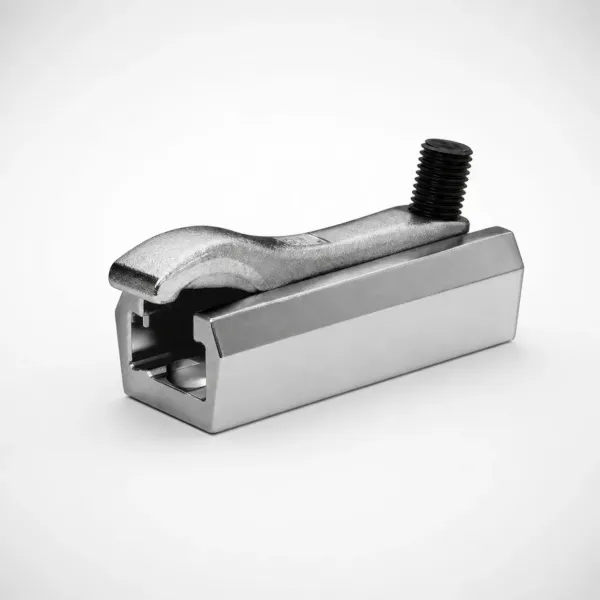
Mold price scales with cavity count, steel and runner system. The mold base is roughly 25 to 40% of the total, cavity inserts another 30 to 50%, and the runner system the rest. Standard P20, H13 and S136 steels keep most tooling under $50,000. Hardened cavity steel at HRC 48 to 62, plus exotic core materials, pushes premium tools past $100,000. A hot runner adds $5,000 to $40,000 over a cold runner but saves resin and cycle time on every shot.
Life and maintenance change the total cost picture. A progressive die in D2 or carbide runs millions of hits with punch regrinds every 100,000 to 500,000 hits. A production mold runs 100,000 to 1 million shots before cavity wear or fatigue retires it, with polish and repair intervals along the way. On a 5-year program, tool maintenance runs 3 to 8% of tooling cost per year for either route. A cheap tool that wears early is rarely the cheap tool.
Both tools ship from DieStrike in 2 to 5 weeks, because dies and molds run through the same machining floor. That shared floor matters more than tool price alone. The DFM review that catches a bad bend radius also catches a wall thickness that will sink. One quote desk prices both routes against your part file.
Piece Price and Volume Crossover
Piece price is where the two processes separate. Stamping is fixed-cost heavy and variable-cost light. Once the die exists, the press runs a part in a fraction of a second at 50 to 800 SPM. Labor and energy then add cents, not dimes. Molding is the reverse: moderate tooling, but every part pays for a 15 to 90 second cycle, machine time and resin.
Run the hourly math and the gap shows. A progressive die at 200 SPM makes 12,000 parts per hour before downtime. A 16-cavity mold on a 30 second cycle makes 1,920 parts per hour. Even a 64-cavity tool on a 20 second cycle tops out near 11,500. Stamping reaches those rates with one press operator per line, while molding needs a machine and an operator per mold and often more for automation.
That speed gap turns into a volume crossover. Work a 3-year program at 200,000 parts per year, or 600,000 parts total. A $60,000 die adds $0.10 per part in amortization, and a stamped bracket runs $0.35 in material and processing, for a $0.45 total. A $30,000 mold adds only $0.05, but the molded part carries $0.55 in resin and cycle time, landing at $0.60. Stamping wins by $0.15 per part and about $90,000 over the program.
Cut the volume and the answer flips. At 20,000 parts per year over 3 years, the same die adds $1.00 per part. The mold adds $0.50, and the totals become $1.35 stamped versus $1.05 molded. In practice, the crossover for such parts sits between 10,000 and 500,000 units a year. Thin gauges and simple shapes push it low, while complex forming and tight tolerances push it high.
Material utilization bends the curve on the stamping side. A good strip layout holds 55 to 70% utilization, and scrap below 45% drags the variable cost up because steel is paid for twice. Molding has its own leak: cold runners and gates leave 5 to 25% of the shot as sprue, regrindable but not free. Both costs are visible in a clean quote, and both are why quoting the part, not the process, is the only honest comparison.
Tolerance and Repeatability
Tolerances get quoted as single numbers, but they behave differently between the two processes. A stamped dimension is set by the die steel and stays put for hundreds of thousands of hits, with no material shrinkage involved. A molded dimension is set by the cavity but moves with shrinkage, packing and cooling, so batch-to-batch scatter is part of the process.
Typical stamped tolerances run ±0.05 mm on hole positions and formed features, and precision dies hold ±0.01 mm on critical spacing. Cut edges carry a burr of 0.05 to 0.1 mm on one side, controlled by die clearance and direction. Bend angles hold ±0.5 to 1.0 degrees. Flatness after forming needs a leveling or restrike station to reach 0.1 to 0.3 mm across a 100 mm bracket.
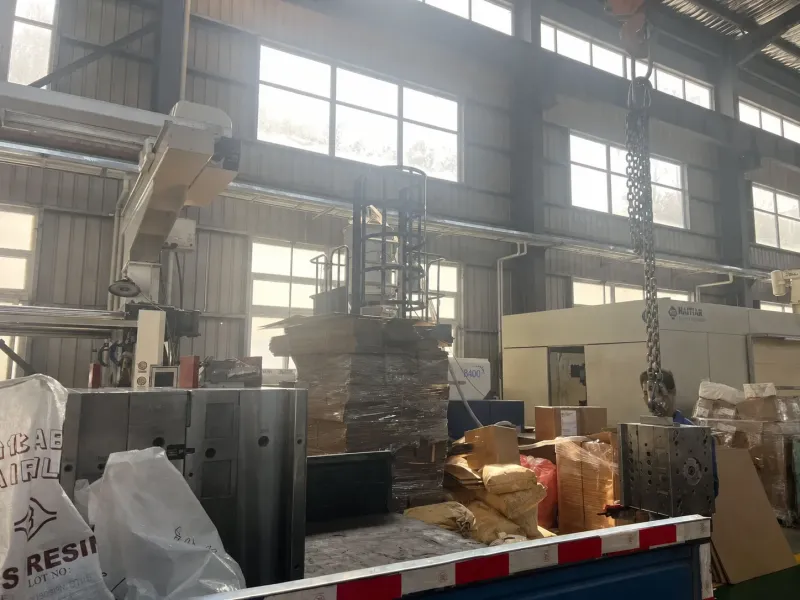
Molded tolerances start wider and get wider with distance from the gate, and typical parts hold ±0.1 mm. Precision connector and automotive molds reach ±0.005 mm, but only on features controlled by gating, cooling and process monitoring. Shrinkage is the variable behind it, and the resin choice sets the scatter before the mold is cut. POM runs 1.8 to 2.2%, PA66 runs 1.5 to 2.0%, and PC shrinks only 0.5 to 0.7%. Precision molded tolerances are detailed further in our guide on how to hold ±0.002 mm precision mold tolerances.
Repeatability over a shift also diverges. A progressive die holds its dimensions until the punch dulls. Burr checks at intervals of 10,000 to 50,000 hits are the maintenance signal. A mold drifts with melt temperature, pack pressure and mold temperature, so windows hold barrel temperature within ±10 °C and cycle time within ±2 seconds. Both are repeatable, but the stamping die stays repeatable passively while the mold needs the machine to hold its window.
| Feature | Progressive Die (typical) | Injection Mold (typical) |
|---|---|---|
| Toleranced dimensions | ±0.05 mm standard, ±0.01 mm precision | ±0.1 mm standard, ±0.005 mm precision features |
| Draft required | None on pierced or blanked features | 0.5-1.5 degrees per side on walls |
| Minimum wall or gauge | 0.1-0.5 mm stock on thin electronics | 0.5 mm thin-wall, 1.5-3.0 mm practical |
| Part-to-part consistency | Locked by die steel, no shrink | Shrink scatter of 0.3-2.0% by resin |
| Edge quality | Burr 0.05-0.1 mm on one cut side | No burr, gate vestige 0.1-0.5 mm |
| Flatness and warp | Leveling or restrike to 0.1-0.3 mm | Cooling balance and packing control |
← swipe to scroll →
Table: typical industry tolerance classes for stamping and molding. Verify every critical dimension against your process and supplier before tooling.
Secondary Operations and Assembly
Neither process ships a finished assembly, and the secondary operation list is where many budget surprises live. Stamped parts often need threads, and tapping adds $0.02 to $0.08 per hole when done off the press. Progressive dies can form threads with form taps in-die on softer stock, which removes the operation and its handling cost entirely.
Deburring is the stamping tax that never appears on the first quote. Vibratory finishing runs 1 to 3 hours per batch and adds $0.01 to $0.05 per part. Critical edges still need hand or robotic deburr at higher cost. Plating for corrosion adds $0.02 to $0.15 per part depending on finish. A steel part that must not rust for 10 years gets zinc, nickel or a conversion coat.
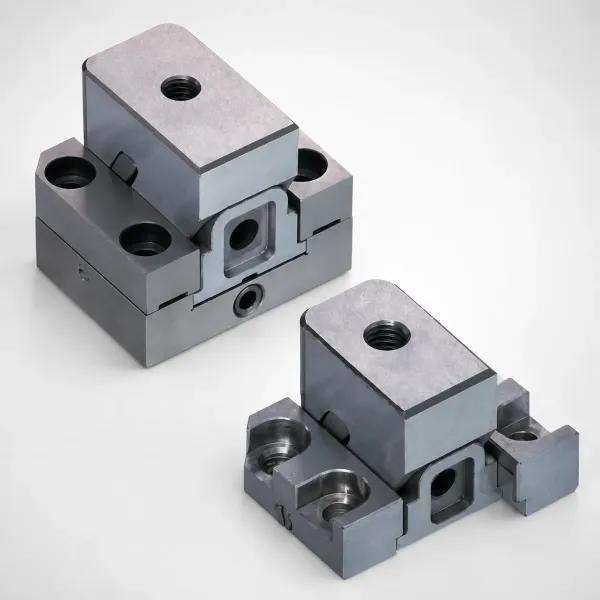
Molded parts push secondary work into the tool instead. Threads come out of the mold with unscrewing cores at a 5 to 15 second cycle penalty. Pressed-in metal inserts cost $0.01 to $0.05 each plus handling. Snap fits and living hinges eliminate fasteners at the design stage. Molded enclosures then assemble in seconds, where stamped enclosures need screws, rivets or welds.
Assembly method tips the decision on small parts. A stamped shield that needs a molded cap, a gasket and three screws becomes a three-part assembly problem with its own inventory and labor. The same function as a two-shot or insert-molded part collapses into one handling step. Counting assembly operations before choosing the process catches most of the hidden cost that sank the bracket in the opening story.
Hybrid Parts: Stamped Metal Plus Molded Plastic
The best answer to the either-or question is often both. Insert molding takes a stamped metal part, places it in the mold, and overmolds polymer around it in one cycle. The result uses metal where the part needs strength, conductivity or heat resistance, and polymer where it needs sealing, insulation or a cosmetic surface. A stamped terminal with a molded connector body is the classic case. It is exactly the program a maker of both tool types is built to quote.
Hybrid design cuts part count and tolerance stacking. A bracket, shield and gasket that would assemble from 3 to 5 separate parts becomes one insert-molded unit. Molded-to-metal alignment is set by the tool, not by assembly fixtures. Sealing improves because the polymer wets into the stamped feature. EMI shielding survives because the metal insert carries the ground path through the plastic wall.
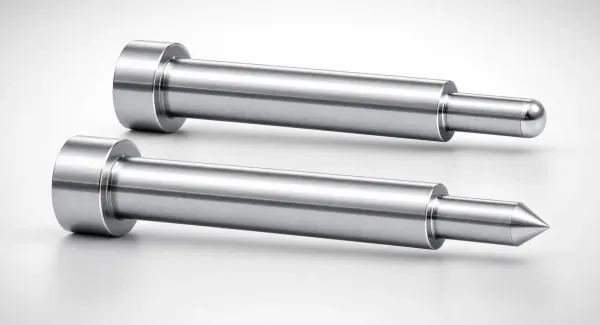
The economics favor hybrids once metal and plastic are both required. The stamped insert tolerances at ±0.05 mm are comfortable for mold loading. The overmold cycle of 30 to 60 seconds is one operation, not an assembly line. The main cost is handling. Insert placement robots or pick-and-place tooling add $20,000 to $60,000 to the cell, while cycle time is dominated by the polymer, not the metal.
Design rules for these parts are distinct from either single process. The stamped insert needs anchorage, through-holes or coined features so the molded plastic locks on mechanically. Wall over the insert should clear 1.5 mm to avoid resin starvation, and gate placement must not wash the insert out of position. Those rules are collected in our guide on how to design insert molds, which covers retention, loading and cycle time in detail.
The Decision Table: 10 Questions to Ask
Run every middle-zone part through this table before any tooling money moves. Score each row honestly against the print, the environment and the forecast volume, and let the majority verdict pick the process. If the score ties, quote both routes, because the crossover math in section four decides ties.
| Decision Point | Route to Stamping | Route to Injection Molding |
|---|---|---|
| 1. Service temperature | Survives 150-400+ °C continuous duty | Most resins cap at 80-150 °C |
| 2. Structural load | Steel yields at 270-350 MPa | PA66-GF30 reaches about 180 MPa |
| 3. Electrical duty | Conducts current, grounds and shields EMI | Insulates. EMI needs paint or plating |
| 4. Wall and weight target | 0.1-6.0 mm gauge, dense metal mass | 1.5-3.0 mm walls, 5-7 times lighter |
| 5. Tolerance class needed | ±0.05 to ±0.01 mm with no shrink | ±0.1 mm typical, ±0.005 mm precision |
| 6. Draft and undercuts | Draft-free cuts, bends limit shape | Draft 0.5-1.5°, ribs and snaps are free |
| 7. Annual volume | Wins above the 10k-500k crossover | Wins below it at low to mid volume |
| 8. Corrosion and chemicals | Needs plating or coating for rust | Corrosion-free polymer body |
| 9. Fasteners and assembly | Tabs, clinches, staked inserts | Bosses, snap fits, molded threads |
| 10. Enclosure duty | Open frames, shields, heat sinks | Sealed housings, gaskets, Class A surface |
← swipe to scroll →
Table: decision routing for parts that fit both processes with typical industry values. A tie means quote both tooling routes.
Two rows usually decide the part before the table is half finished. Row three, electrical duty, sends anything that must conduct to the stamping press. Row one, service temperature, does the same for anything above 150 °C. Rows seven and five, volume and tolerance, arbitrate between the survivors. Rows six and ten settle the enclosure-style parts that could go either way.
FAQ: Stamping vs Injection Molding
Q1. Which process is cheaper for a bracket at 100,000 parts a year?
If steel meets the function, stamping usually wins by 20 to 40%. A die at $40,000 adds $0.13 per part over 3 years, against $0.10 for a $30,000 mold. The stamped blank at $0.35 to $0.50 beats the molded part at $0.55 to $1.20 in material and cycle cost. Quote both with the same part file, because geometry complexity moves the crossover.
Q2. Can molded plastic match the strength of stamped steel?
Not at the same wall thickness. PA66 with 30% glass reaches about 180 MPa tensile against 270 to 350 MPa for low-carbon steel. A molded part needs roughly 2 to 3 times the wall for equal stiffness. The resin is 5 to 7 times lighter, so weight-for-weight the molded part can still win on enclosures and non-load parts.
Q3. What tolerances can stamping and molding hold?
Stamping holds ±0.05 mm typical and ±0.01 mm precision with no shrinkage in the process. Molding holds ±0.1 mm typical, with ±0.005 mm precision only on controlled features of connector and automotive parts. Molded dimensions drift with resin shrinkage of 0.3 to 2.0%. If the print needs draft-free walls or tight hole spacing, stamping is the safer route.
Q4. Why do stamped parts carry so many secondary operations?
Because the die cannot make threads, seals or cosmetic surfaces that the material does not form naturally. Tapping adds $0.02 to $0.08 per hole, deburr adds $0.01 to $0.05 per part, and plating adds $0.02 to $0.15. Molding moves those functions into the tool with unscrewing cores, inserts and snap fits, trading tool cost for assembly labor.
Q5. Can one supplier build both the die and the mold?
Yes, and that is the useful answer for middle-zone parts. A maker of both tool types, DieStrike among them, runs one DFM review against both processes and prices the part, not the process. The hybrid option, a stamped insert in a molded body, only exists when the same floor can build and align both tools.
The Bottom Line
The process decision for brackets, shields, housings and terminals is a numbers problem, not a preference problem. Stamping wins when the part must conduct, ground, shed heat or survive above 150 °C. It also wins when volume sits above the crossover, where a $15,000 to $100,000+ die amortizes to cents per part. Molding wins when the part seals, flexes, carries complex 3D features or must look finished. Moderate volume lets a $3,000 to $100,000+ mold spread its cost thin over resin that weighs 5 to 7 times less than steel.
Score the 10 questions in the decision table before quoting, and quote both routes whenever the score is close. The bracket that opened this article cost its program $54,000 in year one because nobody ran that score. The same bracket, routed through a progressive die, would have stamped at $0.74 per unit with no crack risk at -40 °C. The difference was visible on paper the whole time.
DieStrike builds production molds and progressive dies in-house under IATF 16949 across more than 120 machines. It holds standard tolerance at ±0.005 mm and precision at ±0.002 mm. Long-running connector programs for OEMs such as TE Connectivity, Amphenol and Luxshare run on those tools. Send the part file that could go either way. The same DFM team will route it, quote it and build whichever tool the numbers support.
KEEP READING
Related Reading
How to Maintain Punch Clearance in Progressive Dies
Cutting clearance runs 5-10% of stock thickness per side for cold rolled steel. Wrong clearance shows up as burr over 0.05-0.1 mm in the first 1,000 hits.
Read articleDESIGN GUIDE9 Draft Angle Mistakes That Kill Moldability
Molded walls need draft of 0.5-1.5 degrees per side and uniform walls of 1.5-3.0 mm. Nine geometry errors that force mold rework and slow cycles.
Read articleVS GUIDESoft Tooling Vs Hard Tooling
Prototype molds of aluminum or epoxy last 100 to 10,000 shots while hardened steel tools run 100,000 to 1 million shots. Where to switch tooling strategy.
Read articleBUYING GUIDEHow to Read a Mold Quote: Line by Line
Mold quotes vary 20-40% for the same tool across suppliers. Break down base steel, cavity inserts, hot runner and tryout line items before comparing.
Read articleNEXT STEP
Ready to Start Your Mold?
Send us your element dimensions or part numbers — our team responds within 24 hours with pricing and lead time.

Written by
Ray ChanMold Buyer's Guide Author · Precision Mold Manufacturing Specialist. Ray helps global importers, distributors and OEMs source factory-direct molds and mold parts.