
17-4 PH vs 420 Stainless Mold Steel: Corrosion, Polish and Life
Table of Contents
A 32 cavity optical tool arrived in H13, the wrong call on day one. The resin was a flame retardant polyamide that gives off acidic combustion products above 280 °C, and after 100,000 shots the cavity steel showed a mottled haze at the last-to-fill corners. The haze was corrosion, gloss dropped from a mirror reflection to a dull film, and 4 cavity sets went back for re-cutting at 4 working days and 6,500 USD per set.
The replacement grade question is where programs stall. Both grades are sold as corrosion resistant mold steels, both machine cleanly and both take a good polish. They are not interchangeable. 17-4 PH is a precipitation hardening martensitic steel: chromium, nickel and copper, hardened by an aging cycle that moves dimensions by 0.005 to 0.010 mm. 420 is a straight chromium martensitic, hardened by quench and temper.
That route lets 420 reach HRC 48 to 54, where 17-4 typically stops near HRC 47. Higher hardness comes with worse toughness and a harder repair. The full trade is the subject of this article.
This article compares the two grades property by property: chemistry and structure, hardening routes, corrosion ranking in real molding atmospheres, polish response, thermal conductivity, machinability, weld repair and cost. Then the decision rules: when to pick each, and when both are the wrong answer. Figures below are typical published or industry values. Verify every one against the mill certificate and the heat treatment report before the drawing is released, using the incoming checks in our steel verification guide.
The Snapshot
- Hardness caps differ by 4 to 6 HRC. 420 reaches HRC 50 to 54 by quench and temper. 17-4 PH runs HRC 40 to 47 in the common aging conditions and tops out near HRC 48 at H900. A stainless seal land at HRC 50 or above is a 420 decision.
- Toughness runs the other way. Charpy V-notch impact for H900 17-4 sits at 20 to 30 ft·lbf, roughly 2 to 4 times hardened 420 at 5 to 15 ft·lbf. Long cores, snap-fit cams and press-fit details belong in 17-4.
- Corrosion margin favors 17-4. Chromium equivalent is 18.3 versus 14.5 and nickel adds film stability, so 17-4 clears most storage and salt-air scenarios with room to spare. Both grades still lose to condensation plus dust on an idle mold.
- Thermal conductivity is the hidden tax. 17-4 conducts about 11 W/m·K against 24 W/m·K for 420 and 30 to 34 W/m·K for P20, so 17-4 runs near 40 percent of P20 and can add 3 to 8 seconds to a cooling-dominated shot.
- Repair welding splits the grades. 17-4 welds with no preheat and regains strength at a 480 °C aging step. 420 needs 300 to 400 °C preheat, immediate post-heat and a full re-temper, or the heat-affected zone cracks.
What the Metallurgy Difference Actually Is
Both grades are martensitic stainless steels, and both sit right on the passivity threshold. Corrosion resistance in stainless comes from a chromium oxide film only 2 to 5 nm thick that reforms instantly when damaged. The film needs about 10.5 to 12 percent chromium to work. 420 carries 12 to 14 percent, which clears the bar with narrow margins. 17-4 carries 15 to 17 percent plus 3 to 5 percent nickel, and the nickel both stabilizes the film and toughens the matrix.
Structure is where the two parts company. 420 is straight chromium with essentially no nickel. Its martensite forms on quench from 980 to 1050 °C and is hardened by carbon alone: 0.16 to 0.38 percent depending on variant, with 420F adding sulfur for free machining. Skip the free-machining variant for any cavity that must polish or resist acid; sulfur is a pitting seed and a polish defect in one.
17-4 PH is iron, 15 to 17 percent chromium, 3 to 5 percent nickel and 3 to 5 percent copper, with columbium around 0.15 to 0.45 percent as a carbon fixer. Hardness does not come from carbon. It comes from fine copper-rich precipitates that nucleate inside the matrix during aging, which is why the grade is called precipitation hardening. The carbon stays mostly in solution and the structure is far tougher than a carbon-hardened martensite at the same hardness.
Practical consequence: 420 buys hardness with brittleness, while 17-4 buys strength plus toughness with a hardness ceiling and a thermal penalty. The rest of this comparison follows from that single split.
Hardening Routes Compared: Aging Versus Quench and Temper
17-4 reaches the shop as Condition A: solution treated at roughly 1040 °C, water quenched, soft at HRC 33 to 38. You machine it, rough the cavity, sink the EDM details, then age it. Aging is an air-circulated furnace cycle with furnace-level control at plus or minus 6 °C and air cooling to under 65 °C between steps. No brine, no salt bath, no quench crack risk.
| Condition | Aging cycle | Typical hardness | Dimensional change | Mold use |
|---|---|---|---|---|
| H900 (482 °C) | 4 hours, air cool | HRC 44 to 47 | +0.0004 to +0.0010 in (0.010 to 0.025 mm) growth | Default for cores, sliders and inserts needing maximum strength |
| H1025 (552 °C) | 4 hours, air cool | HRC 40 to 44 | near zero, within the measurement scatter | Maximum corrosion resistance, near-dimensionless aging |
| H1100 / H1150 | 4 hours, air cool | HRC 35 to 40 | slight growth | Rare in tooling; toughness and corrosion over strength |
← swipe to scroll →
Table note: aging cycles, hardness bands and growth values are typical published ranges for bar and plate. The aging temperature, time and cooling log belong in the tool file with the hardness map taken after aging.
420 hardens the old way. Machined from annealed stock at roughly HB 230 to 280, or bought pre-hardened at HB 240 to 280, then austenitized at 980 to 1050 °C, quenched in oil or still air on thin sections, and tempered at 150 to 200 °C for HRC 52 to 54. That temper window is deliberately low: go past about 370 °C and hardness falls off the cliff, and the pass of peak softness near 500 °C is a place nobody visits on purpose.
The distortion arithmetic is the argument. A quench and temper cycle moves a mold plate by 0.1 to 0.3 mm per 25 mm of thickness in the worst case, and a cavity that has already been finished cannot survive that. So 420 inserts get roughed, hardened, then temp-cored, ground and sink-EDMed to print, which adds 5 to 10 mm of stock and a second machining pass. 17-4 ages after roughing with single-digit-micron growth, and the finish machining happens once, straight to print.
Lead time and cost follow the route. Solution-annealed 17-4 bar runs about 6 to 12 USD per kg against 5 to 10 USD for annealed 420, and commercial aging services bill 150 to 400 USD per batch with 2 to 5 day turnaround. Through-hardening quotes for 420 usually run higher than aging because the heat treat house carries the crack and distortion risk. Neither number should decide a grade. The property split below should.
17-4 PH vs 420: Side-by-Side Property Table
One table, both grades, the numbers that drive the selection. Read it against the part: optical cavity, corrosive resin, long core, high-cav automotive set. Then the sections that follow explain every row.
| Property | 17-4 PH (H900) | 420 (HRC 52 temper) | Mold consequence |
|---|---|---|---|
| Chromium / nickel | 15 to 17 percent / 3 to 5 percent | 12 to 14 percent / under 0.6 percent | 17-4 holds a stronger passive film in condensation and salt air |
| Hardening mechanism | Copper precipitates, 482 to 621 °C aging | Carbon martensite, quench and temper | Aging barely moves 17-4; 420 distortion must be ground out |
| Achievable hardness | HRC 40 to 47, HRC 48 max | HRC 48 to 54 | Shut-off lands above HRC 50 are 420 territory |
| 0.2 percent yield strength | about 1,170 MPa | about 740 MPa | 17-4 cores resist bending at 5 to 8 times diameter slenderness |
| Charpy V-notch energy | 20 to 30 ft·lbf | 5 to 15 ft·lbf | 420 chips at sharp internal corners and thin webs |
| Thermal conductivity at 100 °C | 10.9 to 11.4 W/m·K | 24 to 25 W/m·K | 17-4 removes heat at less than half the rate of 420 |
| Corrosion ranking in molding | good, strong in condensation and salt air | fair to good, needs a clean passive surface | Ranking flips with polish quality and shutdown habits |
| Polish ceiling | SPD-A with extra time, smear risk | SPD-A reliably, carbide constraint | Mirror optical work usually runs 420 or S-grades |
| Weld repair | no preheat, re-age to restore | preheat 300 to 400 °C, re-temper or crack | Repair-heavy programs pay back 17-4 in downtime |
| Typical raw cost | 6 to 12 USD per kg | 5 to 10 USD per kg | Processing and rework dominate the difference |
← swipe to scroll →
Table note: values are typical published ranges for bar and plate in the conditions named. P20 pre-hardened at roughly HB 290 conducts at 30 to 34 W/m·K for reference. Confirm against the certificate for the heat you buy.
Thermal Conductivity and the Cooling Penalty
Thermal conductivity is the row that surprises buyers. 17-4 PH conducts at roughly 10.9 to 11.4 W/m·K near 100 °C. 420 sits at 24 to 25 W/m·K. P20 pre-hardened runs 30 to 34 W/m·K, so 17-4 removes heat at about 40 percent of the P20 rate, and 420 gives up roughly 25 to 30 percent against P20. If cooling time is your cycle bottleneck, this single property can outweigh every other reason you picked a stainless.
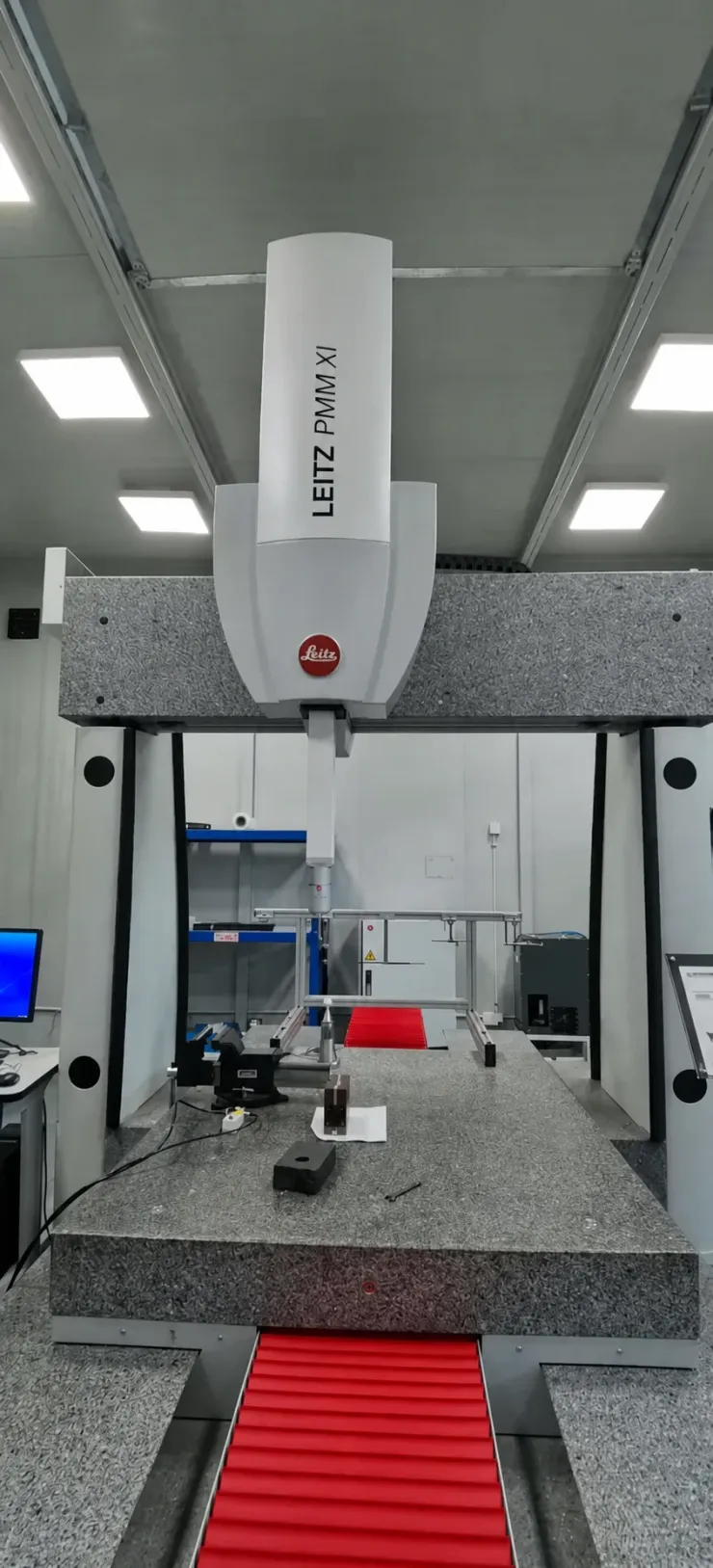
Translate the property into seconds. A cooling-dominated shot on a 1.6 mm wall part that freezes in 18 seconds in a P20 cavity will land near 21 to 24 seconds in the same geometry cut in 17-4, because cooling time scales with the inverse of conductivity once the Biot number is high enough. At 85 shots per hour instead of 92, a tool that runs 6,000 hours a year loses roughly 42,000 shots of capacity. That is the entire case against 17-4 on a commodity part, and it is why 420 often wins optical and appliance work even where corrosion is equal.
Three mitigations buy the number back. Keep the distance from cavity face to channel at 12 to 20 mm so conduction path length stays short; a 17-4 insert thicker than 30 mm over the nearest channel is a heat trap. Use local beryllium copper or copper alloy inserts at the last-to-fill hot spots, rated for the same shut-off duty only if they stay off seal lands. And balance the water side: turbulent flow at 4 to 8 L/min per circuit recovers part of the penalty that the steel cannot.
A verification step belongs in the trial. Put surface thermocouples or a probe in at least six points on the cavity face at steady state. On stainless inserts the spread between core side and cavity side runs wider than on P20 for the same channel layout, and a spread above 5 °C predicts a 0.05 to 0.15 mm sink and gloss variation across the part, not just a slower cycle.
Corrosion Resistance Ranked by Molding Atmosphere
Stainless corrosion resistance is a film problem, and the film quality tracks chromium equivalent plus melt cleanliness. 17-4 brings 15 to 17 percent chromium and 3 to 5 percent nickel: chromium equivalent about 18.3, against 14.5 for 420 with no meaningful nickel. Neither grade carries molybdenum, so both are vulnerable to chloride pitting. The ranking below is what that chemistry means in shop-floor reality, worst environment first.
Storage condensation: equal opportunity killer. A warm tool pulled into a cool plant coats its cavity in a water film within minutes, the film picks up CO2 and resin dust, and 420 pits first because its passive film is thinner and its chromium carbides set up micro-galvanic cells in the matrix. 17-4 shrugs off short condensation events; nobody shrugs off a month of them. VCI paper, desiccant to keep humidity under 50 percent and an oil coat matter more than the grade here.
Salt-air and coastal plants: 17-4 wins clearly. Chloride-laden air at 3 to 10 mg per square meter of sea-salt deposition attacks the weaker film first. A coastal plant storing a 420 tool over weekends sees orange bloom at ejector-pin holes and under clamps in 2 to 4 weeks unless protection is perfect. 17-4 tolerates the same exposure for months between planned preservation.
Acidic off-gas from flame-retardant resins: both lose without polish discipline. Brominated and phosphorus flame retardants decompose above roughly 280 °C and the combustion products condense as acidic films at the vents and last-fill corners, wherever the steel sits below the acid dew point. This is the failure that opened this article. Neither grade is immune; the defense is a full polished surface with the EDM recast layer removed, vent design that stays above the dew point, and shutdown cleaning that strips the deposit before it hydrates overnight. The resin-by-resin selection logic is covered in how to choose mold steel for corrosive resins.
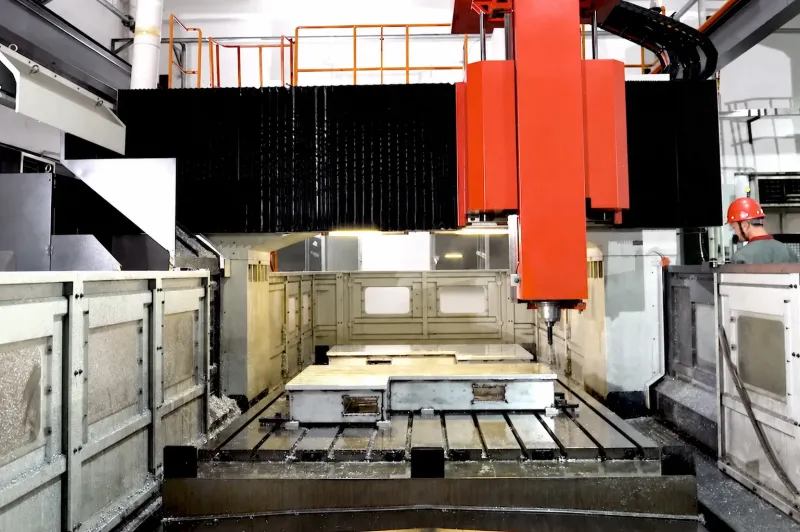
Glass-filled abrasion: a hardness contest 420 wins. Thirty percent glass-filled nylon does not corrode, it scours. Wear rate tracks hardness across the HRC 45 to 54 band, so 420 at HRC 52 to 54 outlasts 17-4 at HRC 44 by roughly 30 to 60 percent at the gate and around core bends, and a coating closes the rest of the gap. The application framing differs from the corrosive case: here the environment is mild and the load is mechanical.
The honest summary: for pure corrosion defense across condensation and salt air, 17-4 wins on chemistry. In the acidic, hot, deposit-laden molding atmospheres that actually kill cavities, film chemistry is secondary to surface finish and housekeeping, and 420 at HRC 52 polished to SPD-A is the tougher surface. Rank your real environment before you rank the data sheet.
Inclusions and Polishability
Polish quality is decided before the polisher arrives: it is decided by the steelmaker. Inclusions are the enemy, sulfides worst of all, because a pulled-out MnS stringer leaves a pit 5 to 20 µm wide that no amount of diamond polishes over. 420F and any free-machining stainless variant is banned from cosmetic cavities. 17-4 is not sold free-machining, which is one of its quiet advantages. For mirror work on either grade, buy ESR or at least low-sulfur ladle-refined stock and spec inclusions to a DIN V 21-0 or ASTM E45 limit of 1.5 stars or less on the heavy series.
The two grades polish for opposite reasons. 420, at HRC 50 to 54, behaves like hard steel: the abrasive cuts clean chips, striae come out fast, and a competent polisher reaches SPD-A mirror, Ra under 0.02 µm, in a predictable number of hours. The constraint is phase, not scratch: retained carbides near the surface can pull during the fine steps, so a through-hardened 420 that was over-tempered or under-austenitized will ghost streaks at the last step.
17-4 polishes like a tough nickel alloy. Its matrix is ductile at HRC 40 to 47, so the surface smears instead of chipping: pits close over with displaced metal, then reopen after the first hot acid cleaning or a few thousand shots of mild abrasion. The countermeasure sequence is firmer abrasives held longer, no flex stones loaded with compound, and a final step on BSD diamond film at 6 then 3 then 1 micron rather than the aluminum-oxide slurry most shops default to. Budget 20 to 40 percent more polishing hours on a 17-4 cavity than on a clean 420 to reach the same SPD number.
EDM history matters on both steels. The recast layer from sinking runs 0.01 to 0.05 mm deep, is full of microcracks and unloads corrosion and polish defects underneath the steel you thought you polished. Remove 0.05 mm after the final skim cut with 240 to 400 grit, then ultrasonic or chemical brighten, then polish. On a mirror 420 or 17-4 cavity this step is not optional; see how to design high gloss molds for the full surface spec.
Strength, Toughness and Mold Life
Yield strength separates the grades more than hardness does. 17-4 at H900 yields at roughly 1,170 MPa; 420 at HRC 52 yields around 740 to 900 MPa depending on temper. On a slender core the benefit is direct: an 8 mm diameter core pin 48 mm long, a 6 to 1 slenderness, under 60 MPa cavity pressure needs about 30 to 40 percent less safety margin in 17-4 before yield enters the calculation, and deflection at the shut-off is where flash starts. Cores past 5 times diameter in glass-filled resin are a 17-4 decision almost by definition.
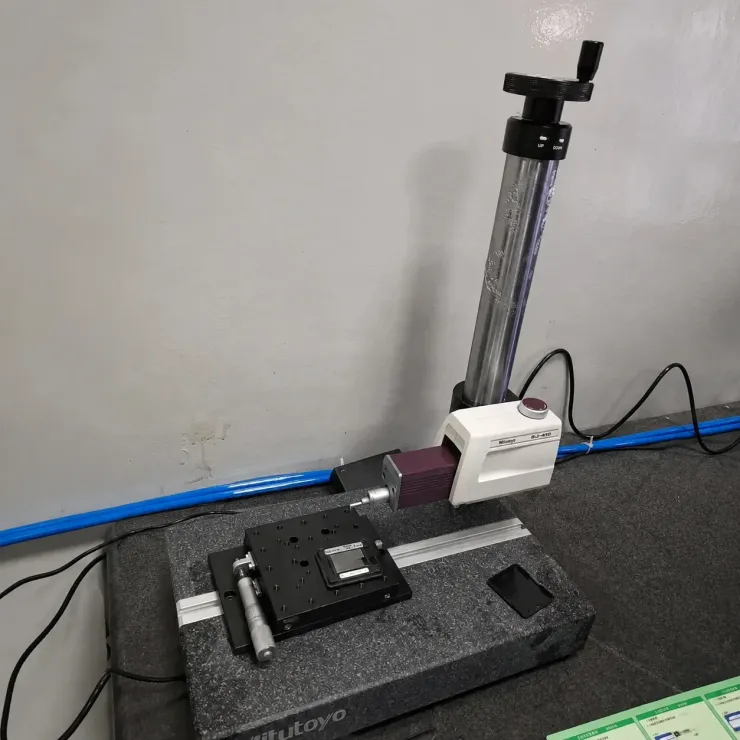
Toughness is the bigger split. Charpy V-notch energy at H900 runs 20 to 30 ft·lbf on 17-4 versus 5 to 15 ft·lbf on hardened 420. That shows up as corner chipping on sharp shut-offs, catastrophic failure of thin webs in sliders, and cracked gate inserts around press fits. Where a 420 insert fractures along a machined corner after 80,000 shots, a 17-4 insert of the same geometry typically only wears. Never leave a sharp internal corner in a 420 insert; radius everything at 0.15 mm or more and keep the corner grind clean.
Heat stability favors 17-4 in a subtle way. Its aging temperature of 482 °C means nothing in the structure changes during a 200 °C LSR cavity or even a 260 °C PEEK tool. 420 at HRC 52 was tempered at 150 to 200 °C and its hardness already sits on the tempering cliff; sustained welding heat or a 320 °C purge fire can drop it a point or two per exposure. For die-casting thermal fatigue, neither stainless replaces a hot-work grade; the H13 family owns that duty.
Mold life numbers to design with: a well-maintained 420 cavity on a mildly corrosive, glass-filled cosmetic part holds gloss to 300,000 to 500,000 shots before regrind and re-polish; the same geometry in 17-4 reaches first cosmetic loss 30 to 60 percent sooner when abrasion, not corrosion, is the limit, while 17-4 parts in compression, snap-fit cams and thin webs run 2 to 4 times longer without fracture events. Life is a system: put the shot-count interval in the tool file as a scheduled maintenance event, not an after-the-failure event.
Machinability and Workshop Behavior
17-4 in Condition A machines gummy. The solution-annealed nickel martensite at HRC 33 to 38 work-hardens under a dull edge, the chip welds to the rake face, and surface roughness degrades fast if you chase it with speed instead of feed. Practical parameters: carbide grades rated for stainless, 80 to 120 m/min with high-pressure coolant, constant engagement to avoid rubbing, and 0.2 to 0.3 mm finishing cuts to get under the work-hardened skin before aging. Expect 60 to 70 percent of the P20 removal rate. The advantage pays it back after aging: you mill, sink and grind a single time, straight to print, because aging moves the part only microns.
420 buys and machines sweetly at HB 240 to 280 in the pre-hard state, and annealed bar behaves like a good carbon tool steel. The cost lands after hardening: any feature inside print tolerance must be ground, jig-bored or sink-EDMed, and at HRC 52 the grinding wheels and EDM time are what your quote is really paying for. Our shop holds ±0.005 mm on finished mold geometry and ±0.002 mm on EDM and jig-grinding work on hardened stainless, and the stainless grades are exactly where that discipline earns its keep.
Wire EDM and sinking both behave predictably on either grade; 17-4 cuts marginally slower because of its nickel content. Residual stress is the underrated difference: a 420 plate quenched from 1000 °C can carry residual stress above 200 MPa and creep-move 0.02 to 0.05 mm when you open the pocket you just machined. 17-4 aged after roughing is effectively stress-relieved into its final shape, which is one reason long, thin stainless inserts come out straighter in that grade.
Weldability and Repair
Every mold gets repaired; the question is what the steel allows. A 2 mm nick on a shut-off, a galled slide track, a gate eroded by glass, all get filled with a weld and re-machined or re-textured. Here the grades invert the corrosion story: 17-4 is one of the easiest tool steels to weld, and 420 is one of the nastiest.
17-4 takes TIG with ER630 filler or matched 343 flux-cored wire at zero preheat on thin sections, interpass temperature capped at 150 °C, then a re-age at 482 °C for 4 hours restores the weld and heat-affected zone to within 2 to 4 HRC of base metal. The repair is invisible after blend-polishing, and the insert goes back in the same shift. On H1025 material, stay below that aging temperature or the repair overages the surrounding zone; spec the condition to the welder.
420 is air-hardening: cool it fast above 500 °C and it turns to untempered martensite, which cracks. A proper 420 repair preheats the whole insert to 300 to 400 °C, welds with matched 4145 or 420 filler, keeps it above 250 °C for a post-heat soak of 1 to 2 hours, then tempers back at 150 to 200 °C, or the heat-affected zone checks at first grind. Small pit fillers on hardened 420 are where shops get burned: the local heat cycle is a quench, and a 0.3 mm weld can ring-crack 2 mm around itself. Laser welders reduce the input to 5 to 15 J per pulse and the risk falls, but does not vanish.
Program consequence: a high-cav set that will be texture-repaired, gate-rebuilt and re-cut three times over its life is cheaper in 17-4 even where the cavity count favors 420. A repair-heavy maintenance culture is a materials decision made at RFQ time, not at the weld bench at 2 a.m.
When to Specify Each Grade
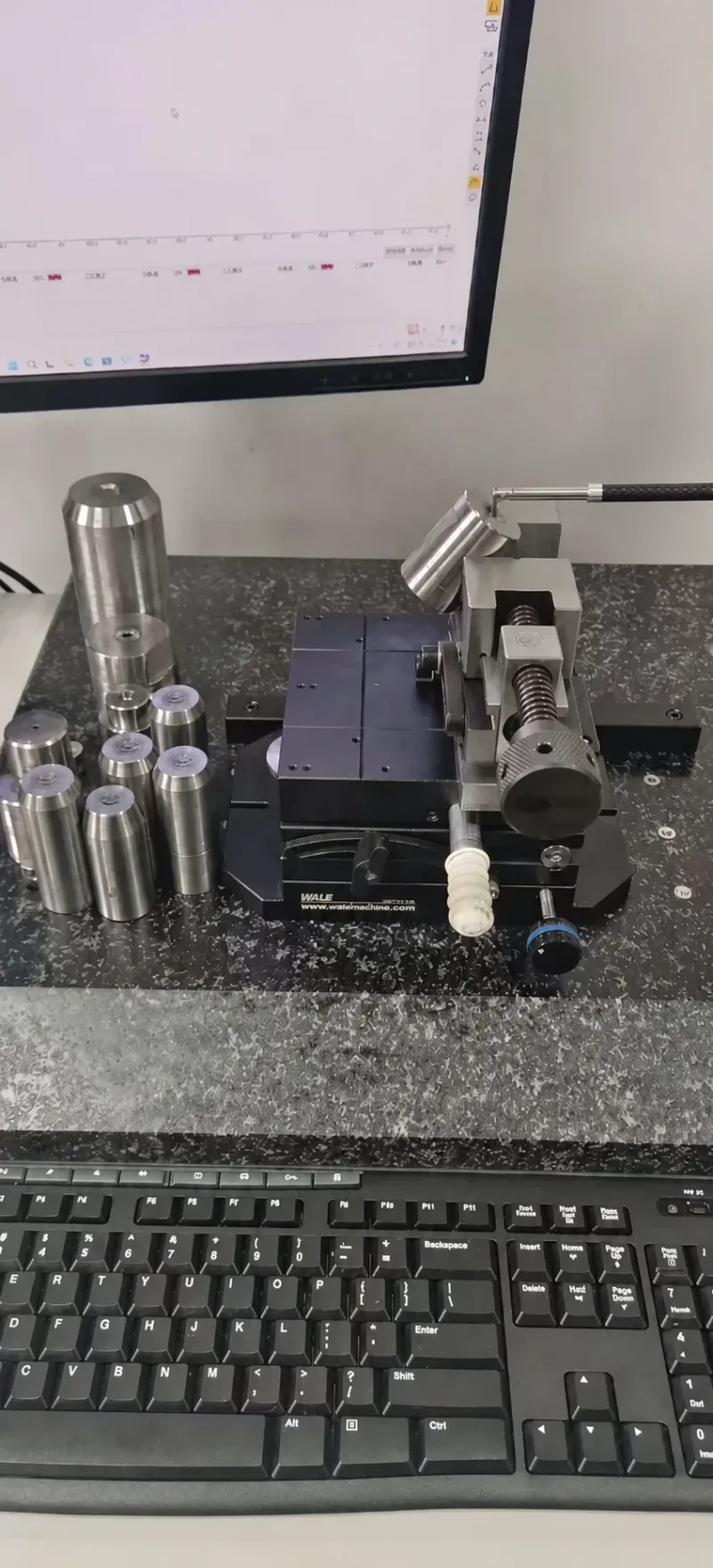
Choose 420 when the cavity is the asset and the mechanism is not. Optical and cosmetic parts on home appliance bezels, lens light-guides, high-gloss trim: SPD-A mirror reliability plus HRC 50 to 54 abrasion resistance against glass-filled resins, in a plate that polishes in a predictable shift count. High-cavity sets where 24 to 48 inserts get interchanged and a 0.005 mm fit error is a schedule hit, so pre-hardened blanks ground to size with the shut-offs held on a jig grinder win. If the program is corrosive resin plus mirror plus volume, 420 (or the S136 variant at HRC 50 to 54) is the standard answer.
Choose 17-4 when the part is thin, deep or loaded. Cores past 5 times diameter, snap-fit cams, thin-web sliders, ball-lock punch seats and any insert you expect to weld-repair. The aging route is the second reason: an insert that must hold ±0.005 mm after heat treatment, a mold base plate or cavity block from standard mold bases that you want machined once and aged, not hardened, distorted and re-ground. Medical and connectors tools with 4 to 8 inserts in mixed duties split cleanly: 420 for the visible cavity face, 17-4 for everything that carries load or gets touched by a welder.
A four-question tie-breaker for the RFQ. Does the surface need mirror plus glass abrasion? Then 420. Does the geometry carry bending or impact load, or need welding? Then 17-4.
Is the cooling bottleneck under 2 seconds of margin? Then neither grade; run P20 or H13 with a coating. Is the environment chlorides or a strong acid film? Then neither grade, jump to the next section.
When to Jump to 316, LCY or a Coating
Both grades fail the same way under the same attack: chloride pitting and sustained acidic film. A salt-spray-adjacent process, a medical grade with aggressive sterilization residues, or a PVC-family resin running continuously above 200 °C will put 20 to 40 µm of pit depth on either stainless inside 100,000 shots. At that point jump, do not hedge. 316L adds 2 to 3 percent molybdenum, which is the element that closes the chloride-pitting gap, at the cost of dropping to HRC 28 to 32 work-hardened: 316 owns corrosive mold bases and liner plates, never a shut-off land.
The other escape hatches are cheaper than a grade change. A coating turns any of these steels into a different surface: hard chrome at 0.02 to 0.05 mm seals the film defects and gives release; PVD CrN or TiAlN at 2 to 5 µm on 420 at HRC 52 is the standard answer to glass-filled cosmetic wear, as the nitriding versus PVD comparison details. Electroless nickel at 25 to 50 µm buys corrosion margin on 17-4 cores and takes texture well. Design the coating into the steel decision and the 420-versus-17-4 question stops being a coin flip and becomes a cost trade.
And check the boring option first: on non-cosmetic, mildly corrosive work, pre-hardened P20 with 0.001 mm tolerance discipline and a shutdown preservation routine outperforms both stainless grades on cost and cooling. Stainless is a surface decision, not a toughness decision, and about half the spec sheets that land in our RFQ box are stainless out of habit rather than need.
17-4 PH vs 420 FAQ
Q1. Can 17-4 PH replace 420 in a high-gloss cavity?
Only if you accept a hardness ceiling and extra polish hours. 17-4 tops out near HRC 48 and smears under the fine abrasives; 420 at HRC 52 to 54 cuts to SPD-A predictably. On mirror cosmetic work with glass-filled resin, 420 holds gloss 30 to 60 percent longer at the same polish number.
Q2. Is 17-4 really better against resin acid?
Against condensation and salt air, yes: 18.3 versus 14.5 chromium equivalent with nickel stabilizing the film. Against hot acidic off-gas deposits from flame retardants, chemistry is secondary; polish integrity, recast-layer removal and shutdown cleaning decide whether either stainless survives 300,000 shots without haze.
Q3. What does the cooling penalty on 17-4 cost per cycle?
Plan 3 to 8 seconds on a cooling-dominated shot against P20, roughly 15 to 25 percent, because 11 W/m·K against 32 W/m·K is not a rounding error. Keep channel distance at 12 to 20 mm, run turbulent flow at 4 to 8 L/min, and verify the cavity face spread under 5 °C before releasing the process.
Q4. Which grade handles weld repair on the bench?
17-4, clearly: no preheat, ER630 filler, interpass under 150 °C, re-age at 482 °C for 4 hours and the zone returns within 2 to 4 HRC of base. Hardened 420 demands 300 to 400 °C preheat and a post-heat soak or the heat-affected zone cracks at the first grind.
Q5. Should I buy 420F to save machining time?
Never for a cavity or any surface that polishes or sees acid. The sulfur that makes 420F free-machining pulls out as 5 to 20 µm pits and seeds corrosion under the passive film. Use it only for hidden ejector housings and backing plates where nothing cosmetic or corrosive touches.
The Bottom Line
17-4 PH and 420 are two answers to two different questions. 420 answers "how do I hold a mirror and a hard shut-off against acid film and glass?" with HRC 48 to 54, SPD-A polishability and predictable repair economics in grinding. 17-4 answers "how do I carry load, age without distortion and weld without drama?" with 1,170 MPa yield, 2 to 4 times the impact energy and a 482 °C aging step that moves the part 0.01 to 0.025 mm. The cooling penalty, about 40 percent of P20's conductivity on 17-4, and the chloride ceiling both grades share decide when neither is right and P20 plus coating, hot-work steel or 316L is.
Write the decision into the RFQ the way you write the tolerance: grade, condition, hardness map, inclusion limit and surface spec on the drawing. The tool shop that knows whether your cavity is a 420 job or a 17-4 job quotes the same part 10 to 20 percent differently, and the difference is the rework you do not pay for twice.
KEEP READING
Related Reading
How to Choose Mold Steel for Corrosive Resins
PVC, flame retardants and off-gas chemistry: which grades survive the acid.
Read articleArticleHow to Design High Gloss Molds
Mirror surfaces from SPD-A polish, substrate choice and cooling layout.
Read articleProductMold Bases
Standard mold bases in pre-hardened and hardened steels, shipping in 3 to 7 days.
View productsServiceInjection Mold Manufacturing
IATF 16949 mold building to ±0.005 mm with 2 to 5 week lead times.
Read articleNEXT STEP
Ready to Start Your Mold?
Send us your element dimensions or part numbers — our team responds within 24 hours with pricing and lead time.

Written by
Ray ChanMold Buyer's Guide Author · Precision Mold Manufacturing Specialist. Ray helps global importers, distributors and OEMs source factory-direct molds and mold parts.