
Thermoset vs Thermoplastic: Mold Design Impact
Table of Contents
A phenolic part run through a thermoplastic mold does not just make bad parts — it can kill the tool. The cross-linking reaction that cures a thermoset does not trigger at a 40-80°C mold temperature the way it does at 150-180°C, so the charge partially cures, adheres to the cavity steel, and welds itself in. Removing it means polishing cured resin out of the steel, re-cutting shut-offs, or scrapping the cavity — typically a five-figure loss and weeks of lead time.
This guide is for mold buyers, mold engineers, and material-selection engineers deciding one question before steel is cut: thermoset or thermoplastic tool? The families put opposite demands on the mold. Mold temperature, steel, venting, runners, and shrinkage compensation all flip with the chemistry. Get it wrong and the first trial is the last one.
The Snapshot
- Thermosets cross-link during molding: cure is irreversible, so a cured part, runner, or flash cannot be remelted or recycled; thermoplastics melt reversibly and are reprocessable.
- Mold temperature is the biggest divider: thermosets cure in a heated mold at 150-180°C (phenolic typical); thermoplastics run on a cooled mold at 20-80°C, up to about 120°C for PC.
- Shrinkage: thermosets typically 0.2-1.0% (filler-dependent), thermoplastics 0.5-2.5% — amorphous grades 0.4-0.8%, semicrystalline grades 1.5-2.5%.
- Venting is tighter on thermoset tools: 0.01-0.02 mm vent depth to hold flash, versus 0.02-0.05 mm on most thermoplastic tools.
- Thermoset tooling is usually hardened H13 or S136 at 46-52 HRC, serving 150-180°C against abrasive fillers; thermoplastic tools often run P20 or 718 pre-hardened at 28-38 HRC.
- The cycle driver changes: cure time of roughly 30-120 s (injection) or 60-180 s (compression) replaces the 10-60 s cooling time typical of thermoplastics.
- DieStrike builds both families to IATF 16949 systems — heated thermoset and water-cooled thermoplastic tooling — with CMM-verified dimensions on every mold.
Choosing Wrong Can Scrap the Tool
The worst failure in this material family is not a warped part — it is a chemically welded tool. Thermoplastic barrels run melt zones at 220-280°C typical; thermoset injection machines cool their barrels to 50-70°C on purpose. Feed thermoset granules into a hot barrel and the resin cures inside the screw — screw, barrel, and cylinder go to scrap together.
The second failure mode is subtler and more common: a thermoset charge injected into a mold built for thermoplastics. At a 40-80°C cavity temperature the cure reaction barely runs, so the part exits soft and tacky — or worse, the surface cures enough to bond to the steel while the core stays green. Every shot after that picks up cured residue, the shut-offs foul, and cleaning hardened phenolic out of an EDM-textured cavity usually means re-cutting steel. Molders who inherit "multi-purpose" tooling discover this on the first trial, and the cavity set — typically $8,000-25,000 — is written off.
The mirror-image failure is just as expensive. Run a thermoplastic through a heated thermoset mold and the polymer degrades in the cavity: ABS discolors and bubbles above roughly 100°C mold temperature, PC yellows and loses molecular weight, and both stick to hot steel at ejection. A hot-runner manifold is the most fragile case: thermoset flowing into a manifold held at 200-260°C cures inside the drops, blocking every nozzle — a repair that typically runs into five figures.
The rule is simple: the mold's thermal system is part of the chemistry. A thermoset tool is a heated reactor; a thermoplastic tool is a heat exchanger that pulls heat out. Decide the family first, sign it into the RFQ, and design around it. Decide later, and the steel pays for the mistake.
Thermoset vs Thermoplastic: The Chemistry Difference
Thermoplastics are long polymer chains held together by secondary bonds. Heat them above their glass transition (amorphous) or crystalline melting point (semicrystalline) and the chains slide; cool them and they freeze back into shape. The process is reversible — sprues and runners are reground and reused at 10-30% typical blends.
Thermosets start as short prepolymer chains with reactive groups, mixed with a cross-linking agent. Heat builds covalent bonds between the chains into a three-dimensional network — the material cures. That network cannot be melted back, which is why thermoset scrap is waste and why the mold must hold cure temperature until the reaction finishes. Phenolic (phenol-formaldehyde) is the classic case: a condensation cure at 150-180°C mold temperature releases water and formaldehyde vapor — gas the mold must vent, not just air.
The thermoset families differ in the mold. Phenolics and urea/melamine cure by condensation, releasing volatiles, so venting and temperature uniformity are design drivers. Epoxies cure by addition with little volatile output, typically at 130-180°C, and dominate encapsulation. Polyester BMC cross-links through styrene at 140-160°C typical and carries 20-35% glass fiber by weight, dictating wear-resistant steel. Liquid silicone rubber is the outlier — addition-cured at 120-180°C with its own tooling logic, covered below.
Cure is exothermic, and the exotherm is a mold-design input, not a footnote. In thick thermoset sections the reaction can push part temperature 20-40°C above the mold (typical published range), accelerating cure and risking overcure, blistering, and uneven shrinkage. Temperature control is about uniformity as much as level: cartridge heaters or hot oil zoned, thermocouples in both halves, roughly ±5°C across the cavity — the discipline a thermoplastic mold applies to cooling, aimed at a steady reaction instead of fast heat removal.
Mold Design Differences: Temperature, Steel, Venting
When the resin family is decided, the design differences are systematic, not cosmetic. The table maps the factors that change between the two tool types.
| Mold design factor | Thermoset tool | Thermoplastic tool |
|---|---|---|
| Mold temperature and heating | 150-180°C typical (phenolic 150-170, LSR 120-180); cartridge heaters, steam, or hot oil, ±5°C zoned | 20-80°C typical, up to ~120°C with hot water or heat-transfer fluid |
| Mold steel | H13, S136, D2 hardened to 46-52 HRC typical | P20 / 718 pre-hardened 28-38 HRC; H13/S136 at high-wear spots |
| Venting depth | 0.01-0.02 mm (flash control + reaction gas) | 0.02-0.05 mm typical |
| Runner system | Cold runners or transfer pot; no hot runners for most thermosets | Cold runners with regrind, or hot runners |
| Shrinkage compensation | 0.2-1.0% typical, filler-dependent, directional | 0.5-2.5% typical (amorphous 0.4-0.8%, semicrystalline 1.5-2.5%) |
| Flash and ejection | Flash ≤0.02 mm target; part ejected at 150-180°C | Standard shut-offs; part ejected at 50-90°C |
| Cycle driver | Cure time 30-120 s (injection), 60-180 s (compression) | Cooling time 10-60 s typical, 50-70% of cycle |
← swipe to scroll →
Values are typical published ranges for standard grades and tooling practice; actual numbers vary by compound, grade, and process.
Temperature. A thermoset mold is heated, and the heating system is a core deliverable, not an accessory. Cartridge heaters or hot oil channels must hold a uniform field — a 20°C cold spot under a thick boss means that boss cures last and shrinks differently — warpage and dimensional scatter follow. The target is roughly ±5°C across the cavity, agreed at design review. A thermoplastic mold does the opposite job with water: channel layout, not heater wattage, sets the cycle.
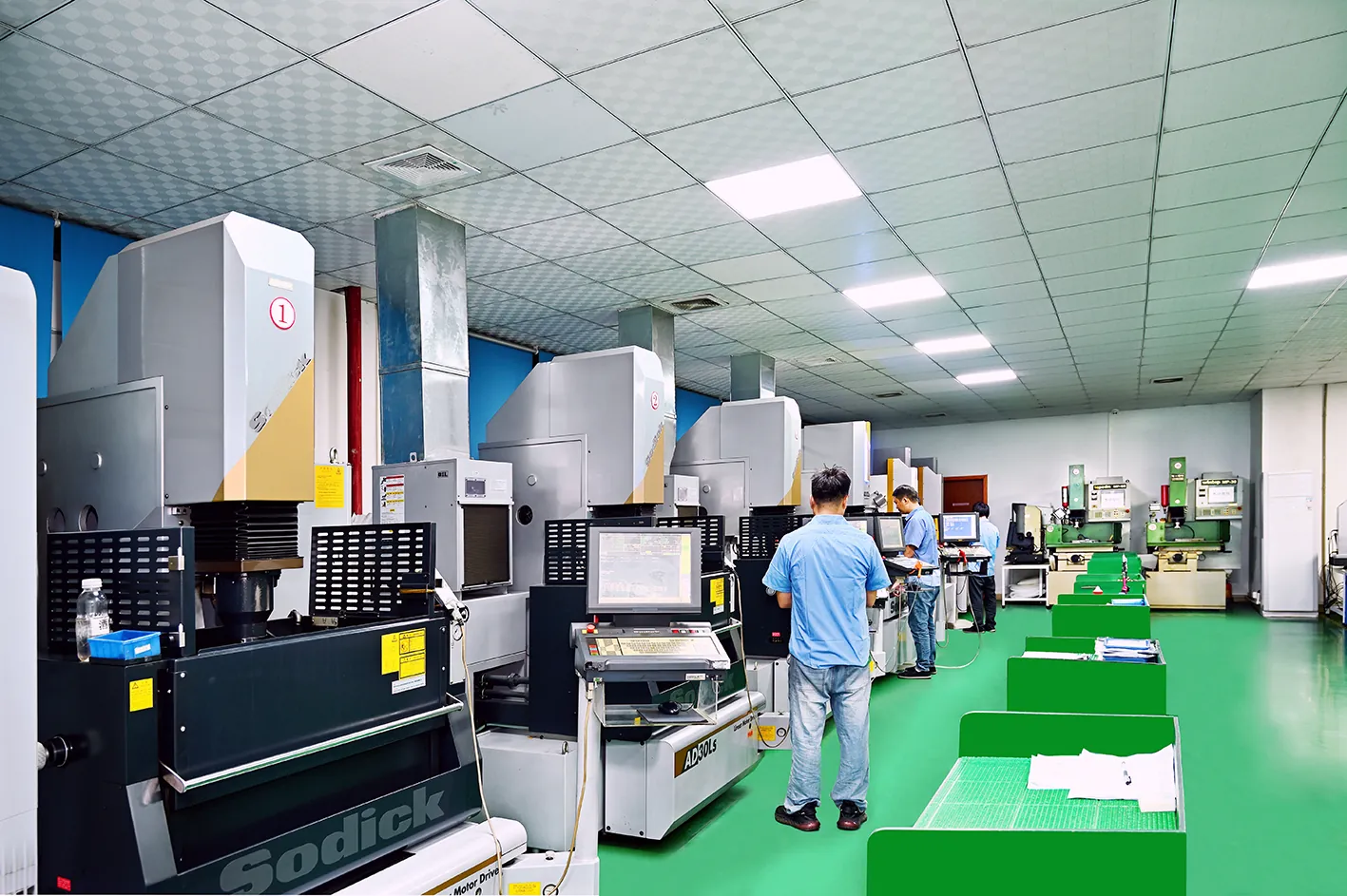
Steel. Thermoset tools earn their hardened steel from two sources: service temperature and filler abrasion. At 150-180°C a pre-hardened P20 insert softens and wears; glass-filled BMC at 20-35% fiber content erodes soft cavities like sandpaper, and mineral-filled phenolics are not far behind. Hardened H13 (46-52 HRC typical) holds its hardness at 150-180°C service, and S136 stainless handles corrosion from condensation volatiles. Because the steel is hard, the cavity is roughed, hardened, then EDM-finished and ground — why thermoset tooling budgets carry more machining cost. Thermoplastic tools are usually cut in pre-hardened P20 or 718 (28-38 HRC), upgrading to H13/S136 only at gates, shut-offs, and high-wear features. The full P20 vs H13 vs S136 trade-off is covered in our mold steel guide.
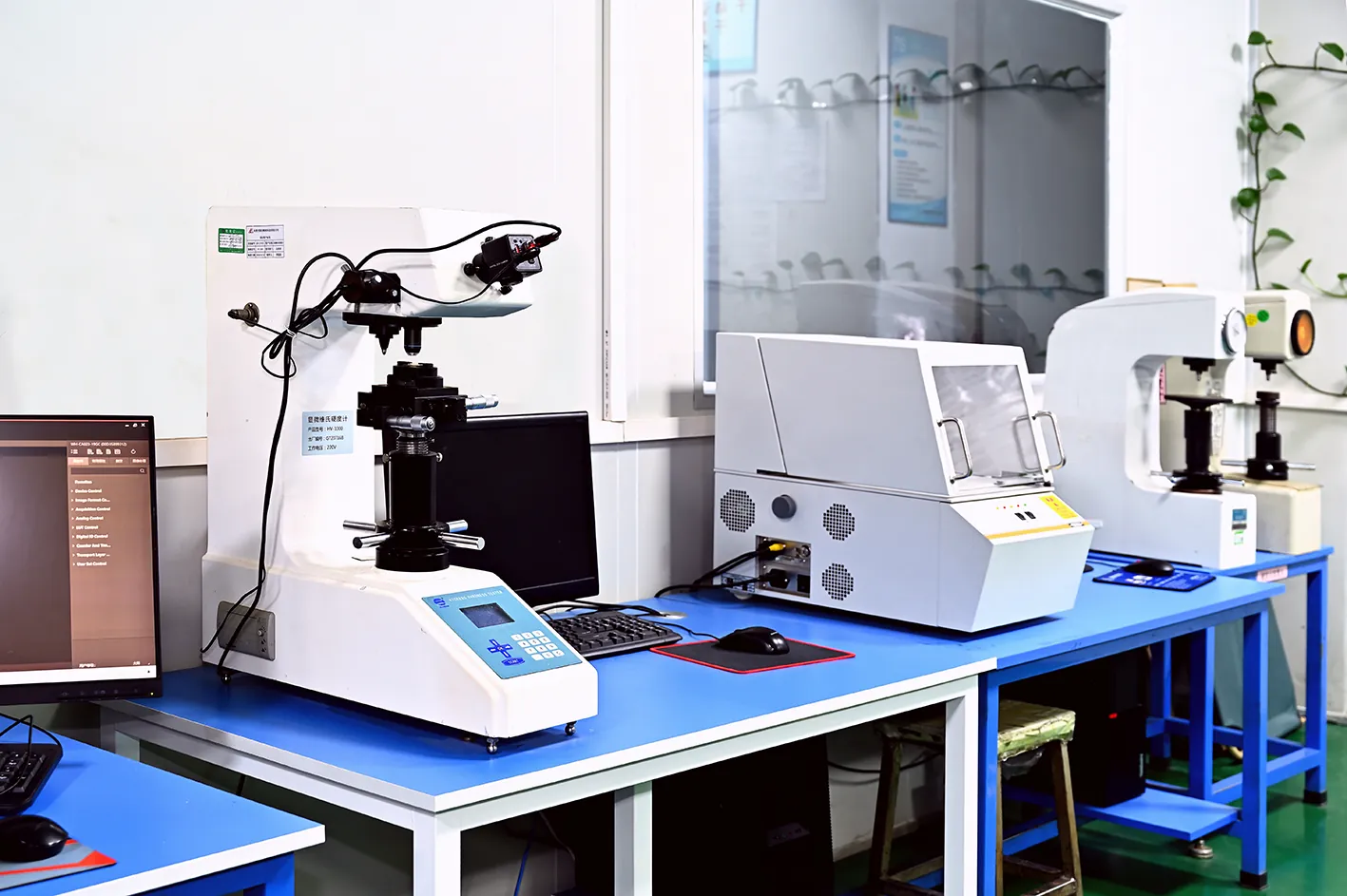
Venting. Vent depth is the design detail that separates a clean thermoset tool from a flash factory. Thermoset compounds are low-viscosity at injection and the flash they make cures hard, so vents are cut at 0.01-0.02 mm — half the depth of a typical thermoplastic vent at 0.02-0.05 mm — with vent lands of 3-8 mm. Vents have two jobs on a thermoset tool: exhausting trapped air and exhausting condensation reaction gas (water and formaldehyde from phenolics), so placement at last-fill points is a design-review item. Escaped flash must be trimmed, and cured flash is abrasive on shut-offs — another reason hardened steel pays. Vent and shut-off design is a common miss in moldability reviews.
Thermoplastics: The Mold Designer's Default
Most mold shops, presses, and design rules are built for thermoplastics — ABS, PC, PA, POM, PP. They dominate part volume, cycle fast, tolerate complex geometry, and their scrap is recyclable. The defaults follow: cooled mold, pre-hardened steel, cold runner with regrind, shrinkage compensated per wall zone.
The shrinkage discipline is the first default. Amorphous thermoplastics shrink 0.4-0.8% uniformly; semicrystalline grades shrink 1.5-2.5% with flow-direction anisotropy the cavity must anticipate zone by zone. The tool compensates from the datasheet range, and the first trial — our T1 sampling step — tunes the last fraction of a percent. Because shrinkage is a physical freeze, not a chemical reaction, a well-made thermoplastic tool hits tolerance after minor cavity adjustments.
The runner default is the cold runner with regrind. Sprues and runners are ground and blended back at 10-30% typical, keeping material cost down. Where regrind is not acceptable — cosmetics, optics, food contact — hot runners eliminate the runner entirely, at the price of added tool cost. Neither option exists for most thermosets, where cured runners are waste.
Mold temperature for thermoplastics is a surface-finish and warpage lever, not a chemistry trigger. ABS runs 40-80°C (40°C yields matte, 80°C glossy), PC 80-120°C, semicrystalline PA/POM 40-100°C. Water cooling handles almost all of it, and the steel never sees sustained heat above roughly 120°C — why pre-hardened P20 and 718 dominate.
The economic consequence is real: a thermoplastic tool is faster to cut, cheaper to finish, and easier to modify. The parts that fail this default are the ones that need 150°C+ service, creep resistance under load, or arc resistance — and those belong to the thermoset family. The build sequence is laid out in our mold manufacturing process guide.
Thermosets: Compression vs Injection Molding
Thermosets are molded by three processes, and the mold design differs more between them than anything in the thermoplastic world. The choice changes tool cost, cycle, and tolerance capability — so the decision belongs in the RFQ, not on the shop floor.
Compression molding is the classic bakelite process: a weighed charge loads into the open heated mold (150-180°C typical), the press closes at 10-40 MPa over the projected area, and the material flows and cures under pressure. There is no runner, gate, or sprue — the mold is a heated cavity set with tight shut-offs, so tool cost is the lowest of the three. Trade-offs: manual loading, a longer cycle of roughly 60-180 s, and parting-line flash trimmed to a 0.02 mm target — the workhorse for large simple parts, high-filler compounds, and lower volumes.
Transfer molding splits the difference: the charge sits in a pot above the closed mold, and a plunger forces it through a sprue into the cavity. The closed cavity gives better dimensional control, inserts, and tolerances. The pot and sprue cure with each shot — that material is waste — so transfer tools carry a per-shot penalty but still cost less than injection tooling. It is the standard choice for insert-heavy parts like commutators.
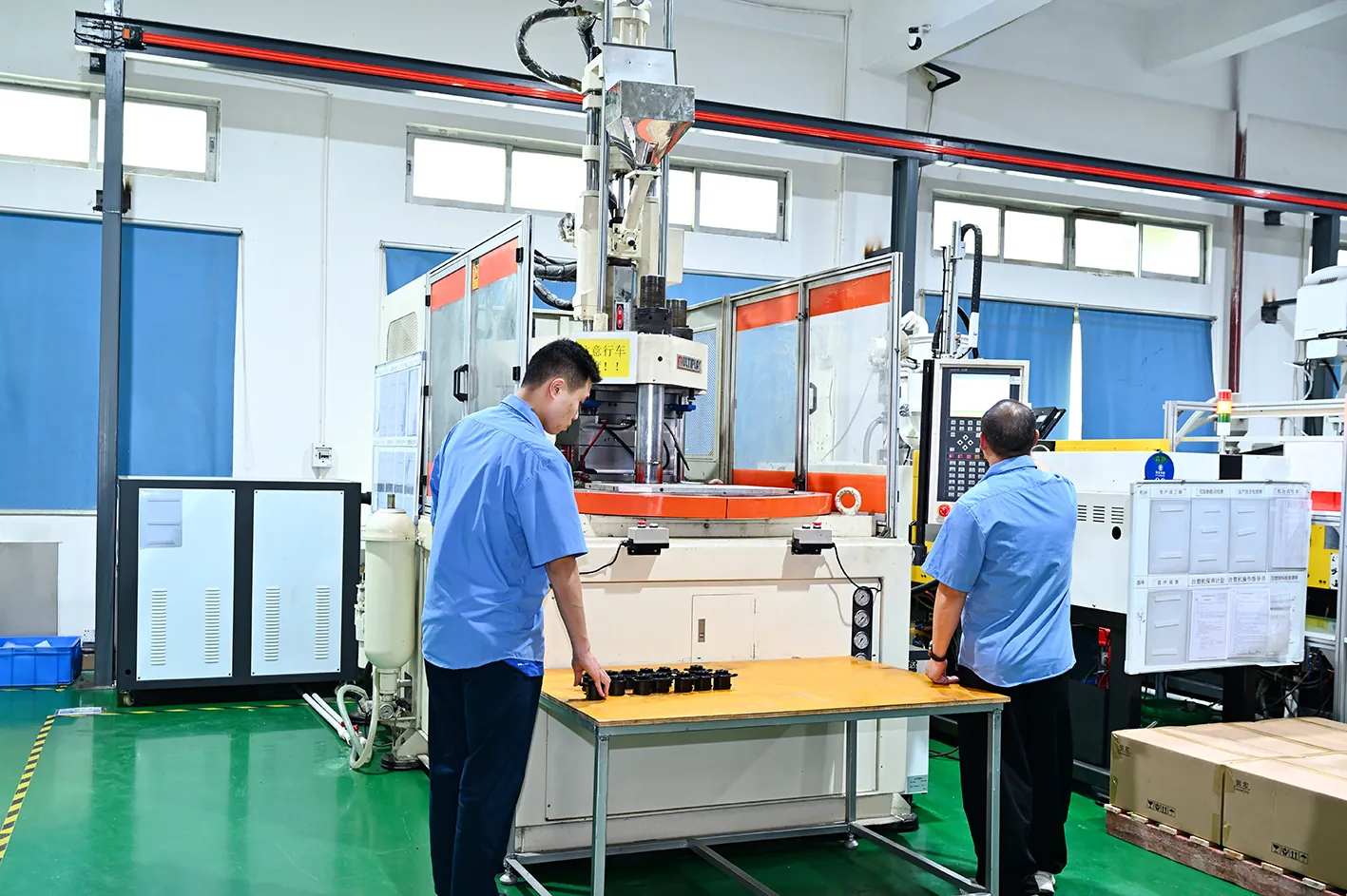
Thermoset injection molding automates the process: a screw plasticizes granules at a cooled barrel temperature of 50-70°C (12-20:1 L/D, low compression ratio near 1.0-1.2:1 to avoid shear heating) and injects into a mold heated to 150-180°C, where the material cures in 30-90 s. Cycle and labor drop and cavity pressure control improves — but the tool is the most complex: hardened steel, zoned heating, 0.01-0.02 mm venting, cold runners whose cured contents are scrap. BMC and DMC, with 20-35% glass content, are the classic injection thermosets, and they wear tooling hard enough that steel selection is a lifecycle decision.
| Process | How it works | Typical cycle | Tool cost | Best for |
|---|---|---|---|---|
| Compression | Charge loaded into open heated mold, press closes at 10-40 MPa, material flows and cures | 60-180 s | Lowest — no runner system | Large simple parts, high-filler compounds, low volume |
| Transfer | Charge in pot, plunger forces material through sprue into closed cavity | 60-150 s | Low-mid — pot and sprue waste each shot | Insert encapsulation, commutators, tighter tolerances |
| Thermoset injection | Cooled barrel 50-70°C, screw injects into heated mold 150-180°C, cures in cavity | 30-90 s | Highest — hardened steel, zoned heating, tight venting | High volume, automation, BMC/DMC compounds |
← swipe to scroll →
Typical published values; cycles and costs vary with part geometry, compound, and cavity count.
Whichever process is chosen, the mold carries the same responsibilities: uniform 150-180°C heat, hardened steel against filler abrasion, and 0.01-0.02 mm venting so flash stays a trim operation. Our injection mold manufacturing line builds all three variants, with heating and venting locked in at DFM.
LSR as the Thermoset Exception
Liquid silicone rubber breaks every rule above, which is why its tooling logic is often misunderstood. LSR is an addition-cure thermoset: two components mix, a platinum catalyst drives cross-linking, no volatiles. Cure runs at 120-180°C, typically 130-170°C, with cycle times of 10-60 s at 150°C normal for thin sections.
The exception that changes tooling is the cold runner. Because LSR only cures when heated, the runner and manifold are held chilled at 20-30°C while the cavity runs at 120-180°C. Material left in the cold runner never cures, so it is purged and reused on the next shot — near-zero runner waste, and no regrind problem, because cured silicone cannot be recycled. The result is a two-zone mold: a chilled manifold feeding a heated cavity set, with the temperature break managed at the gate — the one thermoset system where hot-runner logic applies, inverted.
LSR's low mixed viscosity — roughly 20-100 Pa·s (typical published range) — fills thin walls with low injection pressure, but makes venting stricter: vents at 0.01-0.02 mm, flash that tears instead of breaking clean, and hardened steel shut-offs. In thin sections, cure time rather than cooling governs the cycle.
Shrinkage is the second surprise: LSR shrinks 2-4% typical, several times a phenolic's 0.2-0.6%, so cavity compensation is aggressive; for soft seals, dimensional control targets the insert or compression set, not the molded envelope. The full processing and tooling picture lives in our LSR injection molding guide.
Shrinkage and Dimensional Behavior
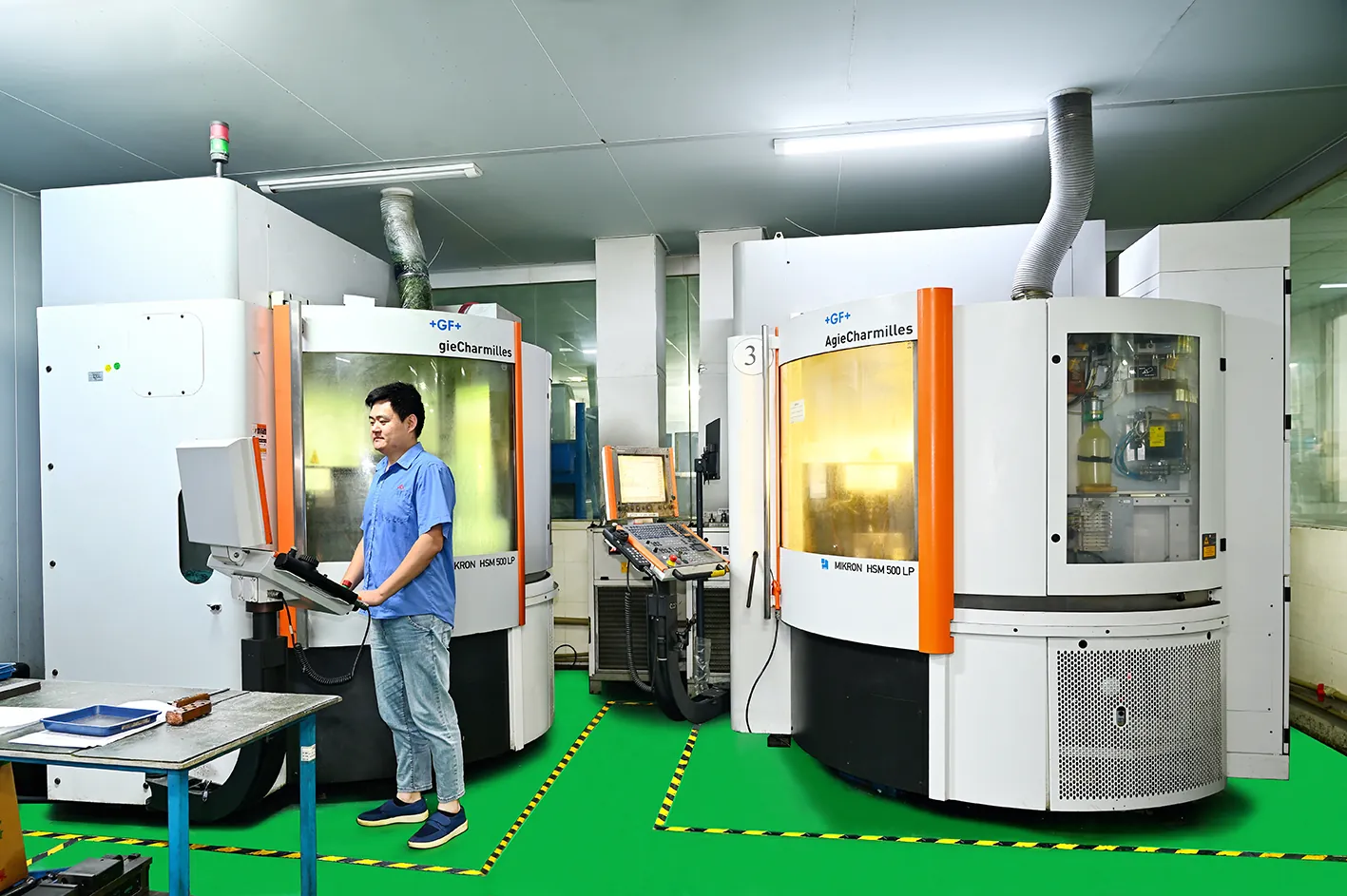
Shrinkage compensation is where thermoset tooling quietly differs — and where datasheets stop being enough. Thermosets shrink 0.2-1.0% typical, but the number is compound-specific: phenolics run 0.2-0.6%, mineral- and glass-filled grades reach up to 1.0%, epoxies sit at 0.1-0.5%, BMC is notably low at 0.1-0.3%, and LSR jumps to 2-4%. One number for the whole cavity is rarely enough — the mold must be compensated zone by zone, set by wall thickness, flow length, and filler orientation.
Anisotropy is what compression and BMC parts teach best. Glass and mineral fibers orient along the flow, so a filled thermoset shrinks less in the flow direction and more across it — the difference can reach several tenths of a percent on highly oriented parts. The cavity compensates directionally — the fill pattern is a design input, not an afterthought. Get the gate and fill right and shrinkage lands inside tolerance; get them wrong and no cavity tweaking fixes a molded-in anisotropic warp.
Post-cure is the second difference. Thermoset parts eject hot — at 150-180°C — and keep changing dimension as they cool and, for some grades, as the cross-link network finishes. High-temperature phenolics are commonly post-baked at 150-180°C for 2-4 hours to complete cure, relieve residual stress, and stabilize dimensions; the tool must anticipate that movement in its compensation, or the part grows out of tolerance after the molder ships it. This is a DFM-stage conversation, not a first-batch discovery.
The payoff is why thermosets survive in demanding corners: cured networks creep far less under sustained load at temperature, holding dimensions and electrical properties through decades of 150°C+ service where a thermoplastic would relax and deform. A commutator in phenolic holds geometry through thermal cycling that would creep a POM or PA equivalent — the entire reason the family exists.
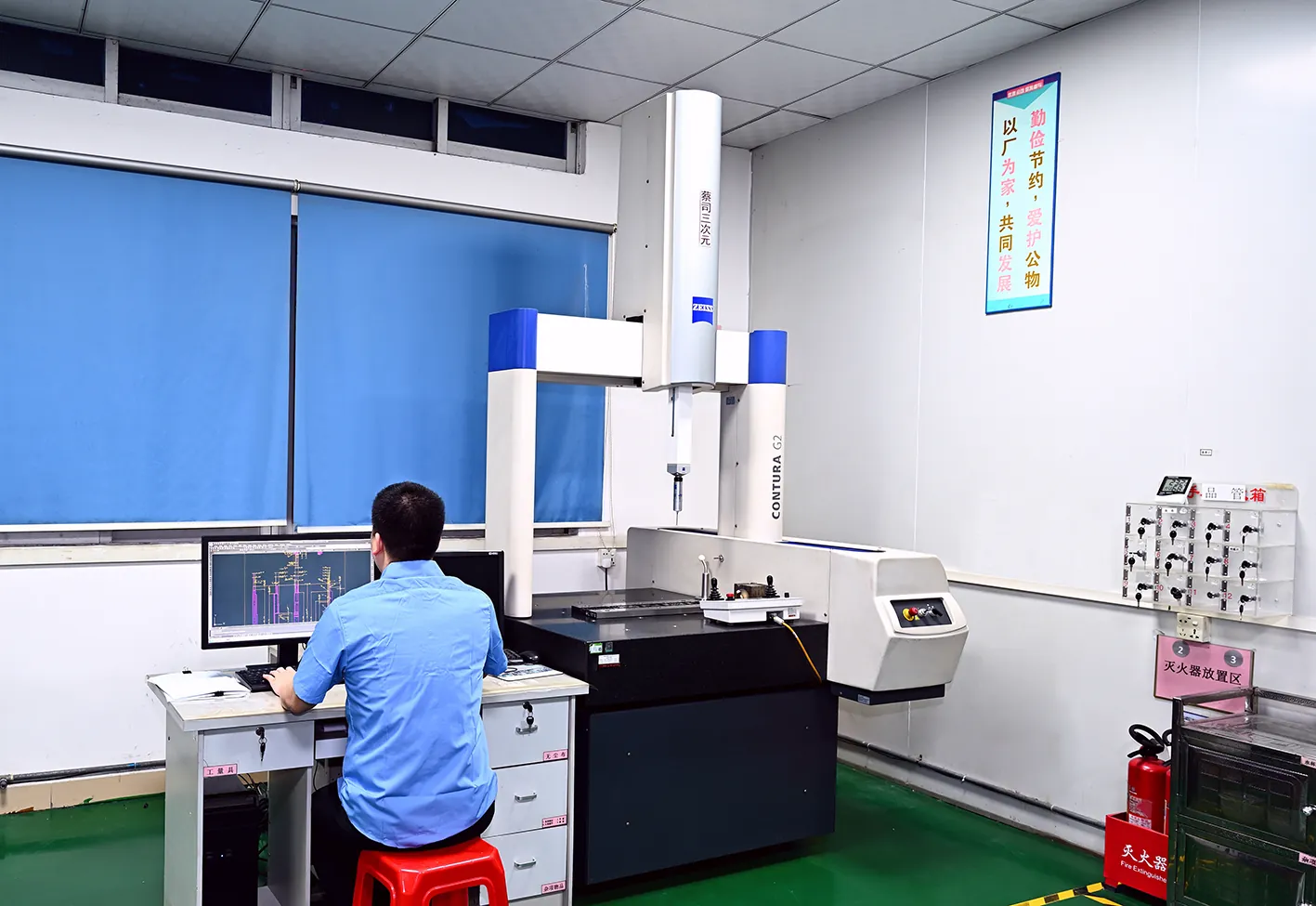
Set tolerance expectations at quoting: compression-molded thermosets typically hold roughly ±0.3-0.5%, transfer tightens that, and thermoset injection reaches ±0.15-0.3% on well-designed tools. Every number is verified on T1 sampling and locked with CMM reports.
Material Selection Decision Matrix
The table below is the working tool for the first decision in any mold program: which family, and which process. It combines the service conditions that drive material choice with the tooling consequences that drive budget and lead time. Temperatures are typical published values.
| Application | Best material family | Service temp | Relative resin cost | Mold type and complexity |
|---|---|---|---|---|
| Switchgear, commutators, insulators | Phenolic (thermoset) | 150-200°C typical | Low | Compression — simple, low tool cost |
| Cookware and appliance handles | Phenolic or urea (thermoset) | 120-150°C | Low | Compression / transfer — simple |
| Under-hood automotive, valve covers | BMC polyester or phenolic (thermoset) | 140-180°C | Low-mid | Thermoset injection — complex heated tool |
| Seals, gaskets, diaphragms, medical | LSR (thermoset) | -50 to +200°C typical | Mid-high | Injection with cold runner — complex, highest tool cost |
| Encapsulation, potting, adhesives | Epoxy (thermoset) | 150-180°C | Mid | Transfer / potting — simple tooling plus curing ovens |
| Housings, enclosures, toys, trim | ABS / PP / PC (thermoplastic) | 85-135°C HDT range | Low | Standard injection — moderate cost, fast cycles |
| High-temp precision parts, gears | PPS / PEEK (thermoplastic) | 200-260°C continuous | High | Standard injection, hot mold 140-180°C |
← swipe to scroll →
Typical published ranges for standard grades. Compound selection, fillers, and flame-retardant variants move individual rows.
Choose a thermoset when the part must hold dimensions and load above roughly 120-150°C, when creep under sustained load is the failure mode, when arc resistance and insulation are specified, or when a thick simple shape suits compression molding at volume. The tooling costs more and the cycle runs slower, but the part cannot be made any other way — a hot switchgear housing in ABS is not an option, it is a recall.
Choose a thermoplastic when geometry is complex, tolerances are tight at low cost, cycles must run under a minute, thin walls and snap fits are required, or regrind and recyclability matter. For the large middle of the parts universe — housings, trim, brackets, gears — the default is correct: the tool is cheaper, faster to cut, easier to modify. Engineering thermoplastics like PPS and PEEK even cover 200°C+ service when geometry rules out compression molding.
The gray zone is where the matrix earns its keep: a 150°C under-hood part could be BMC or a high-temperature nylon; a seal could be LSR or a thermoplastic elastomer. Tie-breakers: geometry (compression needs simple shapes), volume (injection thermosets amortize expensive tooling), and dimensional behavior (post-cure movement versus regrind limits). A 24-hour DFM review with the material family on the table resolves most of these before tooling starts — the chemistry is decided on paper, the steel is cut once.
Frequently Asked Questions
Q1. What is the difference between thermoset and thermoplastic?
Thermoplastics melt reversibly when heated and freeze into shape when cooled, so they are reprocessable and recyclable. Thermosets cross-link into a permanent network during molding — heat triggers an irreversible chemical cure, so a cured thermoset cannot be remelted. That single difference drives opposite mold design: cooled molds for thermoplastics, heated molds at 150-180°C for thermosets.
Q2. Can the same mold run both thermoset and thermoplastic?
No, not practically. A thermoset mold is heated to 150-180°C with hardened steel and 0.01-0.02 mm venting; a thermoplastic mold is water-cooled at 20-80°C in pre-hardened steel with 0.02-0.05 mm vents. A thermoset charge in a cooled mold will not cure and can weld itself to the cavity; a thermoplastic in a heated mold degrades and sticks.
Q3. What mold temperature is used for thermoset molding?
Typically 150-180°C for phenolics, 130-180°C for epoxies, 140-160°C for BMC, and 120-180°C for LSR, held uniform to roughly ±5°C across the cavity so cure completes evenly.
Q4. What is the shrinkage of thermoset vs thermoplastic?
Thermosets shrink 0.2-1.0% typical — phenolic 0.2-0.6%, filled grades to 1.0%, BMC as low as 0.1-0.3%, LSR 2-4%. Thermoplastics shrink 0.5-2.5%: amorphous 0.4-0.8%, semicrystalline 1.5-2.5% with flow anisotropy. The mold compensates zone by zone, then tunes at first trial.
Q5. Why do thermoset molds need tighter venting than thermoplastic molds?
Two reasons. Thermoset compounds are low-viscosity when injected and their flash cures hard, so vents are cut at 0.01-0.02 mm versus 0.02-0.05 mm for thermoplastics. And condensation-curing resins like phenolic release water and formaldehyde gas during cure, so vents also exhaust reaction gas, not just air.
Q6. What is bakelite molding?
Bakelite is the trade name for early phenol-formaldehyde resin, and "bakelite molding" is the classic compression process: a weighed charge loads into an open mold heated to 150-180°C, the press closes at 10-40 MPa over the projected area, and the material flows, cures, and ejects as a hard cross-linked part — still the standard for phenolic electrical and appliance parts.
Q7. Can thermoset runners and flash be recycled?
No — cured thermoset material is cross-linked and cannot be remelted, so runners, flash, and rejected parts are waste. This is why thermoset tooling minimizes runner volume, and why LSR's cold runner is an advantage: material that never enters the heated cavity never cures and is reused on the next shot.
Q8. What steel is best for thermoset molds?
Hardened H13, S136, or D2 at 46-52 HRC typical. The mold serves at 150-180°C against abrasive glass and mineral fillers, so pre-hardened P20 (28-38 HRC) wears too fast and softens. S136 stainless suits condensation volatiles or moisture. Thermoplastic tools run fine in P20 or 718 pre-hardened steel.
The Bottom Line
A thermoset charge in a thermoplastic mold cures, sticks, and can scrap the steel — the failure is designed in before the first shot. Match chemistry to tooling before cutting steel: temperature, venting, and shrinkage flip with the resin family. DieStrike builds both, DFM-reviewed in 24 hours.
KEEP READING
Related Reading
Mild Steel vs Tool Steel for Mold Components: Which to Use
Mild steel vs tool steel for mold components: AISI 1018/1020 vs P20/H13/S136 properties, the 3-8x cost gap, carburizing…
Read articleArticleMold Steel Guide: P20 vs H13 vs S136 — Which One Do You Need?
P20, H13 and S136 cover 90% of injection mold applications. P20 (28-32 HRC) is the economical default; H13 (48-52 HRC)…
Read articleArticle5 Mold Cooling Channel Design Tips for Faster Cycles
Mold maker's 5 cooling channel design rules: channel-to-cavity distance 2-2.
Read articleArticle5 Shrinkage Compensation Rules for Mold Design
Shrinkage compensation decides mold accuracy. Five rules: material rates from 0.3% to 2.
Read articleNEXT STEP
Ready to Start Your Mold?
Send us your element dimensions or part numbers — our team responds within 24 hours with pricing and lead time.

Written by
Ray ChanMold Buyer's Guide Author · Precision Mold Manufacturing Specialist. Ray helps global importers, distributors and OEMs source factory-direct molds and mold parts.