
Injection Molding Services: How to Choose a Partner in 2026
Table of Contents
Your new part passed sampling. Then the first 5,000-piece order ran at 11 percent scrap, and your customer's line stopped twice waiting for reworked inserts. That mold was the cheapest of five quotes you received.
Rejected housings cost more than plastic. They cost line downtime, expedited freight, and a supplier review that took three months. Choosing a plastic injection molding company on price alone is the fastest route to that outcome.
This guide covers what injection molding services actually include and how mold prices are built. It also explains how to read quotes, which quality systems hold up, and which red flags kill projects. Figures marked as published industry ranges come from public sources. DieStrike shop data is flagged where it appears.
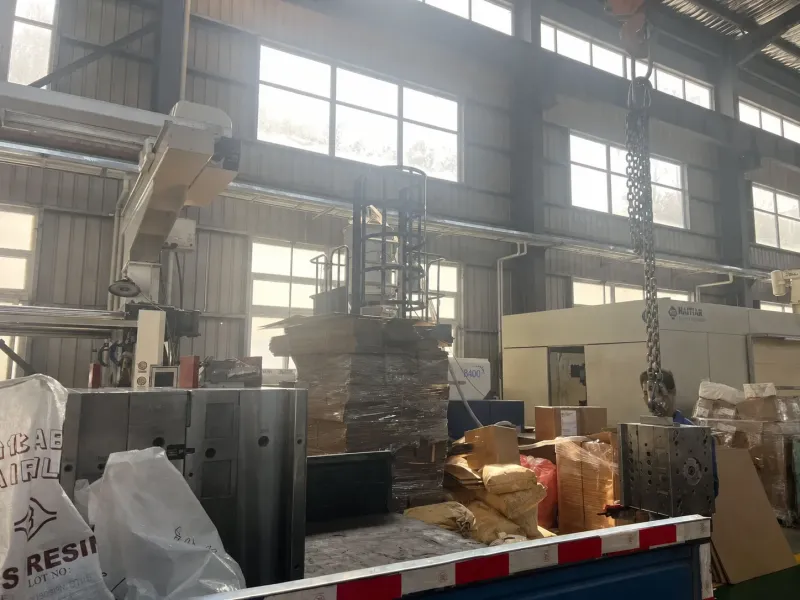
The Snapshot
- Mold prices span about $3,000 for an aluminum prototype mold to $100,000+ for a large multi-cavity hot runner mold, per published industry ranges.
- Lead times run 10-15 days for prototype molds and 4-6 weeks for complex production molds. DieStrike quotes 2-4 weeks for standard plastic molds.
- Tolerance capability is the real filter. ±0.005mm standard and ±0.002mm on critical features separate tooling-grade shops from general job shops.
- Certifications screen, they do not promise. IATF 16949 plus ISO 9001 with documented PPAP-style control beats a logo with no audit trail.
What Injection Molding Services Include
Plastic injection molding services cover far more than cutting steel. A complete engagement starts with a design for manufacturability review, moves through mold design and build, and continues with sampling, trial runs, and production support. Some shops stop when the mold ships. Others carry the tool through its first 50,000 shots.
Know which kind of partner you are hiring. A mold maker builds and validates the tool. A molder runs the machine and sells you parts. Some companies do both. If you buy from a molder, ask who actually builds the mold. Quality control lives in the tool shop, not the press room.
Why does the builder matter when a molder handles production? Because the mold sets the floor for part quality. Dimensional variation, cycle time, and scrap rate are mostly decided in the tool. A molder with a weak in-house tool room is only as good as the mold they buy.
A full service scope looks like this:
- Design for manufacturability review and mold design
- Mold build with documented steel grade and heat treatment
- Sampling, trial runs, and first article inspection
- Production support, repair, and maintenance
- Standard components supply: ejector pins, core pins, springs, mold bases
Scope gaps cause most of the surprises. A quote that covers steel and machining but not sampling leaves you paying for trial shots later. A quote that ignores engraving and packaging adds cost at the end. Match the scope to your program before you compare numbers.
Ownership is another scope item. The mold is your asset in most programs, so confirm the ownership clause in writing before the first payment. Some suppliers retain tooling rights and charge release fees later.
DieStrike is a mold maker, not a molder. We supply IATF 16949 certified injection molding services to molders and OEMs across automotive, medical devices, and EV energy. That scope covers the full plastics manufacturing chain from a buyer's perspective — mold design, steel selection, machining, assembly, and sampling — so your molder gets a production-ready tool instead of a rough blank. We do not compete with your molder on part price, which keeps the incentives clean. Our injection mold manufacturing services page details the full scope.
The first deliverable is engineering, not steel. We return DFM feedback within 24 hours of receiving a part file. That early review catches wall thickness, draft, and gate problems before they become tooling costs.
How Injection Molding Prices Are Built
Published industry ranges put a plastic injection mold at about $3,000 for a simple aluminum prototype tool. The same tool as a large multi-cavity hot runner mold passes $100,000+. Most production molds for typical housings and brackets land between $10,000 and $50,000. The spread is not random. It tracks five variables.
| Cost driver | Typical impact | What to verify |
|---|---|---|
| Steel grade | Hardened S136, H13, or ASP-23 adds 10-30 percent over P20 | Grade named in the quote, hardness target such as HRC 62 |
| Cavity count | Machining hours scale with cavities; per-part cost drops | Cycle time math at your annual volume |
| Part geometry | Deep ribs, thin walls, and undercuts add EDM and slide work | DFM feedback on moldability before quoting |
| Tolerance and finish | Tighter than ±0.005mm and SPI A-1 polish add grinding and polishing hours | CMM report at sampling, finish sample approval |
| Runner system | Hot runner adds $5,000-$20,000+ upfront | Payback at your volume per year |
← swipe to scroll →
Region shifts the numbers too. Labor rates, steel costs, and energy prices vary by country. That is why identical tooling quotes differ by 30-50 percent across regions, a published industry observation. The low quote is only a bargain if quality, lead time, and after-sales support survive the trip.
The cheap quote is where buyers lose. A quote 20 percent below the pack usually hides one of four things: softer steel, skipped heat treatment, or fewer trial shots. Sometimes the lump-sum line item simply has no specification behind it. When a mold wears at 200,000 shots instead of 1,000,000, the discount disappears.
Hardness is the number to check. DieStrike heat-treats SKD11, 8407, and ASP-23 tool steel to HRC 62 for production cavities. A quote that does not state steel grade and hardness is not yet a quote.
Run the lifecycle math before you sign. A $30,000 tool rated for 1,000,000 shots carries $0.03 per shot in tooling cost. The same tool wearing out at 300,000 shots triples that number before you add downtime. That math belongs in every quote comparison.
How to Read and Compare Quotes
A comparable quote shows comparable line items: mold design, steel, machining, heat treatment, trial shots, engraving, and packaging. When one supplier bundles everything into a single number, you cannot compare it to anything. Ask for the itemized version.
Four line items get hidden more often than they get quoted. Mold design time, trial shots, engraving, and packaging. Design time is real engineering work and belongs on the quote. Engraving and packaging look small until they hit at delivery. Ask each supplier to show every line before you compare totals.
Checklist for every quote:
- Steel grade named, not "tool steel"
- Heat treatment spec and target hardness, for example HRC 62
- Trial shots included, typically 1-3 for prototype and 3-5 for production
- 3D CAD model and CMM report included with delivery
- Mold ownership, revision policy, and warranty in shots
- Payment milestones tied to sampling sign-off, not calendar dates
Payment terms reveal supplier confidence. A standard split runs 30 percent at order, 40 percent at sampling, and 30 percent at delivery sign-off. Heavy upfront percentages with no sampling milestone shift risk to you. Tie milestones to events you can verify.
The quality of your quotes tracks the quality of your RFQ. Send the 3D model, material, annual volume, tolerance callouts, and finish class. Our guide on how to write a mold RFQ walks through the complete package.
Quality Systems and Certifications That Matter
A certification logo on a website is a screen, not proof. The version that matters is current, audited, and scoped to mold making. For automotive programs, IATF 16949 is the baseline your customers will ask about. ISO 9001 is the floor for everyone else. ISO 14001 covers the environmental controls some OEM programs now require.
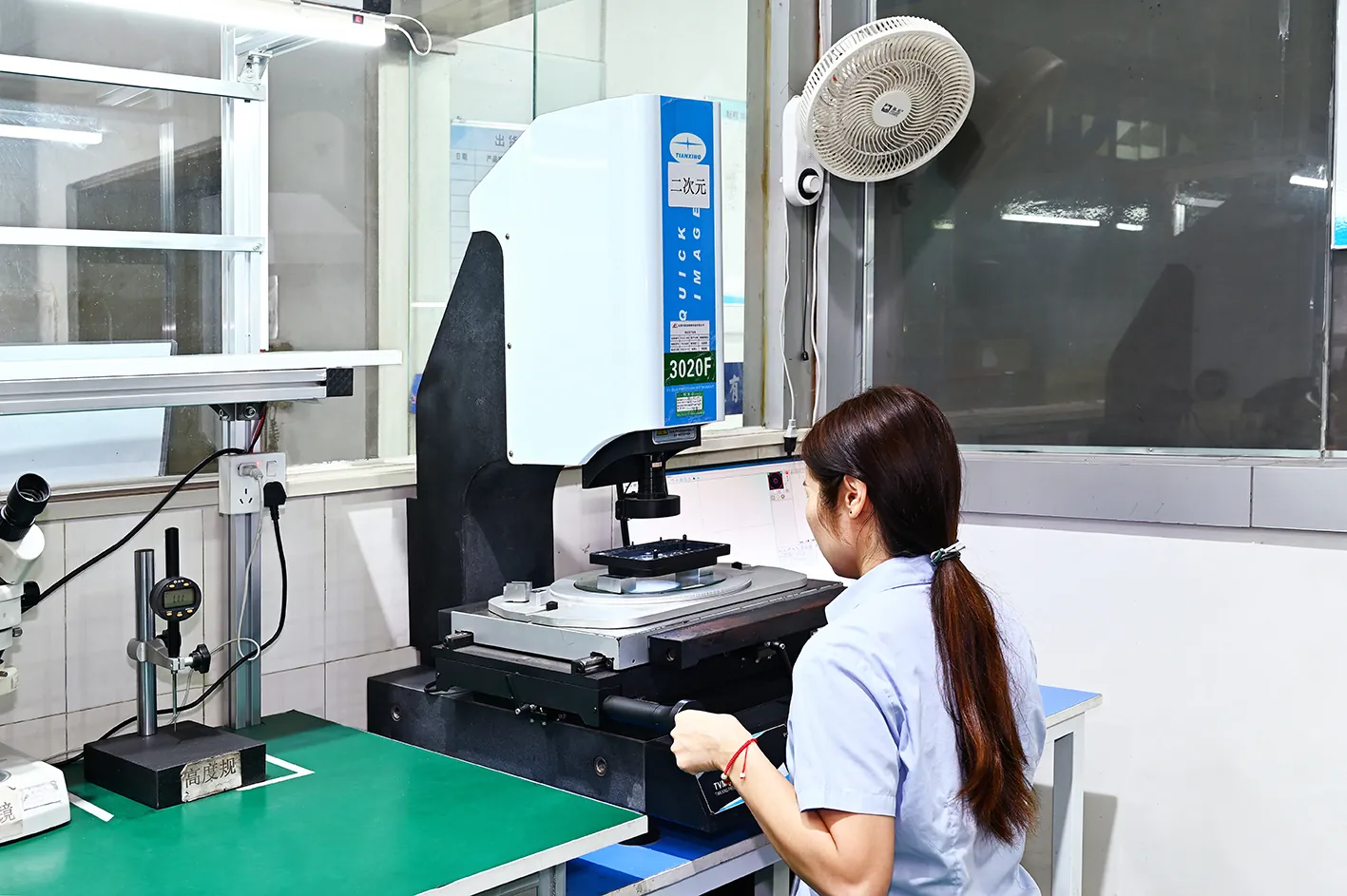
In-house metrology is the second signal. A shop that owns its CMMs can verify its own work. DieStrike operates 8+ CMMs, runs wire EDM at ±0.002mm, and finishes mirror surfaces to Ra 0.02µm on Sodick machines. If a supplier cannot show a CMM report for your part, the tolerance on the drawing is a hope, not a spec.
PPAP is not just paperwork for automotive. Level 3 PPAP documents the part, the process, and the controls in one pack: dimensional results, material certs, capability studies, and a control plan. If your customer asks for it later, a supplier without the habit will struggle. Ask early whether the shop can produce a PPAP pack on request.
| Document | What it proves | How to verify |
|---|---|---|
| ISO 9001 | Baseline quality management system | Valid certificate, audit scope covers tooling |
| IATF 16949 | Automotive-grade process control | Certificate scope includes mold manufacturing |
| PPAP Level 3 | Part and process validation | Sample documentation pack for your program |
| CMM inspection report | Dimensional verification | Report generated for your part, not a template |
| Material certificate | Steel grade and heat treat traceability | Mill certificate matching the quoted grade |
← swipe to scroll →
Lead Time Reality: Rapid vs Production
Published industry lead times run 10-15 days for a prototype mold and 4-6 weeks for a complex production mold. DieStrike quotes 2-4 weeks for standard plastic molds and 2-5 weeks for stamping dies. Standard mold components ship in 3-7 days.
Rapid injection molding compresses that timeline with aluminum or soft steel tooling. Use it for 50 to 5,000 parts, for design iterations, or as bridge tooling while the production mold is built. Do not push it past its limits: abrasive resins wear soft cavities, and a 100,000-piece program on an aluminum tool is false economy.
Rapid injection molding shines in the pilot phase. Use the aluminum tool to validate the part in the real resin, then commit to the production tool with data. That sequence turns guesswork into decisions and usually pays for the prototype mold in avoided changes.
| Mold type | Published lead time | Best used for |
|---|---|---|
| Aluminum prototype mold | 10-15 days | Design validation, 50-5,000 parts |
| Standard production mold | 2-4 weeks, DieStrike quote for plastic molds | Production runs with hardened cavities |
| Complex multi-cavity hot runner mold | 4-6 weeks | High volume, automated cells |
| Standard mold components | 3-7 days | Ejector pins, core pins, springs; HASCO, DME, and MISUMI compatible |
← swipe to scroll →
Ask for the timeline inside the quote, not as a verbal promise. Mold design, steel purchase, machining, heat treatment, assembly, and sampling each take days. A shop that cannot show the sequence cannot commit to the date. DieStrike sequences every project and confirms the sampling date before steel is ordered.
Three levers compress the timeline. Lock the design before quoting so DFM changes do not restart machining. Choose standard components where possible, since catalog parts ship in days. Approve the first article fast, because sampling sign-off gates the release.
Standard components shrink both cost and lead time. Ejector pins, core pins, springs, sprue bushings, and mold bases that are HASCO, DME, or MISUMI compatible mean replacements arrive in days, not weeks. That matters when the mold is down and a customer line is waiting.
Geography shapes the schedule more than most buyers expect. A shop in the same time zone answers questions during your working day. Overseas tooling adds shipping time, customs, and a communication lag that eats into every revision. When you compare a 2-4 week quote, ask what happens when the mold needs a fix after delivery.
Mold Design Decisions That Move Cost and Risk
Every mold is a set of decisions trading upfront cost against per-part cost. Cavity count is the biggest. A single-cavity tool is cheap to build and slow to run. An 8-cavity tool costs more in steel and machining, but it divides cycle time per part by eight.
Runner strategy is second. A cold runner is simple and low cost, but it creates runner scrap and longer cycles. A hot runner keeps the plastic molten in the manifold, cuts cycle time, and eliminates runner waste. The system adds roughly $5,000-$20,000+ to the tool. Below 50,000 parts a year, the payback rarely lands. Our hot runner systems page works through the math.
Cooling layout decides cycle time. Cooling accounts for 50-70 percent of a typical injection molding cycle, a published rule of thumb. Conformal cooling channels and balanced water circuits pull heat evenly and shave seconds off every shot. Those seconds compound across 500,000 cycles.
Undercuts force slides or lifters into the design. Each one adds machining, assembly, and maintenance cost. Sometimes a small geometry change removes the undercut entirely. That is the kind of feedback a DFM review catches before steel is cut.
Plan for the second life of the mold before the first shot. Production molds wear: ejector pins gall, cores crack, cooling channels scale. A partner that offers mold repair and maintenance keeps the tool productive instead of shipping it overseas for weeks. Ask about spare component stock before you need it.
Materials, Tolerances, and DFM
Material choice drives mold design more than any other input. Semicrystalline resins like nylon and POM shrink and warp differently from amorphous resins like ABS and PC. Glass-filled grades wear tool steel faster and demand harder cavities. If the material is still open, the DFM review should flag how each candidate changes the tool.
Shrinkage is a number you should see in writing. ABS runs roughly 0.4-0.7 percent, glass-filled nylon around 0.2-0.5 percent, and unfilled POM about 2 percent, typical published ranges. Each resin moves differently as it cools. The mold cavity is cut to the shrunk dimension, not the drawing dimension.
Tolerance is where tooling-grade shops separate from the rest. General injection molding tolerances sit around ±0.1mm and are easy to hold. Precision work at ±0.005mm requires jig grinding, tight EDM, and disciplined process control. DieStrike holds ±0.005mm as standard and ±0.002mm on critical features, with 0.0005mm jig grinding on Waida PG machines. Surface finish runs to SPI A-1 mirror polish at Ra 0.02µm.
Finish classes follow the SPI standard, from A-1 mirror polish down to D-3 sandblast texture. Cosmetic surfaces on consumer electronics often demand A-1. Functional surfaces rarely need better than B-2. Matching the finish class to the surface function saves polishing hours and money.
Most tolerance problems are design problems. Uniform wall thickness and 1-2 degrees of draft reduce warp and sink. So do ribs at 50-60 percent of wall thickness and gates near thick sections. A structured design for manufacturability review catches these before tooling. We return DFM feedback within 24 hours on new part files.
Red Flags When Vetting a Partner
Most plastic injection molding companies that fail their customers fail in the gap between quoting and sampling. Treat these as deal-breakers: no certified quality system, no in-house metrology, or lump-sum quotes with no steel grade. No DFM feedback, no trial-shot commitment, and no clear answer on mold ownership are just as fatal.
Ask every candidate the same six questions. What steel grade and hardness is standard? How many trial shots are included? What dimensional report ships with the mold? What is the warranty in shots? Who repairs the mold when it wears? Can we walk the shop live on video?
Reference customers matter more than logos. Mold builders in the global supply chain get audited by names like TE Connectivity, Amphenol, Luxshare, and Dongshan Precision. If an injection molding company cannot name audited customers in regulated industries, ask why.
Consider a phased strategy instead of a single big order. Prototype mold first, design freeze, then the production mold. The sequence adds a step but removes the biggest risk: building a $40,000 tool around an unvalidated design.
Test the communication channel before you commit. Send a question with a drawing attached and time the reply. A supplier that answers in 24 hours with a technical point will behave the same way when the mold is down. One that replies in a week costs you that week in every change order.
Trust the paper, then verify the parts. Certification scope, itemized quotes, and reference audits narrow the field. The first article inspection closes the deal, because the CMM report on your own part tells you more than any brochure.
FAQ
Q1. How much do injection molding services cost?
Published industry ranges run from about $3,000 for an aluminum prototype mold to $100,000+ for a large multi-cavity hot runner mold. Most production molds land between $10,000 and $50,000. Steel grade, cavity count, geometry, tolerance, and runner system drive the spread. Ask for itemized quotes so you can compare line by line.
Q2. What is rapid injection molding and when should I use it?
Rapid injection molding uses aluminum or soft steel tooling to deliver parts in days instead of weeks. Published prototype lead times run 10-15 days. Use it for low volumes, design iterations, or bridge tooling. For high volume or abrasive resins, go straight to a hardened production mold.
Q3. How long does it take to make an injection mold?
A prototype mold ships in 10-15 days. A standard production mold takes 2-4 weeks at DieStrike, and a complex multi-cavity hot runner mold runs 4-6 weeks per published ranges. DFM feedback within 24 hours shortens the whole timeline by resolving design issues before steel is cut.
Q4. What tolerances can custom injection molding hold?
General injection molding tolerances sit around ±0.1mm. Custom injection molding with jig grinding and tight EDM control reaches ±0.005mm standard and ±0.002mm on critical features. Verify with a CMM report at sampling rather than a brochure claim.
Q5. How do I choose an injection molding company?
Send a complete RFQ, check certification scope, compare itemized quotes, and vet references. Confirm the steel grade, trial shots, and warranty in shots. Ask how the shop verifies dimensions in-house. The cheapest quote is only cheap if the mold survives the volume.
Q6. What do I need to send for a mold quote?
A 3D model in STEP or IGES, the resin and grade, annual volume, tolerance callouts, and finish class. Add the target delivery date and any regulatory requirements. The better the package, the more comparable the quotes you receive.
Your Next Step
A mold is a multi-year asset, not a commodity. A 10 percent cheaper quote on a tool that wears at 200,000 shots instead of 1,000,000 is not cheaper. The extra week of vetting pays for itself in the first production run.
Two more things protect the program after you pick a partner. Insist on a sampling report that lists every deviation from the drawing, and keep one set of approved samples on file. When the mold comes back from repair, compare against that baseline.
Send your part file and annual volume to our engineering team. You will get DFM feedback within 24 hours and an itemized quote you can compare line by line. That is the cheapest risk insurance a mold program can buy.
KEEP READING
Related Reading
5 Mold Cooling Channel Design Tips for Faster Cycles
Mold maker's 5 cooling channel design rules: channel-to-cavity distance 2-2.
Read articleArticle5 Shrinkage Compensation Rules for Mold Design
Shrinkage compensation decides mold accuracy. Five rules: material rates from 0.3% to 2.
Read articleArticle5 Ways to Reduce Mold Cost Without Cutting Quality
Five proven ways to reduce injection mold cost without cutting quality: DFM before quoting, right-sized cavity count,…
Read articleArticle7 Gate Design Best Practices for Balanced Filling
Mold maker's 7 gate design rules for balanced multi-cavity filling: gate depth 50-80% of wall thickness, land 0.5-1.
Read articleNEXT STEP
Ready to Start Your Mold?
Send us your element dimensions or part numbers — our team responds within 24 hours with pricing and lead time.

Written by
Ray ChanMold Buyer's Guide Author · Precision Mold Manufacturing Specialist. Ray helps global importers, distributors and OEMs source factory-direct molds and mold parts.