
Injection Molding Companies: 9-Point Checklist
Table of Contents
A $38,000 mold that cannot hold its own drawing tolerance is not a bargain at any price. Buyers who skip capability vetting usually find out at sampling: the first article fails, the second trial still fails, and the program burns two extra weeks of lead time plus an expedited-freight invoice reworking a tool that was never going to pass.
Run the arithmetic before you sign anything. On a 500,000-piece program, a tool that runs at 5 percent scrap instead of 1 percent rejects 20,000 parts before anyone notices the trend. At a $0.40 part price that is $8,000 in plastic alone, before line downtime and the quality investigation your customer files. Capability gaps show up in the press room, but they are decided in the tool shop — before the first shot.
This checklist gives you nine points to verify on every candidate, plus a weighted scorecard you can run in an afternoon. It is written for buyers and purchasing managers comparing plastic injection molding companies on more than the bottom line. Figures marked as published industry ranges come from public sources; DieStrike shop data is flagged where it appears.
The Snapshot
- Nine points to verify: in-house mold making, machine shop capability, quality systems, tolerances, trial and sampling, material handling, secondary operations, communication and DFM, and references plus financial stability.
- Two points decide most outcomes: in-house mold making and machine shop capability, because part quality, cycle time, and scrap rate are mostly decided in the tool.
- Tolerance claims mean nothing without a CMM report on your own part. General injection molding runs about ±0.1mm; precision tooling holds ±0.005mm standard and ±0.002mm on critical features.
- Certifications screen; evidence decides. IATF 16949 with a documented PPAP habit beats a logo with no audit trail behind it.
Why the Capability Checklist Exists
Plastic injection molding companies quote the same way and deliver differently. The quote covers steel, machining, and sampling. The delivery covers whatever the shop can actually execute. A brochure lists CNC machines and certificates; the difference between a supplier that ships 1,000,000-shot molds and one that ships problems is not marketing copy. It is nine verifiable capabilities.
The checklist exists because downstream cost concentrates in the tool. Cycle time, scrap rate, and dimensional stability are decided when the cavity is cut. Once the steel is machined, the options narrow to rework and replacement. Verifying capability before the order costs hours. Discovering a gap after sampling costs weeks, and published industry experience puts tooling rework at 20-40 percent of the original mold price when problems surface late.
This guide assumes you already know what you are buying. For the comparison and negotiation layer, pair it with our guides on how to choose a mold manufacturer and how to buy injection molds.
Point 1: In-House Mold Making vs Outsourced
The first question is not how many machines a molder runs. It is where the mold is actually built. A company with an in-house tool room controls the whole sequence — design, steel purchase, machining, assembly, and sampling — under one roof. A molder that buys tools from a third-party tool shop adds a layer of indirection between you and the people who cut your steel.
A brokered tool is not automatically bad. Many quality molders source tooling and still deliver excellent parts. But the relationship changes who answers when the mold fails. With an in-house tool room, the machinist who cut the cavity sees the first article fail at T1. Feedback loops are measured in hours instead of courier days, and change orders do not travel through a middleman who marks up every revision.
Ask three follow-ups when a shop says the mold is built in-house. Who designs the mold, and is that engineer in the same building as the machines? Which steel grades are standard, and at what hardness target? Who performs the CMM inspection at sampling, and where does the report come from? If the answers point to a subcontractor, add the subcontractor's name to your vetting list and audit them directly.
Steel grade is the first thing to verify in either case. A quote that names P20, H13, or S136 with a hardness target is a specification. A quote that says "tool steel" is a hope. The right grade depends on the application — our comparison of P20 vs H13 vs S136 walks through the trade-offs. DieStrike builds tools in-house and heat-treats SKD11, 8407, and ASP-23 to HRC 62 for production cavities.
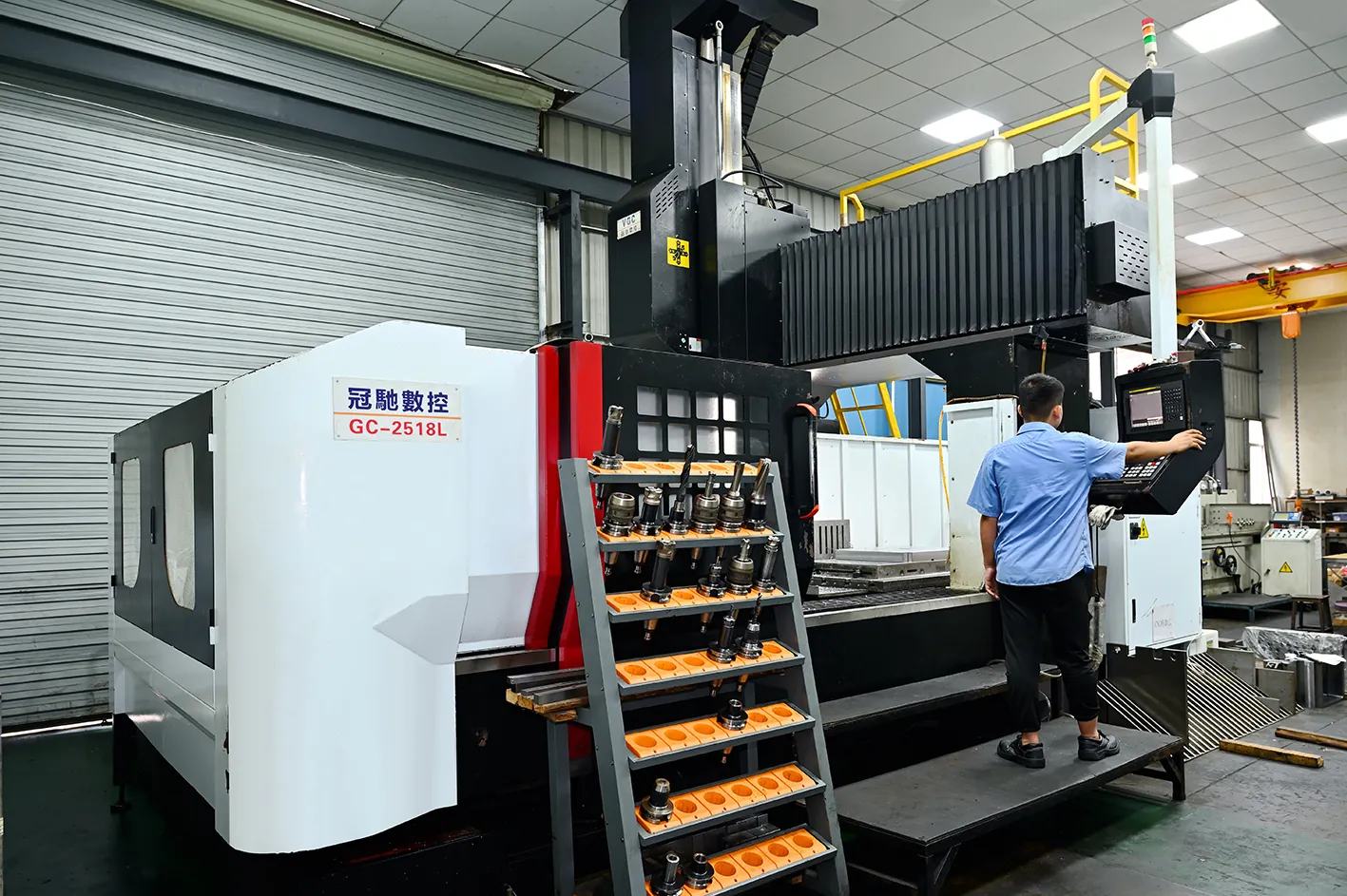
Point 2: Machine Shop Capability
The machine list separates a tooling shop from a trading company. You do not need to know every spindle RPM, but you need to know which operations are in-house and which are subcontracted. Capability lives in-house; capacity can be bought. A shop that subcontracts wire EDM or jig grinding outsources exactly the tolerance-critical operations that decide whether your mold holds dimension.
Walk the list below against every candidate. Counts and brands matter less than presence: the question is whether the operation exists on site with a qualified operator, not whether the brochure photo is current.
| Equipment | What it proves | What to verify |
|---|---|---|
| 3-axis / 5-axis CNC machining centers | Core and cavity roughing and finishing in-house | Machine count, max workpiece size, spindle speed |
| High-speed machining (HSM) | Fine detail, thin ribs, less EDM handwork | Spindle speed above 20,000 rpm, tool-path control |
| Sinker EDM | Square corners, deep ribs, shut-off detail | Achieved finish class, electrodes made in-house |
| Wire EDM | Precision inserts, tight clearances, keyways | Stated tolerance, typically ±0.002-0.005mm; taper capability |
| Jig grinding / surface grinding | Hardened steel finishing, flatness control | Machine brand, reported flatness and roundness |
| CMM and metrology | In-house dimensional verification at sampling | CMM count, reported accuracy, calibration records |
← swipe to scroll →
Machining capability maps directly to what your part needs. Deep ribs and square internal corners need sinker EDM. Precision inserts and replaceable cavity segments need wire EDM. High-gloss cosmetic surfaces need jig grinding or extended polishing after CNC. Our guides on precision CNC machining for mold components and wire EDM for mold making explain what each process can hold and where it fails.
Point 3: Quality Systems
A certification logo on a website is a screen, not proof. The version that matters is current, audited, and scoped to mold making or injection molding. ISO 9001 is the floor for most buyers. IATF 16949 is the baseline your automotive customers will ask about, and it carries the process disciplines — APQP, PPAP, control plans — that keep production stable. ISO 14001 covers the environmental controls some OEM programs now require.
In-house metrology is the second signal. A shop that owns its CMMs verifies its own work at sampling, instead of shipping the part to an outside lab and waiting for a report. DieStrike operates 8+ CMMs and runs wire EDM at ±0.002mm. If a supplier cannot show a CMM report generated for your part number, the tolerance on the drawing is a hope, not a specification.
PPAP is not automotive-only paperwork. A Level 3 pack documents the part, the process, and the controls: dimensional results, material certificates, capability studies, and a control plan. Ask early whether the shop can produce a PPAP pack on request. The habit of documenting every deviation, not the certificate, is what protects you in a quality investigation.
| System / document | What it covers | Red flag if missing |
|---|---|---|
| ISO 9001 | Baseline quality management, calibration, document control | Certificate expired, or audit scope excludes tooling |
| IATF 16949 | Automotive process control, APQP, PPAP discipline | Automotive program with no automotive-grade system |
| PPAP Level 3 | Part and process validation pack | Shop cannot produce a pack on request |
| CMM inspection report | Dimensional proof on your actual part | Report is a template with no part number or date |
| Material certificate | Steel grade and heat treatment traceability | Quote says "tool steel" with no grade or hardness |
← swipe to scroll →
Point 4: Tolerances They Can Actually Hold
Tolerance is where tooling-grade shops separate from general job shops. Published general injection molding tolerances sit around ±0.1mm and are easy to hold. Precision work at ±0.005mm requires jig grinding, tight EDM control, and disciplined process control. Holding ±0.002mm on critical features — shut-offs, insert pockets, mating faces — is a different class of shop entirely.
The number on the brochure is a claim. The number on the CMM report for your part is evidence. Ask every candidate two questions: what tolerance do you hold as standard, and which of my drawing features would push you past it? A capable shop answers with a feature-by-feature breakdown. A weak one answers with a range they have never verified.
Tolerance capability has three layers. Steel selection, because hardened cavities hold dimension longer than soft steel under heat and pressure. Machining process, because wire EDM and jig grinding are what actually produce the tight numbers. And process control at sampling, because a mold that measures correctly on the bench must also repeat through a production run.
Watch the shrinkage math too. The cavity is cut to the shrunk dimension, not the drawing dimension, and each resin family shrinks differently — amorphous resins like ABS run roughly 0.4-0.7 percent while unfilled POM can reach about 2 percent, per typical published ranges. If the supplier cannot tell you the shrinkage assumption behind your material, the tolerance discussion is not finished.
DieStrike holds ±0.005mm as standard and ±0.002mm on critical features, with 0.0005mm jig grinding capability on Waida PG machines and surface finish to SPI A-1 mirror polish at Ra 0.02µm. Those numbers are verified on our own CMMs at every sampling.
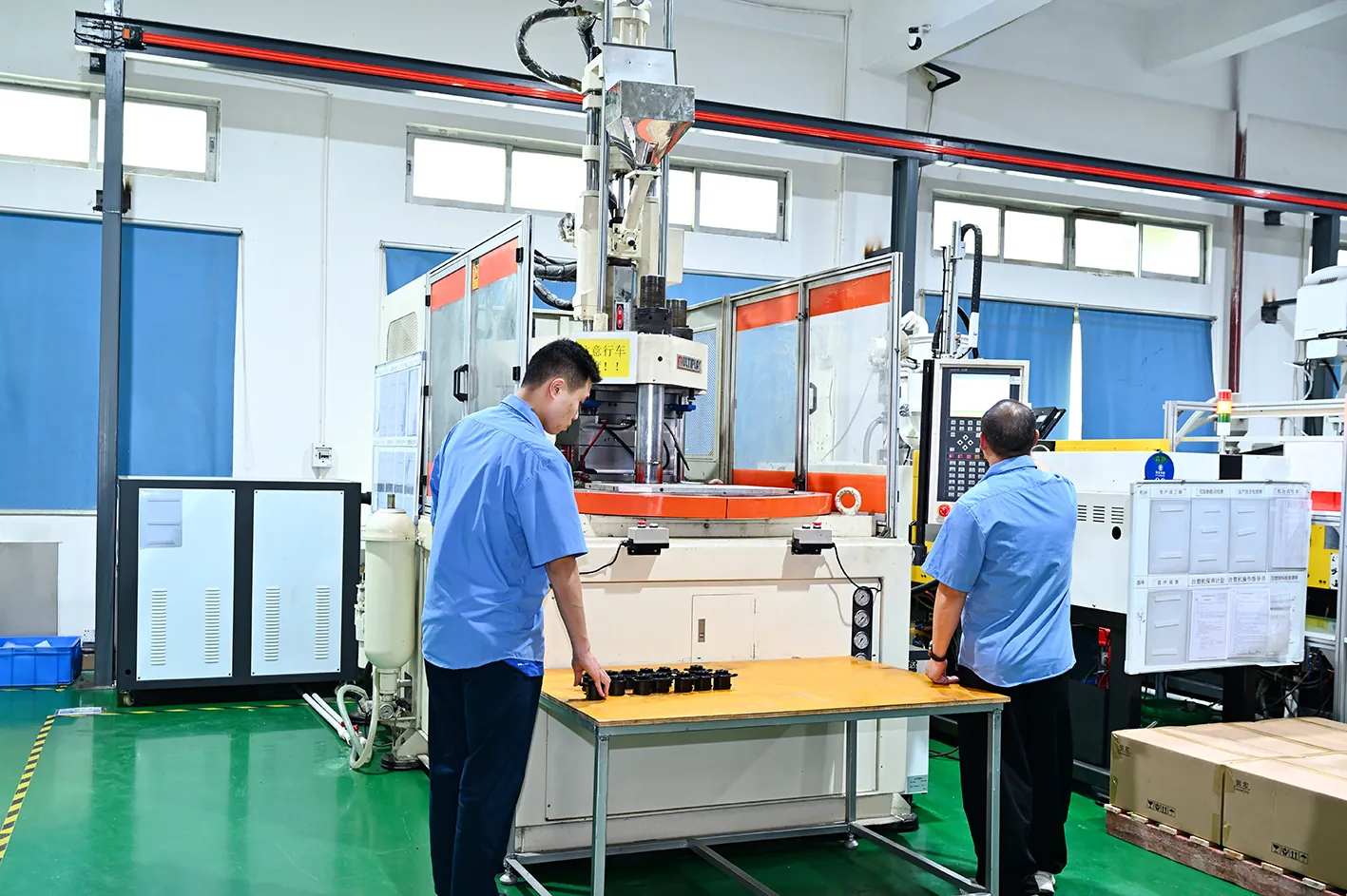
Point 5: Trial and Sampling Process
Trial shots are where the mold proves itself. A quote that includes trial shots is a commitment to validation; a quote that treats sampling as an extra line item is a warning. Published practice puts prototype molds at 1-3 trial shots and production molds at 3-5, with each trial a documented event, not a "let's see what happens" run.
The T1 trial is the most important. The mold meets the real resin at the real process window for the first time. What you want to see is a structured event: fixed machine settings, a shot-by-shot log, dimensional measurement of the first articles, and a written list of deviations from the drawing. DieStrike runs T1 sampling as a dedicated service with a formal report, and our mold trial and T1 sampling service page explains the process in detail.
Ask who signs off the first article. If the shop's own quality team measures and approves without your presence, ask for the raw data, not a summary. Video-walk the trial if you cannot attend — a live look at the machine screen and the parts on the bench tells you more than a photo of a mold in a crate.
Three numbers to lock before the mold ships. The dimensional report for every critical feature, the deviation list with root causes, and the shot count at sign-off. Keep one set of approved samples on file. When the mold comes back from repair a year later, compare against that baseline.
Point 6: Material Handling and Drying
Resin handling capability is invisible until the second week of production, when splay appears on every part and no one can explain why. Hygroscopic resins — nylon, polycarbonate, PET, TPU, and most glass-filled grades — absorb moisture from the air. If the material is not dried before molding, the moisture flashes to steam in the barrel and leaves silver streaks, voids, and lost mechanical properties.
Ask what drying equipment the shop runs and how it matches your resin. A molder with desiccant dryers, calibrated dew-point control, and documented drying times can handle engineering plastics. A molder that gravity-feeds material straight from an open gaylord into the hopper is fine for polypropylene and trouble for nylon.
Typical published drying guidelines look like this. Always confirm against the resin supplier's data sheet, because grades within a family differ:
| Resin family | Typical drying temperature | Typical drying time | Failure mode if wet |
|---|---|---|---|
| Nylon (PA6, PA66) | 75-90°C | 2-4 hours | Splay, brittleness, dimensional drift |
| Polycarbonate (PC) | 115-125°C | 3-4 hours | Silver streaks, loss of impact strength |
| PET / PBT | 130-150°C | 4-6 hours | Hydrolysis, viscosity drop, haze |
| ABS | 80-90°C | 2-3 hours | Surface splay, reduced gloss |
| POM (acetal) | Usually not required | n/a | Check supplier data sheet; over-drying can degrade |
← swipe to scroll →
Material handling extends past drying. Ask about regrind policy — what percentage of regrind is allowed, and whether it is segregated by color and grade. Ask about material traceability for regulated programs. In a medical or food-contact application, the answer to "who can trace this lot of resin to this lot of parts" determines whether you can ship at all.
Point 7: Secondary Operations
Few parts ship straight off the press. Most programs need insert molding, overmolding, assembly, ultrasonic welding, pad printing, laser marking, or packaging. The question is not whether the shop lists these services. It is whether the operations exist in-house or in a named partner network — and who owns the quality when a subcontracted step fails.
Insert molding is where capability really shows. Loading metal inserts into the cavity, holding them in position against injection pressure, and sealing against flash requires mold design experience that general shops do not have. Overmolding adds a second material with its own shrinkage and adhesion constraints. Ask to see a sample of each operation, not a slide. A physical part shows you what the process can hold; a brochure shows you what the sales team can write.
Assembly capability matters for a different reason: it signals how far the supplier can take responsibility. A shop that assembles, tests, and packs your finished unit removes interfaces from your supply chain. Each interface is a place where tolerances stack, ownership blurs, and lead time disappears.
For medical and regulated programs, secondary operations carry extra weight because the validation burden multiplies with every process step. Our medical injection molding guide covers the documentation and validation questions that apply.
Point 8: Communication and DFM Feedback
Communication quality is a leading indicator of everything else. The supplier that answers a technical question in 24 hours with a drawing-level response will behave the same way when the mold is down in year two. The supplier that replies in a week costs you that week on every change order, every revision, and every delay.
The best test happens before you buy. Send the part file with a question attached and time the reply. Two signals matter: speed and content. A generic "we will get back to you" is worth nothing. A reply that flags wall thickness, draft, gate location, or tolerance risk on your actual part is worth more than any certificate.
DFM feedback is the concrete deliverable. A structured design for manufacturability review catches wall-thickness variations, thin ribs, undercuts that force slides, and gate placement problems before steel is cut. DieStrike returns DFM feedback within 24 hours of receiving a part file, and our mold design and DFM service explains what a complete review covers.
Ask who you will actually talk to during the project. The salesperson who quoted you is not the engineer who will answer your questions at sampling. Get the engineer's name and direct contact before you commit. A project with a named technical contact is a project with an escalation path.
Point 9: References and Financial Stability
Capability answers what a shop can do. References and financials answer whether the shop will still be standing when the mold needs its first repair. Mold programs run for years, and the repair, maintenance, and spare-component relationship outlasts the original order.
Ask for references in industries like yours — not a curated list of logos, but named programs with a contact who will talk. Call them with three questions: did the mold meet the drawing at T1, how did change orders get handled, and what happened when the mold needed repair a year later. Published industry experience says the third question separates suppliers more than the first two.
Financial stability is harder to verify across borders, but four signals are public or easy to ask for: years in continuous operation, ownership structure, payment terms offered, and whether tooling is held as an asset or a liability on the books. A supplier that insists on heavy upfront payments with no sampling milestone is either undercapitalized or passing risk to you. Standard splits run 30 percent at order, 40 percent at sampling, and 30 percent at delivery sign-off.
Ask about tooling liens explicitly. In some jurisdictions a molder can claim a lien on tooling you own if the account falls behind. The mold is your asset in most programs — confirm the ownership clause and any lien exposure in writing before the first payment. Our about page documents how DieStrike structures tooling ownership and project milestones.
How to Run the Checklist
Run the nine points as a weighted scorecard, not a pass-fail exam. Weight the points by what your program actually risks. A cosmetic consumer product weights tolerances and communication heavily. An automotive program weights quality systems and trial discipline. A medical program weights material handling and documentation.
Score each candidate 1-5 per point, multiply by the weight, and total. A workable starting weight set looks like this — adjust for your program:
| Capability point | Weight | What a pass looks like | Score (1-5) |
|---|---|---|---|
| In-house mold making | 10% | Tool room on site; design engineer in the same building | |
| Machine shop capability | 10% | CNC, EDM, and wire EDM in-house, not brokered | |
| Quality systems | 15% | Current certs, in-house CMM, PPAP on request | |
| Tolerances | 15% | Stated capability at ±0.005mm or better, CMM proof | |
| Trial and sampling | 10% | Fixed trial-shot count, written T1 deviation list | |
| Material handling | 5% | Desiccant dryers matched to hygroscopic resins | |
| Secondary operations | 10% | Insert molding, overmolding, assembly in scope or named partner | |
| Communication and DFM | 15% | DFM feedback with drawing-level detail within 24-48 hours | |
| References and financials | 10% | Audited customers, stable ownership, no tooling liens |
← swipe to scroll →
Set a gate before you compare quotes. Any candidate scoring below 3.5 weighted — or scoring 1 on in-house mold making or quality systems for a regulated program — is out, regardless of price. Then compare quotes only among the survivors, using our guide on how to read a mold quote. Feed every candidate the same information with a properly written mold RFQ so the quotes are comparable.
Two shortcuts keep the process fast. First, send the same drawing to every candidate with three questions: what tolerance do you hold standard, what trial-shot count is included, and who performs the CMM inspection? Second, video-walk the shop floor. A 15-minute live tour settles machine shop capability, material handling, and cleanliness in one call.
FAQ
Q1. How do I verify a plastic injection molding company's real capability?
Run the nine-point checklist as a weighted scorecard: in-house mold making, machine shop, quality systems, tolerances, trial and sampling, material handling, secondary operations, communication and DFM, and references. Weight the points by your program, gate out low scorers, then compare quotes only among the survivors. A CMM report on your own part at sampling is the final proof.
Q2. Is in-house mold making necessary, or is outsourcing acceptable?
In-house mold making is not mandatory, but it shortens feedback loops and concentrates accountability. A molder that brokers tooling can still deliver, provided you audit the actual tool shop directly. Ask who designs the mold, who cuts the steel, and who signs the CMM report. If the tool builder is a subcontractor, add them to your vetting list.
Q3. What tolerance should I expect from a capable supplier?
General injection molding runs about ±0.1mm. Precision tooling holds ±0.005mm standard and ±0.002mm on critical features, which requires jig grinding, tight EDM control, and disciplined process control. Verify the claim with a CMM report generated for your part number, not a brochure range.
Q4. How many trial shots should a quote include?
Published practice puts prototype molds at 1-3 trial shots and production molds at 3-5. What matters more than the count is structure: fixed machine settings, a shot-by-shot log, dimensional measurement of first articles, and a written deviation list with root causes. Treat trial shots as a commitment to validation, not a checkbox.
Q5. Do I need IATF 16949 even outside automotive?
Not as a requirement, but its disciplines — APQP, PPAP, control plans, documented deviation handling — are the same habits that keep any program stable. A shop with IATF 16949 and a working PPAP habit will document your part better than an ISO 9001 shop that treats paperwork as optional. Ask whether the shop can produce a PPAP pack on request.
Q6. How do I run this checklist when I need to move fast?
Send the same drawing to every candidate with three questions: standard tolerance, trial-shot count, and who performs CMM inspection. Video-walk the shop floor for 15 minutes to settle machine shop and material handling. Then run the weighted scorecard — the fastest viable candidate at or above the gate wins. Skipping the gate to save a week costs more than the week when the gap surfaces at sampling.
The Bottom Line
A mold is a multi-year asset, and the company behind it determines whether that asset earns or burns. Nine points separate a capable partner from a brochure: in-house mold making, machine shop capability, quality systems, real tolerances, structured sampling, material handling, secondary operations, communication and DFM, and financial stability. Two of them — in-house mold making and machine shop capability — decide most outcomes, because the tool sets the floor for everything that follows.
Run the scorecard before you compare prices. A candidate below the gate is not worth a discount. A candidate at or above the gate, with a CMM report on your own part and a named engineer who answers in 24 hours, is a partner worth the extra 2-5 percent on the quote.
DieStrike builds injection molds in-house with IATF 16949 certified processes, returns DFM feedback within 24 hours, and verifies every tool on our own CMMs. The injection mold manufacturing services page details the full scope. Send your part file and annual volume to our engineering team via the contact page, and you will get the checklist answers — tolerance, trial-shot count, and CMM verification — in writing before you commit.
KEEP READING
Related Reading
How to Get an Accurate Injection Molding Quote
Get an accurate injection molding quote: 10 fields that must be complete before the RFQ goes out, how mold shops…
Read articleArticle5 Mold Cooling Channel Design Tips for Faster Cycles
Mold maker's 5 cooling channel design rules: channel-to-cavity distance 2-2.
Read articleArticle5 Shrinkage Compensation Rules for Mold Design
Shrinkage compensation decides mold accuracy. Five rules: material rates from 0.3% to 2.
Read articleArticle5 Ways to Reduce Mold Cost Without Cutting Quality
Five proven ways to reduce injection mold cost without cutting quality: DFM before quoting, right-sized cavity count,…
Read articleNEXT STEP
Ready to Start Your Mold?
Send us your element dimensions or part numbers — our team responds within 24 hours with pricing and lead time.

Written by
Ray ChanMold Buyer's Guide Author · Precision Mold Manufacturing Specialist. Ray helps global importers, distributors and OEMs source factory-direct molds and mold parts.