
Polypropylene (PP) Injection Molding: Grades & Processing
Table of Contents
A crate mold machined with a 1.5% shrinkage allowance produced crates 1.2 mm undersized on a 420 mm length. The cavity was cut correctly — polypropylene simply shrank more than the allowance, and the correction was a re-machined cavity, not a press setting. A few benches over, a flip-top cap mold cycled beautifully until the living hinge cracked at 2,000 flexes; the gate had fed the hinge along its length instead of across it, so the polymer molecules oriented the wrong way. Both failures were written into the tool design long before the steel was cut — and both are the reason this guide reads PP from the mold side, not the chemistry side.
Polypropylene (PP) is a semi-crystalline thermoplastic from the polyolefin family, polymerized from propylene gas. Global production sits near 75 million tonnes per year (published industry estimate), which makes it one of the highest-volume plastics on earth. It combines the lowest density of any commodity plastic, strong chemical resistance, outstanding fatigue endurance, and one of the widest processing windows in the catalog. Those traits put PP into food containers, living hinge boxes, medical disposables, automotive interior parts, and battery housings.
This guide is written for the people who buy and build the tool: mold buyers, tooling engineers, and manufacturing engineers. It walks from the properties that dictate mold decisions, through the design rules for PP tooling, into the processing window the mold must survive, and ends with defects traced to their mold-side root causes. Every number here is a typical published value for injection-molding grades; where a figure depends on grade or tool design, the range is given instead of a single point.
The Snapshot
- PP is semi-crystalline — mold shrinkage runs 1.0-2.5%, among the highest of common thermoplastics. The cavity is cut oversized, and the allowance is split by wall-thickness zone.
- Density 0.90-0.91 g/cm³ — the lightest commodity plastic; PP floats on water.
- Melting point ~160-170°C (homopolymer, typical); melt processing runs 200-250°C into a mold at 20-60°C.
- No drying required — moisture uptake stays at or below 0.03%, and thin-wall parts commonly cycle in 15-30 seconds.
- A correctly designed living hinge — 0.25-0.5 mm thick, fed by a gate on the hinge line — survives hundreds of thousands of flex cycles.
- Food-contact grades are cleared under FDA 21 CFR 177.1520 (US) and Regulation (EC) No 10/2011 (EU), grade by grade.
- DieStrike builds PP-capable tooling to IATF 16949 / ISO 9001 systems, with CMM-verified dimensions on every mold.
What Is Polypropylene (PP)?
Polypropylene is the addition polymer of propylene (C₃H₆). The repeat unit is [-CH₂-CH(CH₃)-]ₙ, and the pendant methyl group is what separates PP from polyethylene at the molecular level — it stiffens the chain and raises the melting point, which is why PP resists heat better than PE. Commercial injection grades are isotactic: the methyl groups sit on the same side of the chain, and that regularity lets the polymer crystallize. Typical isotactic PP reaches 50-70% crystallinity (published range). The crystalline fraction gives PP its stiffness and melting point; the amorphous fraction gives it toughness and its glass transition.
For the mold designer, one fact matters more than any datasheet row: PP is semi-crystalline, and semi-crystalline resins shrink more — and less uniformly — than amorphous ones. An ABS part compensates predictably at 0.4-0.7% mold shrinkage; a PP part compensates at 1.0-2.5%, and the same part can hold two different shrinkage values in different directions in a single shot. That single difference drives nearly every tool decision that follows: oversized cavities, zone-by-zone compensation, gates at the thickest mass, and a cooling layout that keeps every region shrinking at the same rate.
The glass transition temperature (Tg) of PP's amorphous phase is typically around -10°C to 0°C (published values). Below that range the material behaves as glass and turns brittle. Copolymers with ethylene shift the transition lower, which is exactly why random and impact copolymers survive cold impact better than homopolymer. Grades are sold by melt flow rate (MFR), measured at 230°C with a 2.16 kg load; injection-molding grades typically sit at 3-30 g/10 min. Higher MFR means thinner walls and easier filling — and a greater flash risk at the parting line. Lower MFR means tougher parts and better dimensional stability, at the cost of flow length.
Three families, one shrinkage band. Polypropylene is not one polymer; it is a family of three commercial structures that share the same base chemistry and differ in how much ethylene is added and where it lands. Homopolymer (PP-H) contains only propylene units — the stiffest, strongest, highest-melting member of the family, and the most prone to brittle failure below 0°C. Random copolymer (PP-R) carries roughly 1-7% ethylene (typical) scattered randomly along the chain; the ethylene disrupts crystallinity, which lowers the melting point, softens the material, and improves clarity. Impact copolymer (PP-B, also called block or heterophasic copolymer) is a homopolymer matrix with a dispersed ethylene-propylene rubber phase, typically 5-25% rubber. The rubber particles absorb impact energy, which makes PP-B the choice for cold and crash-loaded parts.
| Property | Homopolymer (PP-H) | Random Copolymer (PP-R) | Impact Copolymer (PP-B) |
|---|---|---|---|
| Rigidity (flexural modulus, typical) | Highest — ~1,200-1,700 MPa | Moderate — ~800-1,200 MPa | Moderate — ~900-1,400 MPa |
| Low-temperature impact | Lowest — brittle below ~0°C | Improved — usable to about -10°C | Highest — usable below -20°C (typical high-impact grades) |
| Transparency | Translucent; clarified grades available | Highest — clarified grades approach glass-like haze | Opaque |
| Melting point (typical) | ~160-170°C | ~140-150°C | ~160-165°C |
| Mold shrinkage (typical) | 1.5-2.5% | 1.0-2.0% | 1.0-2.0% |
| Typical uses | Food containers, crates, hinges, textiles | Clear food packaging, medical bottles, hot-fill cups | Bumper fascias, battery trays, luggage, power tools |
← swipe to scroll →
Table 1. The three PP families. Modulus and melting values are typical published ranges, not a DieStrike specification.
Polypropylene material selection is a stiffness-versus-impact trade, and the choice lands in the mold: the family letter moves the shrinkage number, the fill behavior, and the weld-line tolerance. A crate that must stack under load wants homopolymer. A bumper fascia that must survive -20°C wants impact copolymer. A clear hot-fill cup wants random copolymer. Specifying "polypropylene" without the family letter is how parts fail in the winter — and how a cavity cut to the wrong shrinkage number gets re-machined in the spring.
PP Properties That Drive Mold Design
Material selection and tool design are one decision, not two. The table below maps the PP properties that matter most to the specific mold decisions they drive. If a datasheet number is missing at RFQ time, this is the list to ask for.
| PP property | Typical value | What it drives in the mold |
|---|---|---|
| Mold shrinkage | 1.0-2.5% (homopolymer 1.5-2.5%, copolymers 1.0-2.0%, filled grades 0.3-1.2%) | Cavity compensation per wall-thickness zone; thick sections shrink more, so ribs and bosses need their own allowance |
| Melting point | ~160-170°C (homopolymer) | Cooling layout and cycle time; no hot-side steel needed, but channel placement sets the 15-30 second cycle |
| Melt flow (MFR) | 3-30 g/10 min at 230°C / 2.16 kg | Flow length, gate sizing, runner balance; thin-wall parts need the high-flow end, flash control needs parting-line discipline |
| Density | 0.90-0.91 g/cm³ | Part weight and cavity volume; venting and degassing needs stay modest |
| Notched Izod impact | ~8-20 kJ/m², grade-dependent (ISO 180) | Wall thickness, rib design, weld-line placement; PP-B grades for cold-loaded zones |
| Moisture pickup | ≤0.03% saturation | No dryer on the press; venting depth is set by melt viscosity, not moisture |
| Living hinge fatigue | 100,000+ flex cycles (typical) | Gate placement on the hinge line, dedicated hinge cooling, hinge thickness 0.25-0.5 mm |
| Chemical resistance | Resists dilute acids, alkalis, salts, alcohols, most solvents at room temperature | Part duty, not steel selection — standard P20/718 tooling is fine; UV exposure needs stabilized grades, not special steel |
← swipe to scroll →
Values are typical published ranges for injection-molding grades; actual numbers vary by grade and test method.
Shrinkage and dimensional stability. Semi-crystalline resins shrink more than amorphous ones, and PP sits at 1.0-2.5% — with homopolymer at the high end and copolymers at the low end. Shrinkage is not a single number even within one grade: wall thickness, gate size, hold pressure, hold time, mold temperature, and flow direction all move it, and filled grades shrink differently along and across the flow direction. For the tool, that means the cavity is compensated per zone and the cooling layout is balanced so every region shrinks at the same rate — the discipline covered in our warpage in thin-wall molds guide. Gross warpage, not just local sink, is the signature risk, and it is a tool-design problem before it is a process problem.
Heat resistance. PP melts around 160-170°C (homopolymer), with continuous service typically rated at 80-100°C and HDT near 100-110°C at 0.45 MPa (typical). That is enough for hot-fill food packaging, dishwasher-warm service, and under-hood-adjacent parts, and it rules PP out of oven and sustained hot-contact jobs. For the tool, the HDT sets expectations, not steel grade: a 20-60°C mold runs on standard P20 or 718-class inserts, and the cooling layout — not the steel — decides whether you hold a 20-second or a 40-second cycle.
Surface quality. PP molds from high-gloss to matte texture on the same tool. Gloss rises with mold temperature — a 20°C mold yields a matte, short-cycle surface; a 60°C mold improves gloss, reduces sink marks and weld-line visibility, and costs cycle time. Clarified random copolymers approach glass-like transparency, which demands a polished cavity and careful gate placement to hide flow marks. The cavity finish must be specified to match: polished steel for gloss, EDM texture for matte, and no in-between guessing at trial.
Impact and electrical behavior. Notched Izod runs roughly 8-20 kJ/m² depending on family (typical, ISO 180) — homopolymer at the low end, impact copolymer at the high end, with PP-B usable below -20°C. For the mold, the impact number sets wall thickness and weld-line placement: a cold-loaded zone should never sit on a weld line. PP is also a serviceable insulator with a dielectric constant near 2.2-2.4 (typical), which puts it into cable, connector, and capacitor housings — and into battery housings where electrical clearance is a design requirement. Flammability is UL94 HB for unfilled grades; flame-retardant grades reach V-2 or V-0 at the cost of some mechanicals and a higher price.

Mold Design Considerations for PP
PP is forgiving on the machine, but the tool still carries the design decisions that decide rejects, cycle, and tool life. The rules below are the ones that matter when the steel is being cut for a PP part.
Shrinkage compensation. Compensate cavities for 1.0-2.5% shrinkage, split by wall-thickness zone — thick sections shrink more than thin ones, and ribs and bosses shrink against the restraint of the surrounding wall. Because PP is semi-crystalline, the compensation is the largest in the commodity catalog, and the split between zones matters on every part with geometry changes. The five shrinkage compensation rules apply directly to PP parts and cover the zone-by-zone method, including the trial-shot correction loop that closes the gap between the datasheet and the molded part.
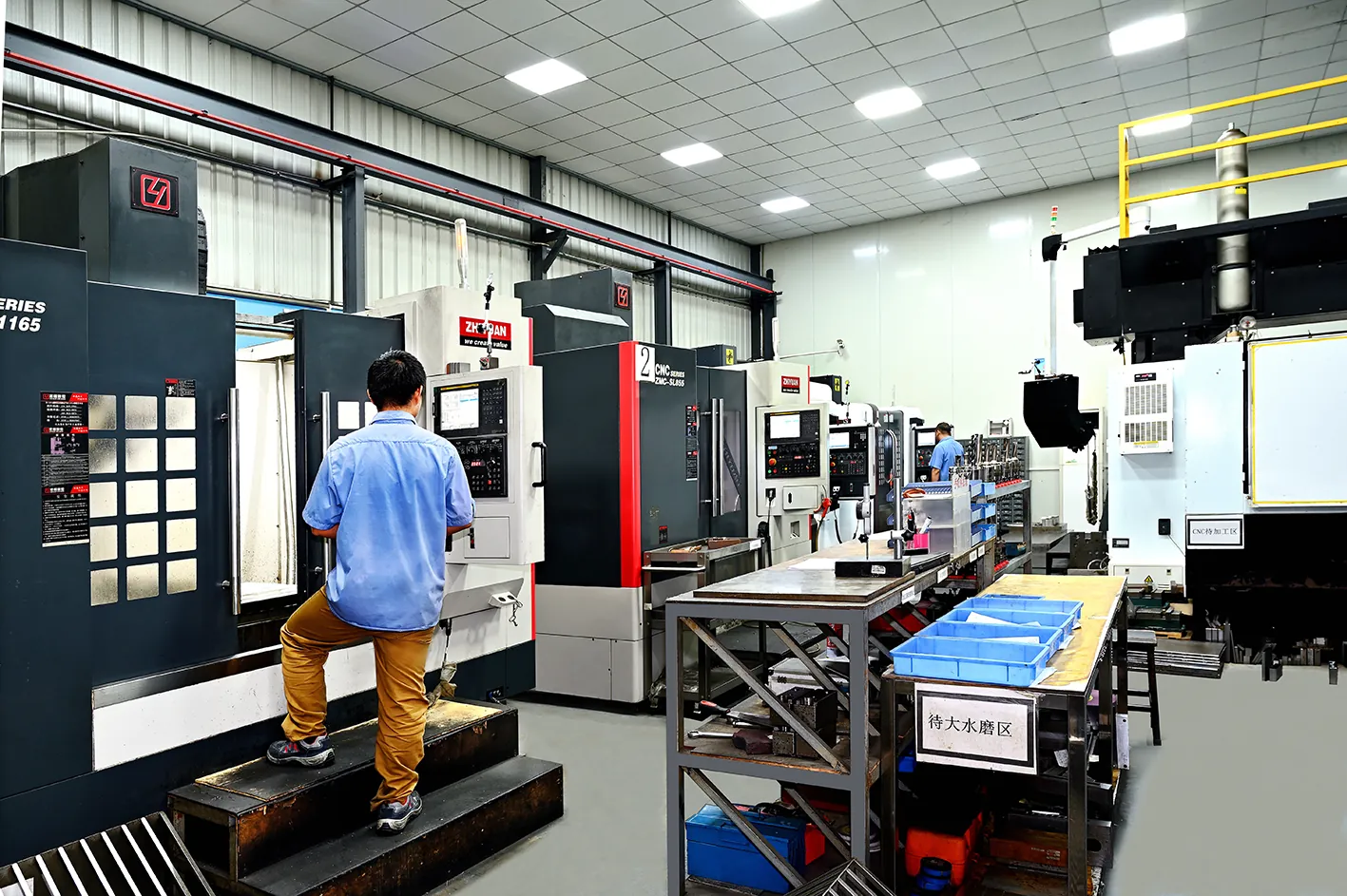
Wall thickness and ribs. Nominal walls of 1.0-3.0 mm are the working range for most PP parts; thin-wall packaging pushes to 0.5-1.0 mm with high-flow grades, and that is where the 15-30 second cycles come from. Ribs should run 50-60% of the nominal wall thickness at the base — thicker ribs guarantee sink marks on the opposite surface, and on PP the same thick section can also void internally because the shrinkage is so high. Radius rib bases at 0.25-0.5 mm, keep transitions gradual, and remember that every thick mass is a packing problem the gate must reach before freeze-off.
Living hinge design — the PP-specific mold topic. PP is the standard material for integral hinges, and the hinge is designed on the drawing, not on the press. A hinge molded 0.25-0.5 mm thick survives hundreds of thousands of flexes (typical published results), given radii on both sides and one non-negotiable rule: the polymer must flow across the hinge, never along it. That means the gate feeds the hinge line at one end and the cavity fills across the hinge into the lid — the runner and gate layout are arranged so the hinge sees clean, unidirectional flow. The hinge zone also needs its own cooling attention: a hinge area that runs hotter than the rest of the part flexes with molded-in stress and cracks early. Mold the hinge as a deliberate feature — thin, radiused, cross-fed, cooled — not as an afterthought in the parting line.
Gate design. PP accepts edge, submarine, fan, and tab gates; the choice is driven by part size, cosmetics, and weld-line placement. The melt is fluid, so gates can be small — but the gate must stay open long enough for hold pressure to pack the thickest mass, because PP's high shrinkage demands real packing. Gate placement decides where weld lines land: place gates so flow fronts meet at a vent or a non-cosmetic, non-loaded zone, and never let a weld line cross a hinge, a living hinge box corner, or a drop-test zone. The gate design best practices guide covers the placement and sizing trade-offs in detail.
Runner system. Cold runners are standard for PP: full-round runners in the 4-8 mm diameter range for typical parts, with the sprue bushing sized to the runner. Hot runners work exceptionally well for high-volume PP tools — the resin holds its window well and the fluid melt fills multi-cavity layouts without pressure trouble — but the manifold temperature must be balanced across cavities, because PP gloss and weld lines are sensitive to melt-temperature differences. The hot runner vs cold runner comparison is worth a read before quoting a high-cavity PP tool: the cycle saving on thin-wall packaging often pays for the manifold.
Venting. Vents of 0.02-0.04 mm depth are the typical guideline for PP. PP's fluid melt flashes the moment the parting line opens, so deeper vents are not an option — and shallower vents trap air and cause burn marks at the end of fill. The cavity and the parting line need real venting paths, machined to depth and verified, not whatever the machining center left behind. Deep, blind pockets — battery housings are the classic case — may need vacuum venting.
Draft and ejection. Minimum draft of 0.5-1° per side on untextured walls; textured surfaces need 1-2° per degree of texture depth. PP is a soft resin, so ejector pin marks and sticking are common rejects on parts with insufficient draft or undersized ejector area — the pin pushes through a warm, compliant surface. Balance draft, cooling, and pin placement together; thin hinge webs and deep ribs are the zones that stick first. The draft angle mistakes list is worth a pass before the steel is cut, because a draft correction after hardening is expensive.
Cooling. Mold temperature is 20-60°C, and the cooling layout decides the cycle — this is where PP tools win or lose money. Thin-wall PP parts commonly cycle in 15-30 seconds, and every second of that is set by channel placement, not by the press. Conformal or drilled channels sized to the part geometry, with coolant flow that keeps the cavity and core within a few degrees of each other, protect both cycle time and dimensional stability — a cavity-core temperature imbalance is the classic root cause of PP warpage. The cooling channel design tips cover the layout rules for uniform mold temperature.
Mold steel. Standard PP tooling runs on P20 or 718-class prehardened steel (28-36 HRC) for most production volumes. Food-contact and medical tools move to 420 or S136 stainless, hardened and polished — the clean-room and chemical-cleaning regime justifies it. High-cavity, high-volume thin-wall tools step up to H13 or comparable for core life, because thin-wall packaging runs millions of shots. For the rest, PP is chemically mild to steel, and the corrosion problems that plague PVC or flame-retardant ABS tooling simply do not show up.
Injection Molding PP: The Processing Window
PP is one of the easiest thermoplastics to mold, and the numbers explain why: the processing window is wide, the melt is fluid, and the tooling runs cool. The window below is the standard starting point for injection-molding grades (typical published practice); your grade datasheet overrides it.
Melt temperature: 200-250°C. Typical barrel settings run 200-250°C. Sustained melt above roughly 280°C starts thermal degradation, and PP degrades visibly above about 300°C (typical guidance). Random copolymers usually run at the low end of the window; impact copolymers at the middle. PP does not need the drying discipline of nylon or PC, but it does reward a clean barrel: degraded PP streaks, and carbonized residue from a previous material shows up immediately on a glossy food container.
Mold temperature: 20-60°C. The low end gives the shortest cycles and a matte surface; the high end improves gloss, reduces sink marks and weld-line visibility, and lowers molded-in stress. Thin-wall PP parts commonly cycle in 15-30 seconds at the low end. If a cosmetic PP part rejects on gloss or sink marks, raising mold temperature is usually the first fix — and the cooling layout must be able to hold that higher temperature uniformly, which is a tool-design question, not a press setting.
Drying. PP normally skips the dryer entirely because uptake stays near 0.01-0.03%. If bags have sat in a cold warehouse, 60-80°C for 1-2 hours removes surface condensate (typical practice). This is one of the few materials where the molding machine can start the day without a drying step — and one of the reasons PP tools are so productive.
Filling. PP's low melt viscosity fills thin sections at moderate injection pressure, which is why thin-wall packaging works — and why flash appears the moment the parting line opens. Vent depth is typically limited to 0.02-0.04 mm, the parting line must close fully, and the clamp tonnage must match the projected area. Filling speed is usually set fast to freeze the orientation into the hinge zone the way the designer intended.
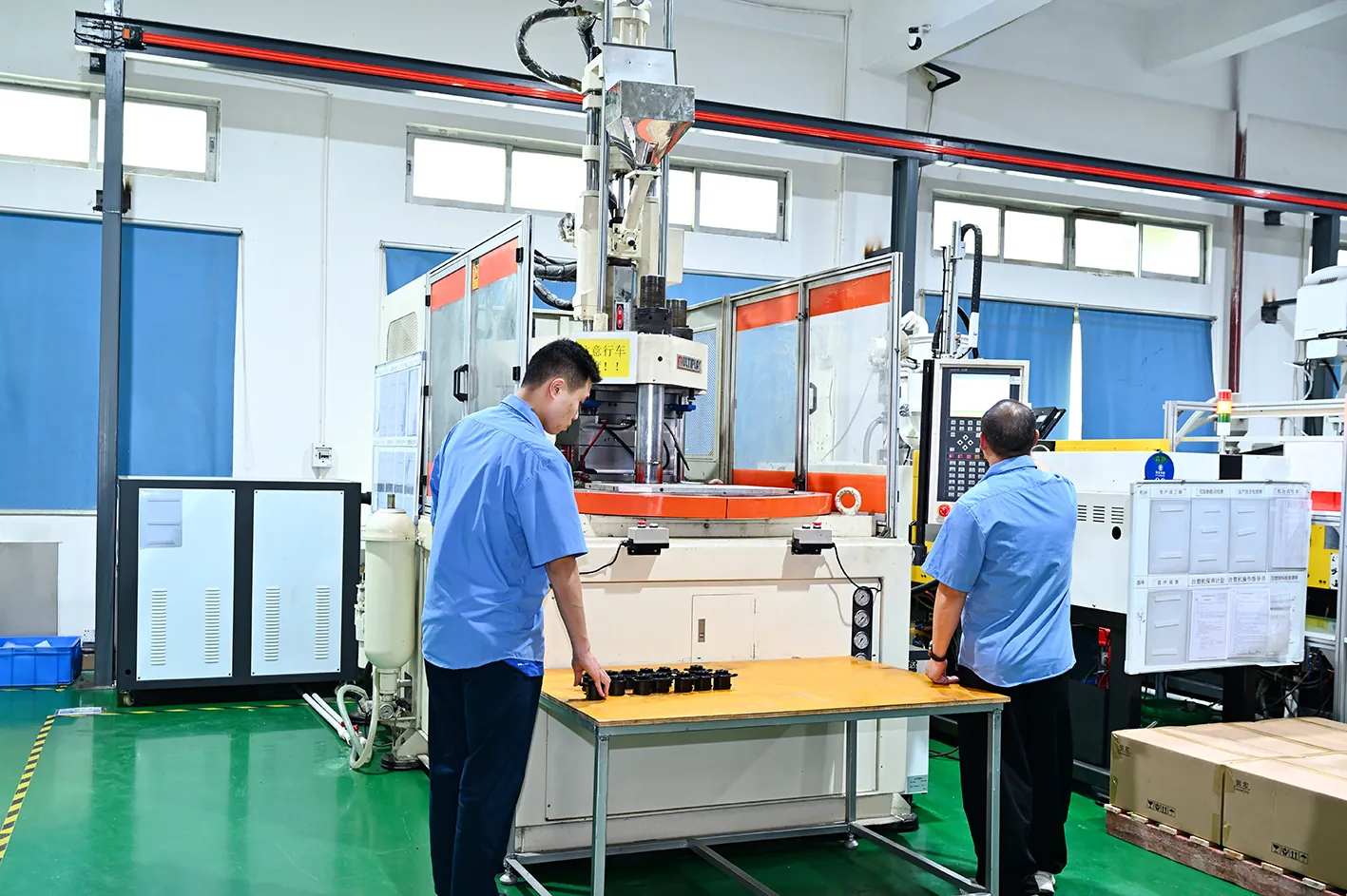
Pressures and packing. Typical injection pressure runs 40-80 MPa (400-800 bar) — lower than amorphous resins because the melt is so fluid — but hold pressure must be strong and hold time long, because semicrystalline packing feeds the 1.0-2.5% shrinkage. A common starting point is hold pressure at roughly 50-80% of injection pressure, with hold time long enough to pack the thickest mass before the gate freezes. Back pressure stays low — 0.3-1.0 MPa — and screw speed moderate; a screw with an L/D of at least 20:1 and a compression ratio of 2.0-2.5 handles PP well.
Shrinkage: 1.0-2.5%. The number moves with grade, wall thickness, and process conditions: higher mold temperature and higher hold pressure push shrinkage toward the low end, and the orientation from fill direction changes it locally. Because the shrinkage is so large, the cavity compensation — not the process — carries most of the responsibility, and the mold trial corrects the remainder. Cavities are compensated with the datasheet range, then tuned on the first molding trial and verified with CMM before production.
Common PP Applications
PP applications cluster in four spaces, and each cluster loads the tool differently — which is exactly why the mold, not the material, decides whether the part works. Automotive interior parts and trim run talc-filled PP on multi-cavity tools with the same cooling and gate discipline as our automotive injection molding work. Battery housings for EVs and energy storage lean on PP's insulation and chemical resistance, with the dimensional requirements covered on the EV and energy page. Medical disposables — syringe barrels, specimen cups — run medical-grade PP on high-cavity tools under the cleanliness rules of our medical device molding practice. Food containers and living hinge boxes round out the volume: thin-wall, multi-cavity tools where hinge gate placement and cooling balance decide reject rates, built the way our mold-making team cuts them.
PP Defects: Mold-Side Root Causes and Fixes
Most PP rejects trace to a mold design decision, not a bad shot. The table below maps each common defect to its mold-side root cause and the tooling fix — the process fixes that also work are noted where they matter.
| Defect | Mold-side root cause | Tooling fix |
|---|---|---|
| Sink marks | Ribs/bosses thicker than 50-60% of wall; gate freezes before the thick mass packs | Ribs at 50-60% of wall, gate at the thickest mass, hold pressure strong enough and long enough to pack before freeze-off |
| Flash | Parting line gap, vents too deep, or clamp tonnage below the projected-area requirement | Vents at 0.02-0.04 mm, verify parting line contact, match tonnage to projected area |
| Warpage | Differential shrinkage between zones; cavity-core cooling imbalance | Balanced cooling, uniform mold temperature (surface differential under 5°C), gate placement for even fill |
| Voids | Thick sections shrink internally after the gate freezes | Gate at the thick mass, longer hold time, thin the section or core it out |
| Short shots | Flow length exceeds the grade's MFR reach; trapped air blocks fill | Higher-MFR grade, larger gate and runner, real vents at the end of fill |
| Ejector pin marks / sticking | Insufficient draft, undersized ejector area, warm compliant surface | Draft 0.5-1° minimum (1-2° textured), larger pins or added lifters, balanced cooling, air-assist where pins mark |
| Living hinge cracking | Gate feeds along the hinge instead of across it; hinge too thick or too thin; hinge zone runs hot | Gate at the hinge line so flow crosses the hinge, hinge 0.25-0.5 mm with radii, dedicated cooling under the hinge |
← swipe to scroll →
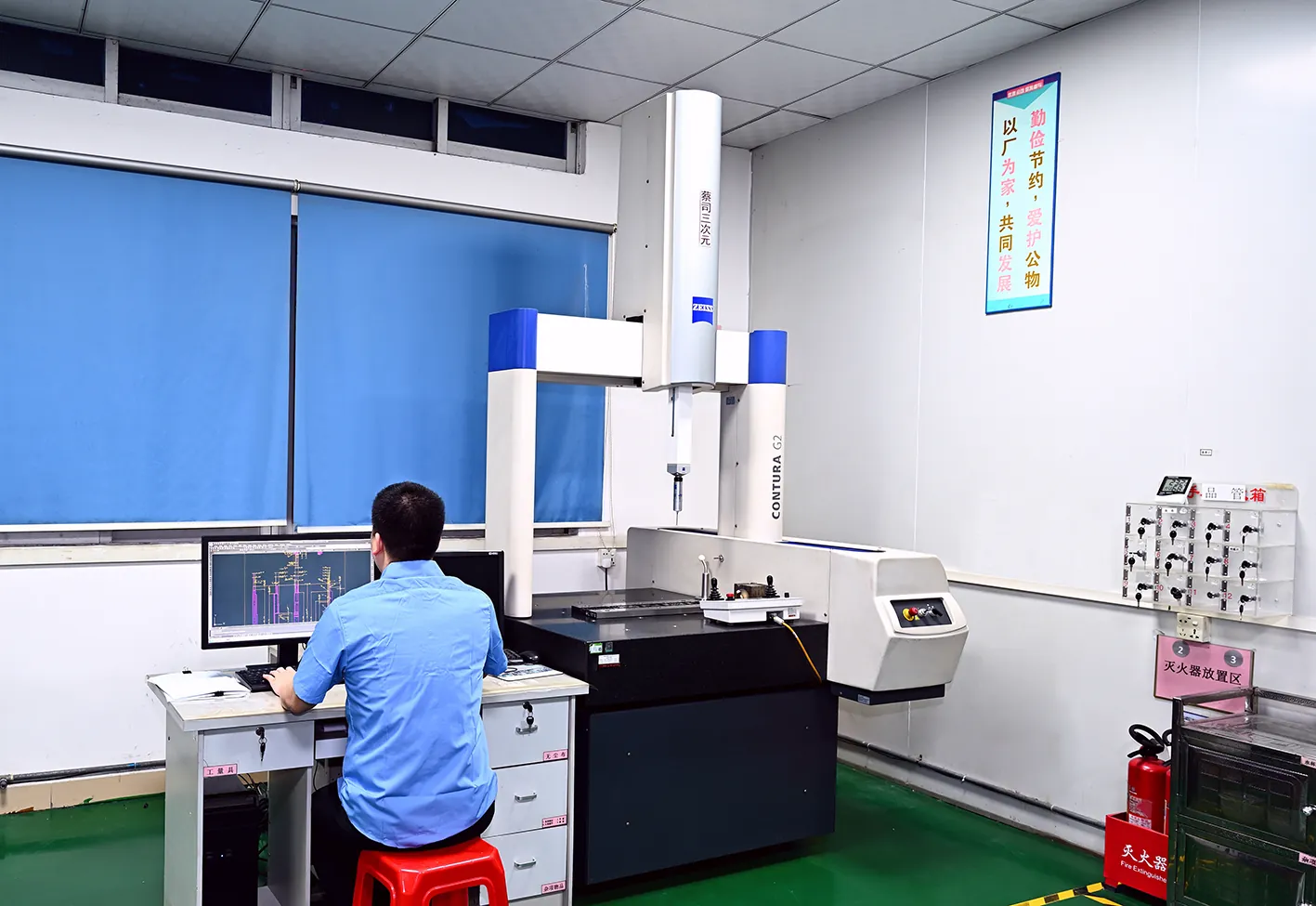
Flash deserves its own line because it is PP's signature defect: the fluid melt finds every gap, and flash appears at the same spots every cycle. Inspect the parting line and the vent depth first — a 0.05 mm vent on a PP tool is already a flash generator — then confirm the clamp tonnage. Gloss mismatch between cavities on multi-cavity tools is almost always a cooling-balance problem: the cavity that runs hotter molds glossier, and the fix is channel balancing, not a press adjustment.
PP vs PE: Comparison Table
Polypropylene and polyethylene are cousins — same family, different chain. The methyl group on PP's backbone changes the properties enough that the two materials are not interchangeable, and the mold sees the difference in shrinkage behavior and hinge design. The table below uses typical published values for injection-molding grades; actual numbers vary by grade and test method.
| Property | Polypropylene (PP) | Polyethylene (LDPE / HDPE) |
|---|---|---|
| Density (typical) | 0.90-0.91 g/cm³ | LDPE 0.910-0.925 / HDPE 0.941-0.965 g/cm³ |
| Melting point (typical) | ~160-170°C | LDPE ~105-115°C / HDPE ~125-135°C |
| Tensile yield strength (typical) | 30-38 MPa | LDPE 8-20 MPa / HDPE 20-31 MPa |
| Stiffness (flexural modulus, typical) | ~1,200-1,700 MPa | LDPE ~200-500 MPa / HDPE ~800-1,400 MPa |
| Low-temperature toughness | Moderate; copolymers improve it | Good to excellent; HDPE has strong stress-crack resistance |
| Living hinge fatigue | Excellent — the standard hinge material | Poor — hinges fatigue quickly |
| Chemical resistance | Excellent vs acids, alkalis, solvents at room temperature | Excellent; HDPE leads on environmental stress cracking |
| Moisture absorption | ≤0.03% | ≤0.01% — both effectively dry |
| Typical uses | Containers, hinges, syringes, bumpers, crates | Film and bags (LDPE); bottles, pipes, drums (HDPE) |
← swipe to scroll →
Table 2. PP vs PE. Values are typical published ranges; PE splits into LDPE and HDPE because the two differ more from each other than some polymers differ from PP.
Choose PP when the part needs stiffness, heat resistance above 110°C short-term, or a living hinge. Choose HDPE when the part needs stress-crack resistance, low-temperature ductility, or the lowest material cost. Choose LDPE when the part is a film or needs flexibility. For the tool, both polyolefins are semi-crystalline with high shrinkage, so the same compensation and packing discipline applies — the differences show in hinge design (PP only) and weld-line sensitivity. At the other end of the shrinkage spectrum, amorphous ABS shrinks 0.4-0.7% — the ABS material guide covers the tooling logic for a resin that compensates predictably instead of zone by zone.
Frequently Asked Questions
Q1. What is the melting point of polypropylene?
Homopolymer PP melts around 160-170°C (typical). Random copolymers melt lower, around 140-150°C, and impact copolymers around 160-165°C. Melt processing temperature is different: injection molding runs the barrel at 200-250°C, with degradation risk above roughly 280°C sustained. For the mold, the melting point sets the cooling side of the balance: a cool 20-60°C tool and fast cycles.
Q2. What is the shrinkage rate of polypropylene in injection molding?
Unfilled PP shrinks about 1.0-2.5% in the mold (typical). Homopolymer sits at 1.5-2.5%, copolymers at 1.0-2.0%, and glass- or talc-filled grades at 0.3-1.2%. The cavity is machined oversized by the allowance, split by wall-thickness zone, and the exact value comes from the grade data sheet plus the mold trial — verify it at DFM, not after the steel is cut.
Q3. Does polypropylene need drying before injection molding?
Normally no. PP absorbs at most about 0.03% moisture (typical), so the dryer is usually skipped. If cold bags show surface condensate, 60-80°C for 1-2 hours is enough (typical practice). This is a major difference from nylon, which requires 1-2 hours of drying and re-equilibrates with humidity in the hopper.
Q4. How long does a PP living hinge last?
A correctly designed hinge — 0.25-0.5 mm thick with radii — survives hundreds of thousands of flex cycles (typical published results). The mold-side rules are non-negotiable: the gate must feed the hinge line so polymer flows across it, the hinge zone needs its own cooling, and the flow must be clean and unidirectional. Tests commonly run past 100,000 cycles. Design errors in the tool, not the material, kill most hinges early.
Q5. Homopolymer or copolymer — which PP should I choose?
Match the family to the loading. Homopolymer for stiffness, stacking strength, and heat resistance. Impact copolymer for cold impact — bumpers, luggage, power tools. Random copolymer for clarity and hot-fill food packaging. The family letter also moves the shrinkage number the cavity is cut to, so specify it at RFQ — the data sheet's flexural modulus and notched Izod at the service temperature settle most debates.
Q6. Is polypropylene safe for food?
Yes, when the grade is cleared for it. Food-contact PP falls under FDA 21 CFR 177.1520 in the US and Regulation (EC) No 10/2011 in the EU, with a 10 mg/dm² migration limit (typical). The base polymer contains no BPA or phthalates. Clearance is grade-specific — the supplier's food-grade certification is the document to request, and it applies to the pellet, not to what was added at the press.
Q7. Can PP be sterilized for medical use?
Yes, within grade limits. Medical PP grades typically survive steam autoclaving at 121°C, ethylene oxide, and gamma sterilization (grade-dependent). Resins are qualified under ISO 10993 or USP Class VI as required. Sterilization method belongs in the grade specification, not assumed — and medical PP tooling carries its own surface and cleanliness requirements.
Q8. Is PP plastic recyclable?
Yes. PP carries resin identification code 5 and is accepted in many municipal rigid-plastic streams where collected. Recycled PP (rPP) is used in crates, pallets, and automotive parts. Post-consumer rPP is not automatically food-contact approved — that requires a separate FDA or EFSA recycling review.
Q9. Is polypropylene flammable?
PP is a hydrocarbon polymer and burns. Unfilled PP typically rates UL94 HB, which means it burns horizontally at a limited rate. Flame-retardant grades with additives reach V-2 or V-0 (typical). Flammability is a property of the whole formulation, so the grade data sheet, not the polymer name, carries the rating.
The Bottom Line
Polypropylene is the workhorse of commodity injection molding: the lightest plastic, chemically inert, fatigue-proof, food-safe in cleared grades, and forgiving on the press. The three families — homopolymer, random copolymer, impact copolymer — cover stackable crates to -20°C bumpers, and selection is a stiffness-versus-impact trade that lands in the mold as a shrinkage number and a family letter.
The two numbers that decide PP part quality are shrinkage and melt temperature. Plan the 1.0-2.5% shrinkage into the cavity before steel is cut — zone by zone, thickest sections first — and keep the melt between 200-250°C with mold temperature at 20-60°C. Gate at the thickest mass, vent at 0.02-0.04 mm, draft at 0.5-1° minimum, feed the living hinge across its line, and balance the cooling layout before the steel is cut. Do that, and PP rewards you with fast cycles and stable parts. Skip it, and sink marks, flash, and warpage appear every cycle.
Specify the family letter and ask for food-contact or medical certification when required. Verify the shrinkage allowance at DFM — run your PP part drawing through our DFM checklist before it reaches the steel — and take the mold buying guide along when you compare tooling quotes. PP is a forgiving material; the discipline is in the specification, and the mold carries it.
KEEP READING
Related Reading
ABS Injection Molding: The Complete Material Guide
ABS injection molding for buyers and mold engineers: shrinkage 0.4-0.
Read articleArticleEjector Pin Steel: SKD61 vs H13 — What's the Difference?
SKD61 (JIS) and H13 (AISI) are two names for the same 5% chromium hot-work steel; ejector pins in both grades harden to…
Read articleArticleLiquid Silicone Rubber (LSR) Injection Molding Guide
Liquid silicone rubber (LSR) is a two-component platinum-cured thermoset with -50°C to +250°C service life.
Read articleArticleNylon (PA) Injection Molding: Grades, Properties & Processing
Nylon (PA) injection molding guide: PA6, PA66, PA12, PA46 and glass-filled grades compared — melting points, shrinkage…
Read articleNEXT STEP
Ready to Start Your Mold?
Send us your element dimensions or part numbers — our team responds within 24 hours with pricing and lead time.

Written by
Ray ChanMold Buyer's Guide Author · Precision Mold Manufacturing Specialist. Ray helps global importers, distributors and OEMs source factory-direct molds and mold parts.