
Thermoplastic Polyurethane (TPU) Injection Molding: Material Guide
Table of Contents
A TPU mold that fails on the first trial usually fails in the tool design, not the resin — and TPU punishes tool-design mistakes harder than almost any other molding material. The shrinkage band is 0.3-1.5%, the widest of any common thermoplastic: compensate for the wrong number and the part comes out undersized or oversized, and the fix is a steel change order that costs weeks. TPU is also tacky — it clings to steel, so an under-drafted side wall turns the ejection stroke into a fight, and a soft 70A part can push straight through an undersized ejector pin. Both failures are visible on the drawing long before the steel is cut — and both are the reason this guide reads TPU from the mold side, not the chemistry side.
Thermoplastic polyurethane (TPU) is a melt-processable thermoplastic elastomer. It stretches and rebounds like rubber, but it runs on standard injection molding machines, molds in seconds instead of the minutes a vulcanized rubber needs, and regrinds like a plastic. Hardness spans Shore 60A to 75D within one material family (typical commercial range), which means the same tooling logic covers a soft 70A phone case and a stiff 60D wheel hub — with very different design consequences for the mold. Because TPU is a block copolymer of hard and soft segments, it also splits into two commercial families, polyester and polyether, and that family choice changes shrinkage, flow, and how the tool should be cooled.
This guide is written for the people who buy and build the tool: mold buyers, tooling engineers, and manufacturing engineers. It walks from the properties that dictate mold decisions, through the design rules for TPU tooling, into the processing window the mold must survive, and ends with defects traced to their mold-side root causes. Processing numbers follow typical published values for injection-molding grades. Test methods are cited where they matter.
The Snapshot
- TPU hardness spans Shore 60A-75D within one material family (typical commercial range).
- Tensile strength of 20-70 MPa and elongation at break of 300-800% (typical published range).
- TPU is hygroscopic: dry at 80-100°C for 2-4 hours to below 0.05% moisture before molding.
- Melt temperature 180-230°C, mold temperature 20-60°C, mold shrinkage 0.3-1.5%.
- Abrasion loss typically 25-40 mm³ (DIN 53516) for 85-95A grades; tear strength 50-150 kN/m.
- DieStrike builds TPU molds in-house; the T-70 parts line runs overmolded and cushioning components daily.
What Is Thermoplastic Polyurethane?
Thermoplastic polyurethane (TPU) is a block copolymer built from two segment types. Hard segments — a diisocyanate plus a short-chain diol — supply strength, stiffness, and heat resistance. Soft segments — a long-chain polyol — supply flexibility, rebound, and low-temperature toughness. Both segment types sit in one polymer chain, so TPU processes on standard injection machines and recycles like a plastic. The ratio of hard to soft segments tunes the hardness, which is why one family covers Shore 60A to 75D — and why the mold designer must know the exact grade before cutting steel, because a hardness shift of ten Shore points moves shrinkage and ejection behavior enough to matter.
Injection molding is why TPU displaces rubber in many parts. A TPU seal molds in seconds on a standard machine, with no vulcanization step and no post-cure. Scrap is reground and reused instead of discarded. The trade-off is material cost — TPU costs more per kilo than most rubber compounds — and the payback is in cycle time and yield. For the mold shop, the practical consequence is that TPU tools run on the same machines, bases, and hot-runner systems as ABS or nylon tools, with design rules that differ in the details, not in the fundamentals.
TPU chemistry splits into two commercial families by soft-segment polyol. Polyester-based TPU delivers higher tensile strength, better abrasion resistance, and stronger oil and grease resistance. Its weakness is hydrolysis: in hot, humid service the ester bond attacks and the polymer loses molecular weight. Use polyester grades for wheels, footwear soles, and seals that run dry or oiled — and expect slightly different shrinkage than the ether family, which matters when the cavity compensation is set.
Polyether-based TPU trades a little mechanical strength for durability in wet environments. It resists hydrolysis, microbial attack, and low-temperature embrittlement better than polyester grades. Cable jackets, hoses, and automotive parts that see water, salt, or cold favor polyether TPU. Tensile strength runs lower — typically 20-50 MPa versus 40-70 MPa for ester grades (typical published range). For the tool, the family choice changes flow slightly and, more importantly, changes which processing problems you can expect: ether grades are the usual choice for parts that must flex at -40°C, so thin-wall flow and weld-line quality matter more in those tools.
Two specialty subfamilies complete the picture. Caprolactone-based TPU combines ester-level strength with markedly better hydrolysis resistance, which is why hydraulic seals use it. Polycarbonate-based TPU adds heat and chemical resistance at higher cost. Density is a useful check when comparing TPU material options: typical TPU density runs 1.10-1.25 g/cm³, with polyester grades denser than polyether grades. A part at 1.18 g/cm³ is 18% heavier than the same volume in polypropylene, which matters in cost-per-part calculations and in how much material the machine must pack into the cavity.
The table below summarizes the trade-off between the two main families (typical published values).
| Property | Polyester TPU | Polyether TPU |
|---|---|---|
| Tensile strength | 40-70 MPa typical | 20-50 MPa typical |
| Abrasion resistance (DIN 53516) | Excellent — loss typically 20-40 mm³ | Good — loss typically 30-80 mm³ |
| Oil and grease resistance | Good | Fair |
| Hydrolysis resistance | Lower — degrades in hot, humid service | Higher — suits wet environments |
| Low-temperature flexibility | Fair | Good, typically to -40°C |
| Microbial resistance | Lower | Higher |
| Typical uses | Wheels, soles, seals, belts | Cable jackets, hoses, automotive |
← swipe to scroll →
Ranges are typical published values, not a DieStrike specification.
Datasheets matter more than family labels. A 95A polyester film grade, a 95A injection grade, and a 95A cable grade behave differently in melt flow, flex fatigue, and surface quality. Confirm the family, the hardness, and the datasheet properties before quoting the tool — and before anyone sets the cavity compensation.
TPU Properties That Drive Mold Design
Material selection and tool design are one decision, not two. The table below maps the TPU properties that matter most to the specific mold decisions they drive. If a datasheet number is missing at RFQ time, this is the list to ask for.
| TPU property | Typical value | What it drives in the mold |
|---|---|---|
| Mold shrinkage | 0.3-1.5% (soft/thick at the high end) | The widest compensation band of common materials; per-cavity, per-zone compensation, verified on a trial cavity before production steel |
| Hardness | Shore 60A-75D | Ejection strategy: soft grades need draft of 1-2°+, large ejector area, lifters or air poppets; hard grades eject like engineering plastics |
| Melt flow (shear-thinning) | Soft grades thin dramatically under shear | Gate sizing, flash control at the parting line, runner taper, cold slug wells; restrictive gates burn soft material |
| Continuous service temperature | -40°C to +80°C typical | Mold runs at 20-60°C — often below ambient, so chilled water or a mold temperature controller is required; the cooling layout sets the cycle |
| Moisture pickup | Hygroscopic; process target under 0.05% | Vent depth 0.01-0.03 mm; bubbles and splay are a drying problem, not a tool problem |
| Compression set | 20-35% after 70 h at 70°C | Drives wall and rib design for seals so they keep their squeeze; a geometry driver, not a steel decision |
| Abrasion / tear | 25-40 mm³ DIN 53516; tear 50-150 kN/m | Gate placement so weld lines never cross wear or loaded zones; thin-wall parts need tear margin at knit lines |
← swipe to scroll →
Values are typical published ranges for injection-molding grades; actual numbers vary by grade and test method.
Shrinkage and dimensional stability. TPU mold shrinkage runs 0.3-1.5%, and the spread is real: soft grades and thick walls sit at the high end, hard grades and thin walls at the low end, and ester and ether families differ from each other. That is the widest compensation band of any common molding material. The consequence is that a single cavity number is not enough — compensation should be split by wall-thickness zone and verified on a trial cavity before the production inserts are cut. Dimensional control in service also depends on creep, because TPU creeps under sustained load more than cured rubber; clamped seals and press-fit parts need design review rather than a datasheet assumption.
Heat behavior. Continuous service temperature typically spans -40°C to +80°C, with specialty grades rated higher. For the tool, the interesting consequence is that TPU molds run cold — 20-60°C, often below ambient. No hot-side steel is needed, but the mold usually needs chilled water or a temperature controller, and the cooling layout — not the steel grade — decides whether you hold a 35-second or a 70-second cycle on a soft part. Sustained service above 100°C degrades TPU, so there is no point engineering the tool for a heat load the material cannot survive.
Surface quality. TPU replicates cavity finish faithfully, from mirror gloss on a polished cavity to a matte or textured look from EDM texture. Mold temperature shifts gloss: a warmer mold improves surface gloss and weld-line appearance, a cooler mold speeds demold. Because soft TPU is tacky, cavity finish also affects ejection — a polished, release-friendly surface with the polish direction aligned to demolding is a design choice, not an afterthought. Outdoor parts need UV-stabilized grades; unstabilized TPU yellows in sunlight, which no cavity finish can fix.
Mechanical behavior and the tool's job. Tensile strength of 20-70 MPa with elongation at break of 300-800% makes TPU strong and stretchy at once — rare among plastics and rubbers. Rebound resilience runs 40-60% (DIN 53512) and tear strength 50-150 kN/m (ASTM D624). These numbers land on the tool in one place: weld lines. A knit line in a seal or a thin-wall jacket is a tear-initiation site, so gate placement that keeps flow fronts away from loaded zones is a mechanical-property decision, not a cosmetic one. Final properties depend on hardness, polyol type, additives, part geometry, and processing — a 95A grade molded wet and hot can underperform an 85A grade molded correctly, which is why molded-part verification (force checks, durometer readings, dimensions) belongs in the process.

Mold Design Considerations for TPU
TPU is demanding on the tool in three specific ways: it shrinks a lot, it is soft and tacky, and it degrades if abused thermally. The rules below are the ones that matter when the steel is being cut for a TPU part.
Shrinkage compensation. Compensate cavities for 0.3-1.5% shrinkage, split by wall-thickness zone and verified per grade — a 70A ester grade and a 60D ether grade will not shrink the same. Because the band is so wide, the safest path is a trial cavity: mold the actual grade, measure the trial parts, then cut the production inserts to the measured numbers. The five shrinkage compensation rules apply directly to TPU parts and cover the zone-by-zone method.
Wall thickness and ribs. Nominal walls of 1.5-3.0 mm are the working range for most TPU parts; soft grades in that range still sink over thick sections because the material packs then relaxes. Ribs should run 50-60% of the nominal wall thickness at the base, radiused at 0.25-0.5 mm, or the opposite surface will sink. On cushioning and seal parts, keep transitions gradual — TPU's high shrinkage concentrates at abrupt changes and shows as witness lines on soft surfaces.
Gate design. TPU wants generous gates. Soft grades shear-thin and burn at restrictive gates, so film and tab gates are the standard for thin parts, with edge and submarine gates on thicker sections. Gate land length around 1 mm and gate depth at 50-80% of wall thickness are typical starting points, tuned at trial. Gate placement decides where weld lines land — on seals, jackets, and soft-touch surfaces, keep knit lines out of loaded zones. The gate design best practices guide covers the placement and sizing trade-offs in detail.
Runner system. Cold runners are standard for TPU: full-round runners sized generously, with a full taper and a cold slug well at every branch and before the gates. TPU strings and drools more than most resins — soft grades in particular — and the cold slug well is what keeps stringing out of the cavity. Hot runners work for high-volume TPU tools, but the resin's low melt window and drooling tendency favor valve gates over open tips, and the manifold must hold tight temperature balance across cavities. The hot runner vs cold runner comparison helps make the call for a given volume.
Venting. Vents of 0.01-0.03 mm depth are the typical guideline for TPU. The material is soft and flashes easily, so deeper vents produce flash at the parting line; shallower vents trap air and cause burn marks at the end of fill. The cavity and the parting line need real venting paths, not just whatever the machining center left behind. Deep, blind pockets may need vacuum venting — a trapped-air burn on a soft part shows as a blackened pocket that no amount of process tuning fixes.
Draft and ejection. Minimum draft of 1° per side on hard grades and 1-2° or more on soft grades, with textured surfaces needing more. Ejection is where TPU tools live or die: soft parts stick to steel and distort if pushed too early or with too little area. Use larger-diameter pins, more pins, lifters, or air poppets on soft parts, and never eject a soft part hot. The draft angle mistakes list is worth a pass before the steel is cut, because a draft correction after hardening is expensive and TPU's sticking makes the penalty worse than for most resins.
Cooling. Mold temperature is 20-60°C, which means the tool often needs chilled water or a temperature controller rather than a heater. Cooling channels should sit 1.2-1.5x the channel diameter from the cavity surface, with turbulent flow verified at commissioning, and the cavity and core kept within a few degrees of each other. Hot spots show up as sink marks on thick TPU walls and as sticking on cores. The cooling channel design tips cover the layout rules for uniform mold temperature.
Mold steel and surface. TPU is not corrosive like PVC, so standard P20 or 718-class prehardened steel (28-36 HRC) covers most production volumes. Medical or high-gloss parts move to S136 or 420 stainless, hardened and polished. What matters more than steel grade is surface: soft TPU grips steel, so polish direction, release-friendly cavity finish, and a parting-line finish that does not grab are real design decisions. A textured cavity hides scratches on consumer parts and also lifts the part off the steel more easily than a dead-smooth high-gloss surface.
Overmolding tooling. A large share of TPU production is overmolding — soft-touch grips, seals on rigid carriers, cushioning over a frame. Two-shot tools mold the rigid substrate first, then rotate or shuttle to the second cavity for the TPU shot; insert tools load a molded or metal part. The TPU cavity must be gated so the melt wets the substrate at the right interface temperature, and the substrate side of the tool is often deliberately kept warmer than the TPU-only zones. Adhesion depends on melt temperature at the interface, compatible chemistry, and a clean substrate — for ABS and PC substrates, the rules in the ABS material guide and the grade datasheets apply. Plan the bond-line geometry in the DFM pass: overmold thickness of 1.5-3 mm typical, generous draft, and no sharp internal corners.
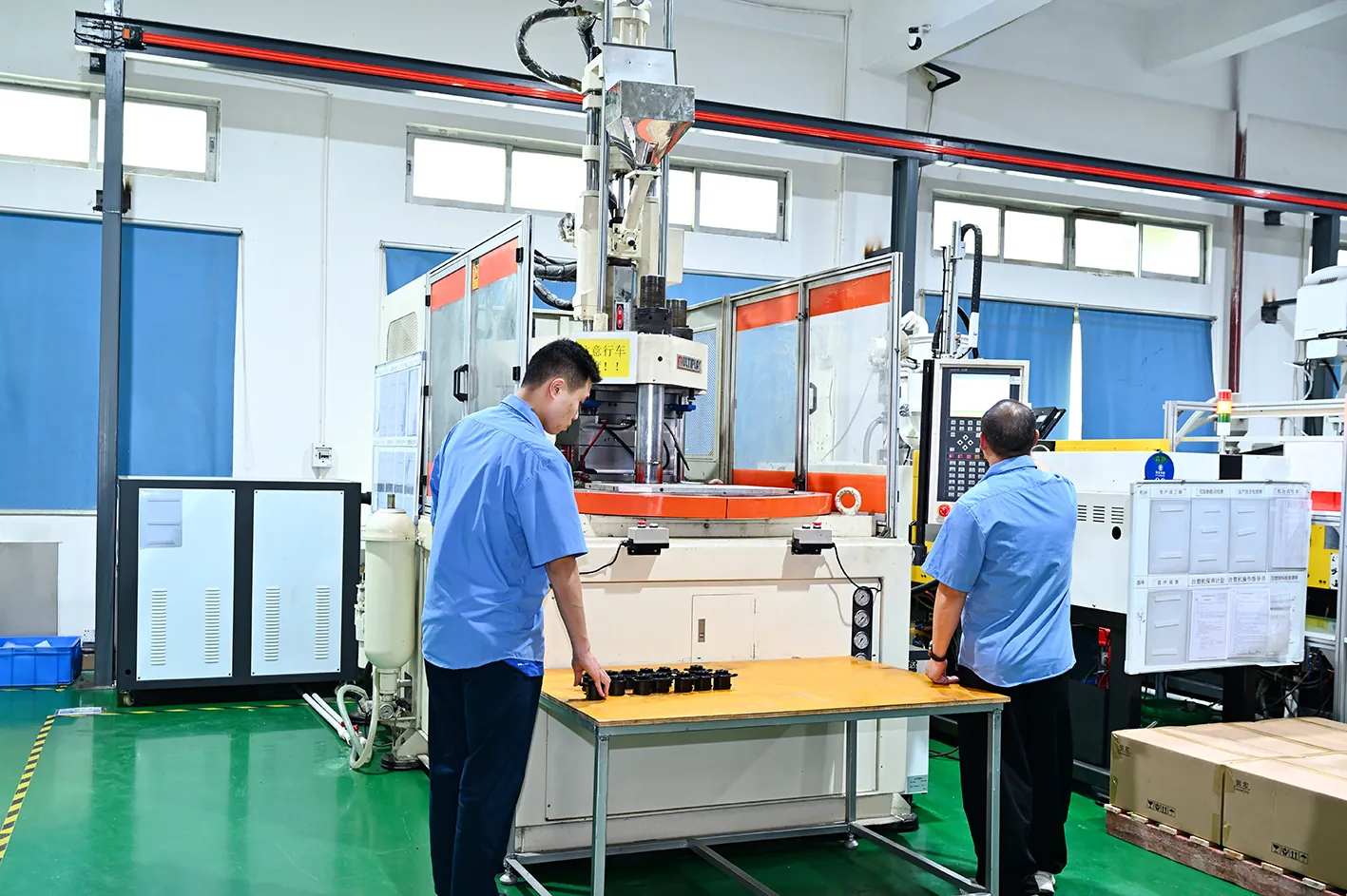
Injection Molding TPU: The Processing Window
TPU is demanding on the machine, and the mold must survive the window, not just the part. Four numbers control success: drying, melt temperature, mold temperature, and shrinkage. The window below is the standard starting point for injection-molding grades (typical published practice); your grade datasheet overrides it.
Drying: 80-100°C for 2-4 hours. TPU is hygroscopic — it pulls moisture from the air as fast as any engineering plastic. Moisture above roughly 0.05% hydrolyzes the polymer during melting, cutting molecular weight and producing bubbles, splay, and brittle parts. Dry with a hopper dryer at a dew point of -40°C or lower. Do not overdry: extended drying at high temperature ages the material and shifts its melt flow, which shows up at the press as a change in fill behavior the tool was not tuned for.
Melt temperature: 180-230°C. Hard grades may run up to 240°C; soft grades run at the low end. Avoid spikes above 240°C, where thermal degradation releases gas and darkens the melt. Keep barrel residence short — TPU degrades with extended dwell at melt temperature, and a degraded melt strings, burns, and loses physicals. For the mold, the practical read is that the melt window is narrow, so the tool must fill reliably without relying on the machine to rescue a bad flow path.
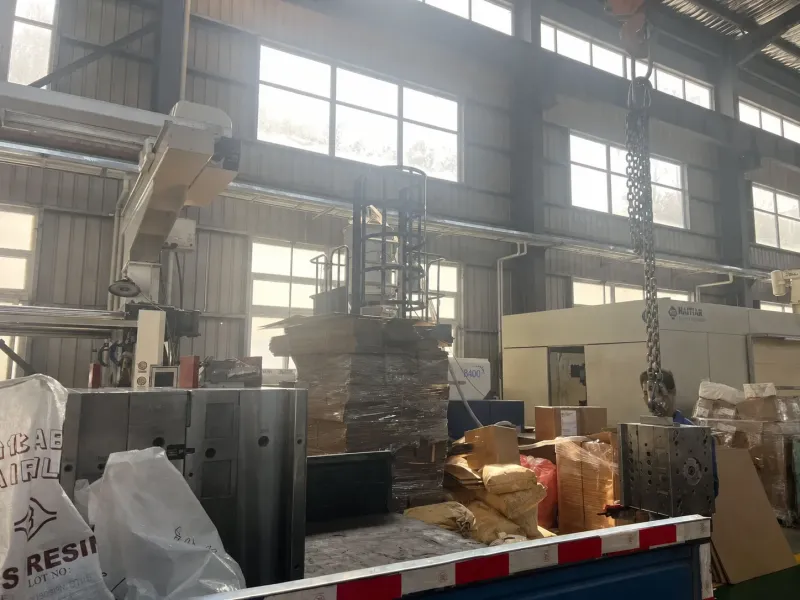
Mold temperature: 20-60°C. A cooler mold ejects faster and shortens cycle time, which helps because TPU demolds slowly. A warmer mold improves surface gloss, flow into thin sections, and sink control on thick walls — and raises the demold temperature, which soft parts do not tolerate. Balance the two against wall thickness and cosmetic requirements. For overmolding, the interface temperature at the substrate is the number that decides adhesion, so the tool is often zoned warmer at the substrate side.
Pressures and speeds. Injection pressure typically runs 40-100 MPa (grade-dependent). Use a low-compression screw with an L/D of 20:1 or higher, and moderate screw speed to limit shear heating. Soft grades shear-thin easily, so hold pressure and packing need tuning per grade — the tool must be able to pack thick sections before the gate freezes, which means gate sizing and hold time are set together, not separately.
Shrinkage: 0.3-1.5%. Soft grades and thick walls sit at the high end; hard grades and thin walls at the low end; ester and ether families differ. Higher mold temperature and higher hold pressure push shrinkage toward the low end, so the compensation number on the drawing must match the process the tool will actually run. Cavities are compensated with the datasheet range, then tuned on the first molding trial — and a trial cavity before production steel pays for itself on the first re-cut avoided.
Venting. Vents of 0.01-0.03 mm depth are the typical guideline for TPU. Deeper vents flash on this soft material; shallower vents trap air and cause burn marks at the end of fill.
Cycle times: 30-90 seconds. Cycle length depends on wall thickness and cooling efficiency. Soft grades need longer cooling because they demold slowly and distort if ejected too hot. Regrind from sprues and runners is reusable at 10-20% blended with virgin resin (typical practice), provided it is dried to the same standard and consistent in particle size.
| Parameter | Typical range | Notes |
|---|---|---|
| Pre-drying | 80-100°C, 2-4 hours | Moisture below 0.05%; dew point ≤ -40°C |
| Melt temperature | 180-230°C | Hard grades to 240°C; avoid overheating |
| Mold temperature | 20-60°C | Warmer for gloss and thin walls; cooler for fast demold |
| Injection pressure | 40-100 MPa | Grade-dependent; tune hold pressure per grade |
| Mold shrinkage | 0.3-1.5% | Soft, thick parts at the high end |
| Screw L/D | 20:1 or higher | Low-compression screw, moderate speed |
| Vent depth | 0.01-0.03 mm | Prevents trapped-air burns; deeper vents flash |
← swipe to scroll →
Processing values are typical published practice, not a DieStrike specification.
Common TPU Applications
TPU parts cluster in four spaces: seals and gaskets, cable jacketing, soft-touch overmolding, and cushioning components. Automotive seals and gaskets run polyether or caprolactone grades at 85-95A in multi-cavity tools, where low compression set and oil resistance are the gating requirements and the tooling follows the same discipline as our automotive injection molding work. Medical tubing and device components favor polyether grades for hydrolysis resistance, typically molded on multi-cavity tools with tight wall control at the top of the mold-temperature window — see our medical device molding page. Cable and wire jacketing for EV and energy applications uses flame-retardant polyether grades that survive -40°C flexing, often in multi-cavity tools where balanced flow keeps wall thickness uniform, which our EV and energy page covers. Soft-touch overmolding — grips, phone cases, wearable housings — is where TPU shines on the molding floor, bonding to PC, ABS, and PA substrates, and the two-shot and insert tooling rules are the ones our consumer electronics lines run daily.
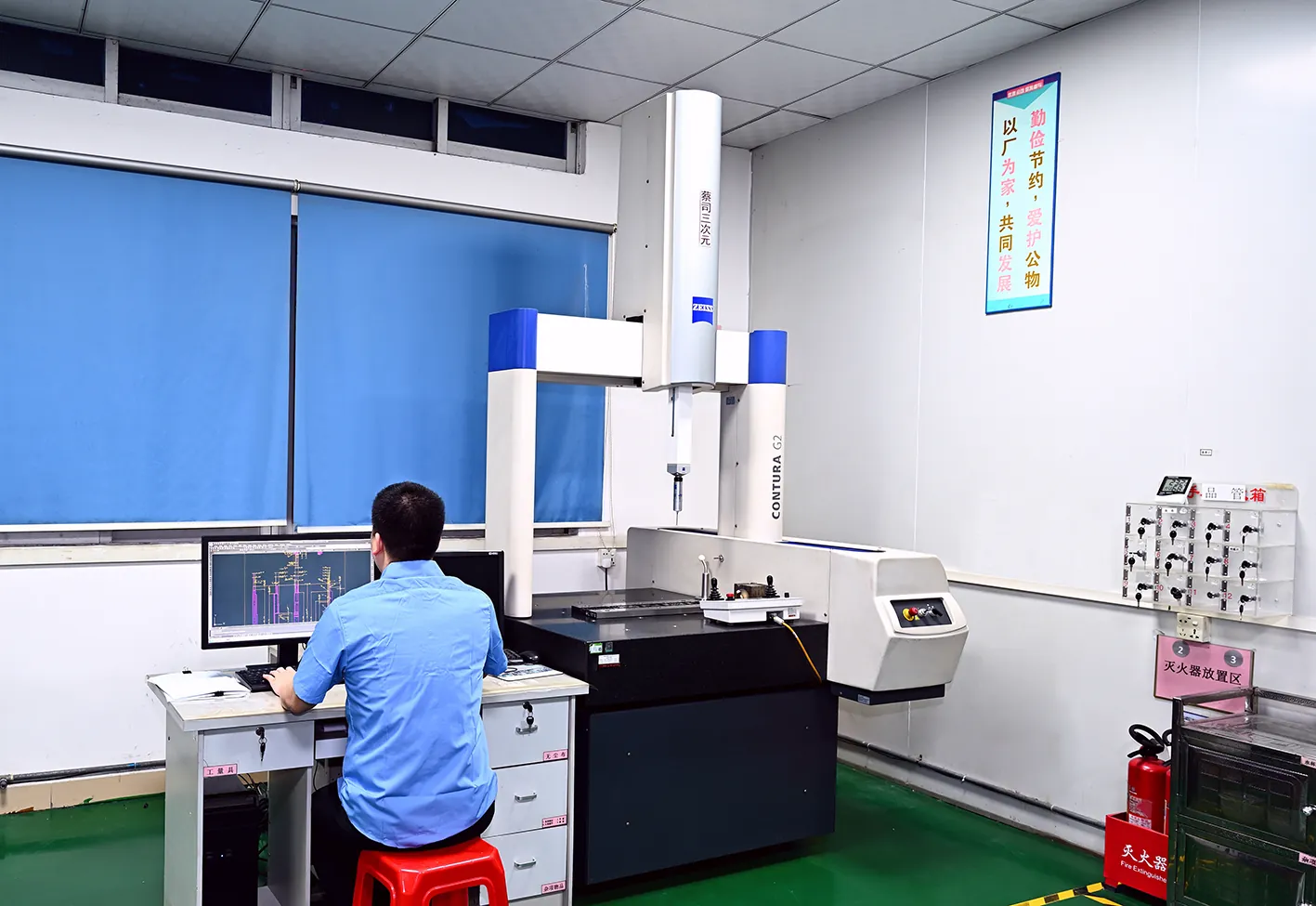
Behind every one of those programs sits the same mold making discipline DieStrike applies to TPU tooling: hardened gates, balanced multi-cavity flow, and CMM-verified shut-offs before the first shot.
TPU Defects: Mold-Side Root Causes and Fixes
Most TPU rejects trace to a mold design decision, not a bad shot — and TPU's softness turns small tooling mistakes into loud defects. The table below maps each common defect to its mold-side root cause and the tooling fix; the process fixes that also work are noted where they matter.
| Defect | Mold-side root cause | Tooling fix |
|---|---|---|
| Mold sticking / pin push-through | Insufficient draft, undersized ejector area, part ejected too hot, tacky material on a grabbing surface | Draft of 1-2°+ on soft grades, larger pin diameters, added lifters or air poppets, release-friendly cavity finish, longer cooling before ejection |
| Flash | Vents over 0.03 mm deep, worn or soft parting-line steel, soft grade pushed at the top of the melt window | Vents at 0.01-0.03 mm, re-cut or re-fit the parting line, drop melt temperature, adequate clamp force for projected area |
| Sink marks | Thick sections, gate freezes before the cavity packs, cooling hot spots | Gate sized so packing reaches thick zones before freeze-off, ribs at 50-60% of wall, balanced cooling channels |
| Weld lines / weak knit | Flow fronts meet at a loaded or cosmetic zone; no vent at the weld; melt stalls at thin ribs fed through a small gate | Move gates so fronts meet at a vent or non-stressed zone, add venting at the meeting line, film or tab gates, raise mold temperature |
| Short shots | Gate too small for the grade, stalled flow in thin sections, stringing from a missing cold slug well | Generous film/tab gates, full runner taper, cold slug wells at branches and before gates |
| Warpage (thin-wall overmolds) | Shrinkage mismatch between the rigid substrate and the TPU skin; unbalanced cooling between cavity and core | Differential shrinkage compensation per layer, balanced cooling on both sides of the part — the same discipline as the thin-wall warpage guide |
| Bubbles / splay | Almost always moisture — wet pellets hydrolyze in the barrel; trapped air in deep blind pockets on thick sections | Fix the dryer first (dew point, drying time); then venting or vacuum venting on blind pockets; purge and reload if the resin degraded |
← swipe to scroll →
Moisture splay deserves its own line because it is the one TPU defect that is rarely a tool problem: bubbles in thick sections and silver streaks radiating from the gate mean the resin was wet. The fix is drying discipline — 80-100°C for 2-4 hours, target under 0.05% moisture, dew point at -40°C or lower — and splay that reappears mid-run points at a leaking hopper dryer, not at the mold.
Stringing and drool are the second signature TPU nuisance. Soft grades string from the nozzle and the sprue, and the strings end up in the next shot. The tooling answer is structural: a full taper on the sprue, cold slug wells at every branch, and gates sized so the melt separates cleanly. A tool designed without those details spends its life fighting a defect that was preventable on the drawing.
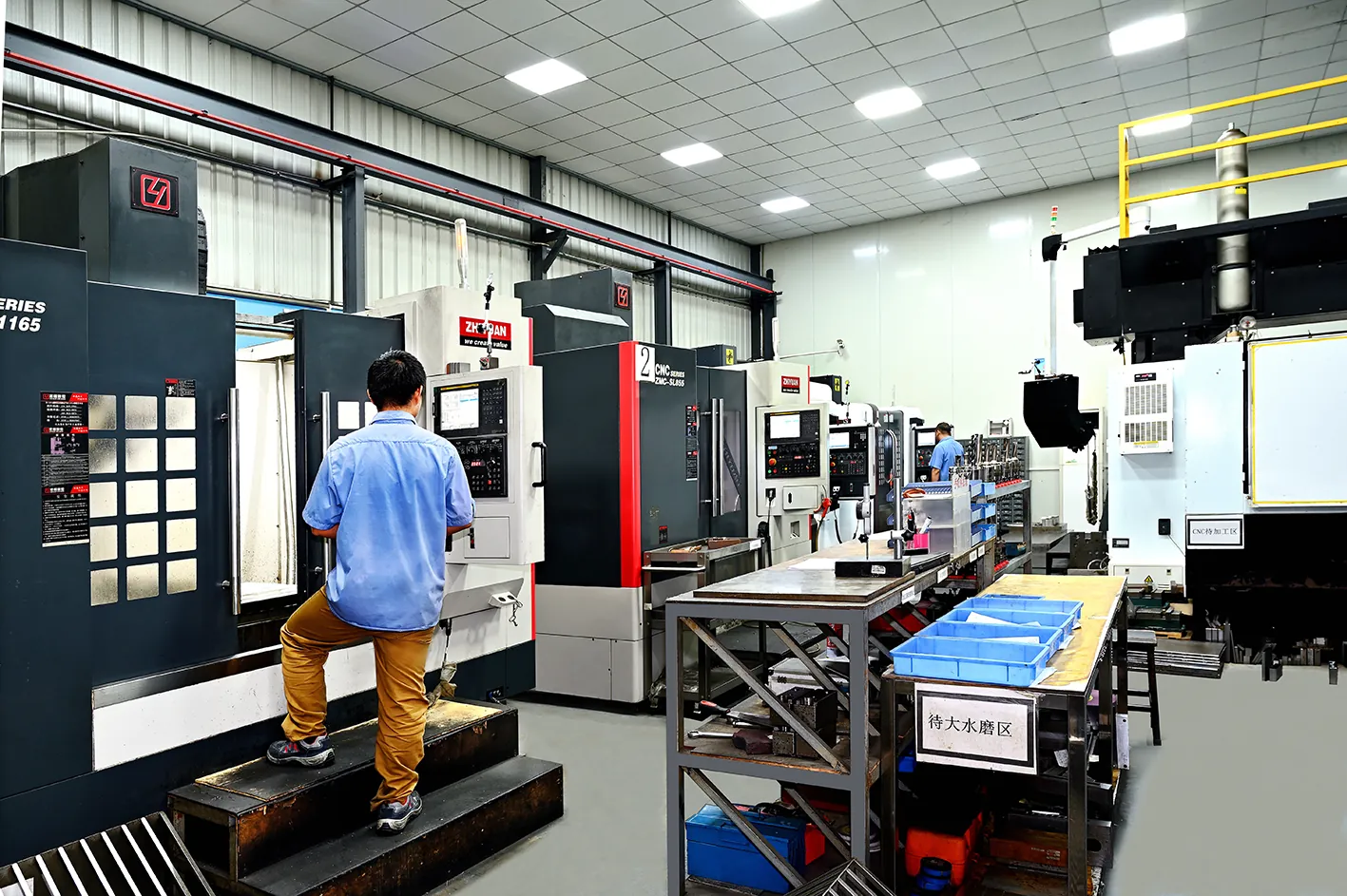
TPU vs TPE vs Silicone vs Rubber: Comparison Table
TPU vs TPE is the most common material question for flexible parts, and the answer starts with the alphabet. TPE is the family; TPU is a member of it. In practice, "TPE" usually means SEBS-based thermoplastic elastomers. Both mold fast and recycle, but their properties diverge sharply — and so do the mold design rules: SEBS flows easily and demolds cleanly, while TPU demands the draft, gate, and ejection discipline described in this guide. The TPE material guide covers the SEBS side in detail.
TPU wins on tensile strength, abrasion, and oil resistance. SEBS TPEs win on softness (down to Shore 0A), weathering, and ease of processing. TPU costs more per kilo and demands stricter drying. Against liquid silicone rubber (LSR), TPU wins on cycle time and recyclability: LSR needs a cure cycle of 60-300 seconds and cannot be reground, and LSR tooling is a different animal — cold-deck systems, no draft needed on soft parts, and tight parting-line shutoffs. LSR wins on heat resistance above 150°C, clarity, and biocompatibility; see the LSR material guide when the service temperature or regulatory need points that way. Against EPDM rubber, TPU wins on abrasion and processing speed, and loses on high-temperature and weathering endurance.
| Property | TPU | TPE (SEBS) | LSR | EPDM rubber |
|---|---|---|---|---|
| Hardness range | Shore 60A-75D | Shore 0A-60D | Shore 10-80A | Shore 30-90A |
| Tensile strength | 20-70 MPa | 5-15 MPa typical | 4-10 MPa typical | 5-20 MPa typical |
| Abrasion resistance | Excellent | Fair | Good | Good |
| Oil and grease resistance | Good (ester grades) | Poor to fair | Good | Fair |
| UV and weathering | Fair, needs stabilizer | Good | Excellent | Excellent |
| Continuous heat range | -40°C to +80°C | -40°C to +100°C typical | Up to 180°C+ | Up to 120-150°C |
| Process | Injection molding | Injection molding | Injection molding + cure | Compression or transfer molding |
| Recyclable | Yes | Yes | No | No |
| Cycle time | Seconds | Seconds | 60-300 s cure | Minutes |
← swipe to scroll →
Ranges above are typical published values for general-purpose grades, not a specification. Verify with grade datasheets.
The decision rule is short. Choose TPU when the part needs abrasion resistance, oil resistance, or bondable soft-touch surfaces. Choose SEBS TPE when the part is soft, unstressed, and cost-sensitive. Choose LSR or rubber when the service temperature exceeds 150°C. The table above gives the numbers behind each call — and whichever material wins, the mold design rules change with it, so fix the material before the tool is quoted.
Frequently Asked Questions
Q1. What is thermoplastic polyurethane?
Thermoplastic polyurethane (TPU) is a melt-processable thermoplastic elastomer made of hard and soft segments in one polymer chain. It stretches and rebounds like rubber but processes on standard injection molding machines and can be recycled. Hardness spans Shore 60A-75D, which is why one family covers both soft-touch parts and firm engineering parts.
Q2. What is the difference between TPU and TPE?
TPE is the family name for thermoplastic elastomers, and TPU is one member of that family. In everyday use, "TPE" usually means SEBS-based compounds. TPU offers higher tensile strength (20-70 MPa) and far better abrasion resistance; SEBS TPEs offer softer hardness grades and easier processing.
Q3. What Shore hardness range is available in TPU?
Commercial TPU grades span Shore 60A to 75D. Shore A grades from 60A to 98A cover flexible parts like seals, jackets, and soft-touch surfaces; Shore D grades from 50D to 75D behave like firm engineering plastics. Hardness moves the mold design — soft grades need more draft and ejector area, and shrink more.
Q4. Does TPU need to be dried before injection molding?
Yes, always. TPU absorbs moisture rapidly, and levels above roughly 0.05% cause hydrolysis, bubbles, and brittle parts. Dry at 80-100°C for 2-4 hours with a dew point of -40°C or lower. Bubbles and splay are almost always a drying problem, not a tool problem.
Q5. What mold temperature does TPU require?
Mold temperature typically runs 20-60°C. Because that is often below ambient, the tool usually needs chilled water or a temperature controller rather than a heater. Cooler molds eject faster but increase sticking risk; warmer molds improve surface gloss and thin-wall filling but soften the part at demold. Balance against wall thickness and cosmetic requirements.
Q6. Can TPU be overmolded onto other materials?
Yes. TPU bonds well to PC, ABS, PA, and metals through two-shot or insert molding. Adhesion depends on melt temperature at the interface, substrate cleanliness, and compatible chemistry. Part geometry needs draft and minimum overmold thickness of 1.5-3 mm for a stable bond, and the tool should be zoned to keep the substrate interface at the right temperature.
Q7. Is TPU recyclable?
Yes. TPU is a true thermoplastic, so sprues, runners, and rejected parts can be reground. Regrind is typically blended with virgin resin at 10-20% (typical practice). Keep regrind dry and consistent in size, or the fill behavior shifts mid-run.
Q8. Why do my TPU parts show bubbles?
Bubbles and silver streaks are almost always moisture in the pellets. Wet resin hydrolyzes in the barrel and releases gas. Verify the dryer's dew point and drying time first, then check melt temperature — and only after those, look at venting on deep, blind pockets.
The Bottom Line
TPU earns its place on the molding floor when the numbers match the application. It delivers Shore 60A-75D hardness, 20-70 MPa tensile strength, 25-40 mm³ abrasion loss, and rebound resilience of 40-60% — a combination no single TPE matches. The price of admission is discipline: dry below 0.05% moisture, hold the 180-230°C melt window, and keep the mold at 20-60°C.
The tooling chain is short but unforgiving. Compensate the wide 0.3-1.5% shrinkage band per cavity, per zone, and verify it on a trial cavity. Size gates generously so the cavity packs before freeze-off and soft melt never burns. Vent at 0.01-0.03 mm, draft at 1-2° minimum, and design the ejection system for a material that grips steel — every one of those decisions shows up in the first trial shot. If you are specifying a TPU part, start with a DFM checklist review so the chemistry and the tooling match from the first drawing, and confirm the mold manufacturer's TPU experience before the steel is cut.
KEEP READING
Related Reading
ABS Injection Molding: The Complete Material Guide
ABS injection molding for buyers and mold engineers: shrinkage 0.4-0.
Read articleArticleEjector Pin Steel: SKD61 vs H13 — What's the Difference?
SKD61 (JIS) and H13 (AISI) are two names for the same 5% chromium hot-work steel; ejector pins in both grades harden to…
Read articleArticleLiquid Silicone Rubber (LSR) Injection Molding Guide
Liquid silicone rubber (LSR) is a two-component platinum-cured thermoset with -50°C to +250°C service life.
Read articleArticleNylon (PA) Injection Molding: Grades, Properties & Processing
Nylon (PA) injection molding guide: PA6, PA66, PA12, PA46 and glass-filled grades compared — melting points, shrinkage…
Read articleNEXT STEP
Ready to Start Your Mold?
Send us your element dimensions or part numbers — our team responds within 24 hours with pricing and lead time.

Written by
Ray ChanMold Buyer's Guide Author · Precision Mold Manufacturing Specialist. Ray helps global importers, distributors and OEMs source factory-direct molds and mold parts.